
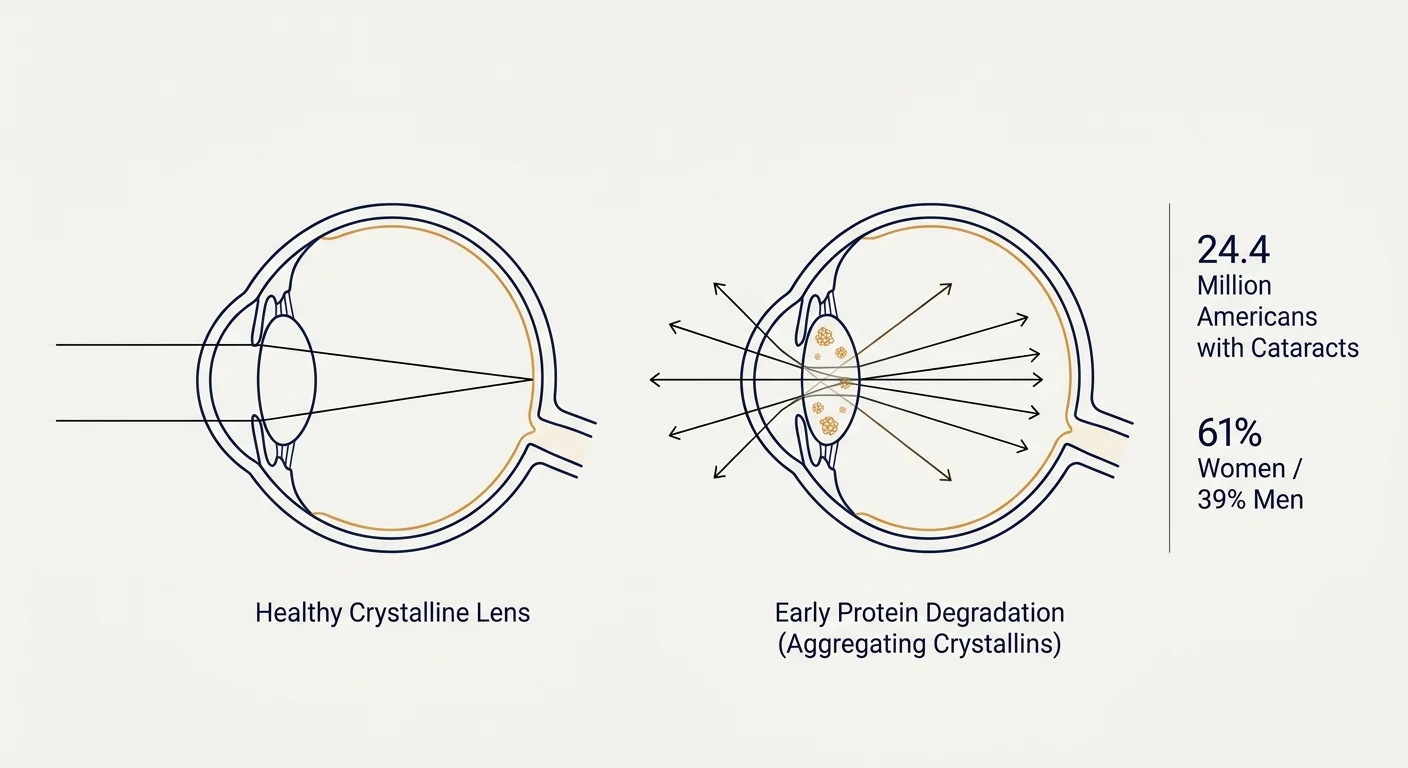
Understanding Early Cataract Development: The Science Snapshot
Your natural crystalline lens consists primarily of water and specialized structural proteins called crystallins. Around age 40, normal biochemical processes cause these proteins to slowly degrade, misfold, and clump together. This microscopic aggregation marks the quiet beginning of age-related cataract formation. According to data from the National Eye Institute, more than 24.4 million Americans aged 40 and older have cataracts, and by age 80, over 50 percent of all Americans either have cataracts or have undergone corrective surgery.
Oxidative stress, cumulative ultraviolet light exposure, metabolic imbalances, and localized inflammation accelerate this protein breakdown over time. The World Health Organization notes that cataracts remain the primary cause of blindness across the globe, accounting for approximately 45 to 50 percent of all worldwide blindness cases. Demographic research also highlights significant disparities; women account for roughly 61 percent of all cataract cases, compared to 39 percent in men. Understanding how these chemical shifts manifest physically enables you to detect changes well before severe vision loss occurs.








Leave a Reply