
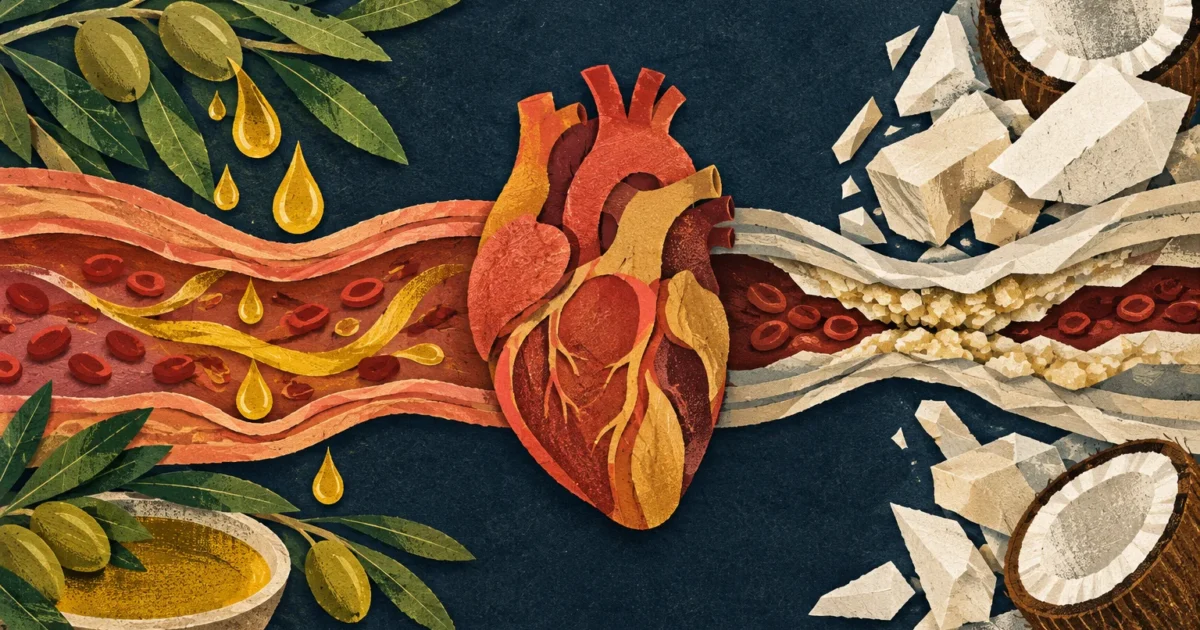
Choosing the right cooking fat directly influences your arterial health and longevity. When you stand in the grocery aisle weighing coconut oil against olive oil, the scientific evidence points decisively to a clear champion.
Extra virgin olive oil offers unmatched cardiovascular protection, whereas coconut oil delivers concentrated saturated fat that can quietly elevate your harmful cholesterol levels. Understanding these biological differences allows you to protect your heart with every meal you prepare.
Let us examine the clinical data, break down the nutritional mechanics, and map out practical dietary habits that safeguard your blood vessels for the long haul.
Nutritional Composition: Calories, Lipids, and Fatty Acids
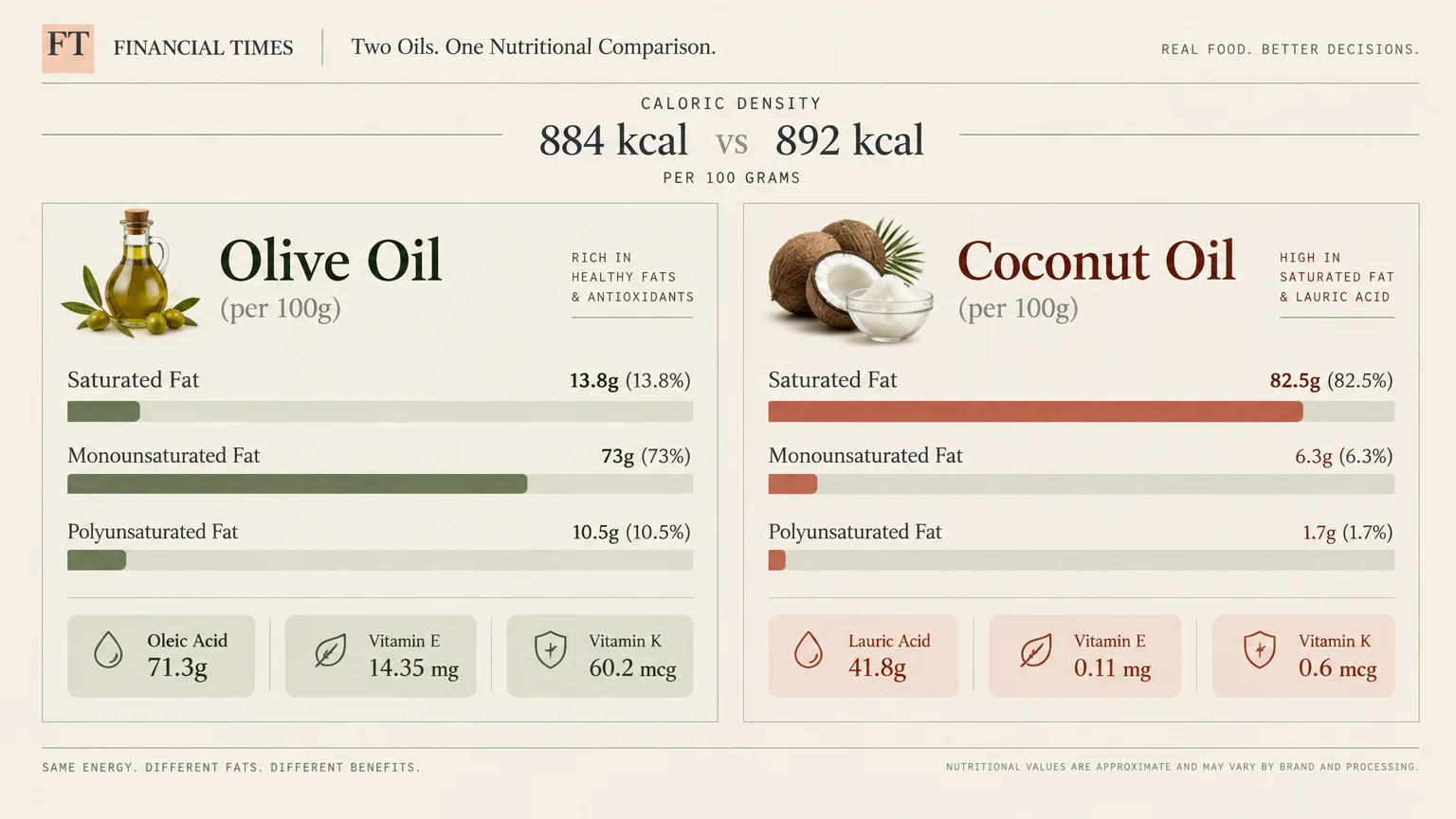
Both olive oil and coconut oil provide substantial energy density in small culinary servings. According to data from USDA FoodData Central, both cooking oils share nearly identical caloric profiles.
One tablespoon of olive oil provides 119 calories and 13.5 grams of total fat. In comparison, one tablespoon of coconut oil yields 121 calories and 13.5 grams of total fat.
Per 100 grams, olive oil supplies 884 calories, while coconut oil delivers 892 calories. Their profound physiological differences emerge not from gross calories, but from the distinct biochemical structures of their fatty acids.
Coconut oil consists of approximately 82.5 percent saturated fat, translating to 82.5 grams per 100 grams or 11.2 grams in a single tablespoon. This structural composition makes it one of the most saturated lipids in the human food supply.
In striking contrast, olive oil contains only about 13.8 percent saturated fat, which equals 13.8 grams per 100 grams or 1.9 grams per tablespoon. This dramatic disparity dictates how your liver processes each fat.
Olive oil excels by providing heart-protective monounsaturated fat at 73 percent, delivering 73 grams per 100 grams or roughly 9.9 grams per tablespoon. It also contributes 10.5 percent polyunsaturated fat to your daily intake.
Conversely, coconut oil offers minimal unsaturated fats to support your blood vessels. It provides merely 6.3 percent monounsaturated fat and just 1.7 percent polyunsaturated fat per serving.
The primary fatty acid in olive oil is oleic acid, a monounsaturated fat accounting for 71.3 grams per 100 grams. Oleic acid plays an established role in maintaining flexible, healthy blood vessel walls.
Coconut oil relies primarily on lauric acid, a 12-carbon saturated fatty acid that represents 41.8 grams per 100 grams. Caprylic and capric acids account for another 12.2 grams per 100 grams combined.
Olive oil also supplies beneficial fat-soluble micronutrients that shield cardiovascular tissues from oxidation. It provides 14.35 milligrams of Vitamin E per 100 grams, which equals 1.94 milligrams per tablespoon.
Furthermore, olive oil delivers 60.2 micrograms of Vitamin K per 100 grams. Coconut oil contains only trace quantities of these micronutrients, offering 0.11 milligrams of Vitamin E and 0.6 micrograms of Vitamin K.
Biological Mechanisms: How Dietary Fats Shape Your Arteries
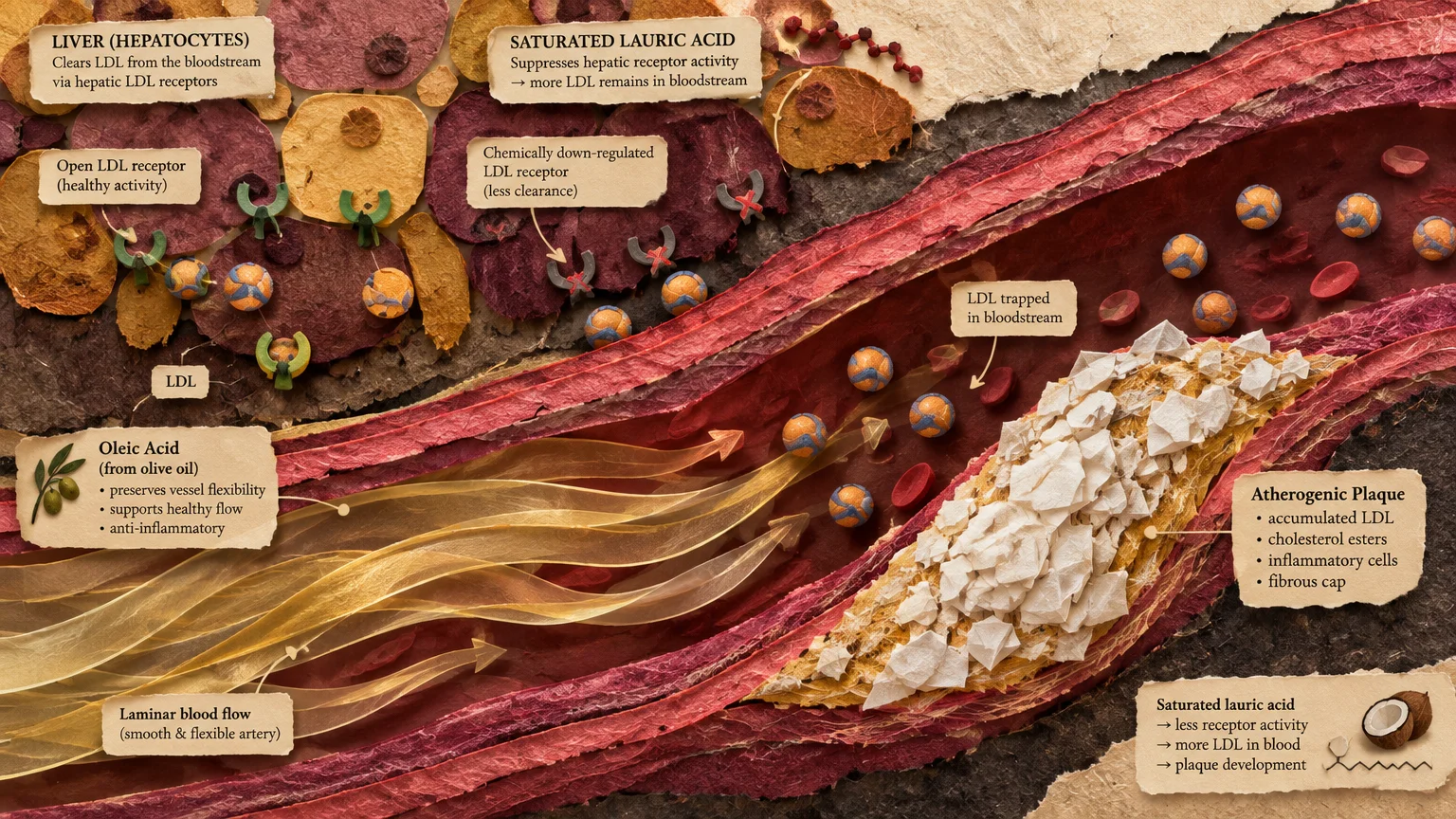
When you consume dietary fats, your liver repackages them into lipoproteins that circulate through your bloodstream. The specific fatty acids you ingest determine how efficiently your liver clears these circulating particles.
Saturated fatty acids suppress low-density lipoprotein receptor activity on hepatic cells. When receptor activity slows, low-density lipoprotein cholesterol particles linger in your bloodstream, raising the risk of arterial plaque accumulation.
Lauric acid strongly triggers this hepatic response, raising low-density lipoprotein levels despite marketing claims framing it as benign. While it also elevates high-density lipoprotein cholesterol, raising both does not neutralize the underlying vascular hazard.
Cardiovascular specialists evaluate overall cardiovascular risk through atherogenic particle count rather than isolated high-density lipoprotein metrics. Elevating total low-density lipoprotein particles consistently accelerates the progression of coronary atherosclerosis.
Monounsaturated fats like oleic acid perform the opposite physiological duty in your body. They enhance cellular membrane fluidity and stimulate hepatic receptors to clear harmful cholesterol particles from your circulation.
By substituting saturated fats with monounsaturated oils, you actively decrease the concentration of circulating apolipoprotein B particles. This physiological shift protects the delicate endothelium lining your coronary arteries.
The U.S. Food and Drug Administration recognizes this distinct arterial benefit through formal qualified health claims. Evidence suggests consuming about 1.5 tablespoons or 20 grams daily of high-oleic oils reduces coronary heart disease risk.
To achieve this benefit, you must use these oils to replace saturated fats without increasing your overall daily caloric intake. This clinical qualification underscores that total dietary balance remains essential for heart defense.
Deconstructing the Medium-Chain Triglyceride Myth
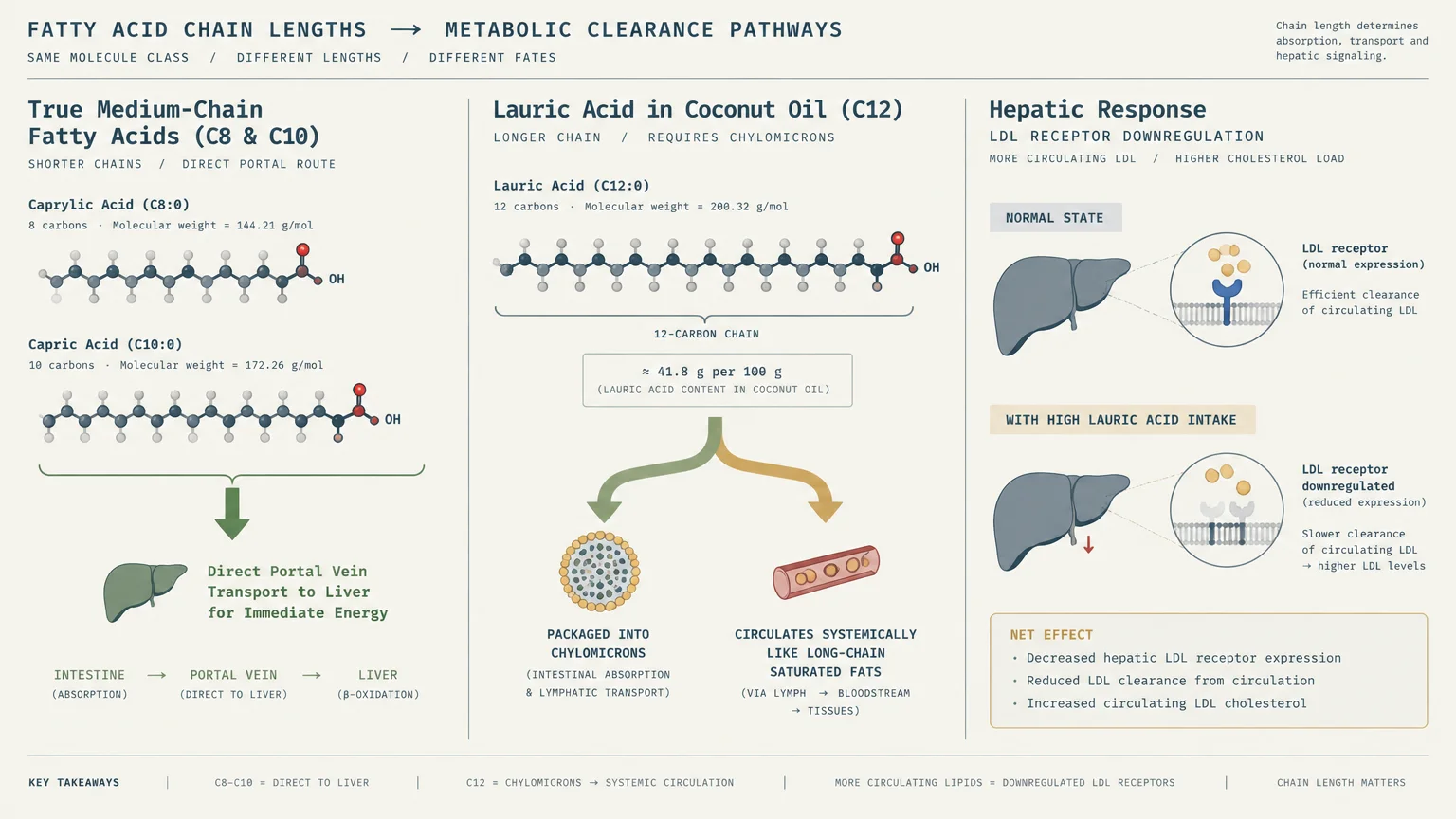
Much of the modern enthusiasm for coconut oil stems from laboratory studies on purified medium-chain triglycerides. Wellness advocates frequently cite research on pure caprylic and capric acids to promote commercial coconut oil jars.
Pure medium-chain triglycerides travel directly to your liver through the portal vein for rapid energy conversion. Because the liver burns them promptly, they behave differently than conventional long-chain saturated fats.
However, commercial coconut oil does not behave like laboratory-formulated medium-chain triglyceride oil. Shorter-chain caprylic and capric acids constitute only about 12.2 grams per 100 grams of standard coconut oil.
The predominant component, lauric acid, contains 12 carbon atoms and behaves physiologically like a long-chain fatty acid. Your digestive system packages lauric acid into chylomicrons that enter lymphatic circulation before reaching the liver.
Because your body processes lauric acid through standard long-chain pathways, it promotes hepatic cholesterol synthesis. Conflating whole coconut oil with pure medical medium-chain triglycerides creates a misleading impression of cardiovascular safety.
When you evaluate the real chemical composition of coconut oil, its potential to clog arteries becomes obvious. Relying on it as an everyday functional health food contradicts robust metabolic data.
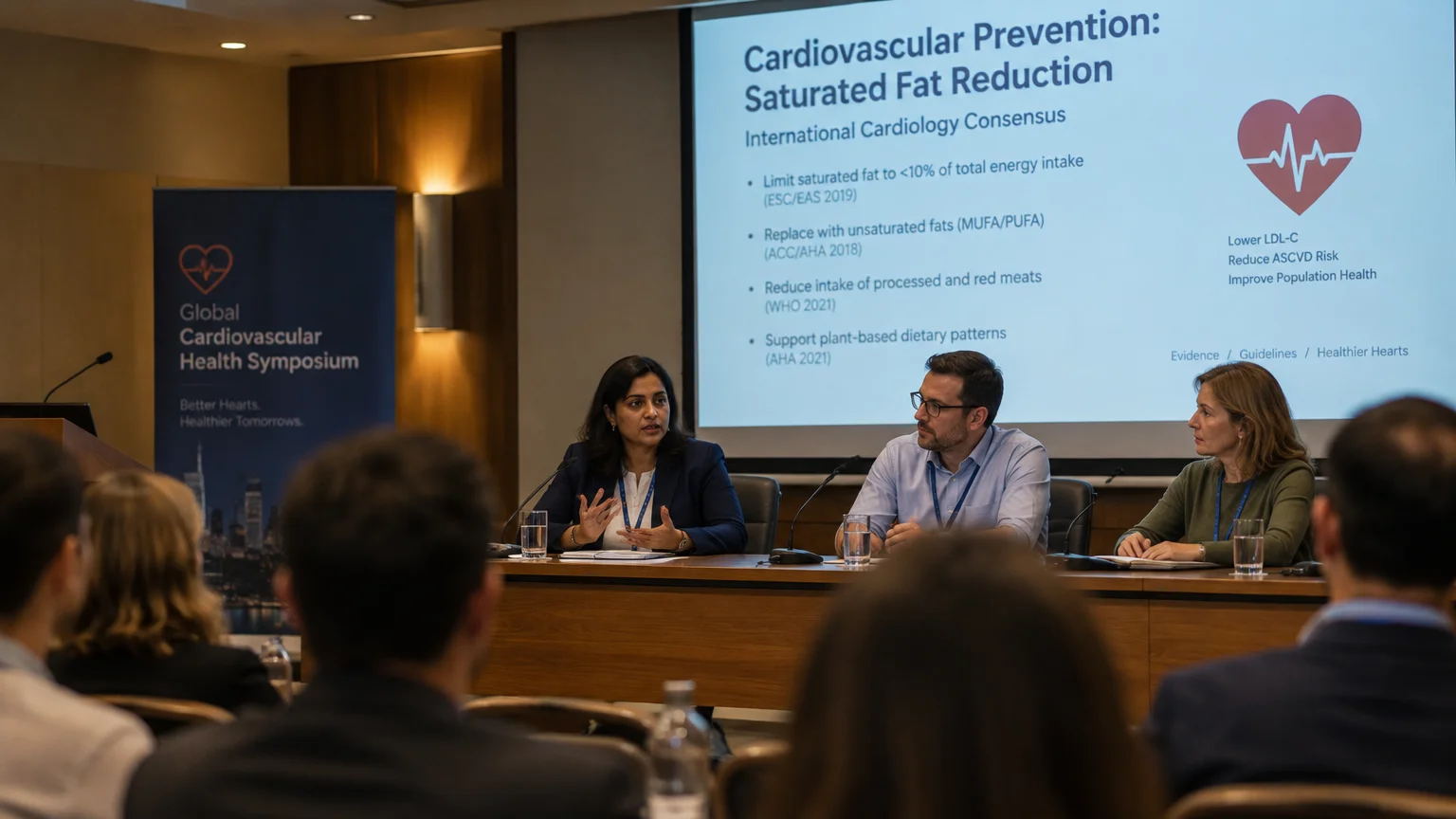
Clinical Consensus and Global Dietary Guidelines
Major global health bodies maintain clear, consistent dietary guidance regarding tropical oils and heart disease. These institutions regularly review human clinical trials to establish safe upper limits for saturated fat intake.
The American Heart Association recommends limiting saturated fat intake to less than 6 percent of total daily calories. For a standard 2,000-calorie daily diet, this allowance equals roughly 13 grams of saturated fat.
A single tablespoon of coconut oil supplies 11.2 grams of saturated fat. Consuming just one tablespoon therefore consumes nearly your entire daily allowance under these strict cardiovascular guidelines.
In contrast, a tablespoon of olive oil provides just 1.9 grams of saturated fat, leaving ample room for other nutrient-dense whole foods. This margin makes olive oil infinitely easier to integrate into a heart-conscious lifestyle.
In its April 2026 dietary guidance update, the American Heart Association reaffirmed the necessity of replacing tropical fats with nontropical plant oils. Clinical trials demonstrate that substituting coconut oil with olive or canola oil lowers dangerous cholesterol.
Both the World Health Organization and the Dietary Guidelines for Americans advise the public to limit saturated fats to less than 10 percent of daily calories. That ceiling equals roughly 20 grams per day on a 2,000-calorie diet.
Global health agencies consistently emphasize that replacing saturated fats with polyunsaturated and monounsaturated plant oils reduces cardiovascular events. The consensus remains firm across independent scientific panels worldwide.
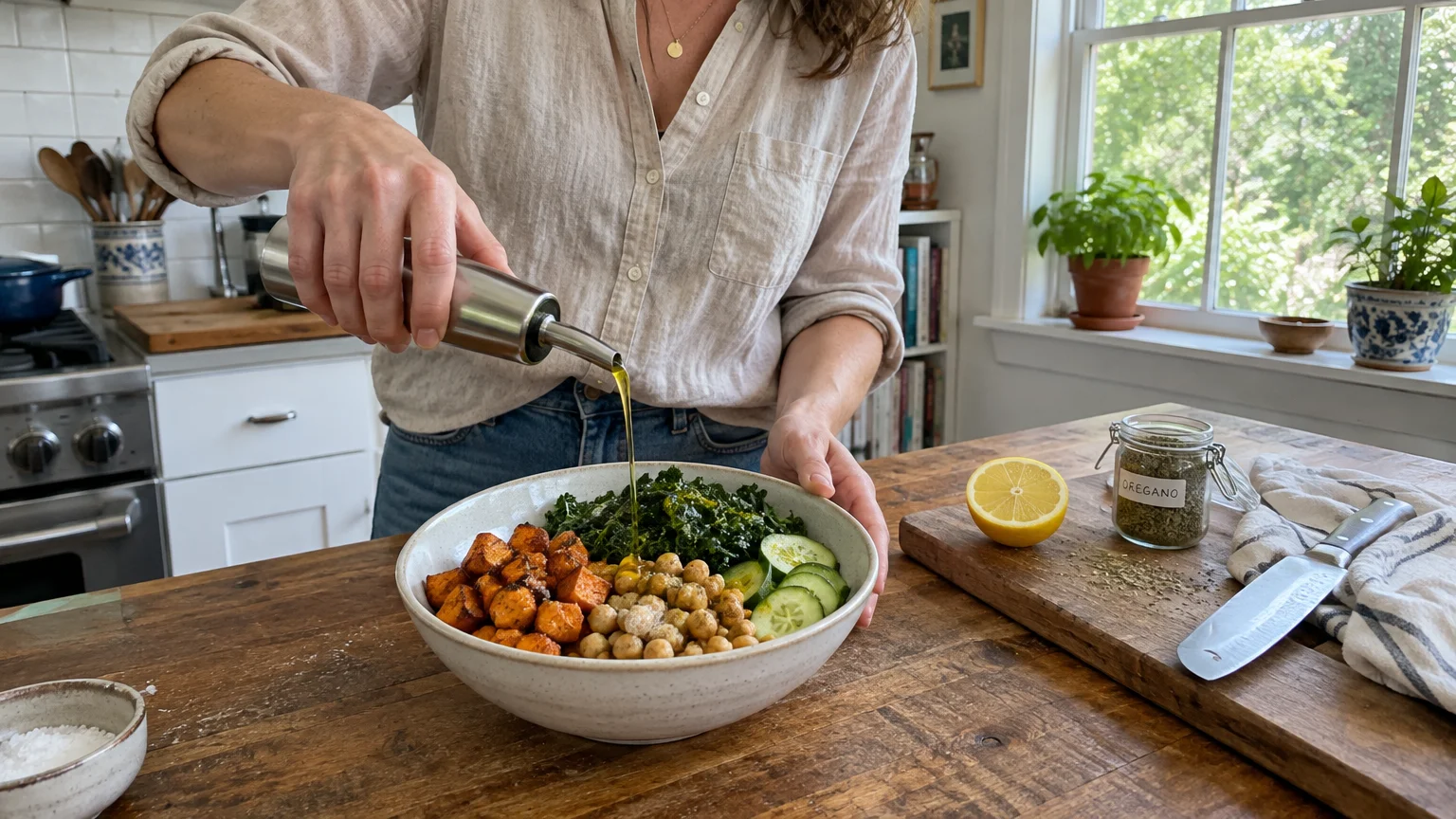
Strategy Pillar 1: Nutrition and Smart Culinary Substitutions
Transforming your culinary routine requires practical, sustainable adjustments rather than abrupt deprivations. You can safeguard your vascular system by making deliberate ingredient swaps during everyday food preparation.
Sautéing and High-Heat Cooking Realities
Use extra virgin olive oil as your default cooking fat for sautéing vegetables, browning proteins, and roasting seasonal produce. Its high concentration of oleic acid provides natural resistance against oxidative heat degradation.
Contrary to persistent kitchen myths, quality extra virgin olive oil remains exceptionally stable under typical home cooking temperatures. Its abundant polyphenol antioxidants protect its monounsaturated fats from breaking down during normal stove-top heating.
Coat vegetables such as broccoli, carrots, and sweet potatoes with olive oil and aromatic herbs before roasting. This method enhances fat-soluble nutrient absorption without loading your circulation with atherogenic saturated fats.
Keep your cooking heat at medium to medium-high settings to preserve delicate flavors and beneficial micronutrients. If a pan begins smoking excessively, lower the heat immediately to avoid oil degradation.
Flavor Balancing and Cold Dressings
Cold applications showcase the rich flavor profiles and delicate micronutrients found in extra virgin olive oil. Create simple dressings by combining olive oil with fresh lemon juice, Dijon mustard, and crushed garlic.
Drizzle cold olive oil over cooked grain bowls, warm soups, or fresh heirloom tomatoes just before serving. This habit preserves delicate polyphenols and guarantees an easy boost of monounsaturated fatty acids.
Avoid using coconut oil in chilled vinaigrettes because its high saturated fat content solidifies quickly at cool temperatures. Olive oil stays silky, providing effortless distribution across fresh leafy salads.
Experiment with infused olive oils containing rosemary, basil, or chili peppers to elevate meal satisfaction without adding sodium. Enhanced culinary satisfaction helps you adhere to heart-healthy eating patterns permanently.
Baking Adjustments and Textured Swaps
Many baking recipes rely on solid fats like coconut oil or butter to achieve desirable crumb textures. You can successfully substitute extra virgin or regular olive oil in many rustic bread, cake, and muffin recipes.
When baking, reduce the fat volume by roughly twenty percent when substituting olive oil for solid fats. This simple mathematical adjustment maintains optimal moisture without creating greasy final baked goods.
For sweet dishes where you desire tropical flavor notes, use unsweetened shredded coconut or coconut water instead of pure fat. These alternatives provide aromatic appeal alongside beneficial dietary fiber or electrolytes.
Applesauce, mashed bananas, and pureed avocados also serve as effective baking substitutes that reduce total saturated fat content. These creative kitchen choices protect your arteries while preserving tenderness and taste.
Shopping Strategies for Budget and Quality
Nutritional health should never depend on prohibitive financial expenditures or rare gourmet pantry items. High-quality extra virgin olive oil is readily accessible in standard supermarkets, discount stores, and community grocery co-ops.
Purchase olive oil packaged in dark glass bottles or tin cans to protect fragile fatty acids from light damage. Store your containers away from heat sources to ensure the oil retains its fresh therapeutic qualities.
Check bottle labels for harvest dates and reputable third-party certification seals to confirm freshness and authenticity. Fresher olive oils contain higher concentrations of cardiovascularly protective polyphenols.
If budget constraints limit your organic purchases, standard refined olive oil still provides abundant oleic acid. You still reap substantial monounsaturated fat benefits compared to purchasing expensive jars of virgin coconut oil.

Strategy Pillar 2: Physical Movement to Enhance Lipid Metabolism
Dietary choices operate synergistically with physical activity to dictate your overall cardiovascular prognosis. Consistent movement alters how your skeletal muscles and liver interact with circulating fatty acids.
Aerobic Exercise for Vascular Endothelium
Engaging in regular aerobic movement stimulates endothelial nitric oxide synthase, the enzyme responsible for keeping your blood vessels open and pliable. Brisk walking, swimming, and cycling all stimulate this essential vascular mechanism.
The Centers for Disease Control and Prevention recommends regular moderate physical activity to lower cardiovascular risk. Aerobic exercise accelerates the clearance of circulating triglycerides and enhances high-density lipoprotein functionality.
When you combine a monounsaturated-rich diet with daily cardio, your vascular walls resist inflammatory remodeling far more effectively. Aim for consistent daily movement rather than sporadic bursts of exhausting exercise.
Incorporate thirty minutes of brisk walking into your daily routine to improve postprandial fat clearance. Moving after meals prevents prolonged circulation of inflammatory lipids through your blood vessels.
Resistance Training for Metabolic Sinks
Strength training expands your skeletal muscle mass, creating an active metabolic sink for circulating glucose and fatty acids. Lifting weights or performing bodyweight exercises improves whole-body insulin sensitivity.
Enhanced insulin sensitivity helps regulate liver fat synthesis and prevents the overproduction of dangerous very-low-density lipoproteins. Schedule two to three resistance sessions each week to reinforce your dietary improvements.
Focus on compound exercises like squats, lunges, and overhead presses to recruit large muscle groups. This comprehensive stimulus ensures your body utilizes dietary fats efficiently for muscular repair rather than arterial storage.
Pairing progressive resistance exercise with an unsaturated plant-fat diet optimizes muscular recovery and limits systemic arterial inflammation. Strong muscles serve as an indispensable metabolic engine for lifelong cardiovascular health.
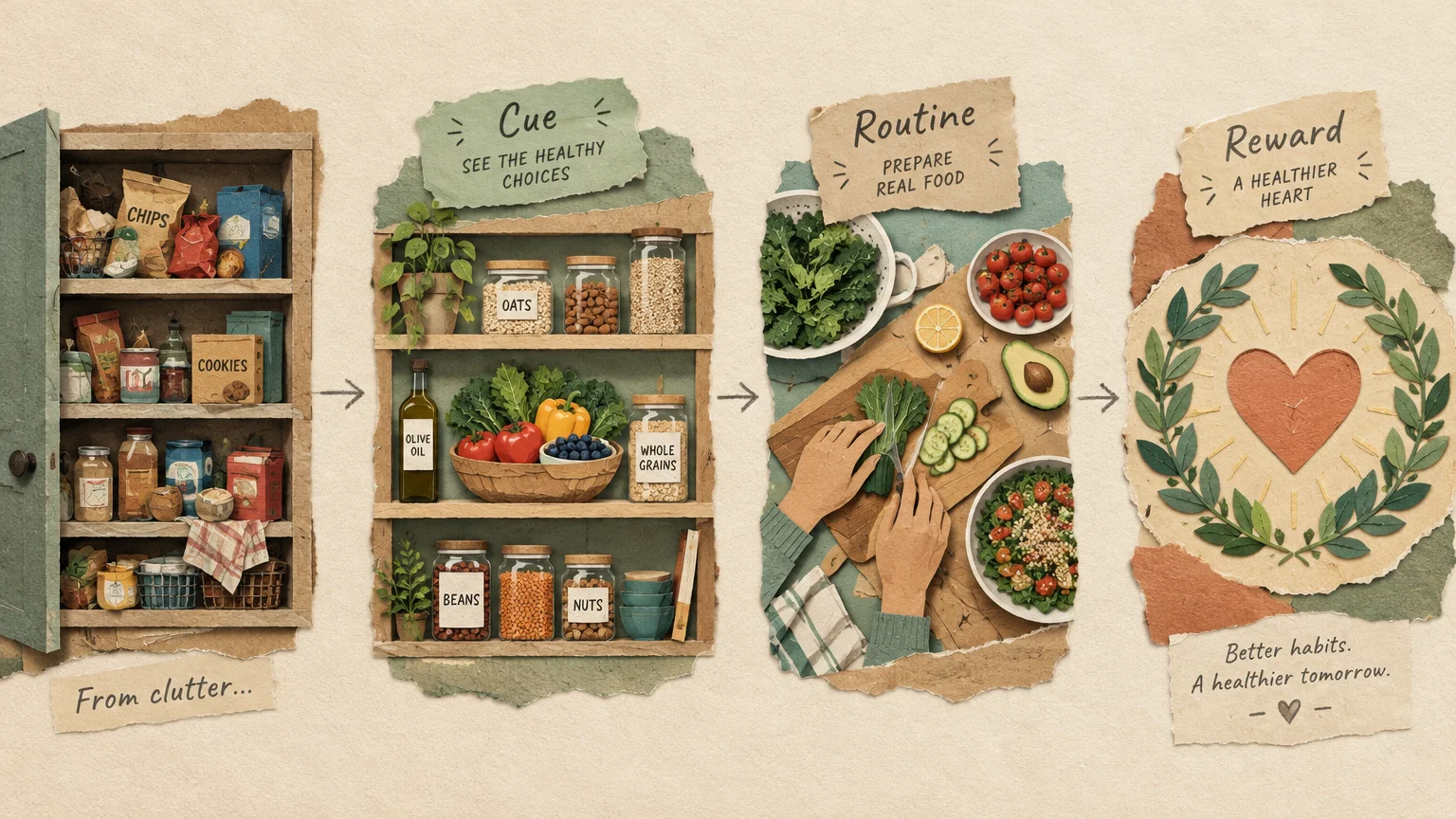
Strategy Pillar 3: Mindset, Habit Formation, and Social Determinants
Sustaining heart-healthy eating habits requires shedding wellness dogmas that treat specific fats as magical cure-alls. Marketing campaigns often leverage exotic origins and romantic storytelling to sell tropical fats at inflated prices.
Dismantling Superfood Mythology
Cultivate a discerning mindset when encountering sensationalized claims about superfood cooking oils on social media. Health trends come and go, but the metabolic reality of saturated fat remains unchanged by popular opinion.
Recognize that foods exist along a spectrum of cardiovascular utility rather than pure moral categories. Olive oil consistently occupies the protective end of that spectrum across decades of robust clinical research.
Reframing cooking fats as long-term investments in vascular longevity helps you resist fleeting nutrition fads. Choose products supported by large-scale randomized controlled trials rather than celebrity testimonials.
Critical evaluation of health marketing shields both your arterial health and your personal financial wellbeing. Sustainable health relies on consistent physiological principles rather than packaged miracles.
Cultural Inclusivity in Heart Health
Cultural traditions frequently incorporate tropical oils into cherished heritage recipes across South Asia, the Caribbean, and Southeast Asia. Preserving cultural heritage is essential for psychological wellbeing and social connection.
You do not need to abandon cultural culinary identity to protect your cardiovascular health. Simply reserve high-saturated tropical oils for special cultural celebrations rather than everyday home cooking.
For standard daily meals, prepare traditional dishes using olive oil or other high-monounsaturated nontropical plant oils. This respectful fusion honors cultural flavors while defending your arteries against unnecessary saturated fat burdens.
Engage your family in discussions about ingredient adaptations that support generational longevity. Small culinary modifications allow treasured cultural traditions to flourish alongside vibrant heart health.
Environmental Design in the Modern Kitchen
Your physical environment profoundly shapes your daily dietary decisions without requiring constant conscious willpower. By organizing your kitchen thoughtfully, you make heart-healthy choices effortless.
Place your olive oil bottle directly next to your cooking stove where your hand naturally reaches during meal preparation. This simple positioning ensures you default to monounsaturated fat every time you heat a pan.
Store coconut oil in a high cupboard or behind other pantry staples where it requires deliberate effort to retrieve. Creating friction around high-saturated fats reduces their casual, mindless use in everyday recipes.
Stock your refrigerator with pre-chopped vegetables and heart-healthy dressings made with olive oil. Easy accessibility ensures you choose nutrient-dense whole foods over processed, saturated-fat-laden convenience snacks.

Strategy Pillar 4: Medical Partnership and Advanced Biomarkers
Modifying your dietary fat intake requires clinical monitoring to confirm that your cardiovascular biomarkers move in favorable directions. Every human body exhibits unique genetic sensitivities to dietary saturated fats.
Working with Registered Dietitians and Physicians
Consult a licensed clinician or credentialed practitioner through the Academy of Nutrition and Dietetics to tailor your daily fat intake. Professional guidance ensures your dietary changes align with your personal health history.
A registered dietitian can evaluate your entire macronutrient balance to guarantee adequate caloric intake without vascular risks. Personalized care becomes particularly crucial if you manage familial hypercholesterolemia or underlying diabetes.
Share an accurate food journal with your medical team during routine preventive checkups. Transparent conversations about your cooking oils provide clinicians with actionable data to refine your treatment plan.
Collaborative medical relationships empower you to make informed, evidence-based decisions rather than navigating dietary confusion alone. Your healthcare team serves as your partner in establishing sustainable longevity habits.
Beyond the Standard Lipid Panel
Standard lipid panels measure total cholesterol, triglycerides, high-density lipoproteins, and calculated low-density lipoproteins. While valuable, these basic numbers do not reveal the entire scope of your cardiovascular risk.
Request an apolipoprotein B test to measure the exact number of atherogenic particles travelling through your bloodstream. Saturated fats like those in coconut oil significantly raise apolipoprotein B concentrations in susceptible individuals.
Additionally, tracking high-sensitivity C-reactive protein provides valuable insight into systemic arterial inflammation. Replacing saturated fats with olive oil regularly produces noticeable reductions in these inflammatory markers over time.
Ask your doctor about testing lipoprotein(a), an inherited independent risk factor for premature coronary artery disease. Understanding your full genetic profile clarifies how strictly you must monitor saturated fat sources like coconut oil.
Interpreting Laboratory Follow-Ups
Schedule repeat blood testing three to six months after revising your primary cooking oils. Objective laboratory data will validate your dietary choices and keep you motivated on your longevity journey.
If your low-density lipoprotein cholesterol remains elevated despite eliminating saturated cooking fats, your physician can investigate other contributors. Comprehensive care examines genetics, sleep quality, stress levels, and total dietary fiber alongside cooking oils.
Celebrate measurable reductions in atherogenic particles as tangible milestones toward long-term arterial vitality. Data-driven adjustments provide clarity, confidence, and peace of mind.
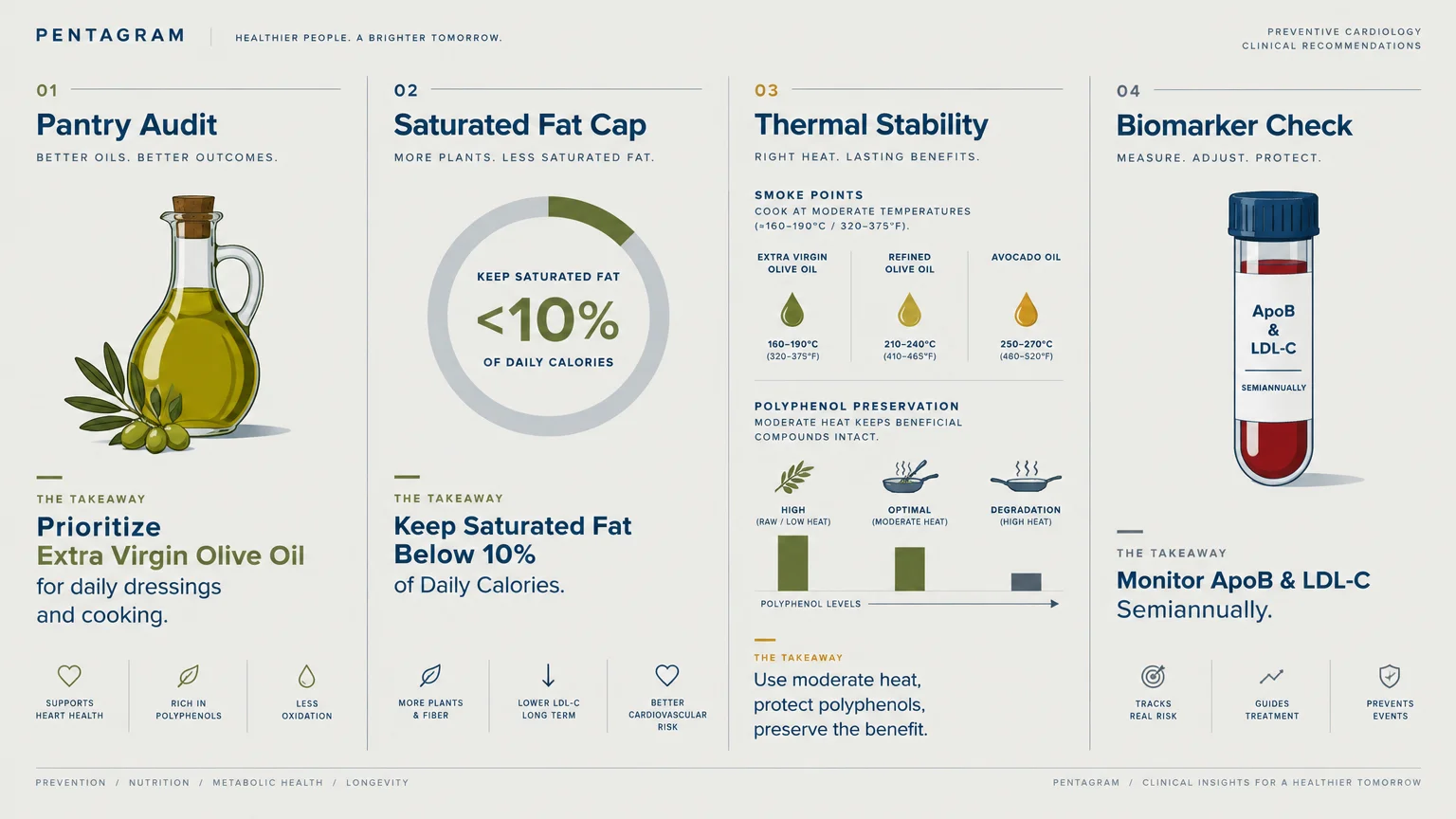
Clinical Voices: Practical Observations from Heart Specialists
Physicians and dietitians frequently encounter patients whose cholesterol markers shifted dramatically after adopting viral fat trends. Their clinical experiences highlight the tangible consequences of everyday cooking choices.
Cardiologists often recount seeing sudden surges in low-density lipoprotein levels when patients replace vegetable oils with coconut oil. These clinicians observe that eliminating tropical fats typically returns lipid parameters to baseline within months.
Preventive cardiologists emphasize that vascular disease develops silently across decades of high circulating atherogenic particles. Preventing arterial injury early through monounsaturated fats proves far more effective than treating advanced heart disease later.
Outpatient dietitians share that clients often fear cooking with olive oil due to misconceptions about smoke points. Once educators clarify that olive oil handles domestic heat safely, patients make the transition with confidence.
One clinical patient recently shared her experience after replacing butter and coconut oil with extra virgin olive oil. Her low-density lipoprotein cholesterol dropped thirty points within four months without requiring pharmaceutical intervention.
These real-world clinical stories demonstrate that simple dietary substitutions produce measurable physiological rewards. You hold immense power to reshape your vascular trajectory right at your kitchen stove.
Frequently Asked Questions About Cooking Oils
Here are direct answers to four common questions about choosing the right cooking oils for long-term cardiovascular health.
Is coconut oil healthy because it contains medium-chain triglycerides?
Commercial coconut oil contains primarily lauric acid, which behaves like a long-chain saturated fat rather than a true medium-chain triglyceride. True medium-chain triglycerides comprise only a small percentage of store-bought coconut oil.
Because lauric acid elevates atherogenic low-density lipoprotein cholesterol, commercial coconut oil does not offer the metabolic advantages of specialized clinical formulations. Relying on it as a health food remains unsupported by cardiovascular trial data.
Can you safely cook with extra virgin olive oil at high temperatures?
Yes, you can safely cook with extra virgin olive oil during everyday pan-frying, roasting, and sautéing. Its high monounsaturated fat content and rich concentration of antioxidant polyphenols grant it exceptional resistance to thermal oxidation.
Most domestic home cooking occurs well below the temperature at which extra virgin olive oil degrades. You can confidently prepare family meals with olive oil without generating harmful chemical breakdown products.
Should you completely eliminate coconut oil from your pantry?
You do not need to eliminate coconut oil entirely if you enjoy its distinctive tropical flavor in specific cultural recipes. The key to cardiovascular longevity lies in keeping your overall saturated fat intake low.
Treat coconut oil as an occasional indulgence or specialized flavor accent rather than your daily cooking standard. For daily culinary needs, let olive oil serve as your trusted cardiovascular foundation.
How quickly can switching to olive oil improve your cholesterol levels?
Most individuals observe favorable shifts in circulating lipid panels within six to twelve weeks of replacing saturated fats with olive oil. Your liver responds quickly when you relieve it from processing concentrated saturated fatty acids.
However, individual metabolic responses vary based on genetics, baseline health status, and concurrent physical activity levels. Always consult your healthcare provider to schedule follow-up blood work and assess your progress accurately.
An Accessible First Step Toward Stronger Heart Health
Protecting your cardiovascular system does not require completely overhauling your lifestyle overnight. Sustainable progress begins with a single, deliberate action that aligns your daily environment with your long-term health goals.
Start today by conducting a simple pantry audit across your kitchen cupboards. Move your extra virgin olive oil to the front counter next to your cooking stove where it remains easily accessible.
If you currently keep a jar of coconut oil by the range, shift it to a higher, less accessible cupboard shelf. This environmental nudge ensures that you automatically reach for heart-protective monounsaturated fat during busy meal preparation.
Take a moment to reflect on your long-term vision for physical vitality, stamina, and cardiovascular wellness. How can choosing olive oil today help you show up more energetically for the people and passions you cherish most?








Leave a Reply