

Your daily multivitamin or morning sunshine routine may be doing far more than building strong bones. Groundbreaking clinical research reveals that targeted vitamin D supplementation can actively slow cellular aging at the chromosomal level.
Recent trials show that maintaining optimal levels preserves the protective caps on your DNA, known as telomeres. In practical terms, this simple micronutrient habit may turn back your biological clock by roughly three full years.
Understanding how this common nutrient interacts with your cellular machinery empowers you to make smarter lifestyle choices today. Here is what the latest science uncovers about your cellular lifespan.

A Daily Habit with Profound Longevity Implications
Most people view vitamin D as a basic bone health supplement or a simple immune booster during cold winter months. You likely take your daily softgel with breakfast without considering your internal chromosomes.
Yet emerging science confirms that this compound behaves more like a master steroid hormone than an ordinary dietary vitamin. Cellular receptors for vitamin D exist across virtually every tissue and vital organ system in your body.
When you consume vitamin D, specialized enzymes convert it into calcitriol, a potent biological signaling molecule. This hormone directly modulates hundreds of genes responsible for systemic inflammation, tissue repair, and ongoing immune surveillance.
Daily micro-habits—such as taking a specific micronutrient each morning—ripple all the way down to your genomic architecture. Your everyday routines either accelerate natural cellular turnover or defend the fragile structures that preserve youth.
The Landmark Trial: Halting the Cellular Aging Process
The conversation surrounding micronutrients and human lifespan shifted dramatically with research published online in May 2025 in The American Journal of Clinical Nutrition. The formal print edition followed in July 2025.
The investigation was co-led by first author Dr. Haidong Zhu from the Medical College of Georgia at Augusta University. Principal investigator Dr. JoAnn Manson from Harvard Medical School and Brigham and Women’s Hospital directed the broader initiative.
Both scientists conducted a detailed sub-study of the landmark VITAL trial, which originally tracked nearly 26,000 adults across the United States. That broad population included men aged 50 and older alongside women aged 55 and older.
Within that massive cohort, researchers isolated and examined the white blood cells of more than 900 to 1,054 participants over four years. Scientists tracked subtle shifts in genomic integrity to assess biological age.
Participants assigned to the active intervention group took 2,000 IU, or 50 micrograms, of daily vitamin D3. Meanwhile, the control group received an identical daily placebo to eliminate psychological bias over the multi-year trial.
Examining the Data Behind Chromosome Protection
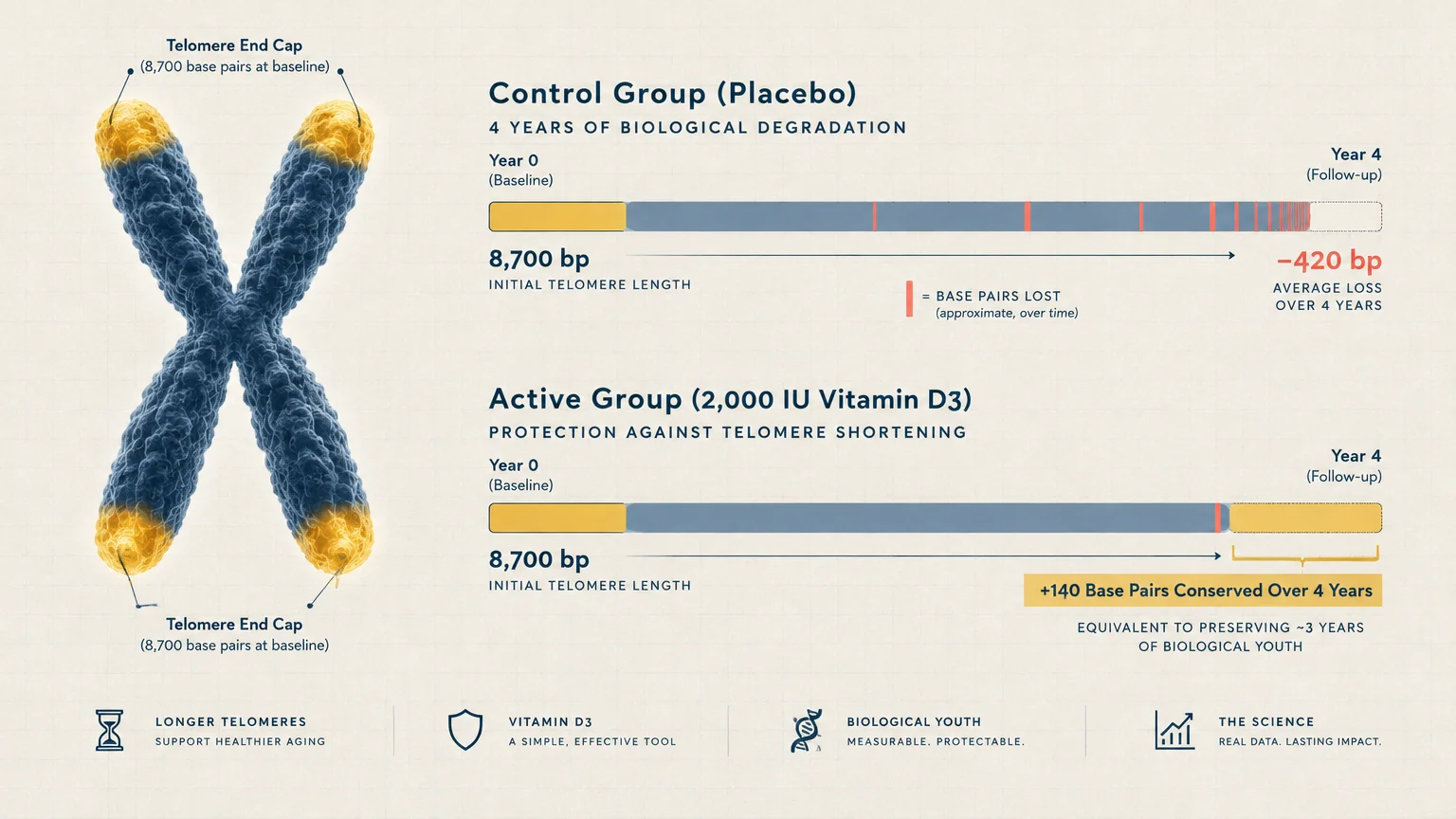
Participants began the four-year clinical trial with an average leukocyte telomere length of 8,700 base pairs. Telomeres naturally shrink whenever human cells duplicate, functioning like an internal biological countdown clock.
At the conclusion of the four-year evaluation, the final data surprised the scientific community. The active group taking vitamin D3 lost 140 fewer base pairs of DNA compared to the control group.
This biological divergence represents far more than a minor laboratory difference. By conserving those 140 base pairs, participants shielded their vital genetic code against ongoing metabolic wear and tear.
Researchers determined that the vitamin D group experienced only the telomere shortening expected from roughly one single year of aging. Over a four-year clinical span, that biological preservation was remarkable.
In practical terms, the daily supplement prevented the equivalent of roughly three years of biological aging. You can review broader longevity principles and nutritional science through the Harvard T.H. Chan School of Public Health.
The Surprising Contrast with Omega-3 Fatty Acids
The VITAL trial did not assess vitamin D in complete isolation; it also tested another celebrated longevity supplement. Researchers administered one gram per day of marine omega-3 fatty acids to evaluate cardiovascular and genetic outcomes.
Many wellness enthusiasts consume fish oil and vitamin D together, assuming both nutrients exert identical anti-aging actions. However, the chromosome data revealed a stark contrast between these two popular supplements.
Daily omega-3 supplementation demonstrated no significant effect on preserving leukocyte telomere length during the four-year study. While omega-3 fatty acids offer established cardiovascular support, they failed to halt chromosomal shortening.
This difference shows that distinct nutrients operate through unique biochemical mechanisms. Vitamin D holds a precise regulatory role within chromosomal maintenance that other anti-inflammatory compounds cannot match on their own.
Telomeres Explained: The Ticking Clocks Inside Your DNA
To grasp why these clinical findings matter for your daily routine, look closely at your chromosomal structure. Inside every cell nucleus, your DNA arranges itself into 23 distinct pairs of chromosomes.
Telomeres represent repetitive nucleotide sequences capping the vulnerable ends of those chromosomes. They function much like the protective plastic tips on the ends of everyday shoelaces.
These specialized caps prevent delicate DNA strands from fraying, fusing together, or triggering false damage alarms. Without intact telomeres, your cellular machinery misinterprets exposed chromosome tips as dangerous double-strand breaks.
Each time your cells divide to heal tissue or replace damaged white blood cells, telomeres progressively shorten. Once telomeres reach a critically truncated threshold, the cell permanently stops dividing and enters senescence.
Why Cellular Division Gradually Shortens Chromosomal Caps
Standard human replication enzymes cannot fully copy the extreme terminal ends of linear DNA strands. As a consequence, your cells shed a tiny fragment of repetitive genetic material during every division.
Chronic systemic inflammation and persistent oxidative stress drastically accelerate this natural degradation process. When metabolic stress runs high, free radicals damage fragile nucleotide bases, causing telomeres to wear down prematurely.
Vitamin D appears to suppress hyperactive inflammatory cascades, effectively creating a calmer internal environment for dividing cells. By dampening baseline oxidative stress, the nutrient preserves your finite reserves of chromosomal base pairs.
Sustaining telomere length keeps your cellular repair systems functional for a significantly longer period. Your immune cells replicate efficiently, and your cardiovascular tissues maintain their natural restorative capacity.
How Biological Aging Diverges from Chronological Age
Your chronological age simply measures the exact number of calendar years that have passed since your birth. Conversely, your biological age reflects the true physiological status and structural vitality of your internal cells.
Two people sharing identical chronological birthdays can display completely divergent biological ages. One individual may exhibit the stiff arteries and worn telomeres of advanced age, while the other retains youthful cellular elasticity.
Daily nutritional choices and consistent lifestyle habits dictate this physiological divergence. Biological aging remains remarkably dynamic, responding directly to the quality of fuel and environmental signals you provide.
Taking actionable steps to protect your DNA allows you to shape your personal aging rate. A long lifespan carries genuine value only when accompanied by an equally vibrant, high-functioning healthspan.
Expanding the Evidence: Landmark Findings from 2025 and 2026
The VITAL sub-study represents one pivotal piece in an expanding body of clinical longevity research. Subsequent large-scale investigations continue to illuminate how circulating vitamin D shapes human cellular vitality.
In February 2026, researchers published an exhaustive systematic review and meta-analysis comprising 21 clinical studies. This comprehensive analysis evaluated data from 185,191 human participants across multiple diverse demographics.
The 2026 meta-analysis confirmed a clear, positive association between circulating blood vitamin D levels and leukocyte telomere length. Higher circulating levels correlated consistently with longer, better-preserved chromosomal protective caps.
This positive association proved particularly pronounced among mature adults, women, and individuals presenting with baseline nutrient deficiencies. Those beginning with depleted cellular reserves experienced the greatest protective benefit from restored levels.
The 2026 Meta-Analysis and the Threshold Effect
The 2026 meta-analysis revealed a vital clinical nuance that must guide your personal supplementation strategy. Scientists identified a definitive biological plateau regarding telomere preservation.
Participants whose circulating blood serum levels already reached 30 ng/mL or higher gained no additional telomere benefits. Once cellular receptors reach adequate saturation, consuming higher doses offers no further genetic defense.
This evidence demonstrates that megadosing is neither necessary nor scientifically advantageous for slowing biological aging. Longevity optimization relies on eliminating hidden deficiencies and maintaining physiological balance, rather than forcing extreme biomarker elevations.
Checking your baseline status through routine blood work allows you to tailor your intake with precision. You avoid guesswork and ensure your daily intake aligns with established physiological thresholds.
Epigenetic Clocks and the DO-HEALTH Synergy
Further scientific validation arrived in February 2025 through an insightful analysis of the European DO-HEALTH trial. Investigators evaluated biological aging across 777 older adults using sophisticated epigenetic DNA methylation clocks.
Epigenetic clocks measure chemical tags attached to your DNA that indicate biological wear, chronic disease susceptibility, and mortality risk. They assess cellular functional health from a complementary perspective alongside physical telomere measurements.
The DO-HEALTH analysis revealed that combining 2,000 IU of daily vitamin D with omega-3s and structured exercise yielded additive anti-aging benefits. The three lifestyle habits worked together to slow epigenetic aging clocks.
While omega-3s alone did not halt telomere erosion during the VITAL trial, they actively enhanced broader epigenetic preservation alongside vitamin D. Multidimensional wellness habits create far stronger biological defenses than any isolated supplement.
Food-First Strategies and Synergistic Nutrient Pairing
Targeted supplements provide practical consistency, yet wholesome nutrition establishes the true cornerstone of lifelong vitality. Relying exclusively on pills overlooks the rich nutritional matrix that whole foods naturally provide.
You can discover comprehensive meal-planning resources and nutritional guidance through the Academy of Nutrition and Dietetics. Prioritizing diverse culinary sources ensures broad exposure to essential micronutrients and protective trace elements.
Wild-caught fatty fish remains one of the most potent natural sources of dietary vitamin D3. A standard fillet of wild sockeye salmon supplies abundant vitamin D alongside clean protein and bioactive minerals.
Canned sardines, mackerel, and wild trout deliver affordable, shelf-stable options that keep your pantry aligned with longevity goals. These oily fish varieties supply natural fats that facilitate proper intestinal absorption of fat-soluble vitamins.
Optimizing Absorption Through Healthy Dietary Fats
Because vitamin D is inherently fat-soluble, your digestive tract requires dietary lipids to absorb it efficiently. Swallowing a capsule with plain black coffee or fat-free juice wastes a meaningful portion of its biological potency.
Clinical trials confirm that consuming vitamin D alongside a lipid-containing meal increases bloodstream absorption by more than thirty percent. Digestive bile acids must emulsify the nutrient so intestinal membranes can absorb it.
Pair your morning supplement with a quarter of an avocado or a handful of raw walnuts. Adding a spoonful of extra virgin olive oil to a morning scramble provides an equally effective absorption vehicle.
Even plain, full-fat unsweetened Greek yogurt provides the necessary lipid matrix to maximize cellular uptake. Thoughtful dietary pairing ensures that every microgram of your daily supplement reaches your bloodstream effectively.
Key Whole Foods to Complement Your Daily Plan
Fortified dairy products and fortified plant milks can help bridge the gap between seasonal sunlight shortages and optimal requirements. Always check the nutritional panel to ensure the food contains vitamin D3 rather than less absorbable variants.
You can investigate detailed nutritional profiles through the federal FoodData Central database. Checking verified nutritional data eliminates confusion and sharpens your weekly grocery choices.
Toss canned sardines into a Mediterranean lunch bowl with leafy greens and kalamata olives for an immediate nutritional upgrade. You receive bioavailable calcium, marine fatty acids, and active vitamin D in a single convenient meal.
Sauté fresh mushrooms exposed to ultraviolet light alongside garlic and herbs for a savory, nutrient-dense dinner side dish. These whole-food additions diversify your micronutrient intake while reinforcing your baseline cellular defenses.

Actionable Daily Routines for Lifelong Vitality
Translating longevity research into enduring personal habits demands intentional routine design. Willpower fluctuates depending on daily stress, but automated behavioral loops run reliably day after day.
Anchor your supplementation to an automatic habit you already perform without conscious effort every morning. Habit stacking binds a new behavior to an established neural groove, eliminating the need for mental reminders.
If you brew a pot of coffee each morning, place your supplement bottle directly beside your coffee beans. As your water heats, your morning dose sits directly in your field of vision.
Avoid postponing your supplement routine until the late evening when mental exhaustion sets in. Establishing morning consistency ensures you never skip your cellular health habits amidst a hectic schedule.
Morning Architecture: Stacking Nutrients with Sunlight
Pair your morning supplement intake with ten to fifteen minutes of natural outdoor sunlight exposure. Morning photons hitting your retinas set your master circadian clock, sharpening focus during the day and promoting restorative nighttime sleep.
Direct daylight prompts localized nitric oxide release in peripheral blood vessels, encouraging arterial relaxation and healthy blood pressure levels. This vascular support operates in tandem with the systemic benefits of vitamin D.
Even when seasonal high-latitude winter skies lack sufficient UVB light for cutaneous synthesis, outdoor light stimulates vital neurotransmitters. Stepping outside grounds your mind and reinforces your daily proactive health habits.
Use these brief outdoor moments to sip water, breathe deeply through your nose, or stretch tight muscles. Combining natural light, proper hydration, and smart supplementation starts your day with biological momentum.
Mindful Movement Cues to Protect DNA Integrity
Nutritional habits deliver their greatest cellular returns when supported by structured physical exercise. The DO-HEALTH clinical trial demonstrated that physical movement acts as an essential catalyst for micronutrient longevity benefits.
Incorporate moderate resistance exercise into your weekly schedule at least two to three times. Lifting weights or performing bodyweight movements loads bones and muscles, signaling internal systems to direct calcium into skeletal architecture.
Review comprehensive exercise strategies and public health benchmarks through the Centers for Disease Control and Prevention. Combining structured strength sessions with daily brisk walking builds remarkable physical resilience.
Break up long stretches of desk work with three-minute movement snacks every hour. Engaging your muscles periodically keeps metabolic pathways active, controls blood sugar spikes, and dampens systemic inflammatory chemicals.
Safety Guidelines, Recommended Intakes, and Prudent Boundaries
More is not inherently better when taking fat-soluble vitamins and hormonal compounds. Understanding established clinical limits protects your health while allowing you to enjoy the cellular benefits of sufficiency.
The standard Recommended Dietary Allowance established by the National Academies is 600 IU daily for adults up to age 70. For adults aged 71 and older, the official baseline recommendation increases to 800 IU daily.
These standard intakes were formulated primarily to protect skeletal integrity and prevent diseases like rickets. However, longevity researchers often argue that higher intakes are necessary to optimize non-skeletal cellular pathways and telomere biology.
The established Tolerable Upper Intake Level for adults sits at 4,000 IU, or 100 micrograms, per day. Exceeding this upper threshold over long periods without medical monitoring creates unnecessary physiological risks.
Evaluating the Endocrine Society Recommendations
In June 2024, the Endocrine Society released updated clinical practice guidelines regarding vitamin D supplementation. Their expert panel recommended against routine screening and high-dose empiric supplementation above the standard allowance for healthy adults under 75.
Instead, the clinical panel focused higher empiric supplementation recommendations on specific sub-populations. They highlighted clear benefits for children aged 1 to 18, pregnant women, and individuals diagnosed with high-risk prediabetes.
The guidelines also endorsed daily supplementation for adults aged 75 and older to lower mortality risk. For healthy adults under 75, study authors stress that further clinical trials must confirm long-term outcomes before national guidelines shift.
Taking 2,000 IU daily—the exact dosage utilized in the VITAL telomere trial—remains safely below the 4,000 IU upper ceiling. This dose balances biological optimization with strict clinical safety parameters.
Understanding Tolerable Upper Limits and Toxicity Risks
Because vitamin D is fat-soluble, your body stores excess quantities in adipose tissue and the liver. Taking megadoses over extended periods without oversight can eventually produce hypercalcemia, an abnormally high blood calcium state.
Hypercalcemia can trigger nausea, kidney stones, vascular calcification, and dangerous cardiac arrhythmias. You should never consume high-dose clinical formulations containing 50,000 IU unless a healthcare professional specifically prescribes them for acute deficiency.
Review verified intake parameters through the National Institutes of Health Office of Dietary Supplements. Keeping informed safeguards your organs while you refine your daily longevity regimen.
Periodic blood tests measuring serum 25-hydroxyvitamin D confirm that your protocol remains within safe boundaries. Targeting a blood serum level between 30 and 50 ng/mL offers robust cellular protection without toxicity.

Building Your Personalized Longevity Support System
Maintaining positive lifestyle habits over decades requires an intentional environment that makes smart choices effortless. Designing your living and work spaces thoughtfully removes daily friction from the habits you wish to keep.
Keep your daily supplements visible on your kitchen counter rather than hidden away in a crowded drawer. Clear visual cues prompt immediate action without depleting your mental focus during busy mornings.
Share your longevity intentions with a friend or family member who values proactive well-being. Having a supportive accountability partner turns personal wellness goals into an engaging, shared lifestyle journey.
Digital Habit Trackers and Clinical Partnerships
Download a straightforward habit-tracking mobile application to record your daily nutrition, movement, and light exposure. Watching an unbroken daily streak build creates satisfying psychological momentum that keeps you consistent.
Discuss your supplementation routine with your primary care physician or registered dietitian during your annual checkup. A collaborative clinical partner can align your daily intake with your comprehensive metabolic blood work.
Request a 25-hydroxyvitamin D test during routine preventive blood draws to uncover your precise baseline number. Knowing whether your level sits at 18 ng/mL or 35 ng/mL eliminates guesswork entirely.
Your physician can also evaluate your serum calcium and kidney function markers to ensure complete metabolic safety. This objective partnership keeps your personal wellness strategy firmly anchored in medical evidence.
Finding Community Accountability in Healthy Living
Connect with people who value whole-food nutrition, regular physical movement, and healthy aging habits. Social environments exert an enormous subconscious influence over the health decisions you make every single day.
Join a local walking group, community fitness studio, or outdoor recreation club in your area. Exercising with peers strengthens cardiovascular fitness while reducing the harmful cellular effects of social isolation.
Research confirms that persistent loneliness accelerates biological aging and shortens chromosomal telomeres as aggressively as poor metabolic health. Nurturing authentic human relationships protects your cellular machinery from ongoing psychological stress.
Frequently Asked Questions About Vitamin D and Aging
How can I consistently manage this habit with a demanding schedule?
Busy schedules often derail healthy habits when mornings feel frantic and disorganized. Combat this friction by storing a backup supply of your supplement at your office desk or inside your travel bag.
If you leave home in a rush, you can easily take your daily dose alongside a wholesome lunch. Pairing the behavior with midday meals guarantees consistent execution regardless of morning disruptions.
Is optimizing cellular health through vitamin D expensive?
High-quality vitamin D3 remains one of the most cost-effective nutritional supplements available today. A comprehensive six-month supply of third-party verified softgels typically costs less than a single week of specialty coffee.
Look for affordable brands carrying independent verification stamps from USP or NSF to guarantee ingredient purity. You do not need expensive designer elixirs to achieve proven cellular longevity benefits.
How do I align these longevity habits with my entire household?
Introduce healthy habits to your family through positive shared experiences rather than rigid mandates. Cook flavorful dinners showcasing wild salmon, roasted vegetables, and extra virgin olive oil that everyone enjoys together.
Encourage family weekend walks or outdoor recreation that exposes everyone to natural daylight and active movement. These shared activities reinforce collective well-being while strengthening family connections.
How can I measure meaningful progress in my biological health?
You cannot physically feel your telomeres maintaining their length on a day-to-day sensory level. Tracking cellular progress requires pairing objective medical laboratory markers with subjective daily vitality assessments.
Monitor your blood work annually to ensure your 25-hydroxyvitamin D concentration remains comfortably between 30 and 50 ng/mL. Concurrently, observe your daily energy, recovery speed, and mental focus as practical indicators of health.
Your Seven-Day Longevity Experiment
Reclaiming control over your biological aging does not require an intimidating lifestyle overhaul. Enduring vitality emerges from small, strategic choices repeated consistently over months and years.
Commit to a simple seven-day experiment beginning tomorrow morning. Take 2,000 IU of high-quality vitamin D3 alongside a balanced breakfast containing healthy fats.
Combine that morning routine with ten minutes of outdoor daylight and brief, mindful breathing. Track how your focus, physical energy, and mood respond across the entire week.
Notice how small, disciplined investments in your health reshape your relationship with aging. Taking ownership of your cellular wellness today builds the physical foundation for a vibrant, resilient tomorrow.