
Major Medicare changes taking effect on January 1 give you powerful new tools to manage your health and lower your healthcare expenses. You can immediately take advantage of capped prescription drug prices and expanded preventative care benefits.
These federal updates establish a vital spending ceiling for medications, extend essential telehealth appointments, and introduce at-home chronic disease monitoring through wearable technology.
Reviewing your specific coverage options now allows you to secure optimal clinical benefits while protecting your household budget for the entire coming year.
Transformations in Medicare Part D Prescription Drug Coverage
Prescription drug coverage undergoes a fundamental restructuring designed to reduce financial strain on older adults. These adjustments provide clear caps on what you spend out of pocket each calendar year.
The New Out-of-Pocket Spending Limit
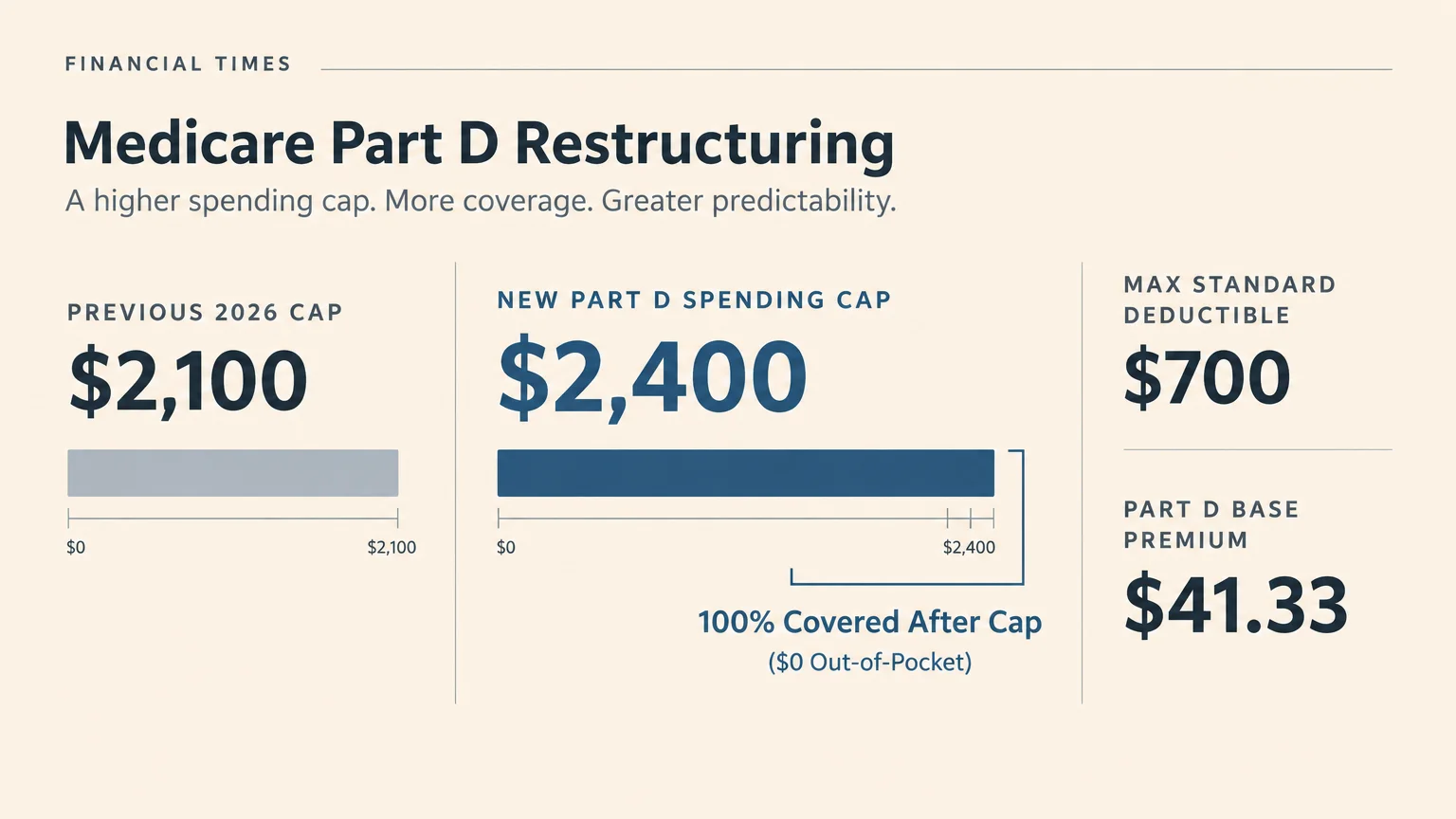
Beginning January 1, your annual out-of-pocket spending limit for covered Part D prescription drugs reaches $2,400. This threshold represents an increase from the $2,100 limit established in 2026.
Once your qualifying prescription payments reach $2,400, your plan covers 100 percent of your remaining formulary drug costs. You pay zero dollars out of pocket for covered medications for the rest of the calendar year.
This cap provides essential financial relief if you manage complex or chronic health conditions requiring expensive maintenance medications. It eliminates the unpredictability that previously forced many individuals to ration vital prescriptions.
Deductibles and Shifting Premium Dynamics
The maximum standard deductible that any Medicare Part D plan can charge increases to $700. Individual plan designs vary, meaning your specific plan may feature a lower deductible or waive it entirely for generic tiers.
Federal regulators set the 2027 Part D base beneficiary premium at $41.33, reflecting a modest six percent increase. The Centers for Medicare & Medicaid Services projects that average monthly premiums for standalone Part D plans will rise slightly to roughly $36.
A temporary federal premium stabilization program expires at the conclusion of 2026. Because this subsidy ends, standalone drug plan premiums and deductible structures will fluctuate more noticeably across different states and insurance carriers.
You must inspect your annual notice of change document closely to identify premium adjustments before the enrollment window closes. Comparing local plan formularies ensures you avoid unexpected premium spikes or alterations in medication tiers.








Leave a Reply