

Navigating your healthcare options directly shapes your physical vitality and long-term financial security throughout retirement. Selecting the right supplemental coverage ensures you can access essential medical treatments without facing catastrophic out-of-pocket expenses.
Many older adults mistakenly assume standard federal coverage pays for every single doctor visit and hospital stay. In reality, uncapped cost-sharing can force retirees to ration care or postpone necessary screenings.
Understanding how supplemental plans function empowers you to build a reliable and proactive wellness plan. Avoiding common enrollment traps protects both your physical wellbeing and your retirement nest egg.
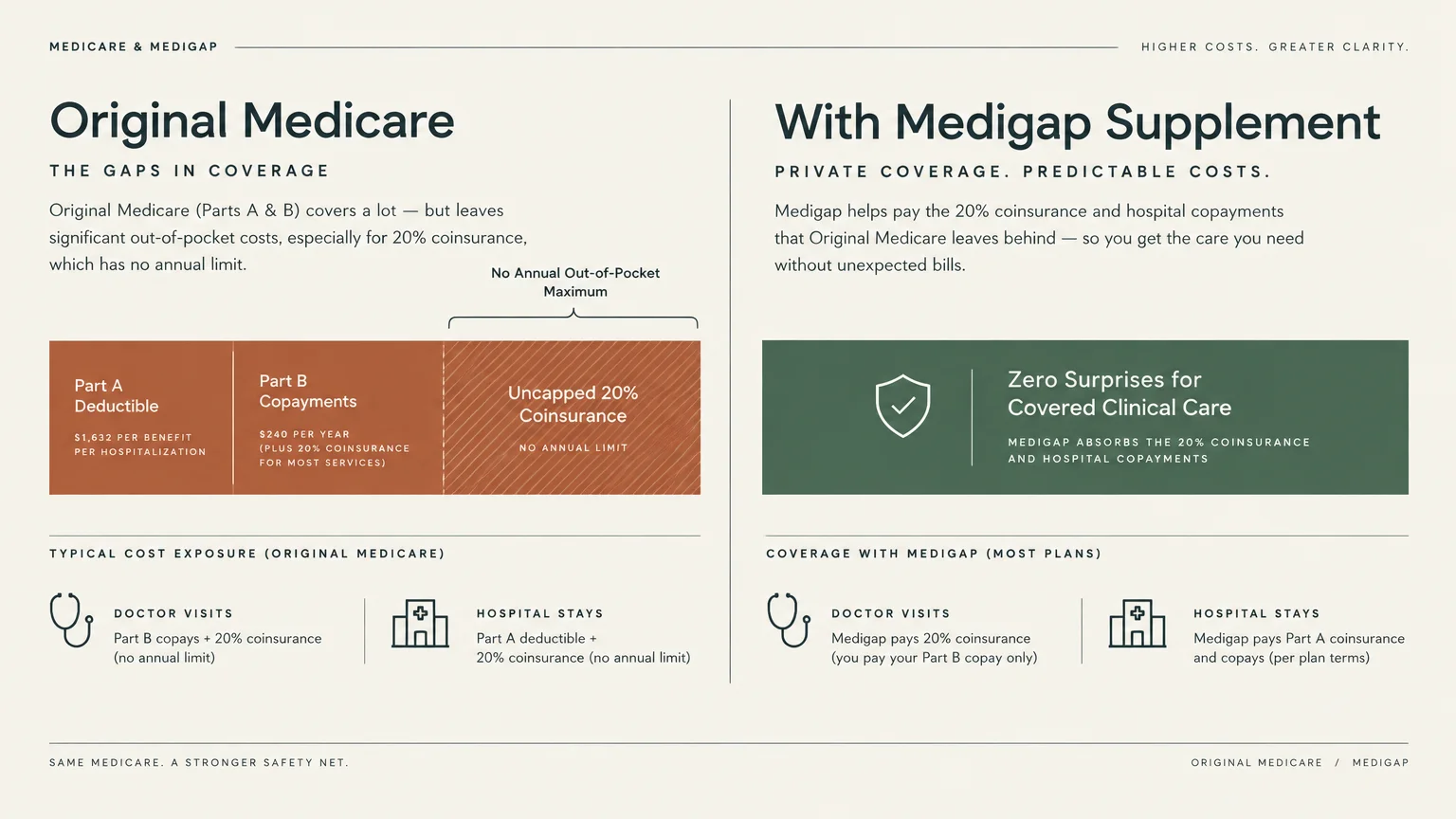
Understanding Healthcare Risks in Retirement
Retirement transforms your relationship with healthcare, shifting you from employer-sponsored plans to an individual payer system. Without a clear roadmap, this shift often brings financial friction and unexpected clinical boundaries.
Original Medicare leaves notable financial exposures through deductibles, copayments, and uncapped twenty percent coinsurance requirements. These unpredictable expenses can destabilize your monthly budget and create chronic anxiety.
Research from the Centers for Disease Control and Prevention shows that chronic conditions affect most older adults. Managing these conditions requires steady, affordable access to clinical specialists.
When coverage falls short, many retirees delay preventative screenings or skip vital therapies. You can avoid these compromises by learning how supplemental coverage fills the gaps.

Science Snapshot: How Financial Clarity Protects Health
Medical debt and healthcare uncertainty create sustained physiological stress. Chronic activation of your sympathetic nervous system elevates cortisol, which increases systemic inflammation and disrupts restorative sleep.
A comprehensive report published by the National Institutes of Health highlights the clinical dangers of financial toxicity. Patients experiencing financial strain frequently reduce their prescription dosages or skip clinical appointments entirely.
Predictable healthcare costs encourage proactive medical engagement. When you know your insurance covers routine appointments and diagnostics, you seek medical guidance at the earliest sign of disease.
Holistic health relies on prompt medical intervention paired with daily lifestyle choices. Comprehensive coverage preserves the peace of mind you need to focus on living well.
8 Mistakes Retirees Make with Medicare Supplements
1. Confusing Medigap with Medicare Advantage
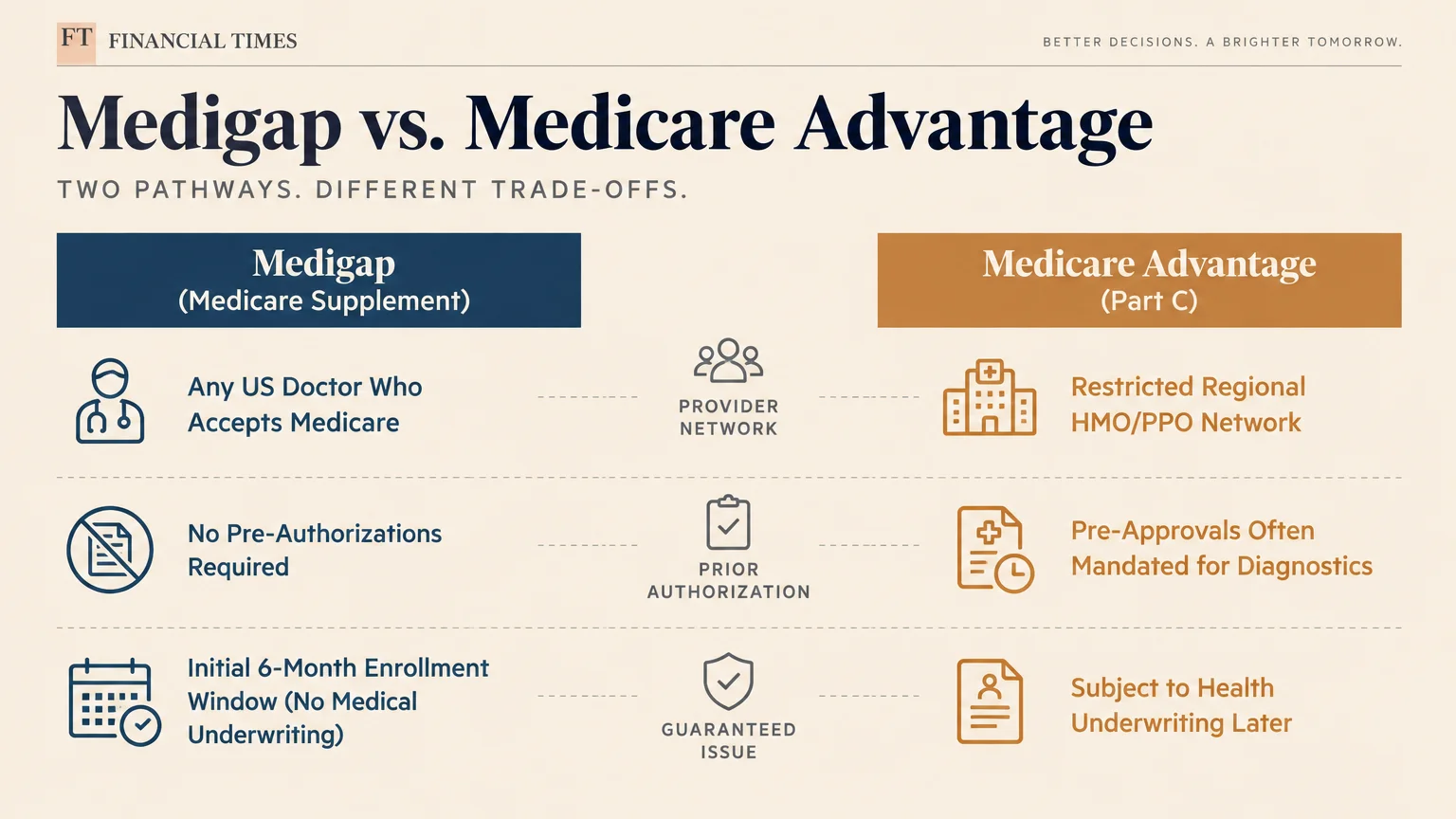
Many retirees use the terms Medigap and Medicare Advantage interchangeably, but they operate under completely different rules. Medigap plans pay the out-of-pocket costs left behind by Original Medicare.
In contrast, Medicare Advantage replaces your Original Medicare with a private managed care network. These private networks often require pre-authorizations and restrict you to specific regional doctors.
Medigap permits you to see any physician in the United States who accepts Medicare. Choosing between them requires weighing network flexibility against upfront monthly premium costs.
2. Missing the Initial Medigap Enrollment Period
Your six-month Medigap open enrollment period begins the first month you turn sixty-five and enroll in Medicare Part B. This window offers an essential legal protection known as guaranteed issue rights.
During this specific timeframe, private insurance companies cannot deny you coverage or inflate your premiums due to pre-existing conditions. Missing this deadline exposes you to medical underwriting in most states.
If you apply later, insurers can examine your full medical history and decline your application. Marking this critical milestone on your calendar protects your future healthcare access.
3. Expecting Medigap to Cover Prescription Drugs
Modern Medigap policies sold today do not include outpatient prescription medication coverage. Retirees who assume their supplement pays for daily pharmaceuticals face startling surprises at the pharmacy counter.
To cover essential medications, you must enroll in a standalone Medicare Part D plan alongside your supplement. Neglecting Part D can also trigger permanent late-enrollment financial penalties.
Reviewing your medication list annually ensures you select a drug formulary that matches your current therapeutic needs. Coordinating your supplement with Part D completes your primary medical shield.
4. Overlooking How Pricing Models Impact Long-Term Costs
Insurance carriers calculate Medicare supplement costs using three distinct pricing structures: community-rated, issue-age-rated, and attained-age-rated. The structure your insurer uses dramatically impacts your future monthly expenses.
Attained-age policies often feature lower initial premiums, but costs climb automatically as you age. Over a decade, these compounding increases can strain a fixed retirement income.
Issue-age or community-rated policies establish rates based on your enrollment age or the broader community group. Evaluating these pricing models helps you forecast your expenses well into your eighties.
5. Assuming Plans Differ in Core Medical Benefits
The federal government standardizes Medigap plans by letter categories, ranging from Plan A through Plan N. A Plan G from one insurer offers the exact same core benefits as a Plan G from another.
While the medical coverage remains strictly identical, premium charges can vary significantly across different insurance companies. Paying a higher monthly premium does not guarantee superior medical attention or faster claim handling.
You should compare companies based on financial stability ratings, customer service reputation, and historical rate increases rather than marketing claims. Standardized plans allow you to shop with confidence.
6. Believing You Can Switch Plans Whenever You Want
Many retirees believe they can start with an inexpensive plan and simply upgrade if a serious illness develops. In most states, switching Medigap plans outside your initial window requires full medical underwriting.
Insurers can review your clinical records, evaluate ongoing treatments, and refuse coverage for chronic ailments. A sudden diagnosis of heart disease or cancer could trap you in your existing policy.
Select a policy during your initial enrollment that accommodates potential future health challenges. Assuming you can change your coverage later without clinical scrutiny is a costly gamble.
7. Neglecting Routine Dental, Vision, and Hearing Care
Original Medicare and standardized Medigap policies intentionally exclude routine dental cleanings, eye exams, and hearing aids. Overlooking these exclusions leaves critical aspects of your sensory and systemic health unaddressed.
Oral infections and untreated hearing loss elevate your risk for cardiovascular issues and cognitive decline. You must establish separate financial strategies or standalone policies to fund these essential care routines.
A truly holistic retirement plan addresses the entire body, not just the services covered by federal insurance programs. Budgeting for sensory care safeguards your long-term independence.
8. Choosing Coverage Based on Friends or Neighbors
Well-meaning friends often recommend their own insurance choices, but their health status rarely matches yours. Selecting a plan because your neighbor loves it can leave your unique clinical needs unfulfilled.
Your personal prescription regimen, travel habits, family medical history, and risk tolerance should dictate your decision. An active traveler requires national provider flexibility, while someone with specific specialists needs unhindered access.
Consult official resources at Medicare.gov to examine plan details customized to your residential area. Base your coverage on your individual medical blueprint.

Strategy Pillars: Aligning Insurance with Whole-Body Wellness
Medical Navigation and Preventive Screenings
Having comprehensive Medigap coverage eliminates the financial hesitation that often delays diagnostic evaluations. Schedule your annual wellness exam promptly to review baseline vitals and preventive biomarkers.
Collaborate closely with your primary care physician to establish an individualized schedule for colonoscopies, bone density scans, and cardiovascular panels. Prompt screenings consistently identify reversible metabolic shifts before they escalate.
Movement and Physical Resilience
Several supplemental insurers provide value-added perks like complimentary gym memberships or physical fitness programs. Taking advantage of these benefits helps you maintain functional muscle mass and joint mobility.
The World Health Organization emphasizes that regular aerobic and strength activities dramatically reduce fall risks in older adults. Consistent physical movement preserves the vitality needed to enjoy your retirement.
Nutritional Support and Chronic Disease Defense
Nutrient-dense nutrition acts as primary medicine against chronic degenerative disorders. Shielding your budget from unpredictable medical bills preserves financial resources for wholesome, unrefined groceries.
Consulting a registered dietitian nutritionist can help you customize anti-inflammatory meal patterns for longevity. Pairing smart nutrition with dependable medical coverage creates an impenetrable defense for your health.
Mindset and Emotional Wellbeing
Persistent health anxiety and financial uncertainty deplete cognitive stamina and impair emotional health. Securing dependable coverage delivers deep psychological relief, allowing you to focus on meaningful pursuits.
Dedicate time to social engagement, creative expression, and daily mindfulness practices. When your healthcare logistics run smoothly, your mental energy flows into purposeful living.

Real Voices: Insights from Healthcare Advocates
Geriatric clinicians repeatedly observe how insurance literacy directly influences patient recovery and clinical compliance. When patients fully understand their benefits, they attend follow-up consultations and adhere to treatment plans.
Dr. Evelyn Vance, an integrative geriatrician, emphasizes that financial stress frequently masquerades as physical distress. Patients who worry about copayments often present with elevated blood pressure and tension headaches.
Advocates recommend reviewing your benefits booklet annually alongside a trusted caregiver or professional navigator. Transparent conversations eliminate surprises and keep clinical decisions centered on your personal healing goals.
Frequently Asked Questions About Medicare Supplements
When is the best time to enroll in a Medigap plan?
Your optimal enrollment window is the six-month period starting the month you turn sixty-five and enroll in Medicare Part B. During this window, you cannot be denied coverage due to pre-existing conditions.
Enrolling outside this guaranteed period allows insurers to review your medical history and potentially reject your application. Speak with a licensed counselor to evaluate your timing.
Can I switch from Medicare Advantage back to Medigap?
You can switch during designated annual enrollment periods, but you may face medical underwriting in most states. If your health has changed, private insurers may decline your Medigap application.
Certain trial periods and special circumstances grant guaranteed issue rights to return to Medigap. Check your regional insurance regulations before leaving any Medicare Advantage policy.
Does Medigap cover foreign travel medical emergencies?
Standard plans such as Plan C, D, F, G, M, and N provide limited foreign travel emergency coverage. These plans typically cover eighty percent of billed emergency expenses after a small annual deductible.
Coverage limits usually cap lifetime foreign emergency benefits at fifty thousand dollars. Travelers with complex medical needs should consider specialized international travel health policies.
How do I know if my doctor accepts my Medigap policy?
Medigap plans do not use restrictive provider networks. Any physician or hospital nationwide that accepts Original Medicare will automatically accept your standardized Medigap policy.
You do not need prior authorizations or referrals to consult specialists across state borders. This national accessibility provides immense flexibility for individuals who travel or split residences.
Taking Your First Step Toward Coverage Confidence
Securing your healthcare foundation begins with honest personal assessment and patient research. Take an inventory of your current medical visits, ongoing medications, and anticipated wellness needs.
Explore localized plan comparisons through the State Health Insurance Assistance Programs to receive free, unbiased counseling. Working with objective specialists ensures your plan choices honor both your health goals and personal finances.
Consider how much peace of mind predictable medical expenses would bring to your daily life. Taking proactive ownership of your coverage today safeguards your long-term independence and physical wellbeing.









Leave a Reply