

A sudden or persistent drop in your testosterone does more than drain your daily vitality; it can alert you to hidden disease long before other symptoms appear. Recognizing this hormonal shift gives you a crucial window to investigate your broader health.
Groundbreaking research reveals that low testosterone frequently functions as a biological smoke alarm for underlying cellular stress and early-stage malignancies. Understanding this critical connection helps you work proactively with your physician.
Rather than ignoring flagging energy or muscle loss, you can use these signals to protect your future. Here is what the latest science reveals about the vital links between your hormones and early cancer detection.
The Biological Smoke Alarm: What Low Testosterone Actually Reveals
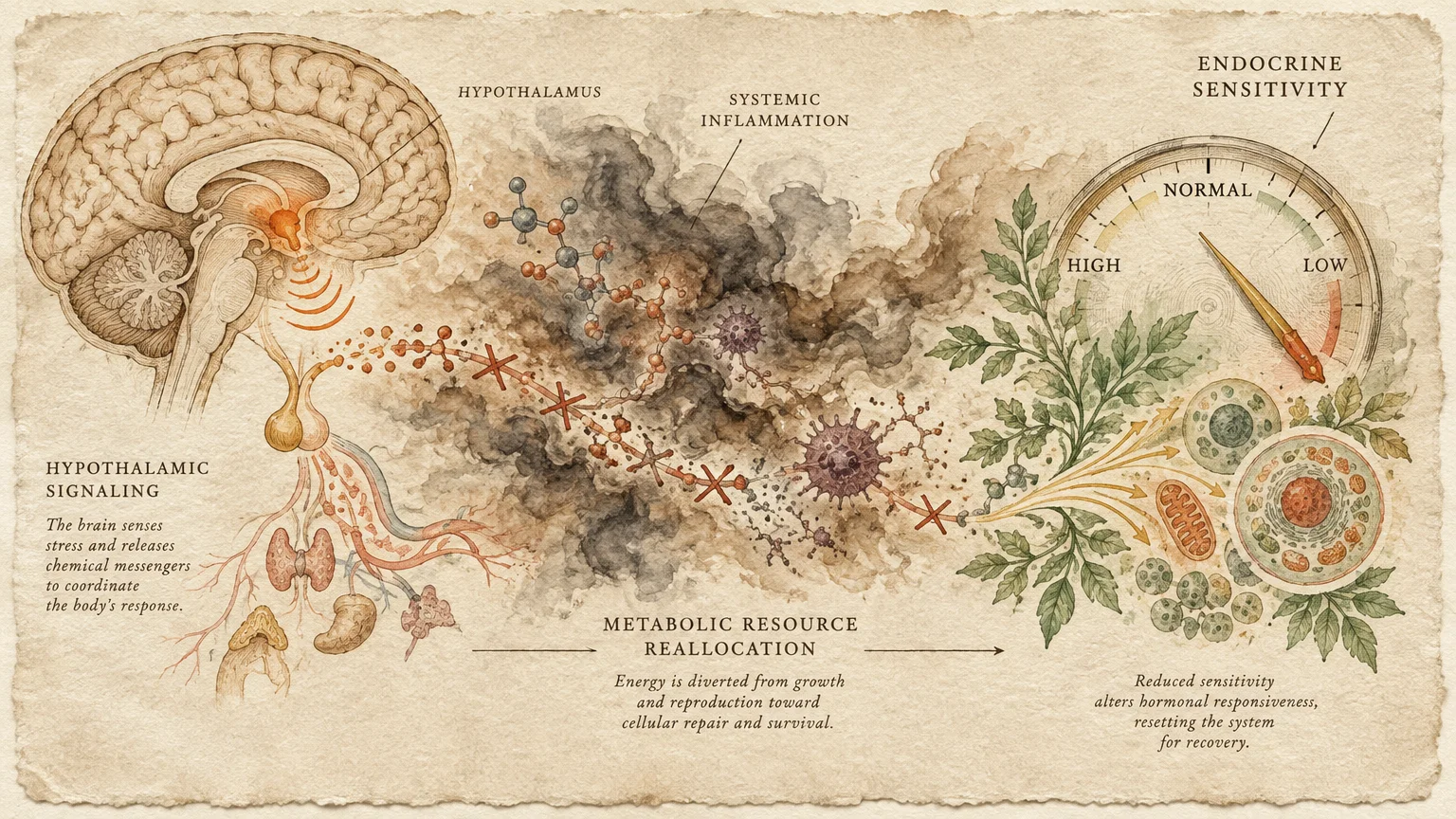
Your endocrine system operates as a sensitive communication network that responds rapidly to physiological stress. When an occult illness begins developing, your body redirects metabolic energy toward immune defense and cellular repair.
This reallocation of biological resources suppresses gonadal hormone production. Consequently, circulating testosterone decreases before physical signs like unexplained weight loss or localized pain ever appear.
Systemic inflammation plays a dominant role in this hormonal downregulation. Pro-inflammatory signaling molecules disrupt the delicate communication between your brain and your endocrine glands.
These inflammatory cytokines directly blunt the pulsatile release of regulatory hormones from your hypothalamus. Without those regular brain signals, your testes reduce their overall testosterone synthesis.
Clinicians frequently observe that men dismiss the early consequences of this drop. You might attribute chronic fatigue, declining physical strength, or low libido to aging or daily work stress.
Normal aging causes a very gradual hormonal transition rather than a sudden plunge. When your levels drop significantly, your body is signaling that an underlying challenge requires clinical attention.
Viewing low testosterone as an early biomarker transforms how you approach your medical care. It shifts the clinical focus from simply masking symptoms to identifying systemic health threats early.
Social determinants of health also shape how quickly men identify these endocrine warning signs. Unequal access to preventive care and diagnostic laboratory testing often delays essential evaluations.
Advocating for comprehensive blood work ensures that you do not overlook hidden pathology. Treating your hormone level as a broad health indicator gives you significant diagnostic power.
Science Snapshot: Landmark Findings on Hormones and Malignancy
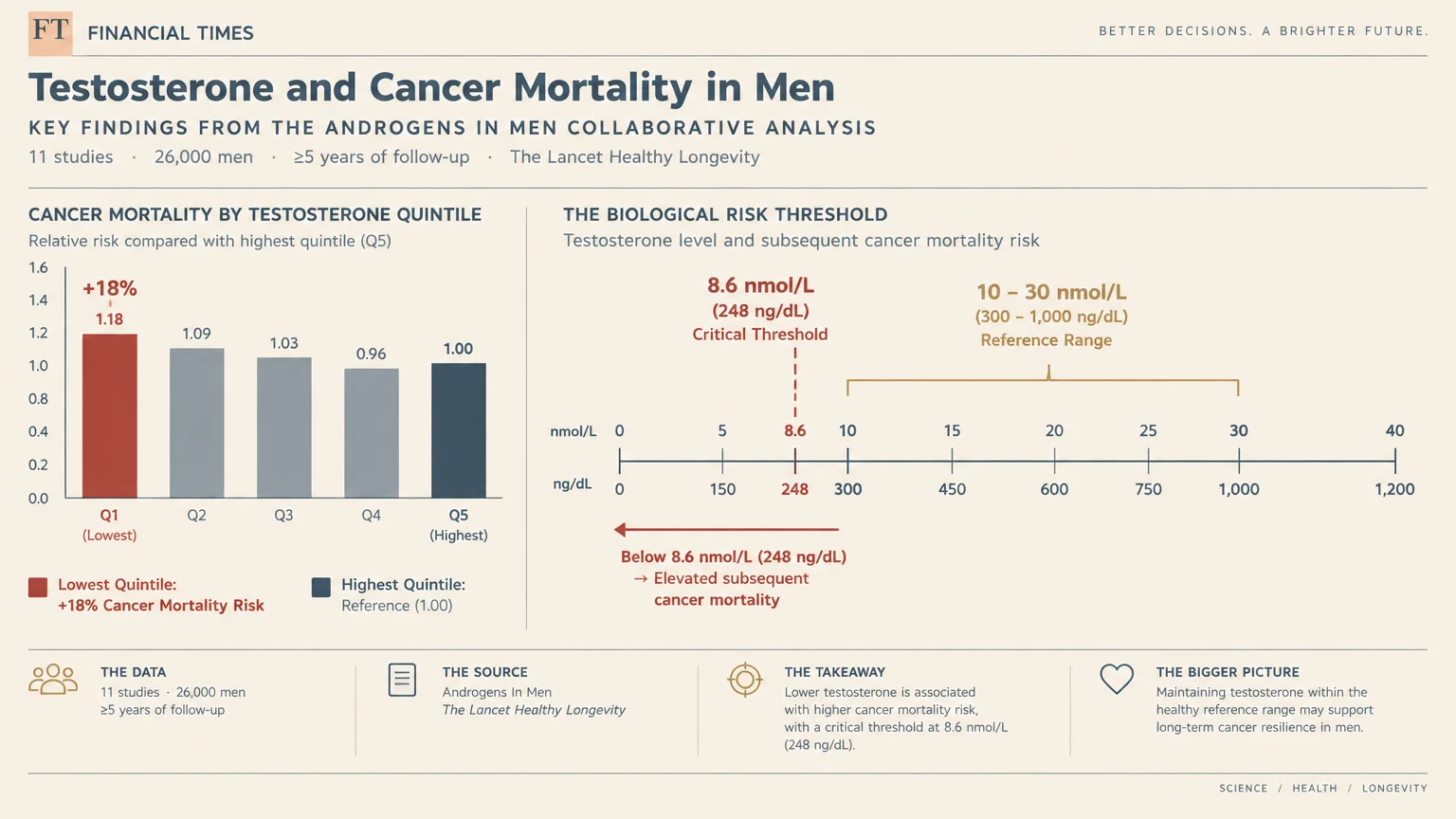
Recent high-quality epidemiological research provides compelling evidence connecting androgen levels with cancer outcomes. Landmark data from the Androgens In Men Study analyzed 11 long-running studies across Australia, Europe, and the United States.
This massive collaborative analysis evaluated health parameters in more than 26,000 men followed for at least 5 years. Researchers published their critical findings in The Lancet Healthy Longevity to clarify hormone-related mortality patterns.
The investigators discovered that men in the lowest one-fifth of testosterone levels faced an 18% higher risk of dying from cancer compared to men in the highest one-fifth. This elevated risk persisted even after researchers adjusted for age and lifestyle habits.
The research team identified a distinct biological threshold where cancer mortality risks began to climb noticeably. Subsequent cancer mortality increased when baseline testosterone dropped below 8.6 nmol/L, which equals approximately 248 ng/dL.
For clinical context, typical reference ranges for healthy younger men sit between 10 and 30 nmol/L, or roughly 300 to 865 ng/dL. Crossing below that 8.6 nmol/L boundary indicates substantial physiological strain.
The study authors emphasize a crucial clinical distinction: low testosterone does not directly cause cancer. Instead, diminished androgen circulation serves as an early warning biomarker of underlying systemic disease or cellular distress.
The research demonstrated that taking exogenous testosterone supplements does not prevent cancer development. Supplementing hormones without medical supervision simply silences a valuable diagnostic signal without resolving the root cause.
These findings reinforce guidance from the National Institutes of Health regarding systemic disease surveillance. A low testosterone reading demands a thorough medical investigation rather than a quick hormone prescription.
Tracking your hormone levels over time provides your healthcare team with actionable insight into your overall biological resilience. That knowledge allows you to address occult challenges at their earliest, most treatable stages.
Prostate Cancer: Untangling Progression and Misconceptions
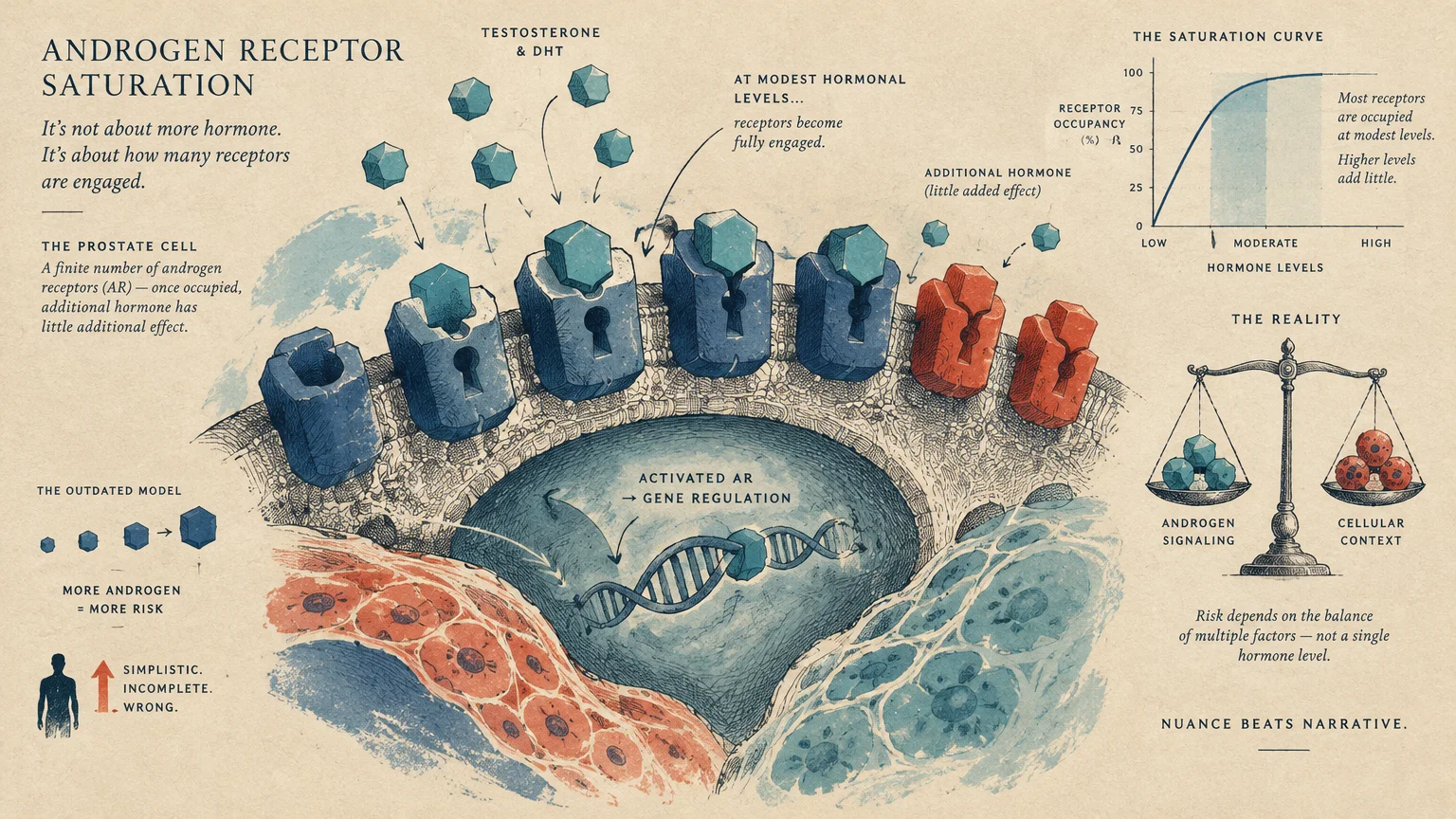
For several decades, medicine operated under the assumption that higher testosterone levels fueled prostate malignancy. Modern clinical trials have thoroughly dismantled this outdated concept.
Data from the multi-cohort study in 26,000 men demonstrated that naturally low testosterone does not trigger an initial prostate cancer diagnosis. Instead, researchers discovered that elevated prostate cancer risk correlated with low levels of sex hormone-binding globulin and luteinizing hormone.
While low testosterone does not initiate prostate tumors, it plays a critical role in disease behavior. Groundbreaking clinical evidence published in The Journal of Urology highlights this critical relationship.
The study analyzed 924 men with early-stage prostate cancer who chose active surveillance instead of immediate surgery or radiation. Researchers tracked these patients to determine which biological markers predicted disease escalation.
The findings were striking: men with baseline testosterone levels of 300 ng/dL or lower faced a 60% higher likelihood of their cancer progressing to Grade Group 3 or higher. This indicates that low androgens often accompany aggressive tumor characteristics.
When an androgen-deprived environment exists, aggressive tumor cells adapt and mutate to survive without normal hormonal signals. These adapted cells often exhibit more aggressive growth patterns than hormone-dependent cells.
If you choose active surveillance for early-stage prostate disease, knowing your total testosterone level provides vital risk stratification. A low reading signals to your oncologist that closer monitoring and more frequent imaging may prove beneficial.
Public health resources from the Centers for Disease Control and Prevention emphasize regular cancer screening to detect disease changes early. Integrating endocrine panels into routine surveillance protocols significantly strengthens patient safety.
Understanding these hormonal nuances relieves unnecessary anxiety about natural testosterone levels. At the same time, it empowers you to demand rigorous monitoring if your baseline hormones register low.

Endocrine Warning Signs: Pituitary and Testicular Clues
When evaluating low testosterone, physicians must determine where the communication breakdown originates. Hormonal regulation relies on a continuous feedback loop between your brain and your reproductive organs.
Doctors divide low testosterone into two distinct physiological categories: primary hypogonadism and secondary hypogonadism. Measuring your luteinizing hormone alongside testosterone reveals the location of the underlying problem.
Secondary hypogonadism occurs when you present with low testosterone alongside low or normal luteinizing hormone levels. This pattern indicates that your brain is failing to send proper stimulatory signals down to your testes.
This hormonal picture often serves as an early warning sign of a benign pituitary tumor, such as a prolactinoma. As these microadenomas expand, they compress adjacent endocrine tissue and block regular hormone production.
A simple blood draw detecting this secondary pattern prompts clinicians to order targeted cranial imaging. Discovering a pituitary lesion early protects your long-term vision, neurological health, and general hormone function.
Primary hypogonadism occurs when your testosterone measures low but your luteinizing hormone rises significantly. In this scenario, your pituitary gland sends vigorous signals, but your testes fail to respond.
This failure pattern can indicate localized testicular tissue disruption, including occult testicular cancer. Testicular cancer represents the most common solid malignancy in young men aged 15 to 44.
A developing testicular tumor compromises healthy Leydig cells, which produce androgens. Furthermore, cancer therapies can permanently impair endocrine performance, leaving nearly 40% of testicular cancer survivors with long-term hypogonadism.
Evaluating both pituitary and testicular signaling turns a standard hormone test into a targeted diagnostic roadmap. This comprehensive approach ensures that life-altering tumors receive rapid clinical evaluation.

Pillar One: Clinical Navigation and Precise Testing Protocols
Accurate hormone assessment requires strict adherence to standardized laboratory guidelines. The American Urological Association clinical guidelines define hypogonadism as total testosterone below 300 ng/dL.
European clinical frameworks employ a comparable diagnostic threshold, diagnosing low testosterone when levels fall below 8 to 8.6 nmol/L. Meeting these clinical criteria requires rigorous testing protocols.
Your physician must confirm your diagnosis using two separate early-morning, fasting blood draws. Testosterone levels follow a strict circadian rhythm, peaking in the morning hours before steadily declining throughout the day.
Testing your blood during the afternoon produces falsely depressed values that misguide your care plan. Drawing blood between seven and ten in the morning provides the most reliable baseline measurement.
A thorough diagnostic workup extends well beyond a solitary total testosterone test. You should request a full panel that includes free testosterone, sex hormone-binding globulin, luteinizing hormone, follicle-stimulating hormone, and prolactin.
Evaluating these complementary biomarkers prevents diagnostic oversights. If your total testosterone appears borderline but your binding proteins are exceptionally high, your usable free testosterone might sit dangerously low.
Navigating these evaluations requires a collaborative partnership with your physician. If your primary care provider hesitates to investigate secondary causes, seek a consultation with an endocrinologist or urologist.
Prepare for your clinical visits by bringing a detailed log of your symptoms and physical changes. Note when your energy drops, any changes in your muscle composition, and alterations in your mental clarity.
Navigating healthcare systems can present financial and scheduling obstacles, particularly when securing morning appointments. Check your insurance coverage for specialized endocrine panels beforehand to avoid unexpected out-of-pocket costs.

Pillar Two: Metabolic Nutrition for Endocrine Resilience
The foods you consume supply the essential structural foundations for all steroid hormone synthesis. Chronic malnutrition, crash dieting, and excessive refined sugars directly disrupt your metabolic stability and hormone output.
Severe caloric restriction signals energetic scarcity to your hypothalamus, which promptly suppresses your reproductive axis. Maintaining adequate caloric intake preserves normal endocrine signaling while supporting ongoing cellular surveillance.
Focus your dietary choices on nutrient-dense whole foods that provide healthy fats. Cholesterol acts as the indispensable biochemical precursor from which your body synthesizes all androgenic hormones.
Incorporate sources of monounsaturated and saturated fats from avocados, extra virgin olive oil, nuts, and pastured eggs. These dietary lipids support cellular membrane integrity and facilitate optimal steroidogenesis.
Insulin resistance represents another primary driver of suppressed testosterone and altered binding globulins. Chronic hyperinsulinemia blunts sex hormone-binding globulin synthesis in your liver, which destabilizes free hormone transport.
Stabilize your daily blood sugar by pairing complex carbohydrates with clean proteins and dietary fiber. Minimizing dramatic glucose spikes reduces systemic inflammation and protects delicate vascular beds.
Prioritize essential micronutrients that act as enzymatic cofactors in hormone creation. Adequate zinc intake preserves testicular enzyme activity, while magnesium supports optimal hormone-protein binding dynamics.
Integrate dark leafy greens, pumpkin seeds, shellfish, and wild-caught seafood into your weekly meal planning. These foods provide dense concentrations of bioavailable minerals that reinforce immune and endocrine health.
Emphasize sustainable, lifelong nutritional patterns rather than restrictive dietary trends. Consistent metabolic support builds physiological resilience and protects your body against long-term cellular damage.

Pillar Three: Targeted Movement to Preserve Cellular Function
Strategic physical exercise functions as a potent stimulus for metabolic regulation and hormonal equilibrium. Engaging in progressive resistance training stimulates your neuromuscular system and enhances androgen receptor sensitivity.
Lifting weights, using resistance bands, or performing bodyweight movements triggers localized muscle protein synthesis. These muscular contractions encourage healthy metabolic clearing of glucose and reduce systemic inflammatory tone.
Structure your strength training around compound movements that recruit large muscle groups. Exercises such as squats, deadlifts, overhead presses, and rows produce robust metabolic signals without exhausting your recovery reserves.
Balance your strength sessions with low-intensity cardiovascular conditioning, often referred to as zone two training. Steady aerobic work enhances mitochondrial density and improves vascular delivery of hormones to target tissues.
Avoid chronic excessive endurance training that outpaces your ability to recover. Sustained overtraining drives chronic elevations in cortisol, which directly inhibits testosterone synthesis in Leydig cells.
Schedule at least two full rest days every week to allow your muscular and nervous systems to repair. Physical adaptation occurs during recovery periods, not during the workouts themselves.
Physical activity also serves as an established, independent tool for reducing cancer incidence and improving long-term survivorship. Consistent movement helps your immune cells identify and eliminate abnormal cells more efficiently.
Tailor your exercise selection to your current physical capabilities and joint health. Even modest daily walking delivers profound metabolic benefits if you practice it with unwavering consistency.
View each workout as an investment in systemic longevity rather than an intense effort to burn calories. Purposeful movement supports your body in maintaining endocrine balance and immune vigilance.

Pillar Four: Restorative Sleep and Mindset Strategies
Your body produces the vast majority of its daily testosterone during uninterrupted sleep. Disrupted sleep architecture blunts nighttime hormone pulses and leaves your endocrine system severely depleted.
Testosterone levels climb steadily as you enter deep, slow-wave sleep and reach their peak during rapid eye movement cycles. Fragmented sleep abruptly halts this physiological synthesis and accelerates daytime cellular breakdown.
Obstructive sleep apnea represents an underdiagnosed condition that frequently drives testosterone down. The repeated nighttime oxygen drops trigger systemic inflammation and disrupt deep sleep stages.
If you experience loud snoring, morning dry mouth, or persistent daytime fatigue, request a formal clinical sleep evaluation. Treating underlying sleep apnea often restores morning testosterone values while lowering your cardiovascular and cancer risks.
Practice consistent sleep hygiene by establishing regular bedtimes and wake times throughout the week. Keep your sleeping space dark, quiet, and cool to support natural melatonin production.
Chronic psychological stress exerts a profound suppressive effect on your reproductive hormones. Persistent mental strain activates the sympathetic nervous system and floods your bloodstream with cortisol.
Elevated cortisol competes directly with androgen signaling pathways, blunting testosterone reception at the cellular level. Over time, this chronic stress response dampens immune surveillance and promotes cellular vulnerability.
Incorporate daily decompression routines that shift your nervous system into a parasympathetic state. Practices such as breathwork, nature walks, mindfulness meditation, or journaling lower autonomic arousal.
Protecting your mental health is an essential biological requirement for maintaining hormone balance. Cultivating emotional balance creates the internal environment your body requires for healing and longevity.

Real Voices: Clinical Perspectives from the Field
Medical experts emphasize that interpreting hormone results requires viewing the patient as an integrated biological whole. Clinicians urge men to treat low readings as a call for exploration rather than an immediate disaster.
Dr. Bu Yeap, lead investigator of the multi-cohort androgen study, notes that low testosterone serves as a key biomarker for underlying disease. His team stresses that doctors should use low readings to prompt comprehensive systemic health checkups.
Urological specialists echo this guidance when managing active surveillance programs for early-stage malignancies. They caution that ignoring a baseline testosterone below 300 ng/dL risks overlooking signals of tumor progression.
Consider the real-world experience of David, a 52-year-old teacher who sought medical care for persistent exhaustion. His physician ordered standard blood tests alongside a comprehensive morning hormone panel.
David discovered that his total testosterone had plunged to 210 ng/dL, well below the standard clinical threshold. Because his doctor followed clinical guidelines, she also checked his luteinizing hormone and prolactin levels.
His results revealed an elevated prolactin level, prompting an immediate magnetic resonance imaging scan of his brain. The scan uncovered a small, benign pituitary tumor pressing on his hormone-producing cells.
Early medical therapy shrank the growth, normalized his hormone output, and restored his daily energy. David avoided permanent vision damage and severe endocrine collapse because his doctor investigated the root cause of his low testosterone.
His experience illustrates why you must never accept a simple hormone prescription without an exhaustive diagnostic evaluation. Listening to what your hormones reveal can safeguard your health and change your life.
Frequently Asked Questions
Does testosterone replacement therapy prevent cancer if my levels are low?
Testosterone replacement therapy does not prevent cancer development. Clinical research confirms that while low testosterone signals underlying health risks, adding exogenous hormones does not eliminate that risk.
Using hormone therapies without identifying why your levels dropped can mask important diagnostic signals. You must always work with your physician to locate and address the root cause of low hormone levels.
Can low testosterone directly cause cancer to develop?
Low testosterone does not directly cause normal cells to transform into malignant tumors. Scientific consensus recognizes low testosterone as an early biomarker of cellular stress and systemic inflammation rather than a direct causative agent.
However, an androgen-deprived environment can foster more aggressive tumor cell variants in men who already have prostate cancer. Monitoring hormone levels helps clinicians identify patients who require closer clinical surveillance.
Why do clinical guidelines insist on two morning blood tests?
Hormone production follows a strict daily rhythm, reaching its highest concentration during early-morning hours. Testing your blood later in the day produces artificially depressed numbers that do not reflect true baseline production.
Furthermore, acute stressors, poor sleep, or minor viral illnesses can temporarily lower your hormone levels. Requiring two separate fasting tests drawn between seven and ten in the morning ensures diagnostic accuracy before any treatment begins.
When should low testosterone prompt immediate evaluation for a tumor?
You need an immediate diagnostic workup if your low testosterone accompanies severe headaches, peripheral vision loss, or unusual breast changes. These symptoms often indicate a pituitary mass compressing delicate cranial structures.
Similarly, any painless lump, swelling, or persistent heaviness in your scrotum demands rapid physical examination and ultrasound imaging. These signs may point toward primary testicular cancer, which requires immediate oncological care.
Your Next Step: Moving from Concern to Constructive Action
Navigating hormonal health can feel daunting, but proactive knowledge gives you a distinct diagnostic advantage. Recognizing low testosterone as a potential early warning sign allows you to take control of your wellbeing.
Your most effective first step involves scheduling an early-morning fasting blood panel with your primary care provider. Request total and free testosterone alongside luteinizing hormone to capture a complete diagnostic picture.
Take a few moments this evening to reflect on your physical health over the past six months. Have you noticed persistent changes in your energy, recovery capacity, or mental drive that warrant an honest conversation with your doctor?
Write these observations down so you can share them clearly during your next medical appointment. Partnering openly with your healthcare team ensures that you investigate every potential contributor thoroughly.
Support your endocrine health by eating nutrient-dense whole foods, prioritizing deep sleep, and engaging in regular resistance training. These daily lifestyle choices strengthen your metabolic foundation while you pursue medical testing.
Trust what your body tells you, and use your hormone markers as valuable guides toward lifelong vitality. Taking prompt, informed action today protects your cellular health and vitality for decades to come.









Leave a Reply