
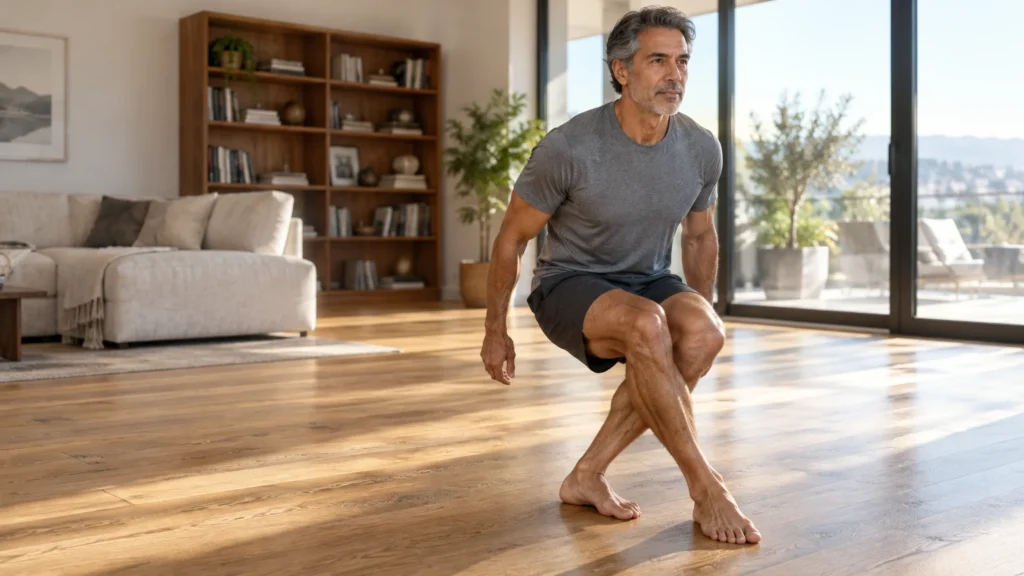
A single physical movement performed on your living room floor can reveal your biological vitality and early death risk. Lowering yourself to the ground and rising back up without support provides an immediate snapshot of your musculoskeletal resilience.
Known worldwide as the sit to rise test, this functional screening uncovers subtle deficits in balance, flexibility, and core power long before traditional clinical exams notice physical decline.
Learning how efficiently your body negotiates gravity offers an honest appraisal of your physical longevity. This simple action clarifies whether your daily habits support lifelong physiological independence or accelerate physical vulnerability.
The Ground Truth: Mechanics and Scoring of the Sitting-Rising Test
Brazilian physician and researcher Dr. Claudio Gil Araújo developed the Sitting-Rising Test at the Exercise Medicine Clinic, known as CLINIMEX, in Rio de Janeiro, Brazil. He first published this non-aerobic musculoskeletal screening method in 1999.
The evaluation measures how effectively your musculoskeletal system functions under the everyday demand of moving your body mass. It assesses joint flexibility, muscular strength, motor coordination, and your body composition in one fluid sequence.
You begin the assessment barefoot in comfortable clothing on a non-slippery floor surface. Ensure you have clear space around you so you can move without hitting furniture or walls.
Cross your legs or keep them apart, then lower your body into a full seated position on the floor. After resting momentarily on the ground, rise back up to a complete standing position.
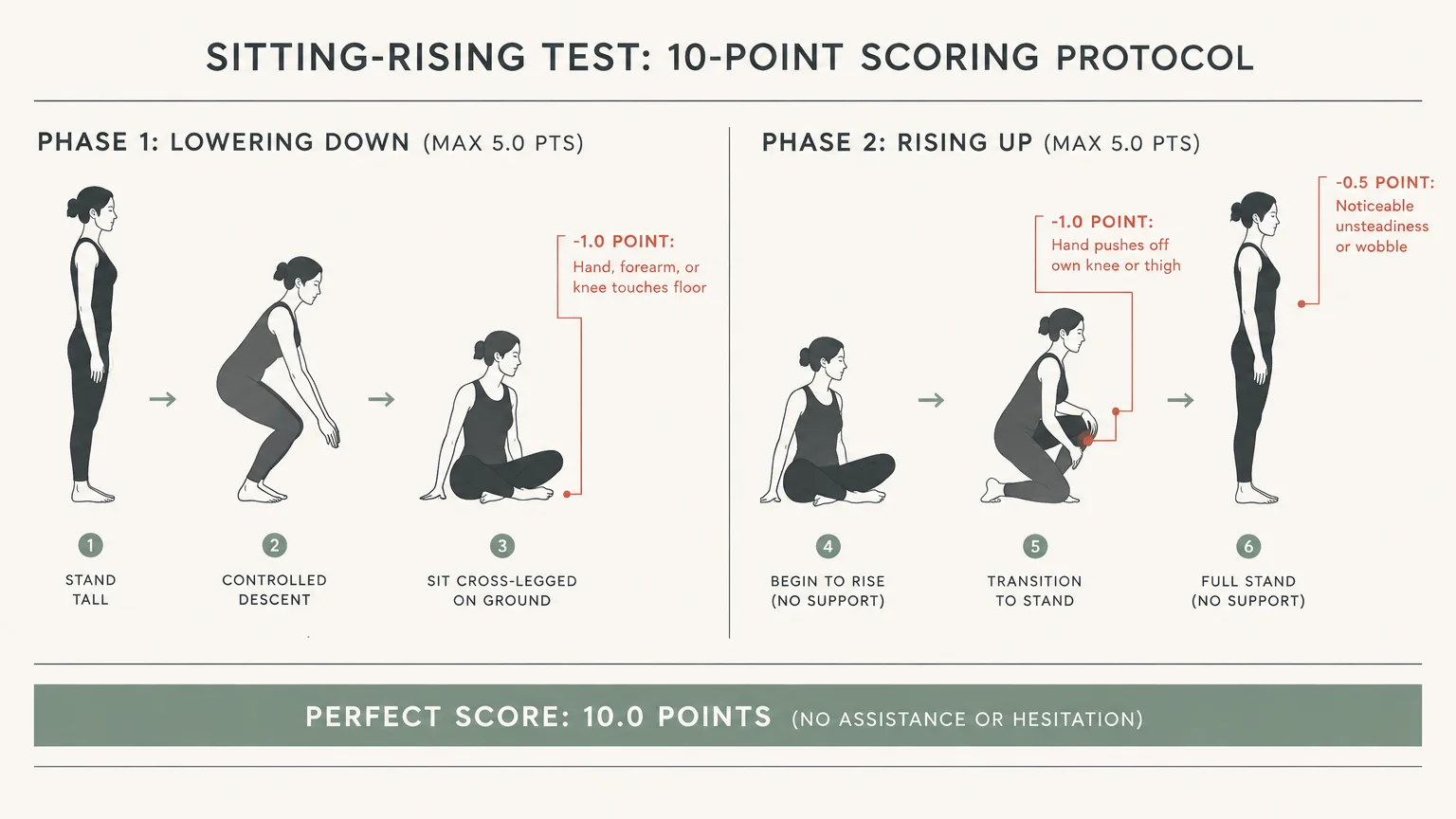
The scoring system operates on a scale from 0 to 10 points. Researchers award up to 5 points for sitting down smoothly and up to 5 points for rising back up.
You lose 1 full point each time you place a hand, forearm, knee, or the side of your leg on the floor. You also lose 1 point if you push off your own knee or thigh for leverage.
Examiners deduct 0.5 points whenever you display noticeable unsteadiness, wobble, or lose your balance during either phase. You receive no penalty for moving slowly because the assessment does not time your performance.
A perfect score of 10 indicates that you sat down and stood up without using any physical assistance or showing hesitation. Lower scores reveal where muscular weakness, stiff joints, or poor balance compromise your basic mobility.
Musculoskeletal Fitness and Longevity: Analyzing the Clinical Data
Medical experts historically evaluated cardiovascular fitness while neglecting non-aerobic muscular health. Dr. Araújo demonstrated that your muscular strength, flexibility, and balance predict natural survival rates with remarkable accuracy.
A landmark expanded study led by Dr. Araújo appeared online in the European Journal of Preventive Cardiology on June 18, 2025. That research reached print in Volume 33, Issue 12 in September 2026.
Investigators evaluated 4,282 adults aged 46 to 75 between 1998 and 2023. They monitored the health outcomes of those participants across a median follow-up period of 12 years.
During that tracking period, researchers recorded 665 participant deaths. The resulting data revealed dramatic differences in survival across distinct scoring categories.
Participants who achieved a perfect score of 10 recorded a death rate of just 3.7%. Meanwhile, participants who scored an 8 experienced a tripled mortality rate of 11.1%.
Participants falling into the lowest performance tier, scoring between 0 and 4 points, faced a 42.1% death rate. Their physical inability to rise from the floor correlated directly with shortened survival.
After adjusting for age, sex, body mass index, and clinical variables, the risks remained striking. Participants in the lowest score range faced a 3.8-fold higher risk of dying from natural causes than high performers.
Those same low-scoring individuals experienced a 6.0-fold higher risk of dying from cardiovascular causes compared to participants who scored a perfect 10. Musculoskeletal frailty directly reflects systemic biological vulnerability.
These findings confirmed Araújo’s foundational research published online in the European Journal of Preventive Cardiology in December 2012, which appeared in print in 2014. That earlier project tracked 2,002 adults aged 51 to 80 over 6.3 years.
In that baseline cohort, 159 participants died, representing 7.9% of the group. Participants scoring between 0 and 3 points were 5.44 times more likely to die of any cause than peers scoring between 8 and 10 points.
Critically, the 2012 investigation proved that every 1-point increase in an individual’s test score conferred a 21% reduction in all-cause mortality. Small, incremental gains in physical capacity generate substantial protection against early mortality.
Related research highlights the protective nature of balance and functional leg power. In a 2022 study published in the British Journal of Sports Medicine, Dr. Araújo tracked 1,702 adults aged 51 to 75.
Participants who failed to hold a 10-second one-legged balance test faced an 84% higher risk of all-cause mortality over a 7-year median follow-up. Balance reflects integrated neurological and muscular performance.
Similarly, standard clinical screenings such as the CDC 30-Second Chair Stand Test monitor lower-body capability. For adults aged 60 to 64, completing fewer than 12 stands for women and fewer than 14 stands for men indicates elevated fall risk.
Together, these clinical investigations demonstrate that physical resilience serves as a vital sign. Your capacity to coordinate movement against gravity reveals the deep biological reserves that sustain your life.
Foundations of Physical Resilience: Sleep, Stress, Nutrition, and Movement
Your ability to sit and rise from the ground depends on interconnected physiological systems. Muscular performance never operates in isolation from your systemic restorative habits.
Restorative sleep provides the cellular foundation for muscular repair and neuromuscular integrity. During deep slow-wave sleep, your body secretes growth factors that rebuild micro-tears in skeletal muscle and regenerate connective tissues.
Chronic sleep deprivation undermines balance and slows motor reflex pathways. Without adequate sleep, your central nervous system struggles to fire motor units efficiently, reducing your physical stability and joint coordination.
Your stress response directly alters muscular composition through chronic endocrine signaling. Sustained psychological stress drives prolonged cortisol elevation, which breaks down skeletal muscle tissue and promotes visceral fat accumulation.
Elevated cortisol blunts collagen synthesis in tendons and ligaments, restricting the joint flexibility required for deep floor movement. Managing your nervous system through conscious recovery restores tissue elasticity and systemic healing.
Nutrition provides the structural substrates necessary to preserve muscle mass and skeletal strength across decades. Consuming adequate dietary protein ensures constant muscle protein synthesis, preventing the age-related muscle loss known as sarcopenia.
Targeted micronutrients like magnesium, calcium, and vitamin D sustain bone density and cellular energy pathways. Anti-inflammatory whole foods reduce systemic arterial stiffness, preserving the microvascular circulation that fuels active muscle tissue.
Modern lifestyle medicine emphasizes addressing these lifestyle pillars simultaneously to halt degenerative decline. Reviewing evidence-based lifestyle medicine interventions helps you align your daily habits with physiological recovery.
Physical movement serves as the operational bridge uniting these systemic foundations. Engaging in resistance training, varied ground mobility, and daily walking keeps hip joints mobile and spinal stabilizers responsive.
When you combine sound sleep, balanced stress levels, nutrient-dense meals, and daily movement, you build functional musculoskeletal capital. This capital enables you to move freely without mechanical compensations.
Mind and Emotional Health: Cultivating Inner Stability and Proprioception
Physical mobility relies heavily on psychological expectations, emotional regulation, and somatic self-awareness. How you perceive your physical capabilities often determines whether you attempt floor movements or avoid them altogether.
Many adults develop an unconscious fear of falling as they age. This underlying anxiety creates chronic muscular guarding, tightening hip flexors and stiffening ankles in ways that paradoxically increase fall risk.
Cultivating body agency breaks this pattern of defensive muscular tension. When you practice intentional movement, you teach your autonomic nervous system that physical challenge does not equal physical danger.
Proprioception describes your brain’s ability to sense your body’s position and movement in space without visual confirmation. This internal mapping system depends on specialized mechanoreceptors embedded within your muscles, tendons, and joint capsules.
Somatic awareness practices enhance this internal signaling network. Slow, focused movement allows your sensory cortex to refine its coordination signals, producing smoother transitions between standing and sitting.
Psychological resilience and physical capability reinforce each other through positive feedback loops. Facing a challenging physical task and working through initial awkwardness builds profound emotional confidence.
Leading organizations examine these connections between mental perspective and physiological outcomes. Reviewing psychological resilience research illuminates how mindset influences physical rehabilitation and healthy aging.
Cultivating an attitude of curiosity rather than self-judgment transforms functional testing. Instead of viewing a low score as failure, interpret it as objective data guiding your personal development.
Mindful breathing during mobility exercises activates the parasympathetic nervous system. This calming response reduces blood pressure and releases defensive joint stiffness, allowing for deeper hip and knee flexion.
Community and Social Health: Sustaining Longevity Through Human Connection
Human movement evolved within social landscapes, not isolated gym environments. Your relationships and community bonds exert a profound influence on your physical vitality and long-term survival.
Social isolation acts as an independent risk factor for physical frailty and early mortality. When individuals disengage from active social networks, their physical activity levels typically plummet alongside their emotional health.
Public health institutions consistently document the severe physiological consequences of relational disconnection. Consulting global health guidelines confirms that robust social connection directly protects cardiovascular and functional health.
Moving with other people transforms exercise from an arduous obligation into an engaging shared experience. Group mobility sessions, walking clubs, and outdoor recreational leagues foster accountability while naturally encouraging varied physical postures.
Intergenerational play offers an exceptional natural vehicle for floor-based movement. Interacting with young children or grandchildren frequently demands lowering yourself to the floor, crawling, and rising repeatedly.
Adults who regularly sit on the ground to play maintain functional hip mobility effortlessly. The playful environment distracts the mind from exertion, building musculoskeletal resilience through joyful social connection.
Community environments that encourage active transport, gardening, and collective physical tasks protect collective longevity. Shared cultural practices that involve sitting on floor cushions preserve joint range of motion naturally across entire populations.
Surround yourself with companions who prioritize daily vitality and proactive health maintenance. Their social support provides the practical encouragement you need to sustain consistent wellbeing rituals through every season of life.

Future-Proofing Your Mobility: Progressive Training and Habit Stacking
If your initial attempt at the test revealed stiff joints or shaky balance, targeted conditioning can restore your physical capability. Musculoskeletal tissue retains plasticity, allowing you to build strength and coordination regardless of your chronological age.
Future-proofing your body requires systematic habit design rather than sporadic bouts of intense exercise. Habit stacking attaches new mobility movements to established daily routines, ensuring consistent long-term practice.
You can practice lowering yourself to the floor each evening while reading or watching television. Spend ten minutes shifting between seated positions, cross-legged sitting, and kneeling to open tight hip capsules.
Progressive floor regressions help you build strength without exceeding your current tissue tolerance. If lowering directly to the floor causes pain, place a firm cushion or folded blanket beneath you to elevate the landing surface.
Practice sitting down onto the raised surface and standing back up while focusing on controlled spinal alignment. As your hip flexors and quads adapt, gradually reduce the cushion height until you reach the bare floor.
Target ankle dorsiflexion, which frequently limits floor transitions. When ankles lack adequate range of motion, your center of mass shifts backward, forcing you to use your hands to prevent falling.
Strengthen your core stabilizers through bird-dog exercises, planks, and glute bridges. A strong, responsive torso transfers force efficiently between your upper and lower body, stabilizing your pelvis during complex ground transitions.
Incorporate clinical resources if structural limitations or chronic joint pain impede your independent progress. Consulting a professional through a clinical physical therapy directory provides personalized biomechanical adjustments.
Re-evaluate your performance every two to three months under identical conditions. Tracking your progress through objective measurements motivates continued effort while confirming that your daily interventions are working.
Consistent preventive screening identifies emerging mobility deficits before they trigger debilitating falls. Reviewing standard clinical tools like preventive mobility assessments helps you maintain physiological independence throughout your lifespan.
Frequently Asked Questions About the Sitting-Rising Test
What should you do if joint pain or previous injuries prevent floor movement?
Never force your body through acute joint pain, sharp knee sensations, or unstable spinal positions. Severe osteoarthritis, previous hip replacements, or spinal fusions may make floor-based sitting mechanically inappropriate for your specific anatomy.
Substitute the CDC 30-Second Chair Stand Test to evaluate your functional lower-body strength safely. Work with a qualified physical therapist to modify ground movements into supported, pain-free strengthening variations.
How can you rebuild your score after an unexpected physical setback?
Illness, surgery, or prolonged bed rest can temporarily compromise your balance and muscle power. Approach recovery with patience, recognizing that neuromuscular pathways reactivate rapidly with consistent, gentle stimulation.
Begin by practicing supported chair squats and simple single-leg balance holds near a sturdy wall. Reintroduce ground transitions gradually, allowing several weeks for connective tissues to adapt before testing yourself again.
Can you make meaningful progress if you have severe daily time constraints?
Meaningful physical improvements require consistency rather than long, exhausting workout sessions. Integrating two minutes of floor sitting and rising into your existing daily routine yields substantial physiological benefits over time.
Practice getting up from the ground once in the morning and once before bed. These brief movement snacks accumulate throughout the week, continually reinforcing neuromuscular coordination without disrupting your busy calendar.
When is it necessary to seek clinical guidance before attempting the test?
Consult a healthcare professional if you experience unexplained dizziness, severe cardiovascular symptoms, or active neurological disorders that cause sudden fainting. Individuals with acute disc herniations or unhealed orthopedic injuries should avoid floor trials until cleared by a physician.
If you feel unsafe or fear falling, perform the assessment with a supportive family member standing nearby. Professional supervision ensures that you gather valuable diagnostic data without exposing yourself to unnecessary physical injury.
Building Your Wellbeing Ritual: Consistency Over Perfection
Lasting longevity does not stem from heroic physical feats performed once a year. It grows from quiet, daily choices that prioritize functional movement, nervous system regulation, and self-awareness.
Design a dedicated weekly wellbeing check-in to reflect on your physical and emotional reserves. Notice how your body moves through space, how your joints feel upon waking, and where your stress settles.
Celebrate small non-scale victories, such as standing up from a low chair without using armrests or balancing effortlessly while tying your shoes. These functional milestones represent tangible expansions of your physical freedom and biological vitality.
Release the need for immediate perfection when practicing ground mobility. Approach each practice session with patience, viewing your body as an adaptable biological system capable of renewal at any age.
By honoring your physical needs and training for real-world resilience, you safeguard your independence for decades to come. Step onto the floor today, listen to your body’s honest feedback, and cultivate the lifelong vitality you deserve.