
Picture waking up at dawn feeling clear-headed, steady on your feet, and genuinely ready for a warm cup of tea. Balanced wellbeing does not require sleeping straight through the night like a teenager, nor does it mean accepting daily exhaustion.
Knowing which nighttime shifts reflect healthy aging and which ones signal a treatable condition puts you back in charge of your energy. Your biological need for rest barely drops as decades pass, even as your sleep patterns evolve.
When you align smarter sleep habits with stress resilience, nourishment, movement, and social connection, deep restoration becomes realistic at any age.
Understanding Your Changing Sleep Architecture
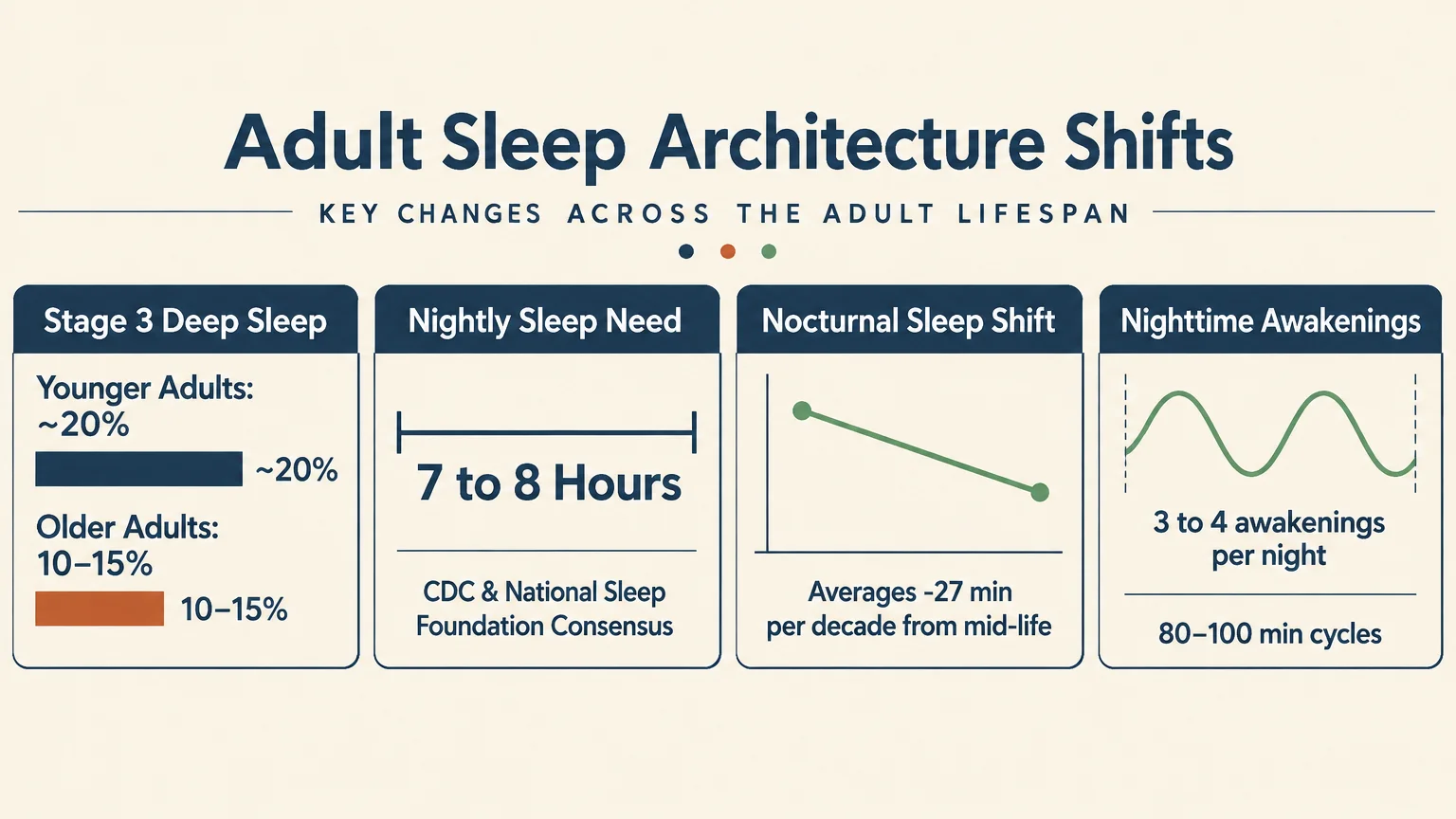
Many people assume that growing older automatically shrinks your biological requirement for rest, yet medical evidence shows otherwise. According to the Centers for Disease Control and Prevention (CDC) in May 2024, adults aged 65 and older still need 7 to 8 hours of nightly sleep.
The National Sleep Foundation reaffirmed that same 7-to-8-hour benchmark in a 2026 systematic review of 133 meta-analyses. By comparison, adults aged 61 to 64 are advised to aim for 7 to 9 hours, while younger adults ages 18 to 60 need 7 or more hours.
Both the National Institute on Aging (NIA) and Mayo Clinic emphasized in February 2025 that your underlying sleep need remains roughly constant across adulthood. What changes with age is not your body’s demand for restoration, but your brain’s ability to maintain continuous, unbroken slumber.
One of the earliest normal shifts occurs in Stage 3 deep sleep, also known as slow-wave sleep. Younger adults typically spend about 20 percent of their night in this deeply restorative stage, whereas older adults spend roughly 10 to 15 percent there.
Slow-wave sleep begins tapering off in middle age and can become largely absent after age 90 in some healthy individuals. Because you spend more time in lighter sleep stages, everyday sounds or slight movements rouse you much more easily than they once did.
Total nightly sleep time also inches downward gradually across the lifespan. Healthy aging research summarized by MedlinePlus and the National Institutes of Health (NIH) in July 2024 notes that nocturnal sleep decreases by an average of about 27 minutes per decade from mid-life into your eighth decade.
As a result, many older adults log about 6.5 to 7 hours of actual sleep per night even when they spend more time resting in bed. Spending extra hours lying awake under the covers often creates frustration unless you recognize this shift as normal biology.
Your sleep cycles naturally fragment more as you grow older, too. According to the NIA in 2025, older adults move through 3 to 5 sleep cycles each night, with each cycle lasting roughly 80 to 100 minutes.
Between those cycles, MedlinePlus and NIH data from 2024 show that older adults wake up an average of 3 to 4 times per night. Abrupt transitions between sleep and wakefulness combine with noise, room temperature shifts, or nighttime bathroom trips to interrupt continuity.
Another classic hallmark of normal aging is an earlier internal schedule, called a circadian phase advance. Deep inside your hypothalamus sits your central clock, the suprachiasmatic nucleus, made up of roughly 20,000 neurons that coordinate your daily rhythms.
As the NIA and EuroHealth/NIH reviews explain, this central clock shifts earlier with age, triggering evening melatonin release and core body temperature drops sooner than before. Consequently, you may feel drowsy well before your favorite late show ends and wake naturally around sunrise.
Far from signaling decline, an earlier rhythm simply invites you to honor your body’s updated timing rather than fighting it. Interestingly, national data shows that many older adults actually fare better with sleep duration than middle-aged workers.
In 2024 figures released by the CDC National Center for Health Statistics (NCHS) in April 2026, only 27.2 percent of adults aged 65 and older averaged fewer than 7 hours of sleep. That rate is lower than the 30.5 percent national adult average and the 34.5 percent rate among ages 50 to 64.
Older adults also reported less trouble initially drifting off compared with young adults. Only 12.8 percent of seniors experienced difficulty falling asleep most days or every day over the prior month, compared with 18.3 percent of adults aged 18 to 34.
Reviewing the CDC sleep health guidelines can help you compare your current schedule against these realistic benchmarks. Recognizing normal shifts frees your energy to focus on the symptoms that genuinely deserve medical attention.
Red Flags: Sleep Problems That Are Not Normal Aging
While lighter sleep and earlier mornings belong to healthy aging, chronic exhaustion and disrupted breathing never do. Clinical sleep disorders affect between 40 and 70 percent of adults aged 65 and older, according to 2024 research in Frontiers in Neurology.
Up to 50 percent of older adults live with ongoing sleep complaints that erode mood, balance, and cardiovascular health. Unfortunately, far too many people brush off serious warning signs as inevitable consequences of getting older.
A 2022 Kaiser Permanente study of adults aged 65 to 79 revealed a striking communication gap in routine healthcare. Although 30 percent slept under 7 hours, 13 percent had frequent insomnia, and nearly 20 percent relied on sleep aids, only 10 percent had discussed sleep with a clinician that year.
The clearest red flag of an abnormal sleep problem is persistent daytime sleepiness. Both the NIA in 2025 and Mayo Clinic in 2024 stress that waking up unrefreshed, dragging through afternoons, or needing frequent naps to function requires a medical evaluation.
Underlying culprits often include obstructive sleep apnea, chronic insomnia, depression, or hidden side effects from daytime prescriptions. Treating the root cause restores daytime alertness far more effectively than pushing yourself through fatigue with extra caffeine.
Non-insomnia disorders are remarkably common later in life, even when you think you simply have trouble resting. In the Mayo Clinic Study on Aging of adults aged 70 to 89, 59 percent showed signs of at least one non-insomnia sleep disorder.
Sleep-related leg cramps appeared in 32 percent of participants, while periodic limb movements affected 17.4 percent. Obstructive sleep apnea (OSA) showed up in 17.6 percent of older adults, with men four times more likely to experience it than women.
Because OSA repeatedly pauses your breathing during the night, your oxygen dips and your brain jolts awake dozens of times without full memory. Warning signs include loud snoring, gasping or choking sounds noticed by a partner, morning headaches, and waking with a dry mouth.
Restless legs syndrome (RLS) is another treatable disruptor that grows more common with age. The Mayo Clinic Study on Aging found RLS in 8 percent of participants, while other geriatric reviews estimate it affects between 10 and 35 percent of adults over 65.
If you feel an irresistible urge to move your legs accompanied by creeping, tingling, or aching sensations when sitting still at night, bring that symptom to your doctor. Targeted iron checks, stretching, and tailored care can calm your legs before bedtime.
One specific nighttime behavior warrants urgent neurological evaluation rather than casual dismissal. Acting out your dreams by kicking, punching, thrashing, or yelling is known as REM sleep behavior disorder (RBD), which appeared as probable RBD in 9 percent of Mayo Clinic Study participants.
Normally, your brainstem switches off voluntary muscle movement during vivid dream sleep to keep you safely still in bed. When that protective paralysis fails, you physically enact whatever your dream presents, sometimes injuring yourself or a bed partner.
International cohort data published in Neurology in December 2023 show that roughly 6.3 percent of people with idiopathic RBD convert each year to an alpha-synucleinopathy. Those conditions include Parkinson’s disease, dementia with Lewy bodies, and multiple system atrophy.
Conversion rates reach 50 percent at 7.5 years and 73 to 73.5 percent at 12 years, rising above 80 to 90 percent over longer follow-up periods reported in Alzheimer’s & Dementia in 2024 and Université de Montréal research in 2025. Catching RBD early lets specialists monitor brain health proactively.
Whenever nighttime symptoms leave you unsafe, breathless, or foggy throughout the day, consult the National Institute on Aging sleep resource and schedule a focused visit with your clinician. Early diagnosis protects both your nights and your long-term independence.
Foundations of Physical Wellbeing: Sleep, Stress, Movement, and Nutrition
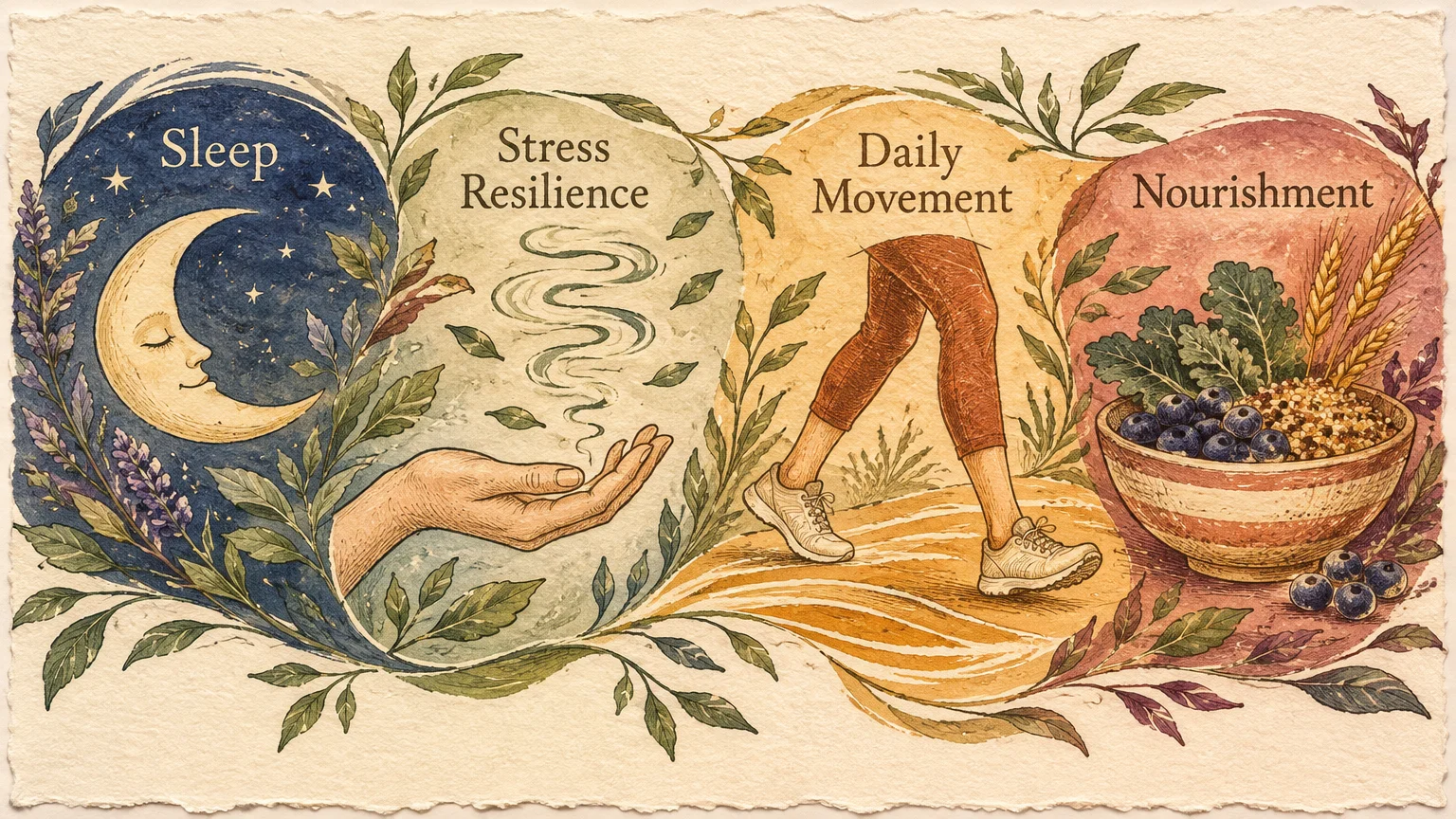
Restorative sleep never operates in isolation from the rest of your body. Your sleep quality, stress response, daily movement, and nutritional habits interact continuously like four gears inside one holistic engine.
When chronic stress keeps your nervous system braced for trouble, elevated stress hormones make lighter older-adult sleep feel razor-thin. Calming your daytime stress response lowers nighttime arousal so your brain can transition smoothly between sleep cycles.
Simple physiological habits help shift your body out of alert mode before bedtime. Slow nasal breathing with extended exhales, gentle progressive muscle relaxation, and quiet reflection tell your nervous system that the day’s demands have finished.
Daytime movement reinforces that same restorative cycle from another angle. Regular physical activity builds healthy sleep pressure—the natural biological drive for deep rest—while easing stiff joints and supporting steady mood.
Pairing morning movement with outdoor sunlight offers a double reward for your aging circadian clock. Bright morning light hits specialized eye receptors and anchors your suprachiasmatic nucleus, sharpening daytime alertness and timing evening melatonin release reliably.
Even gentle routines such as a morning neighborhood walk, gardening, or water aerobics create clear contrast between active daylight and restful darkness. Staying indoors under dim artificial lighting all day blurs that biological contrast and fragments nighttime sleep.
What and when you eat or drink also shapes how smoothly you stay asleep. Sleep specialists advise finishing large or heavy meals 2 to 3 hours before bedtime so active digestion does not elevate heart rate or trigger reflux when you lie flat.
Pay close attention to caffeine timing as well, since your metabolism processes stimulants more slowly over time. As the CDC noted in May 2024, caffeine carries an average half-life of roughly 5 hours, meaning an afternoon cup still circulates well into the night.
Limiting coffee, black tea, and dark chocolate to morning hours protects your fragile slow-wave sleep stages. Similarly, front-loading your water intake earlier in the day and sipping lightly after dinner reduces middle-of-the-night bathroom trips.
Your bedroom environment serves as the physical stage for every sleep cycle. Because core body temperature must drop slightly to initiate and hold deep sleep, an overly warm room fragments older adults’ rest rapidly.
A 2023 longitudinal study from Hebrew SeniorLife found that sleep efficiency in older adults peaked when bedroom temperatures stayed between 20 and 25 degrees Celsius, or 68 to 77 degrees Fahrenheit. When temperatures climbed to 25 to 30 degrees Celsius, sleep efficiency dropped by 5 to 10 percent.
More recently, a February 2026 Griffith University study in adults aged 65 and older showed that holding overnight bedroom temperatures near 24 degrees Celsius, or 75 degrees Fahrenheit, reduced nighttime cardiovascular stress responses. Breathable cotton bedding, a quiet fan, or cracked windows keep heat from waking you.
Smart napping habits round out your physical foundation by refreshing afternoon energy without stealing nighttime sleep drive. Both the American Academy of Sleep Medicine (AASM) and Mayo Clinic recommend limiting naps to 20 to 30 minutes in the early afternoon, roughly 1:00 to 3:00 p.m.
Keeping naps brief prevents you from slipping into deep sleep and waking with sleep inertia—that heavy grogginess that can linger for up to 35 minutes. Late-afternoon naps also drain the sleep pressure you need to fall asleep smoothly at night.
Longer naps carry health signals worth heeding as well. Mayo Clinic noted in 2024 that observational studies link daily naps exceeding 60 minutes with elevated risks of hypertension, diabetes, and heart disease.
Additionally, a SLEEP 2025 study tracking 86,565 adults with a mean age of 63 associated longer and irregular daytime naps with higher mortality risk. If you crave long daily naps to survive the afternoon, treat that urge as a medical clue rather than harmless indulgence.

Emotional Mindset and Social Connection for Restorative Nights
Physical habits set the stage for good rest, yet your emotional relationship with sleep often determines whether a normal 3:00 a.m. awakening passes quietly or snowballs into hours of frustration. How you interpret wakefulness shapes your heart rate within seconds.
If you glance at the clock and tell yourself tomorrow is ruined, your brain floods your bloodstream with alert signals. Replacing alarm with calm acceptance—reminding yourself that waking 3 or 4 times a night is normal biology—keeps your body relaxed enough to drift back off.
When wakefulness stretches beyond roughly 20 minutes, stop forcing sleep inside your bed. Mayo Clinic advises stepping out of the bedroom to do a quiet, low-light activity such as reading a paper book or listening to gentle music until your eyelids feel heavy.
Leaving bed breaks the mental link between your mattress and anxious tossing and turning. Over time, your brain relearns that your bed belongs strictly to calm rest rather than clock-watching worry.
Digital boundaries before bedtime protect both your emotional calm and your melatonin curve. In May 2024, the CDC recommended turning off electronic screens at least 30 minutes before turning in for the night.
Scrolling late-evening news or bright tablets delays melatonin signals while feeding your mind fresh worries right when it needs stillness. Swapping screens for a paper journal, soothing audio, or quiet conversation creates a softer landing into rest.
Your social world outside the bedroom influences nighttime sleep just as powerfully as evening routines do. Loneliness and social isolation quietly raise baseline vigilance, leaving your nervous system subtly on guard even in a safe home.
Meaningful relationships provide emotional security and predictable daytime structure that reinforce circadian health. Sharing regular meals with family, joining a walking group, or volunteering at a local library gives your days purpose and healthy fatigue.
Retirement can unintentionally erase those external time cues that once kept wake times, meals, and social contact consistent. Rebuilding community anchors—a morning coffee club, a community class, or weekly phone dates—keeps your internal clock steady and lifts mood.
Intimate partnerships also deserve open, compassionate communication when sleep changes arrive. Couples frequently experience mismatched circadian timing or disruptions from snoring, restless legs, or early dawn awakenings.
Discussing adjustments without blame protects relationship warmth while prioritizing health for both partners. Whether that means using separate blankets, staggering bedtimes peacefully, or agreeing to get snoring evaluated, teamwork turns nighttime friction into mutual care.
If persistent worry, grief, or low mood keeps your mind racing after dark, exploring a behavioral therapy provider directory can connect you with professionals skilled in late-life emotional and sleep health. Support for your mind directly strengthens your physical rest.
Future-Proofing Your Sleep: Safe Treatments, Habit Stacking, and Preventive Care
Protecting your sleep over the coming decades requires looking carefully at the tools you reach for when rough nights hit. Many older adults turn to sleeping pills hoping for quick relief, yet national data reveal concerning patterns.
According to 2024 CDC NCHS figures released in April 2026, 15.8 percent of adults aged 65 and older used sleep aids most days or every day. That exceeds both the 12.9 percent rate among all U.S. adults and the 10.5 percent rate among ages 18 to 34.
Seniors recorded the highest daily or near-daily reliance on prescription sleep medications at 8.8 percent and over-the-counter sleep remedies or supplements at 7.6 percent. Another 1.7 percent used marijuana or CBD products to manage rest.
Medications marketed for sleep often carry steep hidden risks as your liver and kidneys process drugs more slowly with age. Under the 2023 American Geriatrics Society (AGS) Beers Criteria, experts strongly advise adults 65 and older to avoid benzodiazepines and nonbenzodiazepine Z-drugs such as zolpidem, eszopiclone, and zaleplon.
The AGS Beers Criteria also warns seniors away from over-the-counter sleep aids containing first-generation antihistamines like diphenhydramine and doxylamine. Even though they sit openly on pharmacy shelves, these drugs heighten risks of delirium, memory impairment, falls, fractures, hospitalizations, and motor vehicle crashes.
Before taking any new over-the-counter sleep product or herbal supplement, ask your pharmacist or physician to review your full medication list. Safer, longer-lasting solutions exist without clouding your balance or daytime cognition.
Both the American College of Physicians and the AASM—in 2021 and reaffirmed 2026 guidelines—recommend Cognitive Behavioral Therapy for Insomnia (CBT-I) as the first-line treatment for chronic insomnia in adults. Rather than sedating your brain temporarily, CBT-I retrains your sleep drive, circadian timing, and nighttime thought patterns.
In its 2026 clinical practice guideline, the AASM suggests pairing CBT-I with medication over medication alone only when rapid short-term increases in total sleep time are prioritized. Crucially, the guideline recommends against routinely adding sleep medication to CBT-I when CBT-I alone can succeed.
You can explore structured programs, sleep logs, and patient sleep education and self-assessment tools to see how behavioral therapy works in practice. Many trained clinicians now deliver CBT-I effectively through brief telehealth visits as well as in person.
For lasting resilience, weave sleep-supportive behaviors into your existing daily habits through habit stacking. Instead of inventing complicated checklists, attach one small new cue to something you already do reliably every day.
Pair your morning tea with stepping onto a sunny porch or sitting beside a bright window for natural circadian light. Attach five minutes of gentle calf and hamstring stretching to your evening tooth-brushing routine to ease nighttime leg cramps.
Track simple patterns ahead of your annual preventive checkups so you never fall into the 90 percent who stay silent about sleep. Jot down your usual bedtime, wake time, daytime energy rating, and any snoring or leg discomfort across one typical week.
Integrating sleep tracking with lifestyle medicine principles turns yearly doctor visits into proactive strategy sessions. Sharing concrete notes empowers your clinician to adjust blood pressure timing, screen for sleep apnea, or refer you to CBT-I early.
Common Questions About Aging and Sleep
What should I do after a setback of several bad nights in a row?
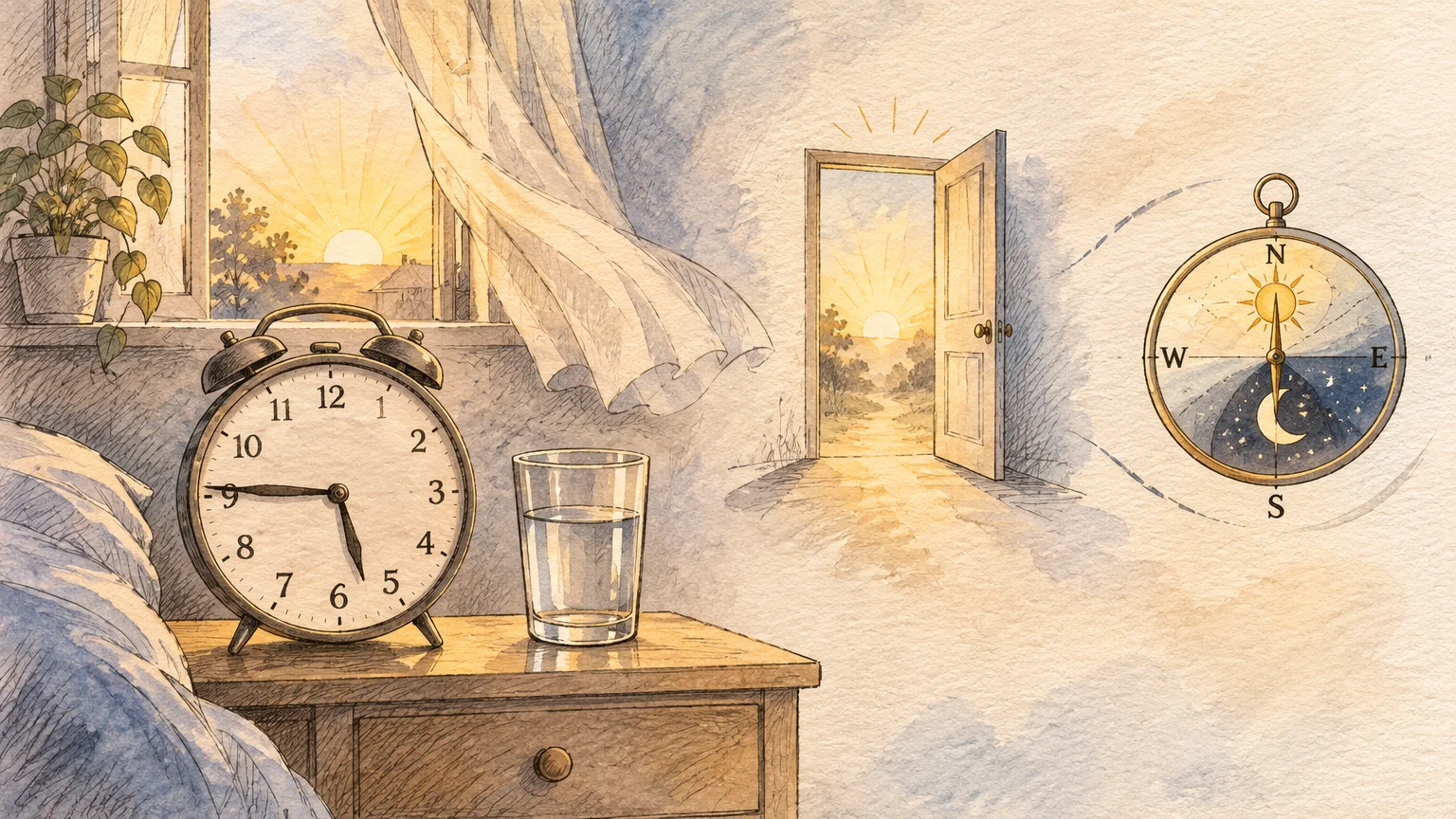
Resist the urge to sleep late, nap all afternoon, or go to bed hours early to catch up, because those moves weaken your sleep drive further. Keep your regular morning wake time steady, get outdoor light early, and trust that built-up sleep pressure will restore deeper rest within a few nights.
How can I improve my sleep if mobility issues or chronic pain limit my exercise?
Gentle seated stretches, chair yoga, light upper-body resistance bands, or warm water movement still build healthy physical fatigue without straining sore joints. Ask a physical therapist or physician about pain timing strategies and supportive pillows that align your spine comfortably through the night.
What if I do not have extra hours in my day for an elaborate bedtime routine?
You never need a long spa ritual to signal rest to your brain. Dimming overhead lamps, silencing phones 30 minutes before bed, and taking five slow breaths on the edge of your mattress deliver powerful cues in minimal time.
When and how should I seek professional support for ongoing sleep trouble?
Schedule a dedicated medical visit if trouble falling or staying asleep lasts more than a few weeks, if daytime drowsiness disrupts daily safety, or if anyone notices loud gasping or dream enactment. Bring a brief sleep diary and your complete medication list, and ask specifically about sleep apnea screening or a referral for CBT-I.
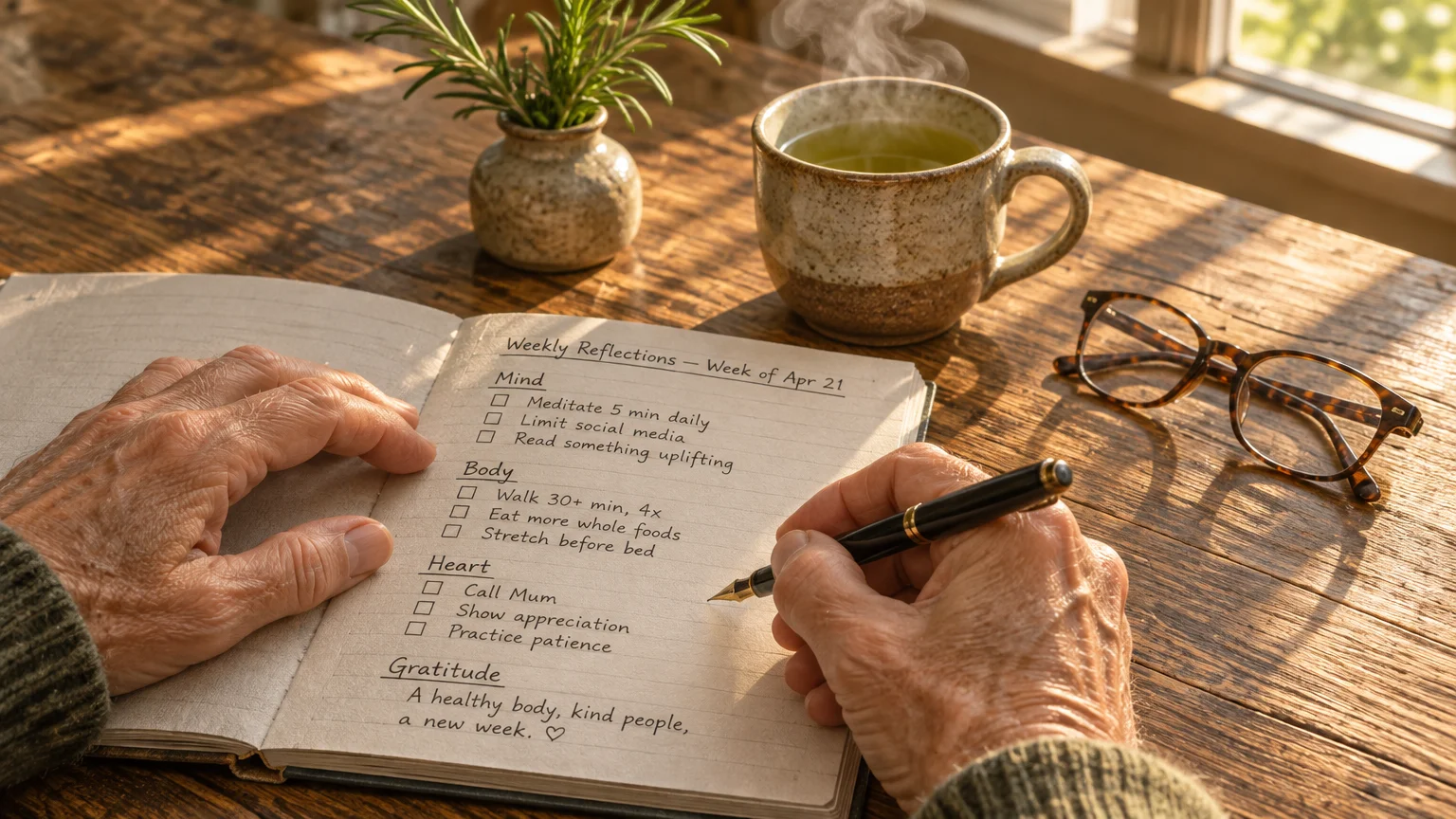
Creating Your Weekly Wellbeing Check-In Ritual
Lasting sleep health grows through steady curiosity rather than perfection on any single night. Choose one calm morning each week—perhaps Sunday over breakfast—to run a brief personal wellbeing check-in.
Notice how your energy felt across the week, how consistent your wake times stayed, which foods or late screens disrupted your rest, and how connected you felt to friends or community. Treating setbacks as useful data keeps self-criticism out of your bedroom.
Make sure you celebrate every small win along the way, whether that means skipping an afternoon coffee, stepping outside for morning sun, or finally asking your doctor about a nagging sleep symptom. Each intentional adjustment reinforces a calmer mind, a steadier body, and brighter mornings for years ahead.