

Turning 65 transforms your medical benefits from a standardized employer plan into a personalized healthcare system. Understanding these pivotal shifts protects your physical vitality and safeguards your retirement savings.
Navigating this shift proactively ensures continuous access to your trusted doctors and essential prescriptions. A smooth transition empowers you to build a preventive wellness routine tailored to your next chapter.
Crucial deadlines and federal regulations dictate how your health insurance functions from this milestone forward. Knowing the rules in advance gives you total control over your care.

Science Snapshot: Health Coverage and Long-Term Vitality
Longitudinal research shows that continuous health coverage directly improves chronic disease outcomes. Insurance disruptions often lead older adults to delay essential preventive screenings.
Evidence from the Centers for Disease Control and Prevention chronic disease guidelines confirms that routine clinical assessments reduce avoidable hospitalizations. Timely primary care keeps manageable conditions from escalating into cardiovascular emergencies.
Financial stress regarding medical access also elevates systemic cortisol and inflammatory markers. Establishing predictable coverage at 65 safeguards both emotional peace and cellular health.
10 Key Changes to Your Health Coverage at 65
1. The 7-Month Initial Enrollment Window Activates
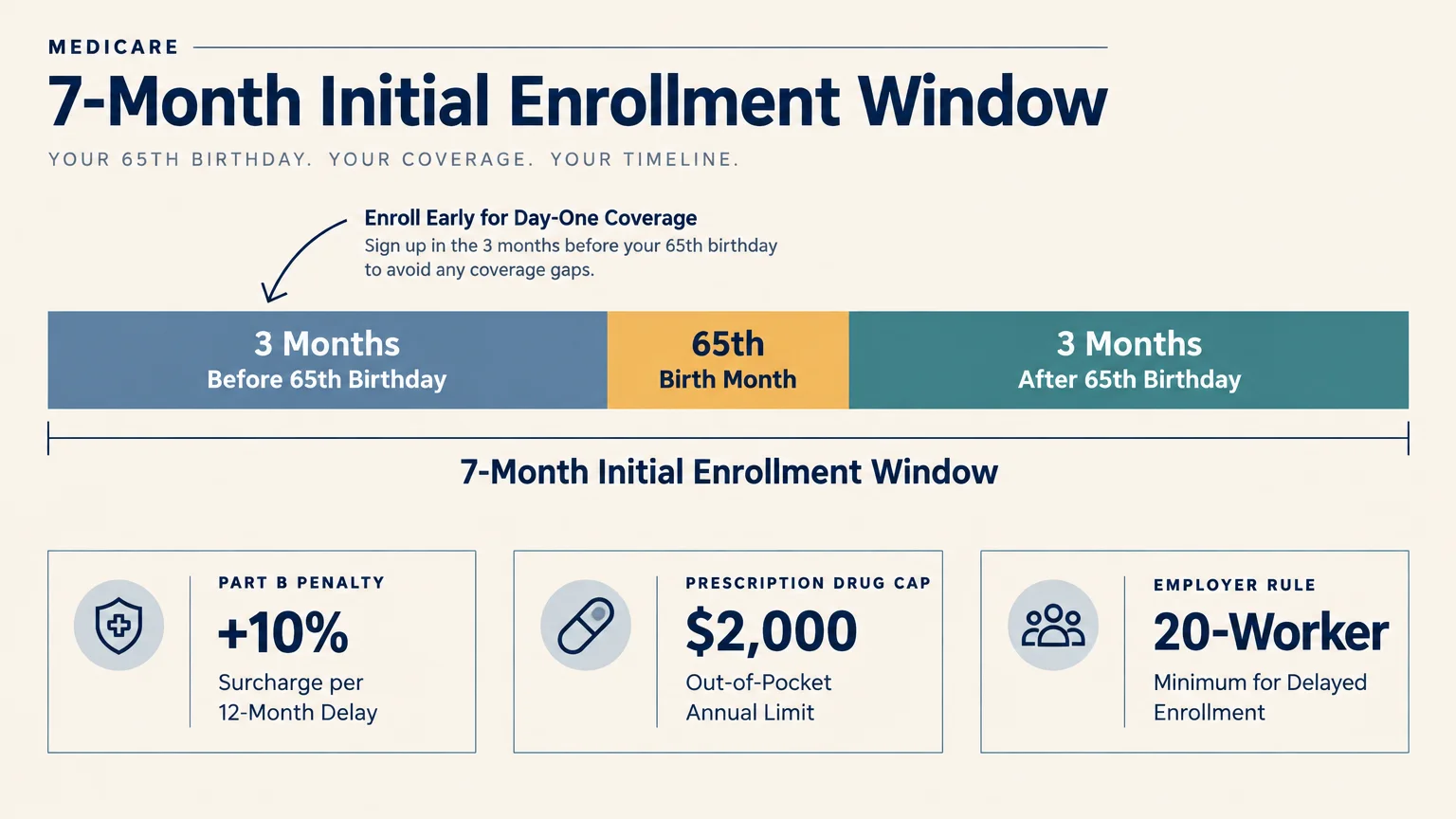
Your primary enrollment window spans seven critical months. This Initial Enrollment Period includes the three months before your 65th birthday, your birth month, and the three months after.
Enrolling during the first three months ensures your coverage activates on the first day of your birth month. Later enrollment can delay your effective start date by several months.
2. Employer Size Dictates Whether You Must Enroll
Active employment does not automatically exempt you from federal enrollment rules. If your employer has fewer than 20 workers, Medicare becomes your primary payer when you turn 65.
Failing to enroll in Parts A and B under a small employer can leave you without valid primary coverage. Workplace plans with 20 or more employees allow you to delay enrollment safely.
Consult the official Medicare enrollment guidelines to verify your company’s coordination rules. Note that COBRA and retiree plans do not qualify as active employer coverage.
3. Missing Deadlines Triggers Lifetime Premium Penalties
Delaying Medicare without qualifying group coverage triggers permanent financial surcharges. Your Part B premium increases by 10 percent for every full 12-month period you were eligible but unenrolled.
This penalty remains active for as long as you maintain Part B coverage. Additionally, going 63 consecutive days without creditable prescription drug benefits generates a permanent Part D monthly penalty.
4. Prescription Drug Costs Face a $2,000 Out-of-Pocket Cap
Federal reforms have transformed out-of-pocket medication costs under Part D. Beneficiaries now benefit from a firm $2,000 annual out-of-pocket cap on covered prescription drugs.
This cap permanently eliminates the former coverage gap known as the donut hole. You can also utilize the Medicare Prescription Payment Plan to spread prescription expenses into predictable monthly installments.
5. Health Savings Account Contributions Must Cease
Enrolling in Medicare alters your ability to fund tax-advantaged accounts. Under Internal Revenue Service regulations on health savings accounts, you cannot make HSA contributions once enrolled in any Medicare tier.
This restriction includes premium-free Part A, which applies retroactively for up to six months if you claim benefits after 65. You must stop all HSA contributions six months before applying to avoid tax penalties.
6. A Guaranteed Window Opens for Medigap Coverage
Turning 65 triggers a one-time, six-month Medigap Open Enrollment Period. This window starts the first month you are 65 or older and enrolled in Part B.
Insurers cannot use medical underwriting, deny applications, or charge higher premiums for pre-existing conditions during this period. Missing this window forfeits your guaranteed right to purchase supplemental coverage without health evaluations.
7. Out-of-Pocket Expenses Shift to Standard Rates
Standard Medicare replaces commercial copay structures with standardized federal rates. For Part B, beneficiaries pay a standard monthly premium of $185.00 alongside an annual deductible of $257.
After meeting your Part B deductible, you generally pay 20 percent of approved outpatient clinical costs. Because original Medicare has no out-of-pocket maximum, supplemental plans are vital for managing financial exposure.
8. Higher Incomes Trigger Stepped Premium Surcharges
High earners face stepped surcharges known as the Income-Related Monthly Adjustment Amount. Surcharges apply to Part B and Part D premiums once individual income exceeds $106,000 or joint returns surpass $212,000.
Medicare calculates these adjustments using your tax return from two years prior. If your income has dropped due to retirement, you can appeal using life-changing event documentation.
9. You Qualify for a Free “Welcome to Medicare” Visit
Medicare Part B covers a one-time preventive physical examination at zero out-of-pocket cost. You must schedule this “Welcome to Medicare” visit within your first 12 months of Part B coverage.
This evaluation assesses your baseline vital signs, fall risk, vision, and cognitive health. Your clinician also constructs a personalized written plan for future screenings, vaccines, and preventive monitoring.
10. Lifestyle and Wellness Benefits Require Strategic Selection
Original Medicare concentrates on diagnostic and acute medical interventions rather than comprehensive lifestyle wellness. Routine dental cleanings, eyeglasses, hearing aids, and gym memberships lack coverage under original Parts A and B.
Many older adults choose Medicare Advantage plans or secondary insurance riders to secure dental, vision, and fitness benefits. Evaluate these options carefully to align your coverage with your integrative lifestyle preferences.

Strategy Pillars for Sustainable Health at 65 and Beyond
Pillar 1: Proactive Clinical Partnerships and Prevention
Audit your healthcare team to confirm that your preferred clinicians participate in your chosen coverage network. Strong therapeutic relationships ensure prompt preventive screenings and proactive chronic disease management.
Clinical evidence from the National Institute on Aging clinical resources indicates that active patient-provider dialogue substantially boosts treatment adherence. Schedule an annual wellness visit each year to review your evolving health goals.
Pillar 2: Functional Movement and Physical Resilience
Preserving muscle mass and balance prevents functional decline and supports independent living. If joint stiffness or balance concerns arise, ask your doctor for a physical therapy referral.
Medicare Part B covers medically necessary physical therapy to restore mobility and stability. Complement your formal therapy with daily walking and gentle resistance exercises to sustain musculoskeletal vitality.
Pillar 3: Cognitive Agility and Purposeful Living
Cognitive health relies on active mental stimulation, restful sleep, and vibrant community connections. Medicare annual wellness exams include cognitive evaluations to help detect early memory shifts.
Engage regularly in lifelong learning, creative hobbies, and community volunteer work. Strong social bonds reduce chronic emotional stress, directly supporting cellular longevity and neurological health.
Pillar 4: Metabolic Nutrition and Evidence-Based Care
Metabolic resilience requires mindful food choices as protein absorption and caloric demands evolve. The American College of Physicians preventive guidance underscores nutritional counseling as a cornerstone of preventive medicine.
Part B covers medical nutrition therapy for qualifying individuals managing diabetes or kidney conditions. Collaborate with a registered dietitian to establish whole-food eating habits that regulate blood sugar and protect cardiovascular function.

Clinician and Patient Perspectives on Coverage Transitions
Healthcare providers emphasize that navigating insurance rules proactively directly improves clinical care. Clinicians frequently see patients delay vital care due to confusion over newly acquired benefits.
Geriatric specialist Dr. Elena Morales emphasizes that understanding coverage specifics avoids surprise bills and encourages timely appointments. She recommends reviewing preventive schedules annually with your care team.
Patient advocate Robert Chen shares that researching network details four months before turning 65 eliminated administrative chaos. His preparation allowed him to retain his doctors without interrupting treatments.
Frequently Asked Questions
Can I keep my existing personal physicians when enrolling in Medicare?
You can keep your physicians if they participate in original Medicare and accept Medicare assignment. Most primary care clinicians participate in the federal program.
If you enroll in a Medicare Advantage plan, you must verify that your doctors belong to that specific provider network. Contact your physician’s administrative staff to confirm their current network status.
How does working past 65 at a large company affect my enrollment?
If your company employs 20 or more workers, your group coverage remains primary. You can delay Part B penalty-free while you remain actively covered under that workplace plan.
Once your active employment or group coverage ends, you receive an eight-month Special Enrollment Period to sign up for Part B without incurring late fees.
How does the $2,000 prescription drug cap impact high-cost specialty medications?
Under Medicare Part D, out-of-pocket costs for covered medications are capped at $2,000 per calendar year. Once you hit this limit, you pay zero out-of-pocket for covered medications.
You can also spread substantial prescription expenses into manageable monthly installments through the Medicare Prescription Payment Plan. This program protects your budget from large, upfront pharmacy charges.
When should I seek individualized guidance from a professional benefits counselor?
Seek guidance if you have unique circumstances like military TRICARE, retiree plans, COBRA, or chronic health conditions. Personalized counseling ensures you do not inadvertently trigger lifelong coverage penalties.
Connect with your local State Health Insurance Assistance Program for free, unbiased Medicare guidance. Certified counselors provide objective support without trying to sell you insurance products.
Your Path Forward to Confident Coverage
Transitioning your healthcare at 65 represents a powerful opportunity to design a proactive, protective medical plan. Mastering these rules preserves both your physical vitality and long-term financial security.
Take your first step today by verifying whether your current workplace plan qualifies as primary coverage. Knowing where you stand brings instant clarity to your next enrollment decisions.
Which areas of your physical health will benefit most when your coverage aligns with your long-term wellness vision? Reflect on your lifestyle priorities as you step forward into this empowering life transition.









Leave a Reply