

Your skin mirrors the operational health of your vital organs every single day. Learning to read these subtle shifts provides critical insight into your metabolic, hepatic, and immune function.
Many systemic diseases reveal themselves across your cutaneous tissue long before internal organ damage occurs. Tracking unexplained surface changes empowers you to catch serious conditions during their earliest stages.
Understanding what your skin says about your health allows you to pursue targeted clinical care. This proactive awareness helps you resolve deep physiological dysfunction instead of merely treating cosmetic blemishes.
10 Crucial Skin Signs of Internal Health Problems
1. Visible Jaundice
Jaundice causes a noticeable yellowish tint in your skin and the whites of your eyes. This coloration occurs when circulating bilirubin accumulates in underlying dermal tissues.
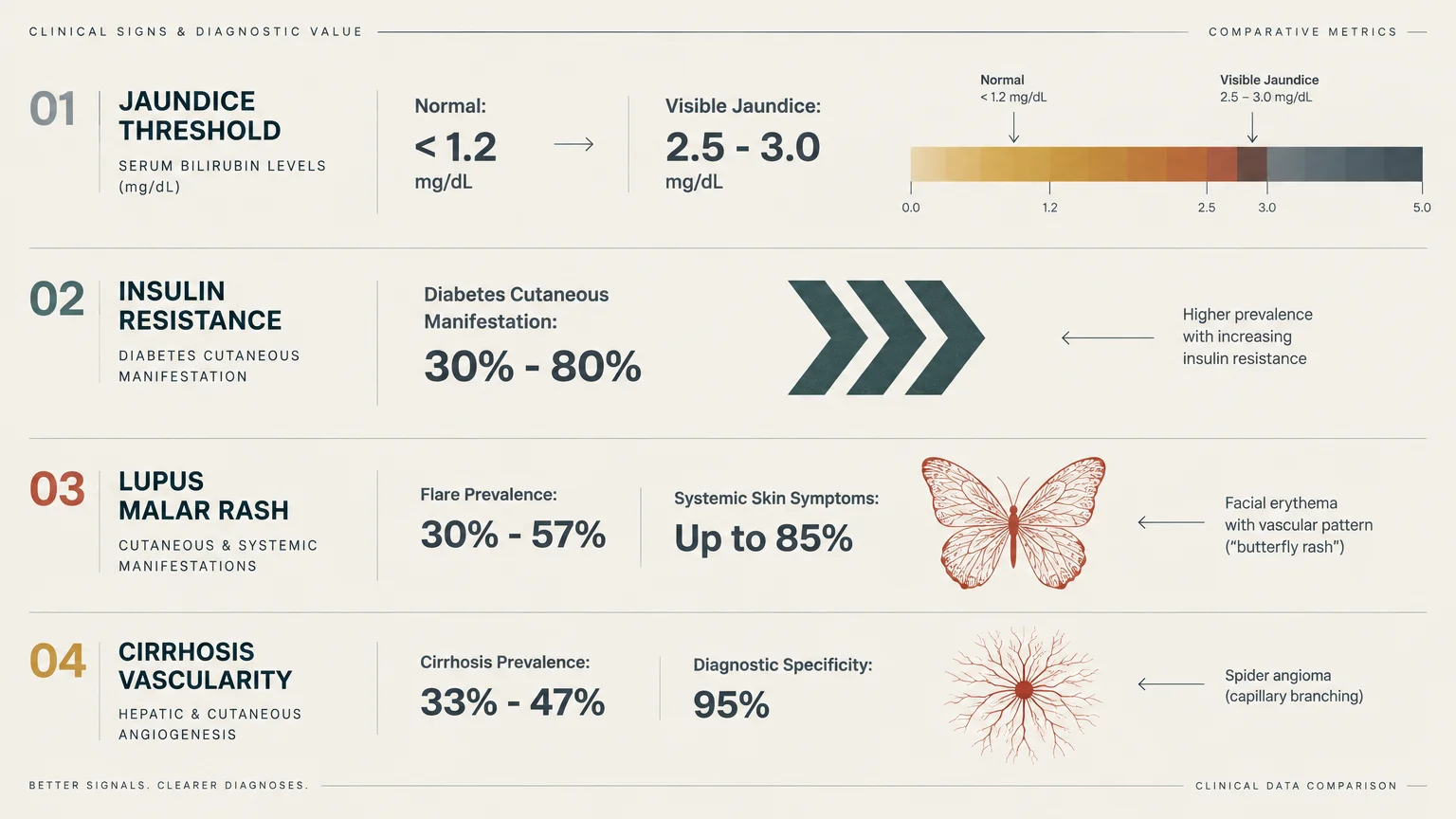
Visible jaundice typically appears when total serum bilirubin rises to 2.5 to 3.0 milligrams per deciliter. Normal adult baseline concentrations remain reliably below 1.2 milligrams per deciliter.
This discoloration warns you of liver dysfunction, gallbladder obstruction, or accelerated red blood cell hemolysis. You must seek urgent medical evaluation when your eyes or skin turn yellow.
2. Acanthosis Nigricans
Acanthosis nigricans creates dark, velvety plaques within your skin folds, particularly around your neck, armpits, and groin. Many individuals mistake these textured areas for simple hygiene oversights or friction marks.
Research shows that 30 percent to nearly 80 percent of people with diabetes develop cutaneous manifestations. Acanthosis nigricans serves as a primary dermatological hallmark of severe insulin resistance.
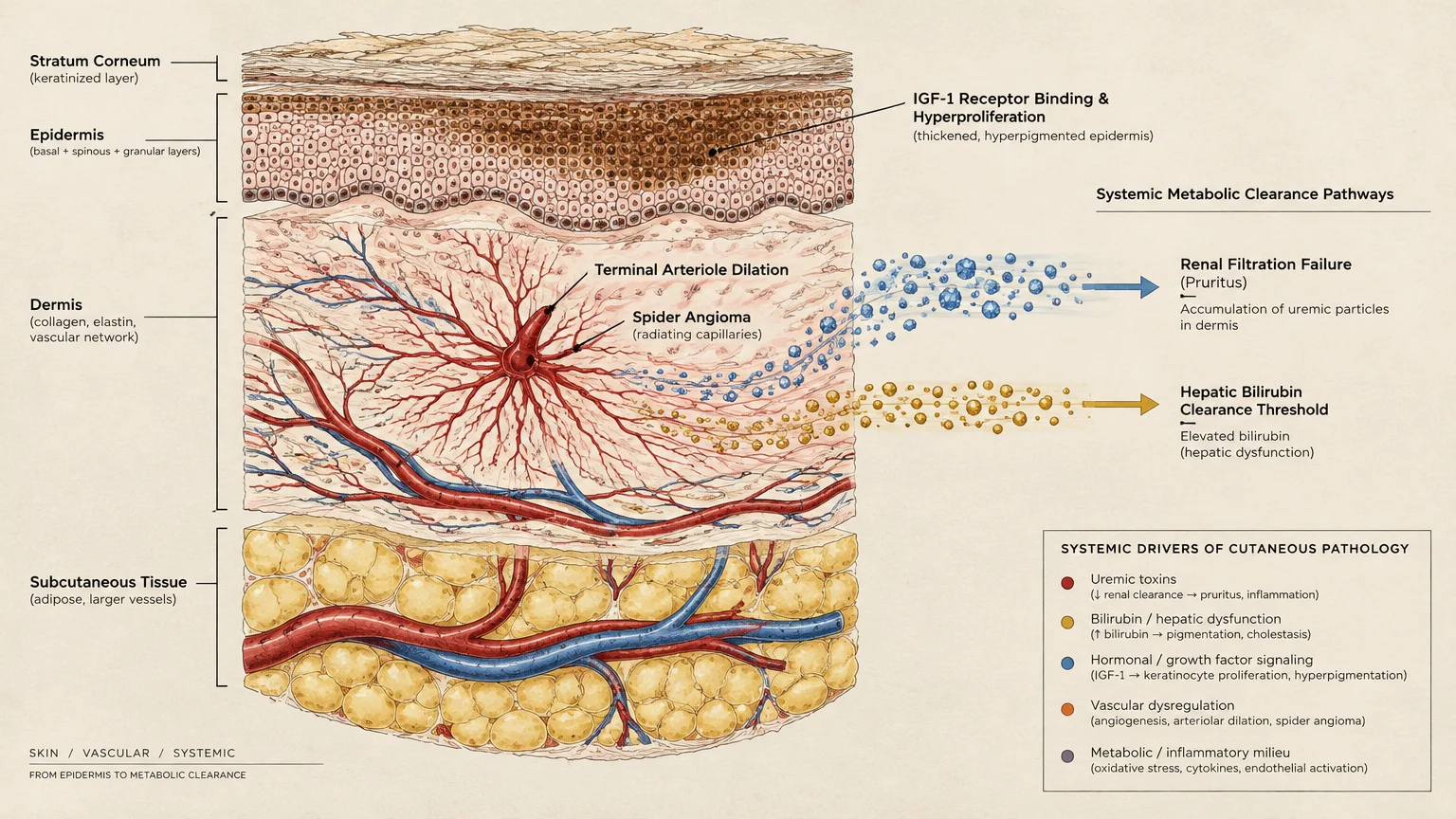
Excess circulating insulin binds to insulin-like growth factor receptors on your epidermal cells. This biochemical stimulation accelerates cellular proliferation, prompting thickened, hyperpigmented skin changes.
3. Malar Butterfly Rash
A malar rash produces a vivid red or purple eruption across your cheeks and nasal bridge. Crucially, this distinctive butterfly pattern spares your nasolabial folds around the mouth.
Clinical studies report that this flare occurs in 30 percent to 57 percent of individuals with systemic lupus erythematosus. Up to 85 percent of lupus patients experience skin symptoms during their disease.
Ultraviolet light exposure frequently triggers or worsens this autoimmune reaction. If sun exposure produces a persistent facial flush accompanied by joint pain, schedule an evaluation with a rheumatologist.
4. Unexplained Generalized Pruritus
Relentless, widespread itching without an obvious primary rash can signify impaired renal filtration. You may feel an overwhelming urge to scratch despite having completely clear skin.
According to the Dialysis Outcomes and Practice Patterns Study, 37 percent to 42 percent of hemodialysis patients experience moderate-to-severe pruritus. Clinicians refer to this persistent symptom as chronic kidney disease-associated pruritus.
Uremic toxins accumulate in systemic tissues when your kidneys cannot clear metabolic waste products. You should consult a nephrologist if persistent generalized itching resists standard topical moisturizers.
5. Multiple Spider Angiomas
Spider angiomas present as central red vascular spots surrounded by thin, radiating capillary extensions. When you compress the central arteriole, the entire lesion temporarily blanches before rapidly refilling with blood.
These vascular formations appear in 33 percent to 47 percent of patients with liver cirrhosis. The presence of multiple spider angiomas carries an estimated 95 percent diagnostic specificity for chronic liver disease.
Impaired hepatic clearance allows circulating estrogen metabolites to dilate your terminal arterioles. Discovering multiple spider angiomas across your chest or face warrants a comprehensive liver panel.
6. Xanthelasma Palpebrarum
Xanthelasma appears as soft, yellowish plaques on or around your inner eyelids. These localized deposits form when lipid-laden histiocytes accumulate within your superficial dermal tissue.
Approximately 50 percent of individuals with xanthelasma exhibit abnormal serum lipid profiles or hypercholesterolemia. These periorbital deposits often point toward significant lipid clearance difficulties.
These lesions can indicate elevated cardiovascular risk, even if you feel completely healthy. Ask your primary care provider for an advanced lipid panel when you observe these deposits.
7. Dermatitis Herpetiformis
Dermatitis herpetiformis causes intensely pruritic, symmetrical blistering clusters on your elbows, knees, buttocks, and lower back. Sufferers describe the sensation as an agonizing combination of burning and stinging.
This chronic blistering condition affects 15 percent to 25 percent of patients with celiac disease. Virtually 100 percent of individuals diagnosed with dermatitis herpetiformis have underlying gluten-sensitive enteropathy upon intestinal biopsy.
IgA antibodies bind to epidermal transglutaminase in your skin after you consume dietary gluten. A strict gluten-free diet remains the definitive therapy to resolve these blistering lesions.
8. Erythema Nodosum
Erythema nodosum causes painful, erythematous nodules that form primarily over your anterior lower legs. These warm, tender swellings reside deep within your subcutaneous fat tissue.
Between 2 percent and 15 percent of individuals with inflammatory bowel disease develop this reactive panniculitis. It appears substantially more often in Crohn’s disease than in ulcerative colitis.
The lesions frequently flare during active intestinal inflammation or systemic infections such as sarcoidosis. Treating the underlying gastrointestinal disease helps eliminate these tender subcutaneous nodules.
9. Pretibial Myxedema
Pretibial myxedema manifests as localized thickened, waxy plaques across the lower front areas of your legs. Your skin often takes on an indurated, orange-peel texture with deepened hair follicles.
This condition develops in roughly 1.5 percent to 4 percent of people with Graves’ disease. It represents a rare extrathyroidal complication of active thyroid autoimmunity.
Thyroid-stimulating hormone receptor antibodies stimulate your dermal fibroblasts to overproduce glycosaminoglycans. Managing your thyroid hormone levels helps control progressive tissue swelling and induration.
10. Diffuse Hyperpigmentation in Creases and Scars
Generalized hyperpigmentation can signal primary adrenal insufficiency, known clinically as Addison’s disease. You might notice unusual darkening across your palm creases, knuckles, recent scars, and inside your mouth.
When damaged adrenal glands produce insufficient cortisol, your pituitary gland compensates by releasing excessive adrenocorticotropic hormone. This hormone simultaneously triggers melanocyte stimulation, producing a pervasive bronzed skin tone.
Unexplained darkening paired with chronic dizziness, fatigue, and low blood pressure demands urgent endocrine testing. Restoring balanced corticosteroid levels typically normalizes skin pigmentation over time.
Science Snapshot: How Internal Systems Drive Cutaneous Pathology
Your cutaneous tissue serves as your largest and most vascular organ, receiving significant cardiac output. Because vast capillary networks nourish every layer, circulating hormones, metabolites, and inflammatory cytokines directly modulate epidermal behavior.
Clinical dermatology continually validates that the skin functions as an external monitor of internal homeostasis. When internal organs falter, microvascular damage and cellular receptor overactivation alter skin texture, color, and barrier integrity.
Researchers at the American Academy of Dermatology emphasize that identifying cutaneous clues accelerates systemic disease diagnosis. Recognizing these physical cues allows you to seek care before permanent internal organ injury occurs.

Strategy Pillars: Restoring Internal Health and Skin Integrity
Pillar 1: Clinical Evaluation and Diagnostic Testing
Never attempt to treat persistent, unexplained skin symptoms with over-the-counter creams alone. You need comprehensive diagnostic lab work to evaluate your liver enzymes, metabolic markers, and renal function.
Consult a board-certified physician who takes a thorough history and orders targeted testing. Clinical guidance from the National Institute of Diabetes and Digestive and Kidney Diseases highlights the value of prompt metabolic screenings.
Diagnostic tools like fasting blood glucose tests, comprehensive metabolic panels, and autoimmune antibody panels isolate underlying systemic imbalances. Establishing a definitive diagnosis directs your treatment toward long-term physiological resolution.
Pillar 2: Anti-Inflammatory Nutritional Support
Your dietary choices influence systemic inflammation, lipid balance, and intestinal barrier function. Prioritize whole, minimally processed foods that nourish your microbiome and stabilize postprandial glucose surges.
Incorporate omega-3 fatty acids from wild-caught fish or chia seeds to support microvascular integrity. Concurrently, increase your soluble fiber intake to assist hepatic bile clearance and maintain healthy cholesterol levels.
If you experience blistering rashes like dermatitis herpetiformis, consult resources from the Celiac Disease Foundation to implement strict gluten elimination. Removing dietary triggers relieves systemic immune stress and promotes dermal healing.
Pillar 3: Metabolic Health and Kidney Protection
Consistent physical activity enhances insulin sensitivity and lowers systemic vascular strain. Engaging in daily moderate exercise helps prevent the hormonal surges that fuel acanthosis nigricans.
Adequate hydration supports renal filtration, aiding your kidneys in clearing uremic waste products. Educational resources from the National Kidney Foundation emphasize hydration and blood pressure management for renal protection.
Pair aerobic movement with adequate restorative sleep to keep cortisol levels within normal ranges. Regulated cortisol prevents adrenal exhaustion and dampens chronic inflammatory cascades that irritate your skin.

Real Voices: Clinical Perspectives on Early Cutaneous Detection
Clinicians across multiple specialties stress the diagnostic power of cutaneous manifestations. Dermatologists often discover life-altering systemic conditions during what patients assumed were simple cosmetic consultations.
Internal medicine specialists frequently observe that subtle changes in skin elasticity or pigmentation precede abnormal blood tests. They encourage patients to document the timing and appearance of new cutaneous symptoms.
Patients diagnosed with celiac disease or autoimmune disorders frequently report years of unexplained skin irritation before receiving accurate diagnoses. Their experiences illustrate why you must advocate for comprehensive internal evaluations when topical treatments fail.
Health organizations such as the Centers for Disease Control and Prevention remind the public that early chronic disease detection significantly improves long-term outcomes. Listening to your skin can save your life.
Frequently Asked Questions About Skin and Internal Health
Can ordinary acne signify an internal health problem?
Yes, persistent adult acne often stems from internal hormonal imbalances or elevated systemic inflammation. Conditions like polycystic ovary syndrome create androgen surges that overstimulate sebaceous glands along your jawline.
If over-the-counter topical treatments fail to clear deep cystic breakouts, consult your physician. A medical provider can evaluate your sex hormones, fasting insulin, and dietary habits.
How quickly do skin symptoms resolve once an internal disease is treated?
The timeline for skin recovery varies depending on the underlying pathology and tissue turnover rates. Jaundice often clears within days or weeks as liver function stabilizes and bilirubin levels drop.
Conversely, resolving acanthosis nigricans or dermatitis herpetiformis may require several months of consistent dietary and medical management. Your cellular healing pace reflects how effectively you control the root disease.
Does severe dry skin always indicate chronic kidney disease?
No, dry skin most frequently results from cold weather, frequent hot showers, or harsh soaps. However, extreme dryness accompanied by relentless itching that disrupts sleep warrants diagnostic attention.
When standard emollients fail to provide relief, request basic kidney and thyroid blood tests from your doctor. Ruling out metabolic dysfunction gives you peace of mind.
Should I see a dermatologist or an internist for unexplained skin changes?
Starting with either medical professional is a valid and effective approach. A dermatologist excels at identifying specific skin lesions and performing diagnostic punch biopsies.
Meanwhile, an internist specializes in broad laboratory evaluations and systemic organ assessments. Collaborating with both specialists ensures you receive comprehensive, coordinated clinical care.
Your Next Step Toward Whole-Body Wellness
Take a few mindful moments today to examine your skin in natural daylight. Notice any unfamiliar textures, color shifts, or persistent patches across your face, neck, and limbs.
What subtle story is your body trying to tell you through your cutaneous tissue? Recognizing these physical messages gives you the power to intervene before minor symptoms become chronic concerns.
Schedule an open conversation with a trusted healthcare professional to discuss your observations. By honoring the connection between your skin and your internal organs, you take command of your lasting vitality.









Leave a Reply