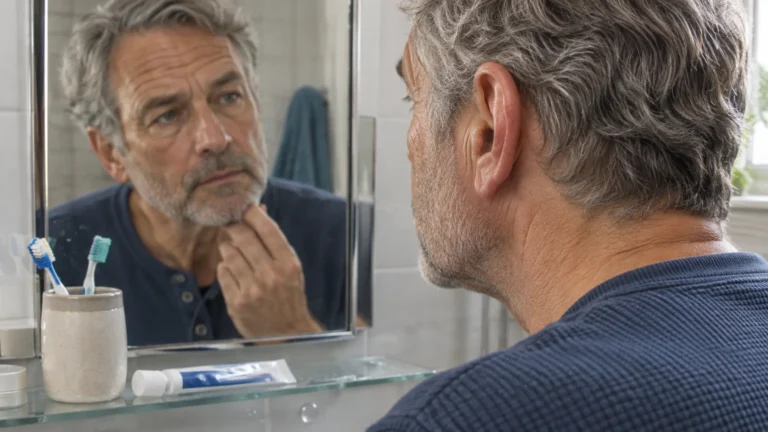

Loud snoring gets most of the attention when people think about sleep apnea, yet many individuals with this disorder never snore. You might wake up exhausted or battle afternoon brain fog without realizing your nighttime breathing is repeatedly interrupted.
Recognizing the quieter signs of sleep apnea helps you seek testing before fatigue, high blood pressure, or memory changes worsen. Understanding these hidden symptoms also helps caregivers spot risks in older adults and loved ones who sleep alone.
This guide explains seven overlooked warning signs, how doctors diagnose the condition, and the latest treatment options available today.
Why Sleep Apnea Happens Without Loud Snoring
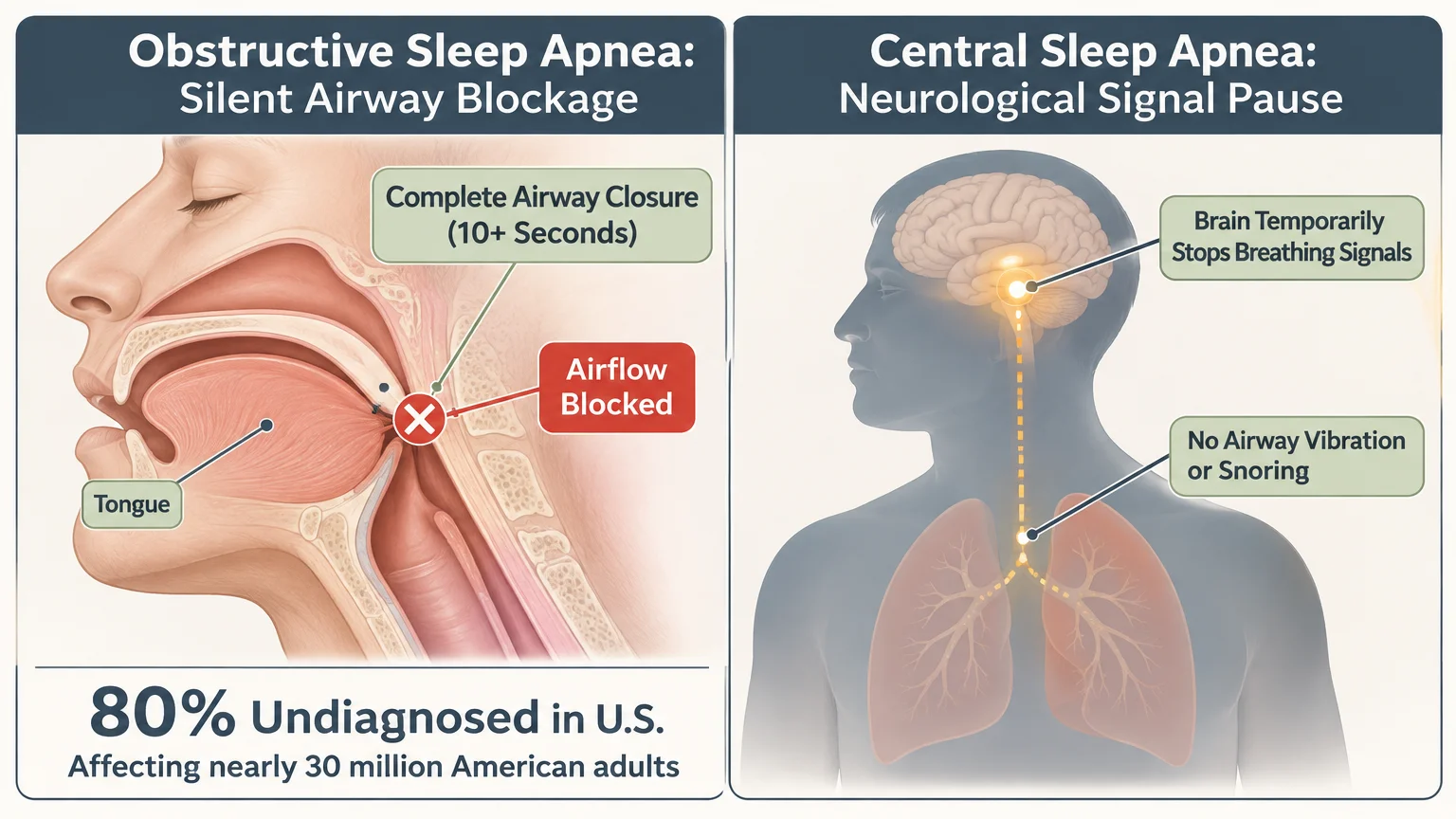
Snoring occurs when air squeezes past relaxed throat tissues and makes them vibrate, which is why common snoring causes include nasal congestion, sleeping on your back, and alcohol before bed. However, complete or partial airway blockages can still starve your body of steady oxygen without creating loud sound.
According to the Mayo Clinic overview of sleep apnea symptoms and causes, not everyone who has sleep apnea snores. Research shows that snoring appears in 70% to 95% of people with obstructive sleep apnea, leaving a meaningful group who stay quiet.
Central sleep apnea also unfolds silently because the problem starts in the brain rather than a narrowed throat. Instead of vibrating airway tissues, your brain briefly stops sending signals to the muscles that control breathing.
Underdiagnosis affects millions of adults who do not fit the classic loud-snoring stereotype. The American Academy of Sleep Medicine reported in 2023 that nearly 30 million Americans live with obstructive sleep apnea, yet 80% remain undiagnosed—costing the United States $149.6 billion each year.
Worldwide, a 2019 modeling analysis in The Lancet Respiratory Medicine estimated that 936 million adults aged 30 to 69 have mild-to-severe obstructive sleep apnea. Newer 2025 modeling in SLEEP suggests 80.6 million U.S. adults—roughly 32.2%—meet diagnostic criteria.
Women frequently miss out on testing because their sleep apnea symptoms look different and carry less social expectation of loud snoring. Estimates cited by the Cleveland Clinic Journal of Medicine indicate that 93% of women and 82% of men with obstructive sleep apnea in the U.S. remain undiagnosed.
A study of 1,913 sleep clinic patients found that women snored just as loudly as men during testing, yet 28% described themselves as non-snorers compared with 6.9% of men. Even more striking, 36.5% of women who called themselves non-snorers actually had severe snoring objectively.
Older adults also tend to fly under the radar because sleep disorders in seniors often mask themselves as normal aging. A University of Michigan study of Medicare beneficiaries found that 56% of adults aged 65 and older carried a high risk for obstructive sleep apnea, yet only 8% had ever been tested.
7 Symptoms of Sleep Apnea Besides Snoring
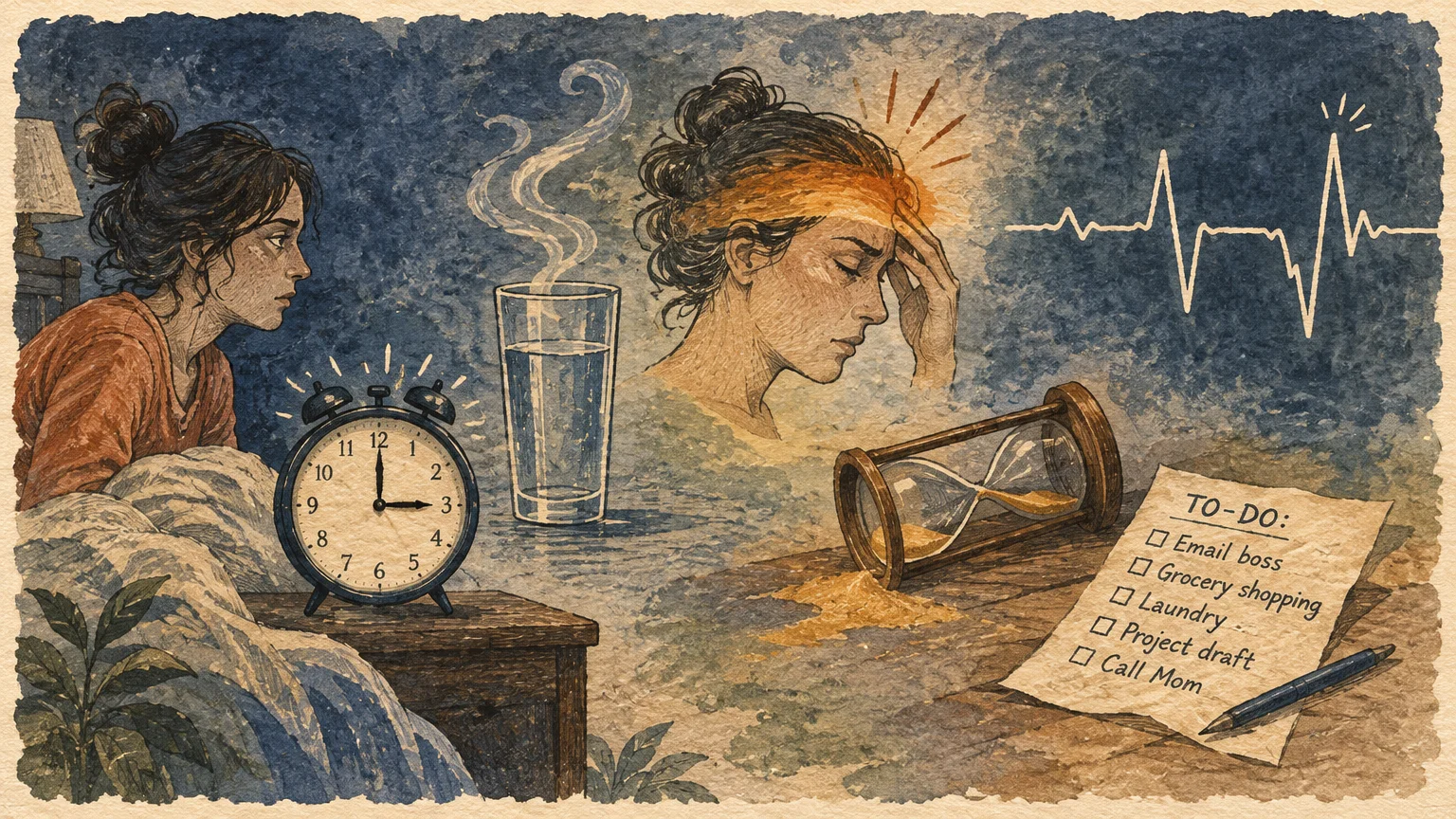
When you live alone, wear earplugs next to a partner, or simply breathe quietly through partial blockages, waking symptoms become your strongest clues. Paying attention to how you feel overnight and during the day helps you catch these signs of sleep apnea early.
1. Witnessed Breathing Pauses, Gasping, or Choking
Repeated pauses in breathing are one of the clearest signs of sleep apnea, even when no snoring precedes them. During an apnea event, airflow stops for 10 seconds or longer—happening 5 to over 30 times every hour in mild to severe cases.
In severe obstructive sleep apnea, these breathing interruptions can occur several hundred times in a single night. Your brain briefly jolts you awake to reopen your airway, often triggering a sudden gasp, snort, or choking sensation.
People with central sleep apnea frequently experience abrupt awakenings paired with shortness of breath rather than loud throat vibrations. If a bed partner notices silent pauses where your chest stops rising, write down what they observe and share it with your doctor.
2. Persistent Daytime Fatigue and Unrefreshing Sleep
Healthy adults need 7 to 9 hours of sleep each night, yet a 2024 federal survey showed that 30.5% of U.S. adults get less than 7 hours. Even when you spend eight full hours in bed, untreated sleep apnea prevents you from reaching deep, restorative rest.
Clinicians define excessive daytime sleepiness as an inability to stay awake and alert during major waking hours almost daily for at least three months. You might doze off while reading, watching television, or sitting in routine afternoon meetings.
This kind of daytime fatigue creates serious safety hazards on the road. The AAA Foundation for Traffic Safety estimates that 16% to 21% of fatal motor vehicle crashes and 13% of crashes leading to hospital admission involve a drowsy driver.
Doctors often measure your daytime sleepiness using the Epworth Sleepiness Scale, which runs from 0 to 24 points. A score above 9—or above 10 under many insurance guidelines—signals excessive sleepiness that warrants a formal sleep evaluation.
3. Morning Headaches That Fade Within Hours
Waking up with a dull, pressing pain across both sides of your forehead can point directly to disrupted nighttime breathing. A 2023 systematic review of 23 studies covering 15,402 patients in Sleep Medicine Reviews found that 33% of people with obstructive sleep apnea experience morning headaches.
Under strict criteria from the International Classification of Headache Disorders, roughly 25% of patients—or 12% to 18% in tighter clinical samples—meet the definition for a true sleep apnea headache. These headaches typically arise when repeated breathing pauses cause carbon dioxide to build up in your bloodstream overnight.
Rising carbon dioxide widens blood vessels in the brain, creating throbbing morning discomfort that usually clears within a few hours of breathing normally. When effective treatment restores steady oxygen, these morning headaches generally resolve within 72 hours.
4. Frequent Nighttime Urination
Getting up multiple times each night to use the bathroom—known medically as nocturia—is often blamed on bladder aging or prostate enlargement. Yet sleep specialists recognize frequent nighttime urination as a classic hidden symptom of sleep apnea in both men and women.
When you try to inhale against a blocked airway, pressure inside your chest swings sharply and stretches the upper chambers of your heart. That stretch prompts your heart to release a hormone called atrial natriuretic peptide, which signals your kidneys to produce extra urine overnight.
You may notice your trips to the bathroom drop quickly once your nighttime breathing stabilizes. Treating the underlying airway blockage lowers atrial natriuretic peptide levels and helps you sleep through the night with fewer interruptions.
5. Insomnia and Repeated Nighttime Awakenings
Many people assume sleep apnea only makes you sleepy, so they overlook trouble falling asleep or staying asleep. According to the Cleveland Clinic Journal of Medicine, insomnia affects roughly 15% of patients with obstructive sleep apnea because repeated breathing arousals fragment the sleep cycle.
Women with sleep apnea report insomnia symptoms more frequently than men, according to StatPearls clinical guidance updated in 2025. Each micro-arousal triggers a small burst of stress hormones that can leave you wide awake at two or three in the morning.
If sleeping pills fail to improve your middle-of-the-night awakenings, an airway problem could be driving the restlessness. Taking sedatives for unexamined insomnia can actually relax throat muscles further and worsen hidden breathing pauses.
6. Waking Up With a Dry Mouth or Sore Throat
Opening your eyes with a parched tongue, sticky lips, or a scratchy throat signals that your body worked hard to pull in air overnight. When your nasal passages feel tight or your upper airway narrows, you instinctively switch to breathing through your mouth.
Repeated gasping and oral breathing dry out delicate throat tissues for hours before your alarm rings. You might reach for water immediately upon waking or notice thick morning phlegm even when you have no cold or allergies.
Using a bedroom humidifier or drinking more water during the day rarely solves this symptom on its own. Keeping track of how often you wake up parched gives your clinician another helpful piece of evidence.
7. Brain Fog, Mood Shifts, and Stubborn High Blood Pressure
Repeated oxygen drops and broken sleep strain your brain and cardiovascular system long after morning arrives. The National Heart, Lung, and Blood Institute sleep apnea guide notes that 50 to 70 million Americans have a sleep disorder, and untreated sleep apnea impairs memory, concentration, and daily decision-making.
You or your family might notice sharper irritability, low motivation, mood swings, or symptoms that mimic depression. Decreased libido and reduced sexual function can also develop as hormone rhythms and nighttime blood flow suffer.
On the cardiovascular side, repeated stress hormone surges drive up blood pressure overnight and throughout the day. Doctors pay close attention when high blood pressure stays stubborn despite taking three or more blood pressure medications, because undiagnosed sleep apnea frequently fuels treatment-resistant hypertension.
Understanding Causes, Risk Factors, and Diagnosis
Knowing what triggers your breathing pauses helps you prepare for an informed medical visit. Your doctor will look at your anatomy, overall health history, and overnight breathing measurements before recommending any therapy.
Obstructive Versus Central Sleep Apnea
Obstructive sleep apnea is far more common and happens when relaxed throat muscles, a large tongue, or surrounding neck tissue narrow your upper airway during sleep. Your diaphragm keeps trying to pull air in, creating chest pressure shifts until your brain wakes you up to tighten throat muscles again.
Central sleep apnea involves no physical throat blockage at all. Instead, temporary glitches in your brainstem—sometimes linked to heart failure, stroke, high altitude, or opioid pain medicines—pause your drive to breathe.
Some individuals experience complex or treatment-emergent sleep apnea, which blends features of both conditions. Distinguishing between obstructive and central patterns is essential because each type responds to specific airway devices and medical adjustments.
Key Risk Factors and Screening Measurements
Anyone can develop sleep apnea, including thin adults and active athletes with narrow jaw or airway anatomy. Still, several physical and age-related traits raise your odds considerably.
Primary care clinicians frequently use the eight-item STOP-Bang screening tool to gauge your pretest risk. It flags a body mass index above 35, an age of 50 or older, and a neck circumference greater than 40 centimeters—roughly over 17 inches in men or 16 inches in women.
Scoring 3 or more on the STOP-Bang assessment points to high probability for obstructive sleep apnea, while a score of 5 or higher suggests high risk for moderate-to-severe disease. High blood pressure, male sex, and family history of airway anatomy also add to your overall risk profile.
Age plays an especially powerful role in sleep disorders among seniors. Clinical studies indicate that obstructive sleep apnea affects 30% or more of adults over age 65, climbs toward 50% in older populations, and reaches up to 70% among elderly nursing home residents.
One clinical study of 2,491 patients found that adults over age 65 faced more than three times the odds of moderate-to-severe obstructive sleep apnea compared with adults aged 18 to 45. Yet older participants reported mild daytime sleepiness—averaging just 6.0 on the Epworth Sleepiness Scale—meaning caregivers cannot rely on sleepiness complaints alone.
How Doctors Diagnose Sleep Apnea
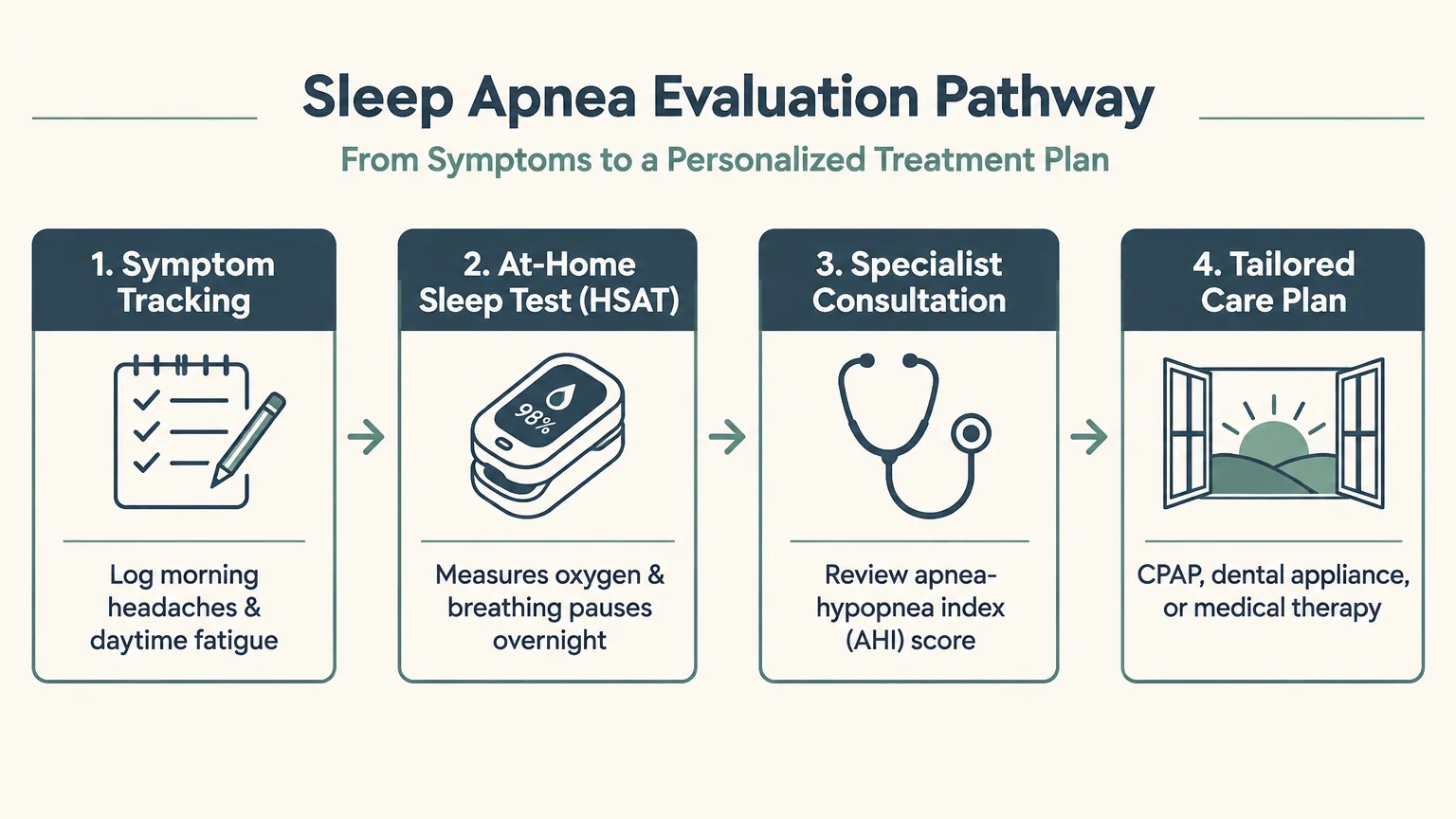
If your symptoms suggest sleep apnea, your doctor will order an overnight sleep test rather than diagnosing you from a questionnaire alone. The gold standard is in-lab polysomnography, where sensors monitor brain waves, oxygen levels, airflow, heart rhythm, and leg movements while you sleep.
For adults with a strong likelihood of uncomplicated moderate-to-severe obstructive sleep apnea, doctors often prescribe a home sleep apnea test instead. You wear a compact belt, finger oxygen sensor, and nasal airflow tube in your own bed for one or two nights.
Sleep specialists calculate your Apnea-Hypopnea Index, or AHI, which counts breathing interruptions per hour of sleep. In adults, fewer than 5 events per hour is normal, 5 to 14 is mild, 15 to 29 is moderate, and 30 or more is severe.
Scoring rules also matter when reviewing results. The American Academy of Sleep Medicine defines a hypopnea as a 30% or greater airflow drop for at least 10 seconds accompanied by either a 3% oxygen drop or a brain arousal, whereas Medicare rules revised in November 2024 require a 4% oxygen drop for positive airway pressure coverage.
Your Treatment Landscape: From CPAP to New Medications
Effective treatment protects your heart, sharpens daytime focus, and lifts persistent daytime fatigue. Because sleep apnea ranges from mild positional narrowing to severe nighttime oxygen drops, your care plan should match your severity, anatomy, and daily routine.
This information is educational rather than prescriptive, so always review benefits and safety trade-offs with your licensed medical provider before starting or changing any therapy.
Positive Airway Pressure and Oral Appliances
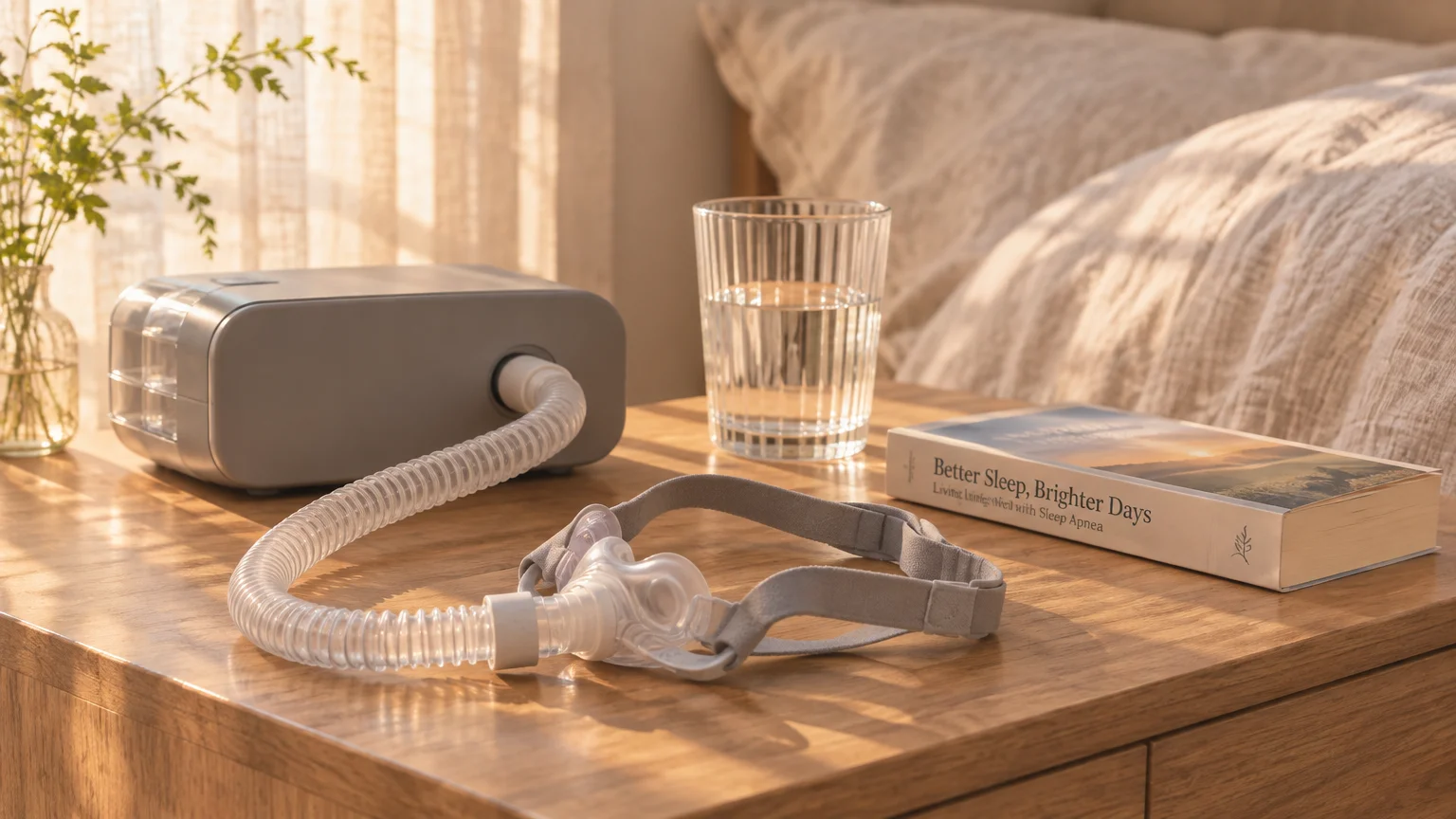
Continuous positive airway pressure, known as CPAP, remains the most reliable first-line therapy for moderate-to-severe obstructive sleep apnea. The bedside machine delivers gentle pressurized room air through a mask, acting like an invisible splint that keeps your throat open.
To protect your health and keep insurance coverage active, clinical and Medicare benchmarks define adequate adherence as using your machine for at least 4 hours per night on at least 70% of nights—roughly five nights every week. Because studies show CPAP nonadherence ranges from 29% to 83%, finding a comfortable mask fit early makes all the difference.
Modern masks include soft nasal cushions, minimal under-nose pillows, and full-face styles for mouth breathers, alongside heated humidifiers that prevent dry mouth. If breathing out against steady pressure feels uncomfortable, ask your sleep specialist about bi-level positive airway pressure or auto-adjusting pressure settings.
For mild-to-moderate obstructive sleep apnea—or when CPAP proves intolerable—a custom oral appliance fitted by a qualified sleep dentist offers a quiet, portable alternative. These mouthguard-like devices gently shift your lower jaw forward during sleep to widen the space behind your tongue.
Lifestyle Strategies That Support Better Breathing
Daily habits work alongside medical devices to calm nighttime airway collapse and reduce snoring causes. Sleeping on your side instead of your back prevents gravity from pulling your tongue and soft palate backward against your throat.
Using a body pillow, wedge support, or specialized positional trainer helps keep you off your back through the night. Skipping alcohol and sedating medications for at least three to four hours before bedtime also keeps throat muscles firmer while you rest.
Managing nasal congestion with saline rinses or doctor-recommended sprays eases nighttime airflow and makes CPAP masks feel more natural. Regular daytime physical activity and balanced nutrition support healthier muscle tone and deeper sleep quality overall.
Prescription Weight-Loss Medication and Surgical Options
Weight reduction can significantly lower airway pressure, and patients now have a dedicated pharmaceutical option backed by clinical trials. On December 20, 2024, the U.S. Food and Drug Administration approved Zepbound, known generically as tirzepatide, as the first prescription medication for moderate-to-severe obstructive sleep apnea in adults with obesity.
Prescribed at weekly doses of 10 milligrams or 15 milligrams alongside a reduced-calorie diet and physical activity, Zepbound showed substantial improvements in the 52-week SURMOUNT-OSA trials involving 469 adults. Participants saw their AHI drop by 25 to 29 events per hour—up to a 62.8% reduction compared with placebo—and up to 50% achieved remission or only mild symptoms after one year.
Safety matters with any prescription therapy, as gastrointestinal side effects can occur and some patients still need CPAP alongside medication. Discuss your medical history, thyroid risks, and current prescriptions carefully with your physician before considering weight-loss medications.
When structural blockages such as enlarged tonsils, a deviated nasal septum, or a recessed jaw drive your symptoms, ear, nose, and throat surgeons can discuss targeted procedures. Another surgical option for select patients who cannot tolerate CPAP is hypoglossal nerve stimulation, an implanted device that gently nudges tongue muscles forward with each breath.

Living Well With Sleep Apnea and Supporting Loved Ones
Managing a chronic sleep disorder takes steady habits, open communication, and practical adjustments at home. Whether you are navigating a fresh diagnosis yourself or caring for an aging parent, small daily routines protect long-term independence.
Daily Self-Management and Partnering With Your Care Team
Keep a simple two-week sleep log before and after starting treatment to track morning headaches, nighttime bathroom trips, and afternoon energy. Concrete notes help your sleep specialist fine-tune pressure settings or adjust oral appliances without guesswork.
Clean your mask cushion daily with mild soap and replace filters, tubing, and headgear on your supplier’s recommended schedule to prevent skin irritation and nasal stuffiness. If you travel, pack a compact travel battery or check airline rules so your breathing support never misses a night.
Coordinate care across your primary care physician, sleep specialist, cardiologist, and dentist, especially if you manage high blood pressure or diabetes. Sharing updated sleep test reports ensures every member of your medical team understands how nighttime oxygen affects your daytime health.
Guidance for Caregivers Supporting Older Adults
Caring for aging parents requires looking beyond loud snoring because sleep disorders in seniors frequently surface as daytime confusion, irritability, or balance trouble. Untreated obstructive sleep apnea in older adults raises the risk of cognitive decline, physical impairment, and dangerous nighttime falls.
The stakes are especially high for seniors living with heart disease. Research published in December 2024 found that Medicare beneficiaries aged 65 and older who had cardiovascular disease alongside undiagnosed obstructive sleep apnea experienced a two-fold increase in hospital admissions.
If you care for a loved one, watch quietly for pauses in breathing during afternoon naps or notice whether they wake up frequently to use the bathroom. Accompany them to medical appointments, ask their doctor whether a home sleep test makes sense, and help troubleshoot CPAP straps or dry-mouth settings if dexterity becomes challenging.
Frequently Asked Questions
Which sleep apnea symptoms require prompt medical evaluation?
Seek prompt medical care if you experience witnessed breathing pauses, gasping awakenings, chest tightness at night, or severe daytime fatigue that causes near-misses while driving. Stubborn high blood pressure requiring three or more medications, sudden memory changes in an older adult, and persistent morning headaches also warrant timely testing.
What happens if a home sleep apnea test comes back negative?
Home sleep tests measure breathing and oxygen, not brain waves, so they can underestimate mild obstructive sleep apnea or miss conditions like central sleep apnea and periodic limb movements. If your test reads normal yet your daytime fatigue, morning headaches, or nighttime gasping continue, ask your doctor about an in-lab polysomnography study.
How do Medicare and insurance rules affect sleep apnea coverage?
Most insurers cover sleep testing and positive airway pressure devices based on your AHI and on symptoms like daytime sleepiness or high blood pressure. Keep in mind that Medicare requires a 4% oxygen drop to score hypopneas and requires using your CPAP at least 4 hours nightly on 70% of nights during your initial trial period.
Can new medications replace a CPAP machine completely?
Tirzepatide helped up to 50% of adults with obesity and moderate-to-severe obstructive sleep apnea reach remission or mild symptoms in clinical trials, yet some patients still needed ongoing airway support. Medications target weight-related airway narrowing and do not treat central sleep apnea or non-obesity anatomical blockages, so work with your doctor before stopping CPAP.
Taking Your Next Step Toward Restorative Sleep
You do not need to rattle the bedroom walls with loud snoring to deserve a proper sleep evaluation. Paying attention to quiet warnings—from morning headaches and nocturia to daytime fatigue and stubborn blood pressure—empowers you to protect your heart, brain, and daily safety.
Schedule a conversation with your primary care provider or a board-certified sleep specialist to review your symptoms and discuss whether a home or in-lab sleep study fits your needs. As a reminder, this article provides educational guidance only and does not replace personalized medical advice from your healthcare team.
Connecting with trusted patient communities like the American Sleep Apnea Association can also help you trade practical mask tips, learn about new research, and stay encouraged alongside others walking the same path toward deeper rest.