
Many women reach their fifties or sixties believing sudden forgetfulness, mental exhaustion, and daily overwhelm simply reflect normal aging or menopause. Yet those persistent struggles often point to undiagnosed attention-deficit/hyperactivity disorder.
Recognizing overlooked adult ADHD symptoms gives you a clear starting point for accurate evaluation and lasting relief. Understanding how midlife hormonal shifts unmask lifelong brain differences helps you advocate for targeted medical care.
This educational guide walks you through hidden warning signs, diagnostic standards, and safe treatment pathways after age 50 so you can partner effectively with your healthcare team.
Why ADHD Goes Unnoticed Until Midlife and Beyond
For decades, clinicians viewed attention-deficit/hyperactivity disorder primarily as a condition affecting hyperactive young boys. That narrow lens left generations of girls and women navigating daily friction without a name for their challenges.
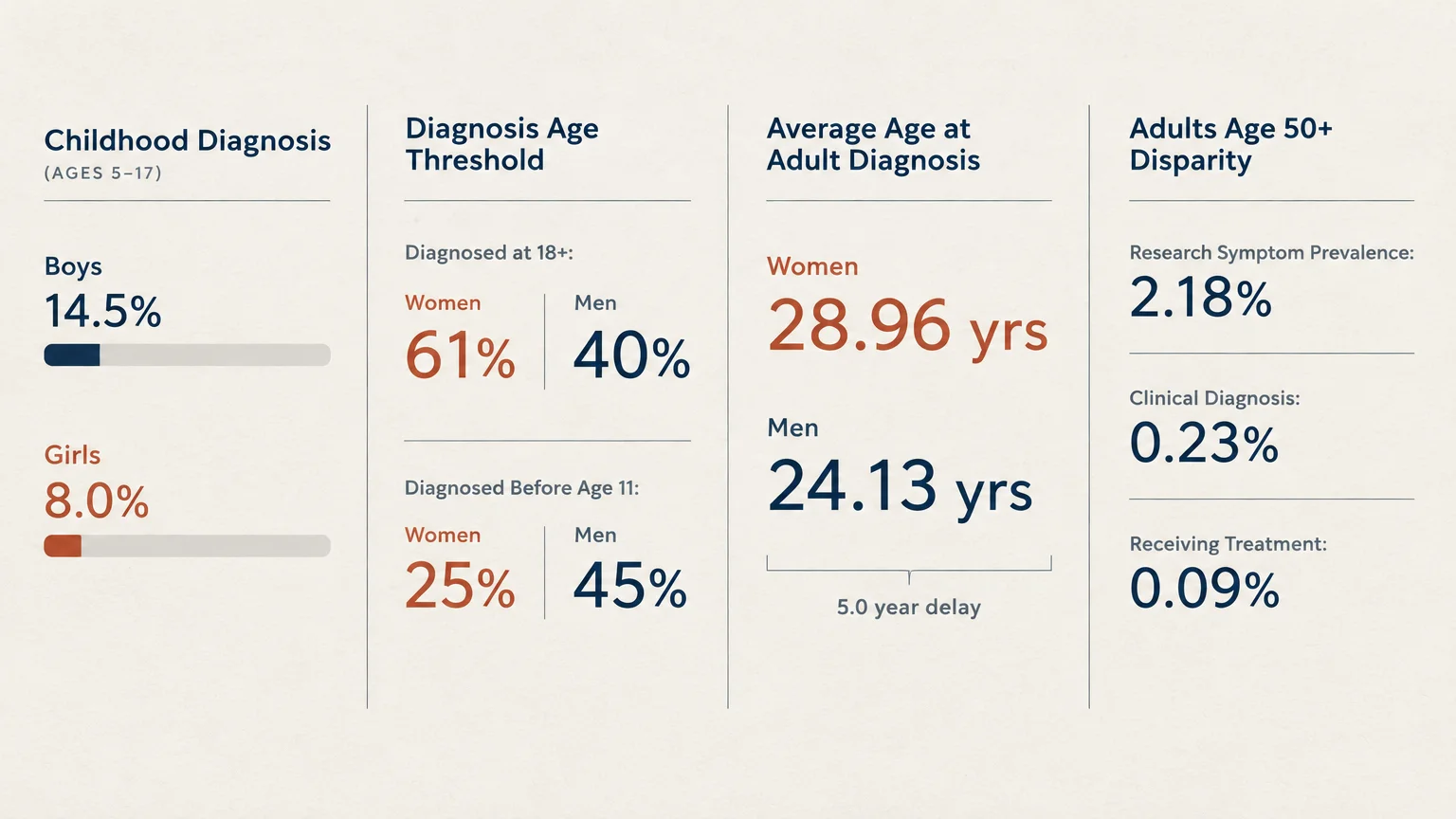
According to the Centers for Disease Control and Prevention ADHD resource center, 14.5% of U.S. boys ages 5 to 17 received an ADHD diagnosis between 2020 and 2022, compared with 8.0% of girls. Duke Psychiatry reports that boys are roughly three times more likely to receive a childhood diagnosis.
By adulthood, however, that dramatic gender gap narrows considerably. CDC survey data from late 2023 show that roughly 6.0% of U.S. adults—about 15.5 million people, or 1 in 16—live with a current ADHD diagnosis.
Among those diagnosed adults, 55.8% are men and 44.2% are women. Crucially, 61% of women with ADHD received their diagnosis at age 18 or older, compared with 40% of men.
Only 25% of women received a diagnosis before age 11, versus 45% of men. Research on 900 first-time adult diagnoses presented at the 38th European College of Neuropsychopharmacology Congress in October 2025 found that women were diagnosed nearly five years later than men.
In that analysis led by Dr. Silvia Amoretti, women averaged 28.96 years at diagnosis compared with 24.13 years for men, despite experiencing similar symptom onset ages. When you grow up before awareness expanded, those delays easily stretch into your fifties, sixties, or seventies.
Older adults remain dramatically underrepresented in formal medical records. In CDC data from 2023, adults ages 50 to 64 made up 10.6% of diagnosed cases, while adults 65 and older accounted for just 4.9%.
A 2020 systematic review and meta-analysis in Neuroscience & Biobehavioral Reviews examining roughly 21 million adults aged 50 and older revealed a striking gap. Pooled ADHD prevalence reached 2.18% on validated research symptom scales, yet only 0.23% held a clinical diagnosis and 0.09% received treatment.
Many older women never fit the stereotype of physical restlessness. Clinicians and families often overlook predominantly inattentive symptoms, quiet daydreaming, and clever coping habits until midlife pressures dismantle your routines.
7 Overlooked ADHD Symptoms in Older Women
Adult ADHD symptoms rarely look like disruptive classroom behavior, especially after decades of social conditioning. Paying attention to subtle cognitive, emotional, and hormonal shifts helps you spot patterns you may have blamed on stress or aging.
1. Persistent Mental Fatigue and Internal Restlessness
Instead of pacing the room or fidgeting visibly, you might feel like an engine idling endlessly inside your mind. Your thoughts jump rapidly from unpaid bills to unfinished errands while your body sits still on the sofa.
This internal restlessness makes genuine relaxation feel nearly impossible, even during quiet evenings or retirement. Over years of pushing through constant mental noise, you may experience deep cognitive fatigue by midafternoon.
Friends and clinicians frequently mistake this exhaustion for normal aging, caregiving burnout, or insomnia. Tracking when your mind races—especially during unstructured downtime—gives your doctor concrete clues about underlying attention regulation.
2. Sudden Executive Dysfunction During Perimenopause and Menopause
Many women manage careers and households smoothly until perimenopause disrupts their hard-won systems. Suddenly, prioritizing tasks, starting routine chores, or following multi-step recipes feels like wading through wet cement.
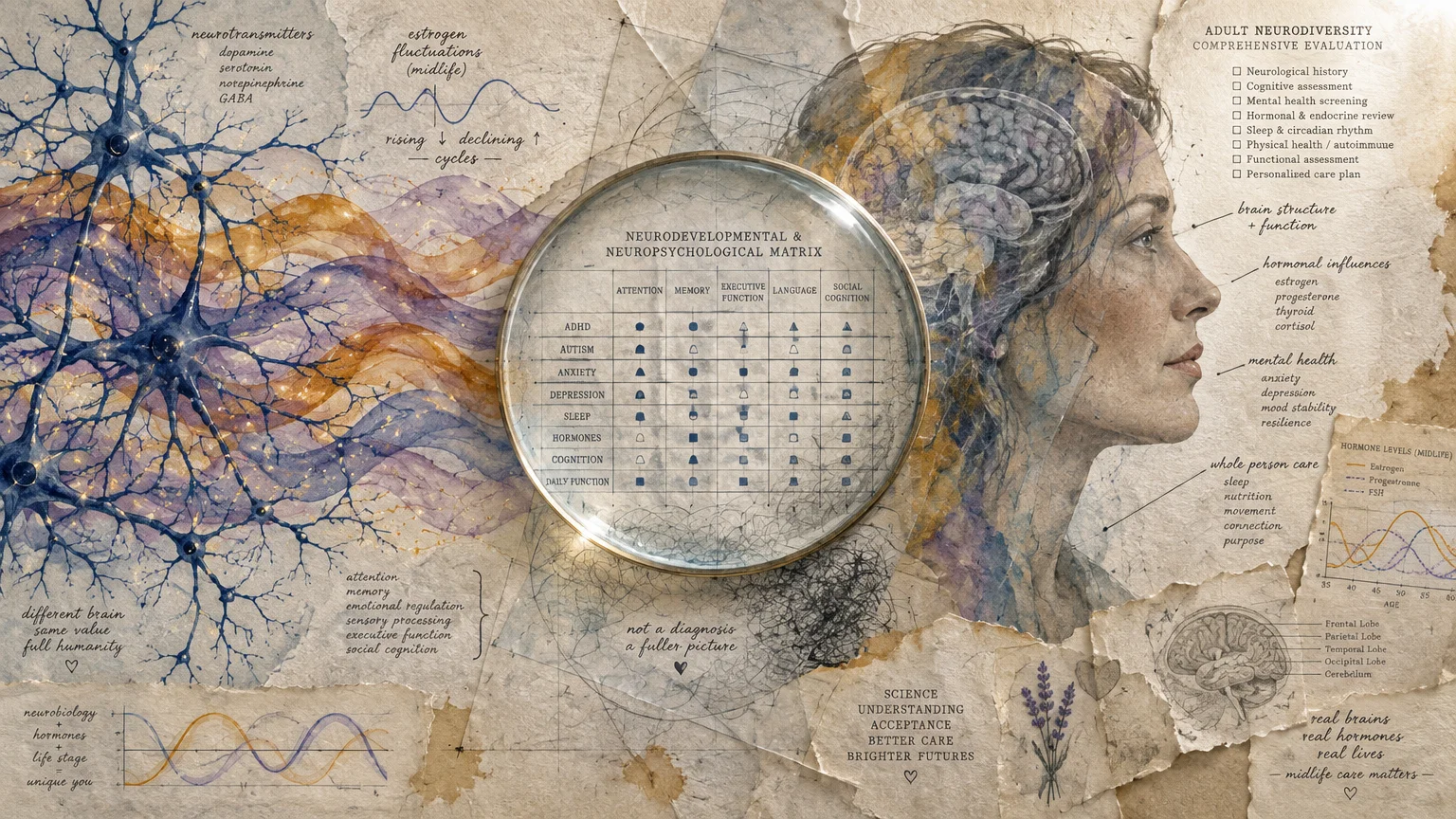
Biology explains why ADHD and menopause collide so intensely. According to an Eunethydis Special Interest Group review in Frontiers, estradiol—the primary premenopausal estrogen—modulates dopamine synthesis, release, reuptake, and receptor sensitivity in the prefrontal cortex and striatum.
When estrogen fluctuates and declines during perimenopause, your brain loses vital dopaminergic scaffolding that once supported focus and working memory. Roughly 6 in 10 women surveyed in a 2023 ADDitude study by Wasserstein, Stefanatos, and Solanto reported peak ADHD impact between ages 40 and 59.
A September 2025 cohort study by Smári and colleagues in European Psychiatry found that 54.2% of women with ADHD reported severe perimenopausal symptoms, compared with 30.1% of women without ADHD. That severity gap peaked between ages 35 and 39, up to a decade earlier than peers.
Similarly, a July 2025 King’s College London study of 656 women ages 45 to 60 in the Journal of Attention Disorders linked greater ADHD symptom severity to worse menopausal complaints. Perimenopausal women experienced significantly more psychosocial distress than premenopausal or postmenopausal participants.
If your lifelong organizational strategies abruptly failed alongside hot flashes or irregular cycles, bring a timeline of both shifts to your clinician. Connecting hormonal changes with executive function dips prevents doctors from dismissing your symptoms as temporary brain fog.
3. Chronic Emotional Dysregulation and Rejection Sensitivity
Minor schedule changes, misplaced glasses, or crowded grocery stores might trigger sudden tears, sharp frustration, or disproportionate panic. You may recover slowly from emotional spikes and replay awkward conversations for days.
Intense sensitivity to perceived criticism can also drive lifelong people-pleasing or avoidance of new social groups. Although emotional dysregulation does not appear in official diagnostic criteria, it is a well-documented feature of ADHD in women.
Caregivers and doctors often label these reactions as mood swings, high sensitivity, or personality traits. Noting how quickly your emotions flood your thinking during everyday setbacks helps distinguish attention-linked dysregulation from purely situational stress.
4. Long-Standing Anxiety or Depression That Never Fully Resolves
Living decades without support for an overwhelmed brain creates secondary worry and demoralization. You might feel constantly on edge because you fear forgetting appointments, missing deadlines, or letting family members down.
A May 2024 retrospective study of four U.S. health databases in the Journal of Attention Disorders found that females were twice as likely as males to receive anxiety or depression diagnoses during the year before an ADHD diagnosis. Many saw mood symptoms improve after starting ADHD care.
Overlap remains extraordinarily common across adult populations. The U.S. National Comorbidity Survey Replication, cited by Children and Adults with Attention-Deficit/Hyperactivity Disorder, found that 47% of adults with ADHD had a coexisting anxiety disorder and 38% had a coexisting mood disorder.
Furthermore, CDC data released in December 2025 showed that nearly 70% of adult ADHD health-center visits included at least one co-diagnosed mental health condition. If standard antidepressants or talk therapy eased sadness yet left disorganization untouched, ask your provider to screen for ADHD.
5. Exhausting Masking and Overcompensation Habits
Women with late diagnosis ADHD often spend decades hiding chaos behind perfectionism and rigid routines. You might arrive thirty minutes early everywhere, keep three redundant calendars, or stay up past midnight finishing paperwork quietly.
Researchers at Duke Psychiatry and in the Journal of Attention Disorders note that masking makes inattentive struggles invisible to teachers, spouses, and clinicians. Because you appear reliable on the surface, nobody sees the enormous energy required to maintain basic order.
Retirement, empty-nest transitions, or caring for an aging partner often strip away the external structure that propped up your masking. When those exhausting workarounds collapse, underlying attention deficits finally surface in plain sight.
6. Time Blindness and Disproportionate Hyperfocus
You might lose an entire afternoon researching genealogy, gardening, or organizing photos while forgetting to eat lunch or take afternoon medication. Conversely, estimating how long ten minutes of errands will take can feel like guesswork.
Psychologists refer to this intense absorption as hyperfocus—another well-documented trait in women with ADHD that sits outside formal diagnostic checklists. Because you concentrate brilliantly on fascinating tasks, clinicians sometimes mistakenly rule out attention disorders.
ADHD actually reflects inconsistent regulation of attention rather than a complete lack of focus. Setting audible alarms for transitions helps bridge the gap between deep immersion and daily responsibilities.
7. Disorganization Misread as Early Cognitive Decline
Walking into the kitchen and forgetting why, misplacing your phone daily, or leaving cabinets open can spark terrifying fears of dementia. Losing track of multi-step tasks like paying quarterly taxes or sorting pillboxes feels especially alarming after age 50.
Yet lifelong patterns separate adult ADHD symptoms from neurodegenerative memory loss. With ADHD, forgetfulness stems from encoding gaps—your attention shifted elsewhere while you set down your keys—rather than progressive loss of stored memories.
Reflecting on your childhood report cards, college study habits, or decades of cluttered drawers provides crucial context. Sharing that long-term history helps neurologists and primary care doctors avoid misinterpreting lifelong inattention as new cognitive impairment.
Understanding Causes, Risk Factors, and Diagnosis
Understanding why ADHD persists into later life empowers you to seek a thorough, respectful assessment. Accurate evaluation separates lifelong neurodevelopmental traits from treatable midlife medical conditions.
What Drives Late-Life ADHD Symptoms
ADHD is a neurodevelopmental condition rooted in brain structure, genetics, and neurotransmitter signaling rather than poor willpower or late-life stress. You do not suddenly develop ADHD at age 55, even if symptoms become unmanageable then.
Differences in prefrontal cortex networks govern working memory, task initiation, impulse control, and emotional pacing. Hormonal shifts during perimenopause, chronic sleep disruption, and complex caregiving duties simply lower your brain’s margin for compensation.
Physical health conditions also intertwine closely with attention and executive function in older adults. In CDC health-center visit data published in December 2025, 40.1% of adult ADHD visits included at least one chronic physical diagnosis.
Those co-occurring conditions included obesity at 24.2%, hyperlipidemia at 13.1%, hypertension at 12.8%, and asthma at 11.4%. Untreated ADHD can complicate medication adherence, meal planning, and preventive care, making coordinated medical attention essential.
How Clinicians Diagnose ADHD in Older Women
Clinicians evaluate adults using criteria from the American Psychiatric Association overview of adult ADHD and the Diagnostic and Statistical Manual of Mental Disorders, Fifth Edition, Text Revision. For adults aged 17 and older, diagnosis requires at least five of nine symptoms in either domain.
Those two domains cover Inattention and Hyperactivity-Impulsivity, or both together for a Combined presentation. Symptoms must persist for at least six months and cause clear functional impairment across two or more settings, such as home, work, or community roles.
Crucially, several symptoms must have been present before age 12, though you do not need a formal childhood diagnosis to qualify as an older adult. Clinicians can rely on your detailed life history, school memories, or interviews with siblings and partners.
International providers using the World Health Organization ICD-11 classification under code 6A05 evaluate eleven symptoms per domain and emphasize clinical judgment rather than strict numerical cutoffs. Regardless of the manual used, a quality evaluation always rules out lookalike conditions.
Expect your doctor to screen for thyroid dysfunction, vitamin B12 or iron deficiencies, sleep apnea, hearing changes, and medication side effects. Standard U.S. clinical guidelines for adult ADHD remain in active development as well.
The American Professional Society of ADHD and Related Disorders announced on August 27, 2026, that the first U.S. Adult ADHD Guidelines entered final review. Publication and distribution with CHADD are anticipated between late 2026 and 2027.
Treatment Options and Safety Considerations Over 50
Receiving a late diagnosis opens access to targeted therapies that ease daily friction without forcing you to work twice as hard. Navigating care after 50 simply requires balancing symptom relief with heart health and medication interactions.
Stimulant and Non-Stimulant Medications
Prescription medications remain the most extensively studied tools for improving focus, working memory, and task follow-through. CDC data from 2023 show that 50.4% of U.S. adults with current ADHD received prescription medication, while 33.4% took a stimulant.
Stimulants—such as methylphenidate and amphetamine formulations—boost dopamine and norepinephrine availability in attention networks quickly. Non-stimulants, including atomoxetine, viloxazine, guanfacine, and clonidine, offer gentler, round-the-clock options when stimulants cause jitteriness or raise blood pressure.
Unfortunately, supply bottlenecks still frustrate patients seeking consistent care. In the CDC’s 2023 survey, 71.5% of adult stimulant users reported difficulty filling prescriptions due to shortages, while 36.5% of adults with ADHD received neither medication nor behavioral therapy.
Ask your prescriber about preferred backup pharmacies, non-stimulant alternatives, or dose adjustments before your bottle runs low. Planning refill requests early reduces sudden gaps that derail hard-won daily routines.
Cardiovascular Monitoring and Medication Warnings
Age brings higher baseline rates of hypertension, arrhythmias, and vascular changes, making careful screening vital before starting ADHD medication. On May 11, 2023, the U.S. Food and Drug Administration mandated updated class-wide Boxed Warnings across all prescription stimulants.
Those warnings highlight serious risks of misuse, abuse, addiction, overdose, and sharing pills with others. Labels also instruct patients to seek urgent care for exertional chest pain, unexplained fainting, or sudden cardiac symptoms.
Common stimulant side effects include elevated heart rate, higher blood pressure, insomnia, irritability, and reduced appetite. Non-stimulants carry separate precautions; atomoxetine in youth and viloxazine carry boxed warnings for suicidal thoughts.
Large population data offer reassuring context when clinicians monitor patients responsibly. A 2022 meta-analysis by Zhang and colleagues in JAMA Network Open covering 19 studies and over 3.9 million participants found no statistically significant rise in serious cardiovascular events overall.
Still, stimulants cause modest average increases in blood pressure and heart rate that matter more after age 50. Both American Heart Association guidance and the National Institute for Health and Care Excellence ADHD guideline advise measuring baseline blood pressure and heart rate first.
Ongoing periodic checks remain essential throughout treatment. NICE guideline NG87 specifically advises consulting a cardiologist before initiating ADHD medication if your baseline blood pressure falls in the hypertensive range.
Behavioral Therapy, Menopause Care, and Telehealth Access
Pills alone rarely untangle decades of self-criticism, cluttered closets, or strained relationships. Cognitive behavioral therapy tailored for adult ADHD teaches practical planning, emotional pacing, and realistic time estimation alongside compassionate reframing.
Many women over 50 also ask whether menopausal hormone therapy can replace ADHD prescriptions. Currently, no randomized controlled trials evaluate ADHD medications specifically in perimenopausal women, and hormone therapy is not a primary ADHD treatment.
Clinicians note that stabilizing estrogen and easing night sweats can indirectly support sleep, mood, and concentration. Notably, UK clinical guidelines for ADHD (NG87) and menopause (NG23)—which clarifies blood tests are not required to diagnose menopause in women 45 and older—do not yet cross-reference each other.
Virtual visits can expand access to specialists when local waitlists stretch for months. CDC data indicate 46.0% of adults with ADHD have used telehealth, and temporary federal DEA and HHS prescribing flexibilities for Schedule II stimulants remain active through December 31, 2026.
Before booking an online clinic, verify that the provider conducts thorough diagnostic interviews, reviews your medical history, and coordinates local blood pressure checks. Reliable care blends convenience with rigorous safety standards.

Living Well With a Late ADHD Diagnosis
A late diagnosis often sparks mixed emotions—relief at finally having answers alongside grief for years spent blaming yourself. Channeling that insight into sustainable daily habits helps you reclaim energy for what matters most.
Building Practical Daily Systems
Working with your brain means shifting key responsibilities out of fragile working memory and into your physical environment. Place daily medications beside your morning kettle, automate utility bills, and keep a single master notebook rather than scattered sticky notes.
Visual timers and calendar alerts with two advance reminders soften time blindness without creating panic. Pairing uninteresting chores with enjoyable audio—such as an engaging podcast while folding laundry—supplies natural dopamine momentum.
Prioritize foundational health habits that directly protect executive function after 50. Consistent wake times, brisk daily walks, protein-rich breakfasts, and treating snoring or sleep apnea sharpen focus noticeably.
Partnering With Your Care Team and Support Network
Managing adhd women over 50 often involves coordinating primary care, gynecology, psychiatry, and cardiology under one shared plan. Bring an updated medication list—including supplements and hormone therapies—to every appointment so clinicians spot subtle interactions early.
Keeping a brief two-week symptom log before follow-up visits gives your doctors objective data on sleep, blood pressure, focus, and side effects. Clear notes turn rushed fifteen-minute checkups into focused problem-solving sessions.
Share practical education with partners, adult children, or close friends who may have misunderstood your forgetfulness or emotional reactivity. Asking loved ones for gentle written reminders or quiet body-doubling during tedious tasks builds teamwork without judgment.
Frequently Asked Questions About ADHD in Older Women
What warning signs separate ADHD from normal aging or dementia?
ADHD causes lifelong patterns of distractibility, misplacing objects, and mental restlessness that intensify under stress or hormonal shifts. Dementia causes progressive, newly emerging loss of stored facts, disorientation in familiar places, and declining ability to learn simple routines.
If memory slips feel new after age 60, ask your physician for a formal cognitive screening alongside an attention history. Identifying lifelong traits prevents unnecessary fear while catching any separate memory conditions early.
Which doctor should I see first, and what happens at follow-up?
Start with your primary care clinician or gynecologist to rule out thyroid disorders, anemia, sleep apnea, and perimenopausal transitions. From there, request a referral to a psychiatrist, clinical psychologist, or neurologist experienced in adult ADHD assessments.
During medication follow-up visits, expect routine blood pressure and heart rate checks, weight tracking, and reviews of sleep quality. Your prescriber will adjust doses gradually to balance crisp focus against side effects.
Does insurance cover late-life ADHD testing, medications, and telehealth?
Most commercial plans and Medicare cover office visits for ADHD evaluation and standard generic stimulants or non-stimulants, though coverage rules vary. Comprehensive neuropsychological testing sometimes faces stricter prior-authorization requirements or out-of-pocket deductibles.
Call the number on your insurance card before scheduling specialized testing or telehealth appointments to verify in-network coverage and pharmacy tiers. Asking about generic extended-release options also helps control monthly costs.
What does new research say about ADHD, menopause, and adult guidelines?
Recent 2025 studies in European Psychiatry and the Journal of Attention Disorders confirm that ADHD severity amplifies perimenopausal distress and midlife psychosocial symptoms. Researchers continue investigating how fluctuating estradiol interacts with dopamine pathways in aging brains.
On the clinical front, APSARD’s forthcoming U.S. Adult ADHD Guidelines entered final review in August 2026 with publication expected in late 2026 or 2027. These benchmarks aim to standardize care across adult practices.
Moving Forward With Confidence and Support
This article provides educational information and does not replace individualized medical evaluation, diagnosis, or treatment advice from a qualified clinician. Only a licensed healthcare professional who knows your full health history can recommend specific tests or therapies.
If these overlooked symptoms echo your daily life, schedule a dedicated appointment with your primary care doctor to discuss your lifelong history and midlife changes. Connecting with peer support groups through CHADD can also offer practical strategies and reassurance from women walking the exact same path.