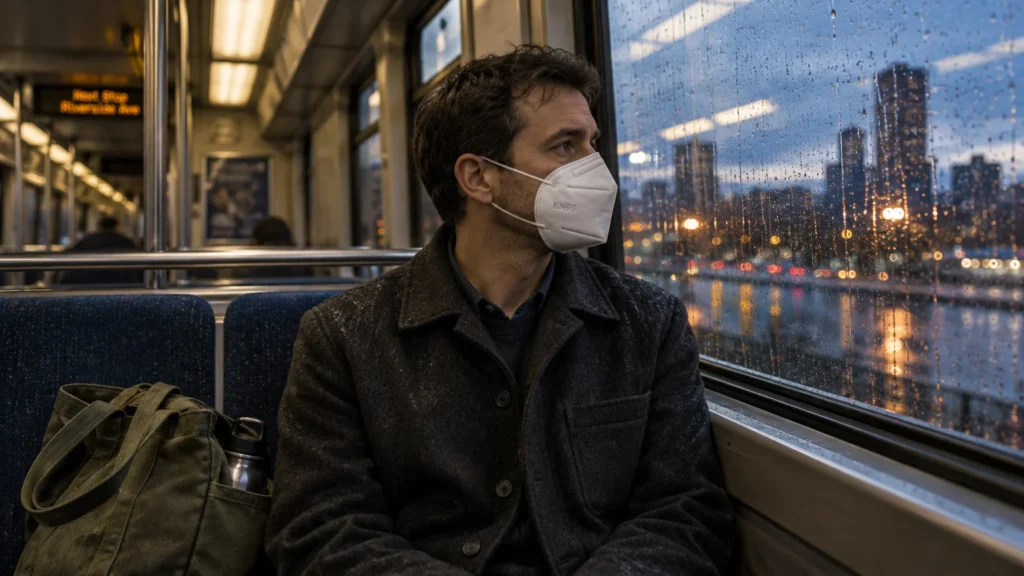
A sharp sore throat, sudden fatigue, or nasal congestion might make you wonder if you caught a new COVID variant this season. Knowing which COVID variant symptoms matter most helps you act fast and protect the people around you.
Public health tracking shows the XFG strain dominates cases globally in late 2026 alongside newer lineages like PJ.2.1. Upper respiratory discomfort often mimics a routine cold, which makes early testing and careful monitoring essential.
This guide explains COVID symptoms 2026 patterns, how to tell COVID vs flu apart, and when urgent care is necessary. Use this educational information alongside guidance from your personal healthcare provider.
New COVID Variant Activity This Season
Respiratory viruses evolve continuously, and several distinct Omicron descendants are driving infections during fall 2026. Understanding which lineages are circulating clarifies what tests detect and how well updated vaccines protect you.
The Strains Leading Global and European Cases
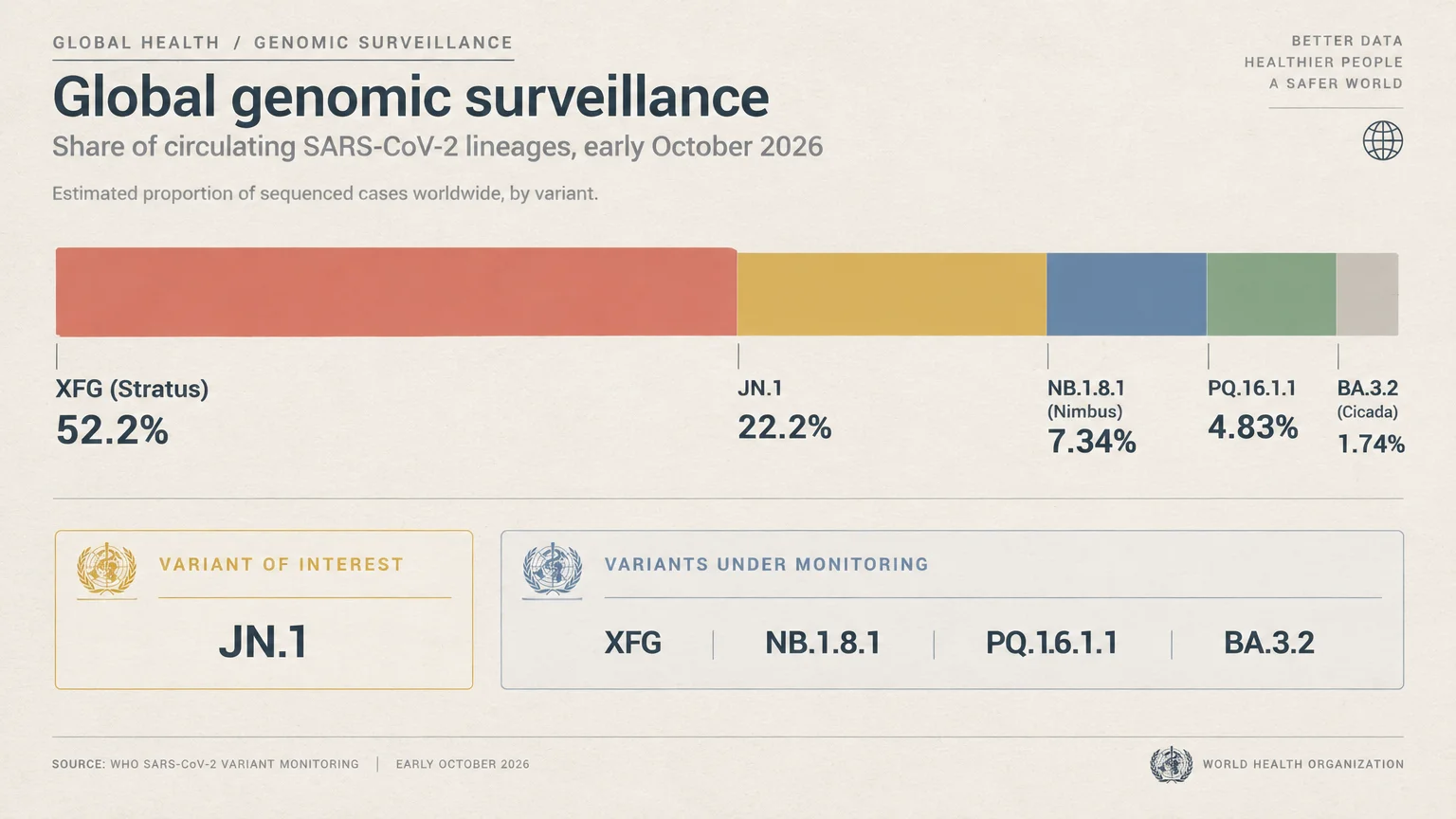
The World Health Organization reports that XFG, informally nicknamed Stratus, is the dominant global strain. For the week of October 4, 2026, XFG accounted for 52.2% of sequenced samples worldwide, rising from 43.7% on September 6.
Other lineages tracked globally during that same early October window include JN.1 at 22.2% and NB.1.8.1 at 7.34%. Health trackers also recorded PQ.16.1.1 at 4.83% and BA.3.2 at 1.74% of global sequences.
Media coverage often refers to NB.1.8.1 as Nimbus and BA.3.2 as Cicada. Those catchy labels are informal nicknames rather than official scientific designations used by clinical laboratories.
European surveillance reflects a similar dominance of XFG across reporting nations. In an update published November 3, 2026 covering weeks 41 and 42, the European Centre for Disease Prevention and Control reported median proportions of 61.6% for XFG and 21.6% for BA.2.86.
During those same two weeks in Europe, NB.1.8.1 stood at 5.1% while BA.3.2 remained at 0.0%. European health assessors concluded that currently circulating strains are unlikely to increase disease severity or reduce vaccine protection against severe illness.
U.S. Variant Shares and Classification Levels
In the United States, XFG descendants led summer estimates from the Centers for Disease Control and Prevention. For the four weeks ending August 29, 2026, SW.2 represented 33%, RV.1 accounted for 10%, and XFG.1.1 made up 8% of cases.
During that late-August reporting period, BA.3.2 and NB.1.8.1 each accounted for 3% of U.S. sequences. The CDC subsequently paused standard Nowcast updates in late September 2026 because overall genomic sequence reporting volume dropped.
When sequence modeling pauses, local wastewater trends and test positivity rates become your most practical risk signals. Checking regional health dashboards helps you decide when indoor masking or pre-visit testing makes sense for high-risk relatives.
Knowing how health agencies classify strains also prevents unnecessary alarm when headlines announce a new subvariant. As of late 2026, the WHO designates JN.1 as a Variant of Interest, while XFG, NB.1.8.1, PQ.16.1.1, and BA.3.2 are Variants Under Monitoring.
Crucially, no circulating strain in late 2026 holds a Variant of Concern designation. The WHO reserves Variant of Concern status and Greek-letter names for strains showing higher clinical severity or major escape from existing immunity.
Understanding PJ.2.1 and Saltation Variants
Scientists are closely watching PJ.2.1, an emerging descendant of the MC.10.1 and JN.1 lineage. Surveillance first detected PJ.2.1 in Ontario, Canada, on May 2, 2026, before identifying it in New York City on June 30, 2026.
Since those initial detections, PJ.2.1 has spread across multiple U.S. states and international regions. Confirmed cases have appeared in European countries including France and Spain, as well as Singapore, Australia, and New Zealand.
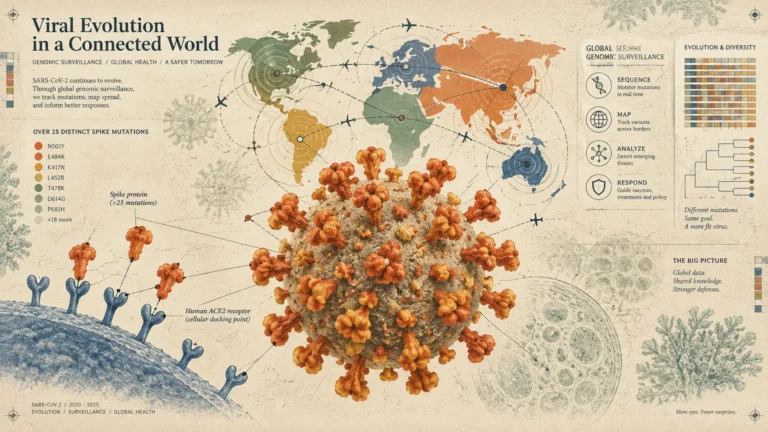
An October 24, 2026 study in the Journal of Infection describes PJ.2.1 as a saltation variant carrying more than 25 spike protein mutations. In laboratory experiments, those mutations gave the virus stronger binding affinity to human cells.
Early lab data still provide reassuring context for patients and caregivers. Researchers observed no evidence that PJ.2.1 causes more severe illness or broadly evades neutralizing antibodies generated by updated vaccines.
Even without signs of heightened danger, global vaccine advisors continue monitoring antigenic shifts closely. On October 27, 2026, the WHO vaccine advisory group requested antigenic data on emerging variants including PJ.2.1 ahead of its December 2026 meetings.
How COVID This Season Is Spreading
As of November 13, 2026, CDC surveillance shows overall acute respiratory illness healthcare visits remain low nationally but are increasing. While clinical COVID-19 metrics are low or declining overall, community transmission has not vanished.
National wastewater monitoring shows moderate COVID-19 viral levels across the United States, varying by state. By comparison, mid-November wastewater data show low levels for seasonal flu and very low levels for RSV.
Emergency department patterns reveal sharp age differences that help families prioritize protection. CDC tracking shows COVID-19 emergency room visits are highest among children under age 5, while COVID-19 hospitalizations remain highest among adults age 65 and older.
Overall emergency visit volume for COVID-19 stays modest yet appears poised for a slight seasonal bump. The CDC CovidHub ensemble recorded 0.52% of new U.S. emergency visits due to COVID-19 for the week ending November 7, 2026, projecting 0.59% by November 21.
Global surveillance echoes this steady baseline circulation as winter approaches in the Northern Hemisphere. Across 84 reporting countries, the WHO recorded 3.4% SARS-CoV-2 test positivity during the week of October 12 to 18, 2026.
European outpatient clinics report higher positivity among people seeking primary care for respiratory complaints. In a November 9, 2026 report covering week 44, SARS-CoV-2 remained the primary respiratory virus detected in Europe, with a median 11% primary-care positivity rate.
COVID Variant Symptoms to Watch For
Recognizing how COVID this season affects your airway and body helps you test promptly. While illness severity depends heavily on age, immunity, and underlying health, clinical reports highlight consistent symptom patterns across late-2026 strains.
Day-to-Day COVID Symptoms 2026 Patterns
Upper respiratory complaints dominate recent clinical observations for circulating Omicron subvariants such as XFG and NB.1.8.1. Many patients notice a pronounced or sharp sore throat early on, often paired with hoarseness, nasal congestion, or a runny nose.
Core systemic symptoms on the official CDC list also remain common throughout the course of illness. Watch for cough, fever or chills, fatigue, muscle or body aches, and throbbing headaches.
Digestive symptoms can appear alongside airway discomfort or occasionally signal infection before respiratory signs start. The CDC includes nausea, vomiting, and diarrhea among recognized COVID-19 symptoms worth checking with a test.
One classic symptom from the early pandemic years now appears much less frequently. Recent urgent-care observations report that new loss of taste or smell occurs in fewer than 10% of cases.
Do not dismiss mild throat scratchiness or morning fatigue as routine allergies when respiratory viruses are circulating. Catching infection on day one lets high-risk individuals access antiviral treatments before strict deadlines close.
Incubation Period and Your Contagious Window
For circulating Omicron subvariants, symptoms typically emerge within a median incubation period of 3 to 4 days after exposure. According to the CDC and Mayo Clinic, the full incubation range extends from 2 to 14 days.
That timeline means you can feel healthy for several days after a crowded gathering before symptoms surface. Monitoring yourself for two full weeks after a known exposure helps protect vulnerable household members.
Transmission can begin even before your throat feels sore or a fever starts. According to the 2026 edition of the CDC Yellow Book, people with COVID-19 are infectious 1 to 2 days before symptoms begin.
Peak infectiousness typically occurs in the 1 to 2 days before symptom onset and during the first few days of illness. People can remain contagious for up to 8 to 10 days after symptoms begin, making layered precautions important during recovery.
Emergency Warning Signs You Should Never Ignore
Most mild cases improve steadily with rest and fluids, yet certain symptoms demand emergency medical attention. Call 911 or go to an emergency room immediately if you develop trouble breathing or persistent chest pain or pressure.
Neurological shifts and severe drowsiness also require urgent evaluation without delay. Seek emergency care for new confusion or an inability to wake or stay awake.
Check skin tone changes as another clear physical warning sign. The CDC advises emergency evaluation for pale, gray, or blue-colored skin, lips, or nail beds, depending on a person’s natural skin tone.
Home monitoring tools can alert you to worsening lung function before confusion sets in. The Infectious Diseases Society of America defines severe COVID-19 as oxygen saturation below 94% on room air at sea level or requiring supplemental oxygen.
Counting breaths per minute at rest provides a simple bedside check when no pulse oximeter is handy. The WHO classifies a resting breathing rate above 30 breaths per minute as a clinical indicator of severe COVID-19.
Diagnosis: COVID vs. Flu and Testing Steps
Because several respiratory pathogens circulate together during fall 2026, guessing your illness by symptoms alone leads to avoidable mistakes. Accurate testing identifies the culprit quickly and guides appropriate medical therapy.
Why You Cannot Separate COVID vs Flu by Symptoms Alone
Both the CDC and WHO state clearly that COVID-19 and influenza cannot be reliably distinguished by symptoms alone. On November 9, 2026, the WHO specifically warned that PJ.2.1 causes symptoms resembling the common cold and flu, requiring testing for confirmation.
Comparing onset speed offers only rough hints rather than a dependable diagnosis. According to the CDC and Mayo Clinic, flu symptoms typically strike abruptly 1 to 4 days after exposure, whereas COVID-19 develops over 2 to 14 days.
Contagiousness also tends to last longer with COVID-19 than with seasonal influenza. Relying on guesswork risks spreading the wrong virus or missing a narrow treatment window.
Other fall viruses further blur the clinical picture in mid-November 2026. CDC and CIDRAP surveillance for the week of November 13, 2026 noted rising flu activity at 11.3% positivity alongside elevated rhinovirus, enterovirus, and respiratory adenovirus levels.
In addition, people can be infected with both influenza and COVID-19 simultaneously. The CDC warns that co-infection can trigger more severe illness, making comprehensive testing especially worthwhile for older adults and medically fragile patients.
Choosing the Right Test and Timing It Correctly
Ask your clinic, urgent care center, or pharmacy about multiplex diagnostic testing when respiratory symptoms start. Combined PCR or nucleic acid amplification assays screen for COVID-19 and influenza—and sometimes RSV—from a single nasal swab.
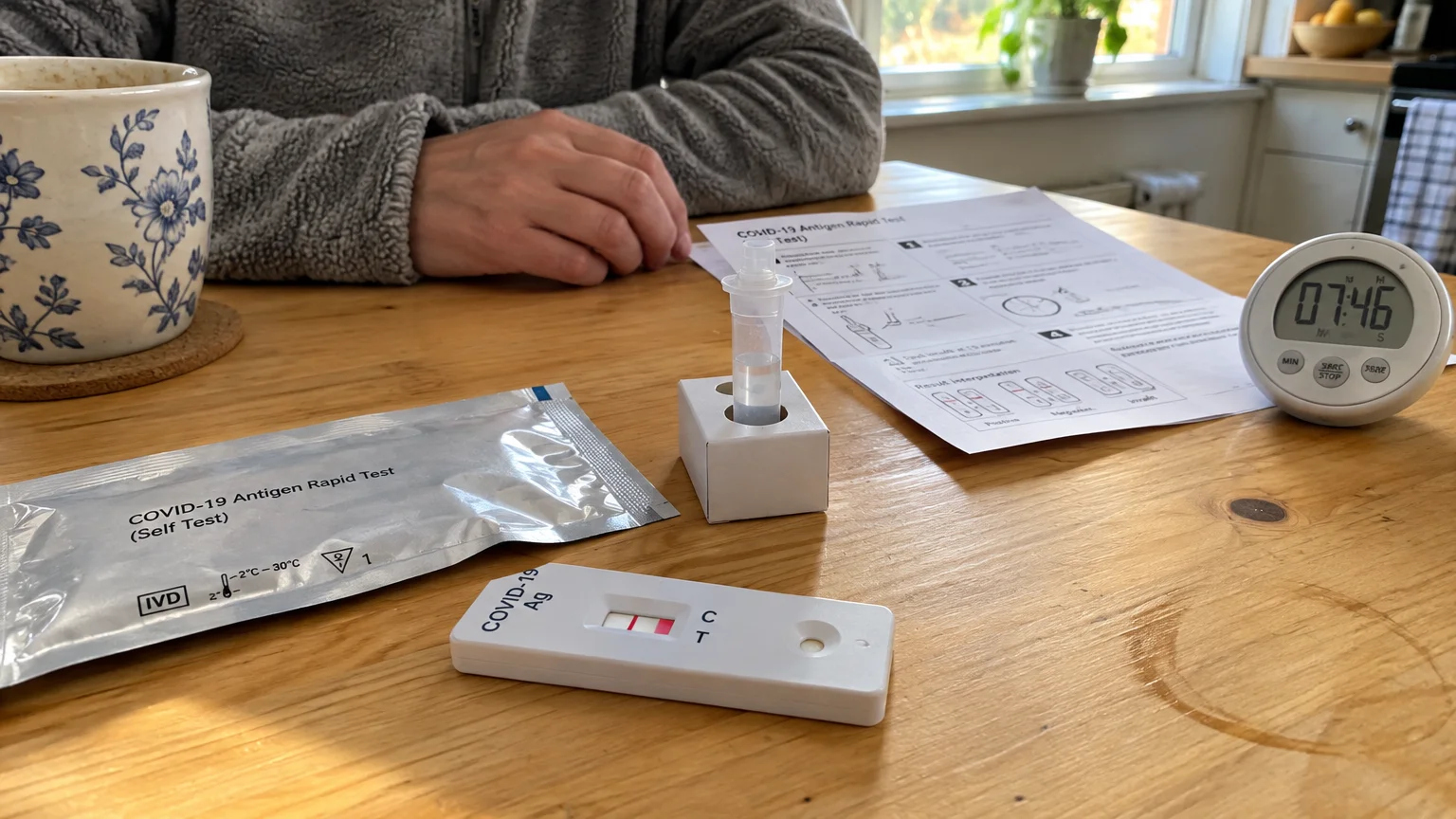
At-home rapid antigen tests provide quick answers when positive, though negative results require careful follow-up. Because rapid tests miss early low viral loads, the Food and Drug Administration recommends repeating the test 48 hours after a negative result.
Follow that 48-hour repeat-testing rule whether you have active symptoms or feel completely normal. Using two tests spaced two days apart significantly improves your odds of catching an emerging infection.
Timing matters just as much if you were exposed to someone with COVID-19 and have no symptoms. The CDC advises waiting at least 5 full days after exposure before taking your test so viral levels have time to become detectable.
Finally, understand the limits of routine diagnostic kits. As Nebraska Medicine explains, standard rapid tests and clinic PCR swabs confirm SARS-CoV-2 infection but cannot identify your specific variant, because only genomic sequencing detects exact lineages.
Treatment Landscape and 2026–2027 Vaccines
Prompt diagnosis matters most when paired with targeted medical care. Antiviral therapies protect high-risk patients from severe disease, while updated XFG-targeted vaccines reduce serious complications across the community.
Antiviral Medications and Critical Timing Windows
COVID-19 antivirals stop viral replication early, before severe lung inflammation develops. According to CDC and IDSA guidelines, oral options Paxlovid and molnupiravir must be started within 5 days of symptom onset.
Paxlovid serves as the preferred first-line oral treatment for eligible adults and children age 12 and older weighing at least 40 kilograms, or 88 pounds. Molnupiravir provides an oral alternative for eligible adults only when other preferred therapies are unavailable or unsuitable.
Safety screening is essential before starting Paxlovid because its ritonavir component strongly affects how the liver processes other drugs. Always review every prescription medication, over-the-counter drug, and herbal supplement with your doctor or pharmacist to prevent dangerous interactions.
Kidney function also guides safe prescribing of oral COVID-19 therapy. Clinicians adjust Paxlovid doses for moderate kidney impairment and avoid prescribing it when estimated glomerular filtration rate drops below 30 milliliters per minute.
When drug interactions or severe kidney disease rule out oral pills, remdesivir offers an effective intravenous alternative. A 3-day IV course of remdesivir must begin within 7 days of symptom onset and covers adults plus pediatric patients over 28 days old weighing more than 3 kilograms.
Testing simultaneously for flu protects an even tighter therapeutic window. Prescription flu antivirals work best when started within 48 hours of symptom onset, making rapid testing critical for adults 65 and older, pregnant people, and patients with chronic heart, lung, kidney, or diabetic conditions.
Supportive Care at Home and Safety Precautions
Alongside medical evaluation, steady home care eases discomfort while your immune system clears the virus. Drink water, warm tea, or broth regularly to keep throat tissues moist and replace fluids lost through fever.
Over-the-counter fever reducers, pain relievers, and throat lozenges help calm sharp throat pain, headaches, and muscle aches. Check active-ingredient labels carefully to avoid overlapping doses in multi-symptom cold medicines, and ask a pharmacist before combining them with prescriptions.
Saline nasal sprays and cool-mist humidifiers gently relieve congestion without rebounding stuffiness. Keep in mind that this information is educational rather than prescriptive, so confirm specific medication choices with your clinician.
Updated 2026–2027 COVID-19 Vaccines
On August 27, 2026, the FDA approved four updated monovalent 2026–2027 vaccines targeting the JN.1-lineage XFG variant. These formulations align closely with the dominant XFG strains circulating globally this autumn.
Two standard mRNA vaccines received approval for older adults and high-risk younger groups. Pfizer-BioNTech Comirnaty XFG covers adults 65 and older plus individuals ages 5 to 64 with at least one high-risk condition, while Moderna Spikevax covers 65 and older plus high-risk ages 6 months to 64.
Patients ages 12 and older also have two additional options under the August 2026 FDA approvals. Moderna mNEXSPIKE offers a lower-dose mRNA formulation, while Sanofi and Novavax Nuvaxovid provides a non-mRNA protein-subunit vaccine for adults 65 and older and high-risk ages 12 to 64.
Understanding federal and specialty guidelines helps you navigate eligibility smoothly this fall. On September 23, 2026, the CDC confirmed its July 2025 immunization schedule remains active, recommending vaccination for all adults 18 and older and moderately or severely immunocompromised children ages 6 months to 17 years.
Under that CDC framework, families of immunocompromised children may use self-attestation when scheduling shots. For other children ages 6 months to 17 years, the CDC advises shared clinical decision-making with a provider, noting some uses are off-label relative to narrowed FDA labels.
Major U.S. medical societies issued unified guidance in September 2026 to support broad protection. The American Academy of Family Physicians, American Academy of Pediatrics, American College of Obstetricians and Gynecologists, and IDSA recommend vaccination for all adults including pregnant people, children 6 to 23 months, and risk-based doses for ages 2 to 18.
If you want to minimize clinic trips, the CDC confirms you can safely receive your COVID-19 and seasonal flu vaccines during the same visit.

Living Well: Recovery, Caregiving, and Care Collaboration
Recovering well requires pacing your return to work and safeguarding vulnerable relatives under the same roof. Practical routines turn confusing public health guidance into manageable daily steps.
When You Can Safely Return to Daily Activities
CDC unified respiratory virus guidance bases your return to normal activities on clinical recovery rather than a fixed day count. Stay home until your symptoms are improving overall and you stay fever-free for at least 24 hours without fever-reducing medication.
Resuming daily errands does not mean transmission risk drops immediately to zero. For the 5 days after returning to activities, add precautions including masking indoors, improving ventilation, distancing, frequent handwashing, and testing before indoor gatherings.
Healthcare settings follow stricter return-to-work standards to protect hospitalized patients. A September 16, 2026 CDC update directs healthcare personnel to wait at least 3 days after onset or a positive test, stay fever-free 24 hours without medication, show improving symptoms, and feel well enough to work.
International guidance offers another useful benchmark if you care for high-risk relatives. The UK National Health Service advises adults 18 and older who test positive to stay home 5 days, children under 18 for 3 days, and everyone to avoid high-risk people for 10 days.
Caregiver Support and Home Monitoring Tools
If you care for a sick family member, write down the exact date their first symptom appeared. Knowing day one keeps medical teams aligned on strict 48-hour flu and 5-day or 7-day COVID-19 antiviral deadlines.
Check oxygen levels morning and evening with a fingertip pulse oximeter when caring for older adults or people with lung or heart disease. Logging readings early alerts you promptly if oxygen saturation dips toward the 94% threshold for severe illness.
Keep a printed list of every household member’s current prescriptions and allergies inside your medicine cabinet. Having exact drug names ready speeds up telehealth consultations when pharmacists screen for Paxlovid interactions.
Simple home barriers help keep one mild infection from spreading across the entire household. Open windows slightly for fresh airflow, run portable air cleaners in sick rooms, and wear a well-fitting mask when delivering meals or checking temperatures.
Working With Your Healthcare Team
Schedule a brief check-in with your primary care provider before respiratory illness peaks in your community. Confirming your latest kidney lab values ahead of time helps clinicians prescribe oral antivirals rapidly if you test positive over a holiday weekend.
Reach out promptly if fatigue, cough, or shortness of breath lingers beyond two weeks after acute illness. Follow-up visits help your care team check for secondary infections, asthma flares, or prolonged post-viral symptoms.
Treat educational resources as preparation for informed conversations rather than personal prescriptions. Your healthcare provider and pharmacist understand your unique health history and tailor vaccines, testing, and treatments safely for you.
Frequently Asked Questions About COVID This Season
What warning signs mean I should seek emergency medical care?
Call 911 or visit an emergency department immediately for trouble breathing, persistent chest pain or pressure, or new confusion. Also seek emergency care for inability to wake or stay awake, or pale, gray, or blue-colored skin, lips, or nail beds.
Objective vital signs offer another clear signal to get urgent medical help. Seek evaluation promptly if oxygen saturation drops below 94% on room air or if resting breathing exceeds 30 breaths per minute.
How should I follow up with my doctor after testing positive?
Contact your clinician or a telehealth service the same day you test positive if you are 65 or older, pregnant, immunocompromised, or managing chronic lung, heart, kidney, or metabolic disease. Quick contact protects your 5-day oral antiviral window and 7-day remdesivir window.
Even if you recover at home with mild symptoms, schedule follow-up if fever returns after breaking or breathing grows harder during week two. Also check in if lingering exhaustion or cough disrupts daily routines weeks after testing positive.
How do insurance and access work for vaccines, tests, and antivirals?
Because August 2026 FDA vaccine approvals focused on adults 65 and older plus younger people with high-risk conditions, some younger adults and children receive vaccines off-label under broader CDC or medical society recommendations. Call your insurer or pharmacy beforehand to confirm coverage and self-attestation policies.
When seeking multiplex tests or antivirals, ask your clinic or local community health center which in-network labs and pharmacies handle prescriptions smoothly. Saving electronic test results and pharmacy receipts helps if you need documentation for employer leave or reimbursement.
Does new research show XFG or PJ.2.1 causes more severe disease?
Current evidence indicates neither XFG nor PJ.2.1 causes harsher illness than recent Omicron variants. In its November 3, 2026 assessment, European health officials concluded circulating Variants of Interest and Variants Under Monitoring are unlikely to increase severity or reduce severe-disease vaccine protection.
Early findings on PJ.2.1 point in the same reassuring direction. Although the October 24, 2026 Journal of Infection study showed stronger cell binding from over 25 spike mutations, initial data indicate no greater severity and no major evasion of updated vaccine antibodies.
Taking Your Next Step With Confidence
Managing a new COVID variant starts with spotting upper respiratory clues early and confirming your illness with timely testing. Whether symptoms stem from XFG, PJ.2.1, or seasonal flu, acting promptly protects high-risk people around you and preserves every treatment option.
Talk with your doctor or pharmacist about 2026–2027 vaccination and build a household testing and care plan before illness strikes. Rely on trusted public health portals and patient respiratory support networks to stay informed with reliable, practical guidance throughout the season.