

Prostate cancer screening rules have undergone a major shift, making testing clearer, earlier, and far more targeted. You no longer have to navigate confusing medical debates alone or dread invasive baseline exams.
Leading medical organizations now recommend routine blood tests rather than waiting for vague symptoms to appear. Understanding these updated age thresholds and testing intervals empowers you to protect your long-term health effectively.
This educational guide explains the newest clinical timelines, diagnostic pathways, and treatment choices so you can make confident medical decisions with your physician.
Why the Prostate Cancer Screening Rules Changed
For more than a decade, confusing medical advice left millions of men uncertain about whether to schedule a prostate check. Many clinics discouraged routine testing or waited until patients developed obvious physical complaints.
That passive clinical approach triggered unintended public health consequences across the country. Over time, national tumor registries revealed a distressing shift in prostate cancer trends.
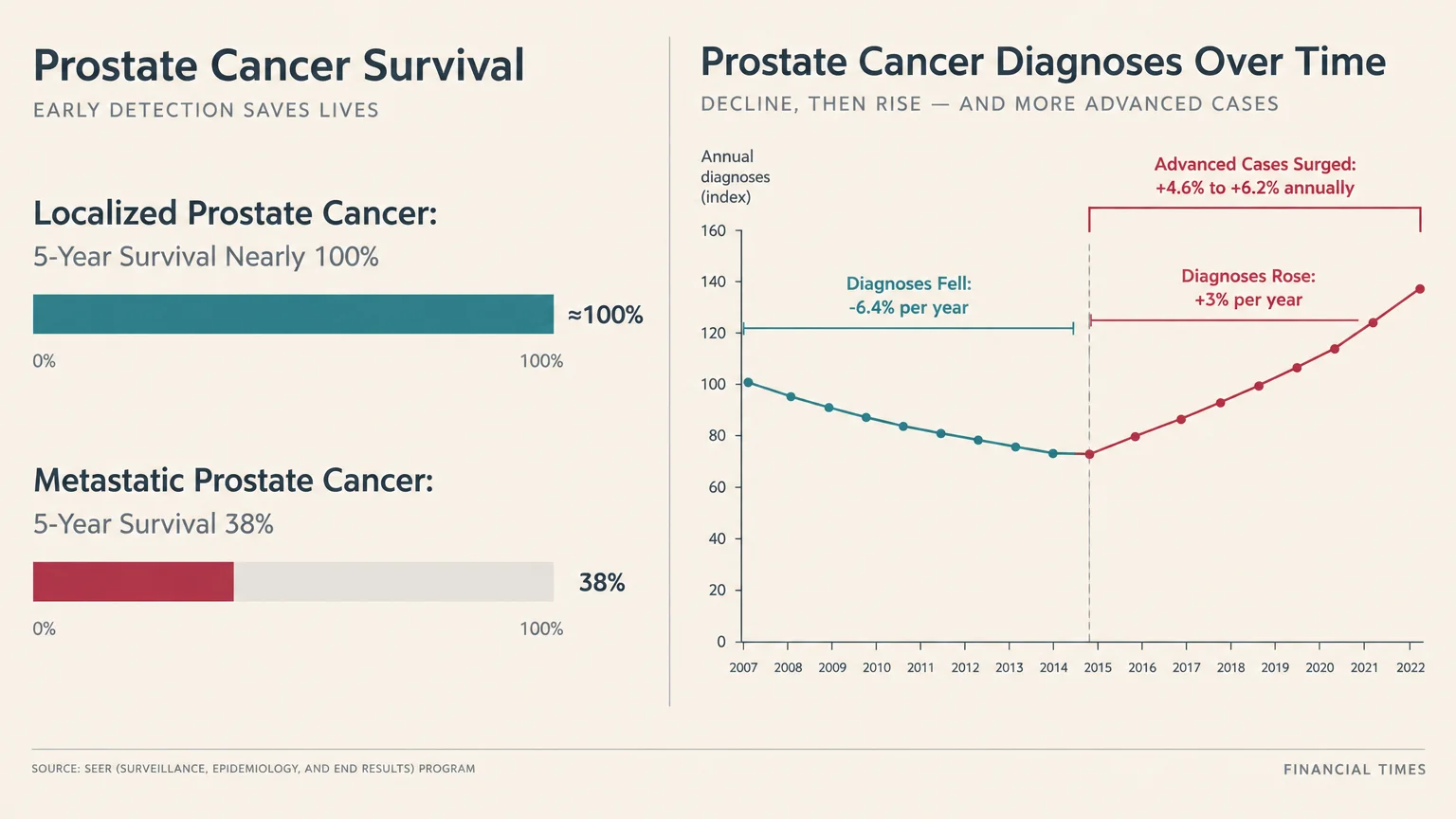
From 2007 to 2014, overall prostate cancer diagnoses declined by 6.4% per year as clinics scaled back testing. However, that encouraging trend reversed completely between 2014 and 2022.
During that subsequent period, overall prostate cancer diagnosis rates climbed by 3% each year. Doctors began seeing more men arrive at clinics with previously undetected tumors.
Even more alarming, advanced-stage prostate cancer diagnoses surged by 4.6% to 6.2% annually over the past decade. Oncologists increasingly diagnosed regional and metastatic cancers that had already spread beyond the gland.
When prostate cancer escapes the gland, your clinical prognosis changes dramatically. While localized disease boasts a 5-year relative survival rate of nearly 100%, metastatic cancer drops that survival rate to 38%.
These climbing rates of late-stage disease pushed medical associations to rethink their earlier hands-off policies. Specialists recognized that neglecting early detection cost thousands of preventable lives.
The newest guidelines correct past mistakes by re-establishing routine blood screenings. They pair early detection with sophisticated secondary tools to avoid the overtreatment problems of prior generations.
You now benefit from a modern screening philosophy that balances early disease identification with careful clinical restraint. This balanced approach protects your long-term survival while safeguarding your everyday quality of life.
The New Screening Framework: Timelines by Age and Risk
The American Cancer Society transformed the national landscape on November 12, 2026, by publishing comprehensive new guidance in CA: A Cancer Journal for Clinicians. This publication marks the organization’s first major screening update since 2010.
The panel moved past ambiguous recommendations that relied purely on open-ended patient conversations. Instead, the organization now directly advises routine blood screening for eligible men.
If you fall into the average-risk category, the guidelines recommend that you start routine prostate-specific antigen testing at age 50. You should repeat your PSA blood test every 2 years through age 69.
High-risk men must follow earlier, more aggressive surveillance schedules under the updated standards. Black men and individuals with a strong family history of prostate cancer should begin annual PSA testing at age 45.
Starting earlier gives high-risk individuals a vital head start against fast-moving cellular changes. Regular testing ensures that physicians identify aggressive tumors before they break through the prostate capsule.
Earlier Starting Points from Urological Specialists
The American Urological Association and the Society of Urologic Oncology updated their clinical guidance in February 2026. Their revised protocol urges vulnerable men to start testing even earlier.
Urologists now advise Black men and individuals with significant family histories or genetic risk factors to begin screening at age 40. This early baseline helps physicians identify aggressive cellular changes before tumors spread.
The urological guidelines also remove a major physical obstacle that historically discouraged men from visiting their doctors. Specialists explicitly de-emphasized the routine digital rectal examination as a primary screening tool for asymptomatic men with low PSA scores.
Research revealed that anxiety over physical rectal exams often prevented men from scheduling preventative visits. A standard, minimally invasive blood draw now serves as the primary gateway to early detection.
Doctors still reserve physical examinations for patients with abnormal blood findings or specific urinary complaints. However, you no longer need to dread an uncomfortable exam just to establish your baseline health.
Federal Guidelines and International Benchmarks
Federal health agencies are currently working to harmonize their recommendations with these updated specialty benchmarks. The U.S. Preventive Services Task Force maintains its May 2018 guidance recommending individualized shared decision-making for men aged 55 to 69 while developing updated recommendations.
The task force continues to advise against routine screening in men aged 70 and older. However, doctors often evaluate healthy older men individually based on their biological vitality and overall life expectancy.
Global health authorities have adopted similar targeted screening strategies for genetically vulnerable populations. In March 2026, the UK National Screening Committee recommended biennial PSA screening for high-risk men aged 45 to 61 carrying the BRCA2 genetic mutation.
These international and domestic recommendations share a common clinical goal. They deliver early detection to the men who need it most while avoiding unnecessary procedures for those at minimal risk.

Understanding Prostate Biology, Cancer Development, and Statistics
Your prostate is a walnut-sized gland resting directly beneath your bladder and encircling your urethra. Its main biological function involves producing nutrient-rich seminal fluid that nourishes and transports sperm cells.
Prostate cancer develops when normal glandular cells undergo genetic alterations that cause them to divide uncontrollably. Over time, these rogue cells can form localized tumors within the prostate tissue.
The overall scale of this disease across the United States remains immense. An estimated 333,830 men receive a prostate cancer diagnosis nationwide each year.
Approximately 36,320 men die from the condition annually, cementing it as the second-leading cause of cancer death in men behind lung cancer. Overall, about 1 in 8 men will receive a diagnosis during their lifetime.
Recognizing Disparities and Inherited Risks
While any man can develop prostate cancer, distinct demographic disparities alter individual risk profiles dramatically. Recognizing these biological patterns helps you advocate for timely medical testing.
Black men experience a 67% higher incidence rate of prostate cancer compared to white men. Furthermore, Black men are twice as likely to die from the condition.
Native American men also encounter notable disparities within current clinical environments. Despite experiencing a 13% lower diagnosis rate than white men, Native American men face a 12% higher mortality rate.
Inherited genetics also play a major role in how tumors develop and behave. If your father or brother developed prostate cancer at a young age, your personal statistical risk doubles.
Specific genetic mutations, such as alterations in the BRCA1 or BRCA2 genes, significantly raise your risk for aggressive cellular growth. Men with Lynch syndrome also share heightened susceptibility to early tumor development.
Discussing your family history with your physician enables you to establish a personalized screening calendar. Early genetic counseling provides essential clues regarding your lifetime prostate cancer risk.
What to Expect from a PSA Blood Test and How to Prepare
The prostate-specific antigen test measures a unique protein made by both healthy and malignant prostate cells. A small quantity of this protein naturally escapes the prostate gland and enters your bloodstream.
Your care team measures your PSA levels in nanograms of antigen per milliliter of blood. While higher numbers warrant investigation, an elevated PSA score does not automatically signify cancer.
Numerous non-malignant conditions can irritate the prostate and elevate your circulating antigen counts. Benign prostatic hyperplasia, urinary tract infections, and localized prostatitis frequently cause noticeable PSA spikes.
Actionable Steps for Pre-Test Preparation
Everyday physical activities can inadvertently alter your blood test results. Taking specific precautions before your laboratory appointment ensures that your results reflect your genuine biological baseline.
You should avoid vigorous bicycle riding for at least 48 hours before your blood draw. Pressure from a bicycle saddle compresses your prostate gland and can artificially release extra antigen into your blood.
You should also abstain from sexual activity and ejaculation for 48 hours prior to testing. Ejaculation temporarily raises circulating PSA levels, which could trigger unnecessary clinical alarm.
If you experience burning urination or symptoms of an active urinary infection, postpone your test until the infection resolves. Treating urinary tract issues first prevents false-positive readings that cause needless worry.
Inform your physician about any medications you take regularly, including finasteride or dutasteride. These medications shrink prostate tissue and typically cut your circulating PSA numbers in half.
Your physician must double your recorded PSA value if you take 5-alpha reductase inhibitors to interpret your results accurately. Clear communication ensures that your medical team evaluates your actual cancer risk correctly.
Next Steps After an Abnormal Test: The Modern Diagnostic Pathway
The modern screening guidelines establish a clear safeguard against medical overtreatment. A single elevated PSA result no longer triggers an automatic, invasive needle biopsy.
If your test results return higher than expected, your doctor will first schedule a repeat PSA test. Waiting several weeks confirms whether the elevation represents a persistent trend or a temporary biological blip.
When PSA elevations persist, your physician will evaluate specialized secondary biomarkers. Tests measuring free PSA, the Prostate Health Index, or urinary biomarker panels assess cancer risk with exceptional accuracy.
The Role of Advanced Imaging Scans
Multiparametric magnetic resonance imaging has revolutionized modern prostate diagnostics over recent years. An mpMRI scan generates detailed cross-sectional pictures of your prostate gland without exposing you to ionizing radiation.
Radiologists evaluate these images using the standardized PI-RADS scoring system, which grades suspicious lesions on a scale from one to five. Low scores indicate healthy tissue, while higher scores identify areas requiring targeted sampling.
If your MRI scan shows clear, healthy tissue, you can safely avoid a tissue biopsy. Your physician will simply continue routine surveillance with regular blood checks and periodic follow-up scans.
Targeted MRI-Ultrasound Fusion Biopsies
When imaging reveals a suspicious lesion, urologists use MRI-ultrasound fusion technology to guide their biopsy needles. This advanced software overlays your previous MRI images onto real-time ultrasound pictures during the procedure.
Targeted fusion biopsies allow doctors to sample the exact abnormal area directly rather than taking random tissue cores. This precision catches aggressive cancers while reducing procedural discomfort and infection risks.
Surgeons can perform biopsies through your perineum rather than through your rectum. This transperineal approach dramatically slashes the risk of post-procedure bacterial infections and hospitalizations.
A pathologist examines the collected tissue cells under a microscope to determine their Grade Group and Gleason score. These standardized metrics describe how closely the tumor cells resemble healthy prostate tissue.
This structured, multi-step diagnostic pathway protects you from unnecessary surgical procedures while identifying clinically significant tumors promptly. You receive thorough medical evaluation without enduring unwarranted invasive interventions.
The Modern Treatment Spectrum: From Active Surveillance to Curative Care
Receiving a prostate cancer diagnosis does not mean you must immediately undergo invasive surgery or intense radiation. Many localized prostate tumors grow so slowly that they may never cause harm during your natural lifetime.
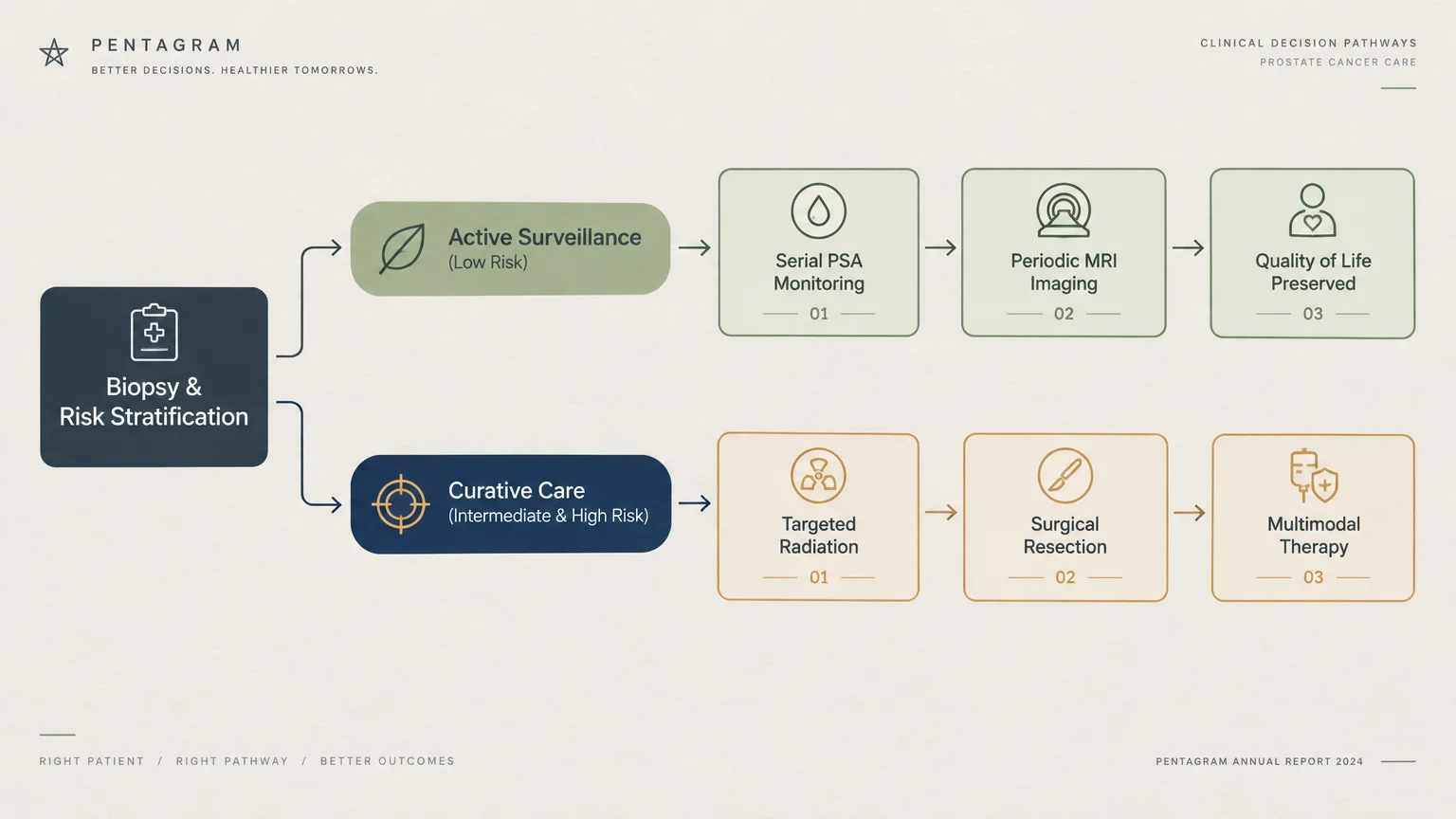
For low-risk and favorable intermediate-risk cancers, active surveillance serves as the preferred primary management strategy. This protocol monitors your tumor closely without compromising your daily quality of life.
The medical community has embraced this conservative management philosophy with remarkable speed. Among men diagnosed with low-risk prostate cancer in the United States, active surveillance use more than doubled from 26.5% in 2014 to 59.6% in 2021.
Under active surveillance, you undergo scheduled PSA testing, clinical checkups, periodic MRI scans, and occasional repeat biopsies. You only begin active therapy if your tumor displays signs of accelerated biological growth.
This careful monitoring protects your sexual and urinary function for years or even decades. You avoid invasive treatments until clear clinical signs prove that active intervention is truly required.
Curative Local Interventions
When tumors present intermediate or high-risk features, definitive local therapies offer outstanding cure rates. Radical prostatectomy involves the surgical removal of the prostate gland and attached seminal vesicles.
Most surgeons perform prostatectomy using robotic-assisted laparoscopic systems that allow high surgical precision. This approach reduces blood loss and helps preserve the delicate nerves controlling bladder function and erections.
Radiation therapy provides another established curative treatment pathway for localized cancer. External beam radiation delivers concentrated energy beams to the prostate, while brachytherapy places tiny radioactive seeds directly inside glandular tissue.
Both surgery and radiation carry potential long-term side effects involving urinary continence, bowel regularity, and sexual potency. Consulting both a urologic surgeon and a radiation oncologist helps you choose the right therapy for your priorities.
Systemic Care for Advanced Disease
For cancers that spread outside the pelvic area, systemic medical treatments manage cellular proliferation throughout your entire body. Androgen deprivation therapy lowers circulating testosterone levels, starving hormone-dependent prostate cancer cells.
Oncologists frequently combine androgen suppression with advanced androgen receptor inhibitors or chemotherapy medications. These multi-drug regimens slow disease progression and extend life significantly for men with metastatic illness.
Targeted radioligand therapies also offer innovative options by delivering radioactive particles directly to cancer cells displaying prostate-specific membrane antigen. These targeted treatments attack distant metastases while sparing surrounding healthy tissues.
Support from organizations like the Prostate Cancer Foundation continues to accelerate research into groundbreaking precision treatments. These innovations expand therapeutic choices for men living with advanced stages of disease.
When you look across all stages combined, the 5-year relative survival rate for prostate cancer stands at 98%. Modern therapeutic combinations continue to improve long-term outcomes and preserve vital quality of life.
Lifestyle Strategies, Nutrition, and Survivorship
While you cannot modify your genetic heritage, daily lifestyle habits strongly influence your cellular health and recovery trajectory. Clinical evidence highlights an undeniable relationship between heart health and prostate wellness.
Adopting an anti-inflammatory, plant-forward dietary pattern nourishes your body with protective micronutrients. Emphasize colorful vegetables, legumes, leafy greens, and cooked tomato products packed with the natural antioxidant lycopene.
You should minimize your intake of highly processed foods, deep-fried items, and red meats high in saturated fats. Maintaining healthy blood glucose levels and reducing systemic inflammation helps deter aggressive cellular behavior.
The Role of Targeted Physical Activity
Regular exercise functions as a powerful therapeutic tool throughout every stage of prostate care. Combining aerobic conditioning with progressive strength training regulates hormone balance and promotes cardiovascular vitality.
If your treatment plan includes androgen deprivation therapy, dedicated resistance training becomes critical. Lifting weights helps prevent treatment-related bone thinning, counteracts muscle wasting, and reduces daily fatigue.
Pelvic floor physical therapy offers essential support for restoring urinary control after surgery or radiation. Learning correct pelvic muscle contraction techniques before undergoing procedures significantly accelerates your urinary recovery afterward.
Addressing mental health is just as important as managing physical symptoms during your cancer journey. Developing stress-reduction routines and seeking professional counseling helps you overcome procedural anxiety and fear of recurrence.
Mindfulness practices and peer support communities provide practical strategies for handling scan-related anxiety before follow-up appointments. Taking proactive steps for your emotional health strengthens your resilience throughout the survivorship process.

Caregiver Collaboration and Multidisciplinary Healthcare Teams
Navigating cancer screenings and treatment decisions can feel mentally exhausting if you try to manage everything by yourself. Enlisting the support of family members, partners, or trusted friends provides vital practical assistance.
Caregivers can attend clinical consultations to take detailed notes, organize diagnostic reports, and ask clarifying questions. Having a second set of ears ensures you remember important clinical instructions accurately.
Your ideal medical care relies on a coordinated multidisciplinary team of healthcare experts. This group may include primary care doctors, urologists, radiation oncologists, medical oncologists, pathologists, and dedicated nurse navigators.
You also benefit from connecting with established patient communities like ZERO Prostate Cancer. These advocacy organizations offer educational resources, peer support programs, and financial navigation assistance to patients and families nationwide.
Transparent discussions with your romantic partner regarding intimate health foster emotional closeness during recovery. Seeking guidance from specialized pelvic health therapists or couples counselors provides constructive solutions for intimacy challenges.
Involving your loved ones throughout every phase of diagnosis and treatment ensures that you maintain strong relational foundations. Mutual support empowers you to face clinical decisions with confidence and clarity.
Frequently Asked Questions About Modern Prostate Screening
What early symptoms of prostate cancer should I watch for?
Early localized prostate cancer typically produces no physical warning signs whatsoever. You cannot rely on physical sensations or pain to alert you to early cellular changes.
As tumors grow, they may cause urinary hesitation, interrupted flow, frequent nighttime urination, or blood in your semen. While these symptoms usually stem from benign conditions, you should evaluate them promptly with a doctor.
What medical follow-up happens if my PSA level is elevated?
Your healthcare provider will not send you straight into an operating room for a biopsy. Instead, current guidelines require repeating your blood test in a few weeks to verify the result.
If your numbers remain high, your physician will order secondary blood biomarkers or a multiparametric MRI scan. These advanced diagnostic tools pinpoint suspicious areas so you only undergo a biopsy when truly necessary.
Will my health insurance cover screening and follow-up tests?
Most health insurance policies fully cover routine preventative PSA blood draws without charging copayments. However, you must pay close attention to insurance terms if you need secondary evaluations.
A 2024 study published in the medical journal Cancer revealed that more than 75% of privately insured men faced out-of-pocket costs for follow-up testing after an abnormal PSA. Contact your insurance provider beforehand to verify coverage for MRI scans and specialized biomarker tests.
How is genetic testing changing prostate cancer management?
Genetic testing allows physicians to tailor screening schedules to your unique DNA profile rather than relying solely on population averages. Identifying inherited mutations helps doctors detect high-risk disease years earlier.
If you carry inherited BRCA1, BRCA2, or Lynch syndrome mutations, guidelines recommend beginning proactive screening at age 40. Specialized clinical registries and genomic profiling tools help your oncologist choose targeted therapies if cancer develops.
Questions to Ask Your Doctor at Your Next Visit
Preparing thoughtful questions before your medical appointments ensures that you extract the most value from your consultations. Taking an active role in medical dialogues helps you personalize your care plan.
Ask your primary physician whether your family medical history or racial background warrants starting PSA screening at age 40 or 45. Inquire about establishing your baseline antigen level now so you can track biological trends over time.
If you receive an elevated test result, ask whether repeat blood draws or biomarker panels make sense before pursuing imaging. Clarify whether your local facility offers multiparametric MRI scans and MRI-ultrasound targeted fusion biopsies.
If you receive a low-risk diagnosis, ask whether active surveillance provides a safe, effective option for your tumor type. Inquire about the exact monitoring schedule your team will follow to keep you safe.
Ask your doctor to explain the potential benefits and risks of any recommended diagnostic test or intervention. Clear answers help you make decisions that align with your lifestyle priorities and personal values.
Partnering for Long-Term Health
The updated prostate cancer screening rules offer a balanced, modern strategy designed to detect dangerous cancers early while sparing you from unnecessary interventions. Knowing your individual risk factors puts you in control of your medical decisions.
Reach out to your healthcare provider today to discuss your personal screening roadmap. Proactive communication and regular surveillance remain your most dependable tools for maintaining lasting health and vitality.