
Many people assume dementia always begins with forgotten names or misplaced car keys. In reality, cognitive decline often surfaces first through shifts in judgment, vision, movement, or mood—well before memory fades.
Nine of the ten official warning signs of Alzheimer’s do not involve memory loss at all. Spotting these overlooked changes early gives you and your family precious time to seek answers and plan care.
This guide explains those nine non-memory warning signs, explores treatable conditions that mimic them, and outlines clear steps for testing and support. Information here is educational and does not replace personalized medical advice.
Why Dementia Does Not Always Start With Memory Loss
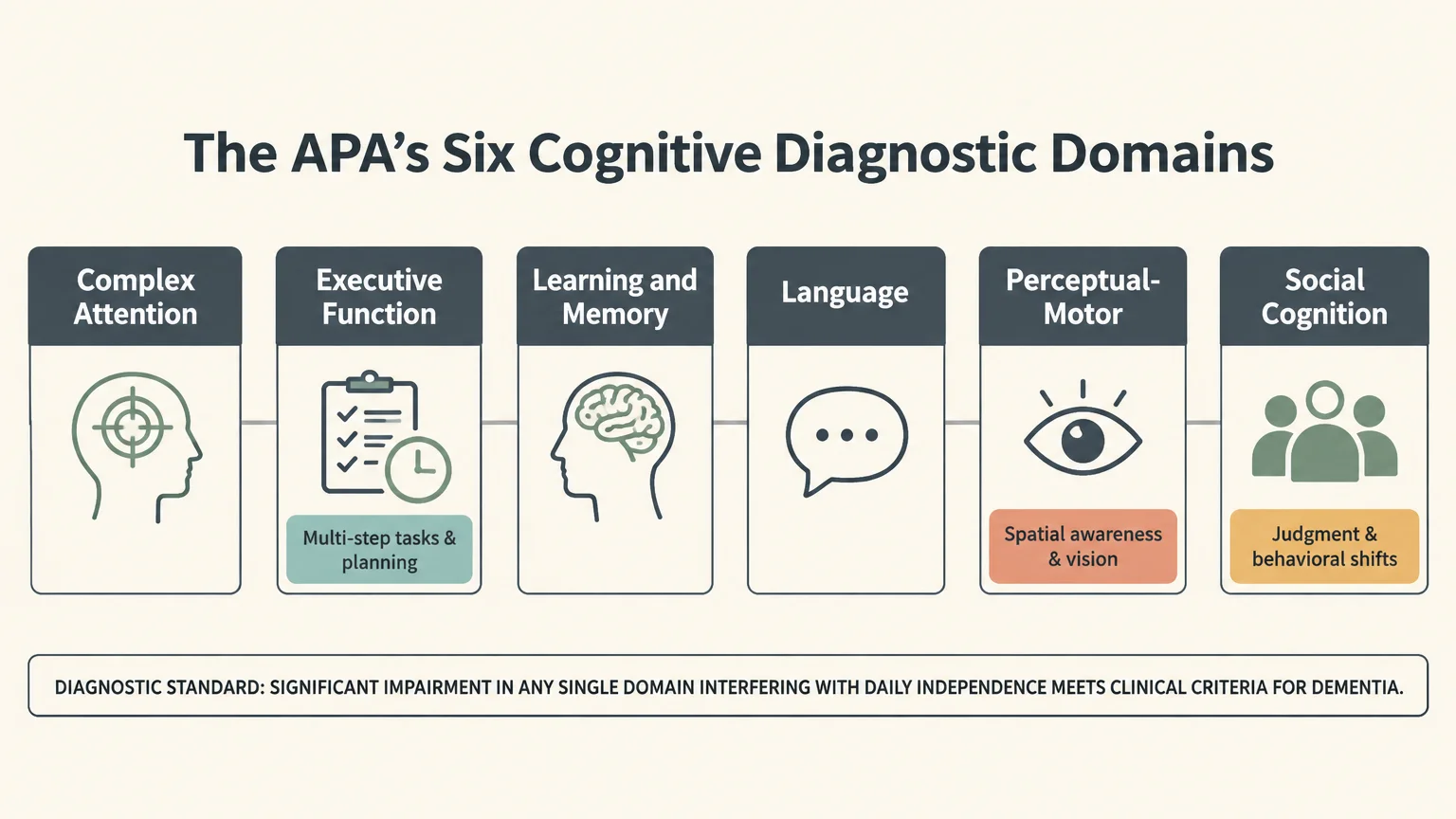
Dementia is an umbrella term for progressive brain changes that disrupt daily independence. Under diagnostic standards from the American Psychiatric Association, doctors evaluate decline across six distinct cognitive domains rather than memory alone.
Those domains include complex attention, executive function, learning and memory, language, perceptual-motor function, and social cognition. Significant impairment in even one non-memory domain that interferes with everyday life meets clinical criteria for dementia.
Because families wait for obvious forgetfulness, millions of early cases go unrecognized for years. Data from Alzheimer’s Disease International indicates that roughly 75% of dementia cases worldwide go undiagnosed, rising to 90% in some lower- and middle-income countries.
Even mild cognitive impairment—a transitional stage where daily independence remains intact—frequently flies under the radar. In the United States, roughly 92% of patients living with mild cognitive impairment have not received a formal diagnosis.
Yet early evaluation matters deeply for your trajectory. A systematic review cited by the U.S. Preventive Services Task Force found that 32% of people with mild cognitive impairment progress to dementia over five years.
At the same time, 10% to 40% may return to normal cognition over four to five years. Knowing what to watch for outside of memory gives you a vital head start.
The scale of cognitive decline continues to grow worldwide. According to the World Health Organization, 57 million people lived with dementia globally in 2021, with nearly 10 million new cases emerging each year.
Alzheimer’s disease accounts for 60% to 70% of those cases, making it the most common cause. In the United States, the Alzheimer’s Association estimates that 7.4 million adults age 65 and older live with clinical Alzheimer’s dementia in 2026.
That figure represents roughly 1 in 9 older Americans, climbing from 5.2% among ages 65 to 74 to 35.8% among those 85 and older. Recognizing early warning signs across every cognitive domain helps families connect with care before a crisis hits.
9 Early Signs of Dementia That Aren’t Memory Loss
Public health guidance from the Centers for Disease Control and Prevention and the Alzheimer’s Association highlights ten warning signs of Alzheimer’s disease. Nine of those signs point to shifts in thinking, perception, language, or behavior rather than short-term memory.
If you notice one or more of these patterns persisting or worsening over months, record concrete examples in a notebook. Sharing specific real-world moments gives your clinician far clearer evidence than general worry alone.
1. Challenges in Planning or Solving Problems
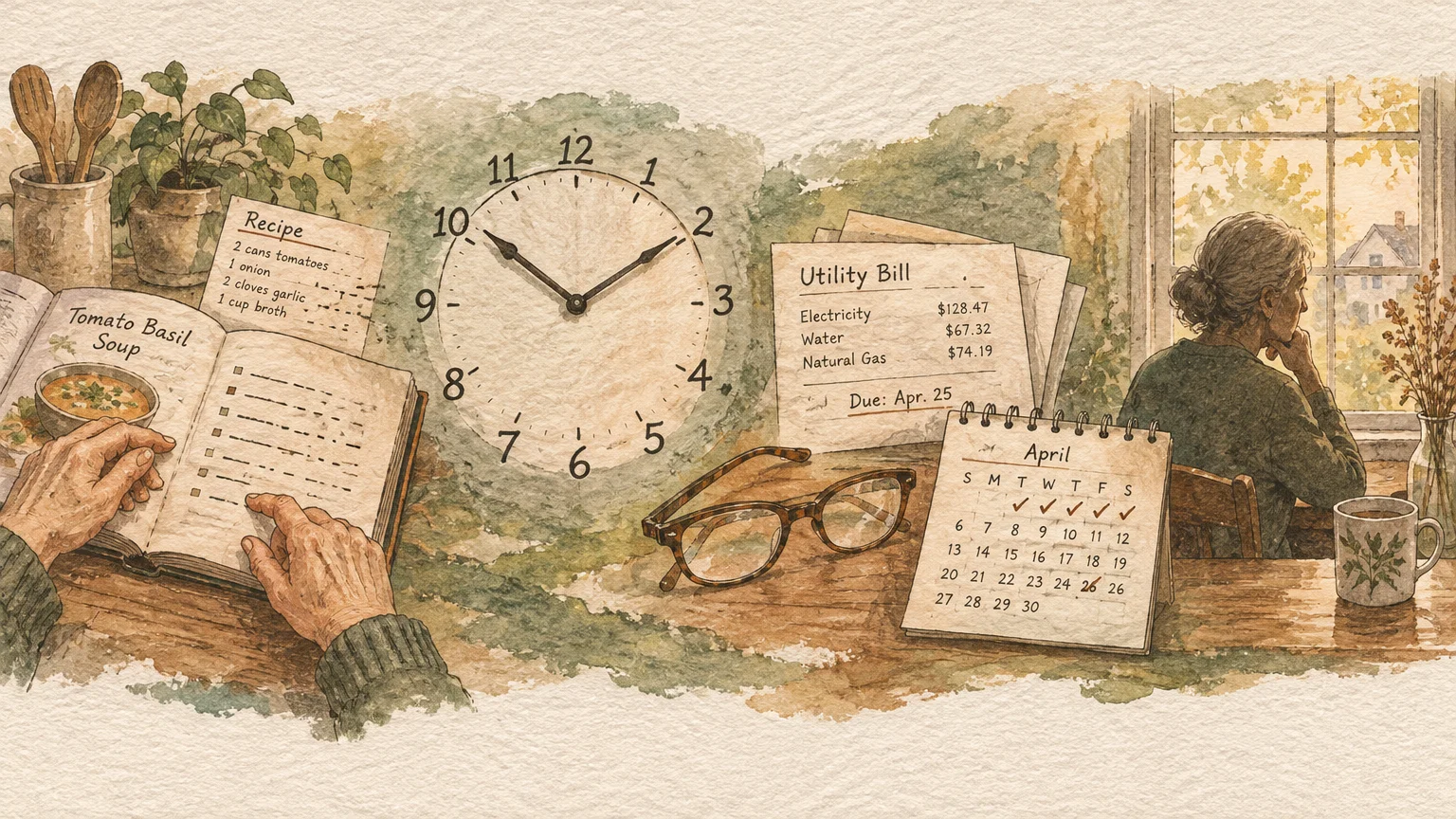
Early executive dysfunction often appears when multi-step tasks suddenly feel overwhelming. You might notice a loved one struggling to follow a favorite family recipe they have cooked for decades.
Monthly bill management is another common trouble spot. Late utility notices, double payments, or an inability to balance a basic budget frequently signal declining planning skills long before memory falters.
Everyone makes an occasional math error on a checkbook or tax form. The difference with cognitive decline is a consistent drop in concentration and markedly slower completion of familiar mental tasks.
Watch quietly for piles of unopened mail or half-finished household projects. Gently offering to review monthly statements together can uncover subtle reasoning difficulties without triggering defensiveness.
2. Difficulty Completing Familiar Tasks
Routine activities that once ran on autopilot may start requiring intense effort. Someone might struggle to drive to a neighborhood grocery store they have visited for twenty years or forget the rules of a weekly card game.
At work or in community roles, organizing schedules, operating familiar office equipment, or coordinating a simple potluck can become unexpectedly confusing. People often cover this strain by claiming they feel tired or bored.
Needing help programming a brand-new television remote or updating a smartphone app reflects normal aging. Struggling with lifelong routines, however, warrants a closer medical look.
Pay attention if a family member abandons beloved hobbies or leaves kitchen appliances running mid-meal. Writing down exact incidents helps your doctor distinguish normal distraction from functional decline.
3. Confusion With Time or Place
Dementia can erode your internal sense of dates, seasons, and the passage of time. A person might prepare breakfast at dusk, dress for winter during a heat wave, or forget how they arrived at a local park.
Briefly wondering what day of the week it is happens to almost everyone—especially after retirement. In normal aging, you check a calendar and immediately orient yourself.
With cognitive decline, future or past events blur together, making it hard to grasp anything not happening right now. Even after looking at a clock or calendar, confusion often returns minutes later.
Place a large-print digital day clock in a central room to ease daily stress. If disorientation persists despite clear visual cues, schedule a primary care evaluation promptly.
4. Trouble Understanding Visual Images and Spatial Relationships
Changes in the brain’s visual-processing centers can alter how you interpret depth, contrast, and movement—even when your eyes remain healthy. Reading dense print, judging stair height, or pouring water cleanly into a glass may grow surprisingly difficult.
Some individuals misjudge distances while driving, leading to curb scrapes or unexplained fender-benders. Others fail to recognize their own reflection in a bathroom mirror and think a stranger stands in the room.
Standard vision changes like cataracts or presbyopia are common with age and respond well to glasses or surgery. Always book a comprehensive eye exam first to rule out ocular causes.
If an optometrist clears your eyes yet tripping, spilled drinks, or reading troubles continue, report those spatial symptoms to a physician. Bright contrasting tape on stair edges can reduce fall risk in the meantime.
5. New Problems With Words in Speaking or Writing
Language changes often emerge subtly during everyday conversations. A person may stop mid-sentence with no idea how to finish their thought, repeat the same story minutes apart, or struggle to join fast-paced dinner chatter.
Word substitutions are another hallmark clue. Someone might call a wristwatch a hand clock or ask for the cold box instead of the refrigerator because the exact noun slips out of reach.
Written communication shifts too, showing unusual spelling errors, dropped words, or fragmented text messages. Occasionally blanking on an acquaintance’s name—only to recall it an hour later—is normal.
When vocabulary loss disrupts clear communication week after week, track a few specific examples. Speech-language changes can point toward Alzheimer’s or less common conditions that affect language centers directly.
6. Misplacing Things in Unusual Spots and Losing the Ability to Retrace Steps
Everyone sets their glasses down and searches the kitchen counter for five minutes. With normal aging, you mentally rewind your afternoon and retrace your path until the glasses turn up.
Early dementia disrupts both placement logic and mental backtracking. Car keys land inside the freezer, a wallet ends up tucked inside a shoe, or hearing aids sit in a sugar bowl.
Because the person cannot reconstruct how the item got there, frustration mounts quickly. Over time, some individuals grow suspicious and accuse family members or neighbors of stealing missing belongings.
Arguing over where items belong rarely helps and often deepens distress. Stay calm, gently assist in checking unusual hiding spots, and document repeated episodes for your medical team.
7. Decreased or Poor Judgment
Subtle deterioration in the brain’s frontal circuits can impair everyday decision-making long before memory tests look abnormal. Financial vulnerability is one of the earliest and most damaging red flags.
A lifelong frugal saver might suddenly wire large sums to telemarketers, buy duplicate subscriptions, or fall for obvious online scams. Personal judgment around safety and hygiene frequently slips alongside financial missteps.
Examples include wearing heavy wool coats in July, neglecting regular showers, or ignoring spoiled food in the refrigerator. While anyone can make a questionable purchase occasionally, persistent poor judgment signals deeper change.
Protect your loved one respectfully by setting up bank transaction alerts and adding a trusted-contact designation on financial accounts. Early safeguards preserve dignity while preventing devastating losses.
8. Withdrawal From Work or Social Activities
Stepping away from bridge clubs, religious services, volunteer shifts, or family gatherings often looks like simple introversion or aging fatigue. In many cases, social withdrawal is an early defense mechanism against cognitive overload.
Tracking multiple conversations in a noisy restaurant demands rapid attention, memory, and language processing. When those networks slow down, socializing feels exhausting and embarrassing.
Someone who once organized neighborhood block parties may quietly stop returning phone calls or abandon favorite sports teams. Unlike temporary sadness after a stressful week, this retreat steadily widens.
Instead of pushing large crowded events, test smaller one-on-one coffee dates in quiet rooms. Notice whether engagement rebounds in calm settings or remains persistently flat.
9. Changes in Mood and Personality
Emotional shifts are among the hardest non-memory symptoms for families to interpret. A normally easygoing parent may grow unexpectedly irritable, fearful, suspicious, or anxious—especially when daily routines change.
Minor travel delays, unfamiliar grocery layouts, or evening fatigue can trigger sudden agitation or tearfulness. Conversely, some people develop deep apathy, losing emotional warmth and initiative without feeling classically sad.
Because mood changes overlap with depression, grief, or retirement stress, families often overlook neurological causes at first. Yet uncharacteristic personality shifts in mid-to-late life deserve thorough medical evaluation.
Keep a brief log noting what happened right before an emotional outburst or anxious episode. Identifying triggers helps both you and your clinician tailor calmer routines and targeted treatments.
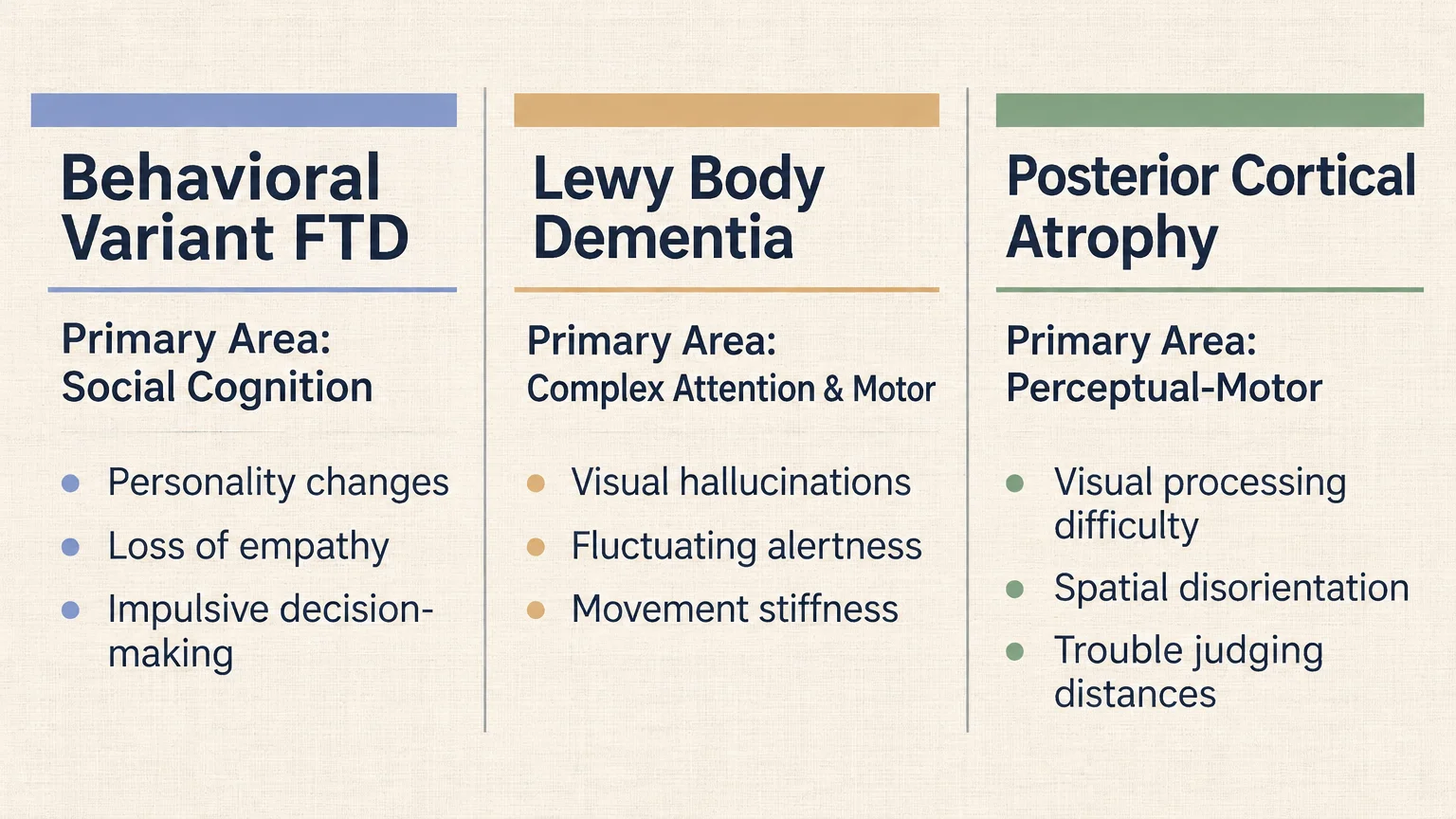
Understanding Subtypes Where Non-Memory Symptoms Appear First
Different neurodegenerative diseases target different brain regions first, which explains why non-memory symptoms frequently take center stage. Knowing these major subtypes helps you recognize patterns that standard memory screenings might miss.
Frontotemporal Dementia
Frontotemporal dementia accounts for 10% to 20% of all dementia cases and often strikes younger adults between ages 40 and 65. According to the Mayo Clinic, early symptoms attack personality, behavior, or language while sparing memory initially.
A person may act impulsively, make blunt or socially inappropriate remarks, neglect hygiene, or show striking emotional apathy. Other variants cause primary progressive aphasia, steadily eroding speech fluency or word comprehension.
Because memory remains sharp at first and patients are relatively young, frontotemporal dementia is frequently misdiagnosed as depression, bipolar disorder, or burnout. Seeking a neurology referral when midlife personality shifts emerge prevents years of mismatched care.
Lewy Body Dementia
Lewy body dementia is the second most common progressive dementia after Alzheimer’s disease. Abnormal protein deposits disrupt chemical messengers across thinking, movement, sleep, and automatic body functions simultaneously.
Early non-memory clues include vivid, recurrent visual hallucinations—often seeing people or animals clearly—and dramatic fluctuations in alertness from hour to hour. Many patients also experience REM sleep behavior disorder, physically kicking or acting out dreams years before daytime symptoms begin.
Movement changes resembling Parkinson’s disease—such as a shuffling gait, muscle stiffness, tremors, and frequent falls—commonly appear early. Autonomic symptoms like sudden blood-pressure drops, dizziness, chronic constipation, and bladder urgency also provide key diagnostic clues.
Vascular Dementia
Pure vascular dementia accounts for roughly 15% of global dementia cases, while mixed vascular and degenerative dementia accounts for another 16%, according to the World Stroke Organization. Restricted blood flow from strokes or chronic small-vessel disease damages white-matter pathways.
Rather than forgetting recent events, patients typically exhibit slowed thinking and executive dysfunction. Planning, reasoning, focusing on complex tasks, and maintaining steady judgment become noticeably harder.
Symptoms sometimes worsen in noticeable steps following small silent strokes, though gradual decline also occurs. Controlling blood pressure, blood sugar, and cholesterol aggressively helps protect remaining brain circulation.
How Doctors Diagnose Cognitive Decline and Rule Out Treatable Mimics
Not every change in thinking, mood, or coordination stems from permanent brain disease. Several common, reversible medical problems produce symptoms that closely mimic dementia and respond quickly once treated.
Reversible Conditions That Look Like Dementia
Guidance from the Mayo Clinic and the NHS emphasizes checking for treatable mimics before assuming a neurodegenerative diagnosis. Urinary or respiratory infections, for example, frequently trigger sudden confusion and delirium in older adults.
Thyroid disorders, dehydration, electrolyte imbalances, and deficiencies in vitamin B12, vitamin B1 (thiamine), vitamin B6, or vitamin E also impair attention and energy. Medication side effects—especially from sleep aids, allergy drugs, pain relievers, or overlapping prescriptions—are another top culprit.
Structural issues matter too, including slow subdural bleeding beneath the skull after a minor fall. Normal-pressure hydrocephalus, caused by excess fluid in brain cavities, produces a classic triad of walking trouble, bladder control loss, and cognitive slowing.
Before your appointment, pack every prescription, over-the-counter pill, and herbal supplement in a single bag for your doctor to review. Catching a drug interaction or vitamin deficit can reverse months of frightening cognitive fog.
Cognitive Screening and Clinical Assessment
If treatable blood and medication triggers are ruled out, your clinician will gather a detailed symptom history from both you and a close family member. Hearing a caregiver’s observations is crucial because some brain conditions reduce a person’s awareness of their own changes.
In the United States, the Centers for Medicare & Medicaid Services requires cognitive impairment detection during every Medicare Annual Wellness Visit. Clinicians typically use brief validated tools such as the Mini-Cog, MoCA, MMSE, SAGE, or Clock Drawing Test.
Note that routine screening differs from symptom-driven testing. The U.S. Preventive Services Task Force currently maintains an I statement, meaning evidence remains insufficient to recommend routine screening in asymptomatic adults 65 and older.
When you bring concrete non-memory warning signs to a visit, however, structured cognitive testing is an essential first diagnostic step. Abnormal scores prompt deeper neurological evaluation rather than a rushed label.
New Blood-Based Biomarker Tests and Brain Imaging
Structural brain imaging—usually an MRI or CT scan—helps doctors spot silent strokes, tumors, subdural bleeding, or fluid buildup. Imaging also reveals regional brain shrinkage patterns typical of Alzheimer’s or frontotemporal dementia.
Between 2025 and August 2026, diagnostic testing expanded rapidly with four FDA-cleared blood-based biomarker tests for Alzheimer’s pathology. These tests serve strictly as diagnostic aids for adults experiencing cognitive symptoms—never as standalone diagnostics or screens for healthy people.
The Lumipulse G pTau217/β-Amyloid 1-42 Plasma Ratio gained FDA clearance in May 2025 for adults 55 and older, though specified reagent lots faced an FDA Class II recall in August 2026. In October 2025, Elecsys pTau181 earned clearance for primary care evaluation in adults 55 and older, showing a 97.9% negative predictive value to rule out amyloid pathology.
Two additional clearances arrived in August 2026: PrecivityAD2 became the first blood test cleared for symptomatic adults as young as age 40, and Elecsys pTau217 earned clearance for ages 55 and older across primary and specialty settings. Discussing these minimally invasive tests with your neurologist can help clarify whether Alzheimer’s biology drives your symptoms.

Treatment Landscape and Risk-Reduction Strategies
An accurate diagnosis unlocks tailored medical, lifestyle, and safety strategies that protect quality of life. While no cure stops all dementias today, modern care offers meaningful symptom relief and newly approved disease-modifying options for select patients.
Conventional Medications and Early-Stage Anti-Amyloid Therapies
Standard prescription options such as cholinesterase inhibitors and memantine support chemical signaling in the brain. They do not halt underlying progression, but they can stabilize attention, language, or daily functioning for months or longer.
For confirmed early-stage Alzheimer’s—specifically mild cognitive impairment or mild dementia with verified amyloid plaques—two FDA-approved anti-amyloid therapies target the underlying protein buildup. Leqembi (lecanemab) gained approval for a convenient subcutaneous at-home starter dose in July 2026.
Kisunla (donanemab) received an updated modified titration schedule in July 2025 that cut ARIA-E brain swelling incidence by 41% at 24 weeks. Because both drugs treat only early-stage disease, recognizing non-memory signs promptly preserves your eligibility window.
Anti-amyloid therapies carry important safety considerations, including risks of brain swelling or tiny brain bleeds known as ARIA. Specialists carefully weigh genetic risk factors, MRI baselines, and overall health before starting therapy and monitor patients closely throughout treatment.
Treatment plans also address non-cognitive symptoms thoughtfully. Targeted behavioral strategies, sleep hygiene, physical therapy, and carefully chosen medications can ease agitation, hallucinations, or gait instability—especially in Lewy body dementia, where certain antipsychotics cause severe reactions.
Evidence-Based Lifestyle and Risk Reduction
Daily habits remain powerful medicine both before and after cognitive symptoms appear. Findings from the 2024 Lancet Commission and July 2026 World Health Organization guidelines show that addressing 14 modifiable risk factors could prevent or delay up to 45% of global dementia cases.
Those 14 factors include low early-life education, hearing loss, high LDL cholesterol, untreated vision loss, high blood pressure, smoking, obesity, depression, physical inactivity, diabetes, excessive alcohol use, traumatic brain injury, air pollution, and social isolation. Keeping systolic blood pressure at or below 130 mm Hg starting at age 40 provides especially strong vascular protection.
Treating hearing and vision loss promptly reduces brain strain and keeps social connections intact. Regular brisk walking, strength training, balanced nutrition, and quality sleep also support blood flow and mood regulation.
Be cautious around over-the-counter brain supplements marketed online. Unless you have a laboratory-confirmed deficiency, World Health Organization guidelines from July 2026 explicitly advise against vitamin B, vitamin E, omega-3 fatty acids, or multivitamin supplements to reduce cognitive decline risk.

Living Well, Self-Management, and Caregiver Support
Receiving a diagnosis—or supporting a loved one through evaluation—brings understandable grief alongside practical questions. Structuring your home, care team, and community early reduces daily friction and protects everyone’s well-being.
Practical Daily Strategies After an Early Diagnosis
Small environmental adjustments compensate smoothly for non-memory challenges like visual-spatial confusion or executive overload. Label kitchen drawers with clear words or pictures, simplify wardrobe choices, and switch recurring bills to automatic payments.
Establish predictable morning and evening routines to ease anxiety and minimize confusion with time. Automated pill dispensers with audible reminders protect medication safety without constant family hovering.
To prevent falls linked to spatial misjudgment, remove loose throw rugs, brighten hallways, and install grab bars in bathrooms. Encourage regular walks, music, and low-stress hobbies that lean on preserved long-term skills.
Building Your Healthcare Team and Caregiver Network
Comprehensive dementia care works best as a coordinated team effort rather than a solo burden. Alongside your primary care clinician and neurologist, consider involving occupational therapists for home safety, speech-language pathologists for communication aids, and geriatric social workers.
Planning ahead early—while your loved one can actively participate in decisions—honors their wishes around finances, driving safety, and medical directives. Early legal and care planning prevents urgent crisis decisions later on.
Caregivers deserve structured support too, as emotional and financial strain builds quietly over years. In the United States alone, Alzheimer’s Association 2026 estimates project $409 billion in health and long-term care costs in 2026, climbing toward $1 trillion by 2050—while lifetime Alzheimer’s risk at age 45 reaches 1 in 5 for women and 1 in 10 for men.
Connecting early with caregiver support groups, adult day programs, and respite services protects your own physical and mental health. Leaning on trusted community networks helps both you and your loved one live with greater dignity and steadiness.
Frequently Asked Questions
How can I tell early non-memory dementia signs from normal aging?
Normal aging occasionally slows word recall or forces you to pause when learning brand-new technology, yet daily independence remains intact. Non-memory dementia signs—such as persistent poor financial judgment, getting lost in familiar neighborhoods, or sudden personality shifts—steadily interfere with everyday routines.
Notice frequency and impact rather than isolated bad days. If changes repeat over several weeks and cause safety, work, or social struggles, schedule a medical evaluation.
What should we bring to a doctor’s visit for suspected cognitive decline?
Bring a written timeline listing specific examples of unusual behavior, missed bills, visual errors, or mood swings, including roughly when each started. Pack every prescription bottle, over-the-counter drug, and dietary supplement currently used.
Ask a trusted family member or close friend to attend the visit with you. Caregiver observations about subtle routine changes give doctors essential context that brief office exams cannot always capture.
Does Medicare cover cognitive evaluations and diagnostic testing?
Yes, Medicare requires cognitive impairment detection during every Medicare Annual Wellness Visit. When symptoms are present, Medicare also covers medically necessary follow-up evaluations, care planning visits, lab work, and standard brain imaging.
Coverage details for newer biomarker blood tests and anti-amyloid therapies vary depending on clinical eligibility and specific plan rules. Ask your clinic’s billing coordinator to confirm out-of-pocket costs before scheduling specialized testing.
Are the new Alzheimer’s blood tests and therapies right for everyone?
No, FDA-cleared Alzheimer’s blood tests are intended strictly for adults already showing cognitive symptoms, and they interpret results alongside clinical exams rather than replacing them. Healthy individuals without symptoms should not use these tests for routine screening.
Similarly, anti-amyloid medications like Leqembi and Kisunla apply only to confirmed early-stage Alzheimer’s disease and require strict MRI safety monitoring. They do not treat vascular, Lewy body, or frontotemporal dementias, making accurate subtype diagnosis essential.

Moving Forward With Clarity and Support
Memory loss is only one piece of a much larger neurological picture. Paying attention to changes in judgment, vision, language, sleep, movement, and mood empowers you to recognize cognitive decline months or years earlier.
Schedule an appointment with your primary care clinician or a neurologist whenever persistent non-memory shifts disrupt daily life. Early evaluation uncovers treatable mimics, preserves access to modern early-stage therapies, and connects your family with steady support networks—and remember to rely on your care team for personalized medical guidance.