
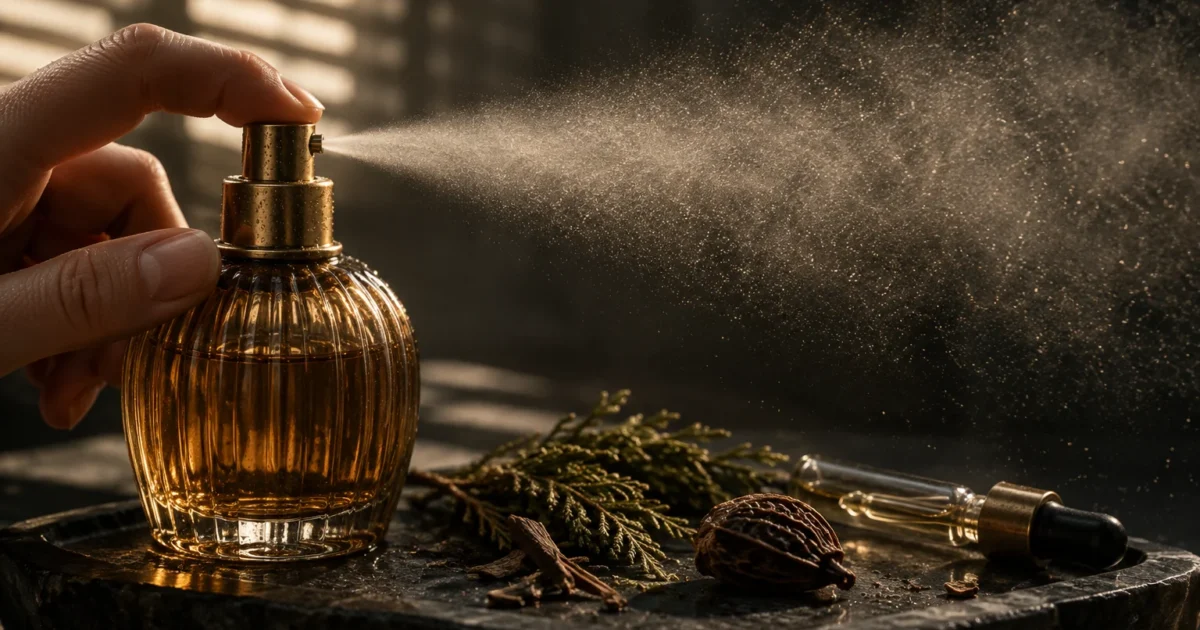
Spritzing your signature scent feels like a harmless luxury, yet that single mist exposes your bloodstream to unlisted hormone disruptors and allergens. Learning how to spot toxic perfume ingredients gives you immediate control over your daily endocrine and respiratory health.
Under outdated federal laws, beauty brands legally hide hundreds of synthetic fragrance chemicals behind the single word “parfum.” While European regulators enforce strict transparency rules in 2026, American shoppers still navigate a largely unpoliced marketplace on their own.
You do not need to sacrifice smelling wonderful to protect your cellular wellbeing. By identifying the eight most common chemical offenders, you can make practical swaps toward clean perfume that honor both your body and your budget.
The Science Snapshot: Why Synthetic Fragrance Risks Matter Now
When you see “fragrance” or “parfum” on a label, you are looking at a legal loophole rather than a single ingredient. Under the 1973 U.S. Fair Packaging and Labeling Act, brands legally conceal hundreds of synthetic compounds as trade secrets.
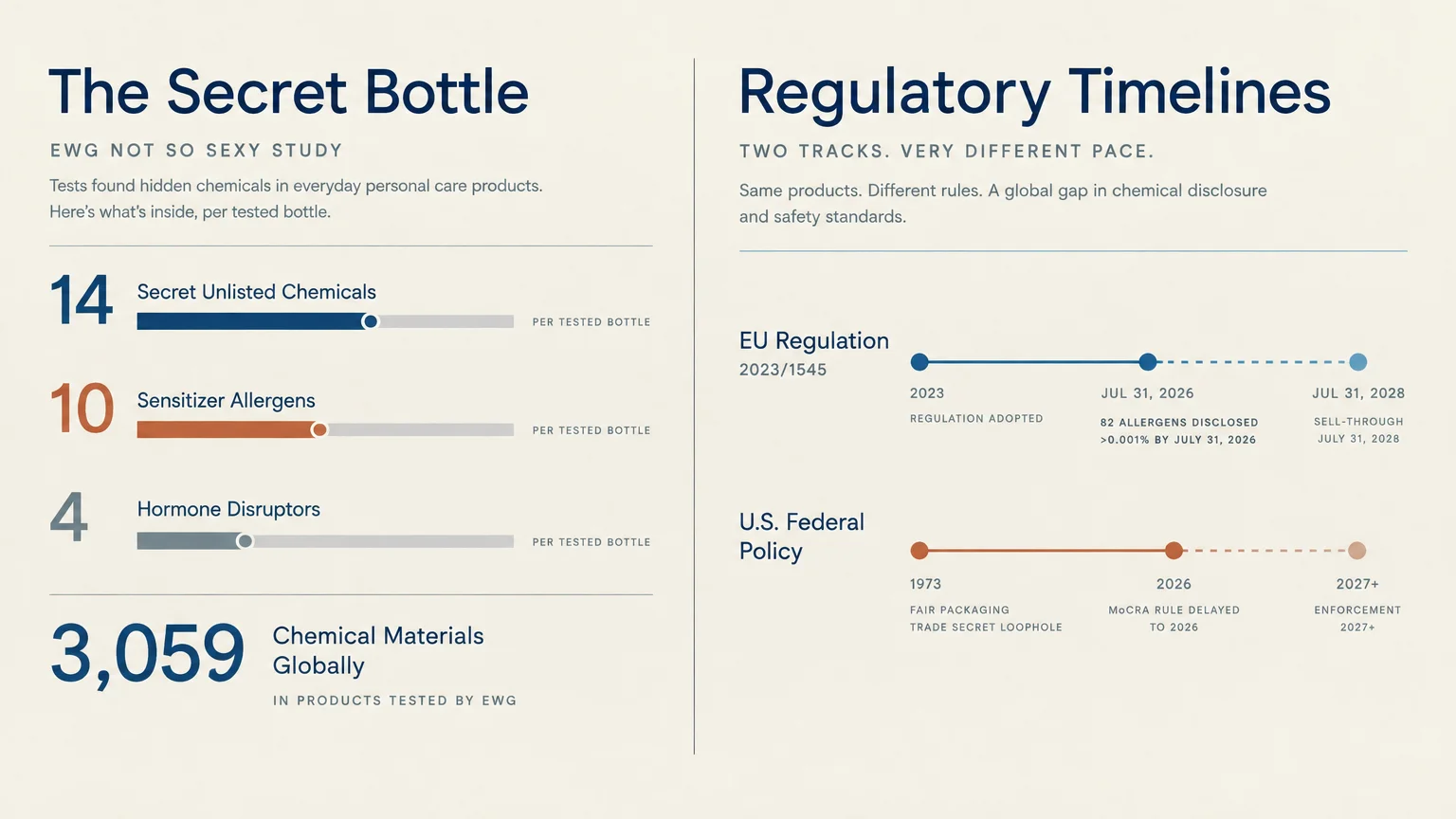
According to the International Fragrance Association and the Campaign for Safe Cosmetics, perfumers use over 3,059 chemical materials globally—several linked to hormone disruption, reproductive toxicity, and cancer. Furthermore, Breast Cancer Prevention Partners reports that fragrance appears in over 95 percent of hair products.
In the benchmark “Not So Sexy” study by the Environmental Working Group and the Campaign for Safe Cosmetics, tests of 17 name-brand fragrances revealed an average of 14 secret unlisted chemicals, 10 allergy-triggering sensitizers, and four hormone disruptors per bottle.
As of July 31, 2026, European Union Regulation 2023/1545 requires new cosmetics to disclose 82 fragrance allergens—up from 26—above 0.001 percent in leave-on perfumes or 0.01 percent in rinse-off washes. Existing stock can sell through until July 31, 2028.
Meanwhile, the U.S. Modernization of Cosmetics Regulation Act (MoCRA) required adverse-event contact info on labels by December 29, 2024, but the FDA delayed its proposed fragrance allergen rule to 2026. Final U.S. enforcement will not occur until 2027 or later.
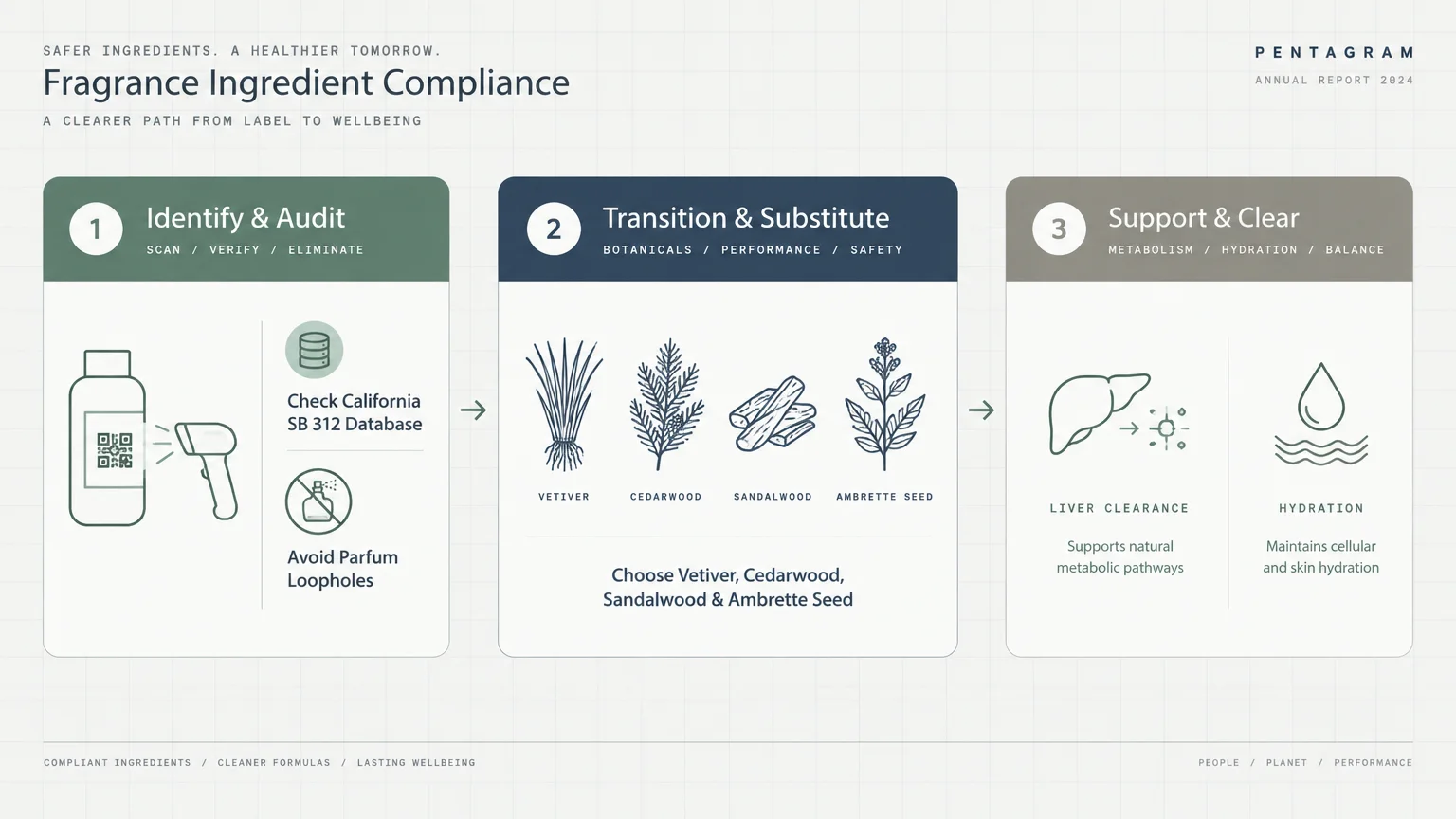
Until federal rules take effect, California’s Right to Know Act (SB 312)—enforced since January 2022 via the California Safe Cosmetics Program database—requires companies to publicly disclose hazardous fragrance ingredients listed on designated chemical hazard lists.
The 8 Toxic Perfume Ingredients Hiding in Your Bottle
1. Diethyl Phthalate (DEP) and Other Phthalates
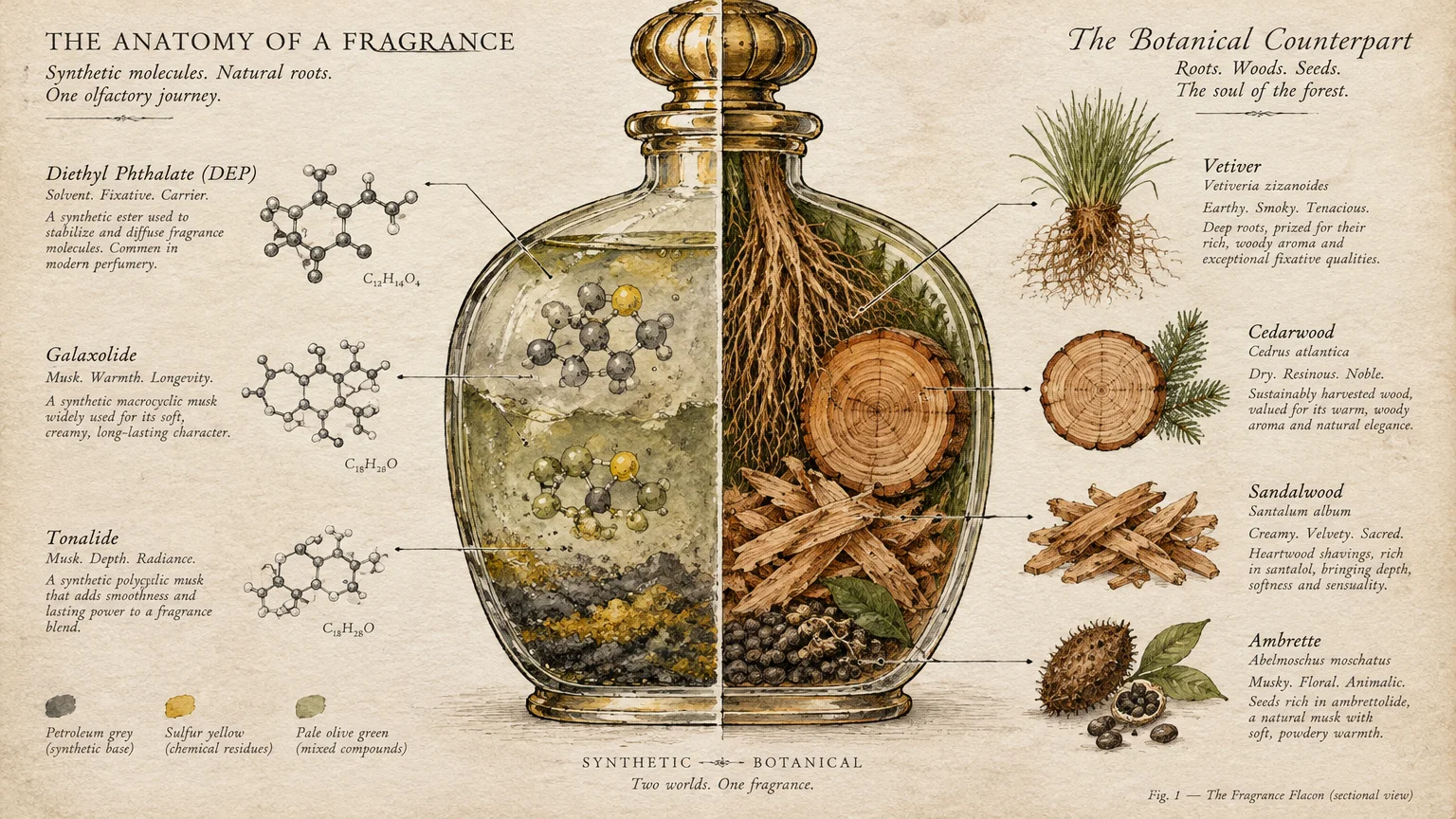
Perfumers add phthalates in perfume—primarily diethyl phthalate (DEP)—as fixatives that help scents cling to your skin for hours. Because U.S. law hides them inside the fragrance formula, DEP rarely appears on the label.
Research from the National Institute of Environmental Health Sciences shows that phthalates act as potent endocrine disruptors. Human studies link elevated phthalate levels to reduced sperm quality, thyroid disruption, and developmental issues during pregnancy.
2. Synthetic Musks (Galaxolide and Tonalide)
Polycyclic and nitro musks like galaxolide and tonalide create warm, powdery base notes in conventional perfumes. Unlike plant botanicals that your liver rapidly clears, these synthetic molecules are fat-soluble and bioaccumulate in human adipose tissue and breast milk.
Once stored in fat tissue, synthetic musks can interfere with hormone receptors and cellular defense pathways. Look for clean perfumes anchored by pure botanical base notes such as vetiver, cedarwood, sandalwood, or ambrette seed.
3. Hexyl Salicylate
Hexyl salicylate is a common floral chemical that gives perfumes a fresh, green scent. Effective May 1, 2026, the European Union’s Omnibus Act VIII enforced strict limits on 18 carcinogenic, mutagenic, or reprotoxic substances—including hexyl salicylate—with no sell-through period.
Because U.S. rules do not mirror these May 2026 restrictions, domestic bottles may still carry high levels of this reproductive toxicant and skin sensitizer. Choosing brands that formulate to European safety standards protects you from legacy stock.
4. Lilial (Butylphenyl Methylpropional)
Listed as butylphenyl methylpropional, lilial mimics the crisp scent of lily of the valley in floral sprays. Regulators classified lilial as toxic to reproduction after studies linked it to fertility impairment and developmental harm.
The International Fragrance Association’s 51st Amendment—introducing 51 standards restricting ingredients for systemic toxicity, skin sensitization, and genotoxicity—set an October 30, 2025 compliance deadline for existing formulations. Still, check older discount bottles for “butylphenyl methylpropional” and discard them.
5. Parabens (Methylparaben and Propylparaben)
Scented lotions, rollerballs, and water-based hair mists use preservatives like methylparaben, propylparaben, and butylparaben to stop microbial growth. These compounds absorb through your skin and exert weak estrogen-mimicking effects inside the body.
Combined with phthalates and synthetic musks across daily products, parabens contribute to a cumulative hormonal burden. Opt for scented body products preserved with potassium sorbate, sodium benzoate, or organic grain alcohol.
6. Styrene
Styrene is a volatile organic compound used to build plastics and rubber, yet perfumers also use it for sweet, balsamic notes. Both the World Health Organization and the U.S. National Toxicology Program classify styrene as a probable or anticipated human carcinogen.
Inhaling aerosolized styrene from a daily perfume mist can also irritate airways and trigger headaches. Because styrene hides legally inside “parfum,” avoiding undisclosed synthetic fragrance blends is the only reliable way to eliminate exposure.
7. Acetaldehyde and Formaldehyde-Releasing Agents
Aldehydes give classic perfumes their sparkling lift, while formaldehyde-releasing preservatives stabilize scented washes and creams. Guidance from the Centers for Disease Control and Prevention warns that formaldehyde irritates the eyes and airways while increasing cancer risks.
Even trace formaldehyde released onto warm skin can spark stubborn allergic contact dermatitis. If scented products leave your neck or wrists red and itchy, hidden aldehydes and formaldehyde releasers are prime suspects.
8. Benzophenone-1 and Oxybenzone (Benzophenone-3)
Perfume houses add UV filters like benzophenone-1 and oxybenzone to clear bottles so sunlight does not degrade the liquid’s color or scent. Unfortunately, benzophenones absorb rapidly through skin, disrupting thyroid function and triggering sun-induced rashes.
Choose clean perfumes packaged in dark amber glass, opaque bottles, or boxes that naturally block light without chemical stabilizers. Store your fragrances in a cool drawer rather than on a sunny bathroom counter.
Real Voices: What Clinicians See in Practice
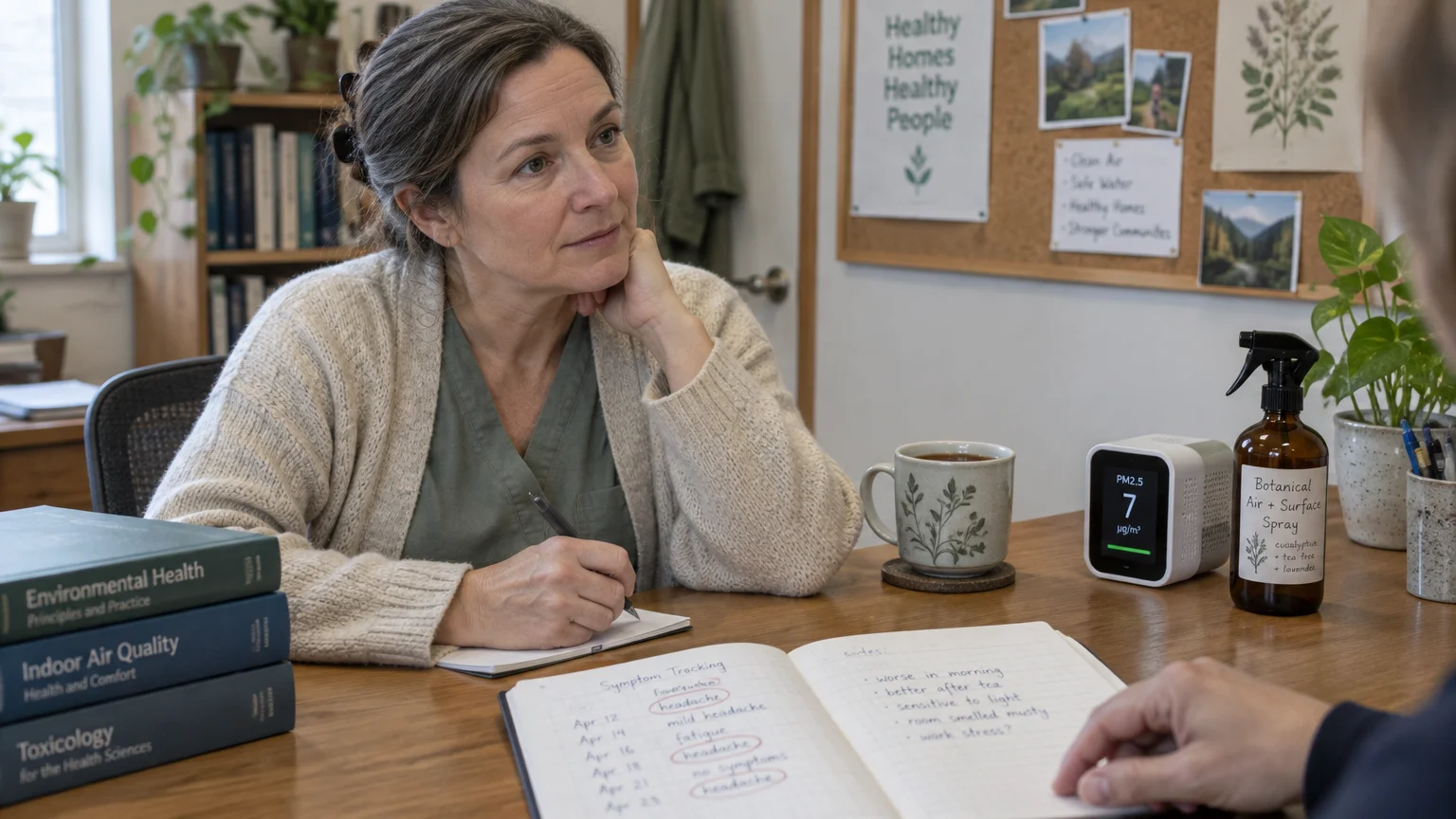
In dermatology and environmental medicine clinics, harmful fragrance chemicals frequently drive mysterious chronic symptoms. According to the European Commission, between 1 percent and 9 percent of the European population is allergic to fragrance allergens, experiencing rashes, asthma flares, or migraines.
Specialists with the American Contact Dermatitis Society note that patients rarely suspect their perfume because allergic contact dermatitis is a delayed reaction. Eyelid eczema or neck redness often appears 48 hours after application.
“When patients pause synthetic fragrances for three weeks, we routinely see neck rashes, sinus congestion, and tension headaches resolve,” says Dr. Elena Rostova, an integrative dermatologist. “Your skin and olfactory nerves are direct highways to your immune and endocrine systems.”
Clinicians also note that toxin exposure intersects with socioeconomic accessibility. Because boutique clean perfumes can be costly, doctors remind patients that going fragrance-free costs nothing and remains the healthiest choice for overburdened airways.
Holistic Strategy Pillars: Supporting Your Body and Transitioning to Clean Perfume
Pillar 1: Mindset and Label Literacy
Approach your low-tox transition with a calm, sustainable mindset rather than tossing every bottle overnight. Replace products gradually as they run out, choosing brands that disclose 100 percent of their ingredients down to individual botanical components.
To reduce skin absorption immediately, mist perfume onto your clothes or hair ends rather than directly onto warm pulse points. This simple habit cuts dermal uptake while you finish existing bottles.
Pillar 2: Nutrition for Detoxification Pathways
Registered dietitians emphasize that nutrient-dense foods help your liver clear fat-soluble chemicals like phthalates and parabens. Cruciferous vegetables—including broccoli sprouts, arugula, and cauliflower—supply sulforaphane to upregulate Phase II liver detoxification enzymes.
Pair these greens with 30 grams of daily fiber from flaxseeds, oats, and legumes, alongside plenty of water. Fiber binds metabolized hormone disruptors in bile so they exit through digestion instead of reabsorbing.
Pillar 3: Movement and Lymphatic Flow
Physical therapists recommend daily movement to boost circulation, respiration, and lymphatic drainage. Brisk walking, strength training, or sauna sessions promote healthy sweating, which helps excrete certain phthalate metabolites through the skin.
Shower promptly after sweating with a fragrance-free wash so mobilized compounds do not linger on your pores. If high-impact exercise feels inaccessible, gentle stretching and deep diaphragmatic breathing effectively pump your lymphatic system.
Pillar 4: Medical Care and Indoor Air Hygiene
Because synthetic fragrances cling to household dust, open your windows for ten minutes daily and vacuum with a HEPA filter. If scents trigger wheezing, rashes, or hormonal concerns, consult an allergist or dermatologist for patch testing.
Always speak with your physician or registered dietitian before starting detoxification supplements, especially if you are pregnant, nursing, or managing thyroid conditions. Personalized medical care ensures your lifestyle shifts remain safe.
Frequently Asked Questions About Harmful Fragrance Chemicals
Does “unscented” mean a product is free of toxic perfume ingredients?
No; “unscented” products frequently contain masking fragrances—including phthalates and aldehydes—added to cover up the smell of raw oils. Always choose products labeled “100 percent fragrance-free” and verify that neither “fragrance” nor “parfum” appears on the ingredient list.
Are essential oil perfumes completely safe for everyone?
Pure botanical perfumes avoid synthetic phthalates and nitro musks, but natural essential oils still contain concentrated allergens like limonene and linalool included on the EU’s 82-allergen list. Consult your OB-GYN or dermatologist for personalized guidance if you are pregnant or have eczema.
How quickly do phthalates in perfume leave the body?
Biomonitoring studies show that urinary levels of diethyl phthalate and parabens drop significantly within three to five days of switching to fragrance-free products. However, fat-soluble synthetic musks clear much slower, making steady long-term avoidance and medical guidance before conception essential.
What can I do if workplace fragrances trigger migraines or asthma?
Start with an empathetic conversation with human resources about scent-free workplace policies and place a portable HEPA-carbon air purifier at your desk. Work with a pulmonologist or neurologist to document your clinical triggers if you require formal workplace accommodations.
Taking Your First Breath Toward a Low-Tox Routine
Protecting your body from synthetic fragrance risks does not require perfection or an expensive shopping spree. Every product you simplify immediately lightens the daily chemical load on your hormones, lungs, and skin.
Take your first manageable step today by auditing the single product you wear closest to your skin—your perfume, body lotion, or leave-in conditioner. Check the label for hidden “parfum” and commit to swapping that item when it runs out.
As you move through your week, pause to reflect: How do your head, breathing, and energy feel on days when you skip synthetic scents, and what simple botanical or scent-free rituals make you feel most grounded?







Leave a Reply