
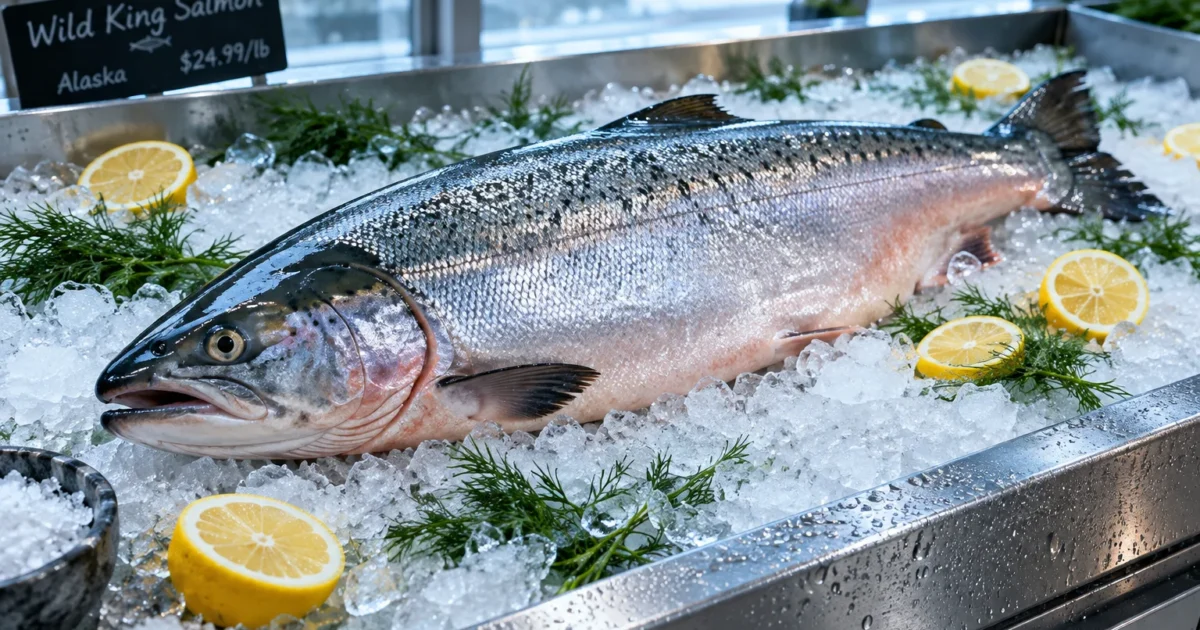
Fresh salmon provides vibrant flavor, heart-healthy fats, and lean protein when you prepare it at peak quality. Learning a few sensory checks protects your digestive health and ensures you never waste money on spoiled fish.
You can accurately judge quality in seconds right at the seafood counter or your home kitchen counter. Your natural senses give you reliable, immediate clues before you start cooking.
Checking the smell, texture, and visual brightness helps you buy nutritious fillets with total confidence. These essential evaluation habits turn routine grocery shopping into an empowering health practice.
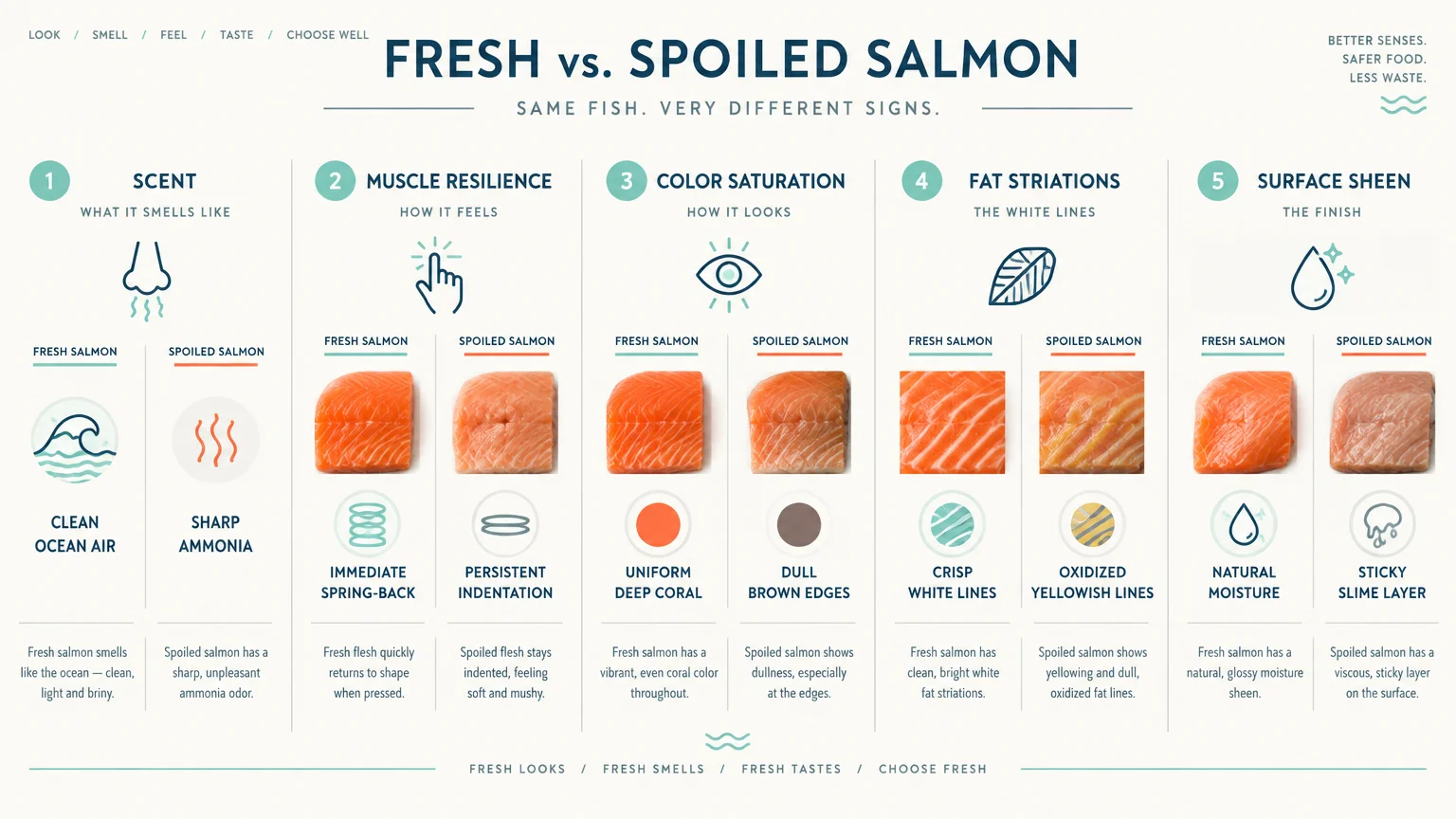
Five Quick Sensory Checks for Salmon Freshness
1. The Scent Test: Neutral Ocean Air Versus Sharp Ammonia
Your sense of smell offers the fastest and most dependable assessment of seafood safety. Fresh salmon carries a subtle, clean scent reminiscent of ocean water or cool river air.
It should never smell overpoweringly fishy, pungent, or sour. A harsh odor signals that organic degradation has already begun.
As fish ages, naturally occurring enzymes and bacteria transform compounds called trimethylamine oxides into volatile amines. This chemical shift produces the sharp, ammonia-like stench characteristic of spoiled seafood.
Do not hesitate to evaluate the aroma before purchasing your fish. If you buy prepackaged fillets, lift a corner of the packaging at home to take a direct inhale.
If a sour wave immediately hits your nostrils, discard the fillet. Cooking spoiled salmon will not neutralize unpleasant odors or eliminate accumulated bacterial byproducts.
Fresh salmon smells so mild that you barely notice an odor across your kitchen. Trust your nasal instincts whenever a fillet smells questionable.
2. The Texture Test: Resilient Muscle Rebound Versus Mushy Indentations
Physical texture reveals the internal structural integrity of fish muscle fibers. High-quality salmon flesh feels dense, elastic, and firmly bound together.
You can test this resilience by gently pressing the flesh with a clean, gloved finger. A fresh fillet springs back immediately without leaving a persistent depression.
When salmon spoils, bacterial proliferation and endogenous enzymes break down the delicate connective collagen between muscle layers. This biological breakdown leaves the flesh soft, mushy, and loose.
If your fingertip creates an indentation that remains visible, the protein matrix has collapsed. You should not purchase or consume fish that displays this loss of elasticity.
Look also for extreme flaking or separation between the muscle segments, known as gaping. While minor gaping can occur from handling, extensive flaking in raw fillets signals advanced aging.
Firm salmon retains its tight structure throughout the entire preparation process. Prioritize fillets that feel taut and springy to the touch.
3. The Visual Examination: Saturated Color and Crisp Fat Striations
The visual appearance of salmon offers immediate clues about its nutritional state and handling history. Fresh wild salmon displays a rich, saturated red or deep coral hue.
Farmed varieties present a lighter, delicate peachy-pink tone derived from dietary carotenoids. Regardless of the species, the coloration must appear uniform and bright across the entire cut.
Inspect the delicate white lines running through the flesh, which represent intermuscular fat striations. In premium fresh fish, these lines look crisp, sharp, and pristine white.
If those fat lines appear yellowish, gray, or brown, the healthy lipids have begun to oxidize. Oxidized fats indicate that the fish has experienced extended storage or temperature abuse.
Examine the outer margins of the fillet for dark brown or faded edges. Browning along the periphery indicates prolonged exposure to air and accelerating cellular breakdown.
Avoid any fillet exhibiting dull, faded patches or dark discoloration. Vibrant, consistent color reflects minimal air exposure and thoughtful cold-chain storage.
4. Surface Residue: Natural Moisture Versus Dull Sticky Slime
Fresh salmon naturally displays a clean, translucent sheen that makes the flesh look vibrant and hydrated. This natural gloss indicates that the cells retain their intracellular moisture.
However, you must distinguish between healthy moisture and an accumulation of bacterial slime. Fresh fish should never feel tacky, sticky, or slippery like wet soap.
Spoilage bacteria generate an extracellular biofilm as they multiply across the protein surface. This biological reaction creates a milky, opaque, or yellowish coating over the flesh.
Touch the surface with clean fingers to gauge the consistency of the moisture. If your fingers pull away with a stringy residue, discard the cut immediately.
Never attempt to wash slimy fish in your sink. Rinsing raw fish spreads dangerous bacteria across your kitchen counters and fails to remove chemical toxins.
A safe fillet looks like polished gemstone rather than a slick, cloudy surface. Choose pieces that glisten with pure, clean moisture.
5. Whole Fish Anatomy: Clear Bulging Eyes and Saturated Crimson Gills
Evaluating whole salmon provides additional physiological markers that fillets cannot reveal. The eyes and gills act as immediate barometers of harvesting freshness.
A recently caught salmon features bright, clear, and convex eyes that bulge slightly outward. The pupils appear jet-black and glossy under clean lighting.
As fish deteriorates, the eyes flatten, sink inward toward the skull, and turn cloudy or milky. Sunken, opaque eyes indicate that the fish spent days in transit or storage.
Next, lift the gill cover on the side of the head to inspect the respiratory tissues. Fresh salmon gills exhibit a vivid, bright crimson or deep rosy red color.
The delicate gill filaments should appear clean, moist, and free from thick mucus. If the gills look faded brown, dull gray, or sticky, pass on that fish.
Inspecting whole fish allows you to verify quality before the fishmonger portions the meat. These physical checkpoints provide unmatched clarity when shopping.
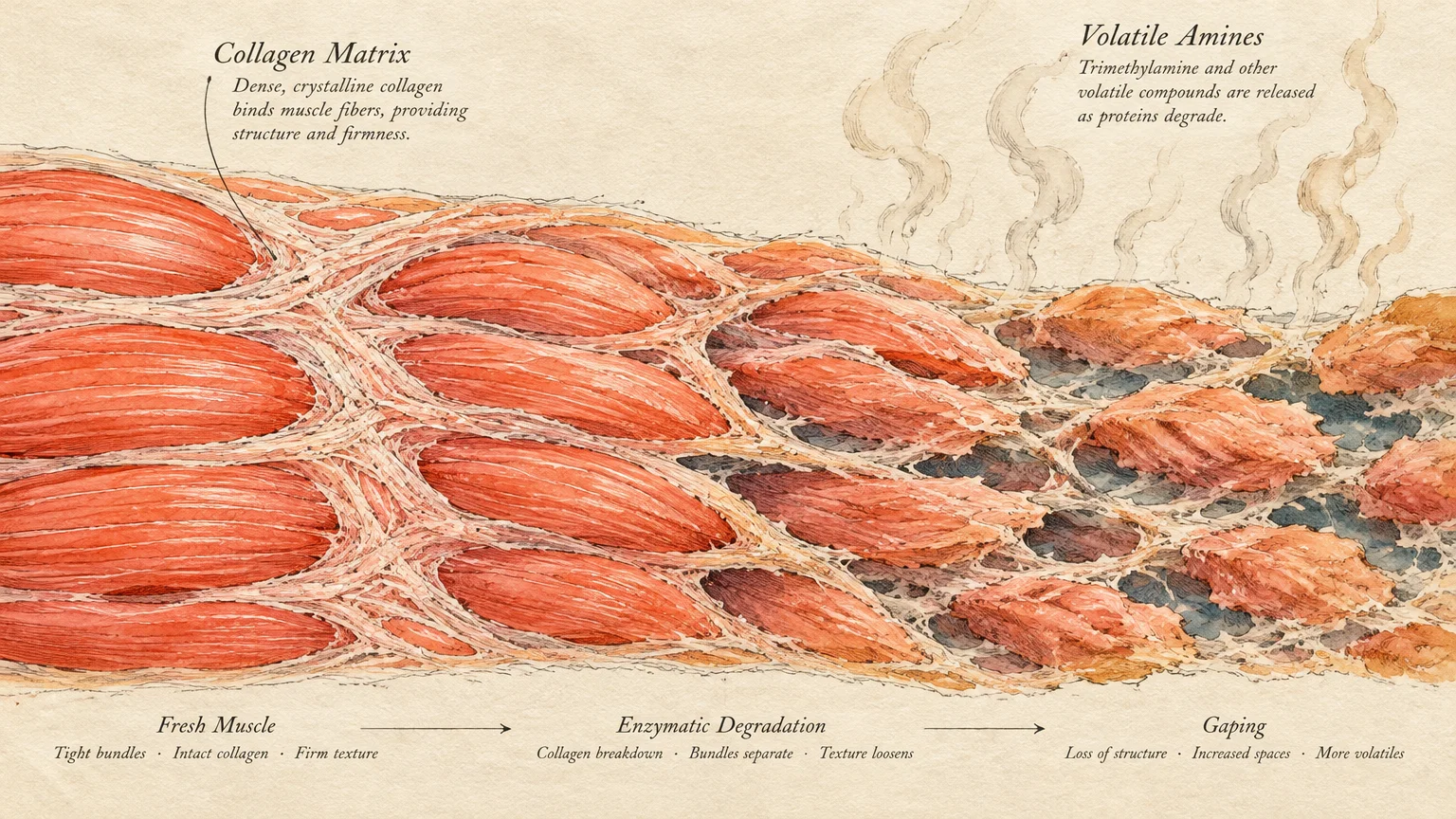
The Science of Salmon Spoilage: What Happens Beneath the Scales
Microbial Colonization and Bacterial Breakdown
Marine environments subject cold-water fish to specialized bacteria adapted to cold temperatures. Microorganisms like Pseudomonas and Shewanella thrive even in cold conditions.
Once fish harvest occurs, the animal’s natural immune defenses cease immediately. Surface bacteria rapidly migrate into the sterile muscle tissues, initiating biochemical breakdown.
These psychrotrophic microbes consume free amino acids and produce volatile sulfur compounds. This metabolic activity creates sulfurous smells and weakens muscle tissue.
Controlling microbial kinetics requires continuous chilling from catch to culinary preparation. Every hour spent above optimal temperatures exponentially accelerates microbial replication.
Understanding these biological processes underscores why visual and olfactory monitoring matters so deeply. Your senses detect the direct metabolic byproducts of these invading bacteria.
Histamine Formation and Scombroid Health Hazards
Improper temperature management causes certain bacteria to produce an enzyme called histidine decarboxylase. This enzyme converts naturally occurring histidine into histamine.
Consuming fish with elevated histamine concentrations triggers scombroid poisoning. Symptoms mimic severe allergic reactions, causing facial flushing, throbbing headaches, abdominal cramps, and acute diarrhea.
According to Centers for Disease Control and Prevention food safety guidance, rapid chilling prevents bacterial enzyme activation. Once histamine forms in muscle tissue, cooking, freezing, or smoking cannot eliminate it.
This chemical heat resistance makes initial freshness your only effective safeguard against toxicity. Never rely on high cooking heat to rescue questionable seafood.
Careful temperature control remains the foundational pillar of non-negotiable seafood safety. Verifying cold storage conditions protects your household from avoidable distress.
Lipid Peroxidation: How Degraded Omega-3s Affect Your Body
Salmon delivers abundant eicosapentaenoic acid and docosahexaenoic acid, exceptional long-chain omega-3 fatty acids. These unsaturated fats support cardiovascular wellness and dampen chronic inflammation.
However, their unique chemical structure contains multiple delicate carbon-carbon double bonds. These fragile bonds render the lipids highly susceptible to oxidative degradation when exposed to oxygen.
Clinical research published by the National Institutes of Health shows that oxidized dietary lipids generate harmful free radicals. These degraded compounds can promote oxidative stress in your gut lining.
Rancid omega-3 fats smell unpleasantly like wet cardboard, paint, or stale oil. Consuming oxidized fats destroys the anti-inflammatory advantages that prompt you to eat fish initially.
Selecting peak-quality salmon ensures you ingest pristine nutrients rather than degraded molecules. Protecting fatty acid integrity preserves both flavor and long-term health advantages.
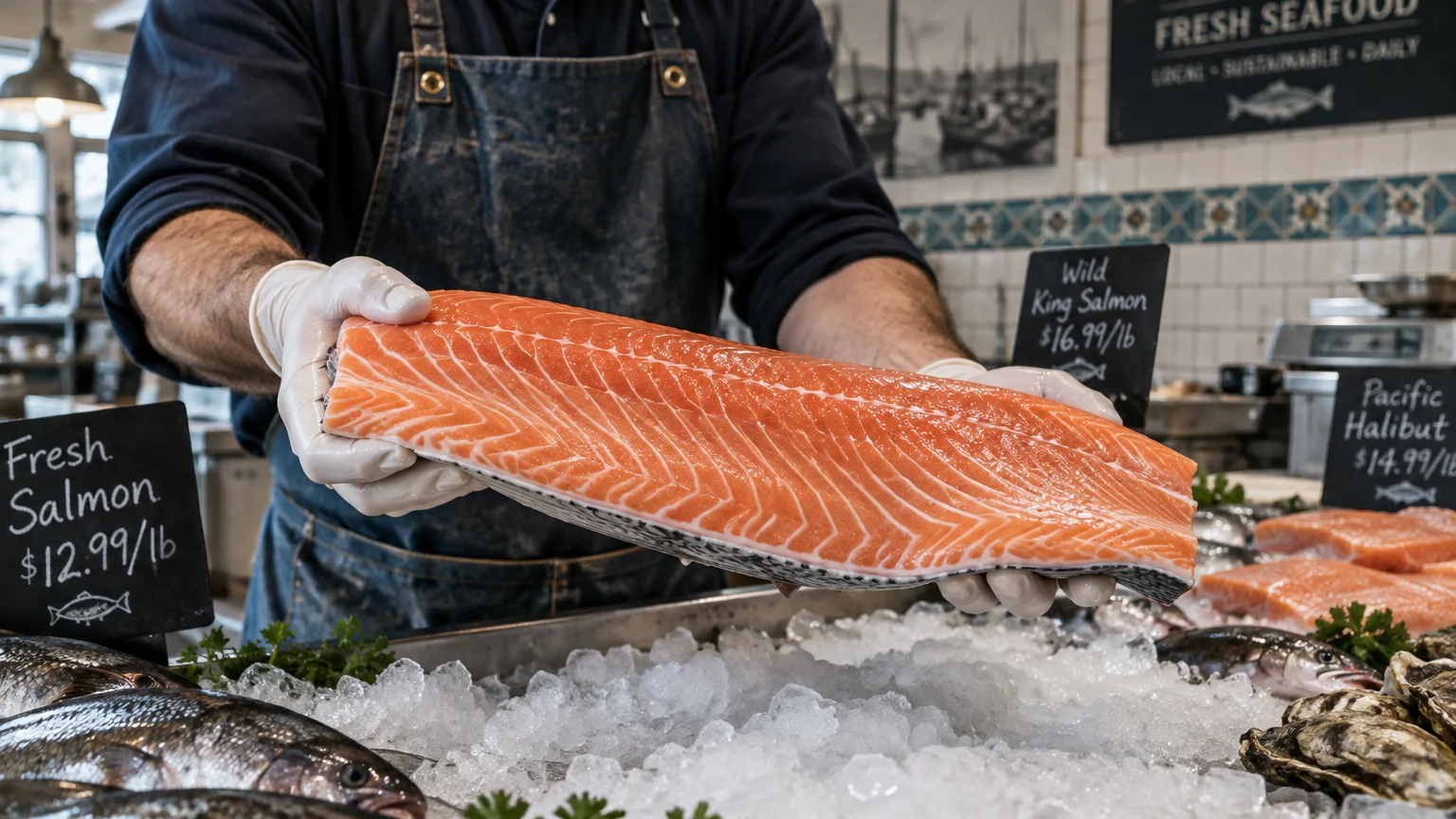
Strategy Pillar 1: Mastering the Seafood Counter and Navigating Sourcing
Engaging Your Fishmonger with Direct Questions
Building a communicative relationship with your local fishmonger transforms how you source protein. Knowledgeable seafood professionals possess exact records regarding catch dates and transport routes.
Ask your merchant when the shipment arrived and where the fish originated. A trustworthy purveyor answers directly and presents the fish for your inspection.
Request permission to smell the fish before making your final selection. Professional seafood handlers take pride in their inventory and welcome educated questions.
Notice how the display case maintains its fresh merchandise. The fish should rest on clean, well-drained, crushed ice rather than sitting submerged in stagnant melted water.
Melted pools of water foster rapid bacterial proliferation between adjacent pieces of fish. Clean display cases signal thorough sanitation practices throughout the entire store.
Understanding Flash-Frozen Versus Thawed Display Options
Many consumers assume that display case fillets have never encountered freezing temperatures. In reality, most commercial fishing vessels flash-freeze salmon at sea immediately following catch.
Flash-freezing drops fish temperatures rapidly to subzero levels, preserving cellular structure and locking in nutrients. This rapid technique prevents large ice crystals from tearing fragile muscle membranes.
Retailers often thaw these frozen fillets before arranging them on retail ice beds. These offerings bear the designation “previously frozen” on their packaging labels.
Purchasing still-frozen fillets often guarantees superior freshness compared to counter displays. You control the thawing process at home, preventing hours of display case oxidation.
Evaluate frozen packages carefully to ensure the vacuum seal remains tight and intact. Reject packages containing frost buildup, cloudy ice crystals, or discolored corners.
Evaluating Wild-Caught and Farmed Varieties Safely
Both wild-caught and sustainably farmed salmon supply outstanding concentrations of clean protein and micronutrients. Selecting between them depends on your budget, taste preferences, and nutritional priorities.
Wild salmon species—such as sockeye, king, and coho—feed on natural marine crustaceans. This varied diet yields lean, deep red flesh packed with natural astaxanthin antioxidants.
Farmed Atlantic salmon typically features a higher overall fat content and milder flavor. These fillets display broader white fat striations and a softer, buttery texture.
Regardless of source, both varieties follow identical freshness rules regarding scent, firmness, and moisture. Never excuse off-putting smells or mushiness simply because a fillet is wild or farmed.
Check for third-party certifications like the Marine Stewardship Council or Aquaculture Stewardship Council. These reputable verification labels demonstrate commitment to environmental standards and hygienic handling.
Strategy Pillar 2: Home Storage Systems and Temperature Safety
Refrigeration Dynamics and Strategic Shelf Placement
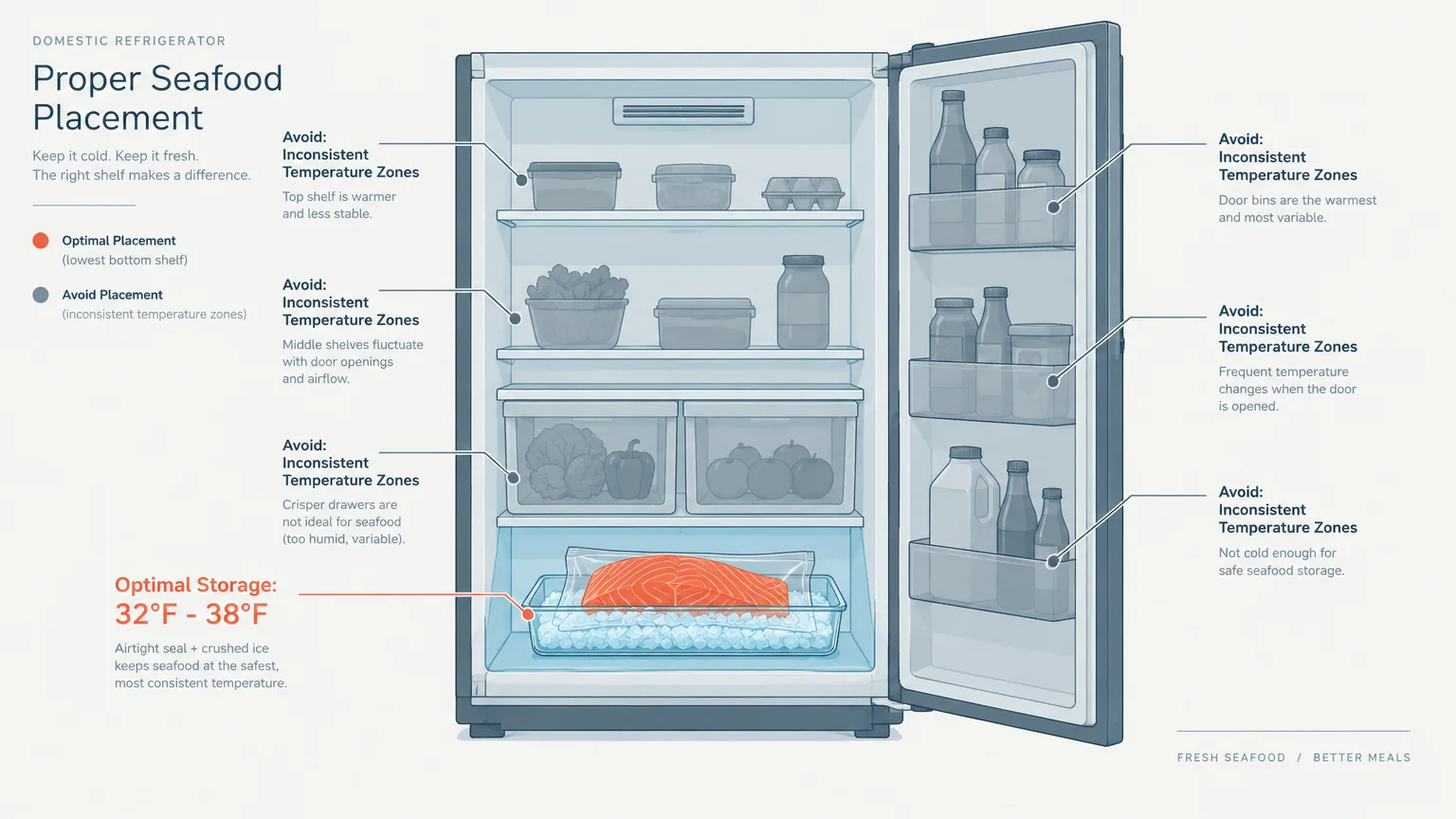
Home refrigerators typically run between 37°F and 40°F to preserve general household groceries. However, fresh fish maintains optimal quality when held closer to 32°F.
Adhering to federal food safety standards ensures you suppress bacterial proliferation in perishable animal proteins. Shelf placement within your appliance plays a major role in temperature stability.
Place your salmon on the lowest shelf toward the back wall. This position represents the coldest, most thermally consistent zone inside standard household refrigerators.
Never store raw seafood in the refrigerator door compartments. Frequent door openings expose delicate fish flesh to warm air drafts that speed up spoiling.
Keep your salmon inside an airtight container or wrap it tightly in parchment paper. Restricting air circulation prevents moisture loss and stops cross-contamination with other foods.
The Crushed Ice Method for Maximum Shelf Life
You can easily replicate professional seafood storage conditions in your home kitchen. Using an elevated ice bath maintains the ideal storage temperature without freezing the flesh.
Place crushed ice into a wide, shallow bowl or glass baking dish. Set a clean, perforated colander or wire rack directly over the ice.
Seal your salmon fillet securely in a waterproof zip-top storage bag. Rest the bagged fish directly on the bed of crushed ice.
This configuration maintains a continuous 32°F chill around the muscle tissue. The bag prevents meltwater from directly contacting the delicate fish meat.
Drain the accumulated water and refresh the crushed ice daily as it slowly melts. This simple kitchen practice extends freshness by two full days.
Freezer Storage Guidelines for Long-Term Nutrient Retention
If you do not plan to cook salmon within two days, freeze it promptly. Freezing halts bacterial growth and protects valuable omega-3 fatty acids from decay.
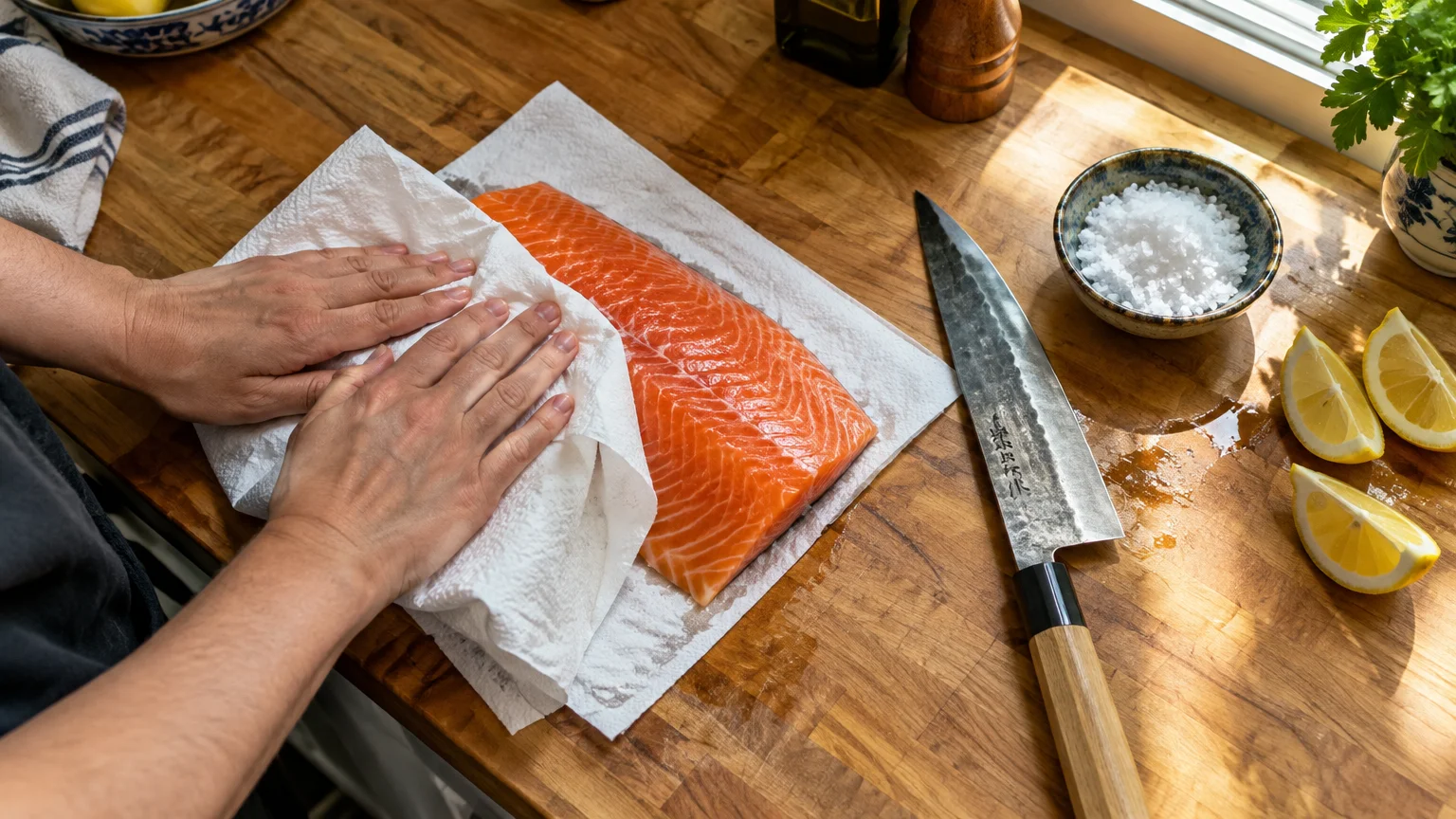
Pat the raw fillet thoroughly dry with clean paper towels before packaging. Removing surface moisture prevents the development of harsh, damaging freezer frost.
Wrap the fish snugly in moisture-resistant plastic wrap, expelling all ambient air. Add an outer layer of heavy-duty aluminum foil to block ambient light and air.
A home vacuum-sealer provides the ultimate defense against damaging freezer burn. Vacuum packaging extracts oxygen, preserving taste and natural texture for several months.
Label the package clearly with the packaging date and fish variety. Consuming frozen salmon within three months guarantees peak flavor and optimal structural integrity.
Strategy Pillar 3: Preparation Protocols and Culinary Safety
Safe Thawing Practices Without Bacterial Growth
Thawing frozen salmon improperly undoes the benefits of thoughtful sourcing and pristine storage. Never thaw raw fish on your kitchen counter at room temperature.
The dangerous temperature danger zone allows dormant surface bacteria to multiply rapidly while the interior remains frozen. Always thaw your fish gradually inside your refrigerator.
Transfer the sealed fish from the freezer to the refrigerator roughly twelve hours before cooking. Slow thawing allows muscle cells to reabsorb moisture, preserving a tender bite.
If you need dinner quickly, submerge the sealed, watertight package in a bowl of cold tap water. Change the water every fifteen minutes until the flesh feels pliable.
Never use warm or hot water to speed up the thawing timeline. Warm water cooks the exterior protein while cultivating rapid bacterial growth across the surface.
Preventing Kitchen Cross-Contamination
Safe meal preparation requires meticulous kitchen hygiene from start to finish. Dedicate a specific cutting board exclusively to raw seafood and poultry prep.
Non-porous cutting boards made from plastic or composite materials clean more thoroughly than worn wood. Sanitize boards and knives with hot, soapy water immediately after use.
Wash your hands thoroughly for twenty seconds before and after handling raw fish. Clean hands prevent transferring foodborne pathogens to fresh salads, utensils, or door handles.
Avoid rinsing raw fish under your kitchen faucet before cooking. Scientific food safety studies demonstrate that splashing water disperses invisible microbes across surrounding counters.
Instead, gently pat the fillet dry using disposable paper towels. Discard the used paper towels immediately into your kitchen trash can.
Cooking Temperatures and Cooking Indicators
Cooking salmon to safe thermal boundaries destroys harmful pathogens while preserving delicate culinary texture. Consistent temperature monitoring eliminates guesswork at the stove.
Consult the guidelines from the Food and Drug Administration for safe seafood preparation. They recommend cooking fish to an internal temperature of 145°F measured at the thickest part.
Insert a calibrated digital food thermometer into the thickest segment of your fillet. The meat should turn opaque and flake easily when pressed with a fork.
You may observe a white, creamy substance emerging onto the surface during cooking. This substance is albumin, a completely harmless, soluble protein that coagulates under heat.
Albumin does not signal spoilage or poor quality in your fillet. It simply indicates that heat pushed interior proteins outward where they solidified.

Strategy Pillar 4: Holistic Mindset and Sustainable Buying Habits
Balancing Food Budgets Without Compromising Digestive Health
Fresh seafood can represent a substantial financial investment in your weekly grocery allocation. However, trying to salvage doubtful or spoiled fish risks expensive medical complications.
Prioritizing food safety protects your household from lost workdays and intense digestive distress. Respecting your biological health means accepting that spoiled fish belongs in the trash.
To optimize your budget, buy frozen wild salmon fillets in bulk bags when retailers offer sales. Flash-frozen portions cost less per serving while delivering pristine nutritional density.
Plan your weekly meals carefully around the arrival date of your fresh seafood. Cook your fresh portions within forty-eight hours to enjoy premium taste without spoilage anxiety.
Resourceful meal scheduling turns healthy eating into an effortless, low-stress routine. Mindful spending honors both your wellness and your hard-earned financial resources.
Minimizing Waste Through Ethical Seafood Choices
Global fisheries face significant environmental pressures that require thoughtful consumer choices. Wasting fish through improper storage dishonors the marine ecosystem that supplied it.
By learning reliable freshness indicators, you prevent unnecessary kitchen waste and discard only what is genuinely unsafe. Accurate assessment prevents the premature disposal of wholesome, nutritious food.
Support local markets and sustainable fish purveyors who emphasize transparent traceability. Purchasing from responsible distributors promotes ethical fishing practices and superior cold-chain logistics.
Mindful eating connects your personal vitality directly to ecological wellbeing. When you treat seafood with informed care, you cultivate sustainable health for your family and the planet.
Every conscious meal choice supports a healthier food supply chain. Value the entire journey from pristine ocean waters to your home dinner table.

Real Voices: Clinical Perspectives on Seafood Safety
Registered dietitians emphasize that fresh salmon serves as a cornerstone of therapeutic, anti-inflammatory nutrition. Its bioavailable protein and essential minerals strengthen immune function and vitality.
However, clinical nutritionists remind patients that spoiled seafood reverses these positive physiological benefits. Foodborne bacteria and histamine toxicity place intense acute strain on the gastrointestinal tract.
Public health sanitarians urge home cooks to trust their sensory perceptions without second-guessing. If multiple physical signs suggest degradation, discarding the fillet remains the only prudent medical choice.
Consult a qualified healthcare provider or registered dietitian if you experience digestive distress after eating seafood. Professional medical guidance ensures personalized care tailored to your unique health requirements.
Healthy living flourishes when scientific knowledge guides daily choices. Treat food safety as an empowering, active component of preventive medicine.
Frequently Asked Questions About Salmon Quality
Does white liquid leaking from cooked salmon mean it has spoiled?
No, the white substance that emerges during cooking is albumin, an entirely benign protein. As muscle fibers contract under heat, they squeeze this liquid protein to the surface where it congeals.
Albumin is completely safe to eat and indicates standard thermal changes rather than bacterial activity. Cooking your fish gently over moderate heat helps minimize the amount of albumin expelled.
How long can you safely store raw salmon in your home refrigerator?
Raw salmon remains safe for one to two days when stored in a standard home refrigerator. Keep the fish packaged tightly on the coldest bottom shelf to preserve maximum freshness.
If you cannot cook the fish within that two-day timeframe, wrap it securely and freeze it. Never leave raw fish lingering in chilled storage past this recommended window.
Can you freeze salmon that you purchased previously thawed from the grocery counter?
Yes, you can safely refreeze previously thawed salmon if you handled it safely and kept it continuously cold. However, repeated freezing cycles degrade delicate cellular membranes and cause moisture loss.
Refreezing alters the cooked texture, resulting in a drier, slightly mushier fillet upon final preparation. For superior culinary results, cook the thawed fish first before freezing the prepared dish.
What should you do if you accidentally ate fish that tasted sour or off?
Stop eating immediately and dispose of the remaining portion to prevent further ingestion of potential pathogens. Stay well-hydrated with clean water and electrolyte fluids to support natural digestive elimination.
Monitor your body closely for symptoms such as vomiting, fever, hives, facial flushing, or severe cramps. Seek immediate professional medical evaluation if symptoms escalate or if you experience respiratory difficulty.
Next Steps for Confident Seafood Preparation
Becoming proficient at identifying fresh salmon empowers you to enjoy nutritious meals with absolute confidence. The five sensory checks give you reliable tools whenever you shop.
Make a conscious decision today to test these methods on your very next grocery excursion. Take a moment to smell, examine, and touch the seafood before you finalize your meal plans.
How might developing confidence in food evaluation transform your overall connection to wholesome home cooking? Embracing mindful discernment supports sustainable vitality and vibrant, enduring wellbeing.







Leave a Reply