

Choosing what goes into your grocery cart shapes how steadily your thyroid gland produces energy-regulating hormones every day. Small upgrades at breakfast, lunch, and dinner supply the core minerals your body relies on without forcing restrictive meal plans.
Knowing which foods for thyroid health truly move the needle helps you skip pricey supplements and focus on real nutrition. Simple swaps like rotating seafood, dairy, nuts, and legumes give your metabolism reliable fuel.
Below, you will find eight nutrient-dense foods backed by clinical guidelines, along with timing rules that protect medication absorption.
Why Daily Thyroid Nutrition Matters More Than You Think
Standing in the grocery aisle between sea salt and iodized table salt feels like a minor culinary choice. Yet everyday kitchen decisions quietly decide whether your thyroid receives the raw building blocks it needs to run smoothly.
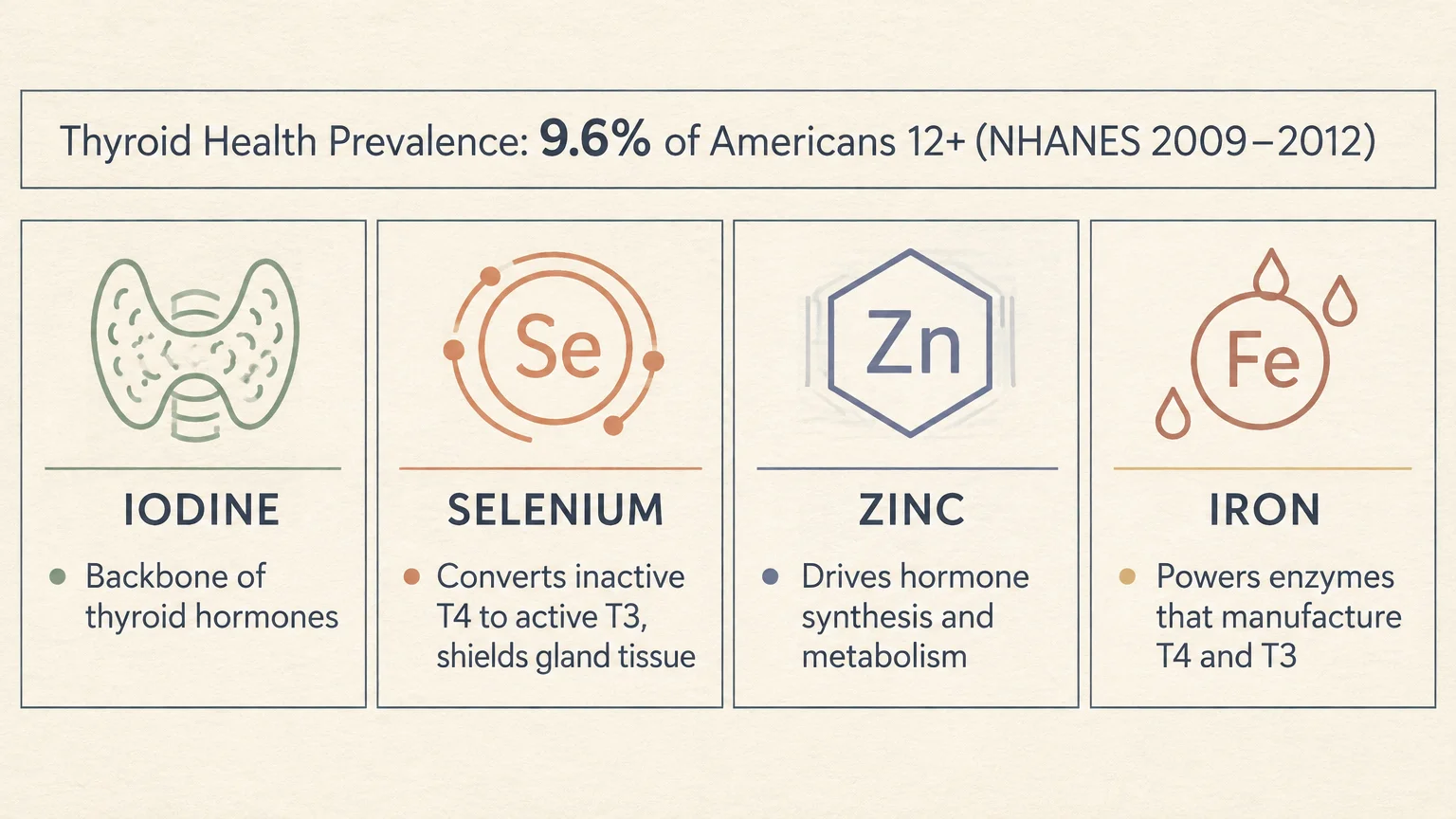
Thyroid sluggishness affects far more households than most people realize. According to 2009–2012 National Health and Nutrition Examination Survey (NHANES) data summarized by the American Thyroid Association (ATA), hypothyroidism affected roughly 9.6% of Americans aged 12 and older.
Recent healthcare records suggest those numbers keep climbing. Optum administrative claims data for adults showed diagnosed hypothyroidism prevalence rose from 9.5% in 2012 to 11.7% in 2019.
Even more striking, the share of diagnosed patients not receiving treatment grew from 11.8% to 14.4% over that same period. Earlier NHANES data from 1999–2002 placed biochemical hypothyroidism at 3.7% to 4.6% and confirmed women experience it five to eight times more often than men.
In iodine-sufficient countries like the United States, ATA guidelines identify Hashimoto’s thyroiditis as the most common cause of hypothyroidism. Even when food seems plentiful, subtle micronutrient gaps still appear across modern diets.
Global surveillance by the World Health Organization (WHO) across 130 countries between 1994 and 2006 found inadequate iodine nutrition in 30.6% of the studied population. Food patterns shift quickly when people rely heavily on restaurant meals and packaged snacks.
Your thyroid depends on a coordinated team of minerals rather than a single magic ingredient. Iodine forms the backbone of thyroid hormones, while selenium helps convert inactive T4 into active T3 and shields gland tissue from oxidative stress.
Zinc drives hormone synthesis and metabolism, and iron powers the enzymes that manufacture T4 and T3 in the first place. When you build a thoughtful thyroid function diet around whole foods, you nourish all four pathways naturally.
8 Foods That Support Healthy Thyroid Function
No single meal fixes sluggish energy overnight, and food never replaces prescribed thyroid hormone when your gland needs medical support. Still, rotating these eight practical foods creates steady nutritional coverage across your entire week.
1. Baked Cod for Steady Iodine
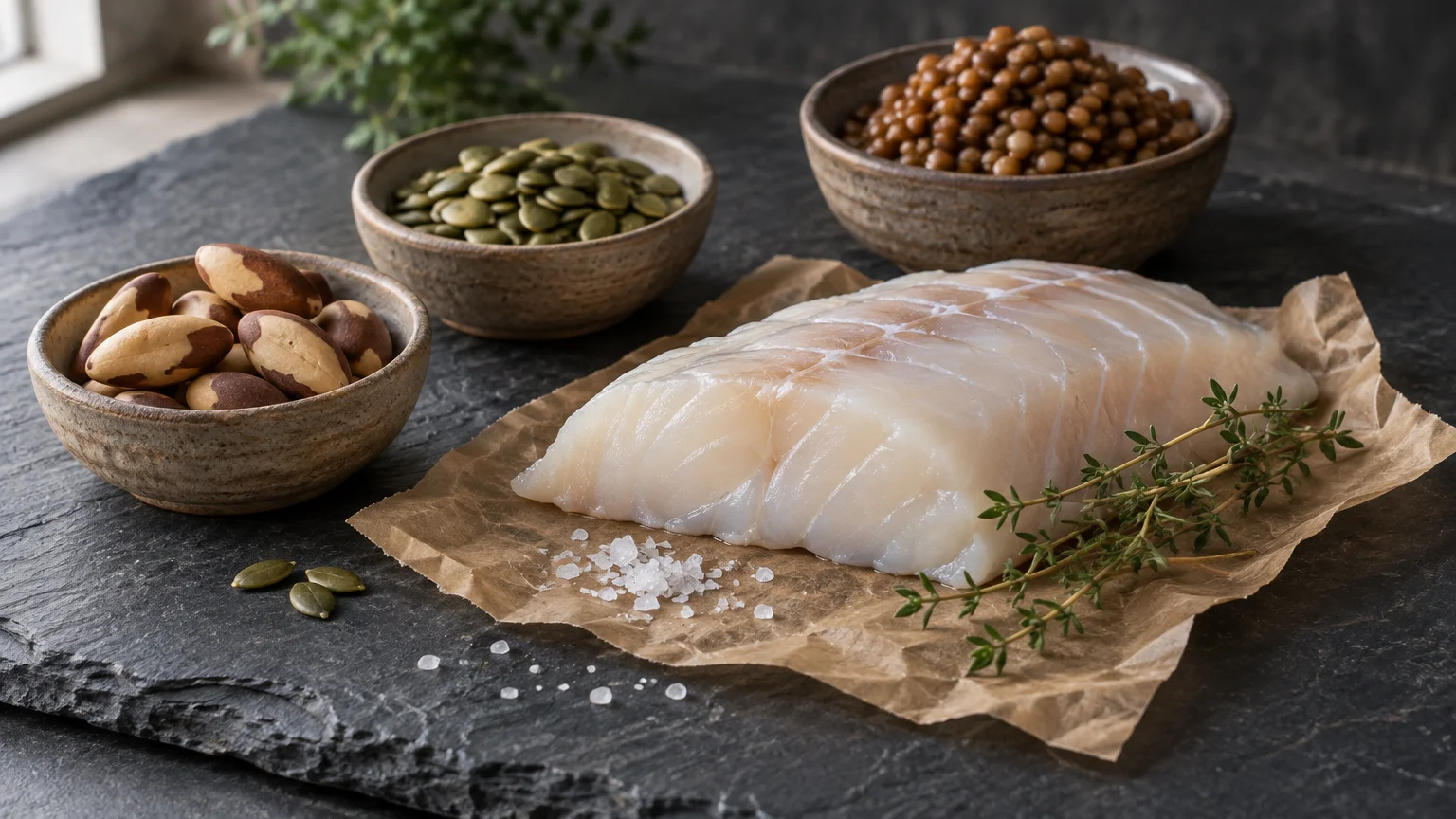
White ocean fish delivers one of the cleanest, most predictable iodine hits on your dinner plate. According to the National Institutes of Health Office of Dietary Supplements (NIH ODS), a 3-ounce serving of baked cod provides approximately 160 mcg of iodine.
That single portion covers the entire daily Recommended Dietary Allowance (RDA) of 150 mcg set by the Food and Nutrition Board and NIH ODS for teens aged 14 to 18 and adults aged 19 and older. Younger children need 90 mcg daily from ages 1 to 8 and 120 mcg from ages 9 to 13.
Iodine demands climb significantly during major life stages to support brain and metabolic growth. The U.S. RDA rises to 220 mcg daily during pregnancy and 290 mcg during lactation, while the WHO recommends 250 mcg daily across both stages.
Keeping iodine within safe bounds matters just as much as hitting your daily target. The NIH ODS sets the adult Tolerable Upper Intake Level (UL) at 1,100 mcg per day, though ATA guidance notes upper limits during pregnancy and lactation range between 500 and 1,100 mcg daily.
You can review exact life-stage targets anytime in the federal iodine nutrition fact sheet. Making cod a regular habit requires minimal kitchen skill on busy weeknights.
Keep individually wrapped frozen cod fillets in your freezer so dinner takes 15 minutes from pan to table. Brush the fish with olive oil, lemon juice, and dried herbs, and rotate shrimp or tuna on alternate weeks for variety among iodine rich foods.
2. Brazil Nuts for Targeted Selenium
Few whole foods pack as much mineral power into a tiny bite as Brazil nuts. Data from the NIH ODS and USDA FoodData Central show a single Brazil nut contains 68 to 91 mcg of selenium, with an ounce averaging 544 mcg.
Adults—including those who are pregnant or lactating—need 55 to 70 mcg of selenium daily according to the Food and Nutrition Board and NIH ODS. Younger children and teens require between 15 and 70 mcg depending on age.
Your thyroid holds high concentrations of selenium because enzymes depend on it to activate T4 into T3 and protect delicate cells. Remarkably, the NIH ODS notes that eating just one or two Brazil nuts a day meets adult selenium needs.
More is definitely not better with selenium foods, because excess intake builds up to toxic levels called selenosis. The adult UL sits at 400 mcg per day, while limits for infants, children, and adolescents span 45 to 400 mcg.
NIH ODS clinical reports warn that chronic excess first causes garlic breath and a metallic taste, followed by hair loss, nail brittleness or loss, skin rashes, digestive upset, fatigue, irritability, and nervous system problems. A documented 2008 U.S. outbreak even caused acute poisoning in 201 people after a misformulated liquid supplement delivered 200 times its labeled dose.
Treat Brazil nuts like a daily culinary garnish rather than a handful snack. Count out one or two nuts alongside your morning oatmeal, or chop them over a lunch salad so your intake stays safe and consistent.
3. Plain Dairy Yogurt for Combined Minerals
Plain dairy yogurt earns a regular spot in your fridge because it delivers multiple thyroid-supporting nutrients in one ready-to-eat cup. The NIH ODS highlights dairy products—including milk, yogurt, and cheese—as primary dietary sources of iodine, selenium, and zinc.
Choosing plain yogurt gives you protein and minerals without the added sugars tucked into dessert-style cups. Its creamy texture also pairs effortlessly with fruit, seeds, or toasted oats when mornings feel rushed.
Dairy works particularly well if you rarely cook seafood at home. A daily bowl of yogurt or a slice of cheese bridges mineral gaps quietly across your week.
If you prefer plant-based milk alternatives, check nutrition labels carefully because most unfortified almond, oat, or soy drinks contain little natural iodine. Also remember to keep calcium-rich dairy and calcium-fortified drinks well separated from morning thyroid medication, a timing rule we cover shortly.
4. Whole Eggs for Morning Momentum
Eggs deserve their reputation as a kitchen workhorse for anyone refining hypothyroidism nutrition. The NIH ODS lists eggs among key food sources for iodine, selenium, and zinc—three minerals your gland relies on every single morning.
Keep the whole egg in your pan rather than tossing out the yolk. Essential trace minerals concentrate inside the yolk alongside fat-soluble nutrients, whereas egg whites mostly supply protein.
Because eggs cook in under five minutes, they solve the weekday breakfast crunch without relying on refined pastries. You can scramble two eggs with chopped spinach, bake egg muffins for grab-and-go mornings, or slice hard-boiled eggs over whole-grain toast.
Batch-boiling half a dozen eggs on Sunday evening gives you a reliable protein-and-mineral anchor all week. Whenever afternoon cravings hit, peeling one egg keeps your blood sugar steady and your thyroid nourished.
5. Oysters for Unmatched Zinc
Zinc rarely gets the spotlight that iodine enjoys, yet your body cannot synthesize or metabolize thyroid hormones smoothly without it. According to the NIH ODS, oysters contain more zinc per serving than any other food.
The Food and Nutrition Board and NIH ODS recommend 8 to 12 mg of zinc daily for adults, with targets ranging from 2 to 13 mg for infants, children, and teenagers. Healthy serum or plasma zinc levels sit between 80 and 120 mcg/dL, while readings under 70 mcg/dL in women or 74 mcg/dL in men indicate inadequate status.
You do not need a fancy seafood restaurant to put oysters on your menu. Canned boiled or smoked oysters sit neatly in your pantry for months and cost far less than fresh shellfish.
Drain a tin and fold the oysters into garlic-herb pasta, warm rice bowls, or crispy whole-grain crackers for a quick lunch. Even enjoying oysters once or twice a month adds meaningful zinc variety alongside poultry, dairy, and other seafood.
6. Lean Beef for Bioavailable Iron and Zinc
Red meat often sparks debate, yet moderate portions of lean beef deliver two critical nutrients that work hand in hand for thyroid wellness. NIH ODS dietary data show beef alone accounts for 20% of total U.S. dietary zinc intake.
Lean beef also provides heme iron, which your body absorbs much more efficiently than plant-based iron. As the British Thyroid Foundation (BTF) explains, your thyroid requires iron to manufacture T4 and T3 hormones, and iron deficiency commonly accompanies hypothyroidism—especially during pregnancy.
Adult iron RDAs set by the Food and Nutrition Board and NIH ODS span 8 to 27 mg per day depending on age, sex, and pregnancy or lactation status. The UL from all sources is 45 mg daily for teens and adults aged 14 and older, and 40 mg for children under 14 unless prescribed for deficiency.
Keep portions balanced by choosing 90% lean ground beef or trimmed sirloin strips once or twice a week. Toss thin slices into a vegetable stir-fry with broccoli and bell peppers so fiber, antioxidants, and bioavailable minerals share the same plate.
7. Beans and Whole Grains for Plant-Based Support
You do not have to eat meat at every meal to build a resilient thyroid function diet. The NIH ODS confirms that beans, nuts, and whole grains supply helpful amounts of zinc, nonheme iron, and selenium—though plant selenium levels vary widely with local soil selenium and pH.
If you follow a vegetarian or vegan routine, paying extra attention to absorption makes a measurable difference. Because plant-based nonheme iron absorbs less efficiently than heme iron, the Food and Nutrition Board and NIH ODS advise vegetarians to consume 1.8 times more iron than meat-eaters.
Zinc from beans and whole grains likewise offers lower bioavailability than animal foods because natural plant compounds bind minerals during digestion. Rotating cooked lentils, chickpeas, black beans, and hearty oats helps offset those lower absorption rates.
Keep canned low-sodium beans rinsed and ready to toss into soups, salads, and grain bowls on busy evenings. Just remember to keep your daily fiber intake fairly steady rather than jumping abruptly between low-fiber and ultra-high-fiber days if you take thyroid medication.
8. Seaweed With Careful Portion Control
Seaweed tastes savory and crisp in sushi rolls or soups, yet it demands more portion awareness than any other item on this list. According to the NIH ODS, iodine levels in whole or sheet seaweed vary more than 100-fold, ranging from 16 mcg/g to 2,984 mcg/g.
That dramatic swing explains why concentrated kelp products can backfire quickly. The ATA advises against taking iodine or kelp supplements containing more than 500 mcg of iodine daily, warning that some commercial products exceed the 1,100 mcg adult UL by thousands of times.
Excess iodine can trigger or worsen thyroid dysfunction—especially in people with Hashimoto’s thyroiditis, who are more likely to fail to escape the iodine-induced Wolff-Chaikoff block. You can read more about safe iodine thresholds in this clinical thyroid nutrition guidance.
Enjoy occasional thin nori sheets wrapped around cucumber and rice, while skipping daily high-dose kelp powders or drops. At the same time, take a fresh look at the salt shaker sitting beside your stove.
NIH ODS data show 1/4 teaspoon of iodized table salt provides roughly 75 mcg of iodine, with U.S. labels listing 45 mcg per gram and tested samples averaging 47.5 to 50.7 mcg per gram. By contrast, processed foods rarely use iodized salt, and specialty sea salt, kosher salt, Himalayan salt, and fleur de sel are generally not iodized unless stated on the label.
Timing Your Thyroid Diet Around Medications and Labs
Even the cleanest foods for thyroid health can interfere with hormone absorption if they hit your stomach at the wrong minute. If you take levothyroxine, consistent timing protects your blood levels far better than chasing exotic superfoods.
Prescribing rules from the FDA, 2014 ATA guidelines, the UK National Health Service (NHS), and StatPearls align on one golden standard. Swallow levothyroxine consistently on an empty stomach with plain water, 30 to 60 minutes before breakfast—or take it at bedtime at least 3 to 4 hours after your final meal.
Morning coffee lovers need a little patience before pouring that first mug. NHS guidance and controlled espresso absorption findings show you should wait 30 to 60 minutes after taking levothyroxine before drinking coffee or tea.
Certain minerals and stomach remedies block levothyroxine even more strongly. Guidance from the FDA, MedlinePlus, BTF, and StatPearls requires separating levothyroxine by at least 4 hours—before or after—from calcium supplements, calcium-fortified drinks, iron supplements, antacids, proton pump inhibitors (PPIs), and multivitamins containing calcium or iron.
Food patterns around soy, fiber, and citrus also benefit from predictability. European Thyroid Association (ETA) and American Association of Clinical Endocrinologists (AACE) advice recommends keeping ordinary dietary soy and fiber intake steady across meals, while ETA guidance advises spacing concentrated soy or grapefruit juice at least 4 hours from levothyroxine.
You can verify exact separation windows anytime using this thyroid medication interaction guide. If you take anti-thyroid medications such as methimazole for an overactive thyroid, NIH ODS guidance warns that high-dose iodine supplements can interact and push hormone output too low.
Supplement timing matters right before lab work too. The ATA recommends stopping biotin supplements—often found in hair, skin, and nail formulas—for 2 full days (48 hours) before thyroid blood tests so biotin does not skew lab readings.
Special clinical safeguards apply during pregnancy and weight management. Both the ATA and the American Academy of Pediatrics (AAP) advise individuals who are planning pregnancy, pregnant, or lactating to take a daily supplement containing 150 mcg of iodine as potassium iodide alongside iodized salt and dietary sources.
Checking prenatal labels pays off, because an NIH ODS-cited 2016–2017 market analysis found only 34 of 59 best-selling U.S. prenatal multivitamins contained iodine, at a median of 150 mcg daily. Meanwhile, a 2017 ATA recommendation advises against selenium supplementation in pregnant women who test positive for TPO antibodies.
Finally, treat prescription thyroid hormone strictly as medical care rather than a dieting shortcut. An FDA boxed warning states clearly that levothyroxine must never be used to treat obesity or promote weight loss in people with normal thyroid function, because toxic doses can become life-threatening.
Action Steps to Build a Thyroid-Friendly Routine
Knowledge only changes how you feel when it turns into automatic daily cues. Instead of overhauling every recipe tonight, build small anchors around your existing schedule.
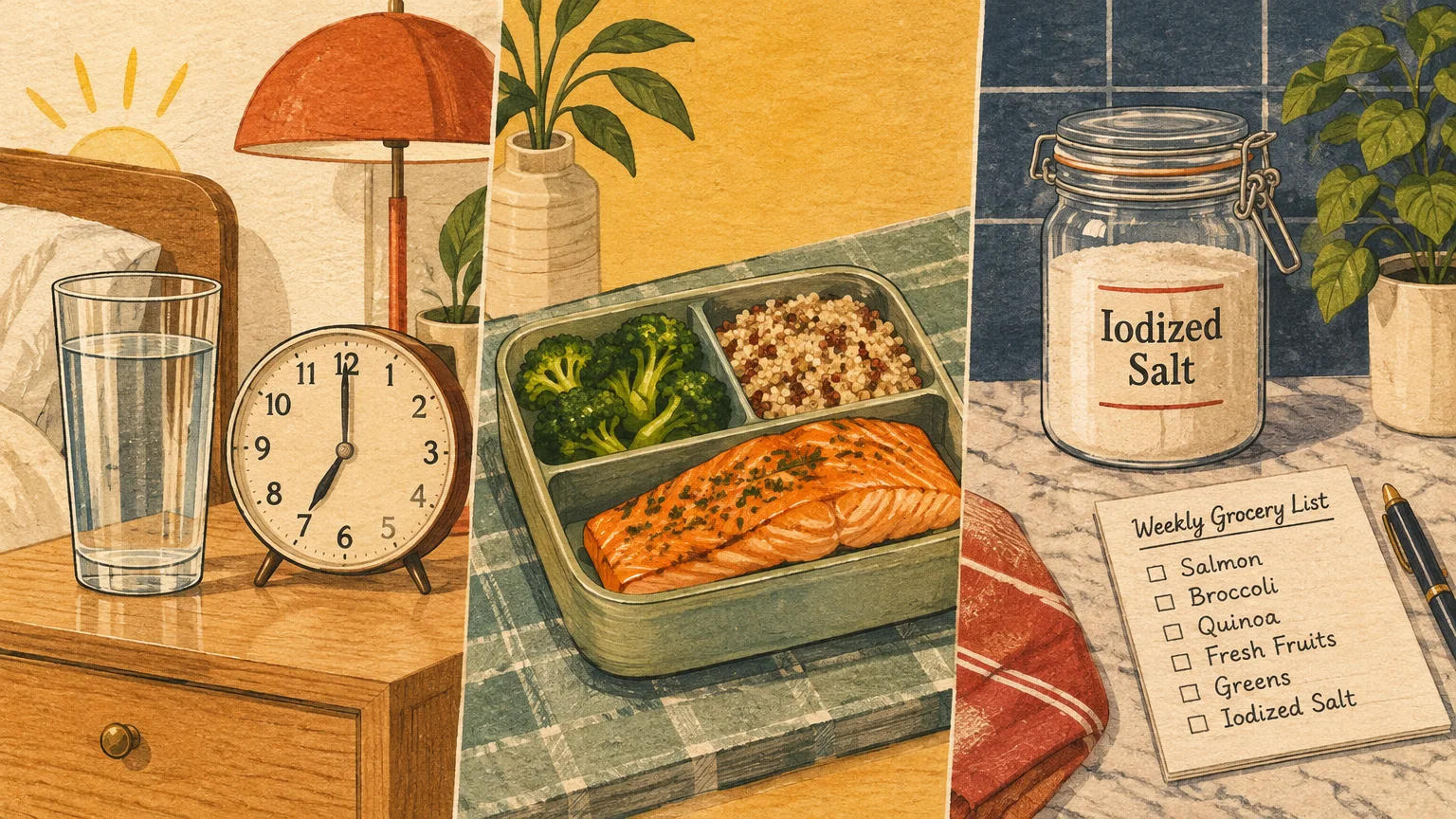
Start with a five-minute kitchen salt audit this evening. Keep your flaky finishing salt for special steaks, and put an iodized table salt container next to your stove for daily pasta water, roasted vegetables, and scrambled eggs.
Next, protect your morning medication buffer with a pleasant movement cue. Set your alarm 15 minutes earlier, take your pill with water at your bedside, and step outside for a brisk walk or gentle mobility flow while the 30-to-60-minute clock counts down.
Pairing that waiting window with daylight and light movement turns an annoying delay into an energizing ritual. By the time you return indoors, coffee, eggs, and plain yogurt are fair game.
Portion your selenium foods in advance so guesswork disappears. Fill a small mason jar with Brazil nuts and place it beside your coffee maker or utensil crock, committing to just one or two nuts per day.
Map a simple three-part meal rotation for busy workdays. Aim for eggs or plain yogurt with berries at breakfast, a lentil or lean beef grain bowl at lunch, and baked cod or shrimp twice a week at dinner.
Practice a flexible mindset whenever travel or late meetings disrupt your routine. Missing a seafood dinner on Wednesday does not erase Monday’s meal; simply pick up your next nourishing choice without guilt or extreme catch-up dieting.

Support Systems That Keep Habits Consistent
Willpower fades fast by Thursday afternoon, whereas smart support systems carry good habits forward automatically. Surrounding yourself with practical tools and helpful people removes daily decision fatigue.
Invite a spouse, roommate, or friend to act as a low-pressure accountability partner. You might trade Sunday texts confirming you prepped hard-boiled eggs or meet a coworker for a morning walk during your medication wait window.
Digital nutrition tools also clarify what your meals actually deliver without requiring obsessive calorie math. Exploring a searchable nutrient composition database lets you check selenium, zinc, and iron values across favorite staple foods in seconds.
Pair that database with a simple seven-day habit tracker—either a paper sticky note on your fridge or a basic phone checklist. Checking off daily water, medication timing, and one thyroid-supporting food builds visible momentum.
When complex symptoms, pregnancy plans, or overlapping diagnoses enter the picture, bring trained professionals onto your team. You can locate specialized support through a registered dietitian directory and coordinate dietary adjustments directly alongside your prescribing clinician.
Frequently Asked Questions About Thyroid Nutrition
How can I eat for thyroid health when I am short on time?
Lean on zero-prep staples that keep for weeks in your fridge or pantry. Hard-boiled eggs, plain yogurt cups, canned oysters on whole-grain crackers, and one or two Brazil nuts deliver core minerals in under two minutes.
For fast dinners, bake frozen cod fillets straight from the freezer with olive oil and lemon while microwave brown rice steams beside them. Ten minutes of active effort beats takeout every time.
How do I build a thyroid function diet on a tight budget?
Focus on affordable mineral powerhouses rather than pricey specialty powders or organic superfood blends. Cartons of whole eggs, dried or canned beans, oats, iodized table salt, and frozen white fish stretch grocery dollars remarkably far.
Even Brazil nuts stay inexpensive per serving because you only eat one or two nuts daily. One small bag from the bulk bin easily lasts a full month.
How can I align these foods with my family’s meals?
Build modular dinners where everyone shares the same base and customizes toppings at the table. A taco night using seasoned lean beef, black beans, rice, and yogurt crema covers iron, zinc, and dairy without cooking two separate meals.
Sheet-pan cod with roasted potatoes and green beans also adapts easily for picky eaters when you serve mild lemon butter on the side. Family meals stay simple while quietly upgrading everyone’s nutrient intake.
How do I measure progress safely over time?
Track subjective daily markers alongside objective medical lab work rather than guessing from one tired afternoon. Keep a seven-day journal noting morning energy, digestion, afternoon focus, and consistent medication timing.
Share those notes with your healthcare provider during routine thyroid panel follow-ups. Remember to pause any biotin-containing supplements for 48 hours before blood draws so your lab results stay accurate.
Your Next Small Shift This Week
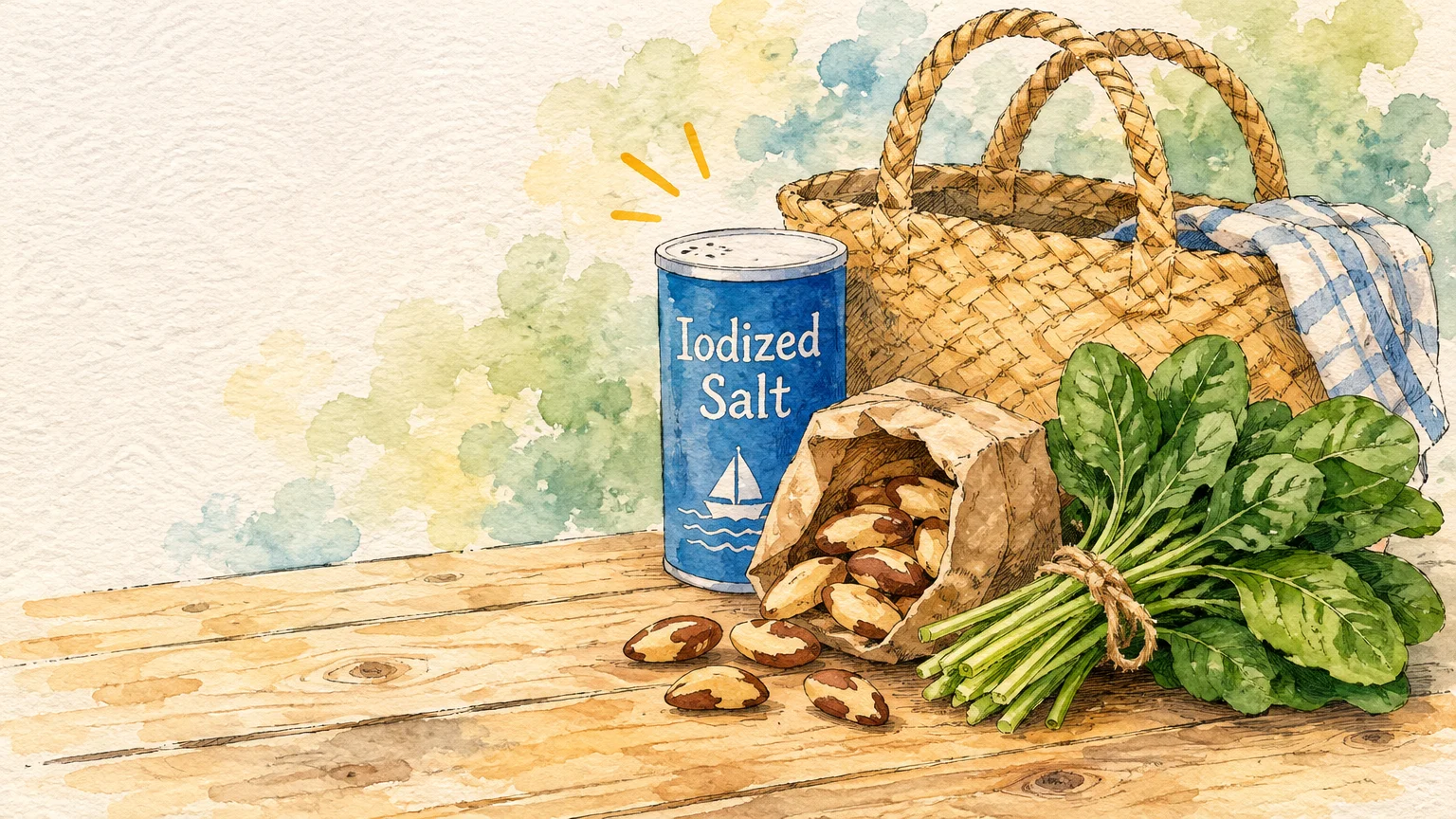
Meaningful health changes rarely arrive through dramatic kitchen purges or complicated supplement stacks. Pick just one small habit from this guide—whether swapping in iodized salt, portioning one Brazil nut daily, or protecting your 30-to-60-minute morning coffee window.
Commit to that single shift for the next seven days and jot down how your energy and daily rhythm feel by next week. Once that cue runs on autopilot, add your next thyroid-supporting food with calm confidence.