

Holiday feasts arrive fast when you take a GLP-1 medication, turning a simple dinner invitation into a tricky balancing act. Avoiding five common seasonal pitfalls protects your digestion, your energy, and your steady progress without forcing you to skip the celebration.
Festive meals, travel schedules, and long hours between snacks easily collide with how your prescription works. Learning what triggers nausea, fatigue, or blood sugar swings keeps unwanted side effects off your holiday menu.
You can savor family traditions while honoring your body’s slower pace. A few practical shifts in how you plate food, hydrate, and plan ahead make every gathering feel much more comfortable.
Why Holiday Habits Challenge Your GLP-1 Routine
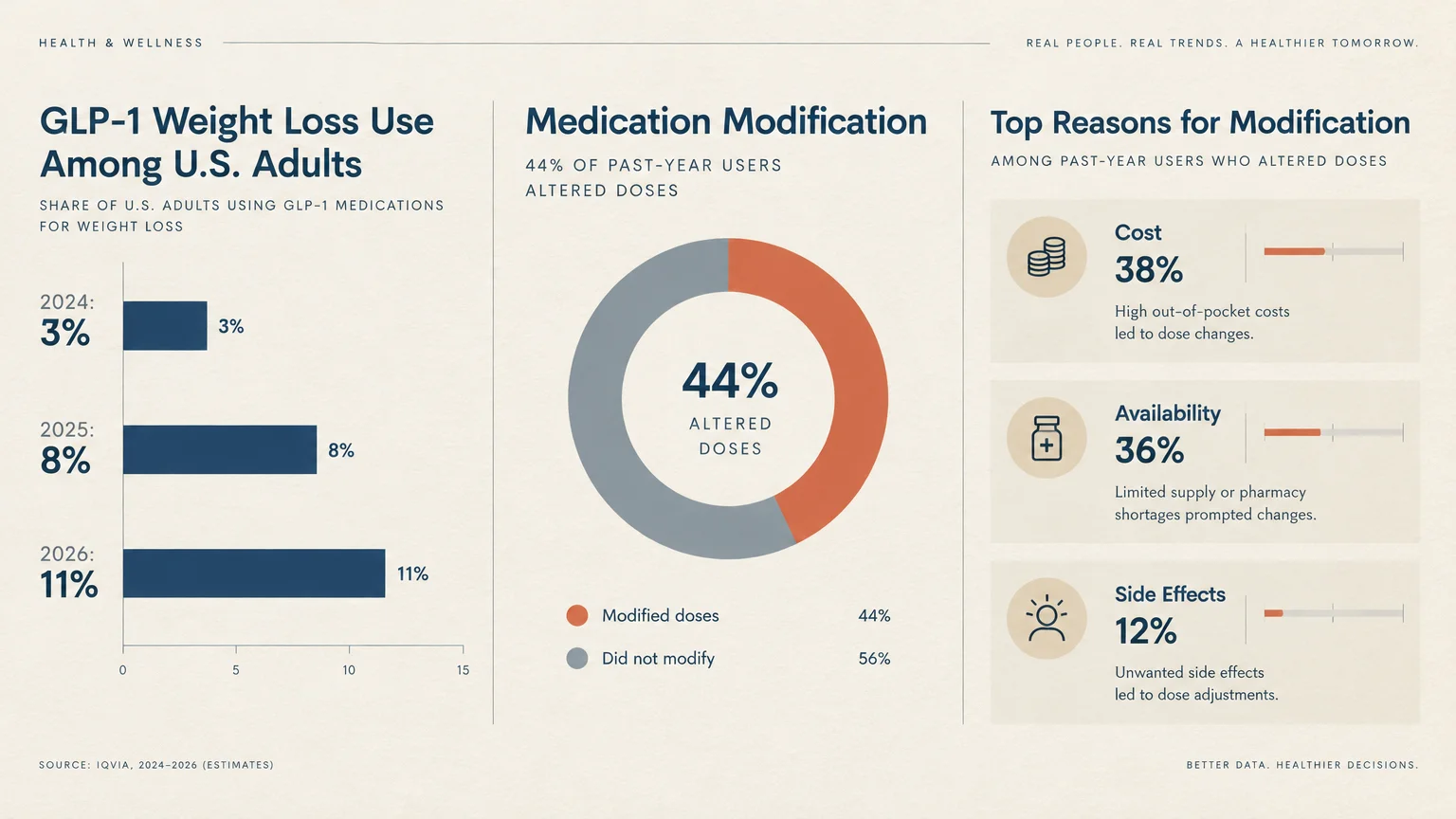
You have plenty of company navigating holiday buffets on these prescriptions. According to the Gallup National Health and Well-Being Index updated in September 2026, 11% of U.S. adults currently take a GLP-1 medication for weight loss.
That figure climbed from 3% in 2024 and 8% in 2025, while 15% of adults have ever used the drugs for weight loss. A November 2025 KFF Health Tracking Poll also found 12% of adults taking a GLP-1 across all conditions.
Where people obtain their prescriptions shapes how much holiday guidance they receive. The same KFF poll showed that 76% received their medication from a doctor, 17% used an online provider, and 9% visited a medical spa or aesthetic center.
When festive stress hits, many patients quietly alter their treatment plans on their own. In November 2026, the CDC Morbidity and Mortality Weekly Report analyzed summer 2025 data showing that 44% of past-year users modified how they took their medication.
Skipping doses was the top change at 28%. Cost motivated 38% of modifications, availability drove 36%, and roughly 12% cut back or stopped because of uncomfortable symptoms.
Those numbers carry real stakes between November and January, when rich dishes and packed calendars amplify every slip. Reviewing official safety notices on the FDA drug safety hub helps you spot seasonal risks before they disrupt your celebrations.
Your prescription alters your appetite signals, yet holiday traditions still revolve around abundance and late-night grazing. Without a clear routine, you can swing from eating too little during busy mornings to feeling painfully full after one heavy dinner.
Doctors warn that these seasonal extremes rarely stay minor; they frequently spiral into days of reflux, dehydration, or missed injections. Understanding the five biggest pitfalls equips you to celebrate confidently while keeping your stomach calm and your health goals intact.
The 5 Holiday Pitfalls Doctors Warn Against
Pitfall 1: Overeating Rich, High-Fat Holiday Foods
Creamy casseroles, buttery pastries, and fried appetizers linger in your stomach far longer when you take a GLP-1 drug. As UC Davis Health explained in October 2026, these medications slow gastric emptying so food exits your stomach at a gentler pace.
Adding heavy fats on top of slower digestion compounds that delay, quickly triggering early fullness, bloating, and acid reflux. Both UC Davis Health and Cleveland Clinic caution that pushing past mild fullness often ends in sudden nausea or vomiting.
Clinical data confirms how common these digestive reactions are even before holiday indulgence. FDA prescribing information for Wegovy shows 73% of treated adults reported gastrointestinal side effects versus 47% on placebo, including nausea in 44% and vomiting in 25%.
Severe gastrointestinal reactions occurred in 4.1% of Wegovy trial participants versus 0.9% on placebo. Comparative Zepbound clinical data showed similar rates, with nausea affecting 43.6% on Zepbound and 44.4% on Wegovy, alongside notable rates of constipation, diarrhea, and vomiting.
Doctors also watch closely for serious abdominal warning signs during heavy eating seasons. FDA labels state that Wegovy and Zepbound are not recommended for severe gastroparesis, and they warn about acute pancreatitis and gallbladder disease.
In October 2025, the FDA also updated Ozempic’s label to highlight severe gastrointestinal adverse reactions. If you feel severe, persistent abdominal pain radiating to your back, seek medical evaluation right away instead of blaming holiday heartburn.
Protect your stomach by serving yourself half-sized portions on a smaller appetizer plate first. Chew slowly, pause for ten minutes before considering seconds, and trade deep-fried sides for roasted vegetables or lean herb-seasoned meats.
If gravy, cheese dips, or frosted desserts appeal to you, enjoy two or three mindful bites alongside lighter foods. Stopping while you feel comfortably satisfied—never stuffed—lets you enjoy the party instead of spending the night near the bathroom.
Pitfall 2: Skipping or Shifting Doses for Big Meals
Many people try to pause their weekly shot before Thanksgiving or a big family feast to regain their appetite. Clinicians at Mayo Clinic, Cleveland Clinic, and Orlando Health strongly advise against improvising these seasonal breaks.
Semaglutide carries an approximate 7-day half-life, meaning the medication builds up gradually and clears slowly from your bloodstream. Skipping one weekly dose will not empty your system in time for a single dinner, so the trade-off rarely works as hoped.
Even worse, stopping and restarting frequently brings back uncomfortable digestive symptoms from your early weeks on treatment. You can experience fresh waves of nausea, vomiting, and diarrhea when you resume, and higher maintenance doses often feel harder to tolerate afterward.
Dose modification spikes especially sharply among people using unregulated products. The November 2026 CDC report noted that 62% of compounded GLP-1 users altered their prescribed regimen compared with 36% of non-compounded users.
That same CDC analysis revealed that 22.6% of GLP-1 users took compounded versions, which lack FDA review for safety, effectiveness, or quality, while 8.8% were unsure. Sticking to an FDA-approved prescription and a steady calendar removes unnecessary guesswork.
When life genuinely makes you miss an injection, follow official FDA missed-dose rules and never double up. For Wegovy injections, take a missed dose right away if your next scheduled shot is more than 48 hours away.
If your next Wegovy dose is under 48 hours away, skip the missed shot and resume on your normal day; missing two or more consecutive doses may require restarting your escalation schedule. For Ozempic, take a missed injection within 5 days.
Zepbound users can take a missed shot within 4 days, or skip it if more time has passed. When changing your weekly Zepbound day for holiday travel, always leave at least 3 days between injections.
Pitfall 3: Mixing Alcohol With Slower Digestion
Festive cocktails, spiked eggnog, and mulled wine hit differently once your stomach empties more slowly. UC Davis Health noted in October 2026 that many GLP-1 patients experience unexpected shifts in how alcohol affects their tolerance and comfort.
Sugary mixers and carbonated spirits can also stir up acid reflux, bloating, and sudden nausea on an already sensitive stomach. Drinking slowly and picking lower-sugar options helps keep festive toasts enjoyable.
Clinicians at UC Davis Health recommend drinking a full glass of water both before and after any alcoholic beverage. Alternating water with wine or cocktails slows your pace, supports hydration, and softens next-morning fatigue.
Alcohol poses an extra hazard if you manage diabetes with multiple medications. FDA prescribing information for Wegovy warns that combining GLP-1 drugs with insulin or sulfonylureas raises your risk of low blood sugar, including severe hypoglycemia.
Alcohol blocks your liver from releasing stored glucose while your stomach digests dinner more slowly, which can mask early warning signs. Mayo Clinic guidance updated in September 2026 identifies 70 mg/dL or below as the alert threshold for low blood sugar.
Never drink on an empty stomach, and check your glucose more frequently during parties if you use insulin or a secretagogue. Letting a trusted friend know what low blood sugar symptoms look like adds another layer of safety.
Even without diabetes, moderation protects your liver and your weekly weight goals. Standards of care published by the ADA in BMJ Open Diabetes Research and Care advise keeping alcohol below 20 grams daily for women and 30 grams daily for men.
Swap heavy cream liqueurs for sparkling water infused with fresh cranberries, rosemary, and a squeeze of lime. If you choose wine or spirits, sip a single small glass alongside a protein-rich plate and close the night early with herbal tea.
Pitfall 4: Skipping Meals, Undernutrition, and Dehydration
Skipping breakfast and lunch to save calories for a holiday feast backfires quickly on GLP-1 therapy. Appetite suppression already shrinks your hunger cues, so skipping meals leaves little room to meet your daily nutrient needs.
Harvard Medical School highlighted in July 2026 that eating too little while on these medications can trigger fatigue, dizziness, and micronutrient shortfalls. Without deliberate planning, you risk running low on vitamin D, calcium, iron, and essential B vitamins.
Rapid weight loss without enough protein and strength movement also chips away at lean muscle mass and bone density. A May 2025 joint clinical advisory from four leading nutrition and obesity societies stresses protecting muscle from day one.
That joint advisory suggests aiming for 80 to 120 grams of protein daily, or roughly 1.2 to 1.6 grams per kilogram during active weight loss. Eating protein-rich foods first at every meal helps you hit those targets before fullness arrives.
Pair your protein focus with steady resistance training, even if holiday travel shrinks your workouts to twenty-minute bodyweight sessions. Two or three brief strength routines each week signal your body to preserve muscle while shedding fat.
Constipation also climbs during busy travel weeks when fiber and fluids drop together. Consensus guidance from the 2025 joint advisory and a 2026 Delphi consensus recommends 14 grams of fiber per 1,000 calories, introduced gradually alongside plenty of water.
Specifically, daily fiber benchmarks sit at least at 25 grams for women, 30 grams for men, and 35 grams for adults with diabetes. Adding roasted Brussels sprouts, lentils, berries, or chia pudding slowly prevents sudden gas and bloating.
Hydration protects far more than your digestion during winter festivities. Experts recommend 2 to 3 liters of fluid daily, and both Wegovy and Zepbound FDA labels warn that dehydration from vomiting or diarrhea has caused acute kidney injury, sometimes requiring hemodialysis.
Pitfall 5: Holiday Travel and Medication Storage Errors
Winter road trips, overheated guest rooms, and freezing airport tarmac delays can quietly ruin expensive injectable pens. Storing your medication carelessly ranks among the most preventable holiday setbacks.
According to FDA prescribing information, unused pens of Wegovy, Ozempic, Zepbound, and Mounjaro belong in the refrigerator between 36°F and 46°F. Keep them in their original carton away from light, never freeze them, and discard any pen exposed above 86°F.
Freezing destroys the active peptide even if the liquid thaws clear later, so never push pens against the back wall of an unfamiliar hotel mini-fridge. Use a small insulated medical pouch to keep temperatures steady during long drives.
If you travel without reliable refrigeration, know the exact room-temperature window for your brand up to 86°F. Zepbound and Mounjaro pens last up to 21 days unrefrigerated, while injectable Wegovy lasts up to 28 days before removing the pen cap.
Ozempic pens remain stable at room temperature for up to 56 days after first use. If you take oral Wegovy tablets under the 2026 label, store them at 68°F to 77°F inside their original closed bottle away from moisture.
Compounded GLP-1 vials follow stricter rules and require consistent refrigeration between 36°F and 46°F away from fridge doors and freezers. Once opened, compounded vials generally must be discarded after 28 days at room temperatures under 77°F.
Flying requires smart packing to protect your pens from lost baggage and freezing cargo holds. The Transportation Security Administration allows prescribed injectable pens and ice packs in carry-on and checked bags, yet advises packing them in your carry-on.
Keep medications in their original pharmacy-labeled box and place them with your ice packs so you can alert screening officers easily. Check current TSA special medical screening rules a few days before your flight to breeze through security.
Action Steps for Busy Holiday Schedules
Turning medical warnings into calm daily routines starts before you even step into a holiday kitchen. Anchor your mornings with a twenty-gram protein breakfast—such as Greek yogurt with berries or two scrambled eggs—so you never arrive at dinner ravenous.
Pack a refillable one-liter water bottle wherever errands take you, aiming to finish two full bottles before evening festivities begin. Sipping electrolyte-enhanced water or warm herbal tea between meals prevents mild dehydration from masquerading as hunger or triggering constipation.
Use smart meal swaps to keep classic flavors on your plate without heavy grease. Trade creamy green bean casserole for garlic-roasted green beans, choose turkey breast over dark skin-on cuts, and enjoy baked spiced apples instead of buttery pecan pie.
When a buffet offers tempting favorites, walk the entire table once before picking up a plate. Choosing your three favorite items upfront stops mindless grazing and respects your stomach’s smaller capacity.
Build a gentle movement cue right into every gathering by inviting a relative for a fifteen-minute neighborhood walk after dinner. Light walking eases fullness, steadies post-meal blood sugar, and pulls your attention away from leftover dessert trays.
Practice a simple mindset check halfway through your meal by placing your fork down for sixty seconds. Asking whether your stomach feels neutral, satisfied, or tight helps you stop before delayed fullness turns uncomfortable.
Keep winter safety updates in mind alongside your meals if you schedule elective medical care. Because slower stomach emptying raises aspiration risk under general anesthesia or deep sedation, always inform your surgical team about your GLP-1.
Watch for rare vision changes following a November 9, 2026 FDA directive adding NAION warnings across all GLP-1 labels. Across over 125 trials, the FDA observed roughly 6 cases per 100,000 yearly users versus under 4 on comparators.
Although nonarteritic anterior ischemic optic neuropathy remains rare, any sudden vision loss in one eye requires urgent emergency care. Staying alert to major symptoms while keeping everyday meals gentle puts you firmly in charge of your holiday health.

Building Your Holiday Support System
Navigating seasonal food pressure feels much easier when you do not carry the plan alone. Ask a partner, sibling, or close friend to act as your discreet holiday ally who checks in on water intake and post-dinner walks.
Schedule a brief check-in with your prescribing clinician or a registered dietitian before holiday travel ramps up. Reviewing your exact injection dates, protein goals, and backup anti-nausea strategies prevents panicked midnight searches.
Digital tracking tools take the guesswork out of protein and fiber benchmarks when meals look unfamiliar. Logging three days of typical holiday eating in a daily nutrition and habit tracker reveals sneaky gaps in fluids, iron, or calcium.
When homemade recipes lack nutrition labels, look up individual ingredients through the USDA FoodData Central database to estimate protein and fiber accurately. Knowing that a cup of roasted chickpeas adds substantial fiber helps you balance rich side dishes effortlessly.
You can also explore broader wellness and movement tools on the CDC public health portal to keep family routines aligned all winter. Reliable information keeps you grounded when social media feeds push extreme holiday diet myths.
Community support matters just as much as numbers on a screen. Join an online patient group led by credentialed clinicians or swap lighter holiday recipes with coworkers so healthy choices feel social rather than isolating.
Frequently Asked Questions About Holiday GLP-1 Habits
How do you protect your nutrition when holiday errands leave no time to cook?
Stock three no-cook protein staples in your fridge and car bag before December gets busy. Single-serve Greek yogurt cups, pre-cooked rotisserie chicken strips, and shelf-stable protein shakes deliver twenty to thirty grams of protein in two minutes flat.
Pair those fast proteins with washed baby carrots, berries, or pre-portioned mixed nuts to cover fiber and micronutrients between shopping trips. Convenient fuel stops you from arriving at evening parties starved and vulnerable to heavy appetizers.
How can you stay consistent on a tight holiday budget?
Skipping expensive specialty holiday snacks saves cash while keeping your digestion happier. Canned black beans, eggs, cottage cheese, frozen spinach, and oats provide budget-friendly protein and fiber that outperform pricey packaged diet bars.
Never turn to unverified compounded vials or dose-stretching schemes just to trim monthly drug expenses without talking to your prescriber first. Your doctor can discuss manufacturer savings cards, safe dosing options, or covered alternatives that protect your health.
What helps when family members pressure you to eat or drink more?
Prepare one warm, firm script before you walk through the door so polite insistence never catches you off guard. Thank the host warmly for cooking, praise a specific dish, and explain that small portions help you feel your best all evening.
Keep a glass of sparkling water with lime in your hand and a small plate with a few colorful bites nearby. Visual cues signal to relatives that you are already enjoying yourself, cutting down on well-meaning refills.
How should you measure progress between Thanksgiving and New Year’s?
Holiday weight naturally bounces up and down from salty restaurant dishes, late flights, and normal fluid shifts. Focusing exclusively on your morning scale number often triggers needless frustration over temporary water retention.
Track non-scale wins instead, such as steady daytime energy, zero severe reflux nights, consistent protein intake, and sticking to your injection calendar. Maintaining weight and muscle strength through January counts as a major holiday victory.
Your One-Week Holiday Habit Shift
You do not need a rigid rulebook to navigate festive meals while taking a GLP-1 medication. Choosing one modest anchor habit protects your comfort far better than trying to overhaul every holiday tradition at once.
Pick a single shift for the next seven days—whether eating protein first at every meal, carrying a two-liter hydration goal, or keeping your exact injection day intact. Jot down how your stomach, energy, and mood respond each evening.
Notice which foods leave you feeling light and energized so you can repeat what works at every gathering ahead. One calm week builds the confidence you need to enjoy the entire season on your own terms.