

Getting more out of a brief medical checkup starts long before you sit on crinkly exam table paper. A few simple pre-visit habits help your care team spot real health trends, prevent false test readings, and address your biggest concerns.
Nurses manage clinic flow, check vital signs, and review medications before the clinician ever walks in. They watch small, preventable mistakes turn routine appointments into rushed and confusing visits.
Learning what nurses notice behind the scenes gives you a clear edge. You can walk into your next appointment calm, organized, and ready to partner in your own care.
1. Your Clock Is Short—Lead With Your Top Priority
Most patients assume an appointment gives plenty of time to catch up on every ache, lab result, and nutrition question. In reality, primary care schedules run on tight margins that leave little room for wandering conversations.
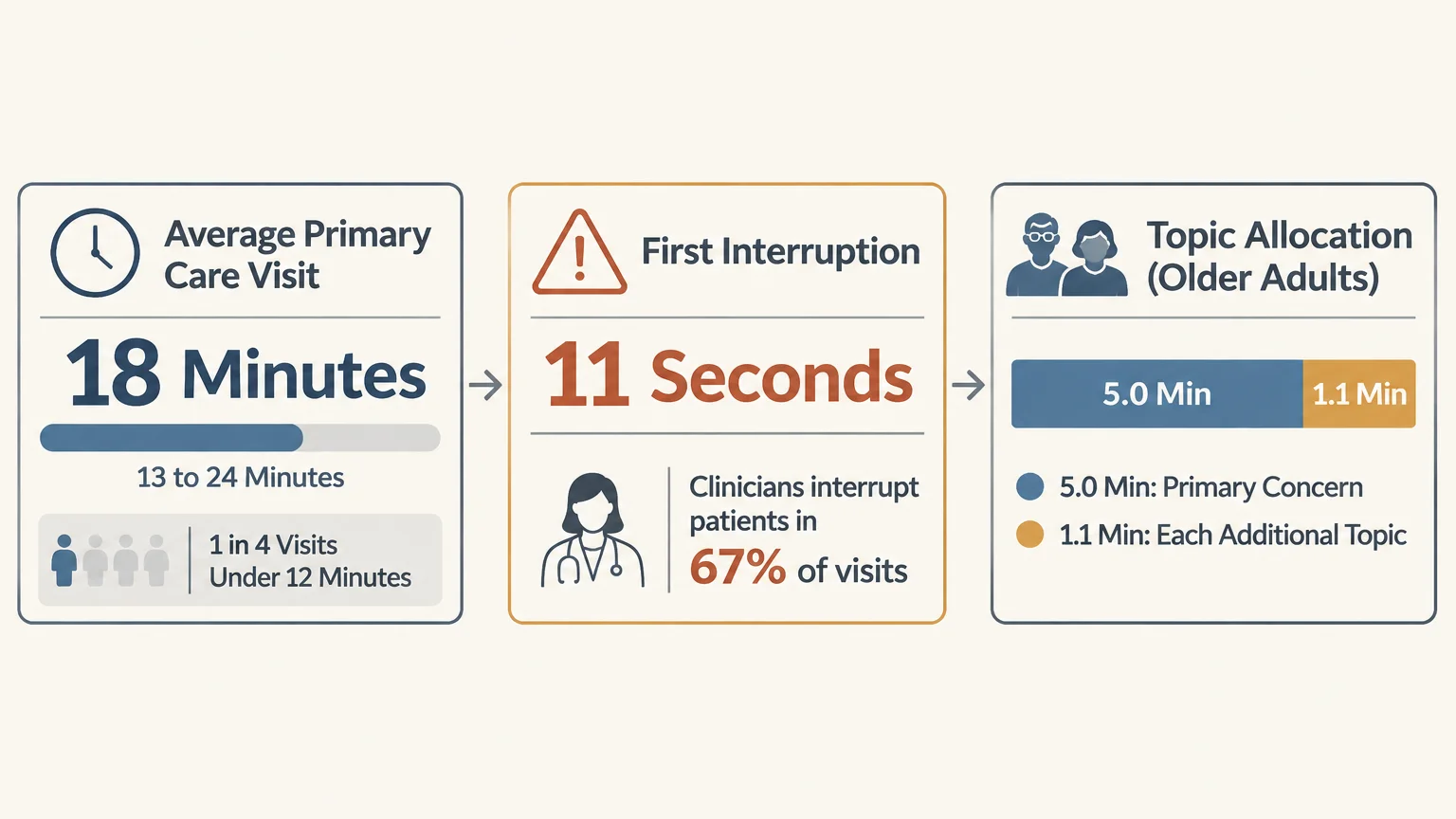
A 2023 analysis of more than 8.1 million primary care visits in JAMA Health Forum found that the average appointment lasts just 18 minutes. Most visits run between 13 and 24 minutes, with roughly 1 in 4 finishing in under 12 minutes.
That compressed schedule carries real consequences for your safety. The same analysis linked shorter visits to higher rates of inappropriate antibiotic prescribing and risky co-prescribing of opioids and benzodiazepines.
Your clinician also carries a heavy digital workload outside the exam room. A 2024 JAMA Network Open study highlighted by the American Medical Association (AMA) showed primary care doctors spend a median of 36.2 minutes in the electronic health record per 30-minute scheduled visit.
That computer time includes 7.8 minutes managing electronic inbox messages and 6.2 minutes of after-hours pajama time at home. When you understand that time crunch, smart preparation becomes one of the best doctor appointment tips you can practice.
Timing matters most during the opening seconds of your conversation. A 2018 study in the Journal of General Internal Medicine across 112 clinic encounters found only 36 percent of clinicians asked patients to explain their agenda.
Even when clinicians did ask, they interrupted patients in 67 percent of encounters after an average of just 11 seconds. That window shrunk from 18 seconds back in 1984.
Older adults often juggle even more competing needs inside a single slot. An observational study indexed by the National Institutes of Health (NIH) found routine primary care visits for older adults had a median length of 15.7 minutes covering a median of 6 topics.
Clinicians spent about 5 minutes on the main issue and just 1.1 minutes on each remaining topic. Saving your biggest worry for the moment your doctor reaches for the doorknob virtually guarantees it will get rushed.
How to Deliver a Clear 10-Second Opening
The NIH National Institute on Aging (NIA) advises patients to write a prioritized list of concerns beforehand and raise the most important items right at the start. Put your top one or two health priorities at the very top of your page.
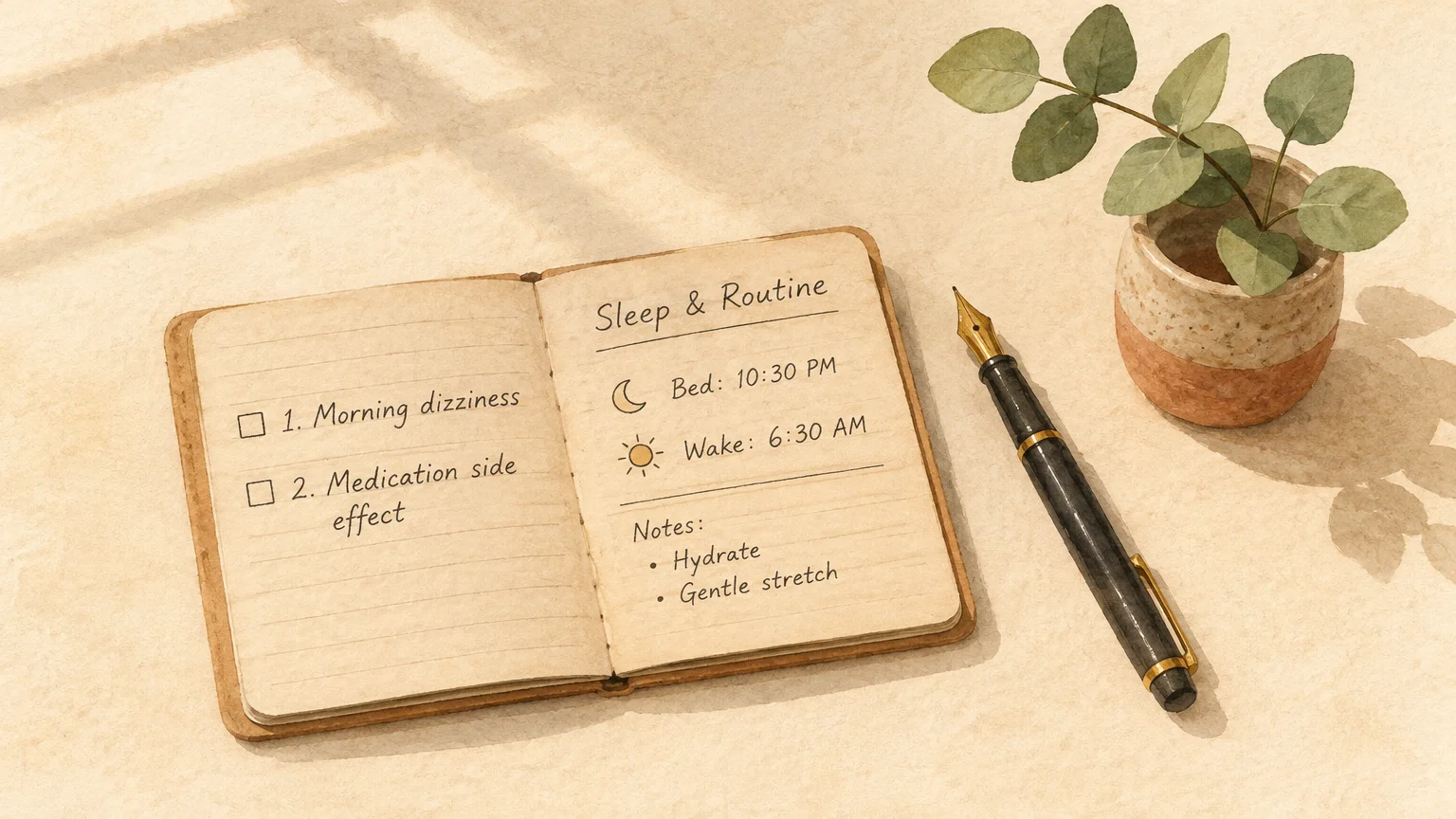
Before you leave home, practice stating your primary goal in two crisp sentences. For example, tell the nurse and doctor that your morning dizziness and a new medication side effect sit at the top of your list today.
If your concerns connect to daily habits—like afternoon fatigue, digestive changes, or blood sugar swings—jot down brief food and sleep notes alongside them. Giving your team concrete context helps them connect your symptoms to your lifestyle right away.
2. Your Supplement and OTC Cabinet Matters as Much as Prescriptions
When nurses ask what medications you take, they do not just mean the prescription bottles waiting in your pharmacy bag. Over-the-counter pain relievers, antacids, allergy pills, sleep aids, vitamins, and herbal teas all count as active chemistry in your body.
Data from the Centers for Disease Control and Prevention (CDC) National Center for Health Statistics shows 69.0 percent of U.S. adults aged 40 to 79 used at least one prescription drug in the past 30 days. And 22.4 percent took five or more.
Add non-prescription products to that routine and the pile grows fast. The Agency for Healthcare Research and Quality (AHRQ) cites data on adults aged 62 to 85 showing 54 percent take one or two over-the-counter products daily, while 29 percent take four or more.
Many patients leave those daily supplements off their intake form because they bought them in a grocery aisle. Yet mixing everyday remedies with prescriptions creates serious risks, making full disclosure essential patient advice.
According to CDC FastStats updated in 2024, adverse drug events trigger more than 1.5 million U.S. emergency department visits and almost 500,000 hospitalizations every year. Adults aged 65 and older account for more than 600,000 of those emergency visits—over twice the rate of younger adults.
The CDC identifies three leading drivers behind those emergency visits: blood thinners at roughly 21 percent, diabetes medications such as insulin at about 14 percent, and antibiotics near 13 percent. Everyday foods and supplements can quietly push these medications too strong or too weak.
As a registered dietitian, I see people take fish oil, turmeric, vitamin K greens, or magnesium powders without realizing how those choices interact with blood thinners or blood pressure pills. Even a high-fiber supplement taken at the wrong hour can block a thyroid pill from absorbing.
Why Nurses Double-Check Every Bottle
AHRQ reports that medication reconciliation errors make up nearly 50 percent of all medication errors. Thankfully, nurses and pharmacists catch between 30 percent and 70 percent of medication-ordering errors when patients give them accurate details.
You can make their safety check effortless with one simple habit from the National Institute on Aging appointment preparation guide. Keep a current written list with drug names, exact doses, how often you take them, allergies, and your preferred pharmacy.
If typing out a list feels overwhelming, gather every prescription bottle, over-the-counter box, vitamin, and herbal supplement into a tote bag and bring it along. Nurses would much rather sort through your actual bottles than guess from memory.
3. Everyday Habits Can Falsely Spike Your Blood Pressure Reading
A single high blood pressure number in the clinic can spark extra medication, repeat appointments, or needless anxiety. Yet nurses see normal readings jump dramatically simply because of what happened in the half hour before the cuff went on.
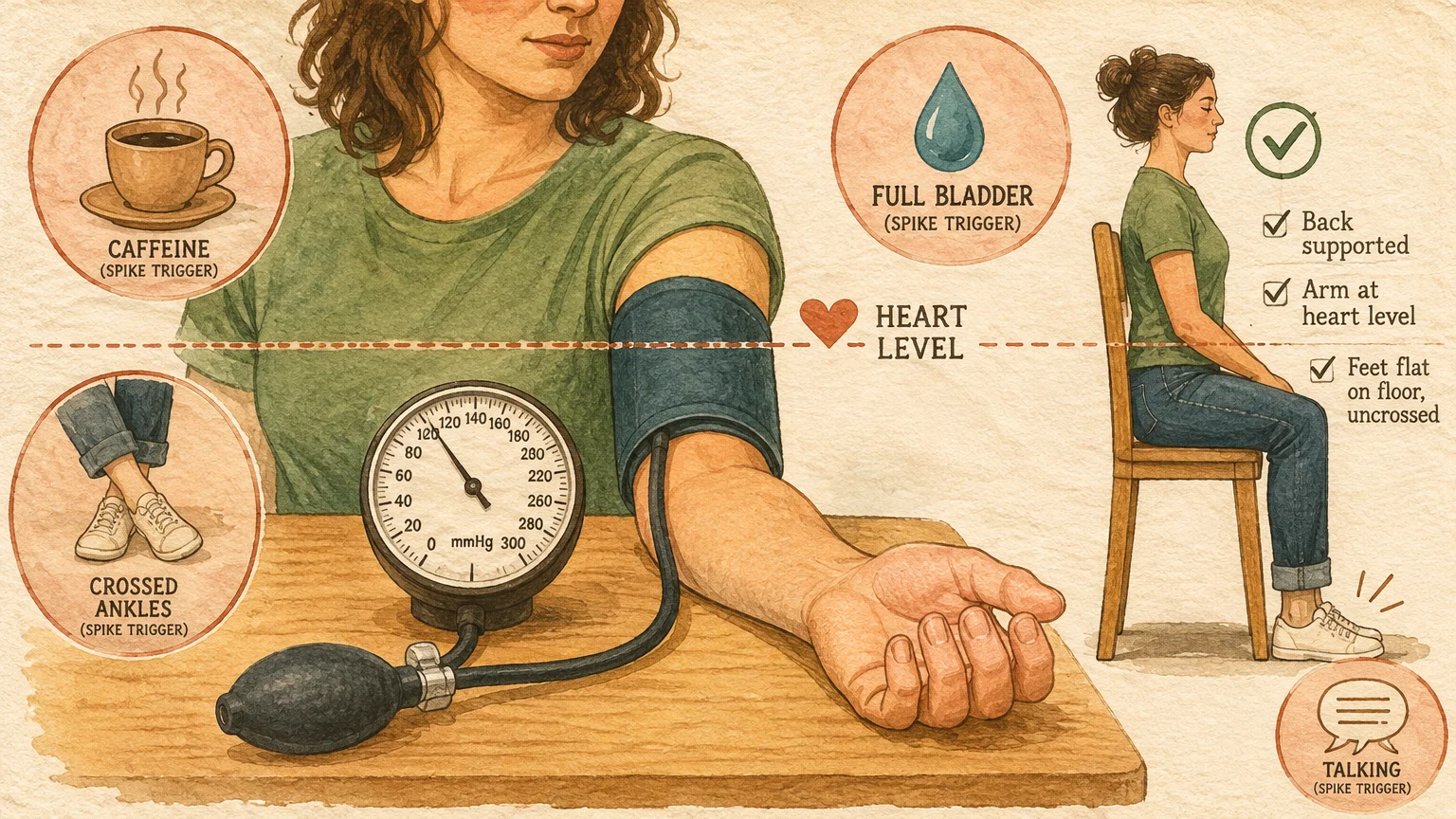
Both the American Heart Association (AHA) and the AMA instruct patients to skip caffeine, nicotine, and exercise for at least 30 minutes before a blood pressure check. The AMA also advises waiting at least 30 minutes after eating a meal.
Right before sitting down for the cuff, empty your bladder. Then rest quietly in a chair for at least 5 minutes without scrolling your phone or chatting.
Proper posture inside the exam room matters just as much as your pre-visit routine. The AHA and the American College of Cardiology (ACC) require you to sit with your back supported, feet flat on the floor, and legs uncrossed.
The cuff belongs on bare skin—never pulled over a thick sweater or rolled-up sleeve that pinches your upper arm. Your arm should rest comfortably on a surface at heart level while you stay silent.
Breaking those simple rules creates huge artificial spikes. According to ACC data reported by the AHA, a full bladder alone can push a reading up by as much as 33 mmHg.
Letting your arm hang unsupported can add up to 20 mmHg, and talking during the inflation adds up to 19 mmHg. Crossing your legs can tack on up to 15 mmHg, while missing back or leg support adds 5 mmHg.
Those extra points easily cross clinical thresholds. Under AHA and ACC guidelines, Stage 1 high blood pressure starts at 130 mmHg systolic or 80 mmHg diastolic, while readings above 180/120 mmHg signal a hypertensive crisis requiring immediate medical attention.
Build a Calm Pre-Vitals Routine
If you have a morning checkup, swap your usual mug of coffee or caffeinated tea for plain water until after the nurse records your vitals. Pack a small thermos or grab a cup right after you leave the clinic.
Dress in a short-sleeve shirt layered under an easy zip-up sweater so the nurse can wrap the cuff smoothly onto bare skin. Give yourself 10 extra parking-lot minutes so you can walk calmly, use the restroom, and catch your breath.
Tracking numbers between visits gives your clinician an even clearer picture of your true baseline. For home monitoring, the AHA recommends choosing a validated automatic upper-arm monitor from the ValidateBP validated blood pressure monitor list instead of wrist or finger cuffs.
Remember that a label saying FDA cleared does not automatically confirm a cuff meets clinical accuracy standards. Checking the validated list saves money and gives your nurse numbers you can both trust.
4. Fasting Blood Work Still Requires Plain Water
Many people hear the instruction to fast before lab work and stop swallowing anything at all after bedtime. Showing up dehydrated turns a quick blood draw into a frustrating hunt for a usable vein.
According to NIH MedlinePlus guidance updated in August 2025, standard fasting tests like blood glucose and traditional lipid panels require 8 to 12 hours without food or caloric drinks. That window prevents recent meals from temporarily skewing sugar and fat levels in your bloodstream.
However, MedlinePlus specifically encourages you to keep drinking plain water throughout your fast. Proper hydration keeps your veins plump, makes the needle stick easier, and helps prevent lightheadedness afterward.
What you put into that water matters strictly. Avoid flavored sparkling waters, lemon wedges, black coffee, tea, juice, soda, and even sugar-free chewing gum, since any flavor or stimulant can alter lab results or trigger digestive responses.
You should also avoid smoking and strenuous morning workouts while fasting. If you are unsure how your morning pills fit in, review the MedlinePlus guide to fasting for a blood test and ask your clinic whether to take medications with plain water before or after the draw.
Protect Your Energy Right After the Draw
Walking out of a lab hungry often leads straight to a pastry case or drive-thru lane. As a wellness coach, I always recommend packing a balanced breakfast box in your bag before you leave home.
A handful of almonds, a hard-boiled egg, plain Greek yogurt, or whole-grain crackers with nut butter travels easily without a fridge for a couple of hours. Eating protein and fiber within minutes of finishing your blood draw steadies your energy and protects your nutrition goals.
You can also hydrate well the evening before your appointment by sipping water steadily with dinner. Scheduling fasting labs as early in the morning as possible keeps your total time without food short and manageable.
5. Nail Polish and Cold Hands Can Throw Off Oxygen Checks
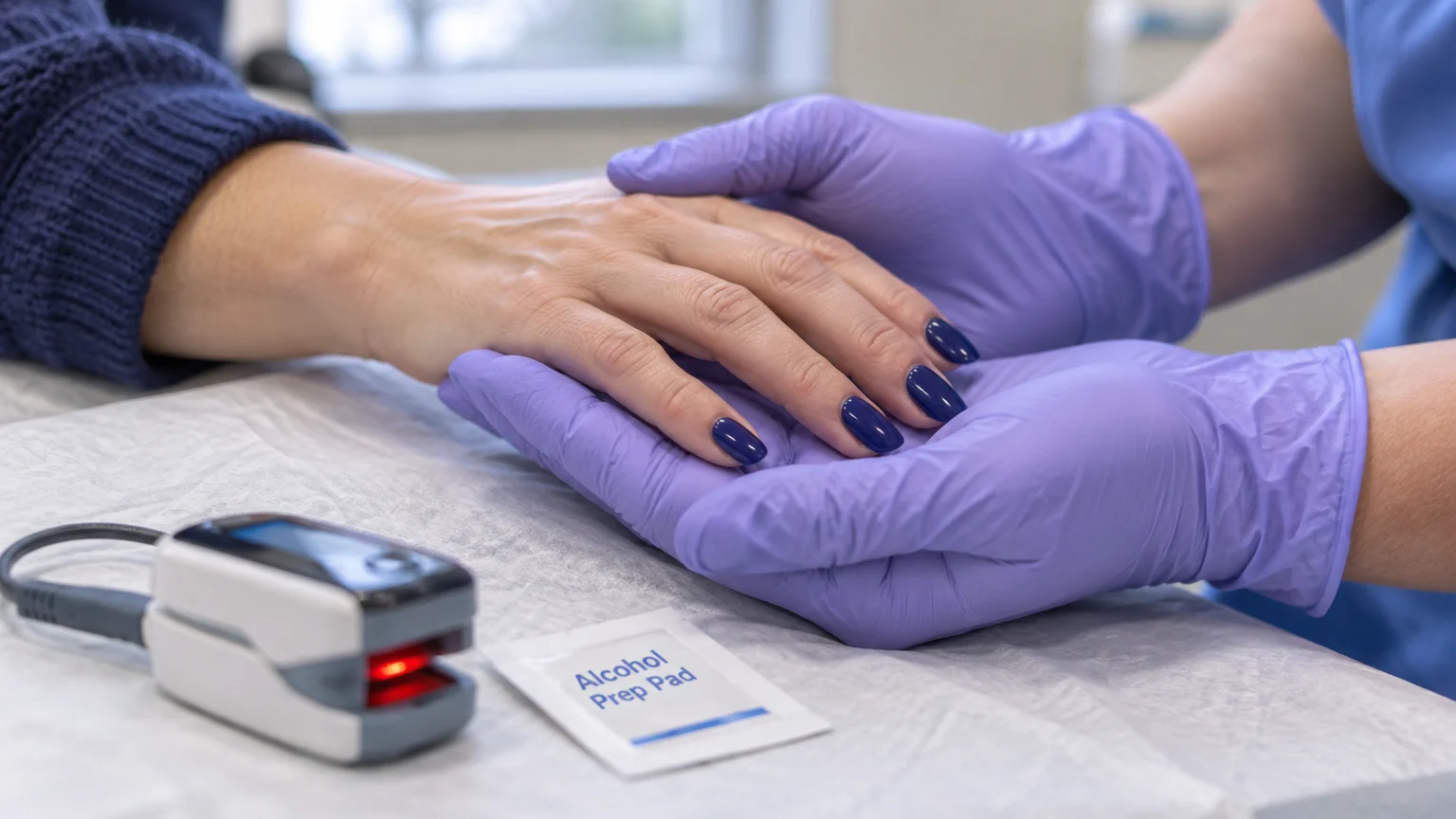
When a nurse clips a small plastic sensor onto your fingertip, that pulse oximeter measures how much oxygen travels in your blood using beams of light. Anything that blocks or scatters that light can make your numbers look artificially low.
In a February 19, 2021 safety communication—and updated January 2025 draft guidance—the U.S. Food and Drug Administration (FDA) warned that several everyday factors reduce pulse oximeter accuracy. Fingernail polish, artificial nails, and tattoo ink on your fingers all interfere with the sensor light.
Cold hands, poor circulation, thick skin, tobacco use, bright overhead lighting, and darker skin pigmentation can also skew readings. In fact, the January 2025 FDA draft guidance proposed requiring manufacturers to test new prescription oximeters on at least 150 participants with diverse skin tones, up from just 10.
When an anxious patient sees a low oxygen number on a clinic screen, it can trigger repeat testing or unnecessary worry. A couple of quick adjustments before you sit down keep that little finger clip working accurately.
Simple Finger Prep Before Clinic Days
The FDA advises patients to remove fingernail polish from the finger being tested and keep hands warm, still, and resting below heart level during the check. If you love getting manicures, consider leaving one ring or middle fingernail bare—or carrying a single acetone wipe in your purse.
During chilly months, slip on gloves for the drive and rub your hands together in the waiting room to wake up local circulation. Warm fingers give sensors a strong pulse signal right away.
If you track oxygen at home during respiratory colds, keep in mind that over-the-counter pulse oximeters are not reviewed by the FDA for accuracy the way prescription devices are. Always pair any home reading with how you actually feel—like shortness of breath, chest discomfort, or dizziness—and share symptoms directly with your nurse.
6. Test Results Often Reach Your Phone Before Your Nurse Sees Them
Hearing your phone chime with a new patient portal alert while you sit in traffic can feel alarming, especially if you spot bold red flags next to lab numbers. Many patients assume their doctor already reviewed the file and chose not to call yet.
In reality, federal rules require electronic results to hit your portal almost immediately. Under the 21st Century Cures Act interoperability and information-blocking rule from the Office of the National Coordinator for Health Information Technology (ONC), providers using electronic health records must give patients free access to clinical notes and test results without delay.
This rule took effect on April 5, 2021, and expanded on October 6, 2022, to cover all electronic protected health information in a designated record set. Disincentive penalties for blocking information were finalized in 2024, and ONC began proactively testing healthcare organizations in 2026.
Only eight narrow exceptions allow clinics to hold back results temporarily—such as preventing physical harm, protecting someone else’s privacy, or honoring state laws requiring a clinician to deliver sensitive news like a cancer diagnosis first. Otherwise, your lab report must be released to you without delay.
That means you often see your cholesterol, thyroid, or imaging report hours or even days before your nurse or physician opens it. Reading raw medical jargon alone at midnight rarely brings clarity.
Practice Mindful Portal Habits
Give yourself a healthy boundary around portal notifications so raw data does not hijack your evening sleep. Wait to open routine lab messages during calm daytime hours when you can read them clearly.
Remember that a single slightly high or low lab flag does not tell your whole health story on its own. Clinicians look at patterns over multiple visits, hydration status, medications, and how you feel day to day.
Write down two or three clear questions in a notebook if something puzzles you, then allow your care team a couple of business days to send their interpretation. Sending one organized portal message beats firing off three anxious notes back to back.

7. An Advocate and Smart Scheduling Protect Your Health and Wallet
Medical visits pack dense decisions, new instructions, and medication tweaks into very few minutes. Trying to absorb everything solo—especially when you feel unwell or stressed—makes forgetting half the plan almost unavoidable.
One of the smartest healthcare tips seniors and busy families can use is bringing a trusted second pair of ears into the exam room. The NIA specifically recommends inviting a family member or close friend to take written notes and help recall follow-up steps.
You do not need complicated paperwork just to have someone sit beside you. Under the Health Insurance Portability and Accountability Act (HIPAA) Privacy Rule from the U.S. Department of Health and Human Services (HHS), doctors and nurses can discuss relevant health details in front of your companion as long as you are present and do not object.
That same rule lets designated family members or friends pick up your prescriptions or medical supplies at the pharmacy. Having an ally in your corner keeps instructions accurate once you get home.
Understand Medicare Wellness Visits vs. Physicals
Smart scheduling also protects your budget from unexpected medical bills. If you rely on Medicare, knowing what your annual visit covers prevents painful surprises in the mail.
According to the Centers for Medicare & Medicaid Services (CMS), Medicare Part B covers a one-time Welcome to Medicare preventive physical exam during your first 12 months of coverage. After that, Medicare covers an Annual Wellness Visit once every 12 months at $0 cost—with no copay or deductible when your provider accepts assignment.
However, CMS stresses that the Annual Wellness Visit is a prevention-planning and health risk assessment conversation, not a head-to-toe hands-on physical exam. Medicare does not cover routine physical exams at all, leaving patients responsible for 100 percent of those charges out of pocket.
Furthermore, bringing up a brand-new knee pain or asking for new diagnostic blood work during a free wellness visit can trigger separate medical billing—typically a 20 percent coinsurance fee. Review the official Medicare Annual Wellness Visit coverage details before booking so you know whether you need a dedicated problem visit instead.
Turn Clinic Prep Into Simple Daily Habits
Preparing well for an appointment does not require turning your life into a medical spreadsheet. The best routines piggyback onto habits you already do every day for nutrition, movement, and mindful living.
Start by keeping a small health note on your refrigerator or inside your phone where you log new symptoms, blood pressure readings, or medication changes in real time. Thirty seconds of jotting after dinner saves an hour of frantic guessing the night before your checkup.
Food patterns offer rich clues for your care team, especially if you manage blood sugar, cholesterol, or digestive comfort. Using a reliable nutrition database like USDA FoodData Central helps you check actual sodium, potassium, and fiber levels in everyday meals without guessing.
Pair your daily movement cue with clinic prep too. When you take a brisk 10-minute walk after lunch, use the last two minutes to check how your joints, breathing, and energy feel so you can report accurate trends to your doctor.
Lean on your support system between visits. Share your prioritized health goals with a spouse, walking buddy, or adult child so someone helps you track refills, ask clear questions, and celebrate small improvements in your numbers.
Frequently Asked Questions About Preparing for Your Visit
How do I prepare for a doctor visit if I only have five minutes before leaving?
Grab a sticky note and write down the single health concern that worries you most today so you say it within the first moments of the visit. Toss every prescription bottle, vitamin, and over-the-counter medicine into a bag, drink a glass of plain water, and wear short sleeves under a light jacket.
How can I avoid surprise clinic or lab bills on a tight budget?
When booking, tell the scheduler whether you want a preventive wellness visit or a problem-focused appointment for a specific symptom. Ask upfront which lab tests are included, verify that your clinician accepts assignment if you have Medicare, and check whether generic prescriptions or mail-order pharmacies lower your monthly costs.
How can families help an aging parent without taking over their appointment?
Ask your parent ahead of time which three questions matter most to them and offer to act as their note-taker during the visit. Sit quietly while they speak directly with the nurse and doctor, then gently prompt them only if they forget a key medication or symptom you both agreed to share.
What should I track between visits to show my habits are working?
Focus on two or three measurable patterns linked directly to your main health goal rather than tracking everything at once. Recording morning home blood pressure three days a week, daily plain water intake, meal timing, and minutes of walking gives your clinician clear proof of steady progress.
Start With One Small Shift This Week
You do not have to overhaul every routine before your next checkup. Picking just one of these nurses tips doctor visit habits—like gathering your supplement bottles into a single bag, hydrating with plain water before labs, or writing down your top priority—immediately transforms your care experience.
Choose one small action today, try it for seven days, and notice how much calmer and more prepared you feel. Taking charge of the moments before your appointment puts you back in the driver’s seat of your lasting health.