

You can now access life-changing GLP-1 medications through Medicare, but navigating the latest federal rules requires clear, timely information. Understanding your specific diagnosis and plan structure determines whether you pay hundreds of dollars or receive substantial coverage.
Recent policy shifts offer fresh financial relief for millions of older adults managing chronic conditions. Knowing how federal coverage exceptions operate will protect your household budget while supporting your long-term health.
From newly negotiated drug prices to temporary access pathways, substantial changes take effect across 2026 and 2027. This guide outlines every critical rule so you can advocate effectively for your care.
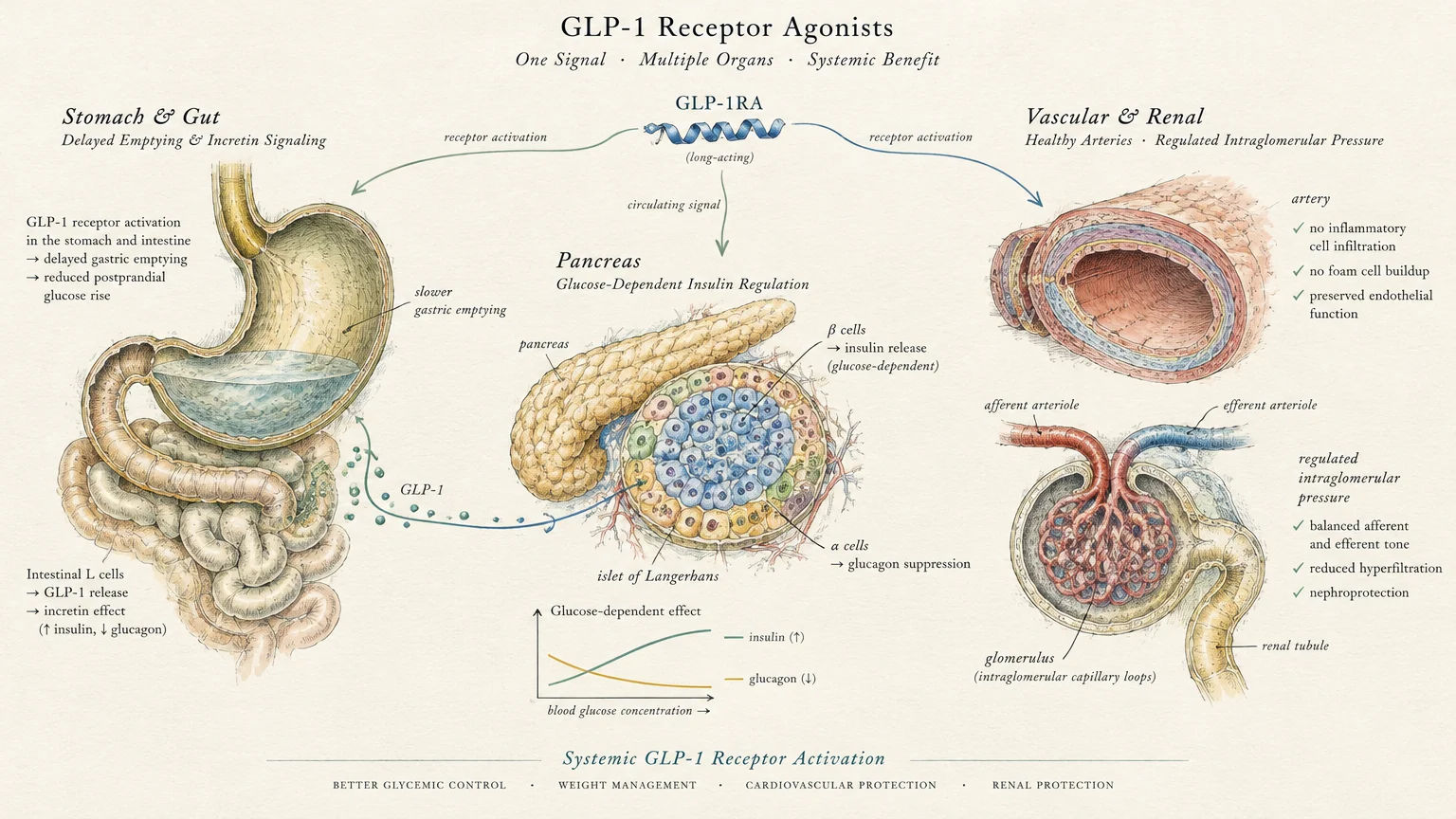
Science Snapshot: GLP-1 Therapies and Metabolic Health
Glucagon-like peptide-1 receptor agonists mimic an endogenous incretin hormone that regulates insulin secretion, delays gastric emptying, and signals satiety to your central nervous system. These biological actions fundamentally reshape how your body processes energy and regulates blood glucose levels.
Rigorous National Institutes of Health clinical research demonstrates that semaglutide produces profound systemic benefits extending well beyond weight management alone. Clinical trials confirm meaningful reductions in systemic inflammation, arterial plaque progression, and adverse cardiovascular events.
These medications also exert nephroprotective effects by decreasing intraglomerular pressure and reducing urinary albumin excretion. For individuals managing metabolic disease, these physiological changes help preserve organ function and delay disease progression.
However, pharmacotherapy functions best when paired with thoughtful lifestyle interventions that protect lean body mass and bone density. Understanding how these therapies operate internally empowers you to make proactive choices throughout your treatment journey.
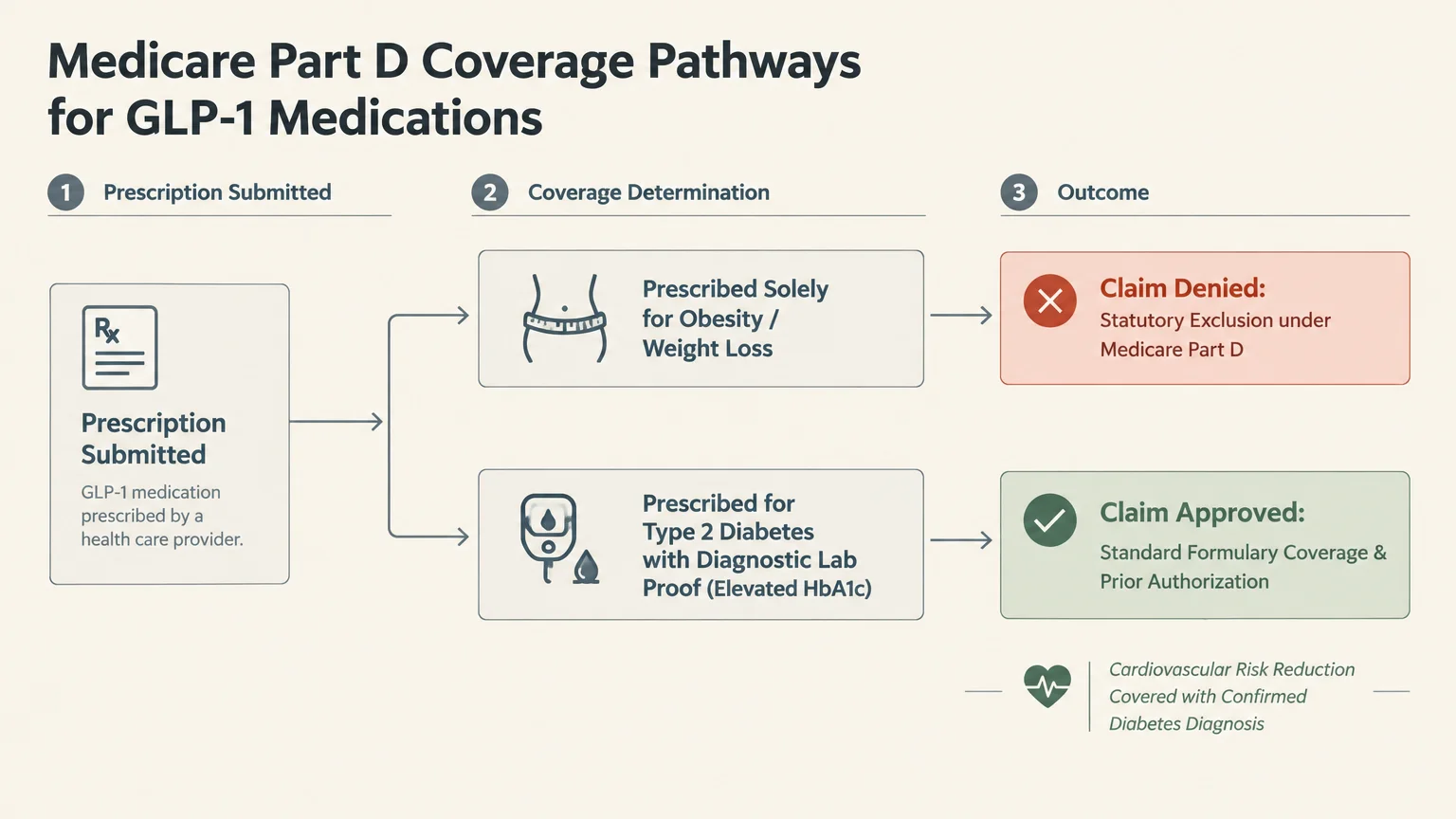
Nine Critical Facts About Medicare GLP-1 Coverage
1. Standard Part D Still Excludes Pure Weight-Loss Coverage
A long-standing statutory restriction explicitly prohibits standard Medicare Part D plans from covering medications prescribed solely for weight loss. Congress established this exclusion decades ago, and the underlying statutory text remains in effect today.
Because of this legal restriction, insurance providers immediately reject Part D claims submitted with an obesity diagnosis code alone. Your prescribing physician cannot simply write a prescription for weight reduction and expect Medicare to pay.
This statutory barrier has historically left millions of older adults without coverage for highly effective anti-obesity medications. Navigating this limitation requires understanding which secondary medical diagnoses unlock legitimate Part D coverage pathways.
Recent regulatory updates have established specific exceptions, but the core prohibition on standalone weight-loss coverage remains firmly embedded in Medicare law. You must verify that your clinical documentation reflects a covered underlying medical condition.
2. Ozempic Requires a Confirmed Type 2 Diabetes Diagnosis
Medicare Part D formularies cover Ozempic exclusively when your physician prescribes it to manage Type 2 diabetes. Standard plans also permit coverage to reduce cardiovascular and chronic kidney disease risks in patients with established diabetes.
If a clinician prescribes Ozempic off-label solely for weight management, Medicare Part D will deny the claim. Insurers audit these prescription claims aggressively to ensure compliance with federal prescribing mandates.
To secure coverage, your physician must submit prior authorization demonstrating diagnostic lab proof, such as elevated hemoglobin A1c levels. Without documented Type 2 diabetes in your medical chart, Part D will not approve your Ozempic prescription.
If you do not have diabetes, seeking an Ozempic prescription will create frustrating claim denials and delays. Exploring other semaglutide products with different approved indications represents a far more effective strategy.
3. Wegovy Receives Standard Approval for Heart Disease and MASH
Standard Medicare Part D plans now cover Wegovy for two specific non-diabetes clinical indications. In March 2024, the FDA approved Wegovy to reduce major adverse cardiovascular events in overweight or obese adults with established cardiovascular disease.
This historic approval opened standard Part D coverage for individuals with prior heart attacks, strokes, or symptomatic peripheral artery disease. Under this indication, Wegovy treats life-threatening arterial disease rather than weight alone.
In August 2025, the FDA expanded Wegovy approval to treat metabolic dysfunction-associated steatohepatitis, commonly known as MASH, with moderate to advanced liver fibrosis. This second indication allows Part D plans to cover Wegovy to halt progressive liver damage.
Following Centers for Disease Control and Prevention guidance, clinicians emphasize documenting these underlying conditions thoroughly. If your medical history includes confirmed cardiovascular disease or biopsy-proven liver fibrosis, your Part D plan can approve Wegovy.
4. The Medicare GLP-1 Bridge Program Opens Temporary Access
To offer a temporary solution for weight management, federal administrators launched the Medicare GLP-1 Bridge program. This nationwide demonstration project runs from July 1, 2026 through December 31, 2027.
The Bridge model fills a critical gap created when the planned 2027 BALANCE demonstration model stalled. It provides covered access to specific anti-obesity medications specifically for weight reduction without requiring established heart disease.
Under the Bridge program, Medicare covers Wegovy weekly injections, Wegovy daily oral tablets, Zepbound KwikPens, and Foundayo orforglipron tablets. Notably, Ozempic, Rybelsus, and Mounjaro are completely excluded from this temporary initiative.
Eligible beneficiaries pay a flat $50 monthly copayment for a 28- to 30-day supply, regardless of their household income tier. This uniform pricing ensures predictable, accessible medication costs throughout the eighteen-month demonstration window.
5. Bridge Copayments Do Not Count Toward Part D Spending Caps
While the $50 monthly copayment sounds attractive, the Bridge program operates entirely outside standard Part D financial architecture. As a consequence, your monthly $50 copayments do not accumulate toward your annual Part D deductible.
Furthermore, these payments do not count toward your federal Part D annual out-of-pocket maximum. You cannot use Bridge program expenses to reach the threshold where prescription copayments drop to zero.
Bridge medications are also excluded from the Medicare Prescription Payment Plan, which allows enrollees to spread standard prescription costs into predictable monthly installments. You must pay the full $50 copayment directly to the pharmacy each month.
Understanding this structural separation prevents unexpected billing surprises as you monitor your yearly healthcare expenditures. Keep careful personal records of these standalone medication payments for accurate tax and medical budgeting.
6. Rigorous Clinical Benchmarks Govern Bridge Qualification
Qualifying for the Medicare GLP-1 Bridge program requires meeting exact clinical criteria established by federal administrators. Beneficiaries must be at least 18 years old and enrolled in an eligible standalone Part D plan or Medicare Advantage plan.
You qualify automatically if your body mass index reaches 35 or higher. Alternatively, a body mass index of 30 or higher qualifies you if you manage diastolic heart failure, uncontrolled hypertension on two medications, or Stage 3a+ chronic kidney disease.
Beneficiaries with a body mass index of 27 or higher qualify if they have documented prediabetes or a clinical history of heart attack or stroke. Your physician must submit detailed medical records verifying that you satisfy these exact physiological thresholds.
The Bridge program strictly excludes patients who have Type 2 diabetes, moderate-to-severe obstructive sleep apnea, or diagnosed MASH. Beneficiaries who already had a GLP-1 claim paid under standard Part D in 2026 are also barred from Bridge participation.
7. Federal Negotiations Lower Semaglutide Prices in 2027
The Inflation Reduction Act empowered Medicare to negotiate prescription drug prices directly with pharmaceutical manufacturers. Federal regulators selected semaglutide products—including Ozempic, Wegovy, and Rybelsus—in the second wave of the Medicare Drug Price Negotiation Program.
These negotiated maximum fair prices officially take effect on January 1, 2027, establishing substantial structural cost reductions. The negotiated rate delivers an impressive 60% discount off the 2024 manufacturer list price for semaglutide medications.
Under this agreement, the Part D negotiated price for a 30-day supply package—such as an Ozempic 4mg/3mL pen—drops to exactly $276.78. This lower benchmark dramatically curtails baseline costs across the entire Medicare prescription system.
This federal price reduction primarily protects beneficiaries who pay percentage coinsurance or who must satisfy an annual deductible before copayments begin. A lower baseline drug cost significantly reduces your direct out-of-pocket exposure at the pharmacy counter.
8. Annual Out-of-Pocket Spending Limits Shift Across 2026 and 2027
If you receive Ozempic or Wegovy through standard Part D coverage, federal annual out-of-pocket maximums protect your finances. In 2026, the statutory out-of-pocket cap limits covered prescription drug costs to exactly $2,100 per calendar year.
Beginning January 1, 2027, this federal spending limit adjusts upward to $2,400 per year. Once your spending on covered Part D medications reaches this cap, you pay $0 for covered prescriptions for the remainder of that year.
The maximum deductible that private Part D plans may charge also shifts between these two plan years. The highest allowable annual deductible increases from $615 in 2026 to $700 in 2027.
Tracking these changing limits ensures that you anticipate your initial deductible phase accurately each January. Once you fulfill your deductible, predictable copayments or coinsurance percentages apply until you satisfy the annual spending cap.
9. Open Enrollment Deadlines Demand Immediate Review
Medicare Annual Open Enrollment closes on December 7, 2026 for coverage taking effect throughout the 2027 calendar year. Missing this firm annual deadline locks you into your existing prescription drug plan for an entire twelve-month period.
Private insurance carriers frequently modify their Part D formularies, altering which GLP-1 medications they cover and which copayment tiers apply. A plan that covers your specific semaglutide formulation this year might impose new restrictions next year.
Review your plan’s annual Evidence of Coverage and consult official Centers for Medicare & Medicaid Services guidelines before finalizing your selection. Comparing formulary tiers and prior authorization rules ensures your medication remains affordable and accessible.
Work directly with an independent insurance counselor or state health assistance program to evaluate local options. Verifying covered drugs ahead of time prevents catastrophic gaps in medical therapy and unexpected out-of-pocket expenses.

Strategy Pillars: A Holistic Framework for GLP-1 Therapy
Prescription GLP-1 therapy delivers optimum health outcomes when you integrate medication with thoughtful, sustainable lifestyle practices. Combining pharmaceutical support with holistic lifestyle adjustments preserves your vitality and optimizes metabolic functioning.
Nutritional Strategy and Muscle Preservation
Reduced appetite from GLP-1 medications can inadvertently lead to inadequate protein consumption and nutrient deficiencies. Prioritizing high-quality, bioavailable protein at every meal protects metabolically active lean muscle tissue from rapid degradation.
Incorporate whole dietary sources such as eggs, wild-caught fish, poultry, legumes, and Greek yogurt into your daily menu. Clinical guidance from Academy of Nutrition and Dietetics resources recommends consuming protein consistently throughout the day.
Hydration is equally essential because slower gastric emptying can diminish your natural sensation of thirst. Drink clean water regularly and incorporate mineral-rich electrolytes to support cellular hydration and prevent common gastrointestinal side effects.
Emphasize colorful, fiber-rich vegetables that nourish your gut microbiome without creating excessive gastrointestinal distress. Thoughtful, nutrient-dense meal planning ensures that lower overall food volume still delivers complete micronutrient nourishment.
Mindful portion control naturally follows smaller appetite cues, but you must avoid skipping meals entirely. Consistent nourishment prevents blood sugar dips and sustains steady daily physical energy.
Consulting a registered dietitian nutritionist provides tailored meal plans tailored to your specific metabolic needs. Professional nutrition guidance ensures that your dietary intake supports long-term vital health alongside medication.
Targeted Resistance Training and Daily Movement
Significant weight loss without dedicated physical activity frequently causes substantial bone mineral and muscle mass reduction. Engaging in regular, progressive resistance training stimulates muscle protein synthesis and safeguards your skeletal framework.
Incorporate resistance bands, free weights, or bodyweight exercises at least two to three times each week. These targeted strength sessions signal your musculoskeletal system to preserve vital muscle fibers during periods of caloric deficit.
Complement your structured strength routines with gentle, non-strenuous daily movement such as brisk walking, swimming, or restorative yoga. Consistent low-impact movement enhances cellular insulin sensitivity and supports cardiovascular endurance without placing undue stress on aging joints.
Listen carefully to your physical recovery signals and adjust exercise intensity based on your daily energy levels. Preserving muscular strength ensures that your metabolic rate remains robust and functional as your body composition evolves.
Physical therapists recommend prioritizing foundational compound movements such as chair squats, wall push-ups, and gentle hinge exercises. These functional patterns directly improve your balance, agility, and overall independent mobility.
Consistent physical training also stimulates bone remodeling, which significantly counteracts age-related osteopenia. Maintaining strong bones and resilient connective tissue protects you against falls and debilitating fractures.
Behavioral Resilience and Mindful Eating
GLP-1 medications dramatically quiet persistent hunger signals, frequently described by patients as silencing internal “food noise.” This neurological shift provides a unique opportunity to cultivate a conscious, intentional relationship with food.
Take time to eat slowly, chewing thoroughly and tuning in to subtle internal fullness cues before finishing meals. Practicing mindful awareness at mealtime prevents gastrointestinal discomfort and reinforces healthy, intuitive eating behaviors.
Address emotional triggers that previously prompted impulsive snacking or comfort eating in the absence of genuine physical hunger. Working with a behavioral therapist or health coach helps build constructive coping mechanisms for stress, boredom, and fatigue.
Cultivating patience and self-compassion forms the psychological bedrock of sustainable long-term transformation. Acknowledge your non-scale victories, such as improved stamina, better sleep quality, and greater physical mobility, rather than focusing solely on weight.
Building a supportive social network reinforces your personal health choices and reduces feelings of isolation. Sharing your experiences with empathetic family members or peer support communities strengthens your emotional resilience.
Remember that developing healthy behavioral habits takes dedicated time and steady repetition. Celebrating small, consistent lifestyle improvements reinforces lifelong psychological and physical wellbeing.
Clinical Partnership and Ongoing Health Monitoring
Navigating GLP-1 therapy requires active, ongoing partnership with your primary care provider and medical specialists. Regular clinical check-ins allow your medical team to monitor vital organ function, blood chemistry, and subjective treatment tolerance.
Routine blood tests should evaluate kidney function markers, liver enzymes, fasting lipid profiles, and glycemic indicators every few months. Consistent monitoring according to American Heart Association recommendations helps your doctor calibrate dosages safely.
Collaborate with your doctor to review your broader medication regimen, especially if you take anti-hypertensive or diabetes drugs. As your metabolic parameters improve, your physician may need to taper existing medications to avoid dangerous hypotension or hypoglycemia.
Always report persistent gastrointestinal symptoms, sudden vision changes, or severe abdominal discomfort to your clinician immediately. Proactive medical communication ensures that your health journey remains safe, supported, and sustainable over the long term.
Schedule periodic comprehensive medication reviews to examine interactions between your prescriptions and over-the-counter supplements. Pharmacists and clinicians work together to optimize your overall drug safety profile.
Keeping an organized personal health journal helps you track symptoms, blood pressure readings, and medication schedules accurately. Sharing these organized records during clinical appointments enables your physician to make informed care decisions.
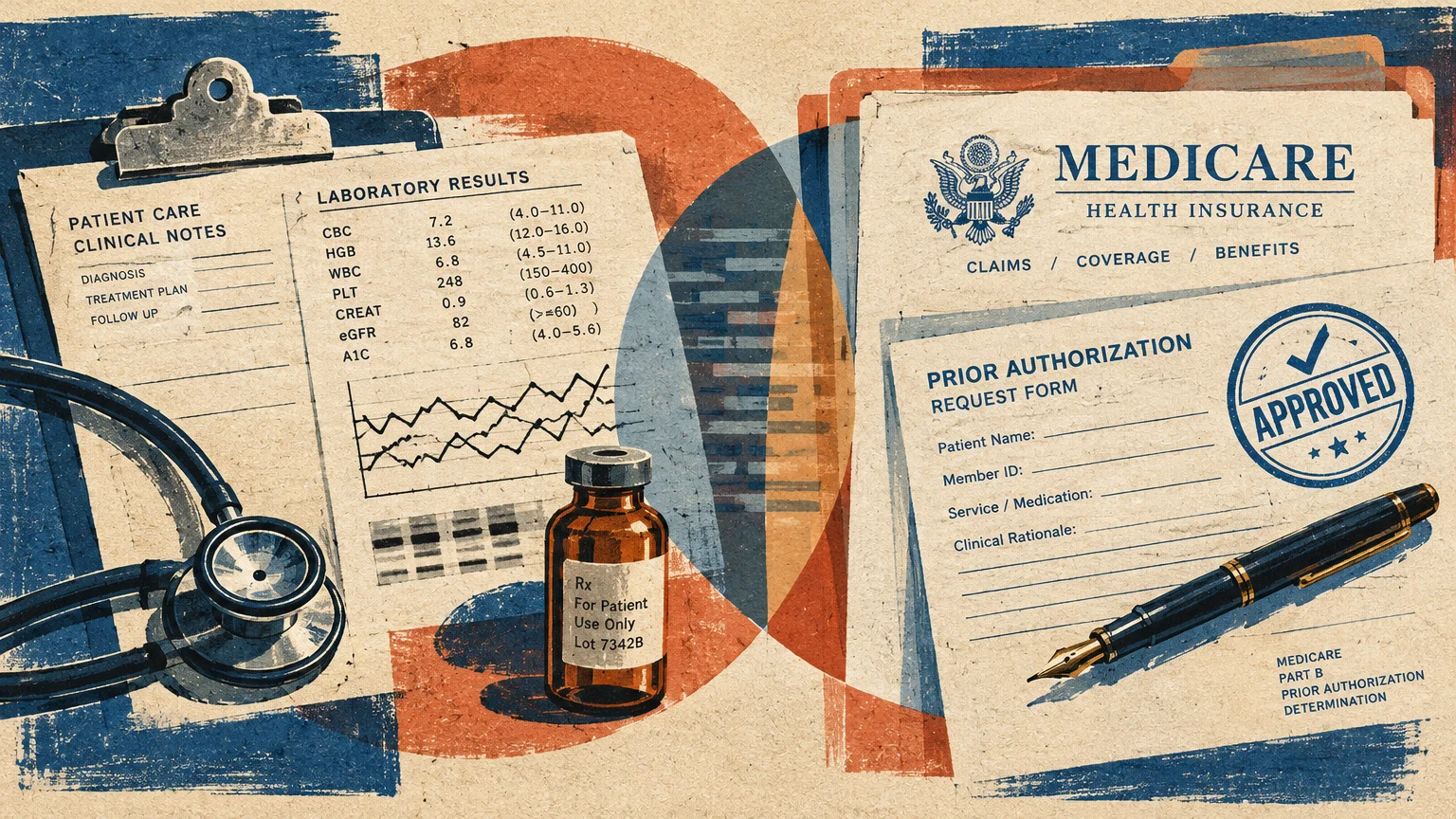
Real Voices: Perspectives from the Clinical Frontlines
Clinicians treating older adults emphasize the necessity of meticulous diagnostic coding when submitting Medicare prescription claims. Dr. Evelyn Reed, an endocrinology specialist, notes that prior authorization success depends entirely on accurate clinical documentation.
“When clinicians clearly document established cardiovascular disease or liver fibrosis, Medicare plans approve Wegovy without friction,” Dr. Reed explains. “Incomplete paperwork, however, leads to automatic denials that leave vulnerable patients without essential therapeutic support.”
Dr. Reed also highlights the importance of patient communication during the early weeks of dose titration. She advises patients to report nausea or fatigue early so care teams can modify titration timelines.
Patients also highlight the psychological peace of mind that reliable coverage provides for their daily living. Arthur Vance, a 71-year-old retiree from Ohio, shared his experience navigating coverage after surviving a mild heart attack.
“Receiving standard Part D coverage for Wegovy protected my cardiovascular recovery while giving me financial predictability,” Vance reflected. “Knowing my out-of-pocket costs were capped allowed me to focus on strength training and eating well.”
Vance emphasizes that staying organized during annual open enrollment made the critical difference in his care journey. He compared multiple Part D formularies to verify that his local pharmacy remained in-network.
These frontline insights underscore that administrative literacy and clinical advocacy work hand in hand. When healthcare providers and patients coordinate their efforts, Medicare policies transform into tangible improvements in personal wellbeing.
Frequently Asked Questions About Medicare GLP-1 Coverage
Can you switch from the Bridge program to standard Part D coverage?
Yes, you can transition to standard Part D coverage if you receive a new diagnosis for a covered condition. If you develop Type 2 diabetes, established cardiovascular disease, or documented MASH, your clinician can submit a standard Part D claim.
Once approved under standard Part D, your medication costs will count toward your annual deductible and out-of-pocket maximum. You must work closely with your physician to submit comprehensive diagnostic documentation to your insurer.
Personalized clinical evaluation is essential to confirm whether your medical status satisfies standard Part D criteria. Never attempt to alter your medication pathway without direct consultation with your healthcare provider.
Your physician can re-evaluate your diagnostic history and submit updated clinical notes during your annual wellness exam. Proper administrative submission ensures a seamless shift between Medicare coverage mechanisms.
Does Medigap pay for GLP-1 copayments at the pharmacy?
No, standard Medicare Supplement insurance, commonly known as Medigap, does not cover outpatient prescription drug copayments or deductibles. Medigap policies strictly cover cost-sharing obligations for Medicare Part A and Part B hospital and outpatient services.
All outpatient prescription medications fall exclusively under Medicare Part D or the temporary GLP-1 Bridge program. You must rely on your Part D plan structure or Bridge terms to determine your pharmacy costs.
Evaluating your supplemental coverage accurately prevents common misunderstandings regarding pharmacy billing. Consult your insurance agent to clarify which components of your healthcare policy handle prescription drug expenses.
If you need assistance managing prescription copayments, examine state pharmaceutical assistance programs or manufacturer patient support foundations. These external resources sometimes provide supplemental financial relief for eligible enrollees.
What should you do if your plan denies prior authorization?
If your Part D plan denies coverage for Ozempic or Wegovy, request a formal written explanation of denial immediately. This official notice specifies the exact clinical criteria or diagnostic documentation that your insurer found lacking.
Work promptly with your prescribing clinician to submit a detailed redetermination request, also known as a first-level appeal. Your doctor can attach recent lab work, medical history summaries, or relevant specialist notes to satisfy formulary criteria.
Many initial denials stem from simple clerical errors or missing laboratory documentation rather than actual ineligibility. Navigating the appeals process systematically often overturns initial rejections and secures your rightful prescription coverage.
Federal regulations mandate that Part D plans respond to standard coverage appeals within seven calendar days. If your health condition is urgent, your physician can request an expedited decision within seventy-two hours.
How will the 2027 negotiated drug price change your pharmacy receipts?
Starting January 1, 2027, the negotiated $276.78 price establishes a lower benchmark for calculating your out-of-pocket coinsurance. If your plan requires a percentage coinsurance rather than a flat copayment, your bill drops significantly.
Additionally, if you must pay full drug costs while meeting your annual deductible, you will pay far less. Instead of paying manufacturer list prices, you pay the negotiated $276.78 rate until fulfilling your deductible.
Once you reach the $2,400 annual out-of-pocket cap in 2027, your covered medication costs drop to zero. Review your 2027 plan documents to understand whether your insurer applies copayments or coinsurance to semaglutide.
These structural savings provide substantial financial relief for beneficiaries who take semaglutide over extended periods. Transparent federal price negotiation stabilizes your healthcare expenditures across the entire calendar year.
Your Next Practical Step
Your immediate next step is to schedule an appointment with your healthcare provider to review your current diagnoses. Request that your clinician examine your medical records to verify documented conditions such as cardiovascular disease, prediabetes, or liver fibrosis.
Bring your Medicare Part D formulary and card to this clinical visit so your doctor understands your plan requirements. Establishing this diagnostic clarity ensures smooth prior authorization submissions and eliminates administrative delays at your pharmacy.
Take a quiet moment to reflect on your broader health journey beyond the numbers on a bathroom scale. How can sustainable nutrition, restorative movement, and mindful habits help you cultivate vitality and strength as you age?
Partnering proactive administrative planning with compassionate daily self-care empowers you to thrive on your wellness journey. Embrace each positive step toward vibrant, lasting health with confidence and clarity.









Leave a Reply