
Choosing the right cooking oil transforms your everyday meals and protects your long-term cardiovascular health. Pairing the proper culinary fat with your heat level prevents toxic breakdown while maximizing natural flavor.
Navigating supermarket aisles feels daunting when you confront dozens of competing labels and claims. Understanding smoke points and fatty acid profiles eliminates confusion, helping you cook with total confidence.
This evidence-based guide ranks ten essential cooking oils by practical use to elevate your culinary technique, protect delicate nutrients, and support your daily wellness.
The Science of Smoke Points and Lipid Stability
Every cooking oil possesses a distinct chemical structure that dictates how it responds to thermal energy. Exposing liquid lipids to high heat destabilizes their chemical bonds, causing them to degrade.
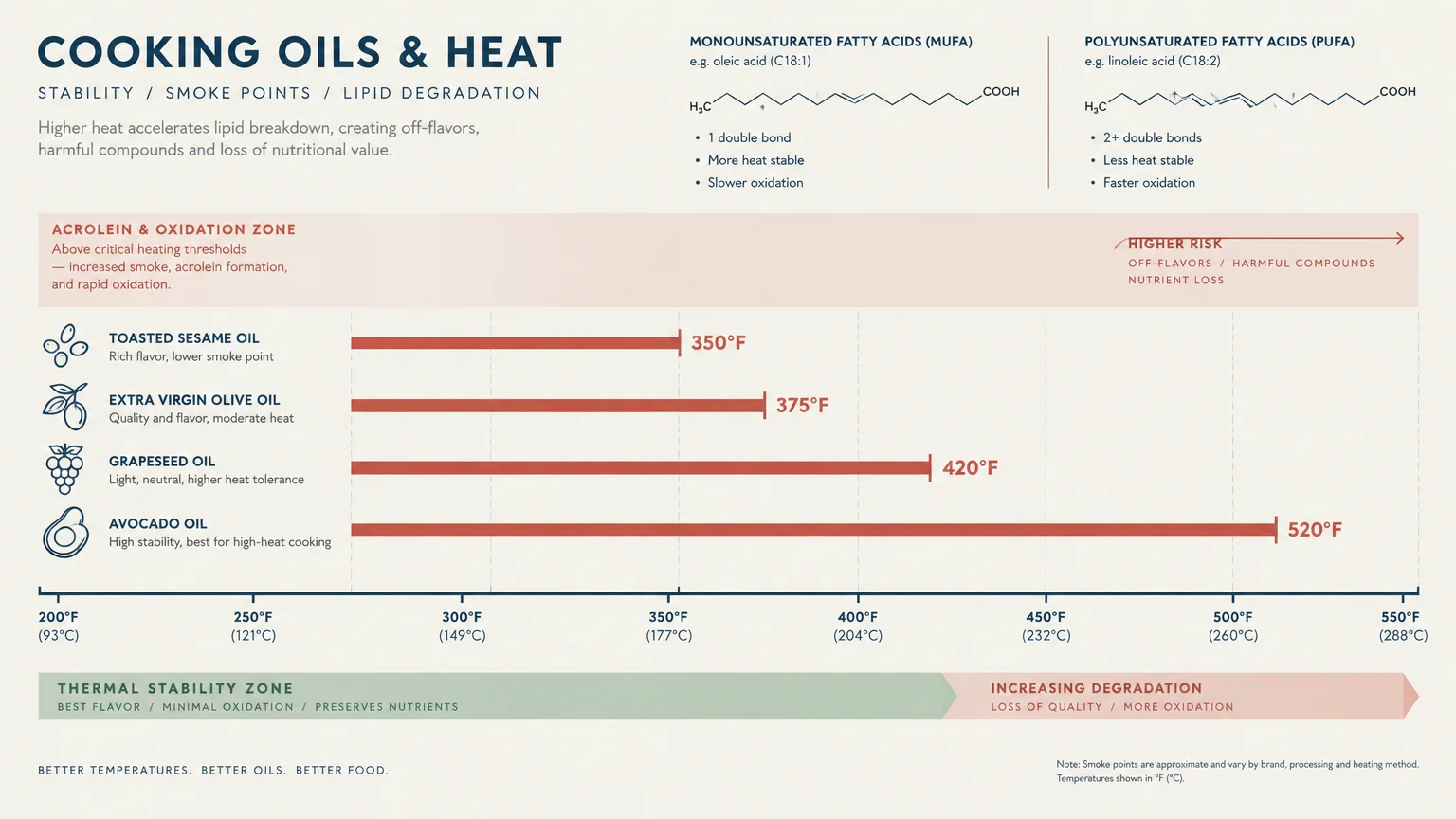
An oil’s smoke point marks the thermal threshold where volatile compounds evaporate and produce bluish smoke. Surpassing this point releases acrolein, an irritating chemical that imparts an acrid, burnt flavor to food.
Overheating also accelerates lipid oxidation, generating free radicals that provoke cellular stress. Saturated and monounsaturated fatty acids resist this thermal degradation far better than polyunsaturated fats.
The Harvard T.H. Chan School of Public Health emphasizes that fat quality matters more than total fat intake. Selecting heat-stable options safeguards your vascular endothelium while cooking.
10 Cooking Oils Ranked by Practical Use
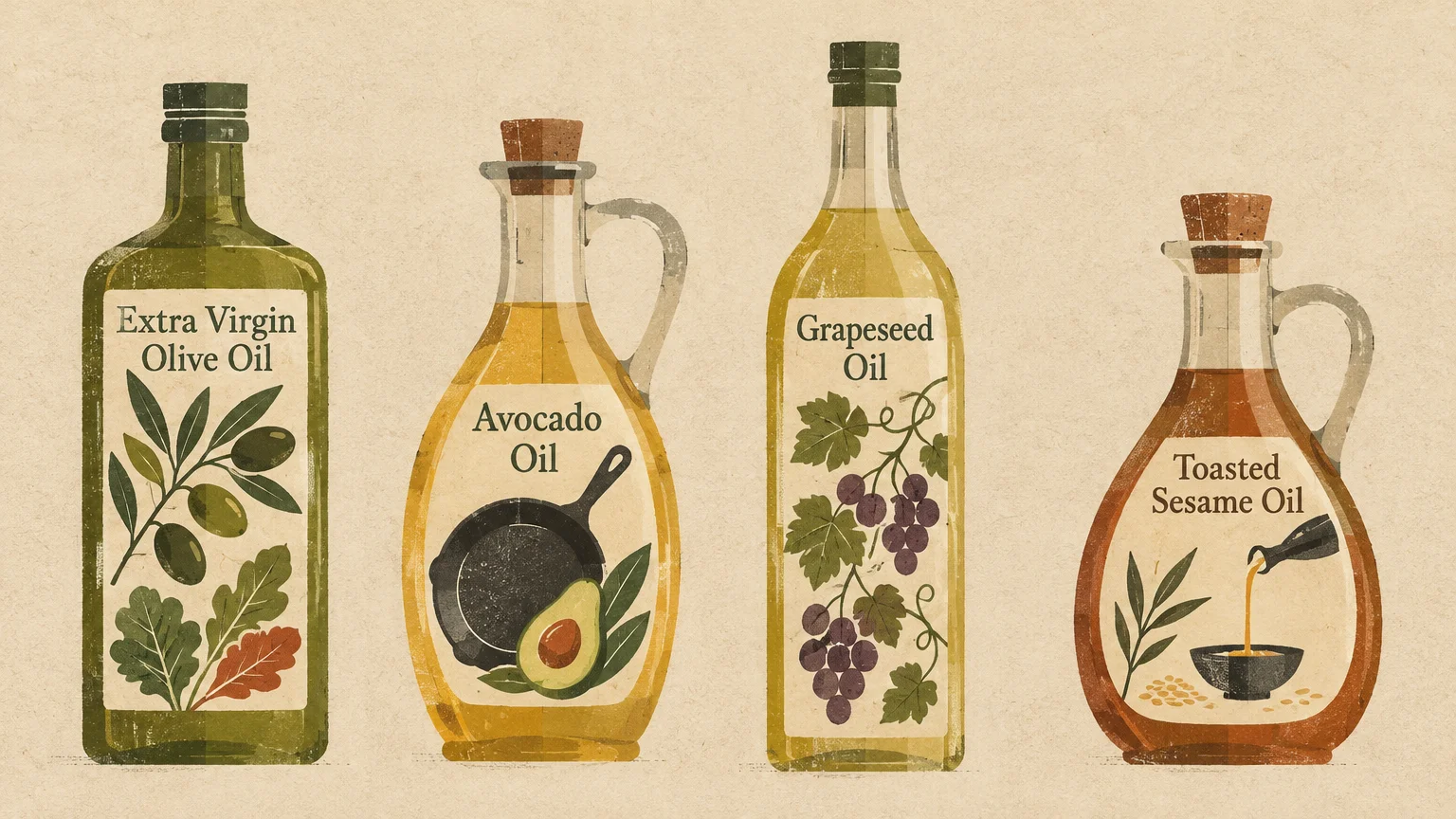
1. Extra Virgin Olive Oil: Best for Dressings and Sautéing
Extra virgin olive oil stands as the premier fat for Mediterranean dishes, daily sautéing, and raw dressings. Cold-pressing mechanical extraction preserves its dense reservoir of polyphenols, squalene, and vitamin E.
Quality unrefined olive oil remains thermally resilient up to 375 degrees Fahrenheit. Its dominant oleic acid shields it from rapid oxidation, making it wonderful for vinaigrettes, roasted vegetables, and gentle stove cooking.
2. Avocado Oil: Best for High-Heat Searing
Avocado oil serves as an unmatched choice for high-heat techniques like pan-searing, grilling, and roasting. Naturally refined avocado oil boasts an exceptional smoke point reaching up to 520 degrees Fahrenheit.
Like olive oil, it supplies heart-supportive monounsaturated oleic acid alongside lutein to nurture vision. It delivers these protective benefits with a mild flavor that never overwhelms delicate ingredients.
When weighing olive oil vs avocado oil, avocado oil wins for blistering skillet temperatures. Reach for it whenever your recipes demand intense, even searing.
3. Grapeseed Oil: Best for Neutral Cooking
Grapeseed oil provides a light, silky texture and a neutral profile for home cooking. Extracted from winemaking grape seeds, it withstands temperatures up to 420 degrees Fahrenheit.
Because it lacks an assertive taste, it never overpowers fresh herb pestos, garlic marinades, or homemade emulsions. It allows delicate ingredients like flaky fish to remain the stars of your plate.
However, grapeseed oil contains elevated levels of omega-6 fatty acids. Balance your intake by pairing it with foods rich in omega-3 fats throughout your week.
4. Toasted Sesame Oil: Best for Finishing Dishes
Toasted sesame oil serves as an aromatic seasoning rather than a frying medium. Its smoke point sits around 350 degrees Fahrenheit, but direct heat rapidly degrades its signature nutty perfume.
This culinary staple contains sesamol and sesaminol, two potent antioxidants that support cellular defense. Research from the National Institutes of Health confirms these lignans provide notable cardiovascular and anti-inflammatory support.
Drizzle a measured splash over stir-fries or warm noodle bowls right before serving. This smart finishing technique preserves its delicate aromatics without scorching volatile flavor compounds.
5. Canola Oil: Best Budget Option for High Heat
Canola oil remains an accessible, cost-effective staple for cooks seeking a versatile, neutral frying option. With a smoke point around 400 degrees Fahrenheit, it handles baking and pan-frying effortlessly.
Derived from modified rapeseed plants, canola oil provides low saturated fat alongside monounsaturated fats. It also provides alpha-linolenic acid, an essential plant omega-3 fat supporting systemic vitality.
Select expeller-pressed varieties when possible to avoid chemical extraction solvents. It serves as an economical workhorse for large-batch culinary tasks without stretching your grocery budget.
6. Virgin Coconut Oil: Best for Baking and Curries
Virgin coconut oil lends a luscious aroma to curries, roasted squash, and baked goods. It maintains thermal stability up to 350 degrees Fahrenheit, making it well-suited for moderate skillet cooking.
This tropical fat contains primarily saturated fatty acids, specifically medium-chain triglycerides like lauric acid. Your body rapidly processes medium-chain fats for energy rather than storing them directly in tissue.
Because saturated fats can increase LDL cholesterol in sensitive individuals, enjoy coconut oil with mindfulness. Use it intentionally for regional flavor profiles rather than as your default fat.
7. Walnut Oil: Best Cold Finishing Oil
Walnut oil delivers a delicate nuttiness that elevates grain bowls, bitter greens, and artisanal cheeses. With a low smoke point of 320 degrees Fahrenheit, it is entirely unsuited for hot cookware.
Subjecting walnut oil to heat turns its nuanced flavor bitter and degrades delicate phytonutrients. Furthermore, thermal stress destroys its abundant alpha-linolenic acid content, nullifying its nutritional value.
Store this fragile oil in your refrigerator to protect it against oxidative spoilage. Whisk it with aged vinegar for an exquisite salad dressing that nourishes your cardiovascular system.
8. Peanut Oil: Best for Wok Cooking and Frying
Peanut oil represents a traditional favorite for tempura, deep frying, and high-heat Asian wok cooking. It manages intense heat with ease, remaining stable at temperatures up to 450 degrees Fahrenheit.
Its harmonious ratio of monounsaturated and polyunsaturated fats gives it superior endurance during prolonged cooking. It resists foaming and sticky polymer formation, keeping your food crisp rather than greasy.
The American Heart Association emphasizes that replacing saturated fats with liquid plant oils supports healthier lipid panels. Utilize peanut oil whenever your meals require blazing wok heat.
9. Ghee: Best High-Heat Animal Fat
Ghee provides a deep, toasted flavor accompanied by an elevated smoke point of 485 degrees Fahrenheit. Simmering butter to evaporate moisture and strain milk solids yields a pure, heat-resistant cooking fat.
Free from lactose and milk proteins, ghee accommodates individuals with dairy sensitivities without sacrificing decadence. It naturally contains fat-soluble vitamins A and K2, along with butyrate to support gut integrity.
Spoon ghee into hot skillets when searing meats or blooming ground spices. A modest spoonful produces immense culinary depth without scorching your cookware.
10. Flaxseed Oil: Best Unheated Omega-3 Source
Flaxseed oil sits in our final ranking because you must never heat it on a stove. Bearing a meager smoke point of 225 degrees Fahrenheit, thermal exposure instantly oxidizes its delicate bonds.
When kept strictly cold, flaxseed oil functions as a superb plant-based source of alpha-linolenic acid. Consuming raw flax oil nourishes cell membrane fluidity and dampens vascular inflammatory pathways.
Stir a modest spoonful into chilled smoothies, yogurt, or dips just before serving. Always store the bottle tightly sealed in your refrigerator to prevent light degradation.

Strategic Pillars for Healthier Kitchen Habits
Nutrition and Balanced Lipid Profiles
Focusing on overall fat quality rather than rigid fat restriction builds long-term metabolic health. Emphasize monounsaturated fats from olive and avocado oils as your culinary baseline to protect arterial function.
Pairing colorful vegetables with healthy culinary fats dramatically increases your absorption of fat-soluble vitamins A, D, E, and K. A light drizzle unlocks powerful carotenoids from crunchy carrots and leafy greens.
Swapping saturated fats for liquid unsaturated plant oils supports healthy insulin sensitivity. These simple kitchen substitutions accumulate into profound cardiovascular protection over decades of home cooking.
Smart Storage and Oxidation Prevention
How you store culinary oils determines whether they nourish your body or deliver oxidized byproducts. Exposure to light, warmth, and atmospheric oxygen degrades double bonds within fats, causing rancidity.
Select oils packaged in dark glass or opaque tins to filter out destructive ultraviolet rays. Keep everyday bottles inside a cool, enclosed pantry cabinet well away from your warm stove.
Transfer delicate polyunsaturated options like walnut and flaxseed oils directly into the refrigerator after opening. If any oil smells reminiscent of crayons or stale varnish, discard it immediately.
Budget, Accessibility, and Everyday Mindset
Cultivating a health-focused kitchen never requires stocking an expensive pantry of specialty items. You can master every culinary scenario and protect your health using just two foundational bottles.
Keep one cost-effective, high-heat oil like avocado or expeller-pressed canola oil for roasting and searing. Pair it with a cold-pressed extra virgin olive oil for sautéing, vinaigrettes, and cold finishing.
The World Health Organization highlights the necessity of replacing unhealthy solid fats with unsaturated plant oils globally. Streamlining your pantry reduces grocery costs while keeping nutritious cooking accessible.

Perspectives from Culinary and Clinical Experts
Elena Rostova, MS, RDN, observes that home cooks frequently avoid healthy fats due to outdated dietary dogma. She reminds clients that dietary lipids serve as indispensable structural cellular components.
Rostova notes that daily consumption of polyphenol-rich olive oil reduces markers of chronic inflammation. She encourages clients to view unrefined culinary fats as preventative functional foods that enhance meals.
Preventative cardiologists equally stress matching fat composition to culinary temperatures. Preventing thermal lipid breakdown preserves the vascular endothelium and protects long-term cardiovascular health.
Combining mindful temperature control with nutrient-dense fats turns ordinary home cooking into an effective, sustainable wellness practice.
Frequently Asked Questions
Olive oil vs avocado oil: which is healthier overall?
Both oils provide superb nutritional profiles, featuring abundant heart-protective monounsaturated oleic acid. Extra virgin olive oil offers higher levels of polyphenols, making it unmatched for unheated dressings and moderate sautéing.
Avocado oil withstands substantially higher cooking temperatures, making it the preferred option for searing and roasting. Keeping both bottles in your kitchen gives you optimal culinary versatility across heat ranges.
Does heating extra virgin olive oil destroy all of its nutrients?
Cooking with extra virgin olive oil degrades a modest fraction of its most fragile phenolic compounds. However, its monounsaturated structure and natural antioxidants defend against lipid oxidation during normal pan-frying.
You can safely use unrefined olive oil for pan cooking, stewing, and baking. Keep your burner within moderate heat ranges to preserve its nuanced taste notes.
What happens inside your body when you eat burnt cooking oil?
Surpassing an oil’s smoke point dismantles triglycerides into irritating free fatty acids, acrolein, and reactive aldehydes. Consuming scorched oils exposes your digestive tract and circulatory system to oxidative stress.
While occasional ingestion causes minimal harm, repeated exposure can strain your endogenous antioxidant defenses. If your skillet smokes profusely, wipe it clean and begin again with fresh oil.
Should individuals with heart conditions avoid coconut oil?
Coconut oil contains substantial saturated lauric acid, which can raise circulating LDL cholesterol in susceptible individuals. Individuals managing cardiovascular conditions should seek personalized guidance from a physician or registered dietitian before consuming it regularly.
Major cardiovascular guidelines advise prioritizing liquid monounsaturated plant fats over solid tropical fats for daily meals. Enjoy coconut oil as an occasional culinary accent rather than your primary cooking medium.
Practical Kitchen Steps for Long-Term Vitality
Upgrading your kitchen wellness begins with practical mindfulness rather than an expensive pantry overhaul. Take five minutes today to audit your current oils, noting their smoke points and storage locations.
Move any clear bottles away from sunny windowsills or warm stovetops to shield fragile fats from oxidation. Select one reliable high-heat fat and one unrefined finishing oil to establish your everyday culinary foundation.
How will matching your cooking oils to their ideal heat levels help you create more nourishing, flavorful meals this week?







Leave a Reply