

Navigating your healthcare in 2027 requires clear foresight, especially when unexpected out-of-pocket costs threaten your budget and peace of mind. Knowing exactly what Medicare won’t pay for empowers you to protect your physical vitality and financial resilience.
While prescription spending caps offer welcome relief, statutory exclusions still leave significant coverage gaps for routine clinical care and common therapies. Understanding these limitations helps you build proactive wellness habits before minor symptoms turn into costly emergencies.
You can sustain whole-person wellbeing by pairing lifestyle medicine with informed insurance planning. Here is your definitive guide to Medicare non-covered drugs, procedures, and practical solutions for 2027.
Navigating Part D Prescription Exclusions and Financial Caps in 2027
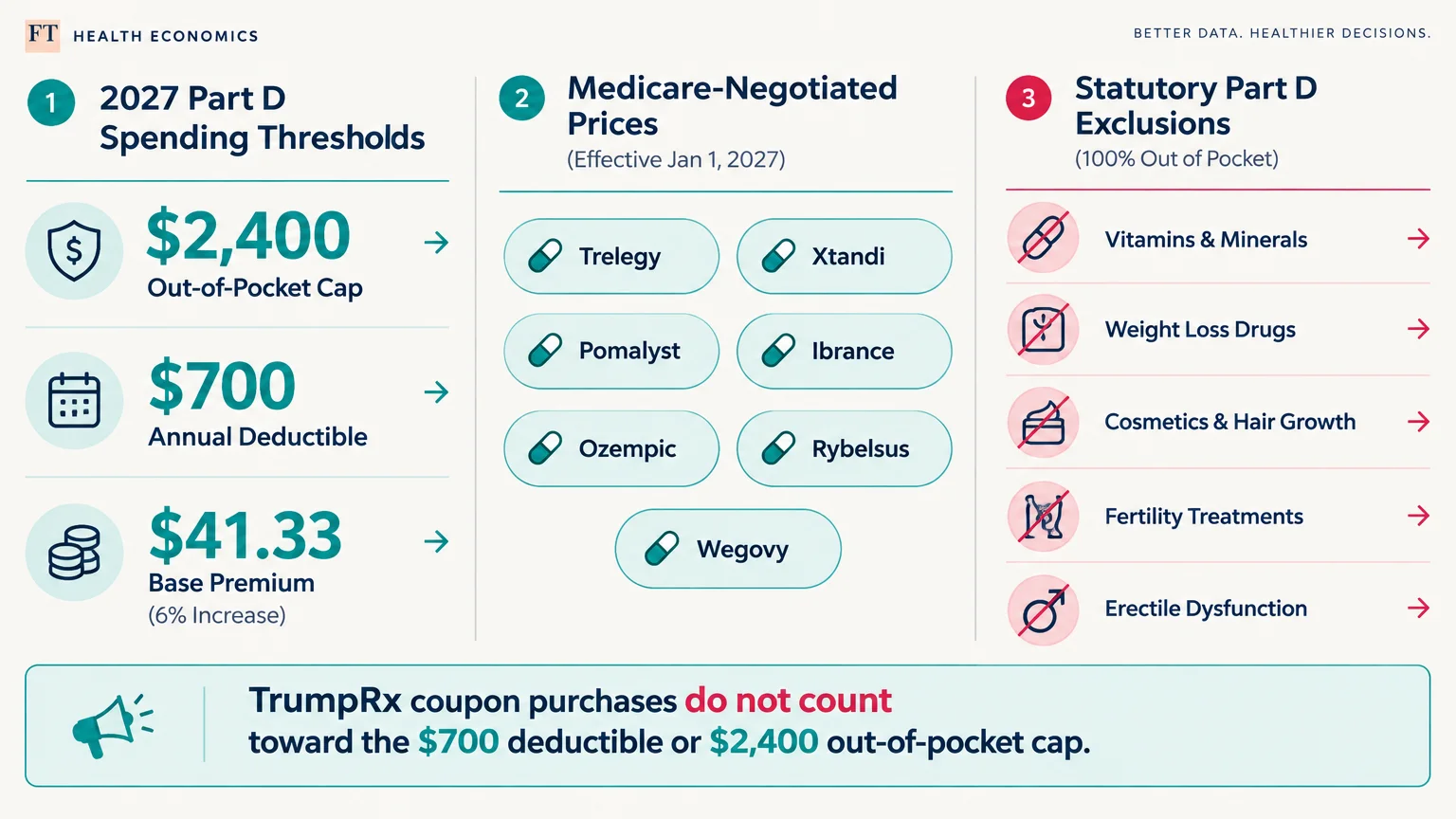
Medicare Part D establishes an annual out-of-pocket spending cap of $2,400 for prescription medications. This financial ceiling shields you from catastrophic medication costs once your covered drug expenses reach that threshold.
However, this cap applies strictly to medications listed on your specific plan formulary. When Medicare excludes a drug, every dollar you spend comes directly out of your pocket without reducing your annual cap balance.
Standard Part D plans also require a maximum annual deductible of $700. You must satisfy this entire initial amount before your insurance provider begins paying its share of your prescription claims.
Federal projections establish the 2027 national base beneficiary premium at $41.33, representing a 6% increase from the prior year. This figure serves as the baseline for calculating late-enrollment penalties and income-related monthly adjustments.
Beneficiaries face substantial variation in stand-alone prescription drug plan costs. While the national average premium hovers near $36 per month, individual plan premiums range between $6 and $204 across different regional markets.
Federal law expressly excludes several common medication categories from Part D coverage. You cannot use Medicare to pay for over-the-counter remedies, everyday vitamins, or mineral supplements.
Standard Part D formularies also bar coverage for medications used for hair growth or cosmetic improvements. Furthermore, Medicare excludes fertility drugs and medications prescribed for sexual dysfunction, including erectile dysfunction pills.
The Centers for Medicare and Medicaid Services introduced the TrumpRx discount coupon platform to offer lower retail prices. You can use this resource to search for cash discounts on non-covered outpatient prescriptions.
You must note that cash paid through TrumpRx does not count as creditable Medicare coverage. Out-of-pocket spending using external discount cards will not reduce your $700 deductible or your $2,400 out-of-pocket limit.
Encouragingly, lower Medicare-negotiated prices take effect on January 1, 2027, for 15 essential medications. These price reductions include critical treatments such as Trelegy, Xtandi, Pomalyst, and Ibrance.
Popular metabolic therapies like Ozempic, Rybelsus, and Wegovy also receive negotiated prices for approved indications. Learning how your plan categorizes these drugs ensures you avoid unexpected out-of-pocket surprises at the pharmacy counter.
Weight-Loss Medications and the Medicare GLP-1 Bridge
Weight management represents a fundamental pillar of cardiovascular health and metabolic vitality. Yet, standard Medicare rules continue to forbid coverage for drugs prescribed solely for weight loss or anorexia.
Medicare Part D only reimburses GLP-1 receptor agonists when doctors prescribe them for FDA-approved medical conditions. These qualifying diagnoses include type 2 diabetes, established cardiovascular disease, and obstructive sleep apnea.
To help enrollees who need anti-obesity therapies, federal health officials established the Medicare GLP-1 Bridge program. This temporary demonstration runs from July 1, 2026, through December 31, 2027.
The Bridge program offers targeted access by establishing a flat $50 monthly copayment for eligible participants. This demonstration significantly lowers the retail financial barrier for qualified individuals struggling with chronic weight complications.
You qualify for this special program if your body mass index reaches 35 or higher without diabetes. Individuals with a body mass index of 30 or higher also qualify if they manage hypertension or kidney disease.
Participants cannot have an existing diagnosis of diabetes, sleep apnea, or fatty liver disease. If you carry those conditions, your regular Part D plan handles your GLP-1 coverage under standard formulary rules.
The Bridge initiative covers Wegovy injections, Wegovy tablets, Foundayo tablets, and Zepbound KwikPens. You must confirm that your physician prescribes these exact delivery mechanisms to receive the discounted rate.
Regulators explicitly exclude single-dose Zepbound pens and Zepbound vials from the Bridge program. If you select those excluded packaging formats, you must pay full retail pricing out of pocket.
Furthermore, monthly $50 copayments paid through the Bridge program do not count toward your Part D deductible. These payments also do not accumulate toward your $2,400 out-of-pocket prescription cap.
Discussing these specific packaging requirements with your medical provider ensures you access the most affordable treatment pathway. Clear communication protects both your physical wellness and your household budget.

Core Physical Care: The Seven Statutory Exclusions of Original Medicare
Original Medicare excludes several vital physical health services that directly influence your daily quality of life. Understanding these statutory gaps allows you to create protective personal funding strategies and alternative care arrangements.
Routine dental care remains completely excluded under standard Medicare Parts A and B. Medicare will not pay for routine preventive cleanings, diagnostic checkups, cavity fillings, tooth extractions, or dentures.
Neglecting dental health increases systemic inflammation and elevates your risk for cardiovascular complications. Investing in regular oral hygiene protects your gums, jawbone integrity, and overall physiological health.
Original Medicare also excludes routine vision care, including regular eye exams for prescribing corrective lenses. You must pay privately for standard eyeglasses and contact lenses throughout your retirement years.
Medicare provides an exception for corrective lenses only following cataract surgery with an intraocular lens implant. Outside of that specific surgical recovery, vision maintenance remains your direct financial responsibility.
Routine hearing exams and hearing aids represent another major statutory exclusion under Parts A and B. Hearing aids require substantial personal investment, yet auditory clarity remains critical for maintaining mental agility and social connections.
Long-term custodial care constitutes perhaps the largest financial vulnerability facing older adults. Medicare does not reimburse room and board in assisted living facilities or nursing homes when you only need daily living assistance.
If you require daily support with bathing, dressing, or preparing meals without skilled medical nursing, you must pay privately. Planning ahead for custodial needs shields your family from unexpected caregiving burdens.
Cosmetic surgery remains entirely excluded from Medicare reimbursement. Coverage applies only when plastic surgery repairs structural trauma from an accidental injury or restores proper physical function to a malformed body part.
Routine foot care receives no standard Medicare reimbursement for healthy beneficiaries. Medicare denies claims for common hygienic services like toenail trimming, corn treatments, and callus removal.
Foot care becomes covered only when severe diabetic neuropathy or peripheral vascular disease threatens lower limb integrity. Proactive foot self-care keeps you mobile, balanced, and confident on your feet.
Medical care received outside the United States remains excluded from standard Medicare benefits. Except for rare emergencies near Canadian or Mexican borders, you must purchase independent travel health insurance when journeying abroad.
Original Medicare features no annual out-of-pocket maximum, leaving you vulnerable to catastrophic 20% coinsurance costs. Purchasing supplemental Medigap insurance can establish essential boundaries around your clinical spending.
High-deductible Medigap Plans F and G cap your annual exposure after you meet a $3,050 deductible limit. Meanwhile, standard Medigap Plan K enforces an out-of-pocket limit of $8,360, and Plan L caps spending at $4,180.
Body: Foundations of Lifestyle Medicine to Bridge Clinical Gaps
Lifestyle medicine empowers you to take ownership of your health long before clinical interventions become necessary. Grounding your habits in preventive wellness reduces your reliance on medical services that insurance excludes.
Clinical research synthesized by the American College of Lifestyle Medicine confirms that lifestyle modifications prevent chronic disease. Adopting plant-rich, whole-food nutrition calms systemic inflammation and stabilizes arterial pressure.
Wholesome nutrition directly benefits oral and periodontal health by strengthening connective tissue and maintaining jawbone density. Eating crunchy vegetables, legumes, and nutrient-dense foods cleanses teeth naturally while nourishing your microbiome.
Daily functional movement preserves joint mobility, builds muscle mass, and strengthens core stability. Engaging in balance-focused activities like tai chi dramatically reduces fall risks, preventing fractures and avoiding costly custodial care.
Restorative sleep acts as your body’s nightly internal repair system, clearing metabolic waste from brain tissue. Consistent sleep hygiene lowers resting cortisol, sharpens memory recall, and optimizes glucose metabolism.
Prioritizing seven to eight hours of darkness and cool temperatures restores cellular integrity and emotional stamina. Chronic sleep deficits, by contrast, accelerate biological aging and elevate cardiovascular vulnerability.
Managing your autonomic stress response protects your vascular endothelium from microscopic inflammatory damage. Simple breathwork exercises downregulate sympathetic arousal and promote cellular recovery throughout your major organs.
Medicare supports these proactive habits in 2027 by launching the innovative ACCESS demonstration model. This initiative covers remote wearable devices and personalized lifestyle coaching at low or no cost for qualifying enrollees.
Through the ACCESS model, you can access digital tracking tools that monitor biometric vitals in real time. These insights help you adjust nutrition, physical activity, and sleep patterns alongside your care team.
Furthermore, federal health officials extended broad home telehealth coverage flexibilities through December 31, 2027. You can consult clinical specialists from the comfort of your living room, avoiding stressful commutes and expensive facility copays.
Blending digital monitoring with daily lifestyle interventions builds a personal fortress against avoidable medical crises. When you strengthen your daily physiological resilience, excluded clinical services become far less urgent.

Mind: Cultivating Psychological Resilience Against Healthcare Stress
Navigating insurance denials, confusing deductibles, and complex appeals can generate significant mental and emotional strain. Protecting your mental health is just as crucial as managing physical symptoms.
Psychological studies published by the American Psychological Association illustrate how ongoing financial worry triggers chronic stress. Elevated stress hormones impair memory formation, disrupt digestion, and weaken adaptive immune defenses.
You can counteract these biological stress cascades by practicing conscious cognitive reframing. Rather than viewing coverage exclusions as personal failures, recognize them as institutional boundaries that require practical navigation.
Somatic grounding techniques help you regain calm during frustrating administrative calls or billing disputes. Pausing to take slow diaphragmatic breaths activates your vagus nerve and restores cognitive equilibrium.
Mindfulness meditation sharpens your emotional focus, preventing healthcare anxiety from spiraling into pervasive distress. Spending ten minutes in mindful stillness each morning anchors your mind against unexpected logistical hurdles.
Cultivating realistic optimism allows you to pursue practical solutions without minimizing genuine administrative challenges. Optimistic individuals communicate more effectively with healthcare advocates and achieve superior health outcomes.
Self-compassion provides a soothing emotional buffer when dealing with bodily changes or treatment denials. Remind yourself that bureaucratic coverage rules do not define your human worth or vitality.
Seeking professional mental health support through a licensed therapy directory connects you with counselors skilled in chronic illness adjustment. Therapy equips you with actionable boundary-setting techniques and emotional coping tools.
Developing emotional grit transforms how you handle Medicare complexities and out-of-pocket costs. A calm, grounded mindset makes every financial decision clearer, wiser, and far less overwhelming.
Community: Social Connection and Collective Wellbeing
Human beings thrive within supportive social networks, especially when navigating complex life transitions. Collective care and community solidarity provide essential protection against the isolation of modern healthcare systems.
Landmark research from the World Health Organization identifies social isolation as a critical social determinant of health. Loneliness carries health risks comparable to sedentary living, smoking, and chronic obesity.
Maintaining deep interpersonal relationships stimulates neuroplasticity and strengthens emotional resilience as you age. Sharing meals, conversations, and laughter releases oxytocin, reducing inflammatory markers throughout your body.
Beyond emotional comfort, your local community offers tangible logistical resources during healthcare transitions. Friends and family members can help you compare insurance formularies, share transportation, and organize medical files.
Community support proves especially critical in 2027 due to widespread disruptions in private insurance markets. Approximately 14% of Medicare Advantage enrollees—nearly 1.7 million individuals—face plans that are shutting down or leaving their counties.
Additionally, roughly 1% of beneficiaries across 193 counties will have no Medicare Advantage prescription drug plan available. These market departures force many older adults to select new coverage configurations.
If an insurer discontinues your plan, federal rules provide a dedicated Special Enrollment Period. This window runs from December 8, 2026, through February 28, 2027, allowing you to secure replacement coverage without penalty.
Reach out to local community senior centers, civic organizations, and state health insurance assistance counselors. These trained local guides offer free, unbiased advice to help you evaluate new plan choices.
Forming neighborhood wellness circles allows you to pool practical resources for everyday physical health. You can organize group walking clubs, share healthy bulk meals, and coordinate group rides to medical appointments.
Social engagement keeps your spirit vibrant and your mind connected to the broader world. Investing in genuine community ties builds a protective safety net that no insurance policy can replace.

Future Planning: Habit Stacking, Preventive Care, and Financial Alignment
Building a resilient future requires aligning your daily micro-habits with sound financial strategies. Proactive planning eliminates the panic often associated with sudden healthcare exclusions and coverage transitions.
Habit stacking offers a reliable psychological technique to embed preventive behaviors into your existing lifestyle. By attaching a new wellness practice to an established daily ritual, you create lasting lifestyle changes without willpower fatigue.
For example, perform single-leg balance stands while brushing your teeth each morning and evening. This simple habit strengthens ankle stabilizer muscles, sharpens proprioception, and protects against debilitating falls.
Floss your teeth immediately before your nightly skincare routine to safeguard your periodontal structures. Consistent flossing eliminates oral pathogens that could otherwise trigger systemic inflammation and damage arterial walls.
Schedule annual vision and hearing evaluations through local health fairs or community clinics offering sliding-scale fees. Early detection of sensory loss allows you to make subtle accommodations before cognitive fatigue sets in.
Establish a dedicated wellness savings account to cover non-reimbursed dental, vision, and hearing care. Setting aside even modest monthly savings creates a predictable financial buffer for your routine wellness needs.
Review evidence-based health maintenance recommendations through the National Institute on Aging to prioritize your preventive screenings. Regular cardiovascular monitoring and bone density checks help you address emerging vulnerabilities promptly.
Schedule your annual Medicare wellness visit every year to establish personalized prevention goals with your physician. This visit provides an ideal opportunity to review medications and identify potential coverage concerns.
Maintain an organized medical binder containing your active prescriptions, dosage schedules, and insurance notices. Having your health records readily accessible streamlines consultations and simplifies annual open enrollment decisions.
Intentional future planning transforms potential coverage gaps into organized, predictable life routines. When you structure your environment for wellness, you protect both your longevity and your financial peace.
Frequently Asked Questions About Medicare Coverage and Wellbeing
How do you handle emotional setbacks when Medicare denies a claim?
Receiving an unexpected coverage denial often triggers immediate frustration, anxiety, and a sense of helplessness. Acknowledge these difficult emotions first rather than suppressing them or panicking.
Request an official written explanation of benefits from your insurer to understand the specific statutory exclusion or clinical justification. Many denials stem from minor clerical errors or missing physician documentation that an appeal can rectify.
Collaborate with your doctor’s billing office to submit a formal redetermination appeal alongside supporting medical necessity letters. Approaching appeals methodically removes emotional friction and dramatically improves your chances of obtaining coverage.
How can you maintain routine dental, vision, and hearing health on a limited budget?
Because standard Medicare excludes these essential sensory services, affordable community alternatives become essential. Look into local dental and optometry schools, which frequently provide high-quality care at deeply discounted rates.
Community health centers often offer sliding-scale fees for preventive dental cleanings and basic vision screenings. Furthermore, non-profit foundations sometimes distribute subsidized hearing aids to older adults meeting income criteria.
Investing in rigorous daily oral hygiene and protective eye habits prevents minor issues from escalating into major expenses. Daily prevention remains your most cost-effective healthcare strategy.
What should you do if time constraints prevent you from managing complex appeals or plan changes?
Navigating insurance paperwork demands substantial mental focus and administrative energy. If your personal schedule feels overwhelmed, enlist the support of a trusted family member or certified caregiver.
You can also connect with your local State Health Insurance Assistance Program to receive free, personalized navigation help. These trained counselors guide you through plan comparisons, enrollment deadlines, and formal appeal procedures.
Delegating administrative tasks preserves your emotional energy for daily wellness, restorative movement, and family connections. You do not have to shoulder the burden of bureaucratic navigation alone.
When is it essential to seek professional guidance from an eldercare planner or patient advocate?
Seek professional guidance when managing multiple chronic illnesses, significant cognitive changes, or impending custodial care transitions. Independent patient advocates clarify complicated treatment paths and identify alternative funding programs.
Eldercare attorneys and certified financial planners assist with long-term asset protection and Medicaid spend-down strategies. Their professional expertise helps protect family resources when non-covered nursing home care becomes unavoidable.
Engaging professional assistance early prevents costly legal mistakes and provides invaluable peace of mind for you and your loved ones. Expert navigation ensures your care preferences remain respected throughout every stage of life.
Creating Your Daily Wellbeing Ritual
Sustained vitality does not occur by chance; it flourishes through small, deliberate daily actions. Establishing a personal wellness ritual creates a grounding rhythm that anchors your physical and mental health.
Set aside fifteen quiet minutes every Sunday evening to review your health goals and upcoming appointments. Use this dedicated space to organize your medications, update insurance documents, and plan your weekly meals.
Celebrate micro-wins across your health journey, such as taking a daily walk or choosing nourishing whole foods. Recognizing your daily accomplishments reinforces self-efficacy and builds sustained intrinsic motivation.
When insurance policies change or unexpected health challenges arise, return to your foundational lifestyle practices. Nutritious food, restorative sleep, mindful breathing, and supportive relationships remain your enduring source of strength.
You have the power to create a vibrant, resilient life regardless of bureaucratic coverage boundaries. Step forward with clarity, nurture your wellbeing daily, and embrace your health journey with confidence.









Leave a Reply