
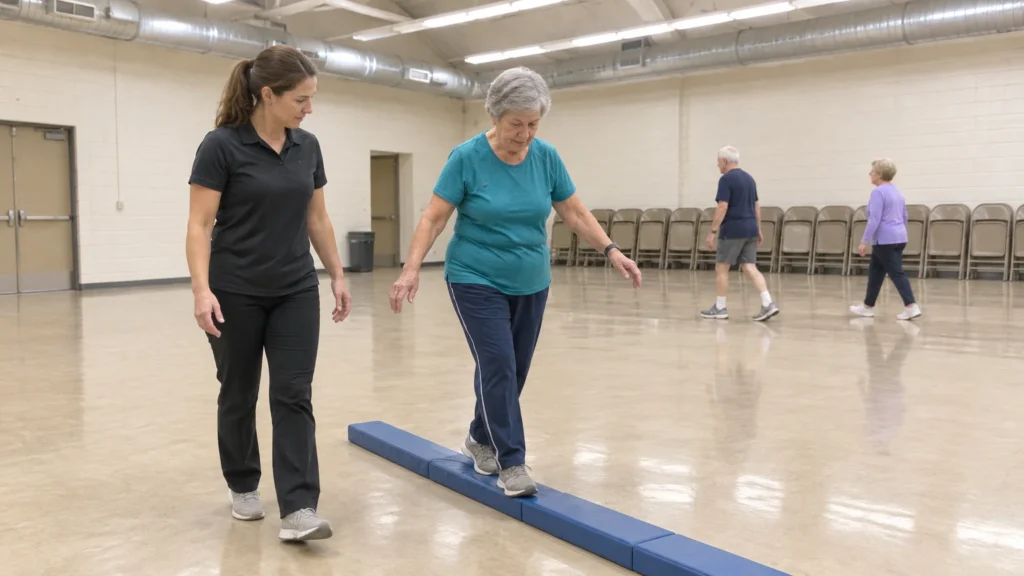
Picture waking up with steady balance and walking down the block to meet a friend for coffee. Comfortable movement supports your sleep, calms daily stress, and protects your independence as you age.
Knowing what Medicare covers for physical therapy helps you start care without guessing what you will owe. Original Medicare Part A, Part B, and Medicare Advantage each cover rehab under clear rules.
Below, you will find exact 2026 and 2027 costs, therapy limits, and home care options. Use these details to protect both your physical strength and your budget.
How Your Body Gets Care Under Medicare Part B and Part A
Your physical health shapes how well you sleep, handle stress, and manage daily errands. When pain slows you down, outpatient therapy under Medicare helps you rebuild strength safely.
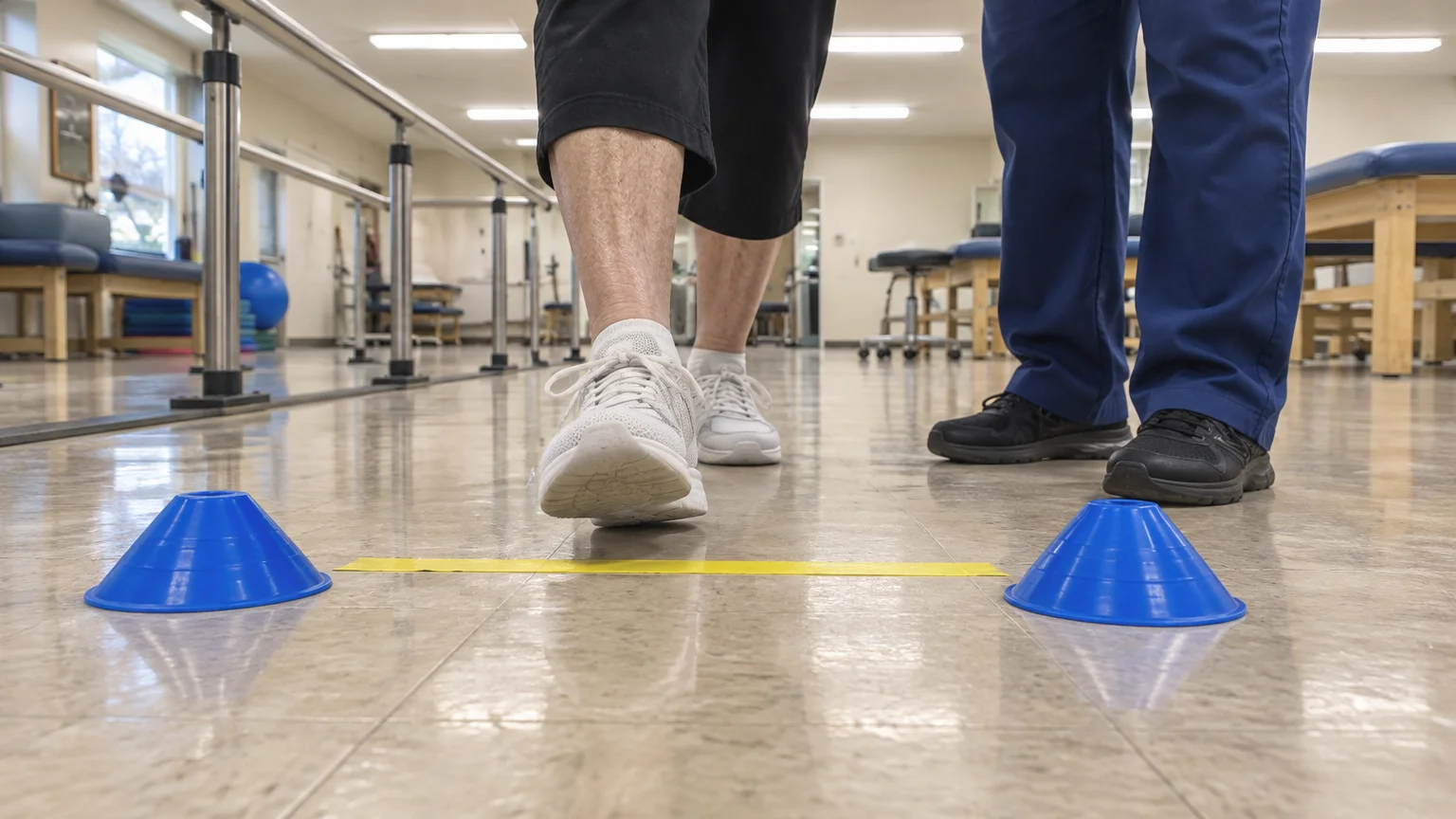
Medicare Part B is the part of Original Medicare that pays for outpatient care. It covers medically necessary physical therapy in private clinics, doctor offices, hospital outpatient clinics, or your home.
Licensed physical therapists, doctors, nurse practitioners, and physician assistants can provide this care. Check the official Medicare outpatient physical therapy rules to review approved care settings.
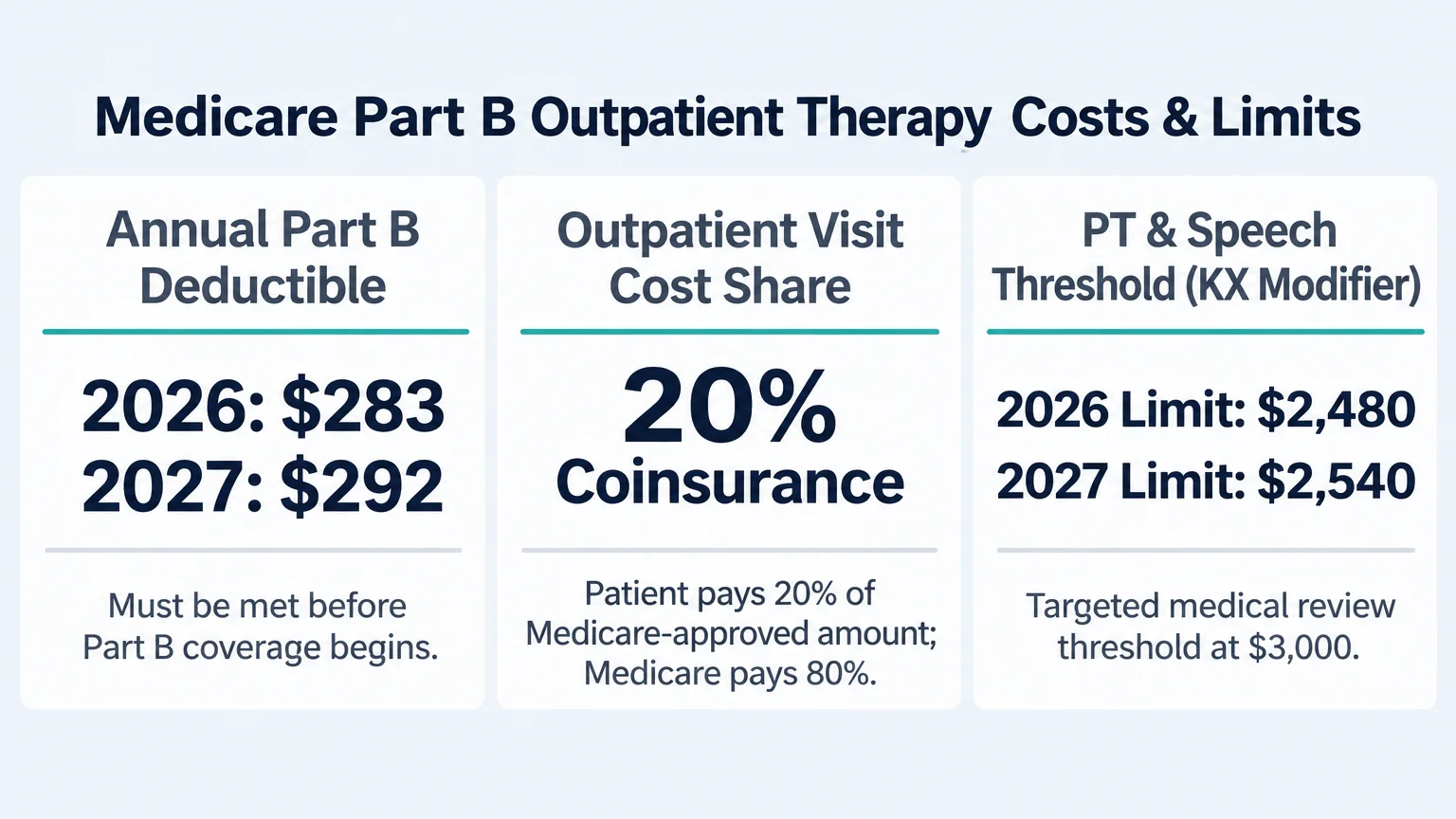
Before Part B pays, you must meet your yearly deductible. That deductible is $283 in 2026 and rises to $292 in 2027.
The standard monthly Part B premium is $202.90 in 2026 and $209.40 in 2027. After your deductible, you owe 20% of the approved amount for each visit.
Medicare pays the remaining 80%, and a Medigap plan often covers your 20% share. Best of all, Congress ended hard yearly dollar caps on outpatient therapy in 2018.
Instead of a cap, Medicare tracks spending with a special billing code called the KX modifier. Your therapist adds that code to confirm your continued care stays medically necessary.
The combined limit for physical and speech therapy is $2,480 in 2026 and $2,540 in 2027. Occupational therapy gets its own separate $2,480 and $2,540 limits.
Claims above $3,000 may trigger a closer medical review, though Medicare does not automatically deny them. Clinics also cannot bill you out of pocket without giving an Advance Beneficiary Notice first.
Providers cannot hand you that warning form simply because your spending passed a dollar limit. Coverage always depends on your medical need, not an arbitrary cap.
Inpatient Rehab, Skilled Nursing, and Home Health Care
After major surgery or illness, Medicare Part A covers inpatient rehab facilities and skilled nursing stays. Inpatient rehab calls for round-the-clock nursing care and at least three hours of therapy per day.
The Part A hospital deductible is $1,736 in 2026 and $1,776 in 2027 for days 1 through 60. Direct transfers from a hospital to inpatient rehab do not trigger a second deductible.
Hospital stays from days 61 to 90 cost $434 daily in 2026 and $444 in 2027. Lifetime reserve days 91 to 150 cost $868 daily in 2026 and $888 in 2027.
A benefit period ends after 60 straight days without hospital or skilled nursing care. Skilled nursing rehab needs a three-day inpatient hospital stay first, not counting emergency room or observation hours.
Once admitted within 30 days, Medicare pays 100% of skilled nursing rehab for days 1 to 20. Days 21 to 100 cost $217 daily in 2026 and $222 in 2027.
If you heal at home instead, home health physical therapy costs $0. A doctor must certify that you are homebound, need part-time skilled care, and use a Medicare-certified agency.
If you are not homebound, Part B covers outpatient therapy at home for the usual 20% share. You just cannot use Part B home visits during an active home health episode.
Supporting Your Mind Through Maintenance Care and Clear Rules
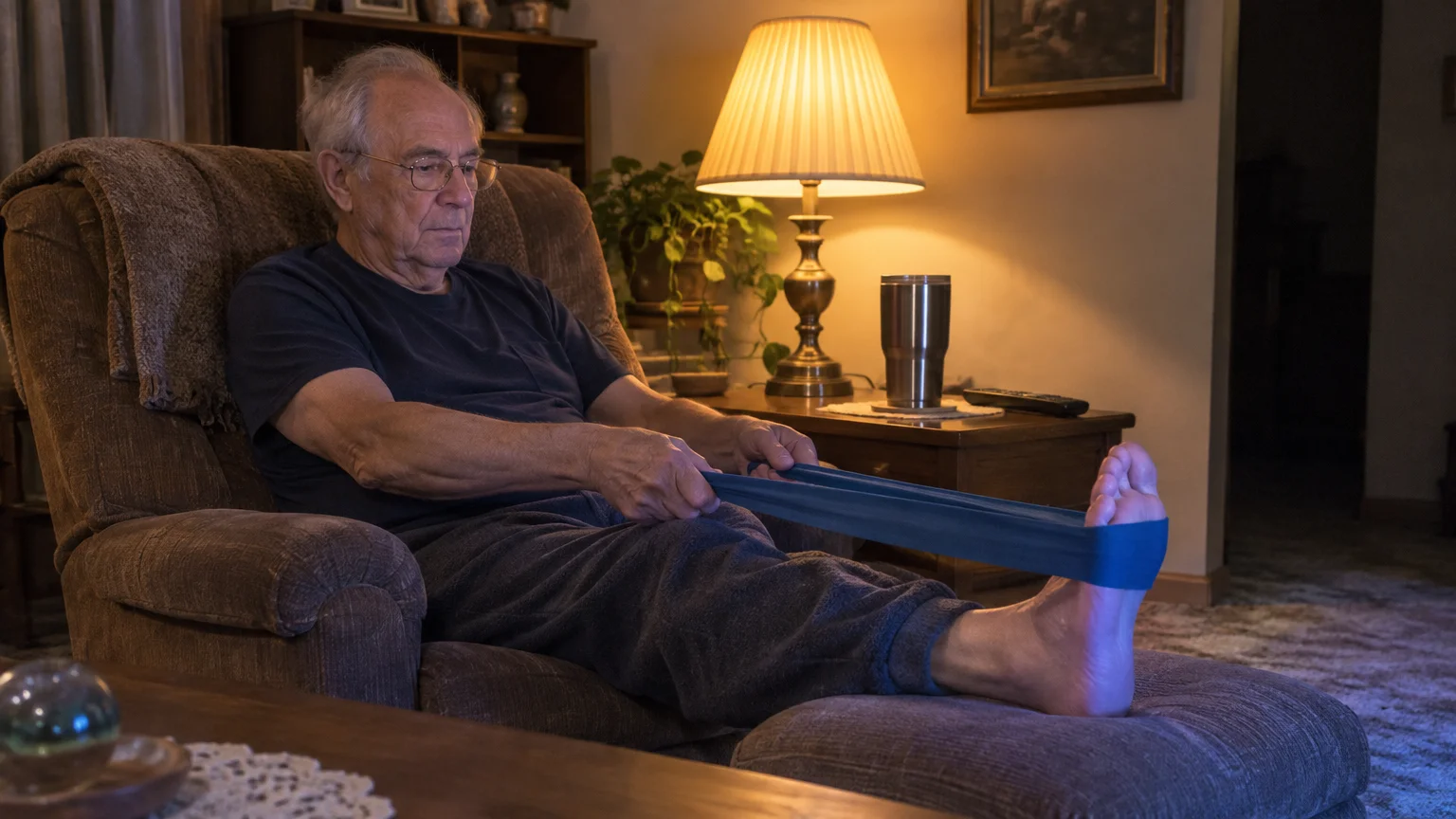
Ongoing pain rarely stays limited to one joint or muscle. Aches raise your stress response, disturb deep sleep, and drain your emotional energy.
Sleep, nutrition, stress management, and movement work together as one connected system. When physical therapy eases your pain, your nervous system settles and your body repairs tissue overnight.
Many seniors delay care because they worry Medicare will stop paying if recovery slows down. Knowing the truth about Medicare maintenance rules brings real peace of mind.
Under the 2013 Jimmo v. Sebelius settlement, Medicare cannot reject care simply because you stop improving. Coverage depends on whether you need skilled help, not on full recovery.
Medicare covers skilled therapy that maintains your current ability or slows further decline. This protection helps people managing arthritis, Parkinson’s disease, or long-term stroke recovery.
Original Medicare does not ask for prior approval before you start outpatient physical therapy. Your therapist simply sends a written care plan to your doctor within 30 days.
Your doctor reviews that plan every 90 days, while your therapist writes progress notes every 10 visits. Physical therapist assistants may guide parts of your visit under general supervision.
For safe ways to build balance and lower stress between appointments, read these healthy aging movement guides. Pairing steady exercise with restful sleep supports both mood and mobility.
Staying Connected With Community and Telehealth Options
Strong legs and steady balance do more than make household chores easier. Mobility lets you visit family, join local clubs, and enjoy walks with neighbors.
Staying connected to your community protects your emotional health as you age. When you feel steady on your feet, it is easier to say yes to social plans.
Telehealth keeps that routine going when bad weather or low energy makes travel hard. Congress extended Medicare telehealth coverage for physical therapists through December 31, 2027.
You can join video visits from your home anywhere in the country. Audio-only calls apply only when you cannot use or do not agree to video.
Unless Congress passes a new extension, physical therapy telehealth ends on January 1, 2028. Visit the federal telehealth resource guide for simple tips on preparing for a video session.
Medicare also covers Remote Therapeutic Monitoring over 2 to 15 days to track your home exercises. Starting in 2027, this service needs an in-person visit first to establish care.
If you hold a Medicare Advantage plan, Part C must cover every therapy benefit Original Medicare covers. However, most Advantage plans use provider networks and ask for prior approval.
New rules that began in 2026 speed up Medicare Advantage approvals. Plans must decide standard requests within 7 calendar days and urgent requests within 72 hours.
If your Part C plan denies care, a qualified clinician must explain the medical reason. Switching plans mid-treatment also gives you a 90-day transition window without new approvals.
Future Planning for Long-Term Strength and Preventive Habits
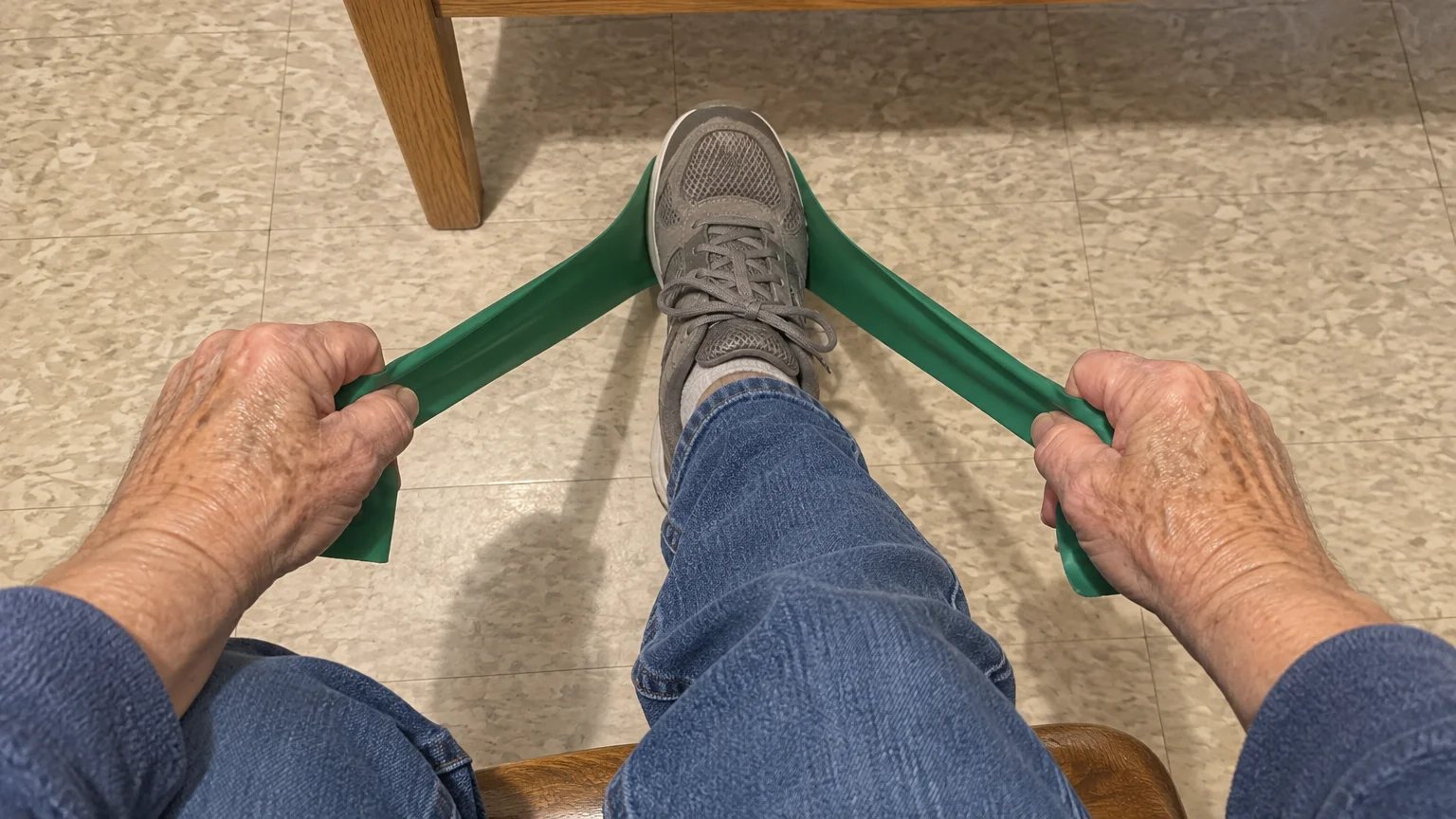
Lasting success with physical therapy for seniors depends on what you do between clinic visits. Stacking short exercises onto existing daily habits makes your routine effortless.
Do calf raises while waiting for morning coffee, or practice gentle stretches after brushing your teeth. Pair movement with balanced protein meals and steady water intake to help muscles recover.
Keep a small notebook to track your pain levels, strength wins, and Medicare rehab coverage bills. Watching your spending helps you plan ahead before reaching the $2,540 limit in 2027.
Bring your symptom log to annual wellness visits so your doctor spots subtle balance changes early. Preventive care keeps small aches from turning into major setbacks.
Compare local clinics anytime through the Medicare Care Compare directory before booking care. You can also search a physical therapist directory and confirm the clinic accepts Medicare assignment.
Common Questions About Medicare Physical Therapy
What if my progress stalls or I have a setback?
Medicare does not cut off Part B therapy just because your recovery slows down. Under federal maintenance rules, your care stays covered if skilled therapy prevents decline, using the KX code when needed.
How can I get care if leaving home is too hard?
Home health physical therapy costs $0 if you are homebound and use a certified agency. You can also use telehealth through 2027 or pay 20% for Part B mobile outpatient visits at home.
What if I cannot fit three clinic visits into my week?
Outpatient Part B plans are flexible and adapt to your energy and calendar. Unlike inpatient rehab, you can mix one clinic visit a week with telehealth check-ins or short daily home habits.
Who can provide my therapy and how do I find them?
Medicare covers licensed physical therapists, doctors, nurse practitioners, and physician assistants, plus supervised therapist assistants. Ask clinics if they accept Medicare assignment, or verify your Medicare Advantage network first.
A Simple Check-In Ritual to Celebrate Your Progress
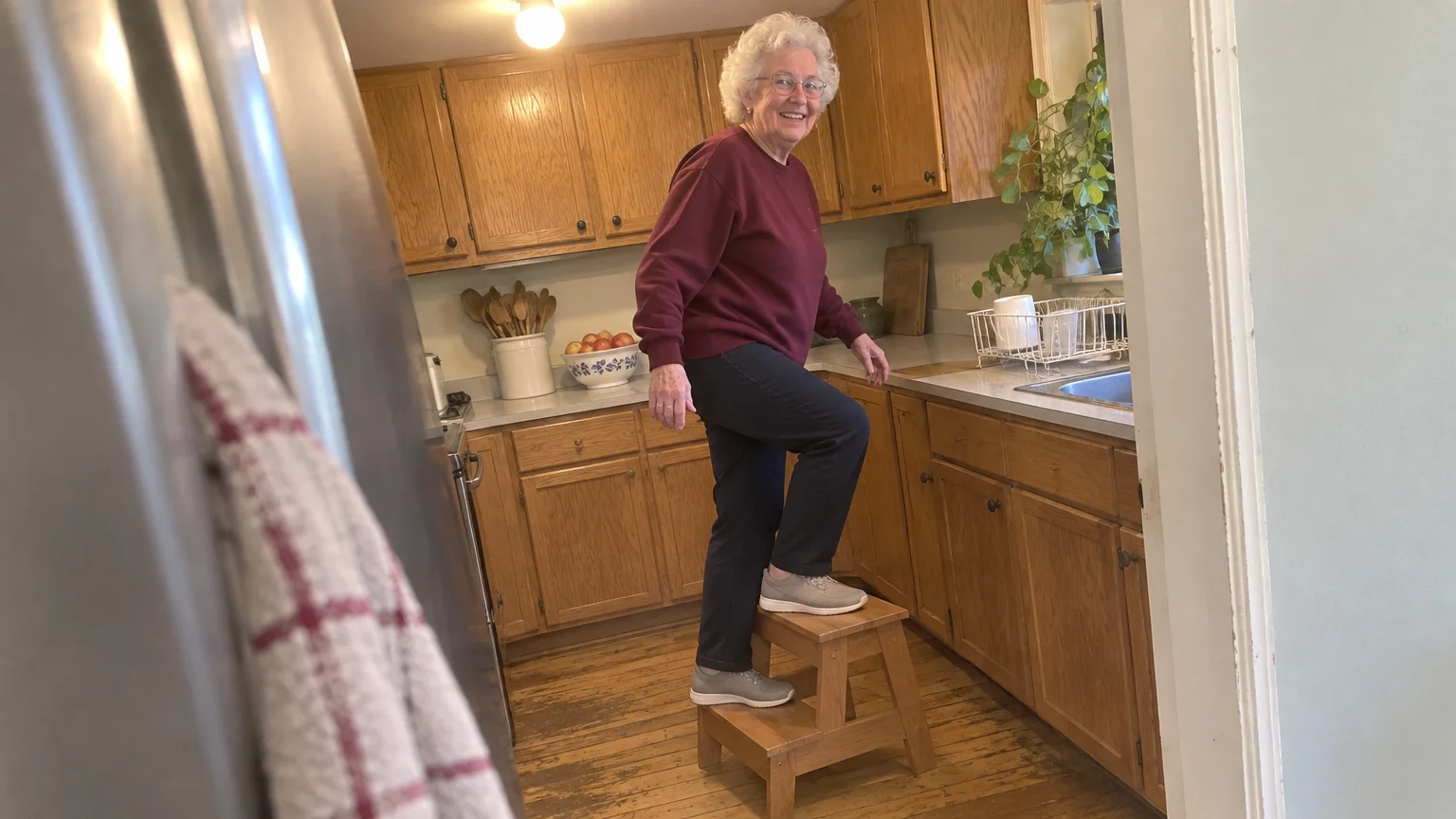
Set aside five quiet minutes every Sunday evening to check in with your body and mood. Notice small wins, like climbing stairs with less stiffness or sleeping more soundly.
Share those victories with a friend, a family member, or your physical therapist. Celebrating steady progress builds confidence and protects your wellbeing for every season ahead.