
Historic Negotiated Drug Prices and the GLP-1 Bridge Program
Federal price negotiations now deliver direct consumer savings on widely prescribed medications. These adjustments directly target treatments for diabetes, cardiovascular disease, respiratory illness, and oncology.
Lower Costs for Fifteen High-Demand Medications
Under the Inflation Reduction Act, lower maximum fair prices take effect on January 1 for fifteen high-cost Part D drugs. These negotiated prices reduce expenditures for both the Medicare program and enrolled beneficiaries.
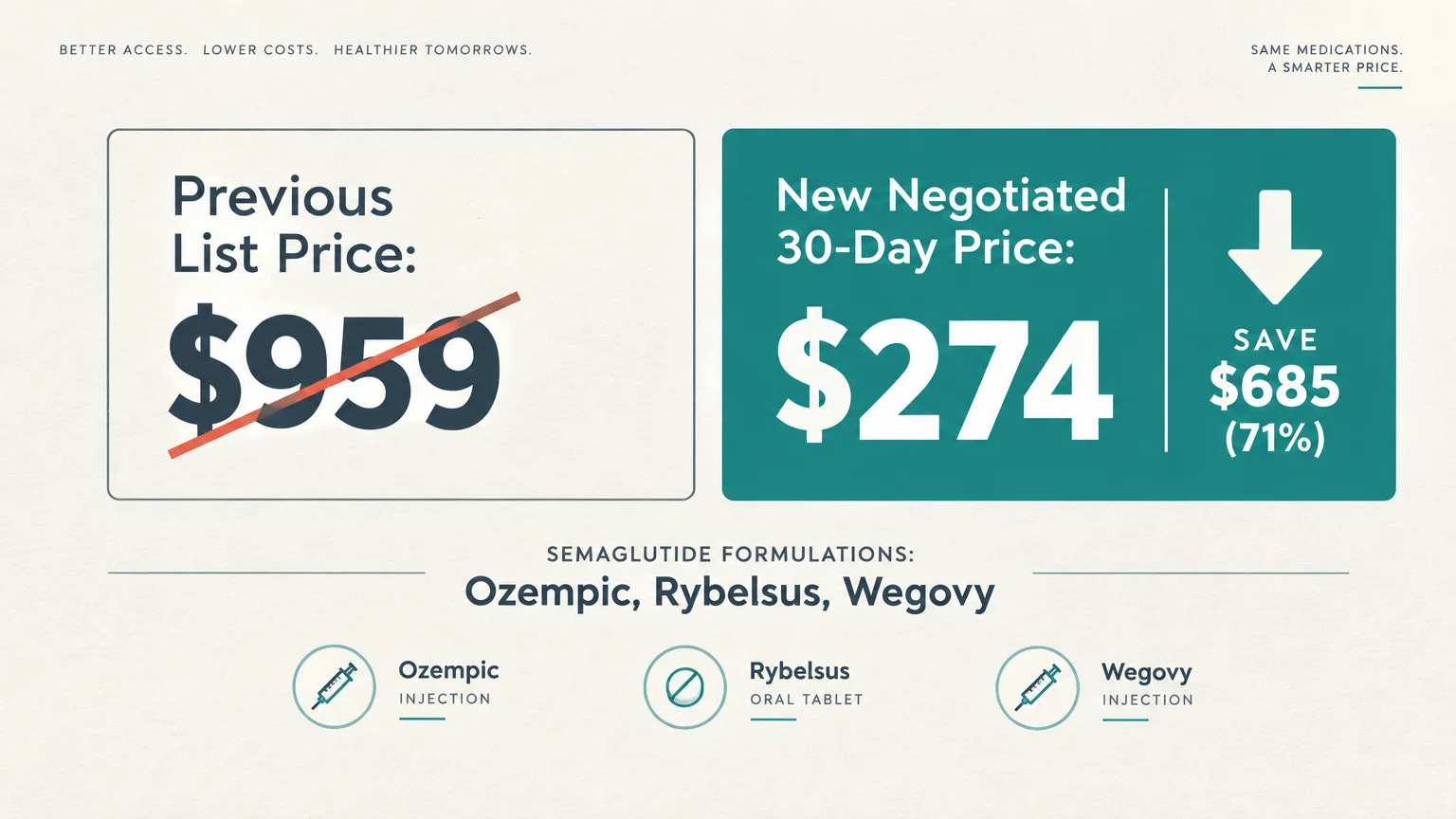
Popular semaglutide formulations—specifically Ozempic, Rybelsus, and Wegovy—now carry a negotiated 30-day supply price of $274. This marks a dramatic drop from their previous list price of $959.
Respiratory patients will benefit from lower negotiated rates on Trelegy Ellipta and Breo Ellipta inhalers. These maintenance medications treat chronic obstructive pulmonary disease and persistent adult asthma.
Cancer therapies including Xtandi, Pomalyst, Ibrance, and Calquence receive significant price reductions under the new statutory rules. These therapies manage prostate cancer, multiple myeloma, metastatic breast cancer, and chronic lymphocytic leukemia.
The list of negotiated drugs also includes Ofev for pulmonary fibrosis, Linzess and Xifaxan for gastrointestinal disorders, and Austedo or Austedo XR for neurological movement conditions.
Psychiatric and inflammatory treatments see major price improvements as well. Vraylar for mood disorders, Otezla for plaque psoriasis, and Tradjenta alongside Janumet and Janumet XR for type 2 diabetes complete the negotiated group.
Accessing Metabolic Treatments Through the GLP-1 Bridge
The introduction of the federal GLP-1 Bridge program expands access to advanced metabolic therapies. This initiative allows qualifying Part D beneficiaries to obtain approved GLP-1 medications for weight loss and cardiovascular risk reduction.
Enrolled participants pay a standardized $50 copayment for a full one-month supply of these therapies. This predictable copayment removes traditional financial barriers to evidence-based metabolic care.
You must note that this specific $50 copay does not count toward your $2,400 annual Part D out-of-pocket maximum. You should plan your personal healthcare budget accordingly while coordinating treatment with your physician.
Your doctor must document qualifying clinical criteria, such as established cardiovascular disease or severe metabolic impairment, to secure this specialized bridge coverage. Early clinical discussions help ensure your prior authorization paperwork proceeds without disruption.








Leave a Reply