

Are moles dangerous?
Spotting moles on your skin is usually caused by too much sun exposure or family genetics. Seniors generally get more of these blemishes than young adults. Suppose there is a suspicious skin blemish lurking around the skin. In that case, it’s time to see a dermatologist and take proper actions to identify and treat it as soon as possible. A biopsy can lead to proper identification of the growth.
Common moles are known as Nevus in the medical field. A collection of the plural of Nevus is known as Nevi. There are many types of nevi. It can be raised or flat on the skin. It may have an oval or rounded shape depending on the growth type. Acquired melanocytic nevi are formed during childhood and usually stop at 30.
But wait! Don’t be scared. The majority of these blemishes that appear on the human body are harmless. If you have had a mole for a long period, it’s good to get it checked to be sure. It might be just a simple skin blemish or a cancerous kind. Treating it in the early stages is easier, and the good news is that melanoma is highly treatable.
So here are 9 things anyone should know about moles, especially seniors.
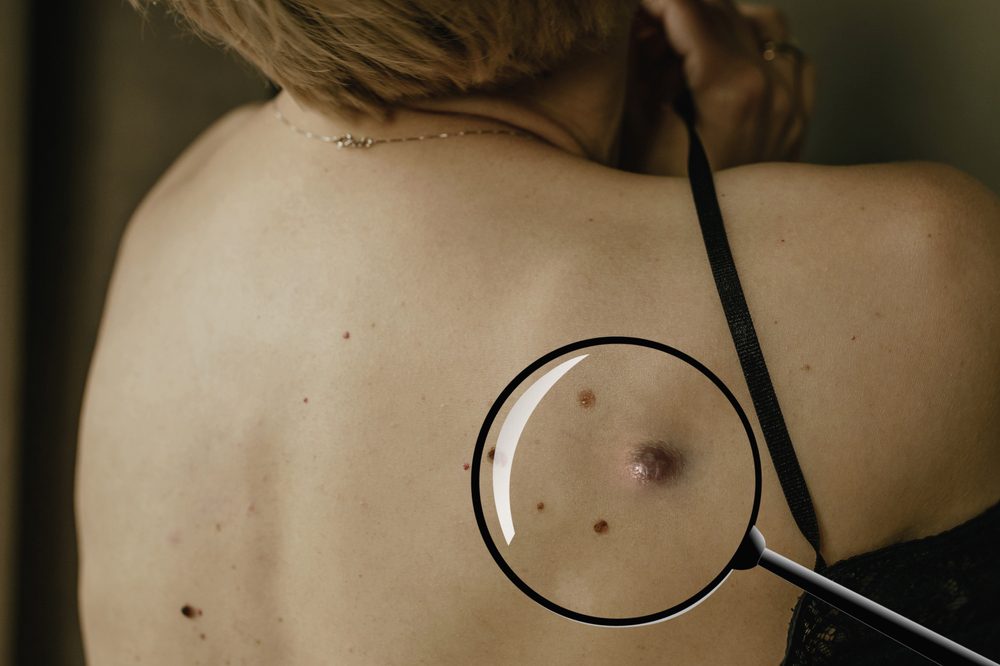
1. Moles come in different colors, shapes, and sizes
Moles are usually dark in the shade and come in different colors like black or brown. They can be raised or flat depending on the growth type. Moles are formed on the skin by a cluster of cells that creates a substance called melanocytes, caused by melanin.
The substance typically gives color to our skin and eyes. If the mole has a different color, then there is a good chance that the mole might be cancerous, so you might want to get it checked out.
2. They can appear on the fetus
A baby can be born with moles on its body. These are known as Congenital Nevus. Even newborns without these skin blemishes can develop them early and continue to grow more as they make their way into adulthood. Congenital moles get developed during fetal development.
This means the fetus grows those moles and surfaces into the world with them. The causes of such skin tags are due to the genetics of the parents. If the family members have a history of moles in their family, then the chances are that the baby will have them too.
The skin tags that grow on the human body during their lifetime are caused by environment rather than genetics. But there are high chances that you have had a mole since you were born.
3. They can be caused by sun exposure
Typically, when people are exposed to increased sunlight, a cluster of melanocytes is created through ultraviolet radiation. When the skin is exposed to sunlight, our skin starts producing a pigment called melanin.
In general, melanin causes our skin to get a darker shade of tan. The process is natural and causes melanocytes to grow in clusters. These clusters are the moles that we see in our bodies. If you have fair skin and a history of sunburn, it’s good to use sunscreen.
4. More moles equal higher chances of getting skin cancer
People having more than 50 moles on their bodies have increased chances of getting melanoma (a type of common yet serious skin cancer). The good news is that common skin tags rarely turn into melanoma.
Still, if you have a history of melanoma or anyone from your family has it, you should probably get it checked. If your mole is bleeding or oozing, has different shades of color, formed an uneven shape, the mole’s surface is scaly and itchy, or you feel a lump inside the mole, then it may be melanoma.
5. They can disappear spontaneously
Healthy moles can disappear suddenly. It is a common thing, but the process is gradual and rather lengthy. Some skin tags might dry out and fall from the skin, and others fade in the skin. Disappearing moles are not all normal. Even cancerous moles can disappear.
Typically, when cancerous moles disappear, it is a sure sign that cancer has spread across the skin. As moles are constantly evolving, some might confuse them to be cancerous. If the skin tags are atypical in growth or itchy and bleeding, then it might be worth getting checked out by a doctor.
6. Moles and freckles are not the same things
Although freckles and moles are both caused by UV radiation and genetics, they are two different types of skin growth. Freckles generally are flat and appear in groups on the skin, whereas moles are typically raised from the skin and grow individually.
Freckles are either one or two shades darker than the skin tone with either reddish or light brown, and moles are generally dark brown or black and often have texture on them. Because freckles and moles have different structures and causes, it is highly unlikely that freckles can transform into moles or the other way around.
7. They can form anywhere on the skin
Moles are typically formed where there is skin. Increased sun exposure causes melanin to be created excessively, causing a collection of cells that ultimately makes skin tags. Even the skin under the nails can grow a mole due to the environment and family history. It can be cancerous as well. But to be fair, it is not so common.
There is a type of melanoma called Subungual Melanoma which appears under the nails of either hand or feet. Only 0.07% of people around the world have this kind of melanoma. Moles can appear on palms and heels and in the mouth region as well, but they are most likely to form on the arms or back. If you have a mole that bothers you, try out this skin tag removal, but make sure to check with your dermatologist first.
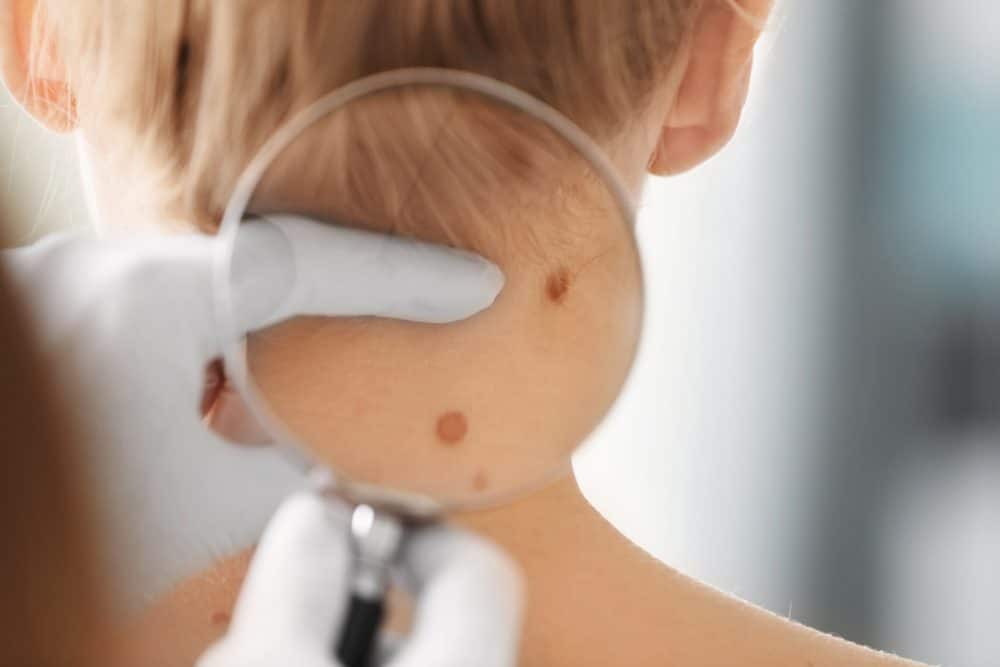
8. Unusual moles can turn into melanoma
Moles evolve on human skin and they come in different shapes and sizes. If a mole grows unevenly and shows different colors apart from the common black and brown, it might be melanoma. Early diagnosis usually results in the successful treatment of the growth, but is not possible to identify the type of mole just by sight. An in-depth diagnosis is required to be certain about the type. However, there are sure tell signs to see a doctor if a person experiences the ABCDE signs on the growth:
A – Asymmetric shape
B – Borders are uneven
C – The color is reddish or white
D – Diameter is larger than a quarter of an inch
E – The surface of the mole is raised and evolving rapidly
If these signs are visible, then one must take proper steps to identify the nature of the growth.
9. Tanning stations, beds, and lamps can cause moles
Tanning lamps and beds emit UV light directly on the human skin. The main ruling reason for mole formation is exposed UV radiation on the skin for excessive time. Tanning beds, booths, and laps generate UV rays and are not safer than the sun.
They cause clusters of melanocytes on the skin that ultimately forms into moles. According to scientists, safe tanning stations, beds, and lamps do not exist. They increase the chances of getting melanoma by 20%, so we can consider these rather dangerous.
Takeaway
Moles disappear as we get old, but there are chances of moles turning into melanoma. It is an excellent step to keep it under check as melanoma is 99% treatable at its early stages of development. If you have a mole that does not seem normal, the safest option is to go to the doctor for an in-depth analysis to determine whether it is cancerous or not.
Have you had an unusual mole for a long time? You better make an appointment with the doctor. Share your thoughts and experiences in the comment section below!
And if you liked this article, make sure to also check out: Sleep: 7 Reasons Why You Should Prioritize It.




I live in Florida for October through March. I recently had a darker pigment on my chest about a month after being in Florida and had gotten burned in that area a week before. It had irregular edges and was not disappearing, but was even and not raised on my skin. I then saw a raised spot on my forehead that scabbed. I have a gel that I use for cuts which is a product that is made of stabilized garlic (called Alliderm) and is antibacterial, antiviral, anti microbial! I applied it to my spot every 6 hours for a couple weeks until I could see a dermatologist. It worked! The Dermatologist examined me and then took a biopsy of the darker skin. It was superficial melanoma. I return this Friday to have it removed!