

Dismissing a severe headache as routine workplace stress often delays the medical support you need to reclaim your quality of life. When head pain throbs relentlessly or turns ordinary daylight into an agonizing glare, you are likely dealing with migraine—a complex neurological disease affecting more than one billion people worldwide. Distinguishing a tension-type headache from a true migraine attack allows you to target the root neurobiological mechanisms rather than relying on ineffective over-the-counter painkillers. Recognizing the precise clinical signals of a migraine empowers you to pursue effective therapies, modify daily habits, and protect your long-term neurological health.
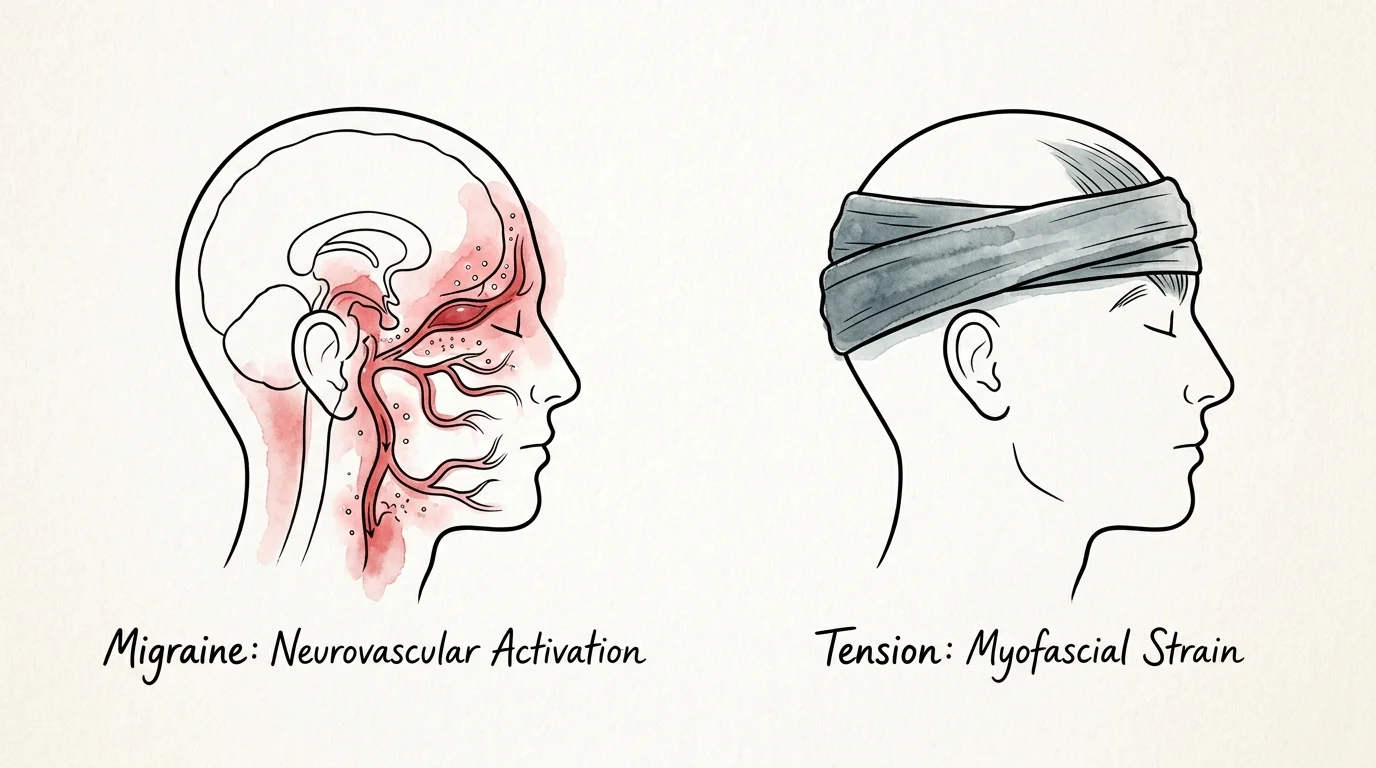
Understanding the Neurobiology: Migraine vs. Tension Headache
Many people treat all head pain as a direct byproduct of emotional exhaustion or tight neck muscles. While everyday stress exacerbates physical tension, a true migraine arises from a fundamentally distinct neurobiological cascade. The World Health Organization identifies headache disorders among the leading causes of global disability, with migraine standing out as an inherited neurological condition rather than a temporary psychological reaction.
During a migraine attack, a wave of altered electrical activity called cortical spreading depression stimulates the trigeminovascular system, releasing calcitonin gene-related peptide (CGRP) and neuroinflammatory neuropeptides. These chemicals dilate cranial vessels and sensitize central pain pathways. In contrast, standard tension headaches originate primarily from pericranial myofascial strain without this profound neurovascular activation. In the United States alone, migraine affects more than 40 million individuals, striking women roughly three times more often than men due to complex neurohormonal interactions.
8 Critical Signs Your Headache Is Actually a Migraine
Clinical diagnostic frameworks, such as the International Headache Society ICHD-3 criteria, establish clear boundaries between ordinary tension headaches and migraine episodes. Identifying these specific patterns helps you differentiate transient stress from a chronic neurological disorder.
1. Unilateral, Throbbing Pain That Pulses With Your Heartbeat
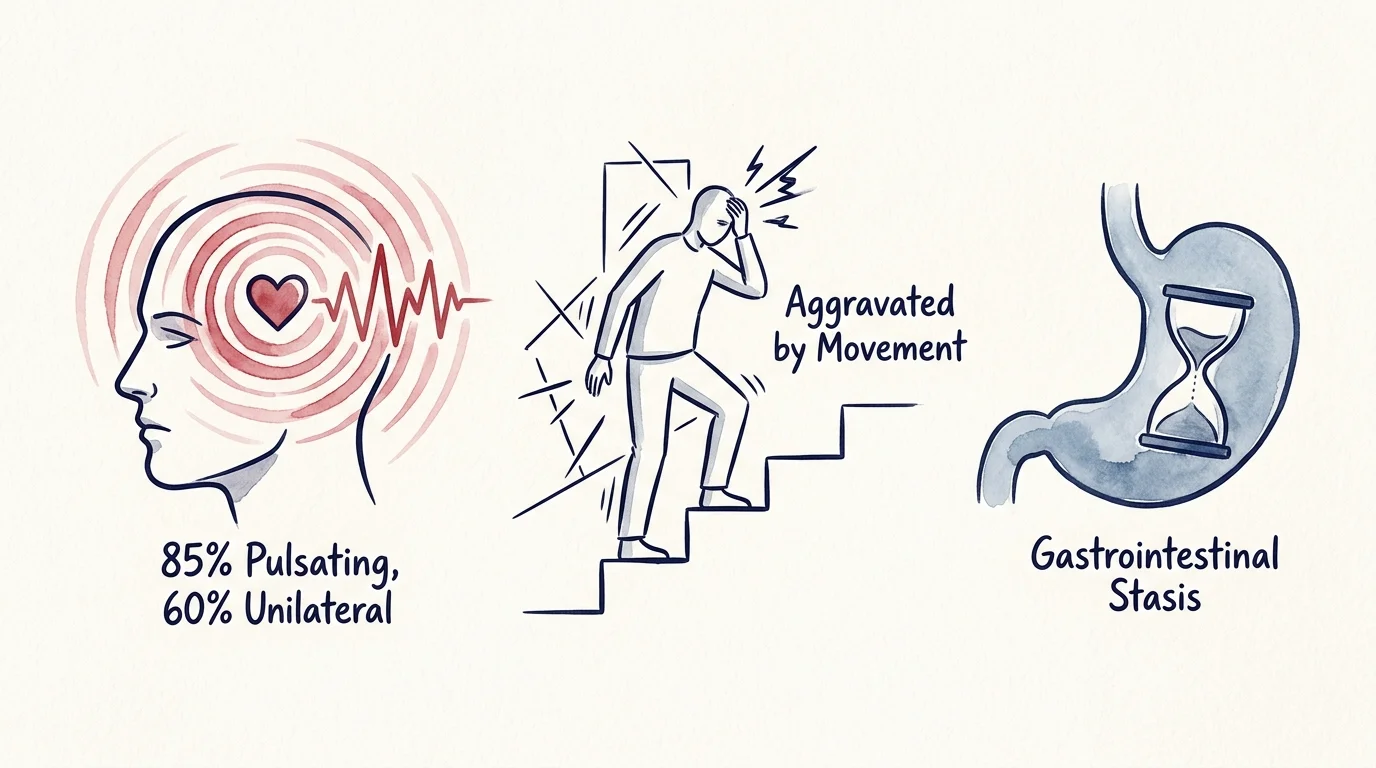
A standard tension headache typically generates a dull, continuous ache that wraps around your forehead like a tight band. Migraine pain presents differently; it throbs or pulsates in rhythm with your heartbeat in up to 85% of documented cases. Furthermore, approximately 60% of migraine attacks localize unilaterally to one side of your head. This intense, pounding sensation stems directly from sensitized trigeminal nerve fibers firing along cranial blood vessels.
2. Routine Physical Movement Dramatically Aggravates the Pain
When you experience a mild tension headache, taking a light walk or finishing chores often provides slight relief by loosening tight musculature. Migraine responds in the exact opposite manner. Routine physical exertion—such as climbing stairs, bending over, or coughing—causes an immediate, sharp surge in pain intensity. This aggravation occurs because physical movement elevates intracranial pressure against already inflamed, hypersensitive cranial tissues, prompting sufferers to seek total stillness.
3. Significant Nausea and Gastrointestinal Disturbance
Migraine is a systemic neurological event that directly disrupts your enteric gut-brain axis. Formal clinical diagnostic criteria require the presence of nausea, vomiting, or significant sensory sensitivities during an attack. During a migraine, your stomach frequently experiences gastric stasis, where normal digestive motility slows dramatically or halts altogether. Pure tension headaches do not cause gastrointestinal upset; if your head pain arrives alongside nausea, your nervous system is signaling a migraine event.
4. Simultaneous Hypersensitivity to Light and Sound
Tension headaches may occasionally make you feel irritable in noisy environments, but migraine induces genuine photophobia and phonophobia. Normal indoor lighting, computer screens, and everyday conversations feel physically painful because central thalamic processing centers lose their ability to filter sensory input. Medical guidelines specify that tension headaches cannot feature both light and sound sensitivity simultaneously. Migraine attacks frequently force individuals into a pitch-black, silent room to avoid sensory overload.
5. Transient Visual or Neurological Auras
Approximately 25% to 30% of people with migraine experience an aura prior to or during their headache phase. An aura consists of reversible neurological disturbances that typically develop over 5 to 20 minutes and last up to 60 minutes. You might notice shimmering zigzag lines, expanding blind spots, flashing lights, or geometric shapes across your visual field. Sensory auras can also manifest as tingling sensations spreading across your face and hands or temporary difficulties with speech.
6. Premonitory Warning Signs During the Prodrome Phase
A tension headache generally strikes without forewarning during periods of overt fatigue. A migraine attack, however, unfolds across distinct phases, frequently beginning 24 to 48 hours before any head pain manifests. This premonitory or prodrome phase produces subtle neurological clues, including uncontrollable yawning, sudden food cravings, stiff neck muscles, fluid retention, and pronounced mood shifts. Recognizing your prodrome allows you to initiate behavioral interventions before debilitating pain takes hold.
7. Cognitive Fog and Exhaustion in the Postdrome Phase
Once a tension headache dissipates, you generally resume normal daily functioning immediately. In contrast, concluding the pain phase of a migraine rarely brings instant relief. Most patients transition into the postdrome phase, often described as a migraine hangover, which persists for 24 to 48 hours. During this period, you may experience profound physical fatigue, diffuse body aches, impaired concentration, dizziness, and cognitive fog as your brain chemistry slowly recalibrates after neurogenic inflammation.
8. Attack Duration Predictably Lasts Between 4 and 72 Hours
Migraine attacks operate on a predictable temporal timeline. In adults, an untreated or unsuccessfully treated migraine episode lasts between 4 and 72 consecutive hours. Tension headaches exhibit a far wider spectrum, lasting anywhere from 30 minutes to an entire week of low-grade discomfort. If your moderate-to-severe throbbing headaches consistently shut down your functional capacity for one to three full days, you are experiencing classic migraine attack patterns rather than simple situational stress.

Clinical Perspectives: Why Accurate Diagnosis Matters
Underestimating migraine as simple stress leads millions into the trap of self-medicating with over-the-counter analgesics. The American Migraine Foundation emphasizes that frequent reliance on combination pain relievers containing acetaminophen, aspirin, and caffeine can trigger medication overuse headaches, transforming episodic attacks into daily chronic pain.
Headache specialists emphasize that treating migraine requires targeted neurochemical stabilization rather than blunt pain suppression. When you articulate your specific symptoms to a board-certified neurologist or primary care clinician, they can prescribe disease-specific rescue medications and formulate a long-term prevention strategy tailored to your individual physiological profile.
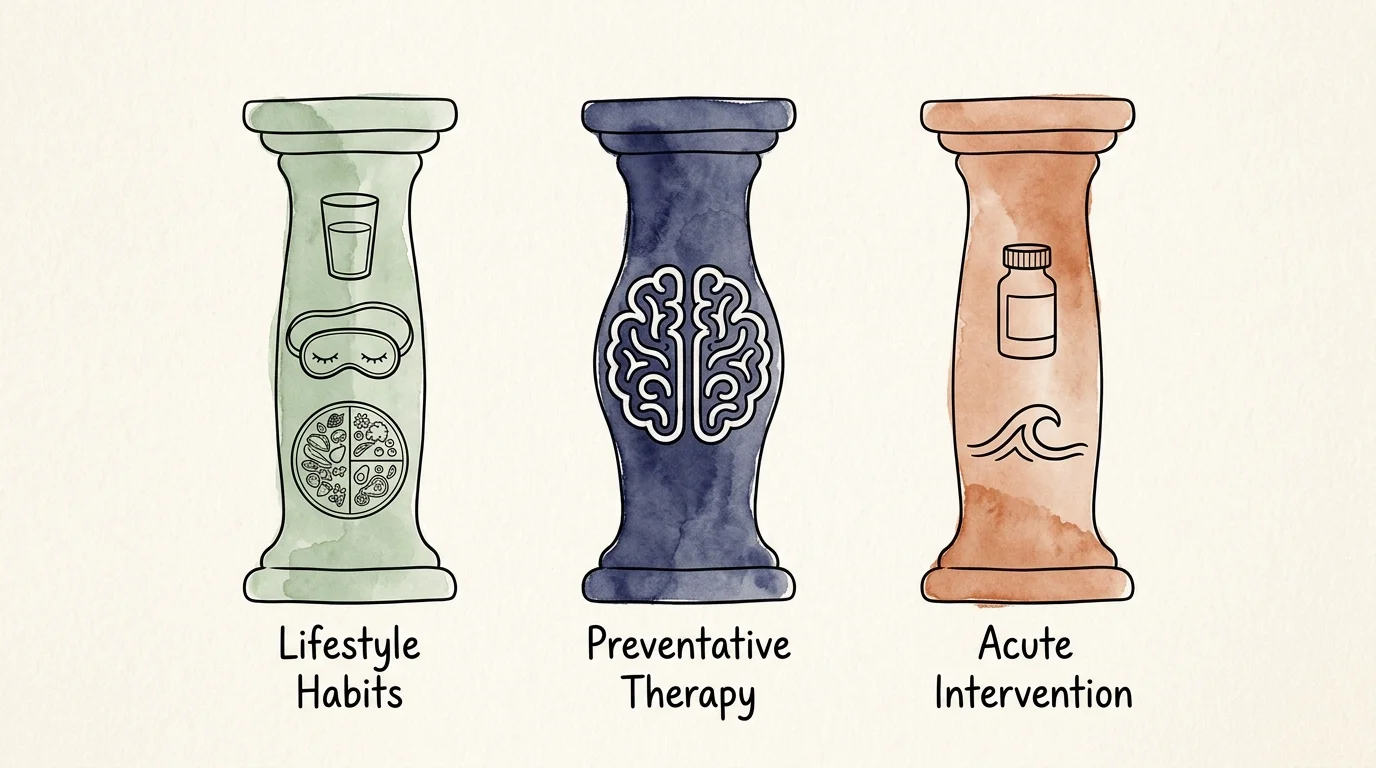
Holistic Strategy Pillars for Migraine Management
Achieving sustainable migraine relief requires a coordinated approach that integrates acute medical options with targeted lifestyle adjustments. You can build resilient defenses against migraine progression by focusing on three evidence-based pillars.
Clinical Care and Acute Medical Intervention
Modern headache medicine offers targeted therapies that directly intercept migraine pathophysiology. Prescription triptans and newer selective 5-HT1F receptor agonists (ditans) abort acute attacks by constricting dilated vessels and blocking trigeminal nerve activation. Furthermore, novel small-molecule CGRP receptor antagonists (gepants) provide effective pain relief without cardiovascular restrictions. The National Institutes of Health supports integrating non-invasive neuromodulation devices that stimulate the vagus or supraorbital nerves to reduce attack frequency alongside prescription regimens.
Nutritional Optimization and Trigger Modulation
Your metabolic stability directly influences migraine threshold levels. Skipping meals triggers rapid blood glucose fluctuations that provoke cortical spreading depression in sensitive brains. Maintain regular eating schedules with balanced complex carbohydrates, healthy fats, and adequate protein to stabilize glycemic levels throughout the day. Evidence-based nutritional supplementation—such as 400 to 600 milligrams of bioavailable magnesium glycinate, 400 milligrams of riboflavin (vitamin B2), and coenzyme Q10—provides essential cellular energy support to neuronal mitochondria. Prioritize continuous hydration, as even minor fluid deficits alter intracranial blood flow dynamics.
Nervous System Regulation and Restorative Movement
Chronic stress lowers your neurological threshold for migraine attacks by keeping your sympathetic nervous system in a perpetual state of hyperarousal. Incorporating structured relaxation techniques—such as diaphragmatic breathing, biofeedback, and progressive muscle relaxation—enhances vagal tone and dampens systemic inflammation. While vigorous exercise during an active attack worsens pain, engaging in regular, low-impact aerobic exercise between attacks reduces baseline attack frequency. Maintain rigid sleep and wake times seven days a week, as circadian disruption remains one of the most potent triggers for migraine onset.
Frequently Asked Questions About Migraine Identification
Can a tension headache transform into a migraine attack?
While tension headaches and migraines represent distinct neurobiological entities, significant physical tension and emotional stress can act as physiological triggers that initiate a migraine in genetically predisposed individuals. Furthermore, tension-type headaches can coexist with migraines, creating mixed headache presentations that require distinct therapeutic interventions.
How do I know if my frequent headaches have become chronic migraine?
Neurologists define chronic migraine as experiencing head pain on 15 or more days per month for at least three consecutive months, with at least 8 of those headache days meeting the full clinical criteria for a migraine attack. If your headache frequency approaches this threshold, you require a specialized preventive treatment plan rather than relying solely on acute abortive medications.
Can emotional stress cause a migraine if I do not have a genetic predisposition?
Stress alone cannot generate the specific neurovascular mechanisms of a migraine in someone who lacks the underlying genetic and biological susceptibility. In individuals without this predisposition, chronic emotional stress typically manifests as classic tension-type headaches, cervical muscle tightness, or temporomandibular joint discomfort rather than true migraine attacks.
When does a headache require emergency medical evaluation?
You must seek immediate emergency medical care if you experience a thunderclap headache that reaches peak intensity within seconds, or if head pain accompanies a high fever, stiff neck, confusion, seizure, vision loss, or focal weakness. The Centers for Disease Control and Prevention advises prompt clinical assessment for any new, severe headache pattern appearing after age 50 or following head trauma.
Your Next Steps Toward Relief
Distinguishing migraine from everyday stress marks the beginning of an empowering health journey. Your most effective first step is keeping a detailed 14-day headache diary, documenting the timing, pain quality, sensory symptoms, and functional impact of every headache episode you experience. Bring these objective observations to a collaborative conversation with your healthcare provider to explore targeted acute and preventive therapies. Take a moment to reflect: how might reframing your symptoms as a legitimate neurological condition change the way you care for your body and mind?









Leave a Reply