

Paying attention to subtle physical changes can save your life, yet many people brush off persistent fatigue, strange visual disturbances, or mild chest discomfort as mere stress or inevitable signs of getting older. When you minimize daily discomfort to keep up with work or avoid burdening your doctor, you risk missing early warnings of serious underlying medical conditions. Healthcare professionals routinely see patients who waited months—or even years—too long to seek care for manageable health issues. Recognizing these downplayed symptoms empowers you to advocate for your body before a minor issue becomes a crisis. Here is what your doctor wants you to notice right now.

Why We Brush Off Pain: The Psychology of Symptom Dismissal
It is surprisingly easy to rationalize a health issue away. You might tell yourself that your joint pain is just the weather, or that your constant fatigue stems from a busy work schedule. A 2025 systematic meta-synthesis published in Psychological Bulletin by researchers at Rutgers Health analyzed 151 qualitative studies involving 11,307 individuals; the authors discovered that patients frequently underreport or minimize their symptoms to clinicians specifically to avoid appearing “dramatic” or exaggerated. This profound fear of being perceived as overly sensitive causes millions of people to delay seeking care, directly leading to missed or delayed diagnoses.
Beyond psychological barriers, real-world structural challenges often influence your decision to see a provider. Fear of medical costs, lack of paid sick leave, and previous negative experiences in healthcare settings create major hurdles. When you feel overwhelmed by these systemic barriers, ignoring a low-grade physical symptom can feel like the easiest path forward. However, acknowledging these feelings is the first step toward reclaiming your health; recognizing that your symptoms are valid medical data allows you to seek care early, before simple problems evolve into complex emergencies.
Cardiovascular and Neurological Indicators You Might Be Ignoring
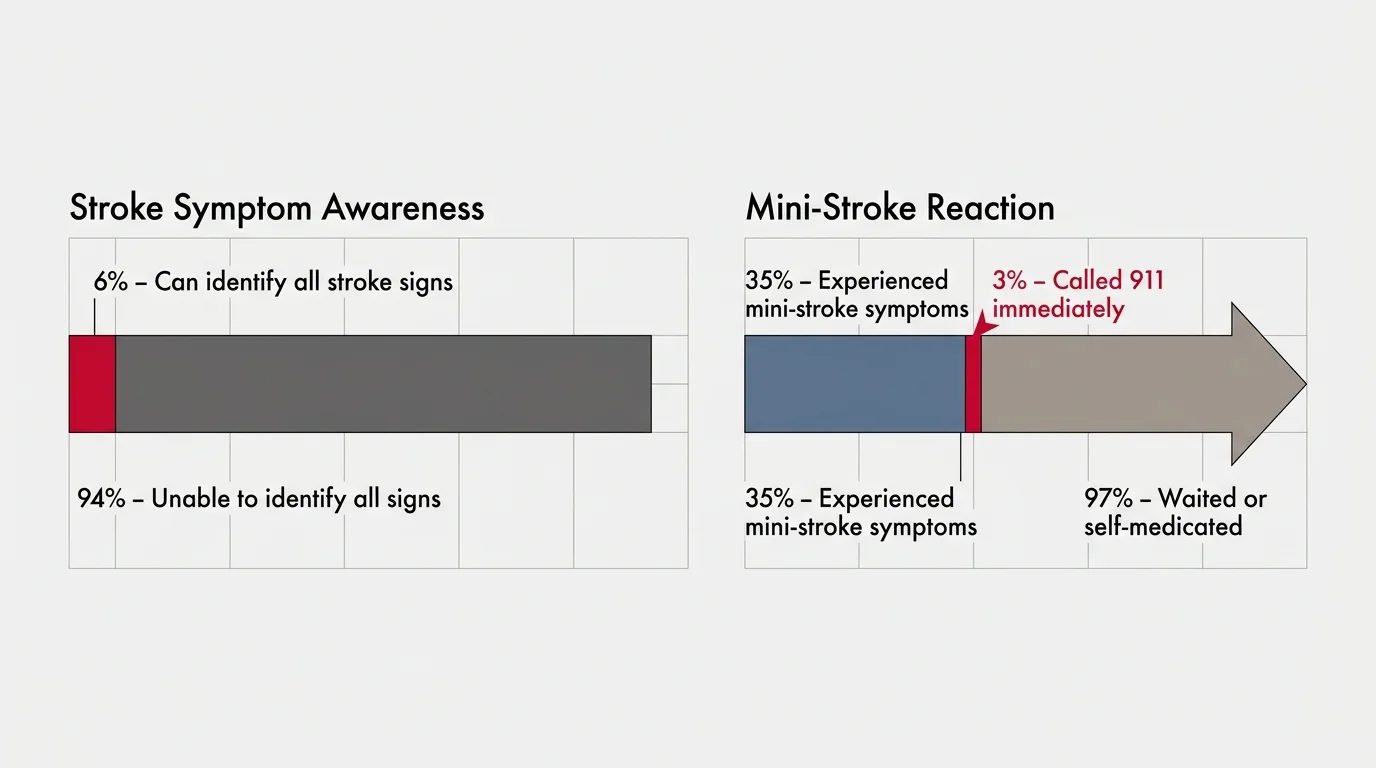
Cardiovascular disease and neurological events rarely strike without warning. Instead, your body usually sends faint distress signals long before a major clinical event occurs. Unfortunately, public awareness regarding these early signals remains alarmingly low. A 2024 MedStar Health survey revealed that only 6% of respondents could correctly identify all standard signs and symptoms of a stroke. This knowledge gap carries grave consequences when seconds count.
Consider transient ischemic attacks, often called “mini-strokes.” According to a survey by the American Heart Association, approximately 35% of U.S. adults reported experiencing at least one symptom consistent with a mini-stroke. Yet, only 3% of those individuals called 911 immediately. The vast majority chose to rest, wait for the feeling to pass, or take self-prescribed over-the-counter medication. Downplaying a temporary spell of dizziness, sudden weakness on one side of your body, or a brief loss of vision can prove catastrophic, as mini-strokes often precede full-blown strokes within days.
Similarly, subtle heart health indicators often go unnoticed. A landmark 2025 study in the Journal of the American College of Cardiology analyzing health data from over 9 million adults across South Korea and the United States revealed that over 99% of patients who suffered a heart attack, stroke, or heart failure had at least one non-optimal risk factor present beforehand. These indicators—such as borderline hypertension, slightly elevated cholesterol, high fasting blood sugar, or light tobacco use—often generate quiet, secondary symptoms like exertion-induced shortness of breath or persistent fluid retention. Taking these early indicators seriously gives you and your medical team a critical window for intervention.

Subtle Body Changes That Could Signal Oncology Risks
When people think of cancer, they often imagine severe pain or dramatic physical shifts. In reality, early-stage malignancies usually produce mild, easily dismissible changes. A comprehensive study published in PLOS ONE by Cancer Research UK examined adults aged 50 and older; researchers found that 53% of participants experienced at least one red-flag alarm symptom over a three-month period. These symptoms included unexplained persistent coughs, abnormal bleeding, and subtle changes in bowel or bladder habits. Crucially, only 2% of those affected recognized that their symptom could potentially indicate cancer, with most participants attributing their body’s signals to aging, minor seasonal infections, or temporary indigestion.
Because early detection dramatically improves cancer survival rates, understanding how your body normally operates is essential. You should never assume that persistent, progressive changes are simply a tax you pay for growing older. The Centers for Disease Control and Prevention emphasizes that identifying red flags early—such as unexplained weight loss, night sweats, or changes in skin moles—dramatically improves treatment outcomes. Partnering with a clinician to investigate these shifts does not mean assuming the worst; it simply ensures you catch potential cell changes at their most treatable stage.

Actionable Pillars to Protect Your Long-Term Health
Transforming how you handle unexpected body signals requires a structured approach. Rather than fluctuating between panic and total dismissal, you can establish clear practices across key pillars of health to protect your long-term wellbeing.
Pillar 1: Systemic Symptom Tracking and Documentation
Your memory can be surprisingly unreliable when you are sitting on an exam table. Establish a simple physical or digital symptom journal. Record the exact date, duration, severity on a scale of one to ten, and potential triggers whenever you notice an unusual sensation. Note how the symptom impacts your daily function—for instance, whether a mild joint ache prevents you from walking your dog or if recurring brain fog limits your productivity at work. Presenting objective data to your physician eliminates guesswork and helps prevent your concerns from being brushed aside.
Pillar 2: Active Medical Self-Advocacy
Effective communication with your doctor is a skill you can practice and refine. When scheduling an appointment, explicitly state that you need to discuss specific, persistent symptoms so the clinic allocates sufficient time. During your visit, state your symptoms directly without minimizing them; avoid phrases like “It is probably nothing, but…” or “I hate to complain.” According to patient advocacy research supported by the National Institutes of Health, clear, direct statements help clinicians build accurate differential diagnoses more efficiently.
Pillar 3: Lifestyle Foundations and Diagnostic Balance
A healthy lifestyle built on targeted nutrition, regular movement, and stress management forms the bedrock of preventive care. Consuming a balanced diet rich in whole foods, staying physically active, and managing daily stress support your immune function and cardiovascular resilience. However, lifestyle habits should complement—not replace—professional medical evaluations. Never rely solely on dietary changes or supplements to treat persistent pain, unusual bleeding, or sudden neurological changes. Use healthy lifestyle habits to maintain baseline wellness while relying on certified medical professionals to investigate underlying clinical alarms.

Real Voices: Insights from Primary Care Clinicians
Primary care physicians frequently express that their biggest clinical challenge is convincing patients to report issues sooner. Dr. Maria Santos, an internal medicine specialist, notes that patients often apologize for making appointments for mild symptoms. “Patients frequently come in for routine physicals and offhandedly mention that they have experienced shortness of breath while climbing stairs for six months,” Dr. Santos shares. “They assume it is just natural aging, but diagnostic testing reveals early heart failure or respiratory disease. We want to see you when the signal is small, because that is when our treatments are most effective.”
Frequently Asked Questions About Overlooked Symptoms
How do I know if my fatigue is just lifestyle stress or something medical?
Lifestyle fatigue usually resolves after a few days of adequate rest, hydration, and stress management. Medical fatigue, on the other hand, persists despite proper sleep and often leaves you feeling physically exhausted even after minimal effort. If your tiredness lasts longer than two weeks, interferes with daily responsibilities, or occurs alongside symptoms like fever, unexplained weight shifts, or swollen lymph nodes, consult a healthcare provider for comprehensive blood testing.
What should I do if I feel like my doctor isn’t taking my symptoms seriously?
If you feel dismissed, remain calm and ask your provider to document their clinical reasoning in your official chart. You can say: “If you do not think my symptoms require further diagnostic testing, could you please note in my record why we are choosing not to investigate?” This simple request encourages clinicians to reconsider their evaluation. You also have every right to seek a second opinion from another qualified specialist or primary care provider through resources like the World Health Organization directories or local medical boards.
Is it ever okay to wait a few days before calling a doctor about new symptoms?
For mild symptoms like a minor sore throat or seasonal sniffles without fever, monitoring your condition for a few days is standard practice. However, acute symptoms—such as chest pain, sudden numbness, slurred speech, high fever, or severe abdominal pain—require immediate medical evaluation. When in doubt, call your doctor’s triage nurse; they can quickly determine whether your situation requires urgent care, an emergency visit, or routine scheduling.
How can social or financial challenges make symptom reporting harder, and where can I find support?
Financial constraints, lack of health insurance, and transportation barriers frequently force individuals to delay medical care until symptoms become severe. Community health centers, federally qualified health centers (FQHCs), and sliding-scale clinics offer affordable medical evaluations regardless of your financial standing. Seeking out local public health departments or patient assistance programs can help you access essential diagnostic care before health conditions escalate.
Taking Your First Step Toward Better Health
Your body possesses an extraordinary ability to communicate its needs, but it relies on you to listen and act. Rather than feeling overwhelmed by every minor sensation, pick one manageable action step today: start a simple health log in a notebook or on your phone, listing any recurring discomforts you have ignored over the past few months. Take a moment to reflect: What physical sign have you been dismissing as ‘normal’ aging or stress, and what is one concrete step you can take this week to have it evaluated by a medical professional?








Leave a Reply