
Your body often whispers before it screams, masking dangerous internal battles behind vague fatigue or mild brain fog. Recognizing hidden infection warning signs early can save your life before tissue damage occurs.
While classic infections announce themselves with high fevers and localized pain, silent infections simmer quietly beneath the radar. Left unchecked, these subclinical threats can rapidly escalate into life-threatening systemic emergencies.
Learning to spot silent infection symptoms empowers you to intervene proactively. This guide reveals the critical indicators of covert illness and outlines practical steps to protect your vitality.
The Hidden Toll: Understanding Sepsis and Silent Infections
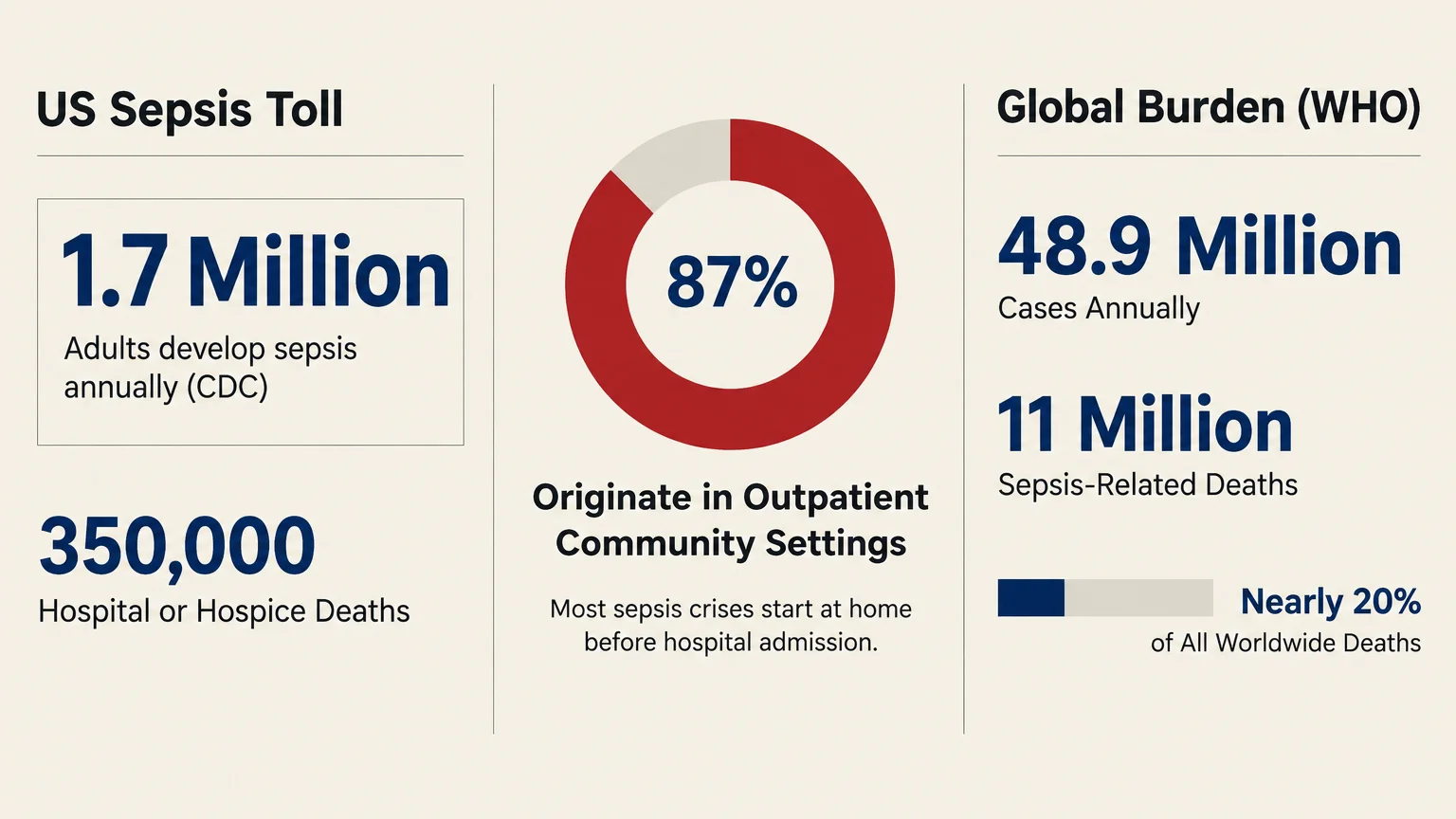
According to the Centers for Disease Control and Prevention, at least 1.7 million adults develop sepsis annually in the United States. Tragically, at least 350,000 die during hospitalization or enter hospice care.
Furthermore, one in three patients who die in American hospitals has sepsis during that stay. Although many assume severe infections begin in intensive care units, clinical data shows otherwise.
An estimated 87 percent of sepsis cases originate in outpatient community settings before hospital admission. These crises typically arise from unnoticed or worsening infections in your urinary tract, lungs, skin, or gut.
Globally, the World Health Organization reports 48.9 million cases and 11 million sepsis-related deaths each year. These numbers account for nearly 20 percent of all worldwide deaths.
Recognizing how quietly these conditions begin gives you the power to intervene early. Early vigilance allows you to act before an infection overwhelms your body.


10 Warning Signs of a Silent Infection
1. Unexplained, Crushing Fatigue
Persistent exhaustion that defies a full night of sleep often indicates an active immunological battle. Your body redirects cellular energy toward immune defenses, draining your daily stamina.
If you experience sudden, profound lethargy without an obvious lifestyle cause, never ignore it. This deep fatigue frequently serves as the earliest harbinger of an occult internal infection.
2. Sub-Normal Body Temperature
Most people associate infection with a blazing fever, but hypothermia poses an even graver threat. Under systemic inflammatory response criteria, a core temperature dropping below 96.8°F (36.0°C) signals a critical emergency.
A falling body temperature indicates that thermoregulatory mechanisms are failing under overwhelming metabolic stress. This warning sign appears frequently in older adults and immunocompromised individuals who cannot mount a fever.
3. Sudden Confusion or Delirium
Acute mental changes represent one of the most critical hidden infection warning signs. Bacterial toxins and systemic inflammation disrupt blood-brain barrier integrity, impairing normal cognitive function.
Geriatric clinicians note that silent urinary tract infections or walking pneumonia often lack localized discomfort. Instead, older adults frequently exhibit sudden disorientation, unexplained agitation, or unexpected falls.
4. Elevated Resting Heart Rate
Your cardiovascular system works harder to deliver oxygenated blood to struggling tissues during systemic inflammation. A sustained resting pulse exceeding 90 beats per minute provides clear evidence of cardiovascular strain.
If your heart races while resting quietly, your body may be compensating for vascular dilation caused by endotoxins. Track your pulse with a wearable monitor or pulse oximeter whenever you feel unwell.
5. Rapid or Shallow Breathing
Breathing faster than normal is a classic, frequently overlooked sign of metabolic distress. Bedside diagnostic standards flag a respiratory rate of 20 to 22 breaths or more per minute as an urgent warning.
As cellular metabolism shifts toward anaerobic pathways, lactic acid accumulates in your bloodstream. Your lungs quicken their pace to blow off excess carbon dioxide and restore proper blood pH.
6. Plummeting Blood Pressure
When an infection spreads unchecked, inflammatory cytokines cause widespread vasodilation and fluid leakage from capillaries. A systolic blood pressure dropping to or below 100 mm Hg indicates compromised tissue perfusion.
Low blood pressure deprives vital organs of essential nutrients and oxygen. You might notice sudden lightheadedness upon standing, extreme dizziness, or a sensation that you might faint.
7. Changes in Urination and Fluid Balance
Your kidneys are exceptionally sensitive to systemic inflammation and reduced blood flow. A marked reduction in urine output, or urine that appears dark and concentrated, demands immediate attention.
Silent urinary tract infections do not always trigger burning sensations or pelvic pain. Instead, producing very little urine throughout the day may be your only visible indicator of renal distress.
8. Subtle Night Sweats and Clammy Skin
Fluctuating internal temperatures often manifest as nocturnal drenching sweats alternating with cold chills. When your immune system releases pyrogens in intermittent bursts, your vascular tone shifts erratically.
Pay close attention if your skin feels cool, clammy, or pale. Poor peripheral microcirculation reveals that your central organs are fighting desperately to maintain baseline function.
9. Disproportionate Muscle Aches
Intense, generalized muscle pain without strenuous exercise suggests immune-mediated cellular breakdown. Pro-inflammatory signaling molecules irritate nerve endings and degrade muscle proteins to supply amino acids for antibody synthesis.
Patients often describe this sensation as feeling bruised down to their bones. When muscle weakness prevents you from climbing stairs or lifting ordinary objects, seek prompt evaluation.
10. Poor Wound Healing and Mottled Skin
A minor scratch, surgical incision, or insect bite that refuses to heal can harbor deep-seated microbes. Local tissues struggle to regenerate when subclinical bacterial colonies divert resources and sustain chronic inflammation.
Watch for faint red streaking, delayed scab formation, or purplish, mottled skin patterns on your extremities. Mottled skin reflects microvascular collapse and demands immediate evaluation by a healthcare professional.

Evaluating Urgency: The CDC TIME Framework
Recognizing when an infection is serious can mean the difference between rapid recovery and critical complications. Medical providers utilize the TIME framework to help you identify emergencies swiftly.
The letter T stands for Temperature, reminding you to check for readings higher than 100.4°F or lower than 96.8°F. Both extremes signify systemic distress that requires medical assessment.
The letter I represents Infection, prompting you to review recent cuts, dental procedures, invasive treatments, or lingering colds. Even minor localized issues can quietly seed systemic trouble.
The letter M highlights Mental decline, urging you to monitor for unusual drowsiness, slurred speech, confusion, or severe lethargy. Any sudden change in cognitive ability requires immediate clinical evaluation.
Finally, the letter E means Extremely ill, capturing severe pain, breathlessness, or a feeling that you might die. Trust your instincts whenever your body sends such intense distress signals.

Three Strategy Pillars for Immune Resilience and Proactive Care
Pillar 1: Clinical Advocacy and Objective Biomarkers
Never hesitate to seek medical evaluation when subtle symptoms linger for several days. Ask your physician to order objective blood tests, such as a complete blood count and comprehensive metabolic panel.
Elevated white blood cell counts and high C-reactive protein levels illuminate hidden inflammation. Consulting guidelines from the Infectious Diseases Society of America can help you understand standard diagnostic protocols.
Invest in basic home diagnostic tools, including a reliable digital thermometer, an automated blood pressure cuff, and a pulse oximeter. Tracking your baseline vitals allows you to spot abnormal physiological deviations immediately.
Pillar 2: Anti-Inflammatory Nutrition and Gut Defense
Roughly 70 percent of your immune tissue resides within your gastrointestinal tract. Nourishing your gut microbiome provides the primary defense against bacterial translocation and systemic infiltration.
Prioritize diverse, fiber-rich whole foods, fermented items, and polyphenol-packed vegetables to foster resilient microbial communities. Guidance from the Academy of Nutrition and Dietetics emphasizes colorful produce to supply critical micronutrients like zinc and vitamin C.
Simultaneously, minimize ultra-processed foods, refined sugars, and excessive alcohol intake during illness. These dietary stressors degrade epithelial barrier integrity and impair your white blood cells from clearing pathogens effectively.
Pillar 3: Nervous System Regulation and Cellular Rest
Chronic emotional stress floods your bloodstream with cortisol, which blunts your immune response over time. High stress levels suppress natural killer cell activity and delay the resolution of localized inflammatory responses.
Incorporate somatic practices such as slow diaphragmatic breathing, restorative movement, and structured daily decompression. Engaging your vagus nerve stimulates the cholinergic anti-inflammatory pathway, keeping inflammatory cascades in check.
Prioritize seven to nine hours of quality sleep each night without compromise. Deep slow-wave sleep stimulates cytokine production and enables the physiological repair necessary to defeat smoldering pathogens.

Voices from the Frontlines
Experienced clinicians emphasize that atypical presentations remain the greatest barrier to early diagnosis. In community clinics, providers routinely treat individuals whose only initial complaint was subtle exhaustion or mild unsteadiness.
Dr. Marcus Vance, an emergency medicine physician, regularly cautions his patients against ignoring intuition. He notes that family members frequently bring in older adults simply because something felt off.
Dr. Vance shares that blood cultures often reveal advanced bacteremia despite normal temperatures in elderly patients. Taking subtle cognitive shifts seriously prevents catastrophic declines in hospital settings.
Critical care nurse Elena Gomez emphasizes the value of early physiological tracking. She reminds patients that resting vitals never lie when your body encounters covert bacterial or viral invaders.
Frequently Asked Questions
How can an infection be silent if pathogens are actively multiplying?
Some pathogens produce stealth virulence factors that suppress your initial inflammatory alarm systems. Alternatively, your immune system may partially contain the microbe without completely eradicating it, producing low-grade, vague systemic symptoms.
In other cases, chronic conditions like diabetes or renal insufficiency blunt your inflammatory response. As a result, the infection spreads silently without triggering traditional localized pain or high fever.
Why do older adults experience confusion instead of a fever?
Aging immune systems undergo immunosenescence, diminishing their ability to generate pyrogenic cytokines that raise core body temperatures. Consequently, the brain bears the metabolic burden of systemic stress first.
Vulnerable cerebral microvasculature reacts swiftly to circulating inflammatory mediators, causing sudden delirium, memory lapses, or altered alertness. Never dismiss acute disorientation in an elderly loved one as ordinary aging.
When should you choose urgent care versus an emergency room?
Visit an urgent care center if you experience mild, localized symptoms accompanied by stable vital signs and clear cognition. Clinicians there can perform rapid diagnostic swabs, basic urine screenings, and outpatient prescription management.
Seek immediate emergency room care if you exhibit low blood pressure, severe breathlessness, chest pain, or confusion. Sepsis is a medical emergency where every passing hour dictates survival outcomes.
Can routine blood work detect a hidden infection before symptoms escalate?
Standard blood tests frequently unveil hidden infections before overt physiological collapse takes place. Clinicians analyze elevated white blood cell counts, immature band cells, and elevated erythrocyte sedimentation rates for diagnostic clues.
According to diagnostic resources from the National Institutes of Health, specialized serum biomarkers like procalcitonin differentiate bacterial infections from non-infectious inflammation. Review your laboratory findings thoroughly with your physician to guide tailored therapy.
Taking Action: Your Next Steps
Protecting yourself from silent infections begins with cultivating deep somatic awareness and recognizing baseline metrics. When you know your typical resting heart rate and normal temperature, subtle fluctuations become unmistakable alarms.
Take five minutes today to check and record your baseline vitals using simple home monitoring tools. Keep this log accessible so you can spot physiological trends whenever you begin feeling unwell.
Reflect on how you currently respond to subtle whispers of fatigue or physical discomfort. Do you push through exhaustion, or do you honor your body by investigating the underlying cause?
Commit to trusting your instincts and seeking qualified clinical care whenever warning signs emerge. Partnering proactively with medical professionals ensures that hidden infections never compromise your long-term health and vitality.

Leave a Reply