
Three Strategy Pillars for Immune Resilience and Proactive Care
Pillar 1: Clinical Advocacy and Objective Biomarkers
Never hesitate to seek medical evaluation when subtle symptoms linger for several days. Ask your physician to order objective blood tests, such as a complete blood count and comprehensive metabolic panel.
Elevated white blood cell counts and high C-reactive protein levels illuminate hidden inflammation. Consulting guidelines from the Infectious Diseases Society of America can help you understand standard diagnostic protocols.
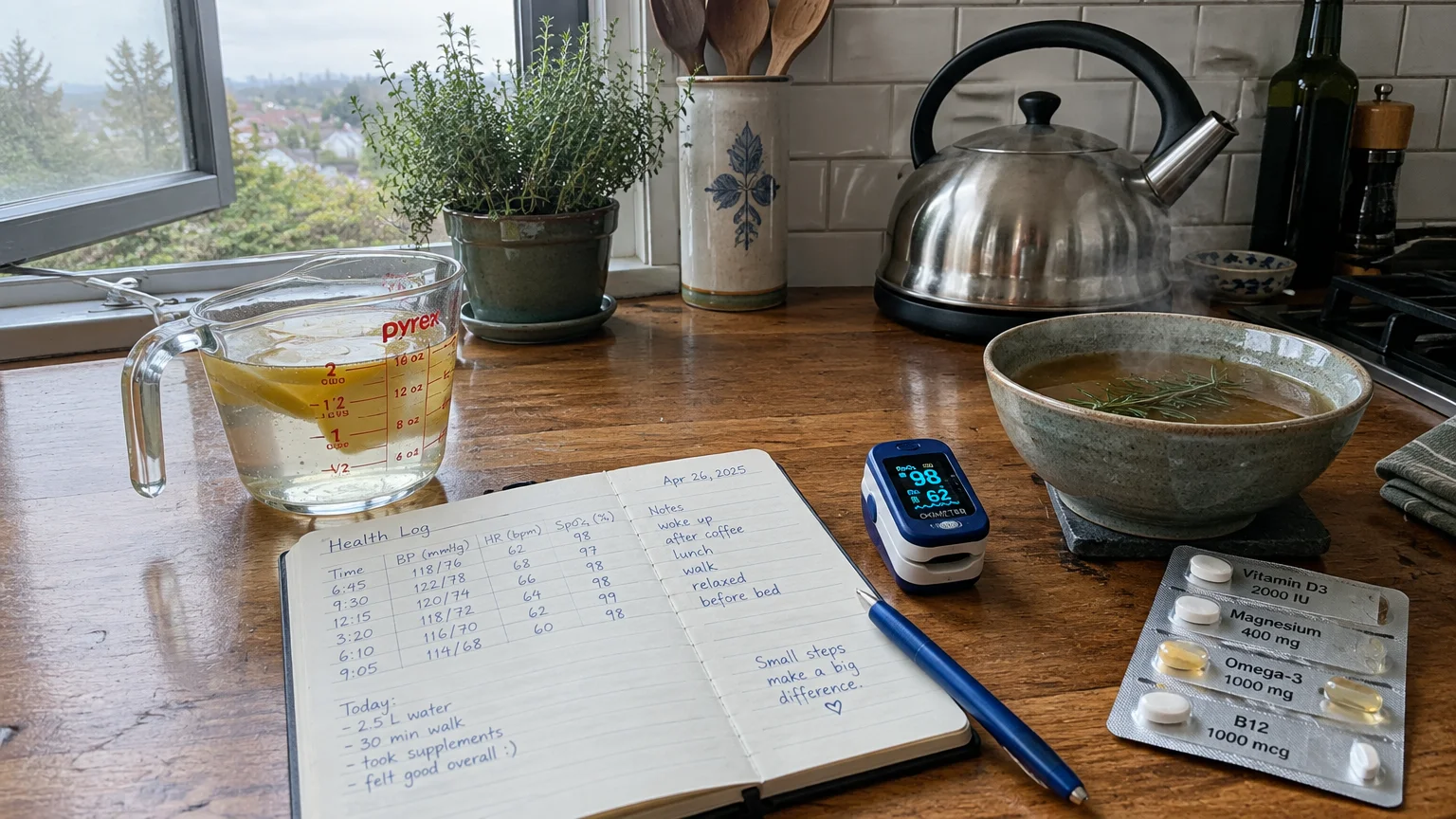
Invest in basic home diagnostic tools, including a reliable digital thermometer, an automated blood pressure cuff, and a pulse oximeter. Tracking your baseline vitals allows you to spot abnormal physiological deviations immediately.
Pillar 2: Anti-Inflammatory Nutrition and Gut Defense
Roughly 70 percent of your immune tissue resides within your gastrointestinal tract. Nourishing your gut microbiome provides the primary defense against bacterial translocation and systemic infiltration.
Prioritize diverse, fiber-rich whole foods, fermented items, and polyphenol-packed vegetables to foster resilient microbial communities. Guidance from the Academy of Nutrition and Dietetics emphasizes colorful produce to supply critical micronutrients like zinc and vitamin C.
Simultaneously, minimize ultra-processed foods, refined sugars, and excessive alcohol intake during illness. These dietary stressors degrade epithelial barrier integrity and impair your white blood cells from clearing pathogens effectively.
Pillar 3: Nervous System Regulation and Cellular Rest
Chronic emotional stress floods your bloodstream with cortisol, which blunts your immune response over time. High stress levels suppress natural killer cell activity and delay the resolution of localized inflammatory responses.
Incorporate somatic practices such as slow diaphragmatic breathing, restorative movement, and structured daily decompression. Engaging your vagus nerve stimulates the cholinergic anti-inflammatory pathway, keeping inflammatory cascades in check.
Prioritize seven to nine hours of quality sleep each night without compromise. Deep slow-wave sleep stimulates cytokine production and enables the physiological repair necessary to defeat smoldering pathogens.









I’m a 74 year old female, still working part-time. In good health. Your 10 warning signs of a silent infection was very informative.
I have lots of pains every place but its go’s up and down at times but can’t do everything for it will go up and have to stop to do nothing. My most pain is in my low back and sides, then I have my arms and legs where I have pain at times. I do not work for can’t walk very much but I try. I also have head aces at times and around my neck. I do like to drive all the time but that’s all for I just sit down and look around me to go wherever I’m going. And I do feel at times pain in my arms and feet. I have been going through this for many years and always pray about it.