

Your nighttime bathroom trips and subtle changes in urine flow provide vital clues about your prostate health. Recognizing these shifts early allows you to protect your bladder, sleep peacefully, and reclaim control over your daily routine.
Benign prostatic hyperplasia, commonly called BPH, affects roughly half of all men in their fifties and up to ninety percent of men over seventy. Understanding the difference between normal aging and clinical obstruction ensures you get timely, effective care.
Here are twelve warning signs of prostate enlargement you should monitor, along with practical, evidence-based strategies to protect your long-term vitality.
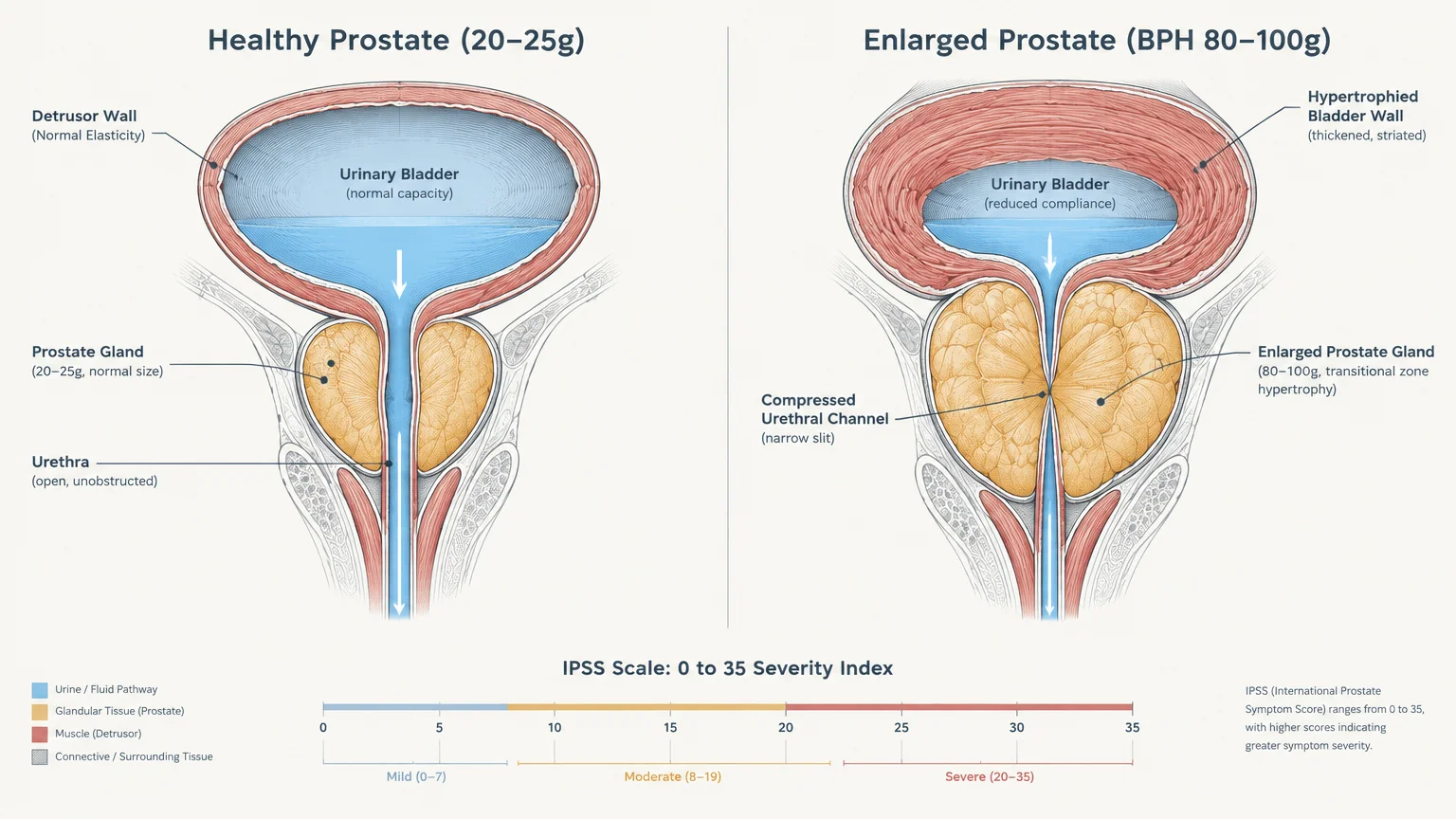
Science Snapshot: Understanding Prostate Enlargement
A healthy adult prostate resembles the size of a walnut, weighing approximately 20 to 25 grams. As cellular growth accelerates in the gland’s transitional zone, the tissue often expands beyond 30 to 40 grams.
In severe cases of benign prostatic hyperplasia, the prostate can exceed 80 to 100 grams. Because the prostate surrounds the upper urethra, this glandular expansion directly impinges upon the urinary channel.
Your bladder must work significantly harder to pump liquid past this mechanical blockage. Over time, the bladder muscular wall thickens and loses elasticity; this progressive strain triggers uncomfortable urinary symptoms.
Urologists evaluate this progression using the International Prostate Symptom Score developed by the American Urological Association. This diagnostic index ranks symptom severity from zero to 35, categorizing challenges into mild, moderate, or severe stages.
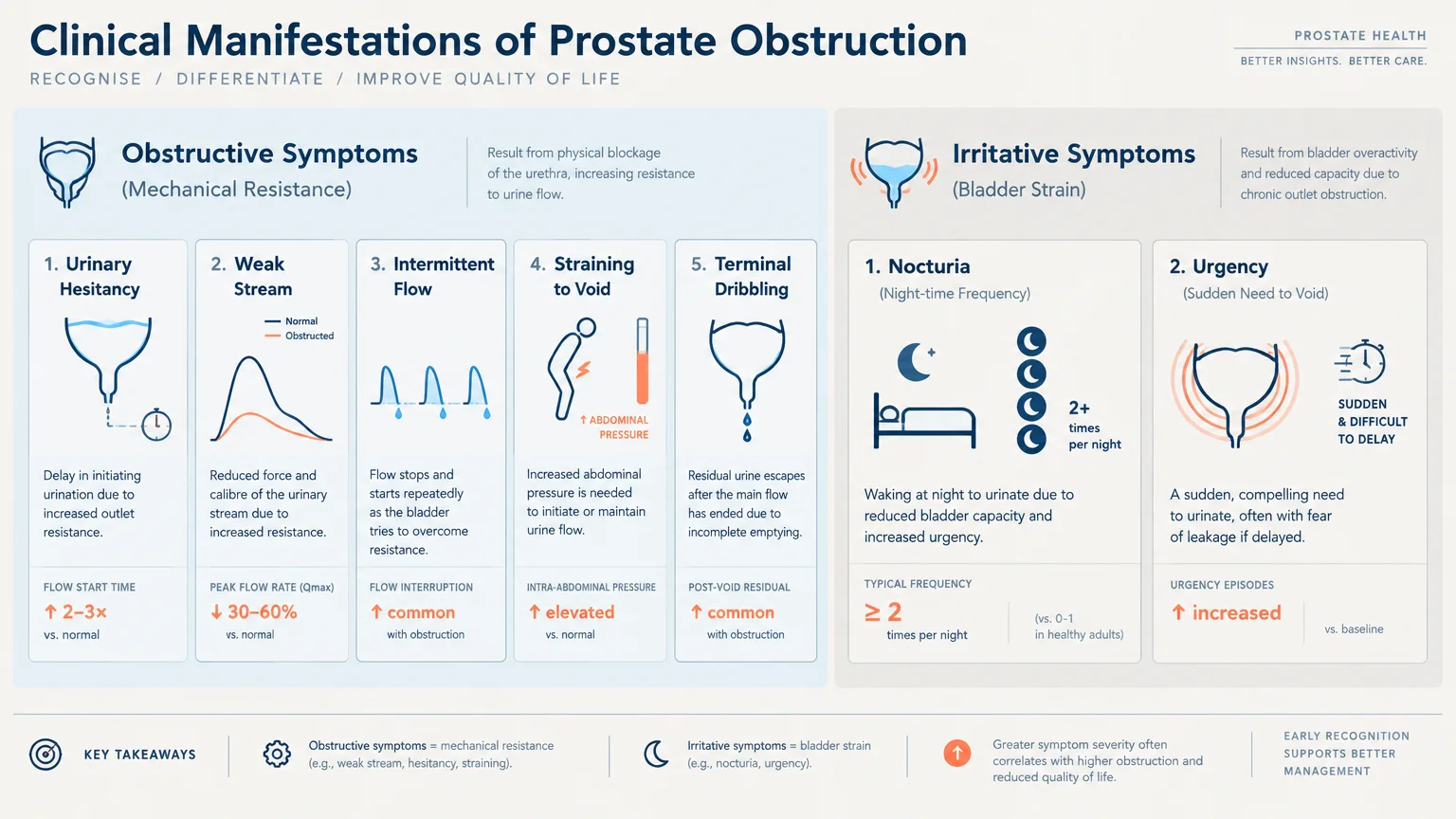
12 Warning Signs of an Enlarged Prostate
Recognizing early warning signs helps you identify obstruction before bladder damage occurs. Clinicians divide these manifestations into obstructive symptoms caused by physical blockage and irritative symptoms caused by bladder strain.
1. Urinary Hesitancy
Hesitancy occurs when you stand before the toilet and experience an involuntary delay before urination begins. You may wait several seconds or even minutes for the stream to initiate.
This delay happens because the bladder muscle must generate elevated pressure to overcome prostate resistance. The urethra remains squeezed shut until internal bladder pressure sufficiently rises.
2. Weak or Diminished Stream
A reduced urine flow velocity is one of the most reliable indicators of urethral narrowing. Your stream may lose its forceful arc, dropping straight down toward your feet.
Urodynamic studies demonstrate that progressive prostate enlargement directly restricts urethral caliber. This restriction slows peak flow rates and prolongs the time required to empty your bladder.
3. Intermittent Flow
Intermittency describes a stream that starts, stops, and restarts multiple times during a single bathroom visit. Rather than producing a steady flow, your body voids in staccato bursts.
This pattern indicates that your detrusor muscle struggles to sustain a continuous contraction against anatomical resistance. As the muscle fatigues mid-void, the flow briefly cuts off.
4. Straining to Void
Healthy urination relies on spontaneous bladder contractions paired with sphincter relaxation. If you must bear down with abdominal muscles to force urine out, your prostate likely obstructs the path.
Chronic abdominal straining increases intra-abdominal pressure, raising your risk for secondary complications such as inguinal hernias and hemorrhoids over time.
5. Terminal Dribbling
Terminal dribbling occurs when urine trickles slowly at the conclusion of voiding. You may feel finished, yet persistent droplets soil your undergarments as you step away.
This prolonged dribble stems from urine pooling in the prostatic urethra behind the obstruction. The trapped fluid slowly leaks outward once voluntary bladder contractions cease.
6. Sensation of Incomplete Bladder Emptying
Experiencing an unfulfilled sensation immediately after urinating signals persistent retention. Even after thorough voiding efforts, you feel as though your bladder remains partially full.
According to the National Institute of Diabetes and Digestive and Kidney Diseases, this lingering sensation indicates that significant residual urine remains trapped in your bladder.
7. Nocturia
Nocturia represents waking two or more times per night specifically to urinate. While waking once can occur with aging, frequent awakenings disrupt sleep cycles and impair daytime vitality.
Because your bladder never empties fully during the day, its functional capacity drops dramatically. Consequently, your bladder reaches full capacity much faster while you rest.
8. Daytime Urinary Frequency
A typical adult urinates six to seven times daily under normal fluid intake. Needing to void more than eight times daily, or at intervals under two hours, signals clinical frequency.
This persistent urge develops because the bladder wall becomes hypersensitive from sustained resistance. Even modest fluid accumulation triggers sensory stretch receptors that prompt an immediate bathroom run.
9. Sudden, Compelling Urgency
Urinary urgency is a sudden, compelling sensation that requires you to find a restroom immediately. Unlike normal gradual filling, this urge feels irresistible and cannot be deferred easily.
Chronic obstruction causes involuntary spasms within the bladder musculature. These uninhibited detrusor contractions create sudden pressure spikes that demand immediate relief.
10. Urge Incontinence or Leakage
When sudden urgency overwhelms your urethral sphincter, involuntary leakage can occur before you reach the toilet. This distressing symptom frequently forces individuals to alter their daily routines.
Overactive bladder contractions easily overcome pelvic floor support when prostate tissue blocks the outlet. Addressing the obstruction directly helps calm these erratic muscular surges.
11. Recurrent Urinary Infections or Bladder Stones
Stagnant urine trapped in an incompletely emptied bladder creates a fertile breeding ground for bacterial colonies. Stagnant fluid also allows mineral deposits to crystallize into painful bladder stones.
Men rarely develop urinary tract infections under normal physiological conditions. Repeated infections strongly suggest that chronic urinary stasis requires professional medical evaluation.
12. Hematuria
Hematuria involves visible or microscopic blood appearing in your urine. While stretched, fragile vessels across an enlarged prostate can bleed, hematuria represents a critical red flag.
You must never ignore blood in your urine, whether it appears bright pink, tea-colored, or dark red. Urologists must promptly investigate this symptom to rule out bladder or kidney malignancies.
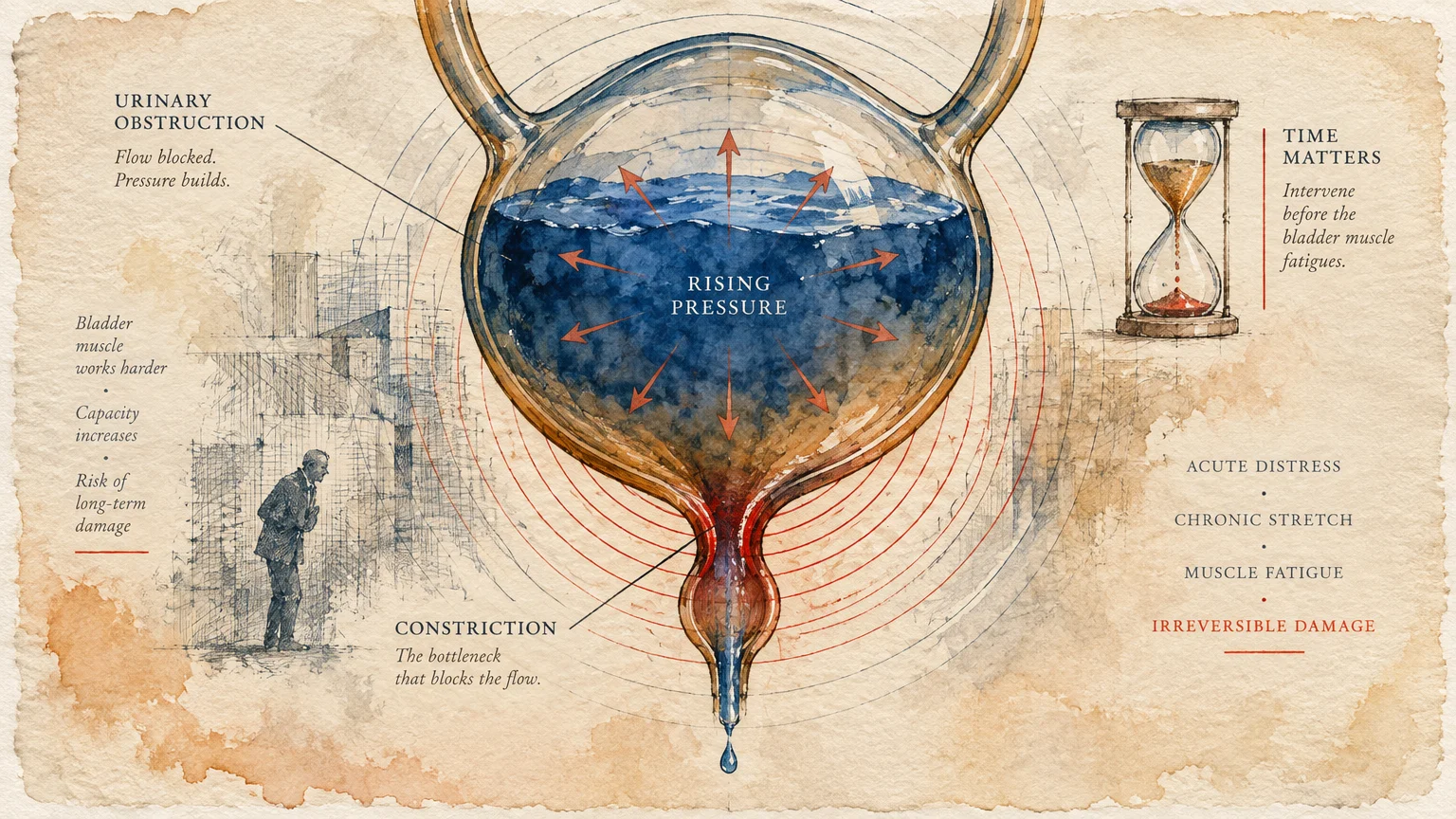
Clinical Complications: When BPH Becomes Urgent
Ignoring escalating urinary symptoms can lead to severe health consequences that extend far beyond daily inconvenience. Acute urinary retention represents a sudden, painful inability to pass urine despite an agonizingly full bladder.
The incidence of acute retention rises from 6.8 per 1,000 person-years in younger cohorts to roughly 34.7 in men aged 70 and older. This crisis demands immediate emergency catheterization.
Unrelieved chronic obstruction can also cause high-pressure backflow into the ureters and kidneys, known as hydronephrosis. Over time, this backward pressure damages renal nephrons and causes permanent kidney dysfunction.

Strategy Pillars for Prostate Health
Proactive care provides remarkable relief for mild to moderate symptoms while halting disease progression. Combining targeted lifestyle adjustments with clinical supervision allows you to preserve your quality of life.
Nutrition and Dietary Adjustments
Modifying what and when you drink creates rapid improvements in urinary frequency. Restrict heavy fluid intake two to three hours before bedtime to reduce nighttime awakenings.
Cut down on bladder irritants such as excessive caffeine, alcohol, artificial sweeteners, and heavily spiced foods. These substances inflame the bladder lining and aggravate urgency.
Adopt an anti-inflammatory dietary pattern rich in tomatoes, cruciferous vegetables, berries, and omega-3 fatty acids. Research documented by the Centers for Disease Control and Prevention highlights how chronic inflammation drives progressive metabolic and glandular disorders.
Targeted Movement and Pelvic Floor Conditioning
Physical inactivity worsens lower urinary tract symptoms by promoting systemic inflammation and metabolic dysfunction. Engaging in brisk walking for thirty minutes five days a week noticeably improves voiding parameters.
Pelvic floor muscle training, taught by physical therapists, strengthens the muscles supporting your bladder neck. These exercises improve urethral closure, helping you suppress sudden urgency and prevent post-void dribbling.
Mindset and Habit Modification
Practicing double voiding helps empty your bladder more completely without painful straining. After finishing your initial stream, remain relaxed for thirty seconds before gently attempting to void once more.
Chronic psychological stress activates your sympathetic nervous system, tightening smooth muscle fibers within the prostate capsule and bladder neck. Regular diaphragmatic breathing calms these involuntary spasms and facilitates smoother voiding.
Medical Care and Stepwise Therapies
Clinical management follows a thoughtful, stepwise path based on your symptom severity score. For mild scores under eight, watchful waiting paired with structured lifestyle modification remains the standard clinical approach.
If symptoms progress to moderate or severe levels, evidence-based medications offer substantial relief. Alpha-blockers relax smooth muscle around the prostate, while 5-alpha-reductase inhibitors actually shrink the physical gland over several months.
A comprehensive review in the National Library of Medicine underscores that combining these medication classes dramatically lowers the long-term risk of acute retention. Minimally invasive interventions also provide lasting tissue reduction when medications prove insufficient.

Real Voices: Clinical Perspectives on Early Action
Dr. Marcus Vance, a board-certified urologist, notes that men often tolerate worsening symptoms for years before seeking help. “Patients frequently assume waking three times a night is simply inevitable aging,” he explains.
“In reality, early intervention prevents bladder decompensation and saves men from emergency catheterization,” Dr. Vance emphasizes. “Simple adjustments initiated during early stages preserve your bladder health indefinitely.”
Patients who adopt combined lifestyle modifications frequently report regaining several uninterrupted hours of sleep within weeks. Recognizing warning signs early transforms anxiety into focused, restorative action.
Frequently Asked Questions
Does an enlarged prostate increase your risk of prostate cancer?
Benign prostatic hyperplasia does not cause or increase your risk of developing prostate cancer. Both conditions can exist simultaneously, however, making routine clinical evaluations essential to distinguish between them.
Can lifestyle and dietary changes alone shrink an enlarged prostate?
Lifestyle adjustments ease urinary symptoms, reduce inflammation, and calm bladder irritability, but they rarely shrink physical prostate volume significantly. Gland reduction generally requires targeted prescription medications or urological procedures.
How do physicians diagnose benign prostatic hyperplasia?
Physicians assess your medical history, calculate your symptom score, and perform a digital rectal examination to gauge gland size. They may also order urinalysis, post-void residual ultrasound scans, and blood tests.
When does an enlarged prostate require emergency medical attention?
Seek immediate emergency medical care if you experience a complete inability to urinate accompanied by severe abdominal pain. Fever, chills, severe back pain, or heavy blood in your urine also demand immediate treatment.
Reclaiming Your Daily Comfort and Rest
You do not have to accept interrupted sleep and frustrating bathroom delays as an unchangeable reality of aging. Modern urological science provides practical, proven tools to restore comfort, confidence, and uninterrupted rest.
Take your first proactive step today by keeping a detailed 48-hour bladder diary. Record what you drink, how often you urinate, and how many times you wake during the night.
What subtle shifts have you noticed in your daily habits, and how would sleeping soundly improve your vitality tomorrow? Share your diary with your physician to design an effective, personalized wellness plan.







Leave a Reply