

If you take thyroid hormone replacement, lingering exhaustion or sudden heart palpitations mean your daily dose may be misaligned. Pinpointing whether your medication is too potent or insufficient helps you quickly restore steady vitality.
Thyroid hormone orchestrates your cellular metabolism, internal thermostat, heart rhythm, and mental focus. When circulating hormone levels shift outside your optimal window, your body sounds distinct physical warning alarms.
Recognizing twelve unmistakable physical cues allows you to identify signs of wrong thyroid dose and request timely diagnostic blood work. This knowledge ensures you collaborate effectively with your physician to regain long-term equilibrium.
The Science of Thyroid Dosing and Therapeutic Windows
Levothyroxine consistently ranks among the most prescribed pharmaceuticals in the United States, serving approximately 23 million Americans every year. Yet maintaining proper physiological balance remains a delicate clinical challenge.
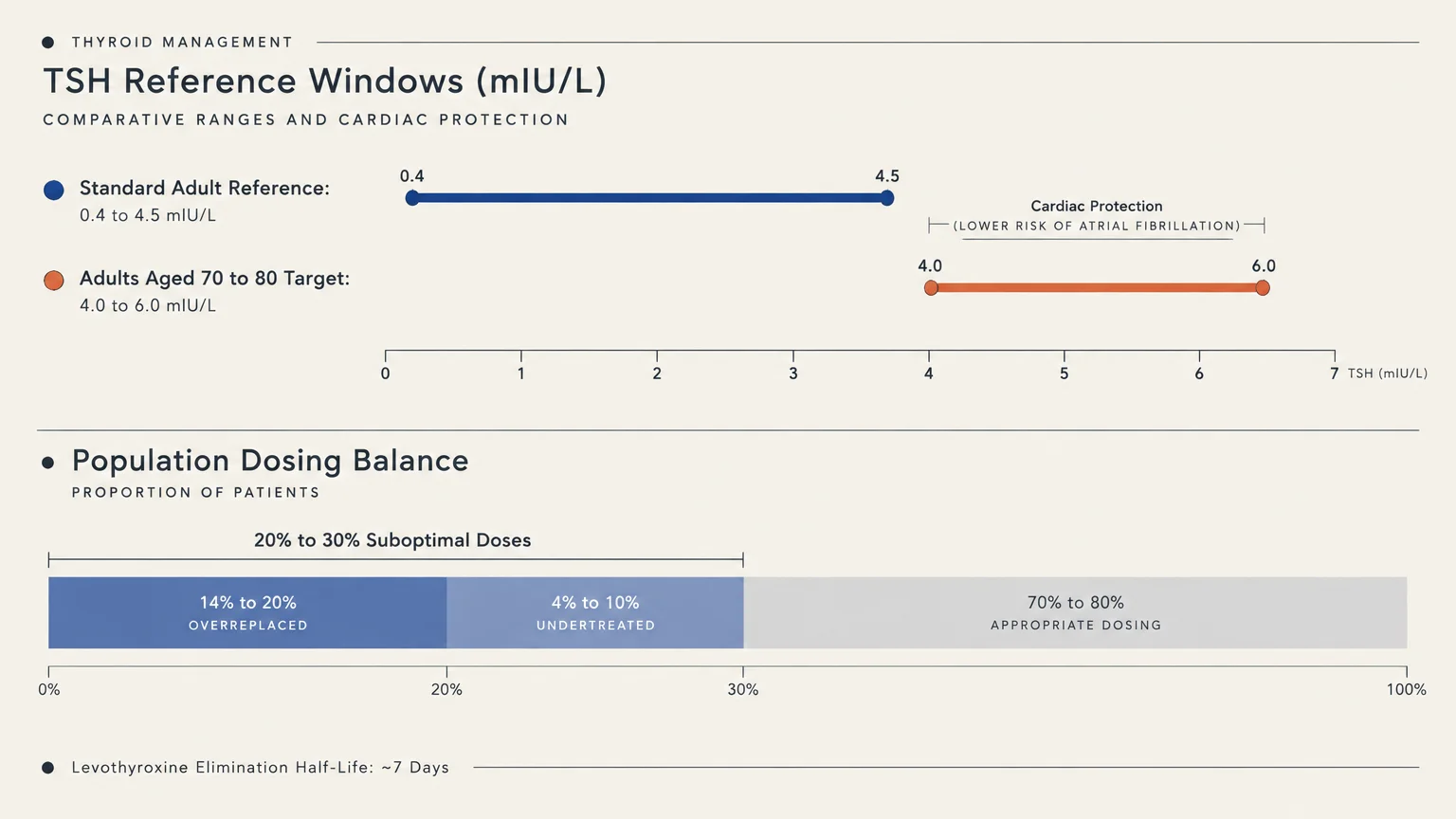
Population studies reveal that 20 to 30 percent of patients on thyroid replacement receive suboptimal doses. Roughly 14 to 20 percent experience overreplacement, while 4 to 10 percent remain undertreated.
The standard adult reference range for thyroid-stimulating hormone (TSH) spans 0.4 to 4.5 mIU/L. However, conventional laboratory ranges do not fit every individual body.
The American Thyroid Association recommends a higher target range of 4.0 to 6.0 mIU/L for adults aged 70 to 80. This clinical adjustment prevents cardiovascular strain and accelerated bone loss.
Adults over age 70 face a fourfold higher overtreatment risk than younger individuals. Excess thyroid hormone strains aging heart tissue and depletes bone mineral density over time.
Because levothyroxine carries an elimination half-life of roughly seven days, physiological adaptations unfold gradually. Any change in your daily regimen requires several weeks before fully stabilizing within your tissues.
Six Signs Your Thyroid Medication Dose Is Too High
When you consume more thyroid hormone than your tissues require, your cellular engines accelerate excessively. Recognizing these thyroid medication side effects early prevents long-term health complications.
1. Unexplained Heart Palpitations or a Racing Pulse
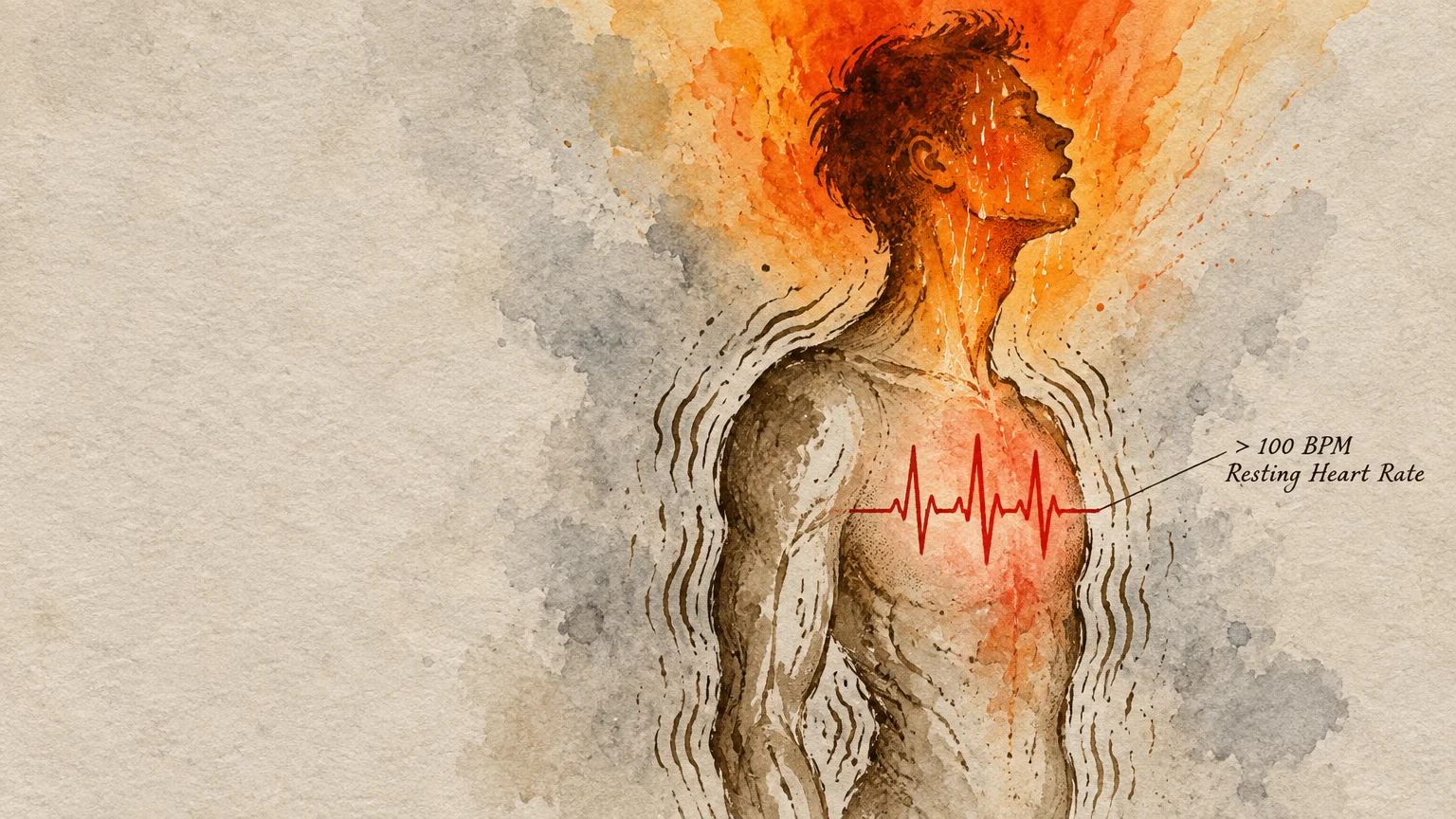
Excess thyroid hormone overstimulates beta-adrenergic receptors, pushing your resting heart rate above 100 beats per minute. You may feel sudden pounding, fluttering, or skipped beats while resting quietly.
Prolonged overtreatment significantly increases your risk for atrial fibrillation. If you notice persistent arrhythmias, contact your healthcare provider for an immediate cardiovascular evaluation.
2. Unintended Weight Loss Despite a Normal Appetite
Surplus thyroid hormone accelerates your basal metabolic rate, burning fuel at an unsustainable speed. You might drop weight rapidly even though your daily caloric intake remains unchanged.
This catabolic state burns through skeletal muscle alongside fat reserves. Rapid weight loss without intentional dietary changes serves as a major warning sign of excessive replacement.
3. Heightened Anxiety, Jitters, and Tremors
An overabundance of circulating thyroid hormone places your autonomic nervous system into constant fight-or-flight arousal. You may experience internal trembling, a fine hand tremor, and unprovoked bouts of panic.
Many patients mistake these sensations for psychological stress or sudden caffeine sensitivity. In reality, an elevated dose keeps your central nervous system chronically overstimulated.
4. Heat Intolerance and Profuse Sweating
Elevated hormone levels increase cellular thermogenesis, which elevates your core body temperature. You may feel uncomfortably hot in air-conditioned rooms where companions sit comfortably.
Excessive night sweats and flushed skin frequently accompany this internal heat surge. Your body constantly struggles to dissipate excess metabolic energy.
5. Severe Insomnia and Fragmented Sleep
An overstimulated nervous system prevents your brain from entering restorative slow-wave sleep. You might fall asleep easily from exhaustion only to awaken abruptly after two hours with racing thoughts.
Chronic sleep fragmentation impairs daytime executive function and weakens immune defense. Ongoing sleeplessness warrants a fresh look at your thyroid lab panel.
6. Frequent Bowel Movements or Diarrhea
Thyroid hormone directly accelerates gastric motility and intestinal transit times. High medication doses cause your digestive tract to push food through before proper fluid absorption occurs.
This hypermotility leads to loose stools, abdominal cramping, and poor absorption of vital nutrients from your meals.

Six Signs Your Thyroid Medication Dose Is Too Low
An insufficient medication dose leaves your cells starved for the hormone required to generate baseline energy. Recognizing these undertreated levothyroxine dosage symptoms ensures you seek medical care before complications multiply.
7. Crushing Fatigue That Sleep Cannot Relieve
Cellular energy production stalls when circulating thyroid hormone levels drop too low. You may awaken after nine hours of sleep feeling just as exhausted as when you went to bed.
Relying on extra caffeine cannot overcome this physiological energy deficit. Your mitochondria lack the necessary hormonal activation to generate cellular energy efficiently.
8. Stubborn Weight Gain and a Sluggish Metabolism
Undertreatment suppresses your resting metabolic rate, causing your body to store calories rather than burn them. You may gain weight despite maintaining a strict calorie deficit and exercising consistently.
Fluid retention also compounds this issue, producing puffiness in your hands, ankles, and facial tissues. Correcting your dosage helps your metabolic engine resume normal caloric expenditure.
9. Intense Cold Intolerance and Chilly Extremities
Without adequate thyroid hormone, cellular thermogenesis plummets, lowering your overall internal heat generation. You might find yourself shivering beneath heavy blankets while family members feel comfortable.
Chronically cold fingers, toes, and nose tips indicate that your circulatory system is prioritizing core warmth over peripheral blood flow.
10. Persistent Brain Fog and Memory Lapses
Low thyroid hormone levels reduce cerebral blood flow and alter neurotransmitter processing. You may struggle to recall familiar words, lose your train of thought mid-sentence, or experience sluggish concentration.
According to research indexed by the National Institutes of Health, restoring euthyroid status reverses cognitive slowing in the vast majority of patients.
11. Chronic Constipation and Severe Bloating
When hormone levels drop, the smooth muscle contractions of your gastrointestinal tract weaken substantially. Sluggish peristalsis delays bowel transit, leading to infrequent, painful eliminations and gas buildup.
Increasing dietary fiber often fails to resolve this constipation because the issue stems from hormonal signaling rather than insufficient roughage.
12. Diffuse Hair Thinning, Dry Skin, and Brittle Nails
Thyroid hormone regulates the cellular renewal rate of your skin, nails, and hair follicles. Low circulating levels prematurely force hair follicles into their resting phase, causing diffuse shedding.
Your skin may appear rough, flaky, and pale, while your fingernails develop longitudinal ridges and crack easily. These external signs indicate that outer tissues lack adequate hormonal nourishment.

Clinical Perspectives on Finding Your Therapeutic Window
Endocrinologists emphasize that matching symptoms with objective lab values requires patience and close collaboration. Many patients endure months of unaddressed symptoms because they assume lingering discomfort is simply their normal state.
Clinical endocrinologists note that blood tests and clinical observations must always be interpreted together. A serum TSH that appears statistically normal on paper may still leave an individual feeling profoundly symptomatic.
Many individuals report remarkable relief once their clinicians adjust their daily prescriptions by small margins. Patients often discover that a modest 12.5 mcg adjustment clears longstanding brain fog or heart palpitations.
Actionable Pillars for Managing Your Thyroid Health
Successfully managing thyroid disease requires more than simply swallowing a tablet each morning. Adopting structured habits around your medication, daily diet, and lifestyle guarantees optimal drug bioavailability and symptom resolution.
Pillar 1: Precise Medication Administration
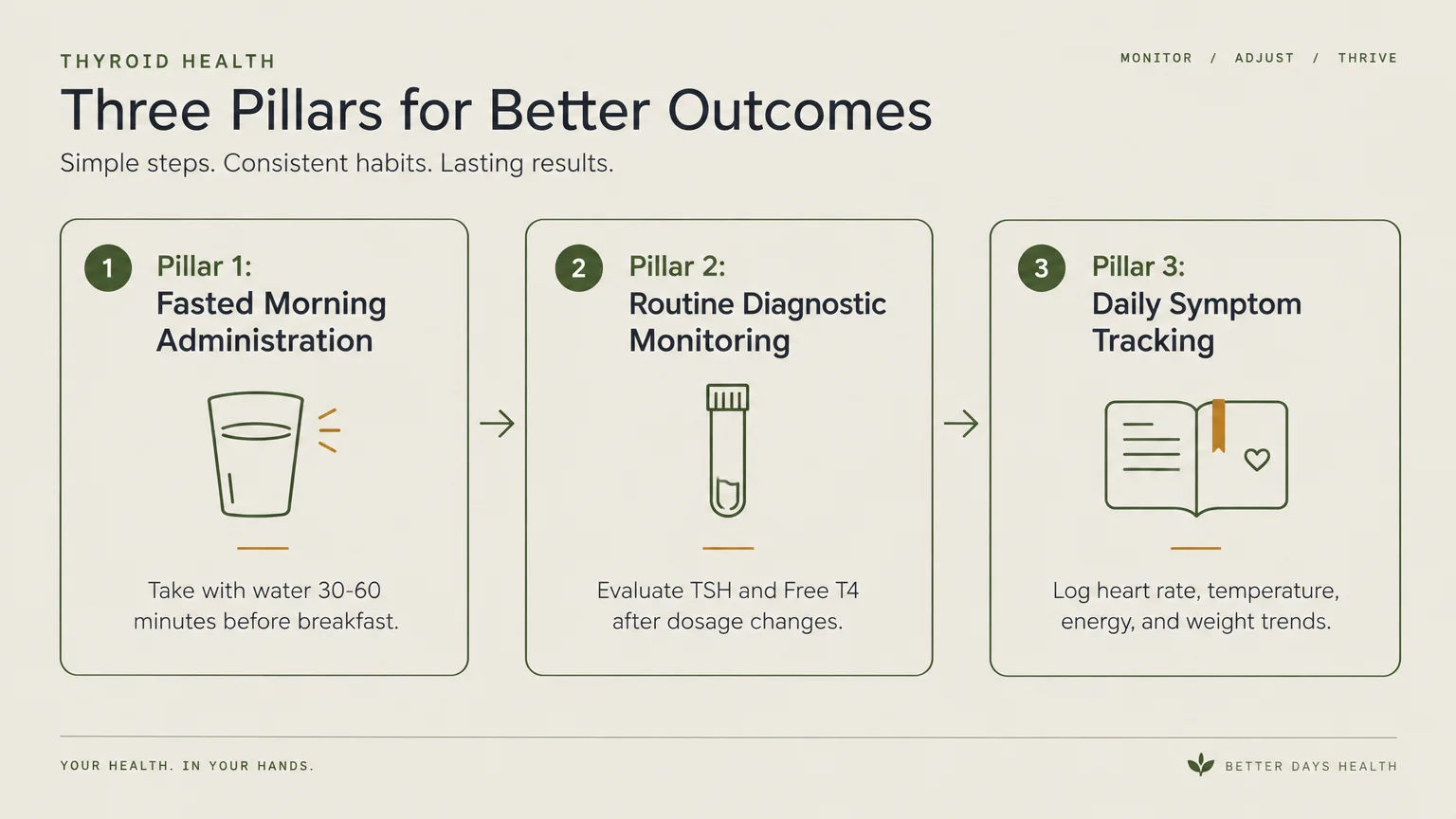
Take your levothyroxine with a full glass of plain water 30 to 60 minutes before eating breakfast. Food, coffee, and tea bind to the active hormone and dramatically reduce gastrointestinal absorption.
Alternatively, you can take your dose at bedtime, provided you wait at least three hours after your evening meal. Evening dosing provides equivalent absorption and fits many working schedules better.
Maintain strict four-hour separation between your thyroid pill and supplements containing calcium, iron, or magnesium. Over-the-counter antacids containing aluminum or magnesium also inhibit intestinal absorption and lower circulating hormone levels.
Pillar 2: Nutritional Synergy and Mineral Timing
Optimize your dietary intake of essential trace minerals that facilitate thyroid hormone synthesis and peripheral conversion. Adequate selenium and zinc support the enzymes that convert inactive T4 into biologically active T3.
Consume nutrient-dense whole foods like Brazil nuts, pumpkin seeds, and pastured poultry to naturally meet these mineral needs. Avoid extreme elimination diets without clinical supervision, as severe caloric restriction suppresses thyroid function.
Pillar 3: Mindful Movement and Nervous System Balance
Chronic psychological stress elevates cortisol, which inhibits optimal peripheral conversion of thyroid hormones. Engaging in daily restorative movement—such as brisk walking, swimming, or restorative yoga—lowers physiological stress markers.
Protect your circadian rhythm by establishing consistent sleep and wake times throughout the week. Deep sleep enhances hormone receptor sensitivity across peripheral tissues and supports steady metabolic recovery.
Pillar 4: Collaborative Medical Care and Lab Tracking
Clinical guidelines published by the Endocrine Society recommend rechecking serum TSH six to eight weeks following any dosage adjustment or brand substitution.
Standard protocols dictate that your physician make a hypothyroid medication adjustment in conservative steps of 12.5 to 25 mcg per day. These measured increments prevent sudden overcorrection into opposite ends of the thyroid spectrum.
Once your lab values and symptoms stabilize, partner with your physician to monitor your levels every six to twelve months. Regular surveillance catches subtle shifts caused by aging, weight fluctuations, or concurrent medications.
Frequently Asked Questions
How long after changing my dose will I start feeling better?
Because levothyroxine has a seven-day half-life, cellular levels require four to six weeks to stabilize. While some individuals notice subtle shifts earlier, comprehensive symptom relief takes six to eight weeks.
If your distressing symptoms persist after two full months at your new dose, request follow-up blood work from your clinician. Personalized lab evaluations ensure your dosage matches your exact metabolic demand.
Can switching between generic and brand-name medications affect my levels?
Yes, small variations in binders and manufacturing tolerances between manufacturers can alter drug bioavailability. Even minor bioequivalence variations can push sensitive individuals out of their optimal therapeutic window.
The Centers for Disease Control and Prevention and thyroid specialists urge patients to stay with a single manufacturer when possible. If your pharmacy changes your supplier, recheck your TSH level six weeks later.
What should I do if my lab tests are normal but I still feel unwell?
A standard TSH test provides only a broad snapshot of pituitary signaling. Ask your physician to evaluate free T4, free T3, and reverse T3 to assess full peripheral hormone status.
Additionally, screen for common coexisting issues such as iron deficiency, vitamin D depletion, or autoimmune celiac disease. Addressing secondary nutritional deficiencies often resolves lingering fatigue that thyroid hormone alone cannot correct.
Why do older adults require different thyroid target ranges?
Aging cardiovascular systems and skeletal structures are exceptionally vulnerable to the stimulatory effects of excess thyroid hormone. Maintaining a slightly higher TSH target between 4.0 and 6.0 mIU/L safeguards against cardiac arrhythmias.
Overtreatment in older adults also accelerates postmenopausal bone demineralization, significantly raising fracture risks. Customized age-adjusted ranges balance symptom relief with vital long-term organ protection.
Your Next Steps Toward Balanced Thyroid Health
Healing from a thyroid medication imbalance requires patience, self-compassion, and methodical tracking. Your body constantly communicates its needs; learning to interpret those physical cues is your greatest health advantage.
As an actionable first step, begin maintaining a simple symptom journal over the next seven days. Record your daily energy, sleep patterns, heart rate, and digestive habits alongside the exact time you take your medication.
Bring these detailed notes to your next appointment and ask your doctor whether comprehensive blood testing is appropriate. How might regaining balanced metabolic energy transform your daily vitality and long-term wellbeing?








Leave a Reply