

A subtle burning sensation on one side of your ribs might feel like an ordinary bug bite or contact allergy. Recognizing the earliest warning signs of shingles protects your long-term nerve health before severe complications develop.
Most people mistake early nerve distress for harmless skin irritation or routine muscle strain. Acting quickly ensures you can access antiviral treatment within the critical first three days of viral reactivation.
Understanding these subtle physical clues gives you the power to safeguard your vitality and comfort. You can protect your nervous system by learning exactly what to look for when strange symptoms appear.
The Science of Shingles: How the Dormant Virus Awakens
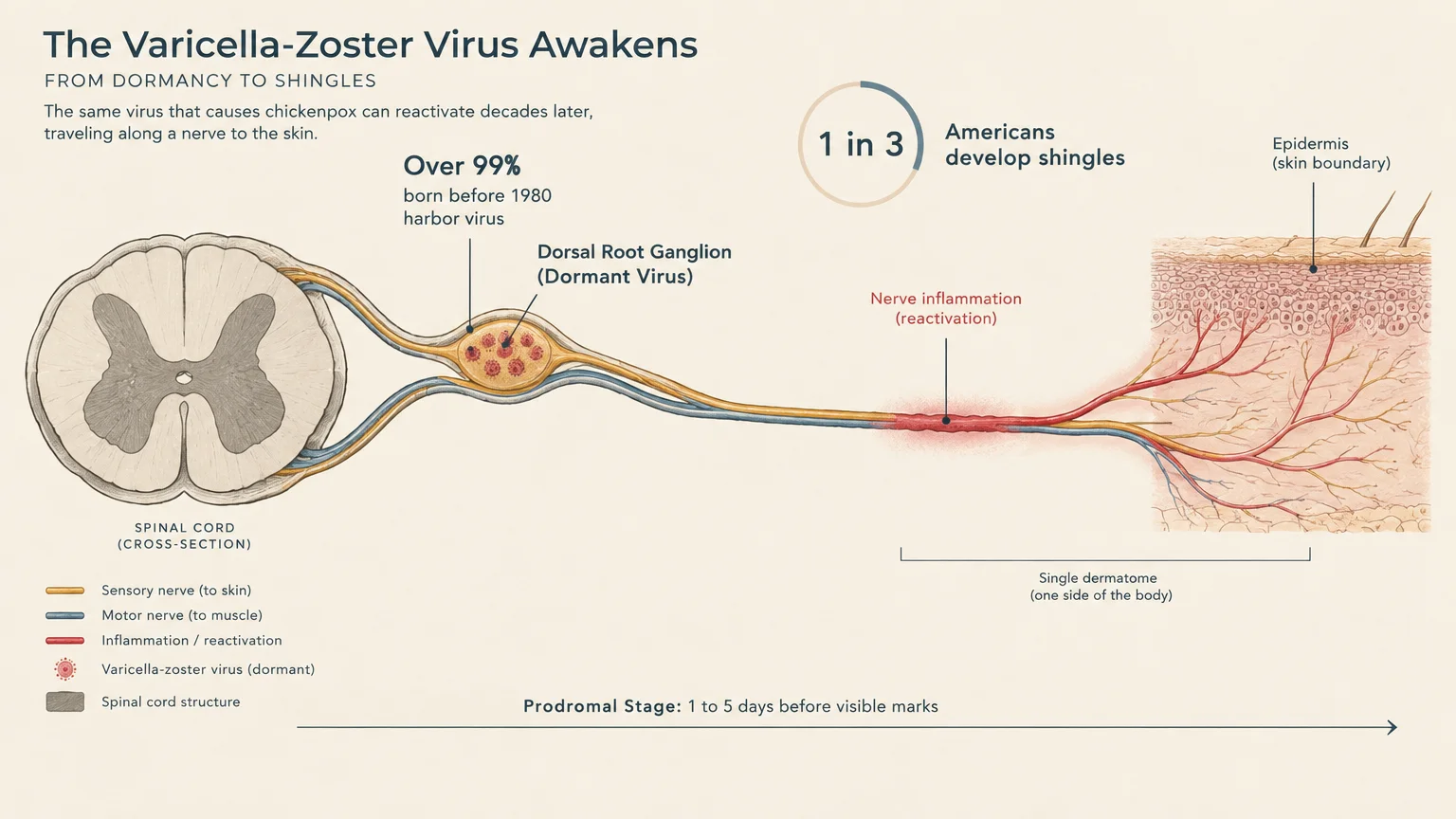
Over 99 percent of Americans born before 1980 harbor the varicella-zoster virus quietly within their nervous system. After chickenpox resolves, the virus retreats into dorsal root ganglia for decades.
According to the Centers for Disease Control and Prevention, approximately one in three Americans develops shingles during their lifetime. This reactivation triggers an estimated one million cases nationwide every single year.
As cellular immunity declines with age or ongoing stress, the virus travels down sensory nerves toward your skin. Adults aged 60 and older represent roughly half of all diagnosed cases.
The prodromal stage typically begins one to five days before any visible marks emerge. Recognizing this early nerve irritation allows you to seek care before painful blisters erupt.
10 Early Signs of Shingles Most People Mistake for a Rash
1. Unilateral Tingling and Numbness
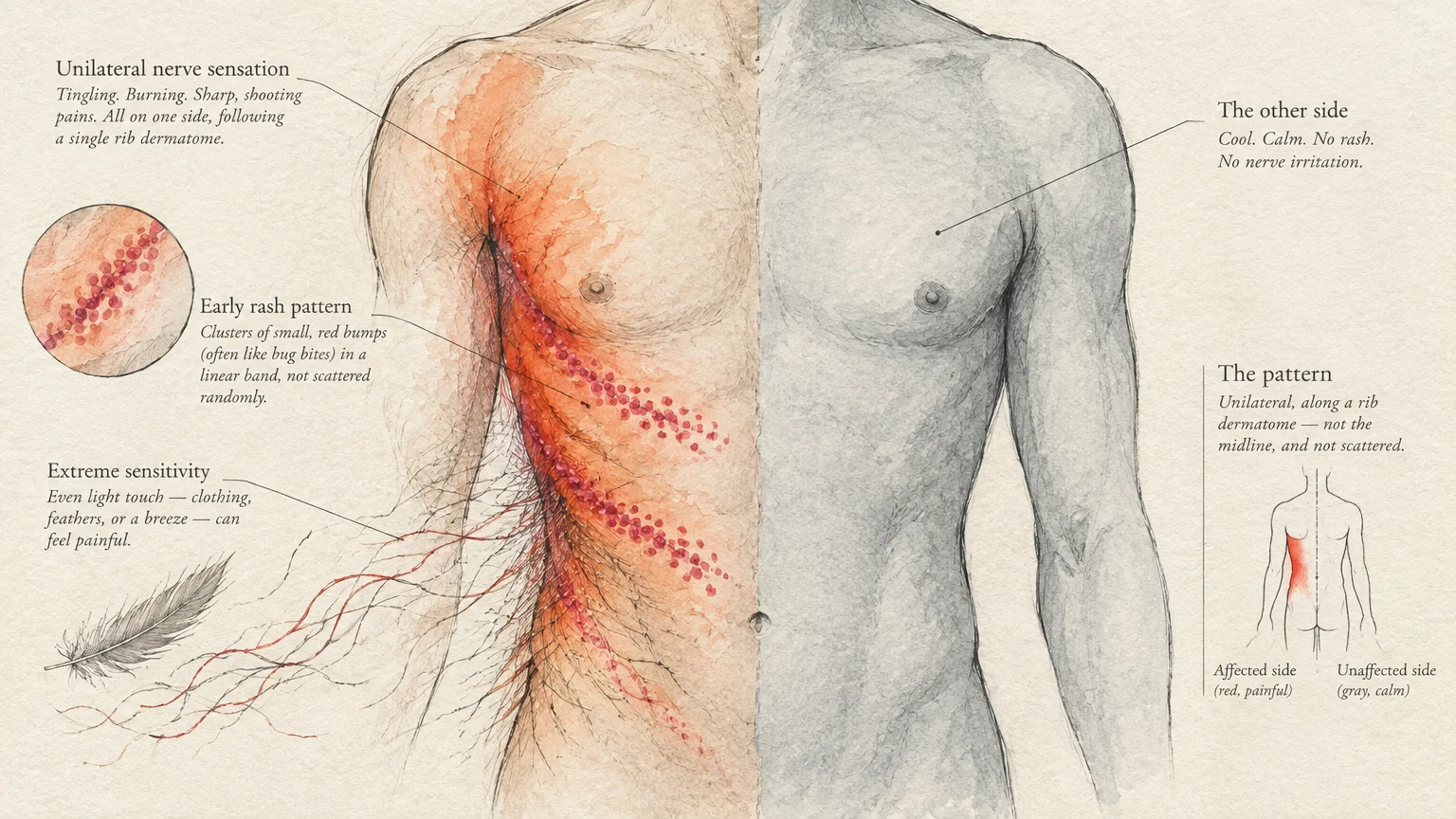
Shingles rarely crosses your body midline. You will typically feel pins-and-needles following a single dermatome on either your left or right side.
Many mistake this sensation for a pinched nerve or insect bite. Because it remains strictly one-sided, it signals nerve distress rather than a widespread skin allergy.
2. Deep Aching Preceding Any Bumps
You may notice a persistent burning ache beneath your skin days before redness appears. This prodromal nerve discomfort often mimics a bruised rib or strained muscle.
Unlike surface rashes that itch mildly, viral nerve pain originates deep within sensory nerve pathways. Suspect shingles if this ache stays confined to a single, narrow band.
3. Extreme Skin Sensitivity to Light Touch
Clinicians describe heightened touch sensitivity as allodynia. Even the gentle glide of a cotton shirt or bedsheet against your skin can trigger sharp discomfort.
Common allergic rashes rarely cause such acute tenderness from minor friction. When normal clothing feels suddenly abrasive on one skin patch, your sensory nerves are signaling inflammation.
4. Localized Redness That Looks Like Dermatitis
Early visible skin changes often emerge as faint pink patches along a nerve pathway. People frequently assume they brushed against poison ivy or reacted to laundry detergent.
Contact dermatitis usually scatters randomly across exposed areas. In contrast, shingles confines itself strictly within the boundaries of a single sensory dermatome.
5. Clustered Bumps Resembling Bug Bites
Within two days of redness, small raised bumps assemble in compact groups. Because they appear abruptly, people frequently suspect spider bites, fleas, or localized folliculitis.
Insect bites usually create isolated welts rather than clustered linear bands. If multiple tender bumps emerge along a distinct path, consider viral reactivation instead.
6. Fluid-Filled Blisters with Clear Centers
Those initial bumps soon become delicate vesicles filled with clear fluid. Patients often mistake them for friction blisters, mild burns, or allergic reactions.
According to the National Institutes of Health, these fragile blisters harbor infectious viral particles. They typically crust over and form protective scabs within 7 to 10 days.
7. Sharp, Radiating Chest or Rib Pain
When shingles targets thoracic nerves, sharp discomfort radiates around your ribs. Individuals often confuse this stabbing ache with an intercostal muscle strain or pleurisy.
Always seek emergency evaluation for unexplained chest pain to rule out cardiac emergencies. Once cleared by a physician, inspect your skin for faint unilateral redness.
8. Facial Tingling Near the Scalp, Eye, or Nose
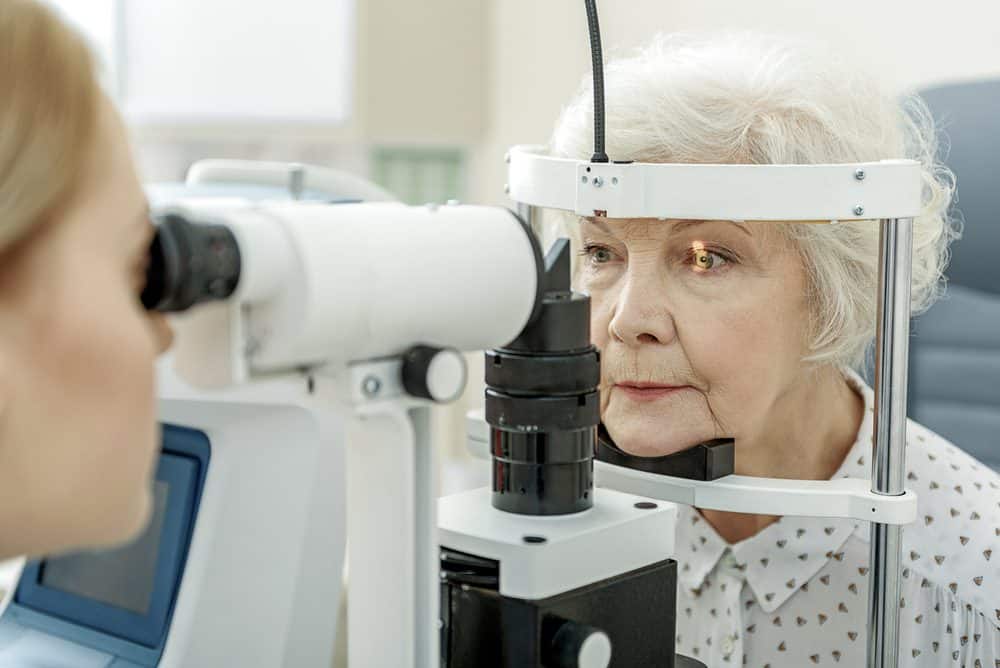
The virus can awaken along cranial nerves, causing strange tingling across your forehead, scalp, or eyelid. People frequently mistake these sensations for sinus pressure or tension headaches.
Watch for bumps on the tip or side of your nose, known as Hutchinson’s sign. This warning indicates ophthalmic nerve involvement and requires urgent clinical care.
Data from the American Academy of Ophthalmology indicates that 10 to 20 percent of shingles cases involve ocular nerves. Prompt antiviral therapy prevents severe complications, including permanent vision loss.
9. Persistent Neuropathic Itching
Neuropathic itching can feel intense, urging you to scratch completely clear skin. Many people apply moisturizers or hydrocortisone, assuming they have dry skin or mild eczema.
Topical creams rarely soothe this sensation because the itch originates inside inflamed nerve fibers. If scratching provides no relief, suspect a deeper neurological trigger.
10. Systemic Fatigue and Low-Grade Fever
Your immune system mounts an aggressive defense when the virus reactivates. You may feel profound exhaustion, mild chills, a low-grade fever, or headache before blisters erupt.
Many assume they caught a mild cold or worked too hard. When general fatigue accompanies localized skin sensitivity, an erupting nerve infection is often the cause.
Clinical Perspectives: What Physicians See in Practice
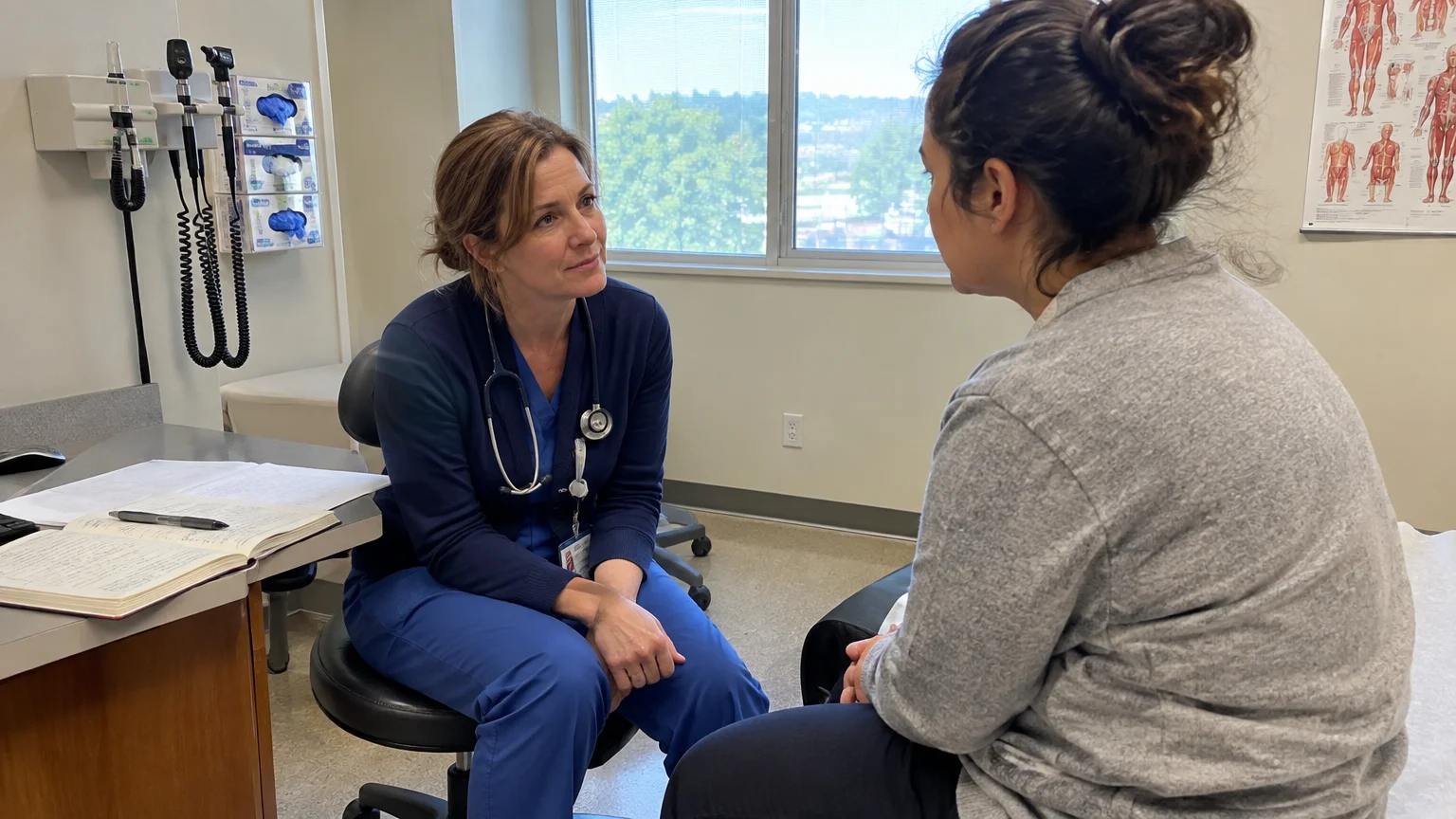
Healthcare providers frequently observe that patients delay seeking treatment because they expect a widespread rash. In reality, early shingles appears in remarkably small, localized segments.
Dr. Laura Chen, an experienced family physician, emphasizes that patients lose crucial time waiting for lesions to spread. She advises anyone experiencing sudden, one-sided burning to seek prompt evaluation.
Misdiagnosing shingles as a simple skin allergy increases your vulnerability to postherpetic neuralgia. This chronic complication causes burning nerve discomfort that persists for 90 days or longer after the rash resolves.
Between 10 and 18 percent of shingles patients develop postherpetic neuralgia, with risks rising steeply after age 60. Fast clinical intervention serves as your best defense against lasting nerve injury.
Holistic Strategy Pillars for Recovery and Prevention
Pillar 1: The 72-Hour Antiviral Window
You must seek professional medical care immediately when early symptoms appear. Prescription antivirals—such as valacyclovir, acyclovir, or famciclovir—work best when initiated within 72 hours of rash onset.
Starting antivirals within this three-day window curtails viral replication, reduces acute nerve pain, and accelerates skin healing. It also substantially lowers your risk of enduring postherpetic neuralgia.
Prevention remains your most reliable medical shield against initial and recurrent episodes. The CDC Advisory Committee on Immunization Practices recommends two doses of the recombinant Shingrix vaccine for adults aged 50 and older.
Providers space the two Shingrix doses two to six months apart. Clinical trials demonstrate over 90 percent efficacy in preventing both shingles and postherpetic neuralgia in vaccinated adults.
Pillar 2: Immune-Supportive Nutrition
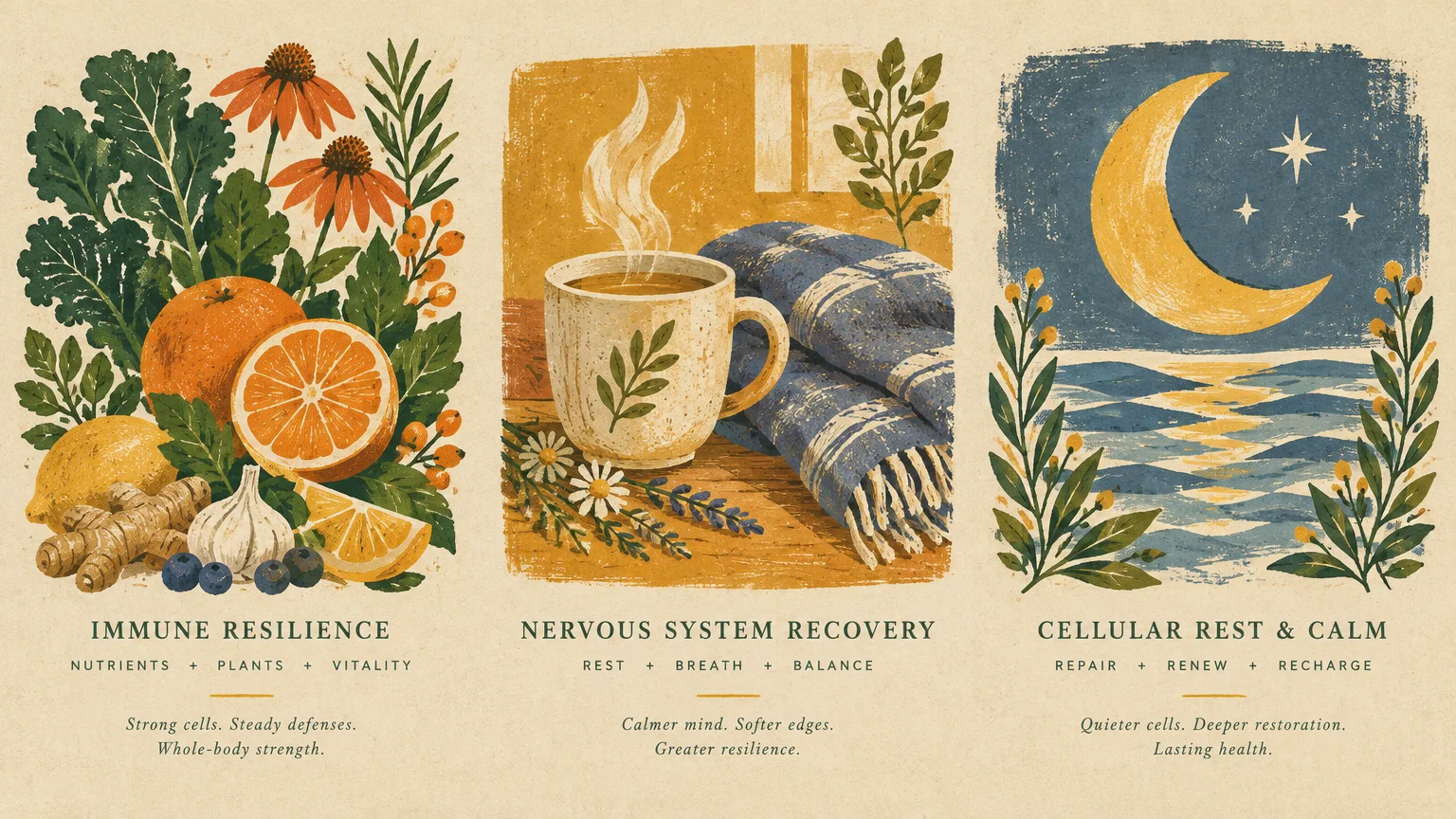
Your immune system needs targeted micronutrients to control viral replication and rebuild tissue. Emphasize whole foods packed with vitamin C, zinc, and bioflavonoids during your recovery phase.
Add citrus fruits, bell peppers, dark leafy greens, pumpkin seeds, and lean proteins to your daily meals. These nourishing choices support white blood cells and encourage healthy skin repair.
Minimize refined sugars, ultra-processed foods, and alcohol while fighting the virus. High blood sugar spikes can suppress cellular immunity and aggravate inflammatory signaling across irritated nerves.
Sustained hydration supports your lymphatic system in eliminating cellular waste. Drink plenty of filtered water, warm herbal teas, and mineral broths throughout the day to nourish healing tissues.
Pillar 3: Restorative Rest and Movement
Suppressing viral reactivation consumes substantial metabolic energy. Prioritize seven to nine hours of restful sleep nightly to allow your nervous system to regenerate effectively.
Avoid intense workouts, heavy weightlifting, and competitive sports while managing an active outbreak. Excessive physical exertion diverts immune energy and may irritate inflamed nerve roots.
Opt for gentle walks or mild mobility stretches if your pain allows. Light movement enhances circulation without causing friction against hypersensitive skin.
Choose loose garments made from breathable, soft fibers like bamboo or organic cotton. Friction-free clothing protects irritated nerve endings from painful mechanical chafing.
Pillar 4: Nervous System Regulation
Chronic stress frequently serves as the catalyst that allows latent viruses to escape dormancy. Sustained cortisol output depresses cell-mediated immunity, letting the virus travel down sensory nerves.
Practice intentional relaxation through slow diaphragmatic breathing, meditation, or gentle mindfulness. Spending ten minutes daily in calm breathing shifts your nervous system toward a healing state.
Treat yourself with patience and kindness as your nerves recover. Minimizing emotional strain reduces physical tension and supports an internal environment conducive to sustained healing.
Frequently Asked Questions About Shingles
Can shingles spread directly to others as shingles?
You cannot transmit shingles directly to another person. However, contact with active blister fluid can spread varicella-zoster to someone without prior chickenpox immunity.
That person would develop chickenpox, not shingles. Keep your rash covered, wash hands frequently, and avoid contact with vulnerable individuals until all blisters scab over.
What is postherpetic neuralgia, and who is vulnerable?
Postherpetic neuralgia is chronic nerve discomfort lasting 90 days or longer after the rash heals. Damaged nerves send distorted, burning signals to your brain.
Risk rises significantly with age, affecting nearly one in five shingles patients over 60. Starting antiviral therapy within 72 hours provides your best defense against this outcome.
Who should receive the recombinant Shingrix vaccine?
The CDC recommends the two-dose Shingrix vaccine for healthy adults aged 50 and older. It is also recommended for immunocompromised adults aged 19 and older.
You should get vaccinated even if you have had shingles before. Speak with your healthcare professional to plan your two doses two to six months apart.
Can severe emotional stress trigger an outbreak?
Intense emotional or physical stress commonly triggers viral reactivation. Elevated stress hormones suppress cell-mediated immune responses, allowing the dormant virus to replicate along nerves.
Many patients recall experiencing acute burnout right before their first symptoms emerged. Daily stress management techniques strengthen immune resilience and help prevent recurrences.
Moving Forward with Confidence
Recognizing early shingles signs allows you to act swiftly before nerve distress escalates. Early antiviral therapy shortens illness duration, eases pain, and protects you against debilitating long-term complications.
Check in with your body today and note any unilateral burning or unusual tingling. If you suspect an outbreak, reach out to your healthcare provider immediately to protect your wellbeing.







Leave a Reply