

A lingering cough can disrupt your sleep, drain your daily energy, and signal underlying respiratory inflammation that requires targeted clinical attention. While most viral coughs clear within a fortnight, ignoring a persistent hack past the three-week mark risks delaying treatment for manageable conditions like cough-variant asthma, silent reflux, or chronic bronchitis. Your body uses a cough as an essential defense mechanism; however, when the reflex becomes self-perpetuating or accompanies red flag symptoms, medical evaluation becomes vital. Recognizing the exact shift from a harmless post-viral tickle to a persistent health concern empowers you to protect your long-term lung function and restore your everyday comfort.
The Science of Cough Duration: From Acute Defense to Chronic Reflex
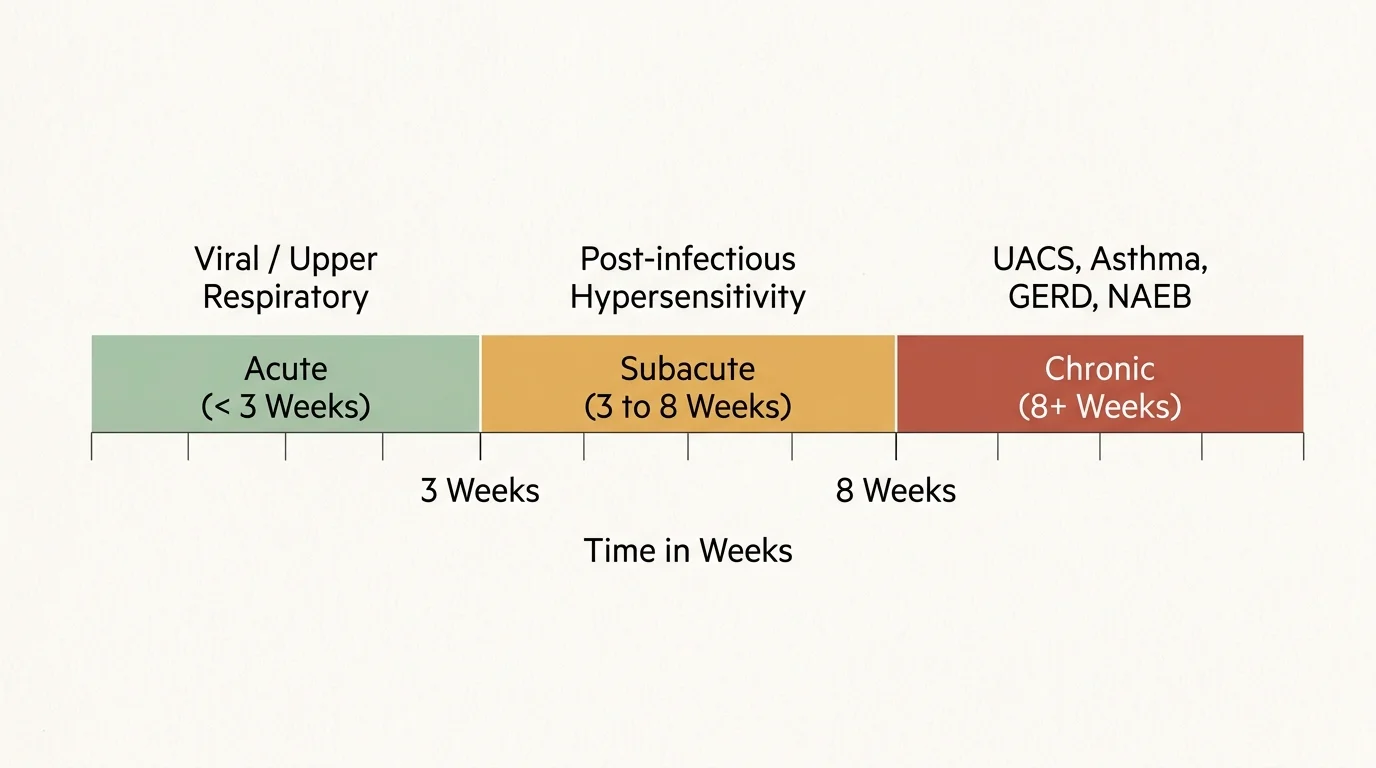
Medical professionals categorize coughs based on precise duration thresholds. An acute cough lasts fewer than three weeks, typically serving as the body’s natural defense against common viral upper respiratory infections. When irritation persists between three and eight weeks, clinicians classify it as a subacute cough, which often stems from post-infectious airway hypersensitivity or prolonged bronchial inflammation. Once a cough persists for eight weeks or longer in adults—or beyond four weeks in children—it formally crosses into a chronic condition. According to clinical consensus from the American College of Chest Physicians, any cough that fails to improve after three weeks warrants an objective medical evaluation.
Global epidemiological meta-analyses reveal that chronic cough affects roughly 6% to 10% of the adult population worldwide. In individuals who do not smoke and present with normal chest radiographs, approximately 90% of persistent cases arise from four treatable conditions: Upper Airway Cough Syndrome (post-nasal drip), cough-variant asthma, Gastroesophageal Reflux Disease (GERD), and Non-Asthmatic Eosinophilic Bronchitis (NAEB). Furthermore, routine cardiovascular medications—specifically ACE inhibitors prescribed for hypertension—trigger an intractable, dry cough in 5% to 20% of patients. Identifying your specific physiological triggers early prevents unnecessary airway trauma and accelerates lasting recovery.
8 Signs Your Cough Needs Medical Attention
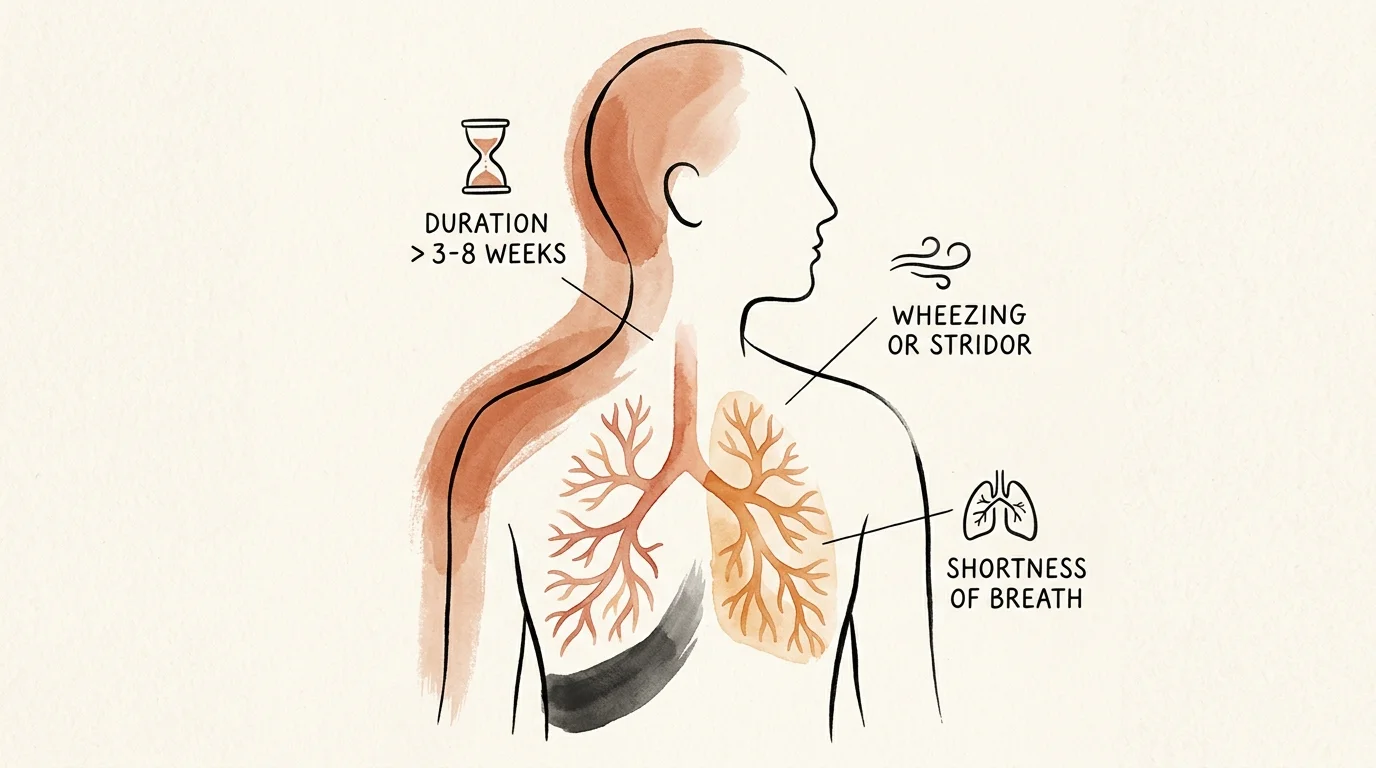
1. Duration Exceeding the Three-to-Eight-Week Window
The most straightforward indicator of a problematic cough is time. If your cough began with a routine cold or flu but continues past three weeks without noticeable improvement, your body is struggling to resolve the initial inflammation. Passing the eight-week milestone indicates that your cough reflex has transitioned from a temporary defensive mechanism into a self-sustaining hypersensitivity loop. Seeking medical care at the three-week mark allows clinicians to perform early diagnostic testing, such as spirometry, before chronic nerve sensitization occurs.
2. Coughing Up Blood or Blood-Streaked Sputum (Hemoptysis)
Never dismiss the presence of blood in your phlegm, whether it appears as bright red flecks, pink froth, or rust-colored streaks. While minor capillary bleeding can occasionally result from violent coughing fits that irritate the throat, hemoptysis can also indicate pulmonary pathology, including bronchiectasis, pulmonary embolism, severe bacterial pneumonia, tuberculosis, or malignancy. The Centers for Disease Control and Prevention emphasizes that any episode of blood-tinged mucus requires prompt clinical evaluation to rule out deep airway damage.
3. Shortness of Breath, Wheezing, or Stridor
When your cough accompanies labored breathing, an audible musical whistling during exhalation (wheezing), or a harsh, high-pitched sound during inhalation (stridor), your lower or upper airways are experiencing narrowing. These signs frequently point toward undiagnosed asthma, chronic obstructive pulmonary disease exacerbations, vocal cord dysfunction, or foreign body aspiration. If you find yourself gasping for air between coughing spells or experiencing chest tightness that restricts normal activity, arrange for medical care promptly.
4. Systemic Red Flags: Night Sweats, Weight Loss, and Fever
A persistent cough paired with systemic symptoms suggests that your immune system is battling an extensive inflammatory or systemic process. Drenching night sweats that force you to change your sleepwear, unexplained weight loss without changes in diet, and recurring low-grade or spiking fevers are major clinical red flags. These symptoms demand thorough blood work, sputum cultures, and chest imaging to investigate underlying systemic infections, autoimmune disorders, or thoracic malignancies.
5. Voice Changes, Hoarseness, or Swallowing Difficulties Lasting Over Three Weeks
If your voice sounds perpetually raspy, weak, or strained for more than three consecutive weeks alongside a cough, your laryngeal tissues are under chronic distress. Prolonged hoarseness and dysphagia (difficulty or pain when swallowing) can indicate severe laryngopharyngeal reflux, vocal cord nodules, nerve palsy, or laryngeal tumors. An ear, nose, and throat specialist can perform a direct laryngoscopy to examine your vocal cords and upper digestive tract for structural or inflammatory changes.
6. Episodes of Lightheadedness, Dizziness, or Cough Syncope
Violent, paroxysmal coughing spasms can dramatically increase intrathoracic pressure, which temporarily impedes venous blood return to your heart and diminishes cerebral perfusion. If your coughing fits lead to dizziness, temporary vision blackouts, or actual loss of consciousness—a condition known clinically as cough syncope—you face substantial risks of accidental physical trauma. Fainting spells associated with coughing require an immediate cardiovascular and neurological workup to ensure stable hemodynamics.
7. Positional Flares or Post-Meal Worsening
A cough that flares up predictably after eating fatty or acidic foods, bending forward, or lying flat on your back often signals Gastroesophageal Reflux Disease (GERD) or Upper Airway Cough Syndrome. In silent reflux, aerosolized stomach acid travels upward into the pharynx, triggering vagal nerve pathways that provoke dry coughing fits without typical heartburn sensations. Recognizing these positional and dietary associations helps clinicians prescribe targeted acid-suppression therapy or mucosal protectants rather than unnecessary antibiotics.
8. High-Risk Environmental, Occupational, or Medication History
Your personal environmental and pharmaceutical history strongly influences your respiratory vulnerability. If you currently smoke, have a significant history of tobacco use, or face chronic occupational exposure to silica dust, asbestos, or industrial chemicals, a persistent cough requires vigilant screening. Furthermore, if you take an ACE inhibitor for hypertension, such as lisinopril or enalapril, your medication could be generating substance P and bradykinin accumulation in your lungs. Under physician supervision, discontinuing an offending ACE inhibitor typically resolves the cough within one to four weeks.

Strategic Pillars to Support Recovery and Restore Airway Health
Managing a chronic cough involves a comprehensive approach that integrates clinical diagnostics with supportive lifestyle modifications. By addressing environmental irritants, soothing mucosal tissues, and training your nervous system, you can reduce airway hypersensitivity and regain your respiratory comfort.
Pillar 1: Structured Medical Diagnostics and Targeted Treatment
The cornerstone of resolving a stubborn cough lies in accurate medical diagnosis. Partner with your primary care provider or a pulmonologist to execute a sequential evaluation. This workup commonly begins with high-resolution chest radiography, spirometry with bronchodilator responsiveness testing, and allergy screenings. When indicated, empirical treatment trials—such as inhaled corticosteroids for cough-variant asthma or nasal steroid sprays for chronic rhinosinusitis—provide both diagnostic validation and symptomatic relief. Never self-prescribe over-the-counter cough suppressants indefinitely; these medications merely mask underlying physiological pathology.
Pillar 2: Environmental Optimization and Airway Hydration
Airway membranes become increasingly reactive when exposed to dry, polluted, or allergen-laden air. Optimize your indoor environment by running a high-efficiency particulate air (HEPA) purifier in your bedroom to capture pollen, pet dander, and microscopic particulate matter. Maintain indoor relative humidity between 40% and 50% using an evaporative humidifier, which keeps respiratory mucus thin and easily cleared. Ensure adequate systemic hydration by drinking warm herbal infusions, such as marshmallow root or licorice root tea, and utilizing saline nasal rinses to gently flush post-nasal irritants before they trigger your cough reflex.
Pillar 3: Breathwork, Postural Adjustments, and Cough Suppression Therapy
Chronic coughing frequently creates a habitual hypersensitivity loop where minor throat tickles trigger explosive coughs that further inflame sensitive tissues. Working with a speech-language pathologist or respiratory therapist on cough suppression techniques can break this cycle. Practice gentle diaphragmatic breathing through your nose, keep your shoulders relaxed, and utilize the “hard swallow” or sip-and-breathe technique whenever an urge to cough arises. If nocturnal reflux triggers your symptoms, elevate the head of your bed by six inches using bed risers to mechanically prevent gastric acid from entering the upper airways during sleep.

Clinical Perspectives: Expert Insights on Cough Hypersensitivity
Modern respiratory medicine views chronic cough not merely as an isolated symptom, but often as a complex sensory neuropathic condition known as Cough Hypersensitivity Syndrome (CHS). According to clinical recommendations published by the European Respiratory Society, prolonged inflammation can leave peripheral airway nerves in a state of hyper-responsiveness, where benign triggers like cold air, laughter, or strong perfumes provoke uncontrollable coughing episodes.
Pulmonologists emphasize that patient history is the single most valuable diagnostic tool. Clinicians advise tracking the exact timing, triggers, and physical sensation of your cough prior to your appointment. By identifying whether your cough is productive or dry, positional or spontaneous, and accompanied by throat-clearing sensations, your physician can rapidly differentiate between upper airway drainage, esophageal reflux, and lower airway hyper-responsiveness, sparing you unnecessary imaging or prolonged medication trials.
Frequently Asked Questions About Persistent Coughs
Understanding the nuances of persistent respiratory symptoms helps you make informed choices about your medical care. Here are evidence-based answers to four common questions regarding chronic cough.
Why does my cough get significantly worse when I lie down at night?
Recumbent positioning allows gravity to work against your respiratory system in two distinct ways. First, if you have Upper Airway Cough Syndrome, mucus that drains unnoticed during the day pools in the back of your throat, irritating sensitive laryngeal receptors. Second, lying flat diminishes the barrier pressure of the lower esophageal sphincter, allowing gastric juices to travel upward and irritate the vagal nerve. Elevating your torso and treating the primary nasal or digestive cause effectively minimizes nocturnal disruptions.
Can blood pressure medications cause a dry cough months after starting them?
Yes, ACE inhibitors can trigger an intractable dry cough weeks, months, or even years after initiating therapy. The medication prevents the breakdown of bradykinin and substance P in the respiratory tract, leading to localized hypersensitivity and a persistent tickle in the throat. If you suspect your medication is responsible, consult your prescribing physician; they can safely transition you to an Angiotensin Receptor Blocker, which carries a significantly lower incidence of cough.
What is the difference between chronic bronchitis and cough-variant asthma?
Chronic bronchitis is clinically defined as a productive, mucus-generating cough occurring on most days for at least three consecutive months across two successive years, frequently linked to smoking or long-term pollutant exposure. In contrast, cough-variant asthma typically manifests as a persistent, non-productive dry cough triggered by exercise, cold air, or viral infections without obvious wheezing. Research indexed by the National Institutes of Health indicates that cough-variant asthma responds favorably to inhaled bronchodilators and anti-inflammatory corticosteroids.
How do doctors treat an unexplained chronic cough when all initial tests come back normal?
When standard evaluations—such as chest X-rays, spirometry, allergy tests, and CT scans—show no obvious abnormalities, clinicians consider refractory or unexplained chronic cough driven by neural hypersensitivity. Treatment focuses on desensitizing airway nerves using specialized speech therapy, cough suppression behavioral training, and centrally acting neuromodulating medications under close specialist supervision. Holistic self-care measures, including stress reduction and airway humidification, further support nervous system regulation.
Moving Forward: Your First Steps Toward Lasting Relief
Living with a persistent cough is both physically exhausting and emotionally draining, yet lasting relief is achievable once you identify the true source of your symptoms. Your most effective first step is to maintain a detailed symptom log for one week. Record the exact time of day your cough peaks, what foods you ate beforehand, your environmental surroundings, and any accompanying sensations like throat clearing, chest tightness, or heartburn.
Take this journal to your primary care physician to begin a structured, evidence-based evaluation. Take a moment to reflect: how has this ongoing cough altered your daily comfort, sleep, and activity levels, and what support do you need right now to prioritize your respiratory wellness? By listening to your body’s signals and collaborating with trusted healthcare professionals, you can protect your long-term lung health and breathe with ease once again.








Leave a Reply