
Disease X… Should you be worried?
Disease X is a mysterious and concerning entity lurking on the fringes of our health landscape. With a fatality rate 20 times that of COVID-19 and no vaccine in sight, this disease could swiftly bring humanity to its knees.
Few would be left untouched by the pathogen if it took hold, causing healthcare systems to crumble and economies to collapse as the world once again was knocked off its feet. Fortunately, Disease X is ONLY hypothetical as of right now.
A so-called placeholder representing yet-to-be-encountered pathogens capable of igniting pandemics. So, in this article, we’ll delve into the shadows to uncover everything you need to know about Disease X that demands our attention.
Shrouded in mystery, it poses a formidable challenge to our understanding of infectious diseases. As we navigate through the maze of information, we’re trying to equip ourselves with knowledge to combat this potential threat.
It’s been keeping health professionals and scientists on high alert, from its elusive origins to its unpredictable behavior.
Join The Lasting Health on this journey as we shed light on the complexities of Disease X and empower ourselves with the insights needed to confront this formidable foe. Let’s embark together on a quest for understanding and preparedness in uncertainty.
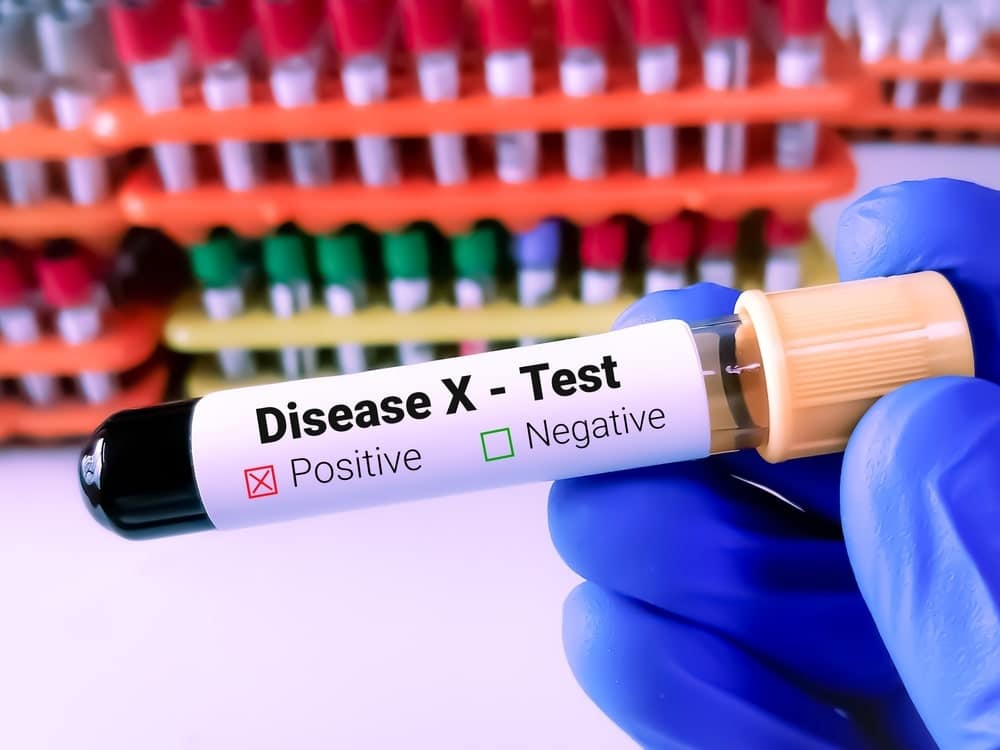
What exactly IS Disease X?
Don’t panic yet! Remember that this disease doesn’t even exist as of right now. But it likely will one day. Disease X is the label the World Health Organization uses to refer to some presently unknown infectious condition capable of causing an epidemic or, if it spreads across numerous countries, a pandemic.
The term can mean a newly discovered pathogen or any known pathogen with newly developed pandemic potential. By the second definition, COVID-19 was the first Disease X. But there could be another in the near future.
What can the next Disease X be?
We don’t know why it’s dubbed “Disease X.” The coronavirus was long seen as a prime contender for producing a new pandemic, even before the COVID-19 outbreak happened. That’s because it wasn’t the first dangerous pathogen from this group.
Back in 2002, a separate coronavirus started spreading around China. It provoked a form of pneumonia called SARS that killed about 1 in 10 of those it infected before strict infection control measures contained it.
Another deadlier coronavirus called MERS breaks out periodically, causing pneumonia that kills 1 in 3 of those who are infected.
But, recent research indicates that SARS and MERS would have a more challenging time triggering a fresh pandemic because almost everyone in the world has antibodies to the virus that provokes COVID-19 at this point.
These seem to give partial protection against most other pathogens in the coronavirus family.
Why are people talking about it so much NOW?
The World Health Organization has cautioned global leaders about future pandemic risks at the World Economic Forum’s annual meeting, held recently in Davos, Switzerland.
The WHO director-general Tedros Adhanom Ghebreyesus stated that “some people say this may create panic.” But he believes it’s better to prepare for something that MAY happen, because it’s happened in our history many times, and humanity wasn’t prepared for it.
What’s the point of studying Disease X?
As the WHO has stated, the whole point of studying this disease is to “enable early cross-cutting R&D preparedness that’s also relevant” for an unidentified disease.
The humanitarian crisis sparked by the 2014–2016 Ebola epidemic that happened in West Africa was a huge wake-up call. Despite many years of research, no products were ready to deploy in time to save over 11,000 lives.
To avoid this happening again, the WHO created an R&D Blueprint to speed up the development of a range of tools for “priority diseases.” The current list includes:
-Covid-19
-Zika virus
-Ebola virus disease and Marburg virus disease
-Crimean-Congo hemorrhagic fever
-Rift Valley fever
-Middle East Respiratory Syndrome (MERS) and SARS
-Lassa fever
-Nipah and henipaviral diseases

Are there any other prospects with pandemic potential?
There are many diseases, some well-known and others less familiar, that could pose a threat globally. Flu strains have caused global pandemics quite a few times, including one of the deadliest disease outbreaks ever, the “Spanish flu” in 1918.
A contagious strain of bird flu is sweeping the world, occasionally spreading from birds to mammals, causing mass fatalities.
And then there are other contenders, like Ebola, which causes severe bleeding, and the mosquito-borne Zika, which can cause infants to be born with smaller heads if the infection happens during pregnancy.
The World Health Organization updated its list of pathogens with the most pandemic potential in 2022.
What can we do to fight Disease X?
Every nation needs better early warning systems for new diseases, and health services need to become more resilient to unforeseen surges in demand, according to experts.
When hospitals were stretched beyond their capacity during peak Covid, we lost many individuals because the situation could not be managed. There wasn’t enough space or enough oxygen.
To prevent something like this from happening when Disease X strikes, the WHO says health services must be able to expand their capacity on demand.
Luckily, they can make those preparations without knowing precisely what the disease will even be. They say that Disease X is a placeholder. Whatever the disease is, they want to prepare for it.
Can Disease X REALLY be stopped in its tracks?
We do have SOME good news! The COVID-19 pandemic might have made it easier to prevent any future Disease X. The pandemic spurred the development of novel vaccine designs, including ones that can be easily repurposed to target new pathogens.
It led, for example, to the source of vaccines based on mRNA. This formula has a short piece of genetic material that makes the body’s immune cells create the coronavirus “spike” protein.
However, it could be updated to make cells put out a different protein merely by rewriting the mRNA sequence.
How’s research in this field going?
It only took 326 days from the release of the genetic sequence of the SARS-CoV-2 virus to the authorization of the first COVID-19 vaccine. This is due in part to the work accomplished since 2017 in preparation for Disease X.
Nowadays, groups like the Coalition for Epidemic Preparedness Innovations, or CEPI, are advocating for rapid response vaccine platforms that could potentially create new immunizations within 100 days of a virus that has pandemic potential emerging under a $3.5 billion plan. Other efforts include:
-A new fund, approved by the World Bank, will be used for pandemic preparedness, prevention, and response.
-Updating the International Health Regulations and creating a new global agreement to shield the world from future emergencies.
-The Global Virome Project strives to uncover zoonotic viral threats and prevent future pandemics.
-Establishment of a global center for pandemic therapeutics.
-A WHO Hub for Pandemic and Epidemic Intelligence in Berlin aspires to hasten access to critical data and develop analytic tools and predictive models to evaluate potential threats.
-$262.5 million in funding for a US national network for catching and reacting more efficiently to public health emergencies.
-A $5 billion US government initiative to invent next-generation vaccines and remedies for Covid-19 called Project NextGen.
Still, multiple challenges threaten to sabotage these efforts, including weakened and depleted health systems, a growing anti-science crusade that has raised vaccine hesitancy, and the prospect for governments to eventually deprioritize funding for outbreak detection and preparedness as perceived risks disperse.
We hope you found this post insightful. Please feel free to share your thoughts with us in the comments section below. In the meantime, The Lasting Health highly recommends also reading: Doctors Agree: These 5 Types of People SHOULDN’T Get the Flu Shot… Here’s Why!









Leave a Reply