

Your spleen silently filters blood and defends against pathogens, but swelling in this hidden organ often signals deeper systemic distress. Catching subtle warning signs early protects you from complications like internal bleeding and severe infection.
Because a healthy spleen hides beneath your rib cage, enlargement frequently goes unnoticed until it presses against neighboring organs. Understanding how your body communicates this shift empowers you to seek timely medical evaluation.
From fullness after light meals to surprising shoulder aches, distinct bodily clues point toward an expanding spleen. Here is what research reveals about spotting these changes before complications arise.
Science Snapshot: Understanding Splenomegaly
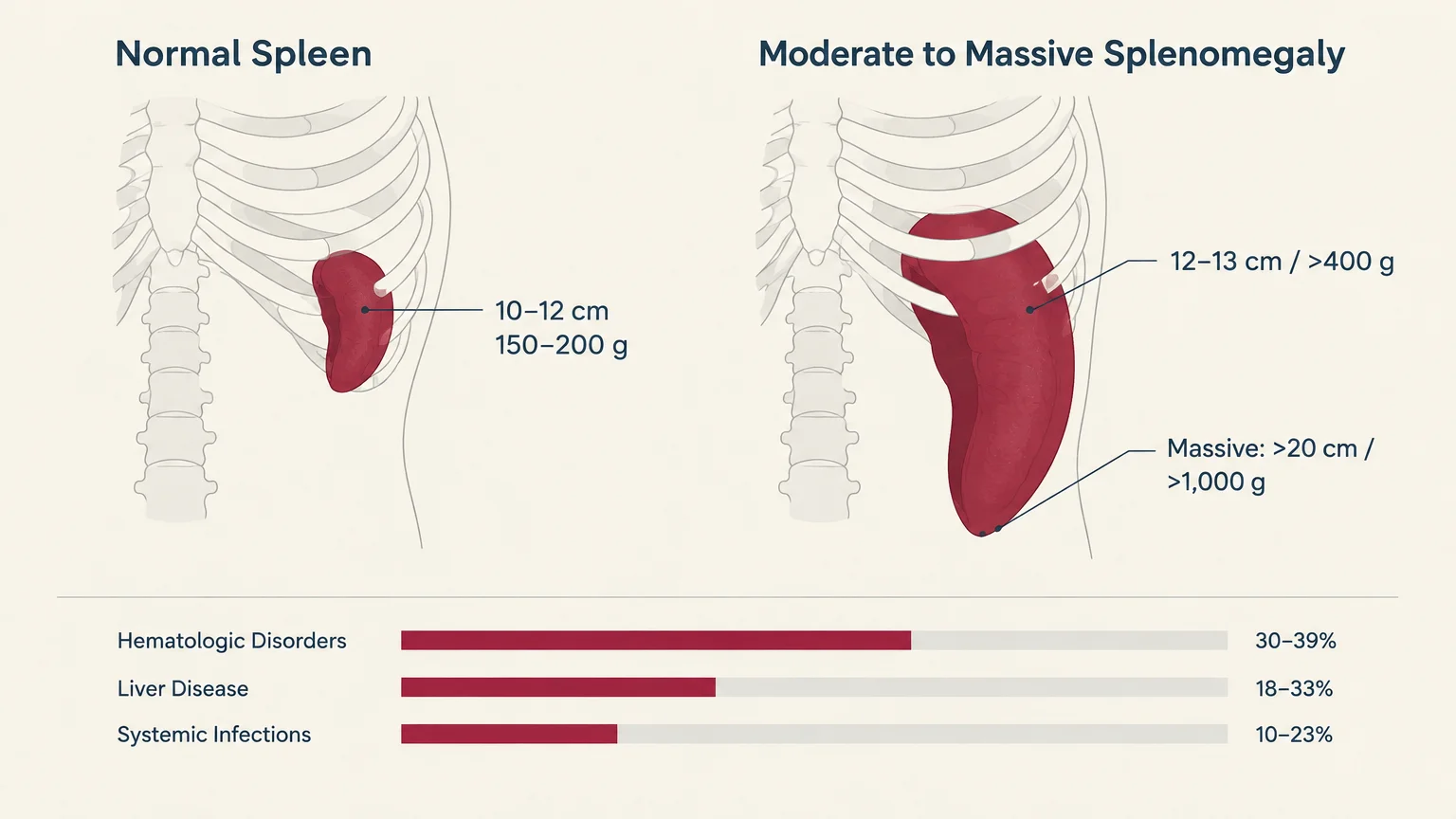
In healthy adults, the spleen measures between 10 and 12 centimeters in length and weighs roughly 150 to 200 grams. It acts as an intricate vascular filter, recycling iron from old red blood cells and orchestrating immune defenses.
Clinicians diagnose mild to moderate splenomegaly when the organ exceeds 12 to 13 centimeters or reaches a weight greater than 400 grams. Extreme cases, known as massive splenomegaly, involve spleens surpassing 20 centimeters or 1,000 grams.
A healthy spleen tucks securely beneath your rib cage where doctors cannot feel it during an examination. An examiner can typically palpate its edge only after the organ swells to two or three times its normal volume.
Approximately two to three percent of the general North American population develops a palpable spleen at some point. Epidemiological research compiled by the National Institutes of Health reveals that underlying causes fall into three primary diagnostic categories.
Hematologic disorders like lymphoma or hemolytic anemia account for thirty to thirty-nine percent of cases. Meanwhile, liver diseases and portal hypertension trigger eighteen to thirty-three percent, and systemic infections cause ten to twenty-three percent.
Splenic enlargement also accounts for approximately 0.3 percent of all hospital admissions. Rates frequently spike among college students and young adults due to acute Epstein-Barr virus infections.
9 Signs Your Spleen Might Be Enlarged
1. Early Satiety and Decreased Appetite
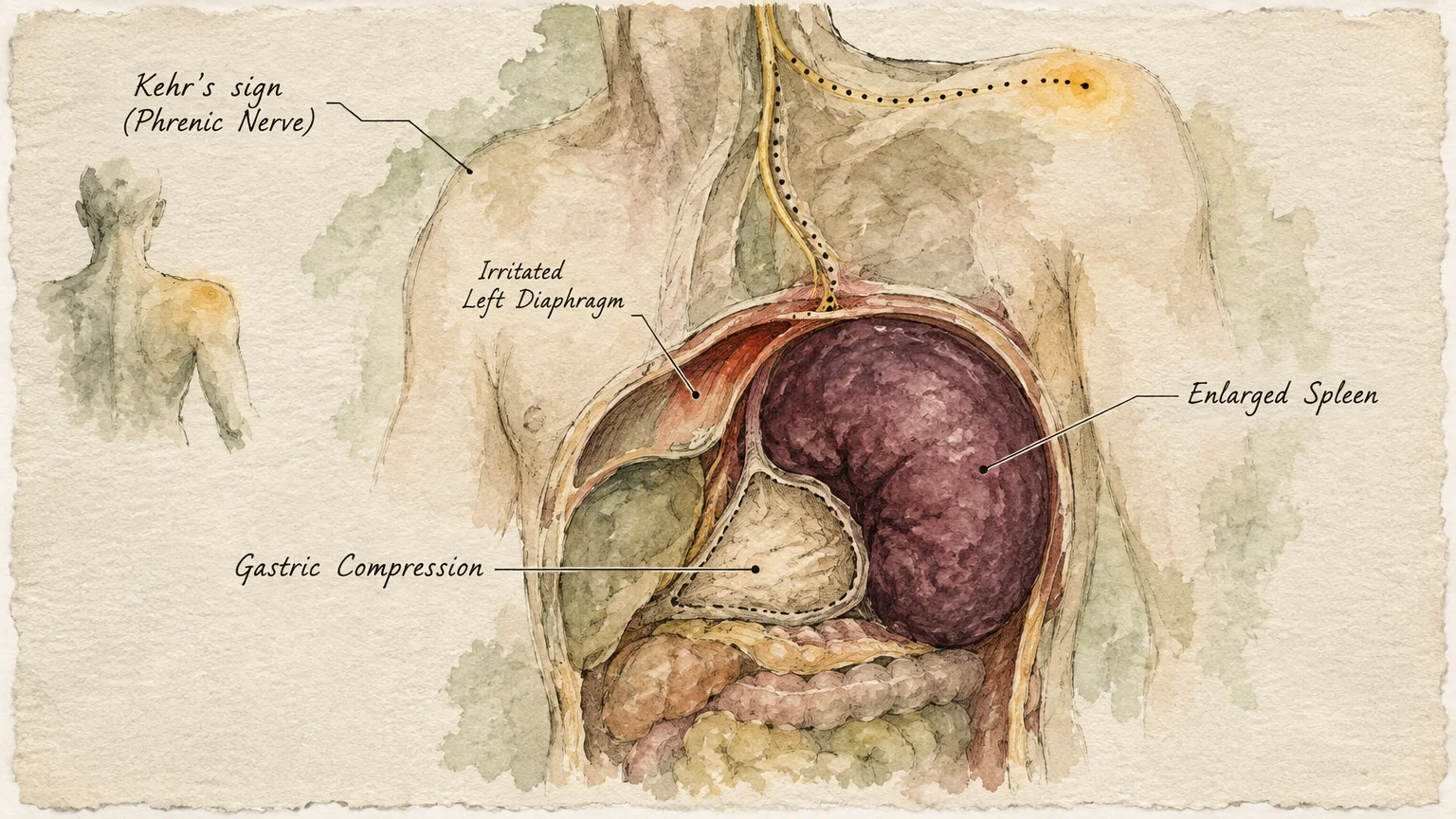
Your stomach sits immediately adjacent to your spleen inside the upper left abdominal cavity. When your spleen expands, it physically compresses the stomach wall and drastically reduces gastric capacity.
You might feel completely stuffed after taking only a few bites of an ordinary meal. Over time, this mechanical restriction can lead to accidental weight loss and nutrient deficiencies.
2. Left Upper Quadrant Discomfort or Pressure
A dull, persistent ache beneath your left lower ribs serves as one of the most direct signs of splenic enlargement. Many people mistake this sensation for muscular strain or digestive gas.
The spleen itself contains few pain receptors, but its outer protective capsule stretches as tissue expands. This mechanical tension produces a deep, heavy fullness that worsens when you bend over or wear tight clothing.
This regional ache often intensifies after eating because your expanding stomach further crowds the inflamed left upper quadrant. Paying attention to this localized pressure helps differentiate it from general abdominal cramping.
3. Radiating Left Shoulder Pain (Kehr’s Sign)
Irritation from an inflamed or swollen spleen frequently radiates upward toward the tip of your left shoulder. Clinicians identify this specific neurological phenomenon as Kehr’s sign.
The anatomical mechanism traces directly to your diaphragm, which shares nerve pathways with your splenic bed. Irritation travels along the phrenic nerve through the C3 to C5 spinal roots, tricking your brain into perceiving shoulder pain.
This referred discomfort often worsens when you lie flat or press on your left upper belly. Because shoulder joints seem unrelated to your gut, many people fail to report this vital symptom to their physicians.
4. Frequent and Lingering Infections
A healthy spleen houses specialized white blood cells that neutralize circulating bacteria and viruses. When splenomegaly disrupts this architecture, your body loses critical immunologic protection.
You may notice that minor colds linger for weeks or evolve rapidly into secondary bacterial infections. Clinical surveillance from the Centers for Disease Control and Prevention emphasizes monitoring recurrent fevers when immune filtration falters.
5. Easy Bruising and Spontaneous Bleeding
Under normal physiological conditions, your spleen stores roughly thirty percent of your circulating blood platelets. In cases of severe splenomegaly, the hyperactive organ can sequester up to ninety percent of these clotting cells.
This severe drop in circulating platelets, known as thrombocytopenia, impairs your natural clotting cascade. You might notice widespread purplish bruises, bleeding gums after gentle brushing, or recurrent nosebleeds without clear trauma.
Even minor surface scratches can bleed for unusually long periods when your platelet pool remains trapped. Spotting tiny pinpoint red dots across your lower legs, known as petechiae, also indicates dropping platelet levels.
6. Persistent Fatigue and Weakness
Splenic pooling does not stop at platelets; an enlarged spleen also traps and destroys healthy red blood cells prematurely. This destructive cycle leads to secondary hemolytic anemia.
Without sufficient hemoglobin carrying oxygen to your tissues, everyday activities quickly leave you exhausted. You may experience chronic sluggishness, pale skin, lightheadedness, and unexpected shortness of breath during routine movement.
7. Jaundice and Skin Discoloration
Accelerated destruction of red blood cells floods your bloodstream with excess bilirubin, a yellow pigment produced during heme breakdown. When your liver cannot process this surplus rapidly enough, jaundice develops.
Look for subtle yellowing across the whites of your eyes and under your tongue before skin tone shifts. In other cases, concurrent liver disease causing portal hypertension drives this visible discoloration.
Clinical data from the American Liver Foundation underscores how closely splenic congestion correlates with chronic hepatic inflammation. Detecting jaundice warrants immediate liver and spleen function evaluations.
8. Visible Abdominal Asymmetry or a Palpable Mass
When a spleen enlarges significantly, it pushes past the lower protective border of your rib cage. You might visually observe uneven swelling on the left side of your abdomen when lying flat.
Gently resting your hand below the left ribs may reveal a firm, distinct edge moving downward as you inhale. If you detect this firm contour, schedule a formal medical assessment rather than pressing deeply into the area.
Vigorous self-palpation carries real risks because an inflamed splenic capsule tears easily under blunt pressure. Leave diagnostic palpation to trained clinicians who know how to examine abdominal margins safely.
9. Discomfort During Deep Breathing
Taking a deep breath requires your diaphragm to expand downward into the abdominal space. An enlarged spleen obstructs this downward motion by occupying the necessary anatomical volume.
You might feel sharp friction or catching pain at the end of a full inhalation. This restriction often prompts shallow breathing patterns that inadvertently heighten physical fatigue and anxiety.

Strategy Pillars for Splenic Health and Recovery
Pillar 1: Targeted Medical Evaluation and Diagnosis
Accurate diagnosis begins with non-invasive abdominal imaging to measure your spleen precisely. High-resolution ultrasound provides an accessible, radiation-free assessment of splenic dimensions and blood flow velocity.
Your physician will likely order a complete blood count to examine platelet volumes and red blood cell counts. Guidance from the American Society of Hematology highlights the importance of identifying whether hypersplenism underlies your cellular deficits.
Treatment rarely focuses solely on the spleen itself, because splenomegaly is usually a secondary symptom. Resolving the root driver—whether an infection, hepatic congestion, or an autoimmune condition—remains the primary clinical goal.
Pillar 2: Physical Protection and Daily Safeguards
An enlarged spleen possesses a thinned capsule and sits exposed beyond the rib cage, dramatically raising rupture risks. Blunt force trauma from contact sports, rough play, or seatbelt impact can cause life-threatening internal hemorrhage.
Medical teams strongly recommend pausing activities like soccer, martial arts, and heavy weightlifting until your spleen stabilizes. You should also take precautions during household chores to avoid accidental falls or abdominal collisions.
Gentle walking and restorative movement support healthy lymphatic drainage without placing excessive mechanical strain on your torso. Always consult your primary care provider before resuming moderate or high-intensity exercise routines.
Pillar 3: Nourishing the Hepatosplenic Axis
While nutrition cannot directly shrink an enlarged organ, anti-inflammatory dietary patterns reduce systemic stress on your liver and spleen. Emphasize colorful vegetables, clean proteins, and omega-3 fatty acids from wild fish, flaxseeds, and walnuts.
Eliminating alcohol is essential because your spleen and liver share direct venous connections through the portal system. Reducing hepatic inflammation eases retrograde pressure on the splenic vein, preventing further blood pooling.
Hydration keeps blood viscosity low and supports microcirculation through the intricate splenic red pulp. Aim for consistent water intake throughout the day while minimizing ultra-processed foods loaded with refined sugars.

Real Voices: Perspectives from Clinical Practice
Clinical hematologists frequently encounter patients who dismissed their spleen symptoms for months as simple indigestion or minor stress. Early intervention prevents severe hematologic crises and preserves organ function.
Dr. Elena Vance, a clinical gastroenterologist, emphasizes that recognizing early fullness can expedite life-saving liver or hematologic care. She notes that patients often regain optimal energy once the underlying congestion resolves.
Patient accounts consistently reveal that paying attention to subtle body shifts made all the difference in their outcomes. Trusting your instincts when multiple vague symptoms align creates a powerful pathway toward effective healing.
Frequently Asked Questions
Can an enlarged spleen return to its normal size?
Yes, a swollen spleen frequently shrinks back to its standard baseline once doctors treat the primary underlying condition. Viral infections like mononucleosis typically resolve over several weeks, allowing splenic inflammation to subside completely.
Chronic causes like advanced cirrhosis or myelofibrosis may require ongoing medical management to control splenic volume. Partner with a specialist to establish realistic recovery benchmarks for your specific diagnosis.
How can I tell spleen pain apart from common digestive gas?
Intestinal gas typically shifts position across your abdomen, produces rumbling sounds, and relieves itself through bowel movements. In contrast, spleen discomfort remains fixed in the upper left quadrant beneath your rib cage.
Splenic discomfort also correlates with physical movement, deep breaths, or left shoulder aching rather than your digestive cycle. If the localized pressure persists for several consecutive days, seek clinical clarity.
When does an enlarged spleen become a medical emergency?
Splenic rupture represents an acute, life-threatening emergency that demands immediate medical intervention. Sudden, severe pain in your left upper abdomen accompanied by dizziness, fainting, or rapid heart rates signals severe internal bleeding.
The clinical triage protocols outlined by the American College of Surgeons stress the urgency of emergency care following any abdominal impact with splenomegaly. Never ignore sudden lightheadedness or escalating abdominal tenderness.
Can a person live a normal life if the spleen must be removed?
Yes, human beings can thrive without a spleen if surgical splenectomy becomes necessary due to trauma or disease. Other organs, primarily your liver and lymph nodes, step in to assume the majority of filtration duties.
However, asplenic individuals face an elevated lifetime risk for certain encapsulated bacterial infections. Doctors administer preventive vaccines and recommend prompt antibiotic therapy whenever fevers arise.
Moving Forward: Your Next Step
Navigating bodily symptoms feels far less overwhelming when you break your health journey into clear, manageable actions. If you recognize several warning signs outlined here, schedule a comprehensive physical checkup this week.
Ask your physician for a gentle abdominal examination and basic blood work to evaluate your platelet levels. Taking this single proactive step replaces anxiety with clarity and protects your long-term vitality.
Reflect on how your body has been communicating its needs lately; what small signal have you been overlooking? Honoring those subtle physical cues today helps secure your lasting wellness for the future.








Leave a Reply