

Catching gum recession early protects your smile from irreversible bone deterioration and costly tooth loss. Subtle shifts along your gumline often signal serious tissue damage years before you feel persistent pain.
Most adults overlook these quiet warnings because early recession rarely causes dramatic bleeding or obvious swelling. Left unaddressed, retreating tissue exposes delicate root surfaces that permanently compromise your oral health.
Recognizing the earliest indicators empowers you to intervene before minor tissue wear demands invasive periodontal surgery. Here is what your mouth is telling you and how you can take control today.
The Hidden Science of Gum Recession
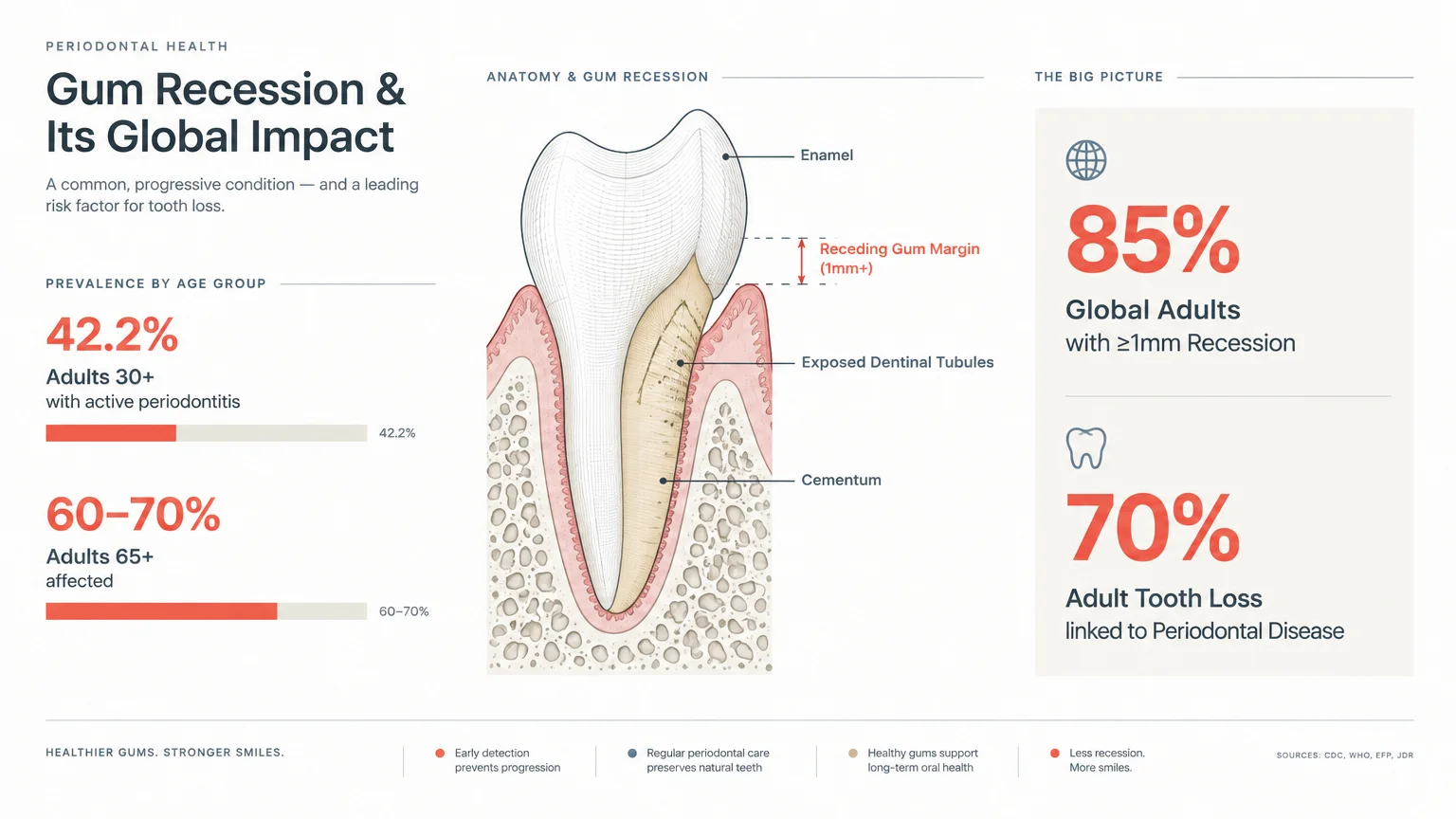
Epidemiological data reveals that an estimated 85 percent of adults globally show gingival recession of one millimeter or greater on at least one tooth. This widespread structural recession frequently progresses unnoticed until root surfaces experience irreversible wear.
According to the Centers for Disease Control and Prevention, approximately 42.2 percent of adults aged 30 and older live with active periodontitis.
That inflammatory burden climbs dramatically as you age, affecting between 60 and 70 percent of adults aged 65 and older.
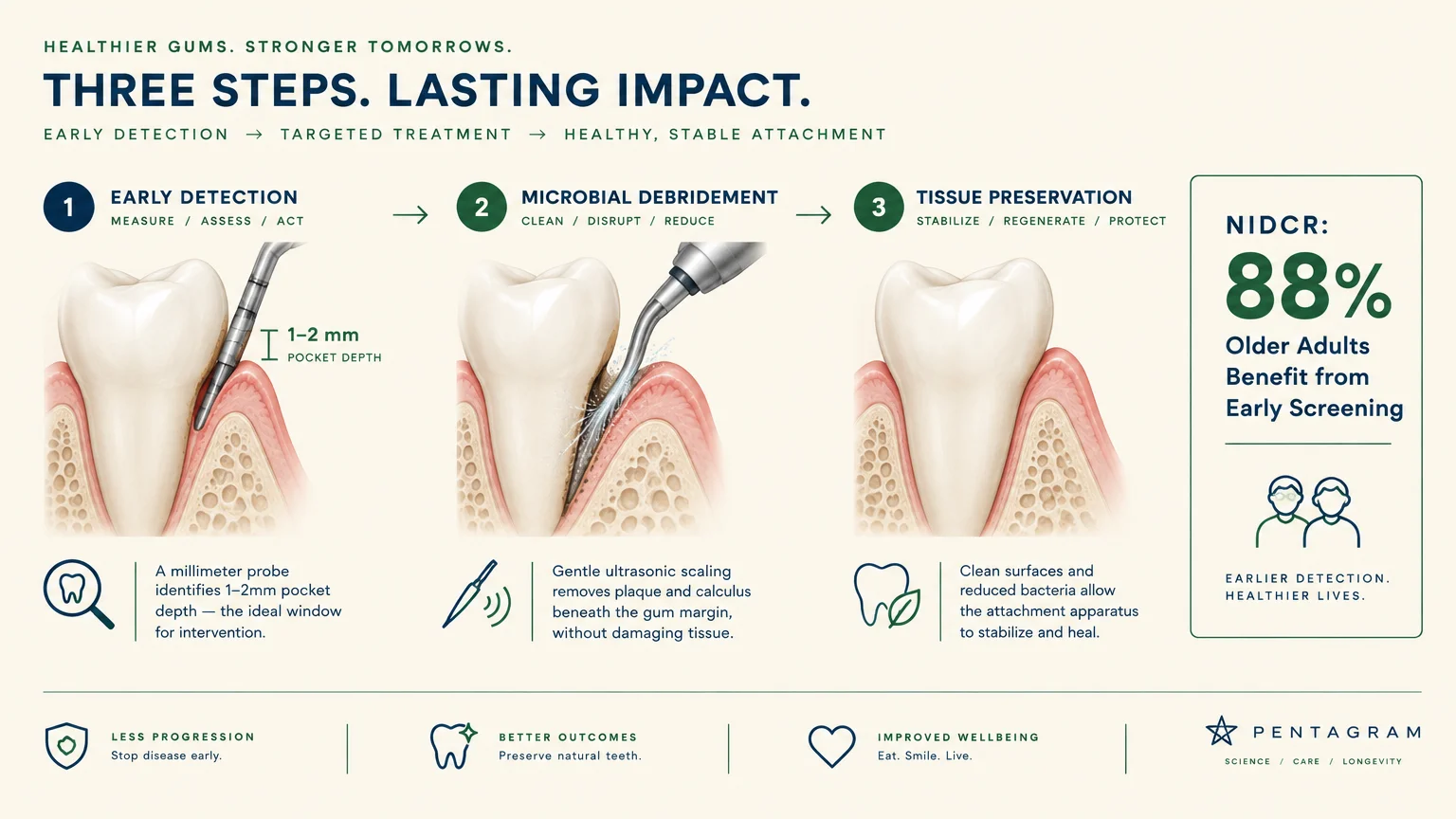
Clinical metrics from the National Institute of Dental and Craniofacial Research indicate that 88 percent of older adults exhibit recession on at least one tooth surface.
Periodontal instability is not merely a superficial cosmetic concern. The Canadian Dental Association notes that periodontal disease accounts for roughly 70 percent of all adult tooth loss.
When gum tissue recedes, underlying support structures vanish; bone loss inevitably follows if you leave chronic inflammation unchecked.
10 Symptoms of Gum Recession You Should Never Ignore
1. Sharp Tooth Sensitivity to Temperature
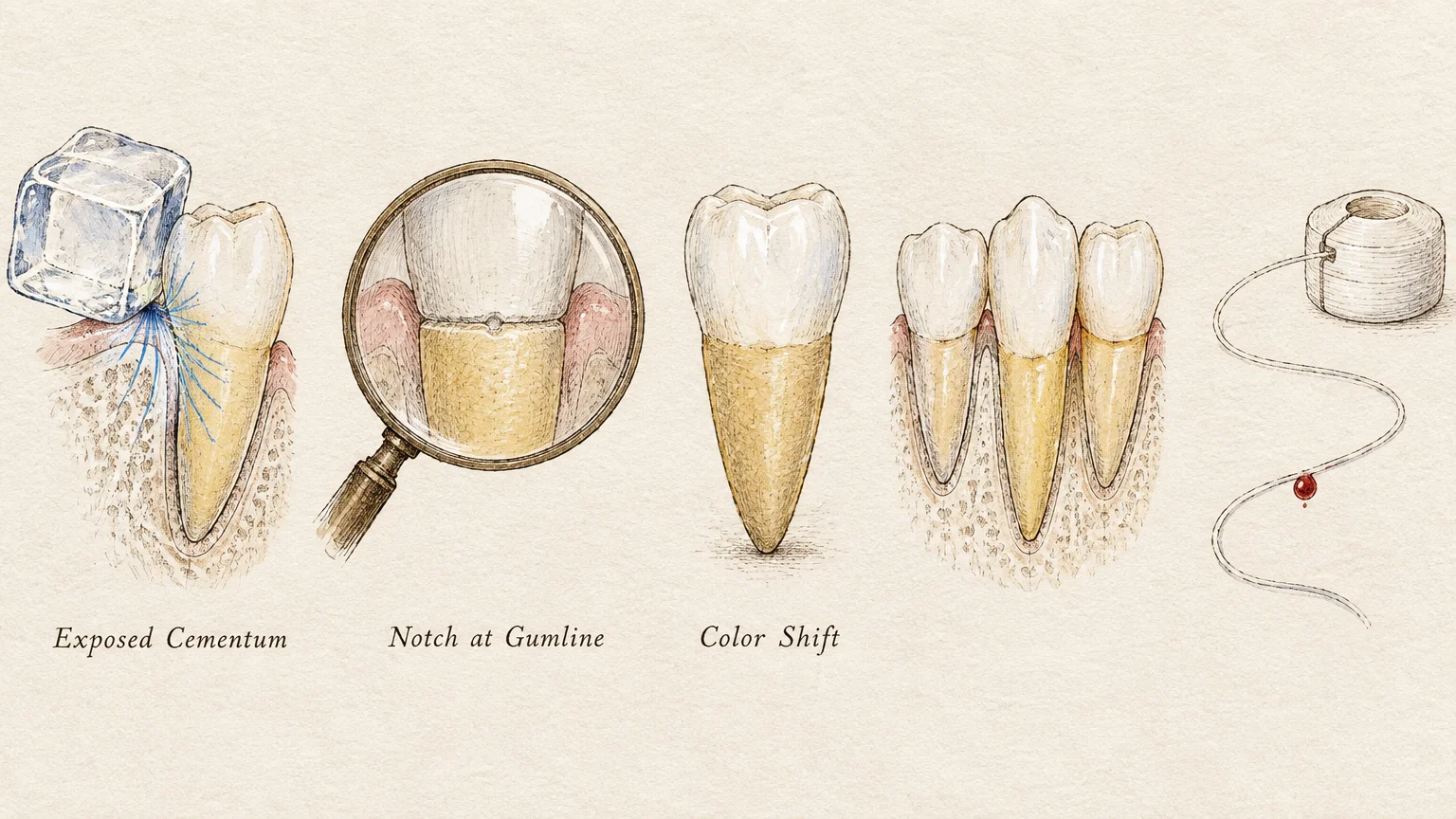
A sudden wince when drinking ice water or sipping hot coffee often signals receding tissue rather than simple enamel wear.
Gums normally protect your tooth root by covering cementum, a softer calcified tissue that erodes much faster than hard enamel.
Once cementum wears away, microscopic dentinal tubules open up, transmitting temperature stimuli directly to your internal dental nerve.
2. Teeth That Appear Noticeably Longer
You might glance in the mirror and observe that one particular tooth looks longer than its neighbors.
Adult teeth never actually grow; instead, retreating gum margins peel downward or upward to expose more of the natural root.
Because this spatial shift occurs fraction by fraction of a millimeter, your eyes can easily adapt to the change without noticing.
3. A Distinct Notch or Ridge Near the Gumline
Gently trace your fingernail or the tip of your tongue along the boundary where your tooth meets your gum.
If you feel a tiny groove, ledge, or physical indentation, you are feeling the exposed cementoenamel junction.
This structural notch forms as softer root material wears down from mechanical friction, creating a vulnerable trough that harbors destructive bacteria.
4. Color Discrepancies Near the Root Surface
Enamel presents a relatively uniform, translucent white or ivory finish across the visible crown of your tooth.
In contrast, exposed root surfaces display a darker, yellowish hue with a matte texture that lacks the natural gloss of enamel.
Many people mistakenly identify this yellow band as everyday surface staining and scrub aggressively, which strips away more tissue.
5. Bleeding During Routine Flossing
Healthy gingival tissue is strong and resilient; it should never bleed during gentle, daily flossing.
If your floss consistently comes away stained with blood, bacterial colonies have triggered active micro-ulcerations along your inner sulcus lining.
This chronic inflammatory state weakens collagen attachments, creating a direct path for progressive gingival detachment.
6. Persistent Food Traps Between Teeth
Pay close attention if fibrous vegetables or meats repeatedly wedge into specific spaces that previously stayed clear.
The triangular peaks of gum tissue between adjacent teeth—called interdental papillae—often flatten and pull back during early recession.
These emerging gaps create sheltered pockets where food debris ferments, accelerating bacterial growth against unprotected root structures.
7. Swollen, Spongy, or Erythematous Margins
Firm, stippled tissue with a healthy light pink shade indicates stable periodontal support.
When your gum borders become puffy, rolled, or intensely red, localized inflammation is actively dismantling the extracellular collagen matrix.
Spongy margins lose their tight seal against your teeth, enabling deeper bacterial invasion and gradual tissue detachment.
8. Chronic Morning Bad Breath or Sour Taste
Lingering halitosis that resists diligent brushing often originates inside deep periodontal pockets rather than on the tongue surface.
As gums pull away from teeth, anaerobic bacteria colonize these dark crevices and release foul-smelling volatile sulfur compounds.
Waking with a persistent sour or metallic taste frequently warns of hidden bacterial colonies thriving beneath receding tissue.
9. Subtle Mobility or Shifting of Teeth
Your bite should feel stable and immovable whenever you chew crunchy foods like raw carrots or firm apples.
If a tooth feels slightly springy, clicks during chewing, or drifts outward, critical periodontal ligament fibers have likely deteriorated.
Any noticeable tooth mobility indicates substantial underlying bone erosion that requires immediate clinical intervention to prevent tooth loss.
10. Tenderness or Discomfort While Brushing
Routine oral hygiene should feel invigorating and comfortable rather than sore or tender.
If your toothbrush bristles trigger a bruised or stinging sensation along your gumline, exposed root surfaces may be inflamed.
Readers often instinctively avoid brushing tender areas, inadvertently accelerating plaque accumulation and worsening the underlying tissue loss.

Holistic Strategies to Protect Your Gumline
Mastering Gentle Mechanical Oral Care
Brushing too forcefully with stiff bristles represents one of the leading mechanical causes of preventable gum recession.
Replace your hard or medium brushes with an ultra-soft manual brush or a smart electric toothbrush with a pressure sensor.
Angle the bristles at 45 degrees toward your gumline; then use gentle, short circular strokes to lift plaque away safely.
Supplement your brushing with gentle interdental brushes or water flossers to clean between teeth without slicing fragile gingival papillae.
Nourishing Periodontal Tissues From Within
Systemic inflammation impairs your body’s ability to repair micro-trauma in gingival tissues and periodontal ligaments.
Build your daily meals around whole foods abundant in vitamin C, zinc, and bioflavonoids to support robust collagen synthesis.
Fatty fish rich in omega-3 fatty acids helps temper inflammatory pathways that otherwise accelerate alveolar bone destruction.
Stay thoroughly hydrated with water to ensure optimal saliva production, which bathes your teeth in protective minerals and natural immunoglobulins.
Mitigating Stress and Nighttime Bite Forces
Psychological stress frequently manifests as involuntary clenching or nocturnal tooth grinding, placing excessive mechanical stress on your teeth.
These extreme lateral forces cause microscopic flexing at the tooth neck, a biomechanical phenomenon known as abfraction that hastens recession.
If you awaken with jaw tightness or dull headaches, consult your dentist about wearing a custom-fitted nocturnal bite guard.
Incorporate evening breathwork or restorative yoga into your nighttime routine to calm your nervous system and reduce involuntary clenching.
Clinical Diagnostics and Professional Intervention
Routine professional evaluations are crucial because you cannot reverse receded gum tissue through home brushing alone.
During your checkups, your dentist or hygienist uses a calibrated probe to measure your periodontal pocket depths in millimeters.
Depths between one and three millimeters reflect healthy attachment, whereas a four-millimeter reading signals early inflammatory swelling.
Pocket depths of five millimeters or greater indicate active bone detachment and periodontal disease that demands dedicated clinical care.
Conservative therapy often starts with scaling and root planing, which averages $150 to $350 per quadrant without dental insurance.
When severe recession threatens tooth survival, surgical connective tissue grafting—costing between $600 and $1,500 or more per tooth—can restore root coverage.
You can locate certified periodontists in your area through the American Academy of Periodontology directory.
Clinical Perspectives on Early Prevention
Dental clinicians frequently emphasize that most patients ignore early recession until sensitivity or aesthetic changes become unbearable.
Dr. Elena Morales, a veteran periodontist, explains that gum tissue does not regenerate like skin; once attached fibers detach, they stay gone.
Preventive specialists urge patients to view millimeter pocket increases with the same urgency as elevated blood pressure readings.
Patients who catch tissue changes early and adapt their brushing habits routinely avoid painful bone loss and expensive surgical interventions.
Frequently Asked Questions About Gum Recession
Can Receding Gums Grow Back Naturally?
Receded gum tissue cannot naturally regenerate or climb back over exposed root surfaces on its own.
However, committed oral hygiene and professional periodontal therapy can stabilize your gumline and permanently prevent further tissue detachment.
Does Teeth Grinding Directly Cause Gum Recession?
Yes, chronic bruxism transmits heavy mechanical forces down the tooth shaft, causing the enamel to flex near the gumline.
This ongoing micro-flexing damages the fragile cementoenamel junction, accelerating tissue detachment and creating deep cervical notches over time.
Is Gum Recession an Inevitable Part of Aging?
While approximately 88 percent of older adults experience some recession, it is not an unavoidable biological consequence of aging.
Recession represents the cumulative impact of aggressive brushing, untreated inflammation, and bite misalignment across decades rather than simple chronological years.
How Often Should Your Periodontal Pockets Be Measured?
You should receive comprehensive periodontal probing at least once every twelve months during your standard dental cleaning.
The American Dental Association supports routine full-mouth charting to intercept subtle pocket deepening before severe structural damage occurs.
Taking Your First Step Today
Tonight, stand before your bathroom mirror under clear lighting and take three minutes to inspect your teeth and gums closely.
Gently run your clean fingertip along your gum margins to feel for subtle ridges, tenderness, or unusual textures.
What single adjustment—whether lightening your brushing stroke or booking a comprehensive periodontal checkup—will you commit to making tomorrow morning?









Leave a Reply