When to See a Doctor Immediately for Urinary Symptoms
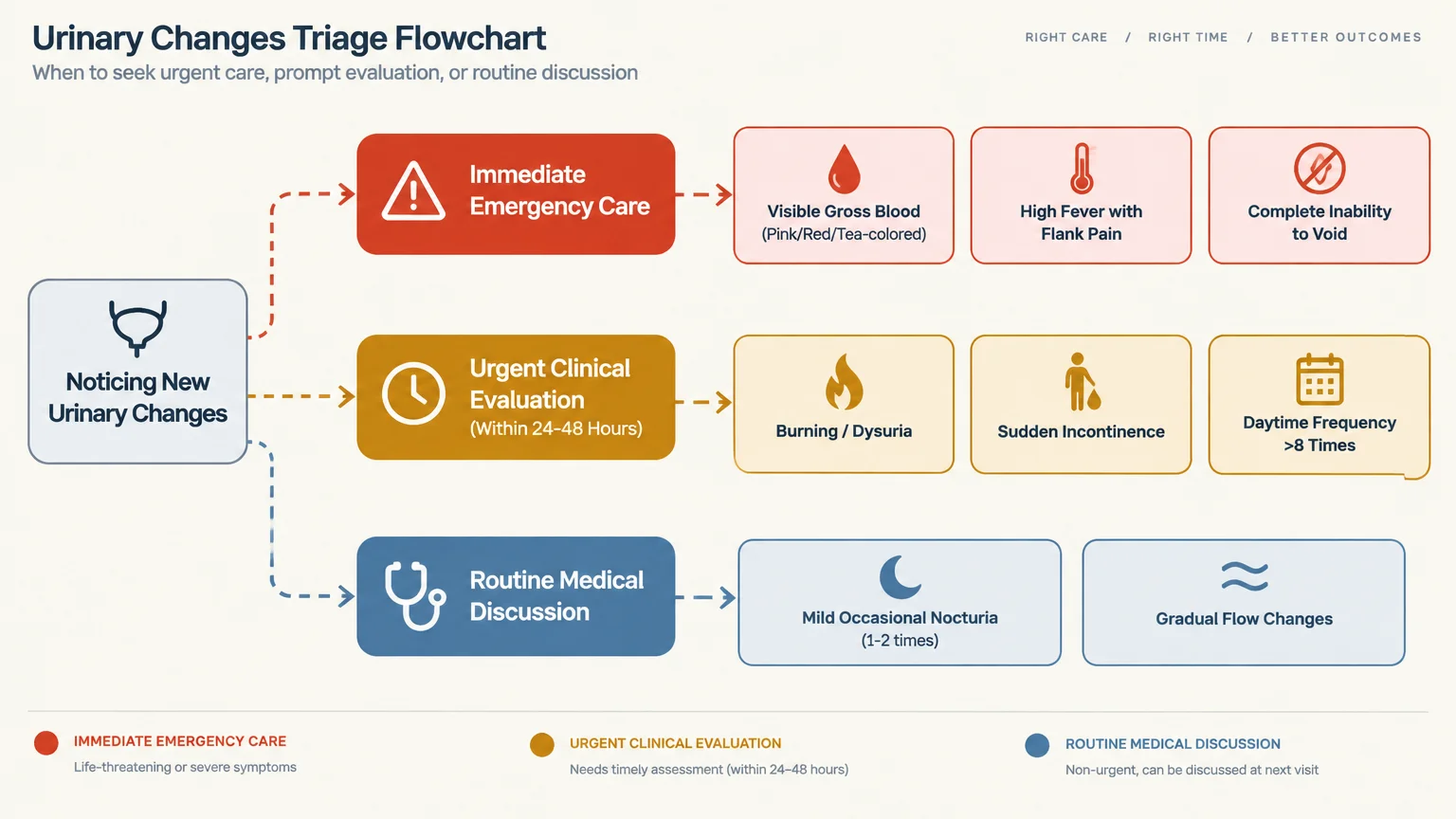
While some bladder complaints evolve slowly over several months, specific warning signs demand urgent emergency attention. Recognizing these critical presentations protects your organs from permanent injury.
Seek same-day medical care if you observe visible blood clots in your urine or experience severe flank pain. Rapid medical intervention prevents dangerous urinary blockages and addresses acute internal bleeding promptly.
Fever exceeding 101 degrees Fahrenheit accompanied by shaking chills, nausea, and burning urination points toward an ascending kidney infection. This clinical presentation requires immediate intravenous or high-potency oral antibiotics to prevent life-threatening urosepsis.
Finally, a total inability to pass urine over several hours represents an acute emergency. Proceed straight to an urgent care or emergency department to decompress your bladder safely.
Frequently Asked Questions
How many times a day should a healthy adult urinate?
Most healthy adults empty their bladder six to eight times within 24 hours when consuming two liters of fluid. Urinating more than eight times daily, or waking repeatedly at night, warrants clinical exploration.
Is urine leakage simply an unavoidable part of aging?
Incontinence is common among older adults, but it is never an unavoidable consequence of aging. Targeted pelvic floor therapies, lifestyle adjustments, and medical treatments can successfully restore bladder control and confidence.
Why do older adults experience more frequent urinary tract infections?
Aging brings shifts such as lower postmenopausal estrogen levels, prostate enlargement, and incomplete bladder emptying that foster bacterial growth. Older individuals also often experience subtle symptoms like confusion or fatigue rather than acute burning.
Can dietary adjustments completely resolve frequent urination?
Eliminating bladder irritants like caffeine, alcohol, and artificial sweeteners can significantly calm overactive symptoms. However, structural obstructions, metabolic conditions like diabetes, and active infections still require targeted medical care.
Taking Your First Step Toward Bladder Health
Restoring bladder wellness does not require overwhelming overhauls of your daily routine. Begin today with a simple, manageable step: track your daily fluids and bathroom visits for the next three days.
Take a quiet moment to reflect on how your physical habits affect your daily peace of mind. Are you altering your travel plans or limiting your social engagements due to bathroom anxiety?
Sharing your observations with a compassionate healthcare provider can unlock targeted therapies and restore your peace of mind. Prioritize your physical signals today, because your urinary system is vital to your lasting vitality.