10 Critical Urinary Symptoms That Demand Attention
1. Visible or Microscopic Blood in Your Urine
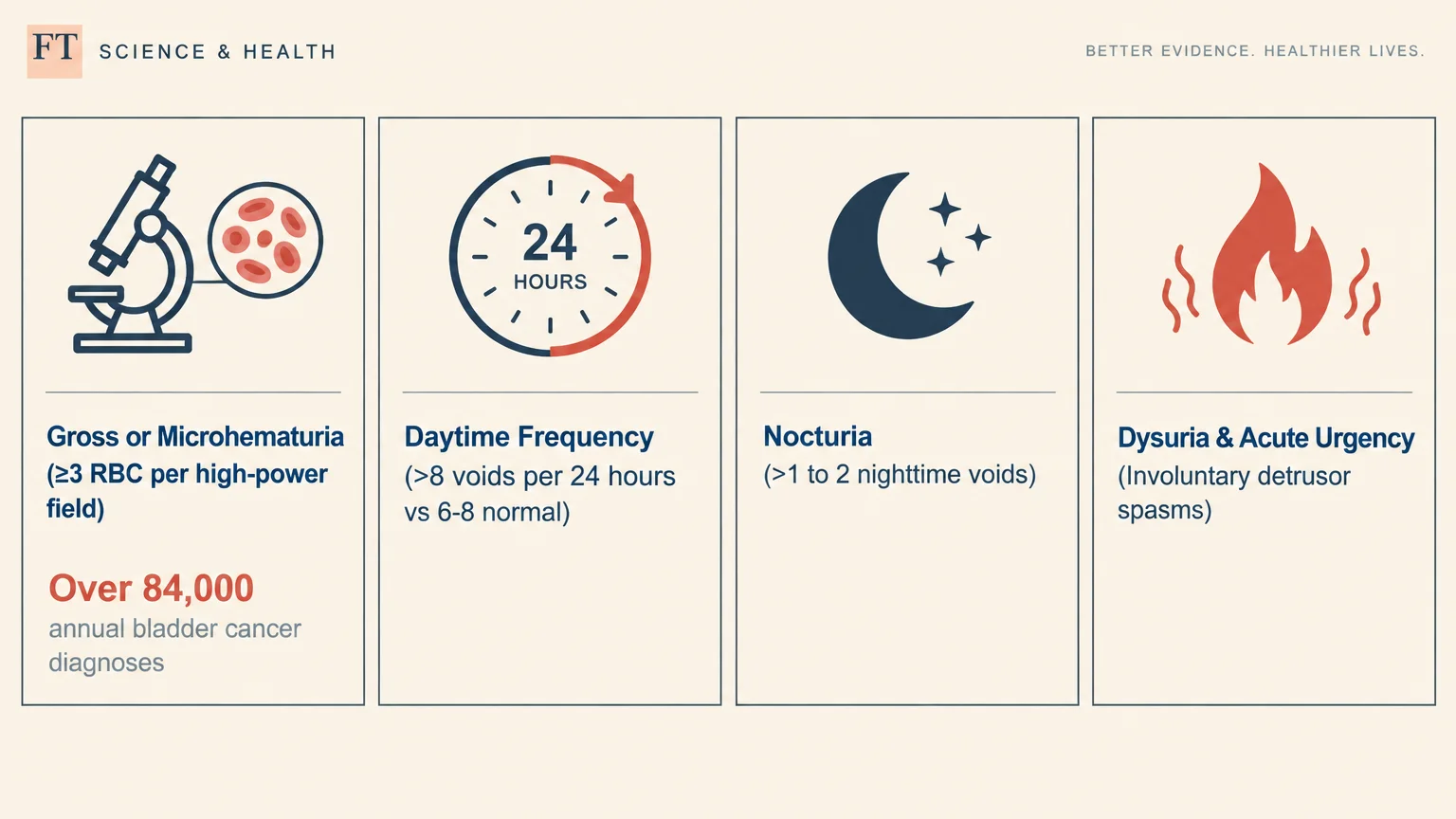
Noticing pink, red, or tea-colored urine represents gross hematuria, whereas microscopic hematuria involves invisible red blood cells detected via urinalysis. Guidelines from the American Urological Association define microhematuria as three or more red blood cells per high-power field.
Up to 10% of hematuria cases indicate genitourinary malignancy, with bladder cancer accounting for over 80% of these cases. According to the American Cancer Society, over 84,000 Americans receive a bladder cancer diagnosis annually, making painless bleeding an urgent warning sign.
2. Persistent Daytime Frequency
Most healthy adults urinate six to eight times within a 24-hour period when drinking roughly two liters of fluid. Urinating more than eight times daily signals an underlying shift that warrants clinical investigation.
Frequent urination causes range from excessive caffeine intake and bladder wall inflammation to early-stage diabetes mellitus. Consistent frequency disrupts daily focus and indicates potential metabolic or anatomical imbalances.
3. Frequent Nighttime Waking (Nocturia)
Waking up more than once or twice per night to void is termed nocturia. This disruption interrupts restorative sleep cycles and elevates cardiovascular stress.
Nocturia often indicates nighttime fluid shifts, congestive heart disease, poorly managed sleep apnea, or progressive prostate swelling in men. Persistent nighttime waking demands a targeted clinical evaluation.
4. Pain or Burning During Urination
Experiencing a stinging, sharp, or burning sensation during urination indicates dysuria. This discomfort signals acute inflammation along your urethral lining or bladder wall.
Dysuria commonly stems from microbial infections, passing kidney stone fragments, or contact dermatitis from hygiene products. Left unaddressed, localized lower tract infections can ascend into your kidneys.
5. Sudden, Uncontrollable Urgency
Urinary urgency creates an overwhelming, sudden compulsion to void that feels impossible to delay safely. This distressing sensation frequently prompts intense anxiety regarding immediate bathroom access.
Urgency usually stems from involuntary spasms within your bladder detrusor muscle, often termed overactive bladder. Neurological conditions like stroke, multiple sclerosis, or spinal cord compression can also disrupt these signals.
6. Involuntary Leakage or Incontinence
Involuntary loss of urine affects millions of adults, manifesting as stress leakage during exertion or urge leakage following intense bladder spasms. Social stigma often delays necessary medical care for years.
Data from the National Institute of Diabetes and Digestive and Kidney Diseases shows incontinence affects 30% to 50% of adults aged 65 and older. Furthermore, nearly half of women over age 50 experience involuntary leakage.
7. Weak, Hesitant, or Interrupted Stream
Struggling to initiate urination or producing a weak, spraying, or intermittent flow indicates physical resistance along the urinary pathway. You might find yourself straining or waiting several minutes for flow to start.
In men, this hesitation frequently points toward an enlarged prostate compressing the urethra. In women, structural issues such as pelvic organ prolapse or urethral strictures can similarly impede normal outflow.
8. Sensation of Incomplete Emptying
Finishing urination only to feel that your bladder remains partially full indicates urinary dysfunction. This persistent fullness often forces you to return to the bathroom just minutes after voiding.
Chronic retention of residual urine stretches your bladder muscle over time, diminishing its contractility. Stagnant urine also creates an ideal breeding ground for recurrent bacterial colonies and bladder stones.
9. Complete Inability to Pass Urine
Acute urinary retention occurs when you experience an intensely full, painful bladder but cannot void a single drop. This condition represents an emergency requiring prompt catheterization.
Acute retention affects roughly 10% of men over age 70, frequently triggered by benign prostatic swelling, anesthesia, or medications. Untreated retention can rapidly cause bladder rupture, urosepsis, and acute renal failure.
10. Deep Pelvic, Groin, or Flank Pain
Discomfort radiating from your lower back around to your groin frequently originates within the urinary tract. This discomfort ranges from a dull ache to sharp spasms that arrive in waves.
Flank pain often points toward kidney stones lodged in the ureter or an ascending infection known as pyelonephritis. Pairing severe flank pain with fever, chills, or nausea demands emergency care.