Three Strategic Pillars for Sustainable Bladder Wellness
Protecting your urinary system requires a proactive strategy combining dietary habits, musculoskeletal support, and structured medical care. Implementing these three foundational pillars can strengthen your bladder and reduce irritation.
Pillar 1: Conscious Hydration and Bladder Nutrition
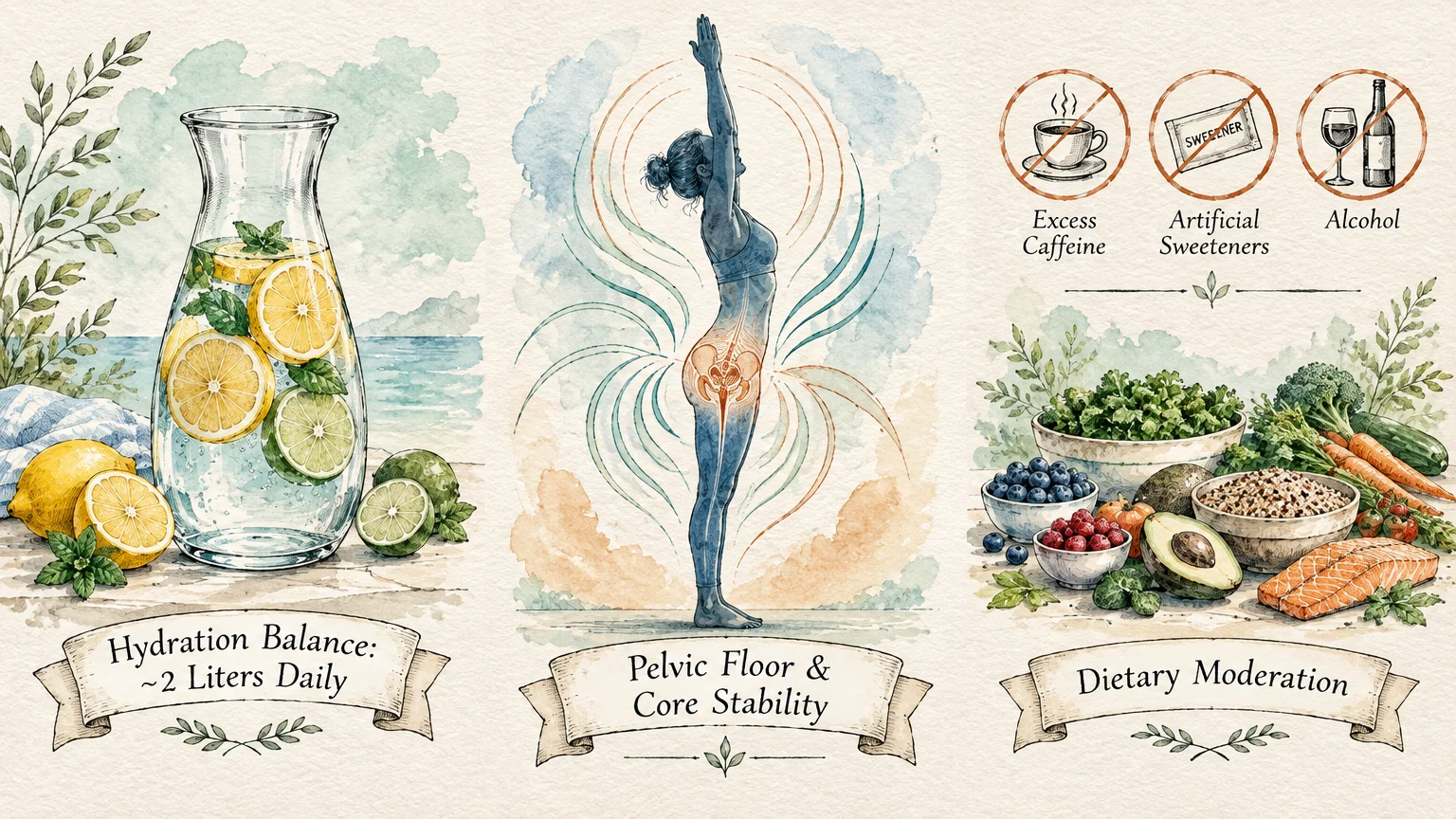
Aim to consume approximately 1.5 to 2 liters of fluid daily, distributing your intake evenly to avoid evening kidney overload. Counterintuitively, restricting water concentrates your urine, which severely inflames sensitive bladder tissue and accelerates bacterial growth.
Limit common dietary irritants such as artificial sweeteners, spicy foods, concentrated caffeine, and alcohol that trigger detrusor muscle spasms. Additionally, prioritize dietary fiber to prevent chronic constipation from placing physical pressure against your bladder wall.
Pillar 2: Pelvic Floor Conditioning and Mindful Movement
Your pelvic floor muscles form a supportive sling that stabilizes your bladder and controls urinary outflow. Consulting a specialized pelvic physical therapist helps identify whether your muscles require targeted strengthening exercises or downtraining relaxation techniques.
Complement specialized physical therapy with daily low-impact activities like brisk walking or gentle swimming. Consistent physical movement stimulates pelvic circulation, aids systemic metabolic control, and reduces dependent fluid pooling in your legs.
Pillar 3: Clinical Collaboration and Systematic Tracking
Maintain a detailed 72-hour bladder log recording fluid volume, voiding frequency, leakage episodes, and associated discomfort. This objective documentation gives your doctor precise diagnostic context rather than relying on vague recollections.
Review your medication list with your physician, because common drugs like diuretics, antihistamines, and antihypertensives directly alter urinary output. Working together ensures you address drug-induced side effects without compromising your general health.