
The Chemistry of the Reheated Cup: A Science Snapshot
Freshly brewed coffee contains a complex matrix of over one thousand chemical compounds. These molecules create the nuanced aroma, rich body, and balanced acidity that coffee drinkers cherish.
When coffee cools to room temperature, these compounds remain relatively stable for a short window. However, reintroducing intense microwave heat restarts chemical reactions that degrade the beverage.
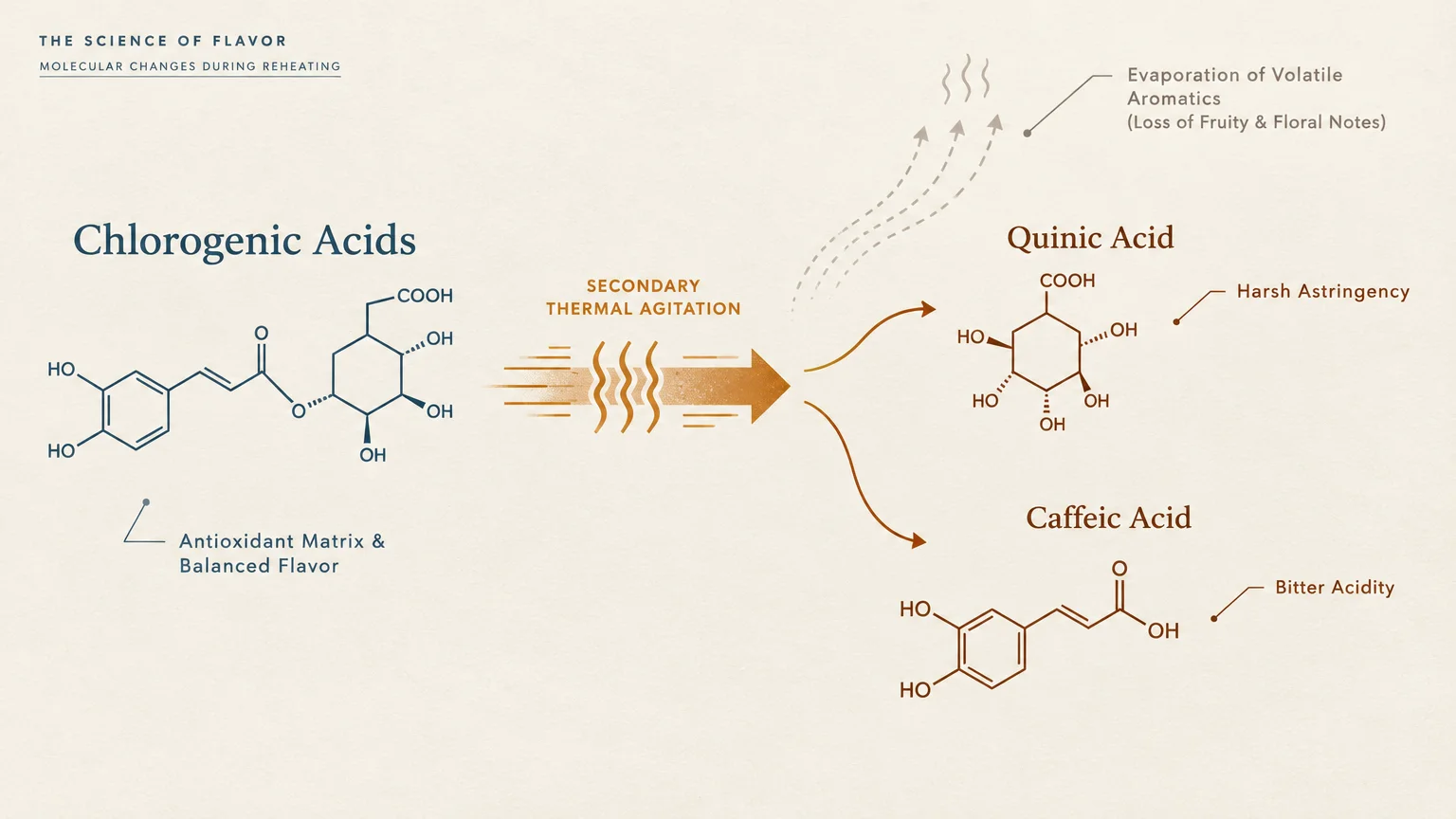
The primary change involves chlorogenic acids, the abundant antioxidants celebrated for their cellular health benefits. Heat converts these molecules into quinic and caffeic acids, which carry an intensely astringent flavor profile.
According to research indexed by the National Institutes of Health, chlorogenic acid degradation correlates directly with increased bitterness and palate harshness. You taste this transformation as an acrid, burnt bite.
When you subject cooled coffee to secondary heat, you also initiate rapid oxidation. Oxygen molecules interact with dissolved lipids, generating rancid flavor notes that persist long after the cup is empty.
This chemical cascade explains why simply adding fresh milk or sugar rarely masks the bitterness of reheated coffee. The unpleasant taste originates from fundamental molecular restructuring rather than temperature alone.
Furthermore, volatile organic compounds evaporate almost instantaneously under microwave radiation. These delicate aromatics provide your brain with the perception of sweetness and floral or fruity notes.
Once these compounds vaporize into the air, they leave behind only heavy, sour notes. The resulting liquid bears little chemical resemblance to the balanced cup you originally brewed.









Leave a Reply