9 Symptoms of Heart Attack in Women
1. Uncomfortable Chest Pressure, Squeezing, or Fullness
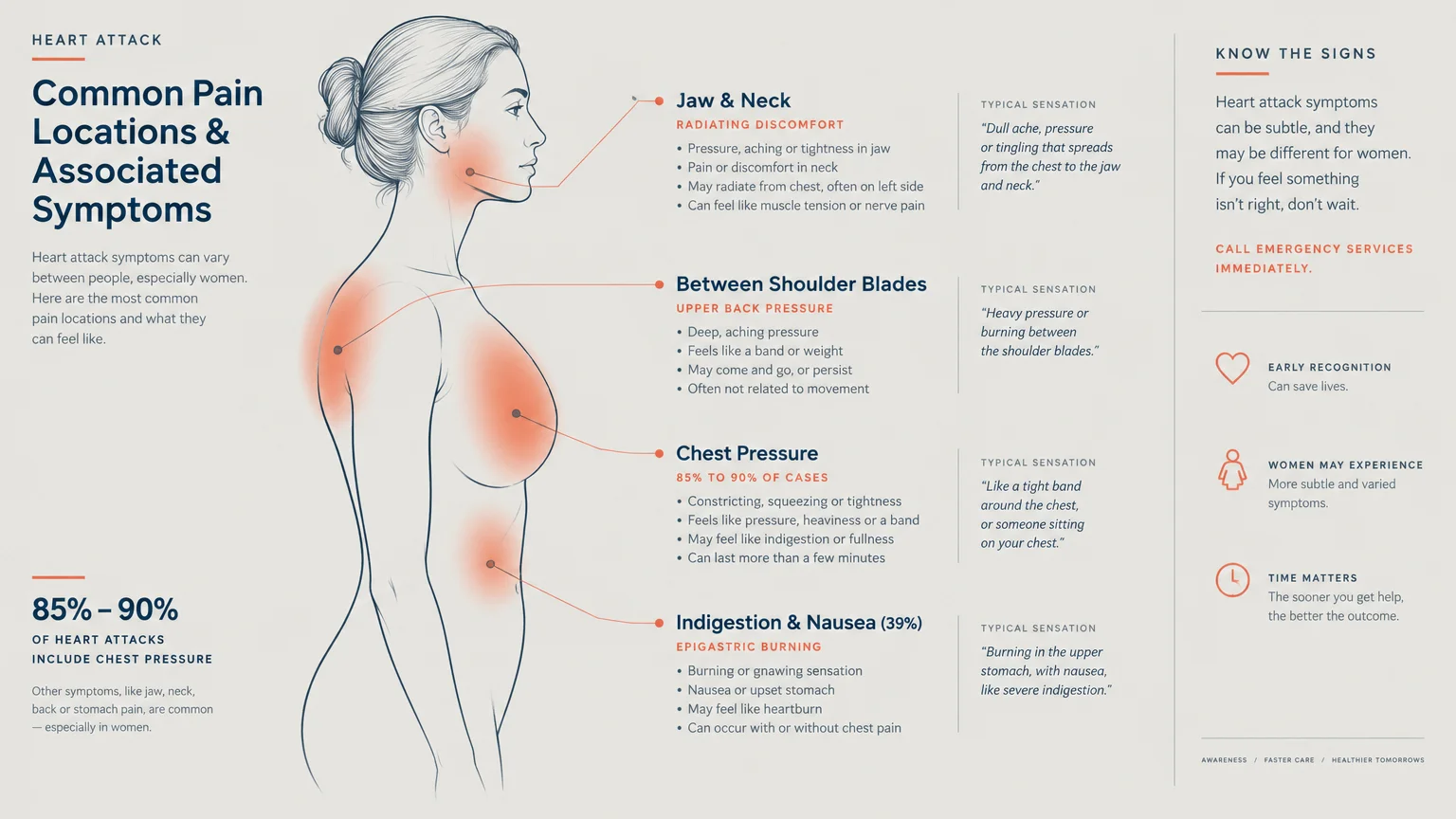
Medical research confirms that chest discomfort remains the primary indicator of a heart attack for both women and men. Studies in the Journal of the American Heart Association show this symptom occurs in 85% to 90% of cases.
Rather than sharp pain, you may feel an escalating squeezing, aching, or heavy pressure across your breastbone. This sensation often lingers for several minutes, or it may fade away and return with greater intensity.
2. Radiating Pain in the Jaw, Neck, or Throat
Cardiac sensory nerves converge alongside somatic fibers originating in your upper cervical spine. This shared neural network causes ischemic discomfort to radiate upward into your jawline, neck, and throat.
You might experience this sensation as an unexplained toothache, throbbing jaw ache, or throat tightness. Pay close attention if this discomfort surfaces during physical exertion and subsides during rest.
3. Crushing Pressure Between the Shoulder Blades
Many female patients report an unmistakable, heavy tightness situated high in the upper back. Women frequently describe this symptom as a tight band constricting the thoracic spine between their shoulder blades.
Because back discomfort is common, women often assume they strained a muscle during exercise. However, cardiac back tightness rarely responds to position changes, stretching, heat application, or massage.
4. Epigastric Burning, Indigestion, and Severe Nausea
When the inferior wall of your heart experiences oxygen deprivation, it stimulates the vagus nerve. This neurological reaction triggers upper gastrointestinal distress, burning stomach discomfort, and sudden nausea.
Roughly 39% of women report indigestion or nausea prior to an acute myocardial infarction. Over-the-counter antacids will not soothe this discomfort, so seek immediate evaluation if stomach burning accompanies clamminess.
5. Sudden Shortness of Breath Without Exertion
Failing myocardial function causes acute pressure increases inside your pulmonary blood vessels. This hemodynamic backup forces fluid into lung tissues, causing sudden breathlessness even while you rest quietly.
Studies in the journal Circulation indicate that 42% of women experience notable shortness of breath before an infarction. Treat unexplained respiratory difficulty as an urgent warning sign even without accompanying chest pain.
6. Profound and Unexplained Systemic Fatigue
Profound fatigue represents one of the most prominent prodromal warning signs in women. Research reveals that over 70% of female cardiac patients experienced overwhelming exhaustion up to a month before their event.
This exhaustion feels far heavier than ordinary tiredness from daily work. You might feel physically unable to walk across a room, fold laundry, or make your bed without resting.
7. Cold Sweats and Clammy Skin
Acute coronary ischemia triggers an aggressive sympathetic nervous system response. This fight-or-flight reaction releases adrenaline, producing sudden, profuse sweating alongside constricted peripheral blood vessels.
Your skin may suddenly become damp, clammy, and cool to the touch. A cold sweat that appears alongside nausea, back pressure, or breathlessness indicates serious circulatory distress.
8. Sudden, Unexplained Sleep Disturbances
Cardiovascular research demonstrates that 48% of women notice significant sleep disruptions in the weeks leading up to a heart attack. You may wake up repeatedly gasping for air or struggle to fall asleep entirely.
These nocturnal disturbances occur as fluctuating blood pressure and declining oxygen saturation disturb your brain stem. Track sudden shifts in your sleep architecture as potential cardiovascular warning signs requiring clinical attention.
9. Acute Lightheadedness and Unshakeable Dread
Impaired cardiac output directly restricts blood flow and oxygen transport to your cerebral cortex. This hemodynamic deficit causes sudden lightheadedness, unsteadiness, or near-fainting episodes.
Roughly 35% of women also report a sudden, unshakeable sense of impending doom or panic. If sudden terror surfaces alongside lightheadedness and physical weakness, demand an immediate cardiac assessment.