

Maintaining sharp physical balance requires more than sturdy shoes and strong leg muscles; it demands precise cellular fuel. Feeding your nervous system key micronutrients can sharpen your reflexes and stabilize your daily stride.
When your body lacks vital minerals and vitamins, peripheral nerve signals degrade and muscle response slows down. Even minor nutritional deficiencies can leave you feeling unexpectedly wobbly on everyday walks or stairs.
Targeted nutritional upgrades restore nerve conduction and strengthen the neuromuscular pathways that keep you upright. Here is how modern clinical science connects your daily diet directly to confident, steady movement.
The Hidden Link Between Cellular Fuel and Stability
According to CDC fall prevention data, more than one in four adults aged 65 and older falls each year. This rate represents over 14 million people annually in the United States.
Falls are the leading cause of fatal and nonfatal injuries in older adults, causing roughly 3 million emergency department visits annually. While slick surfaces cause some slips, internal biochemical deficiencies often initiate the wobble.
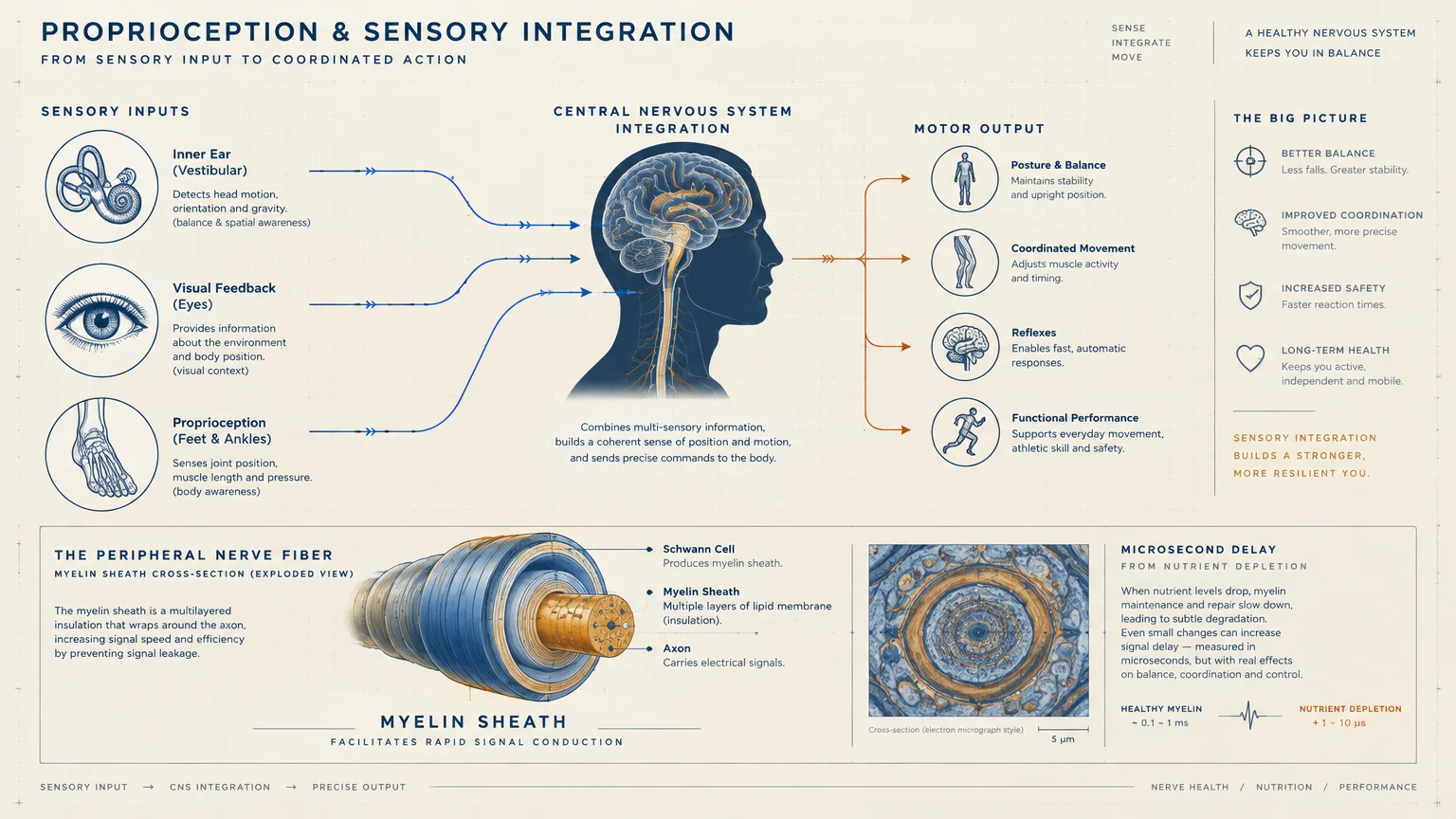
Your balance depends on continuous sensory feedback between your inner ear, your eyes, and sensory nerves in your feet. Clinicians call this spatial limb awareness proprioception.
When your nerves lack necessary biochemical building blocks, spatial signals travel sluggishly to your brain. That microsecond delay can make the difference between maintaining your footing or suffering a severe fall.

Eight Essential Nutrients for Balance and Coordination
1. Vitamin B12
Vitamin B12 is essential for producing myelin, the protective sheath insulating your peripheral nerves. Without sufficient myelin, nerve transmission slows down, directly triggering sensory ataxia, gait instability, and loss of proprioception.
The Recommended Dietary Allowance for vitamin B12 in adults is 2.4 micrograms daily. Data from the NIH Office of Dietary Supplements reveals that 10 to 15 percent of adults over 60 experience clinical deficiency.
Furthermore, up to 40 percent exhibit marginal status because age-related atrophic gastritis decreases the stomach acid needed to absorb protein-bound B12 from food. You can boost intake through wild salmon, fortified nutritional yeast, eggs, or doctor-recommended sublingual supplements.
2. Vitamin D
Vitamin D functions as a neurosteroid hormone that directly supports muscle spindle biology and neuromuscular coordination. Receptors in muscle tissue bind vitamin D to regulate the rapid contractions you need when adjusting to unexpected trips.
The standard RDA is 600 international units daily for adults aged 19 to 70 and 800 international units for those 71 and older. The tolerable upper intake level is 4,000 international units per day.
The U.S. Preventive Services Task Force recommendations advise against routine vitamin D supplementation solely for primary fall prevention in community-dwelling adults without deficiency or bone disease. Routine supplementation provides little clinical benefit if your baseline levels are sufficient.
However, updated Endocrine Society clinical practice guidelines suggest empiric supplementation above the RDA for adults aged 75 and older. The guidelines also caution that large, intermittent bolus megadoses can paradoxically increase fall risk compared to lower daily doses.
3. Magnesium
Magnesium controls hundreds of cellular reactions, playing an indispensable role in neuromuscular transmission and muscle contraction cycles. Without adequate magnesium, muscle fibers remain hyper-excitable, leading to cramps, tremors, and sudden postural instability.
When your calf and thigh muscles cannot relax between steps, your gait stiffens and delays your physical recovery from stumbles. Adults should consume 310 to 420 milligrams daily from pumpkin seeds, black beans, spinach, and almonds.
4. Potassium
Potassium is the chief intracellular electrolyte that sustains resting membrane potentials across every motor nerve and muscle cell. It enables your legs to contract instantly when your brain detects that your footing is sliding.
Potassium also regulates endolymph fluid volume within the semicircular canals of your inner ear. Imbalanced vestibular fluid can trigger acute dizziness, spatial disorientation, and sudden balance failure.
Aim for 2,600 to 3,400 milligrams daily by enjoying avocados, baked sweet potatoes, white beans, and coconut water. Always check with your physician before altering potassium levels if you manage chronic kidney disease.
5. Calcium
Beyond strengthening skeletal density, calcium ions dictate the precise release of neurotransmitters across your synapses. Every coordinated step you take relies on rapid calcium influx into muscle fibers to drive contraction.
Subtle calcium deficiencies dull sensory nerve responsiveness, leaving you feeling clumsy when walking across dim or uneven spaces. Adults need 1,000 to 1,200 milligrams daily from plain yogurt, canned sardines with bones, and collard greens.
6. Omega-3 Fatty Acids
Docosahexaenoic acid (DHA) and eicosapentaenoic acid (EPA) constitute vital structural fats within neuronal membranes. Healthy, fluid cell membranes accelerate synaptic signaling, which sharpens your hand-eye coordination and rapid motor reflexes.
Omega-3s also quiet neuroinflammation that can damage the delicate vestibular nerve connecting your inner ear to your cerebellum. Consume two weekly servings of oily fish like salmon or mackerel, or opt for algae-derived omega-3 supplements.
7. Vitamin B6
Vitamin B6 serves as an essential coenzyme for synthesizing motor-regulating neurotransmitters, including dopamine and gamma-aminobutyric acid (GABA). These chemical messengers coordinate motor commands and spatial integration within your central nervous system.
Deficiencies can lead to peripheral neuropathy, deadening the tactile feedback you receive from the soles of your feet. However, chronic supplemental doses exceeding 100 milligrams daily can also induce nerve toxicity, so rely primarily on chickpeas, poultry, and potatoes.
8. Choline
Choline is the direct biological precursor to acetylcholine, the principal neurotransmitter governing voluntary muscle movement. Without adequate acetylcholine, communication across your neuromuscular junctions slows, leaving your coordination sluggish.
Adult men need 550 milligrams of choline daily, while women require 425 milligrams to preserve nerve health. You can easily achieve this intake by incorporating pastured egg yolks, soybeans, shiitake mushrooms, and lean meats into your meals.
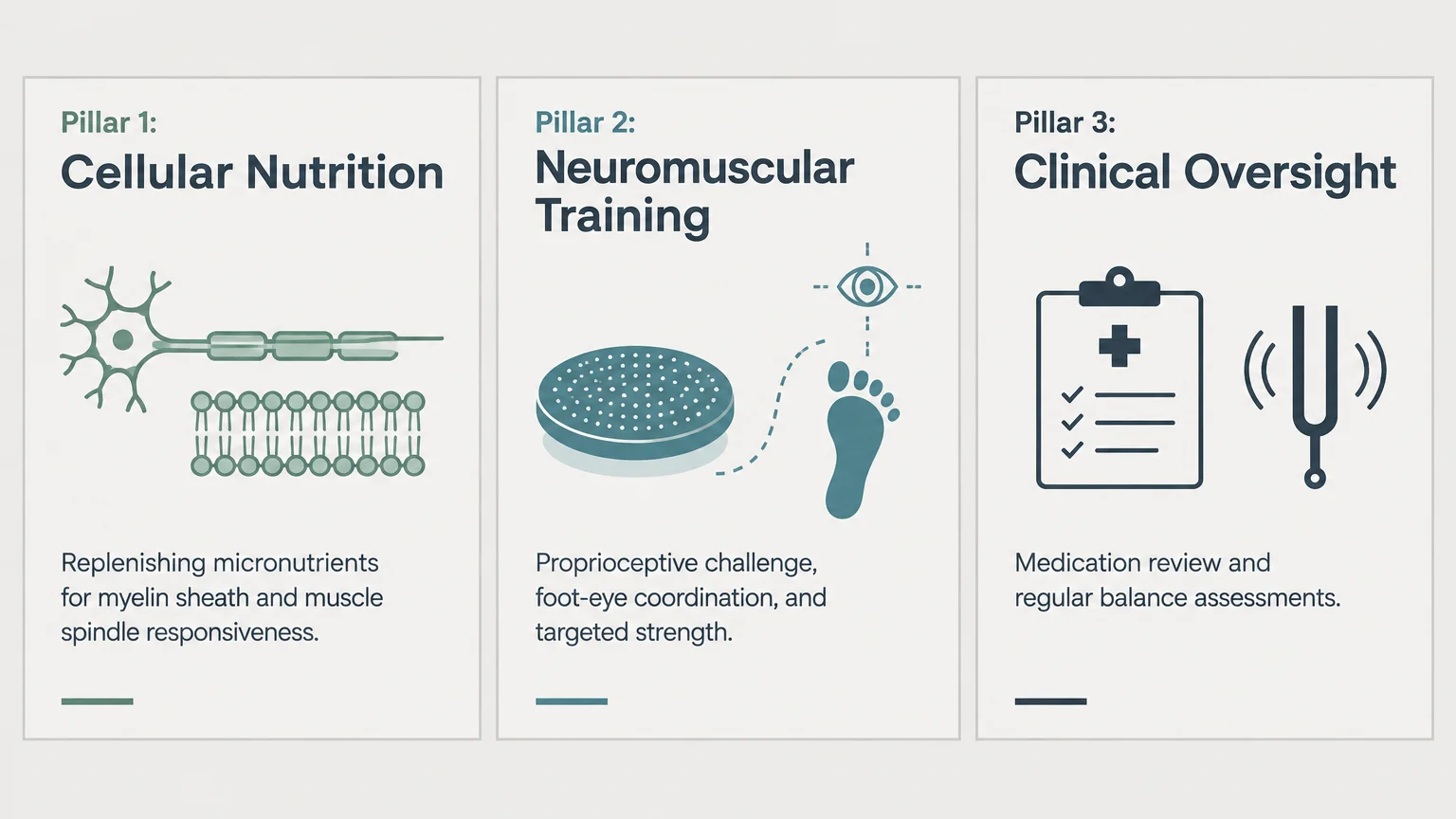
Three Pillars for Sustainable Fall Prevention
Integrating Targeted Nutrition Daily
A stability-focused diet emphasizes balanced meals that prevent sudden fluctuations in your blood sugar. Rapid glucose drops trigger shakiness and lightheadedness, which immediately undermine your physical coordination.
Pair fiber-rich carbohydrates with healthy fats and clean protein to supply steady fuel to your peripheral nerves. Consistent, balanced nourishment keeps your nervous system vigilant and responsive during demanding physical activities.
Hydration also plays an enormous role in maintaining steady equilibrium and joint mobility. Mild dehydration reduces blood volume, precipitating sudden drops in blood pressure and unexpected dizziness when you rise to walk.
Dynamic Movement and Proprioception Training
Targeted nutrients provide the biological materials, but consistent physical movement trains your brain to coordinate them. Balance training challenges your sensory loops, reinforcing fast motor responses when you encounter unexpected obstacles.
Practicing tai chi, heel-to-toe walking, and single-leg balance drills dramatically enhances functional agility. These mindful exercises teach your proprioceptive receptors to adapt swiftly to changing terrain.
If you experience recurring balance problems, find a licensed therapist through the American Physical Therapy Association directory. A skilled physical therapist can evaluate your gait and design targeted rehabilitation exercises.
Routine Medical Reviews and Medication Audits
Even an optimal diet cannot overcome prescription medications that compromise your equilibrium. Common pharmaceuticals, including sedatives, sleeping aids, and high-dose blood pressure drugs, frequently list postural dizziness and unsteadiness as key side effects.
Schedule an annual medication review with your physician or pharmacist to discuss your fall risks. Inquiring about deprescribing nonessential medications can restore your mental alertness and improve physical stability.
Ask your clinician for blood tests evaluating serum B12, methylmalonic acid, vitamin D, and basic electrolytes. Uncovering hidden deficiencies early prevents chronic, irreversible damage to your peripheral nerves.

Perspectives From Clinical Practice
Clinicians often observe how subtle micronutrient deficiencies masquerade as unavoidable age-related decline. Dr. Marcus Vance, a geriatric medicine specialist, explains that unexplained balance deterioration frequently resolves once underlying nutritional gaps are closed.
He notes that evaluating B12, vitamin D, and electrolyte panels should always precede any assumption of permanent impairment. Restoring normal cellular nutrition often revives a patient’s physical confidence and walking stability within several weeks.
Physical therapist Elena Gomez adds that stability exercises yield faster progress when paired with adequate nutritional support. When nerves possess optimal electrolyte conductivity, patients master challenging balance progressions with significantly fewer stumbles.
Both clinicians emphasize that patient empowerment is the ultimate key to lasting mobility. Understanding the direct metabolic connection between your diet and your coordination motivates you to protect your physical independence.
Frequently Asked Questions About Coordination and Nutrition
Can supplements instantly fix clumsy footing or unsteady walking?
Supplements cannot correct unsteadiness overnight because nerve regeneration and muscle adaptation require weeks of consistent biological repair. Overcoming a long-standing deficiency in vitamin B12 or vitamin D takes dedicated, sustained nutritional support.
Furthermore, if mechanical joint wear, inner ear infections, or neurological conditions cause your gait changes, supplements alone will not resolve the issue. You should consult a physician to diagnose the exact root cause of your symptoms.
How does dehydration impair equilibrium and motor coordination?
Dehydration decreases your systemic blood volume, which often leads to orthostatic hypotension when you transition from sitting to standing. This rapid drop in blood pressure starves your brain of oxygen, triggering sudden dizziness and staggering.
Inadequate fluid intake also compromises electrolyte concentrations within your inner ear vestibular canals. Drinking sufficient water throughout the day preserves clear sensory signaling and stabilizes your physical posture.
Why do large infrequent doses of vitamin D increase fall risk?
Massive, intermittent bolus megadoses can disrupt parathyroid hormone regulation and trigger temporary spikes in blood calcium. This biochemical disruption impairs neuromuscular coordination rather than supporting muscle spindle strength.
The Endocrine Society advises steady, moderate daily intake rather than sporadic megadoses to maintain muscle performance safely. Always consult your healthcare provider to establish a daily dosing schedule based on routine blood testing.
When should you consult a doctor about balance issues?
You should contact a doctor immediately if you experience sudden dizziness, unexplained gait changes, or frequent near-falls. Rapid shifts in physical balance can signal cardiovascular, neurological, or inner ear disorders that require urgent evaluation.
Early medical evaluation allows your doctor to adjust high-risk medications and correct metabolic deficiencies before an accident occurs. Never accept balance issues as an inevitable or untreatable consequence of aging.
Taking Your First Step Toward Steady Mobility
Restoring your balance does not require an intimidating lifestyle overhaul. Begin by scheduling a routine clinical appointment to review your prescription medications and test your serum B12, vitamin D, and electrolyte levels.
Pair that medical evaluation with one simple dietary upgrade today, such as adding pumpkin seeds, leafy greens, or pasture-raised eggs to your plate. Consistent, small adjustments provide the biochemical fuel your nerves need to keep you upright.
How would your daily life improve if you felt completely secure and steady in every step you took? Prioritizing your neuromuscular health today safeguards your vitality, your confidence, and your physical independence for decades to come.









Leave a Reply