

You can transform how well your daily supplements work simply by adjusting when you swallow them. Strategic timing maximizes vitamin absorption and prevents common discomforts like nausea or afternoon energy crashes.
Taking your entire regimen on an empty stomach or all at once often wastes valuable nutrients. Your digestive tract absorbs compounds differently depending on meal composition, biological rhythms, and competing minerals.
Learning how your digestive system processes each nutrient will help you build an effortless, highly effective daily routine. Expert guidelines provide the practical roadmap you need to support your long-term vitality.
The Science of Nutrient Absorption and Digestive Chronobiology
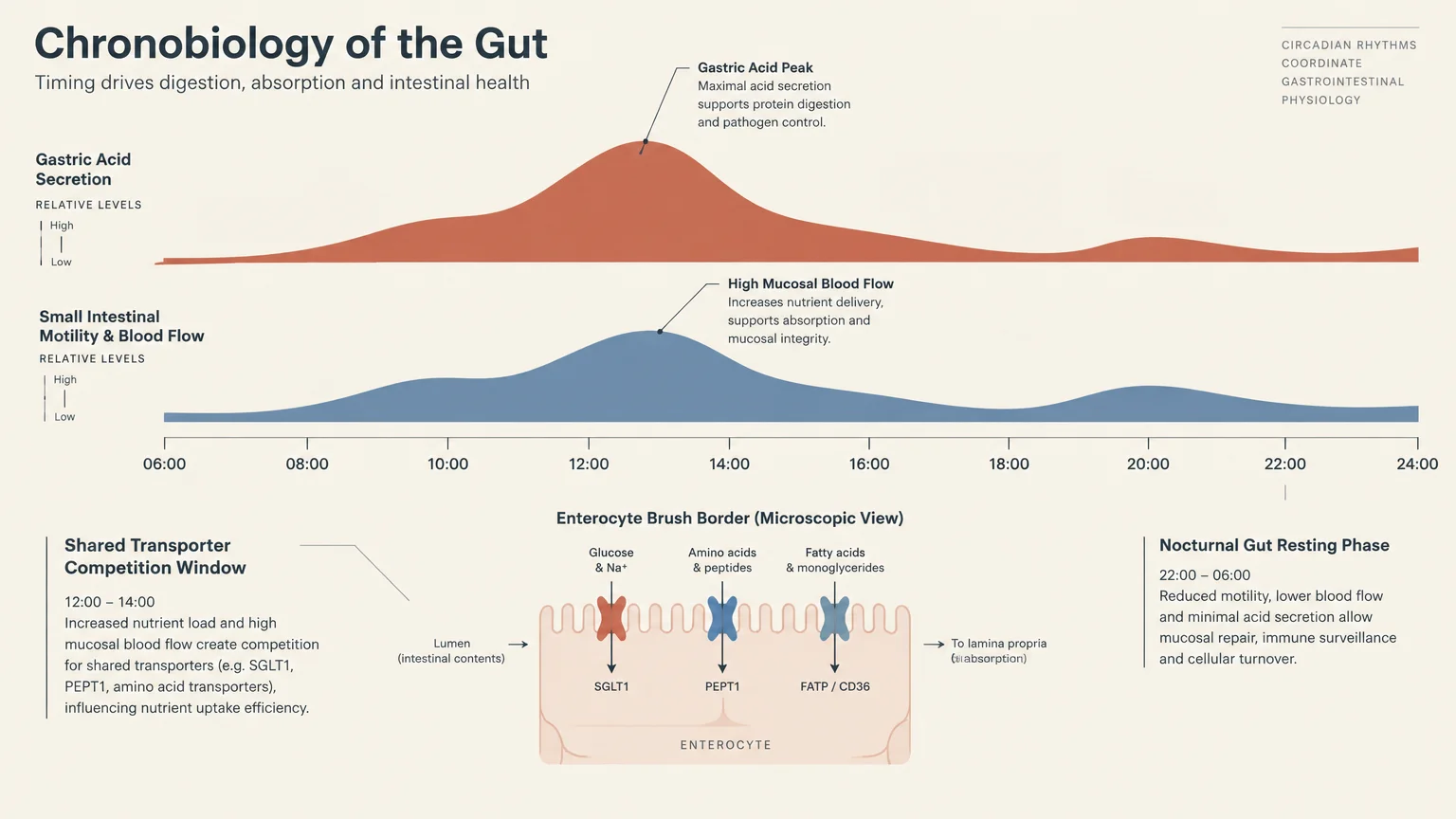
Your gastrointestinal tract operates on a biological clock that dictates stomach acid production, enzyme secretion, and mucosal blood flow throughout the day. These circadian shifts determine how effectively your body extracts essential micronutrients from capsules and tablets.
Stomach acid levels naturally rise and fall across twenty-four hours, typically peaking during daylight feeding windows. Swallowing dense tablets when gastric acid is low can impede dissolution and lead to gastrointestinal irritation.
The small intestine handles the primary workload of nutrient absorption through specialized microscopic transporters. These cellular pathways often share carrier molecules across distinct micronutrients, which can create biological competition when you consume multiple supplements together.
According to clinical guidance from the NIH Office of Dietary Supplements, excessive intake of one mineral can directly impair the biological utilization of another. Understanding these transport bottlenecks helps you schedule your regimen so every nutrient enjoys an unobstructed path into circulation.
Systemic transit time also influences whether sustained-release formulas or standard powders deliver steady blood concentrations. Coordinating your intake with normal gut motility patterns prevents unabsorbed nutrients from traveling straight into the colon.
Digestive enzyme output matches your habitual meal patterns through conditioned physiological responses. Supplying vitamins alongside the digestive enzymes they require ensures prompt breakdown and systemic distribution.

Water-Soluble Vitamins: Energizing Your Morning and Midday
Optimizing the B-Vitamin Complex for Daytime Metabolic Demands
The eight B vitamins act as enzymatic cofactors in cellular metabolism, transforming dietary carbohydrates and fats into usable cellular energy. Taking a comprehensive B-complex early in the morning provides vigorous metabolic support when your physical and mental demands peak.
When you consume B vitamins late in the evening, their stimulating metabolic effects can disrupt restorative sleep architecture. Riboflavin and niacin in particular heighten sensory alertness and cellular activity, which can interfere with natural sleep onset.
Because water-soluble compounds dissolve readily in biological fluids, you can absorb them with a simple glass of water. Even so, consuming them alongside a light breakfast prevents the mild nausea that sensitive individuals sometimes experience.
Vitamin B12 requires intrinsic factor, a specialized gastric transport protein, for efficient uptake in the terminal ileum. Pairing your morning B12 with food stimulates natural gastric acid and intrinsic factor secretion, optimizing total assimilation.
Thiamine and pyridoxine also support neurotransmitter synthesis, helping you maintain sharp cognitive focus during working hours. Morning administration ensures these cofactors circulate when your brain requires optimal neurotransmitter turnover.
If you take high doses of folate or biotin, morning dosing also aligns with the liver’s peak detoxification pathways. This coordination supports ongoing cellular repair and healthy gene expression throughout your active daytime hours.
Vitamin C Timing and Divided Dosing Strategies
Vitamin C serves as a potent antioxidant that supports collagen synthesis, immune cellular defense, and vascular tissue integrity. The human intestine utilizes sodium-dependent vitamin C transporters that become saturated once single oral doses exceed several hundred milligrams.
Splitting your daily vitamin C into two smaller doses—one with breakfast and another with lunch—sustains peak plasma concentrations. A steady daytime supply provides continuous cellular protection without overwhelming renal clearance mechanisms.
Taking large amounts of ascorbic acid immediately before bed may trigger gastric acidity or gastroesophageal reflux in sensitive individuals. Daytime dosing keeps stomach acid buffered by regular food consumption.
Consuming vitamin C during meals also produces a powerful synergy with dietary iron. Ascorbic acid converts non-heme plant iron into a soluble ferrous form, dramatically increasing dietary iron uptake.
Active individuals who exercise outdoors during peak daylight hours also benefit from daytime antioxidant coverage. Circulating ascorbic acid neutralizes exercise-induced oxidative stress without blunting favorable muscular training adaptations.
Because your kidneys rapidly excrete excess ascorbic acid, dividing your intake prevents expensive waste. Spaced dosing maintains consistent tissue saturation throughout your most active hours.
Hydration and Renal Clearance of Water-Soluble Compounds
Water-soluble nutrients rely on adequate systemic hydration to travel across intestinal membranes and circulate through your bloodstream. Drinking a full glass of water with your morning vitamins ensures prompt capsule dissolution and rapid dissolution.
Dehydration slows gastrointestinal transit and concentrates solutes within your kidneys, potentially causing renal strain. Adequate fluid intake allows your urinary tract to eliminate excess water-soluble fractions smoothly and comfortably.
If you consume caffeinated beverages like coffee or green tea, remember that caffeine acts as a mild diuretic. Space your water-soluble supplements slightly away from your first espresso to prevent premature urinary excretion.
Maintaining consistent fluid intake throughout the morning also prevents concentrated vitamin metabolites from irritating sensitive bladder tissues. Pure water remains the ideal vehicle for delivering water-soluble compounds into systemic circulation.

Fat-Soluble Vitamins: The Critical Role of Dietary Lipids
Pairing Vitamins A, D, E, and K with Healthy Fats
Unlike water-soluble nutrients, vitamins A, D, E, and K require the presence of dietary lipids for proper biological assimilation. When dietary fats enter your duodenum, your gallbladder releases bile acids that emulsify lipids into tiny micellar droplets.
Fat-soluble vitamins dissolve within these micelles, which then traverse intestinal enterocytes and enter the lymphatic system. Ingesting vitamin D or vitamin E on an empty stomach drastically cuts absorption efficiency; unabsorbed compounds pass unutilized.
You only need a modest amount of healthy fat—such as avocado, olive oil, nuts, or whole-milk yogurt—to initiate micelle formation. Adding five to ten grams of dietary fat to your meal creates the ideal biochemical environment.
Research summarized by the Harvard T.H. Chan School of Public Health demonstrates that co-ingesting dietary fats substantially increases circulating fat-soluble vitamin concentrations. This single adjustment maximizes the value of your wellness budget.
If you practice intermittent fasting and skip breakfast, postpone your fat-soluble vitamins until your first substantial meal. Swallowing them during your fasting window wastes active ingredients and can trigger minor gastrointestinal cramps.
Choosing whole-food lipid sources provides complementary fat-soluble micronutrients that naturally assist absorption. Monounsaturated and polyunsaturated fats support stable cellular membrane integration far better than highly processed seed oils.
The Chronobiology of Vitamin D and Sleep Architecture
Vitamin D acts like a systemic neurohormone, regulating hundreds of distinct biological processes across human tissues. Cutaneous vitamin D synthesis occurs naturally during peak daylight hours when direct solar ultraviolet radiation strikes exposed skin.
Emerging chronobiological research indicates that high nighttime circulating vitamin D levels may suppress natural pineal melatonin secretion. Taking your vitamin D3 supplement with breakfast or lunch aligns with human evolutionary biology and protects restorative sleep.
Morning or midday administration also pairs conveniently with meals that naturally contain wholesome dietary fats. You reinforce your body’s circadian daytime signaling while supporting long-term bone density and immune competence.
If you work night shifts, take your vitamin D with your first major meal after waking up. Anchoring your intake to your personal daytime helps preserve circadian alignment despite an inverted schedule.
Pairing vitamin D with morning sunshine creates an additive circadian wakefulness cue for your brain’s master clock. This habit promotes daytime alertness while setting the stage for smooth melatonin release later that evening.
Synergistic Orchestration of Vitamins D3 and K2
Vitamin D3 accelerates the intestinal absorption of dietary calcium, while vitamin K2 activates matrix Gla-protein to direct that calcium into your bones. This biological partnership ensures calcium strengthens your skeletal framework rather than accumulating within arterial walls.
Because both compounds are lipophilic, taking them together with your largest daytime meal ensures simultaneous micellar uptake. Their combined action supports vascular elasticity and optimal bone mineralization throughout your lifespan.
Always review your vitamin K intake with your primary care provider if you take prescription anticoagulant medications. Consistent daily intake remains essential to prevent sudden fluctuations in clinical coagulation parameters.
Menaquinone-7, a long-chain form of vitamin K2, remains active in your bloodstream longer than basic phylloquinone. Taking this form at lunch provides continuous arterial protection and enzymatic activation around the clock.
Combining D3 and K2 into a single oil-based liquid dropper or softgel also simplifies your daily routine. This delivery method ensures both lipophilic agents dissolve evenly within a carrier lipid before reaching the stomach.
Vitamin E and Antioxidant Balance Across the Day
Vitamin E represents a family of eight lipophilic tocopherols and tocotrienols that protect cellular lipid bilayers from peroxyl radicals. Because it integrates directly into cell membranes, it requires dietary lipids for effective transport across the intestinal wall.
Taking vitamin E alongside a balanced lunch containing olive oil, seeds, or fish optimizes its lymphatic uptake. Midday consumption provides cellular protection during your peak metabolic hours when physiological free-radical generation runs high.
Avoid taking mega-doses of vitamin E immediately before or after intense cardiovascular exercise sessions. High concentrations of isolated antioxidants can blunt the natural cellular signaling pathways that stimulate cardiovascular adaptation.
Vitamin E works alongside vitamin C in an antioxidant recycling loop, where ascorbic acid regenerates oxidized tocopherol molecules. Consuming both across your daytime meals ensures continuous free-radical defense across aqueous and lipid cellular compartments.
Mineral Management: Avoiding Competition and Supporting Recovery
Resolving the Antagonistic Conflict Between Iron and Calcium
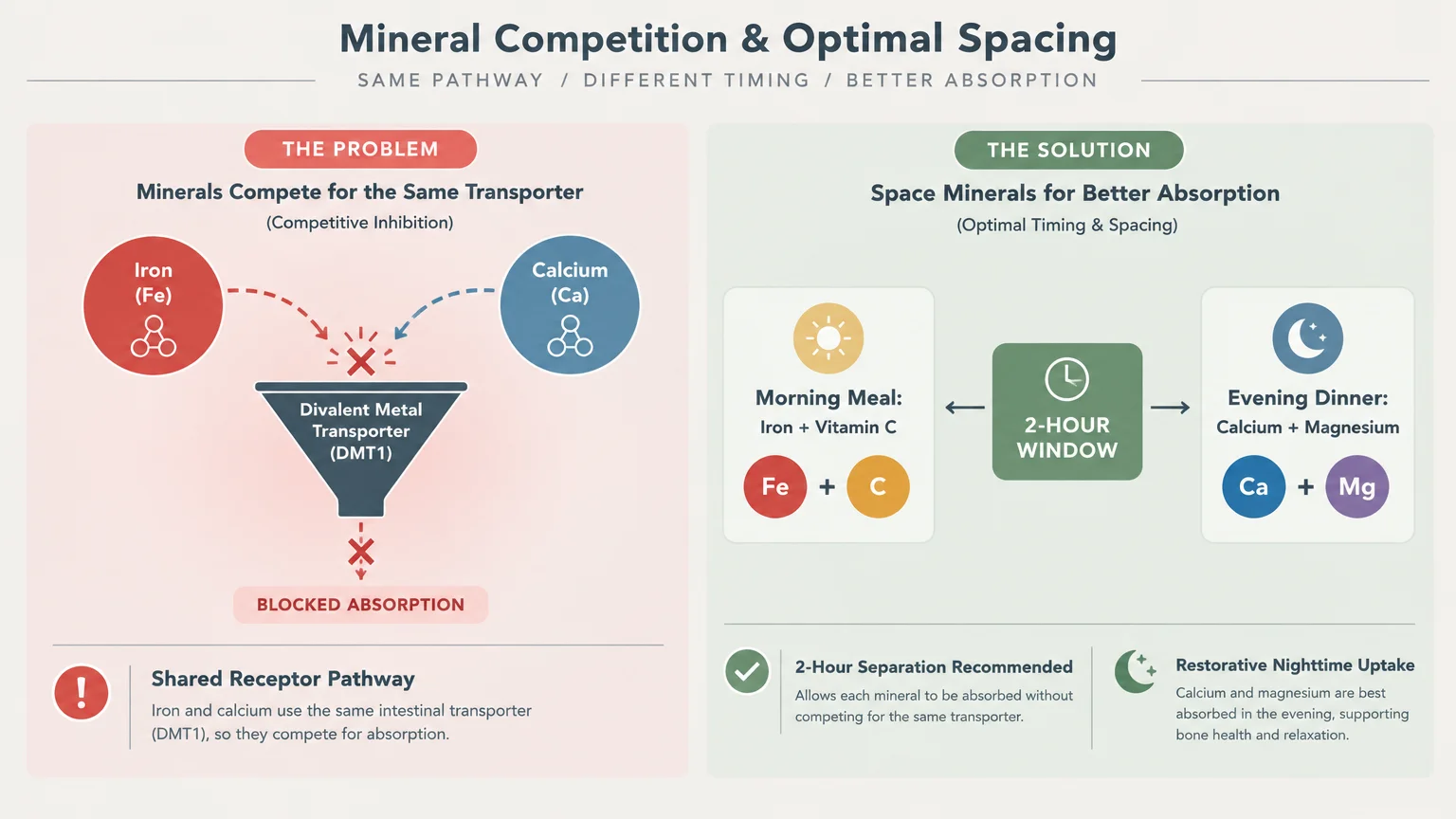
Iron and calcium rank among the most crucial minerals for human health, yet they share the exact same intestinal transport pathway. Divalent metal transporter 1 preferentially carries whichever ion is present in higher concentration, leaving the competing mineral largely unabsorbed.
If you take a calcium supplement alongside your iron tablet, calcium will consistently suppress iron uptake. Health experts recommend separating iron and calcium supplements by at least two to four hours throughout the day.
Take your iron supplement on an empty stomach first thing in the morning with water or a small glass of citrus juice. The acidic environment created by ascorbic acid converts non-heme ferric iron into the soluble ferrous state.
If iron causes digestive distress, take it with a light, calcium-free snack rather than on a barren stomach. Avoiding dairy products, coffee, and black tea during that window preserves maximum iron bioavailability.
Reserving your calcium supplement for dinner or bedtime effectively eliminates the competitive barrier against daytime iron. This simple scheduling adjustment protects your ferritin stores while ensuring strong skeletal support.
Individuals managing iron-deficiency anemia should discuss alternate-day iron dosing with their physician to prevent hepcidin elevation. Spacing iron doses every forty-eight hours can improve intestinal tolerance and total fractional absorption.
Magnesium Timing: Choosing Between Daytime Energy and Nighttime Rest
Magnesium facilitates more than three hundred enzymatic reactions, supporting neuromuscular signaling, vascular tone, and cellular energy synthesis. The specific organic salt bound to the magnesium ion determines its optimal clinical timing.
Forms like magnesium glycinate and magnesium citrate bind the mineral to gentle carrier molecules that produce soothing neuromuscular effects. Administering magnesium thirty to sixty minutes before bedtime promotes muscular relaxation and activates parasympathetic tone.
Magnesium also supports restorative sleep by stimulating gamma-aminobutyric acid receptors across central neural pathways. Patients experiencing nocturnal leg cramps or racing evening thoughts often benefit remarkably from pre-bedtime dosing.
Conversely, magnesium malate combines elemental magnesium with malic acid, a key intermediate in the Krebs energy cycle. Take magnesium malate alongside breakfast or lunch to support physical stamina and daytime cellular metabolism.
If you require higher therapeutic doses of elemental magnesium, split your total intake between morning and evening meals. Dividing your dose prevents the rapid osmotic laxative effect associated with large single mineral boluses.
Magnesium also balances the excitatory effects of calcium on muscle tissues, helping fibers relax after contraction. Evening magnesium counteracts dietary calcium accumulated throughout your daytime meals.
Managing Zinc, Copper, and Stomach Sensitivity
Zinc supports immune cellular proliferation, wound healing, and reproductive hormone synthesis across all life stages. However, consuming elemental zinc on an empty stomach frequently induces sudden nausea and gastric discomfort.
Always take your zinc supplement with a substantial meal to cushion the gastric lining and prevent uncomfortable irritation. Lunch or dinner provides the ideal food volume to buffer the mineral effectively.
Prolonged high-dose zinc supplementation induces the synthesis of metallothionein, an intracellular enterocyte protein that preferentially binds copper. Over time, high zinc intake without proportional copper can precipitate serious neurological copper deficiency.
If your clinician recommends ongoing zinc therapy, select a balanced formulation containing a safe ratio of elemental copper. Taking this combined mineral supplement with food ensures balanced biological uptake without gastrointestinal distress.
Avoid taking zinc at the same meal as high-dose iron, as these two divalent cations compete for intestinal transport. Separating them between lunch and dinner keeps both pathways running smoothly.
Distinguishing Calcium Formulations: Carbonate Versus Citrate
Calcium carbonate represents a common, cost-effective formulation, but it demands robust gastric acid production for proper molecular breakdown. You must consume calcium carbonate alongside a full meal to stimulate sufficient hydrochloric acid secretion.
Calcium citrate dissolves readily in low-acid environments, meaning you can consume it comfortably with or without food. Older adults and individuals using proton pump inhibitors achieve superior absorption by choosing calcium citrate over carbonate forms.
Your body absorbs calcium most efficiently in divided doses of five hundred milligrams or less at a single time. Splitting a daily one-thousand-milligram requirement across lunch and dinner optimizes fractional intestinal uptake.
Taking your final calcium dose with an evening snack supports bone remodeling processes that peak during nighttime sleep. Just ensure your evening calcium does not coincide with your nighttime prescription medications.
Calcium also binds oxalate in the digestive tract, reducing the risk of kidney stone formation in susceptible individuals. Consuming calcium alongside oxalate-rich meals like spinach or nuts provides important preventive protection.

Integrating Supplements with Prescriptions, Movement, and Daily Life
Navigating Common Prescription Medication Interactions
Dietary supplements can interact substantially with common prescription therapies by altering drug absorption, protein binding, or hepatic clearance rates. The Centers for Disease Control and Prevention highlights the necessity of reviewing all over-the-counter regimens with primary clinicians.
Thyroid medications like levothyroxine require an empty stomach and must be separated from calcium and iron by four hours. Swallowing these minerals alongside thyroid hormones renders the medication insoluble and biologically inactive.
Common oral antibiotics, including tetracyclines and fluoroquinolones, chelate tightly to multivalent mineral supplements and lose their antibacterial potency. Pause non-essential mineral supplements or space them several hours away while completing antibiotic courses.
Blood pressure medications, statins, and blood thinners also demand careful timing coordination with fat-soluble vitamins and herbal adaptogens. Schedule your prescription medications first, and then build your vitamin timetable safely around those primary therapies.
Keep an up-to-date printed list of every vitamin, mineral, and medication you consume in your wallet or smartphone. Sharing this list at every medical appointment protects you from unintended pharmaceutical interactions.
Synchronizing Supplements with Exercise and Recovery
Strenuous physical exertion redirects systemic blood flow away from visceral organs toward actively contracting skeletal muscle groups. Ingesting large handfuls of dense supplements immediately before high-intensity exercise can trigger cramping, nausea, or reflux.
Consume targeted pre-workout formulations like electrolytes or branch-chain amino acids thirty to forty-five minutes prior to exercise. These light compounds require minimal digestive work and support fluid balance during strenuous training.
Reserve comprehensive multivitamins and fat-soluble formulations for your post-workout recovery meal when peripheral circulation returns to normal. Restored visceral blood flow ensures comfortable digestion and rapid nutrient assimilation.
Post-exercise feeding enhances amino acid and glycogen uptake while your body initiates restorative anabolic processes. Adding your fat-soluble vitamins to this nutrient-dense recovery meal leverages elevated metabolic blood flow.
If you train early in the morning in a fasted state, delay your daily supplements until your post-workout breakfast. Exercising on an unburdened stomach optimizes athletic performance while protecting your digestive comfort.
Designing Accessible Habits for Varied Work Schedules
Perfect scientific timing offers little benefit if complex scheduling creates frustration and inconsistent daily compliance. Habit stacking links your supplement intake to established automatic rituals, such as brewing morning coffee or packing lunch.
Using a compartmentalized weekly pill organizer takes the daily mental guesswork out of your morning and evening routines. Sorting your supplements once a week prevents accidental double dosing and missed administration windows.
If your budget or living arrangements make multiple daily dosing windows difficult, prioritize consistency over absolute theoretical perfection. Taking a multivitamin with lunch every single day yields better results than following an erratic schedule.
Shift workers should anchor their vitamin timing to their personal wakefulness cycle rather than traditional solar clock hours. Treat your first meal after waking as your breakfast, regardless of whether your day begins at dawn or dusk.
Keep your evening supplements, like magnesium, on your bedside table as a visual prompt before turning out the lights. Visual environmental cues dramatically improve long-term adherence to healthy lifestyle habits.
Expert Perspectives and Clinical Best Practices
Individualized Biomarker Monitoring and Safety
Registered dietitians emphasize that dietary supplements exist to reinforce—never replace—a foundation of nutrient-dense whole foods. Whole foods provide complex fiber matrices, phytochemicals, and cofactors that synthetic pills cannot fully replicate.
Comprehensive blood testing provides the clearest objective assessment of whether your current dosing schedule achieves optimal physiological levels. Evaluating serum ferritin, red blood cell magnesium, and 25-hydroxy vitamin D eliminates guesswork from your daily routine.
Working with your healthcare provider allows you to adjust dosages based on documented laboratory biomarkers rather than general assumptions. Regular lab reviews prevent accidental toxicity, especially with fat-soluble compounds that accumulate in tissues.
Consulting clinical guidelines published by the Mayo Clinic can guide productive discussions regarding targeted supplementation. Partnering with a licensed professional ensures your routine addresses your unique metabolic needs.
Recheck your blood markers every six to twelve months after instituting a new supplement schedule. Objective data will confirm whether improved timing translates into superior tissue saturation.
Troubleshooting Digestive Distress and Compliance Hurdles
If you experience nausea after your morning supplements, common culprits include elemental iron, zinc, or concentrated green tea extracts. Moving these specific compounds to your largest midday meal usually resolves the discomfort immediately.
Switching from compressed tablets to vegetable capsules, powders, or liquid emulsions can also alleviate chronic gastric irritation. Certain individuals lack the robust stomach acid required to break down tightly bound excipients in cheap tablets.
Clinical nutritionists at the Cleveland Clinic emphasize starting with foundational nutrients rather than overwhelming your body with dozens of bottles. Introducing new supplements one at a time helps you pinpoint the exact cause of any adverse reaction.
If your daily schedule becomes hectic, simplify your routine down to your two most essential products. Maintaining a streamlined morning and evening protocol sustains momentum without causing burnout.
Listen attentively to your body’s digestive feedback as you adjust your timing windows. Subtle improvements in energy, bowel regularity, and sleep depth demonstrate that your digestive tract is responding favorably.
Frequently Asked Questions About Supplement Timing
Can I take all my supplements together with breakfast to save time?
Consuming every pill at once increases gastrointestinal competition and diminishes the absorption of several key minerals. Calcium directly suppresses iron uptake, while daytime magnesium might cause unwanted drowsiness during your morning commute.
Splitting your intake into a morning energizing group and an evening relaxing group delivers superior biological results. This minimal separation requires very little effort but yields substantially better systemic utilization.
What should I do if a supplement consistently upsets my stomach?
Digestive distress usually occurs when concentrated minerals or fat-soluble vitamins hit an empty, unbuffered stomach lining. Shift the offending supplement to the middle of your largest meal of the day to cushion gastric exposure.
If nausea continues, discuss alternate chemical forms—such as switching to a buffered vitamin C or chelated mineral—with your clinician. Gentle formulations like bisglycinate salts bypass common irritation pathways in the stomach.
Does timing differ for gummy vitamins or liquid drops?
Liquid and gummy vitamins undergo rapid gastric transit and begin intestinal absorption faster than compressed tablets. However, biological rules governing fat-solubility and mineral competition still apply equally to these delivery formats.
You must still pair fat-soluble gummies with dietary lipids and separate competing minerals by several hours. Always check gummy labels for added sugars and synthetic additives that might influence metabolic health.
How should shift workers adjust their supplement schedules?
Shift workers should synchronize their supplement routine with their individual sleep-wake patterns rather than standard clock time. Take energizing B vitamins and vitamin D upon waking before your shift begins to stimulate wakefulness.
Reserve calming magnesium and supportive recovery nutrients for your wind-down period right before your scheduled sleep. Aligning your intake with your personal biological clock protects metabolic health during non-traditional hours.
A Manageable First Step Toward Optimal Absorption
Transitioning to an evidence-based supplement schedule does not require overhauling your entire lifestyle overnight. Small, intentional modifications create meaningful compounding benefits for your energy, digestion, and long-term health.
Begin today by auditing your current pill organizer and identifying any simultaneous doses of iron and calcium. Separate those two competing minerals by moving one to breakfast and the other to dinner or bedtime.
Notice how your energy, digestion, and physical vitality respond over the next two weeks of consistent application. Tracking subtle improvements in your daily focus and digestive comfort will validate your new routine.
What small adjustment to your daily supplement timing could help you feel your best starting tomorrow morning?









Leave a Reply