

Managing your prescription costs requires tracking new federal updates that directly influence your healthcare budget. The annual Medicare Part D out-of-pocket cap rises to $2,400 in 2027, shifting how seniors navigate chronic disease therapy and medication expenses.
While this ceiling limits catastrophic drug spending, the standard deductible also increases to $700. Understanding these statutory adjustments empowers you to protect both your physical health and personal finances without compromising daily care.
You can safeguard your wellbeing by preparing for plan shifts ahead of time. Strategic enrollment choices and whole-person wellness habits ensure your treatments remain accessible, affordable, and effective all year long.
Understanding the Medicare Part D Cap and 2027 Adjustments
Federal healthcare laws reshaped prescription drug coverage for older adults across the country. The landmark Inflation Reduction Act established an annual out-of-pocket spending limit to protect Medicare beneficiaries from catastrophic drug expenses.
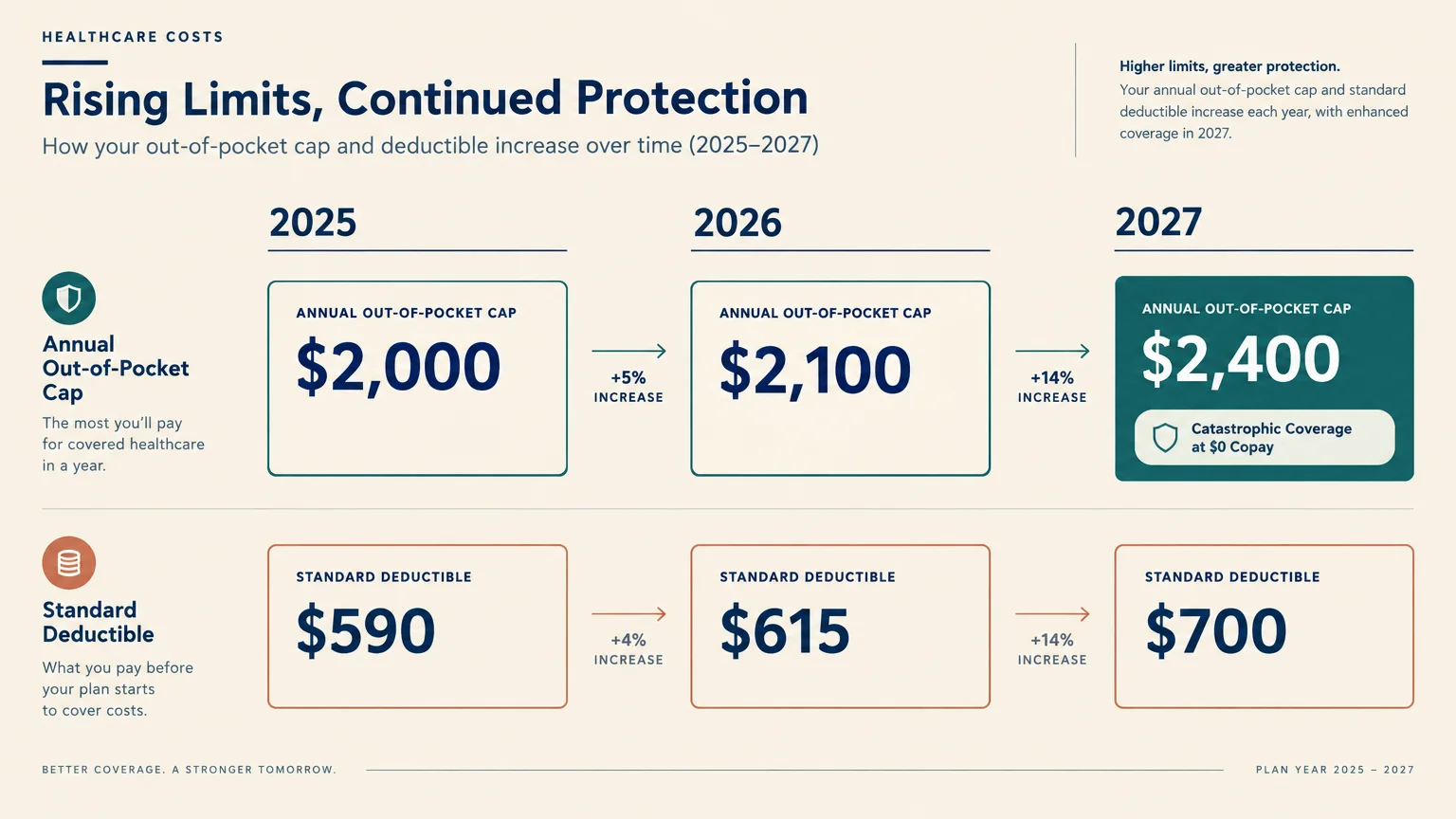
This threshold took effect at $2,000 in 2025 and adjusted to $2,100 in 2026. For 2027, the out-of-pocket limit climbs to $2,400, reflecting a statutory formula tied to national healthcare spending trends.
Federal statute dictates that this ceiling is not a static dollar figure. Instead, regulators recalculate the limit annually based on the percentage increase in per capita Part D expenditures.
Along with the cap increase, the maximum allowable standard Part D deductible changes significantly. The deductible shifts from $590 in 2025 and $615 in 2026 up to $700 in 2027.
Despite this higher entry threshold, older adults gain profound peace of mind once reaching the limit. The historic coverage gap—frequently called the donut hole—remains permanently eliminated from modern Medicare Part D architecture.
Once you hit the $2,400 spending mark in 2027, you enter catastrophic coverage immediately. You pay $0 for your covered formulary medications for the rest of that calendar year.
What Counts Toward Your Out-of-Pocket Cap
Beneficiaries must distinguish between expenses that advance them toward the cap and costs that stand completely outside it. Clear tracking prevents surprising pharmacy bills and helps you plan your cash flow effectively.
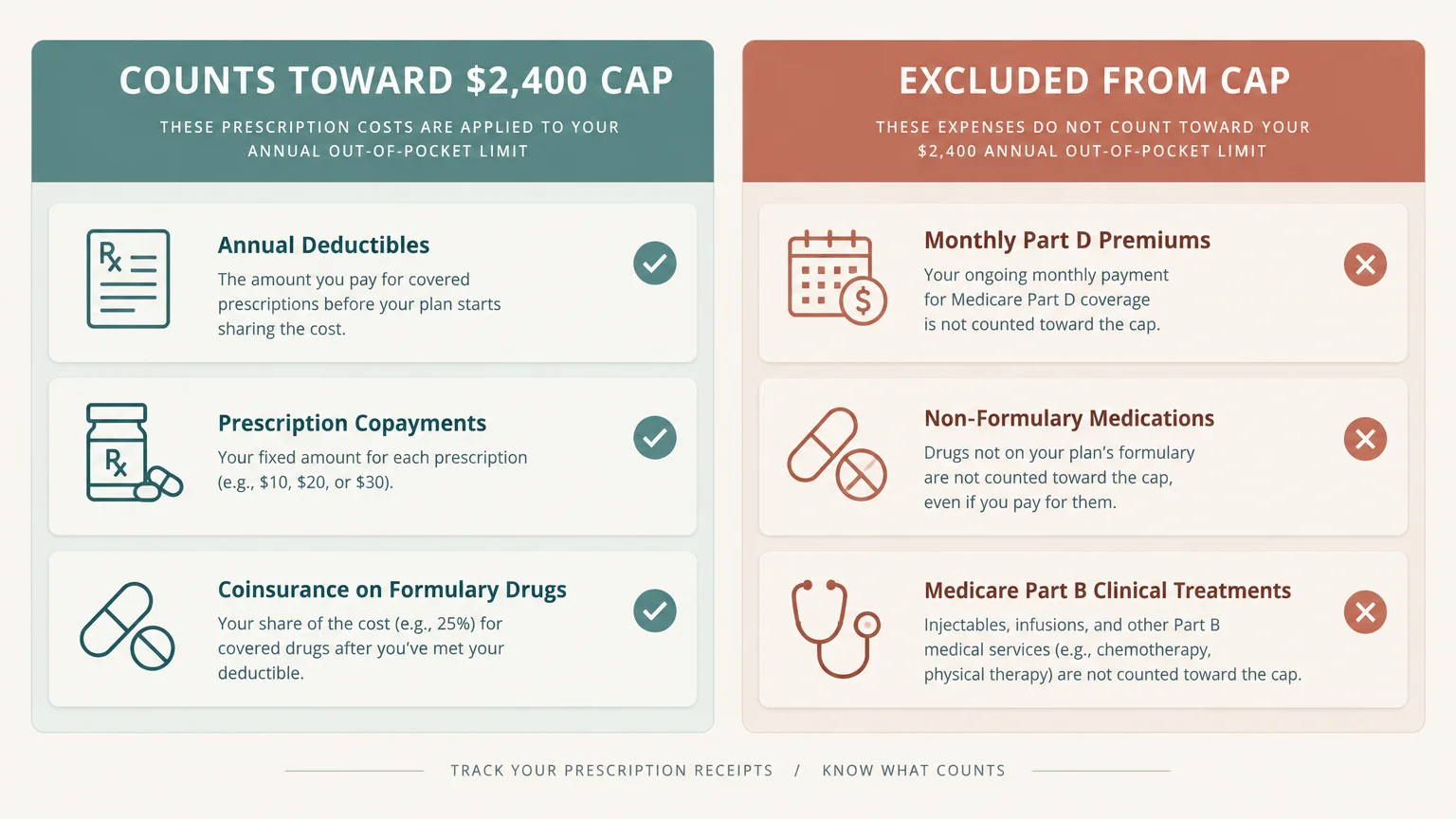
Your direct payments for annual deductibles, copayments, and coinsurance on covered formulary drugs count directly toward the threshold. Every verified dollar spent on qualifying medications brings you closer to full coverage.
You cannot apply your monthly Part D insurance premiums toward the out-of-pocket maximum. Premiums represent the baseline cost of maintaining coverage and remain separate from pharmacy point-of-sale spending.
Medications excluded from your plan formulary do not contribute to your annual spending total. If you purchase non-covered drugs without an approved exception, you bear those costs entirely on your own.
Outpatient clinical treatments covered under Medicare Part B also remain excluded from this cap. For instance, chemotherapy infusions or in-clinic injections follow distinct Part B cost-sharing rules rather than Part D limits.
You can review structural coverage rules through the Centers for Medicare & Medicaid Services to confirm how specific benefits apply. Thorough documentation helps you avoid unexpected coverage denials.

Premiums, Market Shifts, and Drug Price Negotiations
Beyond individual out-of-pocket maximums, the broader Part D insurance market faces notable adjustments in 2027. Insurers must rebalance their financial models as spending distributions adjust across the marketplace.
The statutory Part D Base Beneficiary Premium rises to $41.33 in 2027, up from $38.99 in 2026. A federal protection law caps annual benchmark premium growth at 6% through 2029 to shield enrollees from sudden price jumps.
Market stabilization measures implemented in previous seasons will not continue indefinitely. CMS concluded the temporary Part D Premium Stabilization Demonstration at the close of 2026, altering how stand-alone plans price their coverage.
The conclusion of this program means you might encounter wider premium variations among stand-alone prescription drug plans. Diligent comparison shopping during open enrollment becomes essential to prevent paying inflated monthly plan rates.
Federal drug price negotiations counterbalance some of these premium pressures. Maximum fair prices for the initial 10 high-cost Part D drugs took effect in 2026, delivering measurable savings for common chronic conditions.
An additional 15 negotiated drugs reach pharmacy shelves with lower statutory prices starting January 1, 2027. These negotiated benchmarks lower overall system costs while stabilizing prices for seniors who rely on specialized maintenance therapies.
The Science of Medication Adherence and Financial Toxicity
Financial strain directly undermines your physiological wellbeing. When prescription expenses surge, patients frequently ration life-sustaining pills, skip doses, or delay filling crucial maintenance therapies.
Medical researchers term this destructive cycle financial toxicity; it causes measurable physical decline alongside emotional distress. Cost-related non-adherence accelerates chronic disease progression and increases preventable emergency department admissions.
Peer-reviewed studies cataloged by the National Institutes of Health confirm that predictable drug pricing improves patient compliance. When out-of-pocket costs remain transparent, individuals maintain consistent dosing schedules.
Consistent medical therapy stabilizes cardiovascular disease, controls metabolic disorders, and manages autoimmune flare-ups. Removing financial barriers ensures you receive the uninterrupted therapeutic benefits prescribed by your clinical team.
Research published by the Centers for Disease Control and Prevention shows that routine chronic disease management prevents catastrophic health complications. Stable access to medicine forms the foundation of sustained longevity.

Strategy Pillar 1: Proactive Formulary and Medical Reviews
Protecting your health and pocketbook requires proactive medical management. You must take an active role in evaluating your medical portfolio before each plan year begins.
Review your Annual Notice of Change document thoroughly every autumn. Insurance carriers mail these notices each September, outlining upcoming formulary modifications, premium increases, and shifting pharmacy networks.
Take advantage of the Medicare Annual Enrollment window running from October 15 to December 7. Use this designated period to compare plan alternatives and confirm whether your current drugs remain on preferred tiers.
Schedule a dedicated medication therapy review with your primary care provider or clinical pharmacist. Review every prescription, over-the-counter supplement, and routine therapy to determine whether generic or lower-cost alternatives exist.
If your insurer shifts an essential drug to a non-preferred tier, partner with your physician immediately. Your doctor can file a formal formulary exception request showing that alternative drugs are medically inappropriate for your condition.
Smoothing Pharmacy Expenses with Monthly Installments
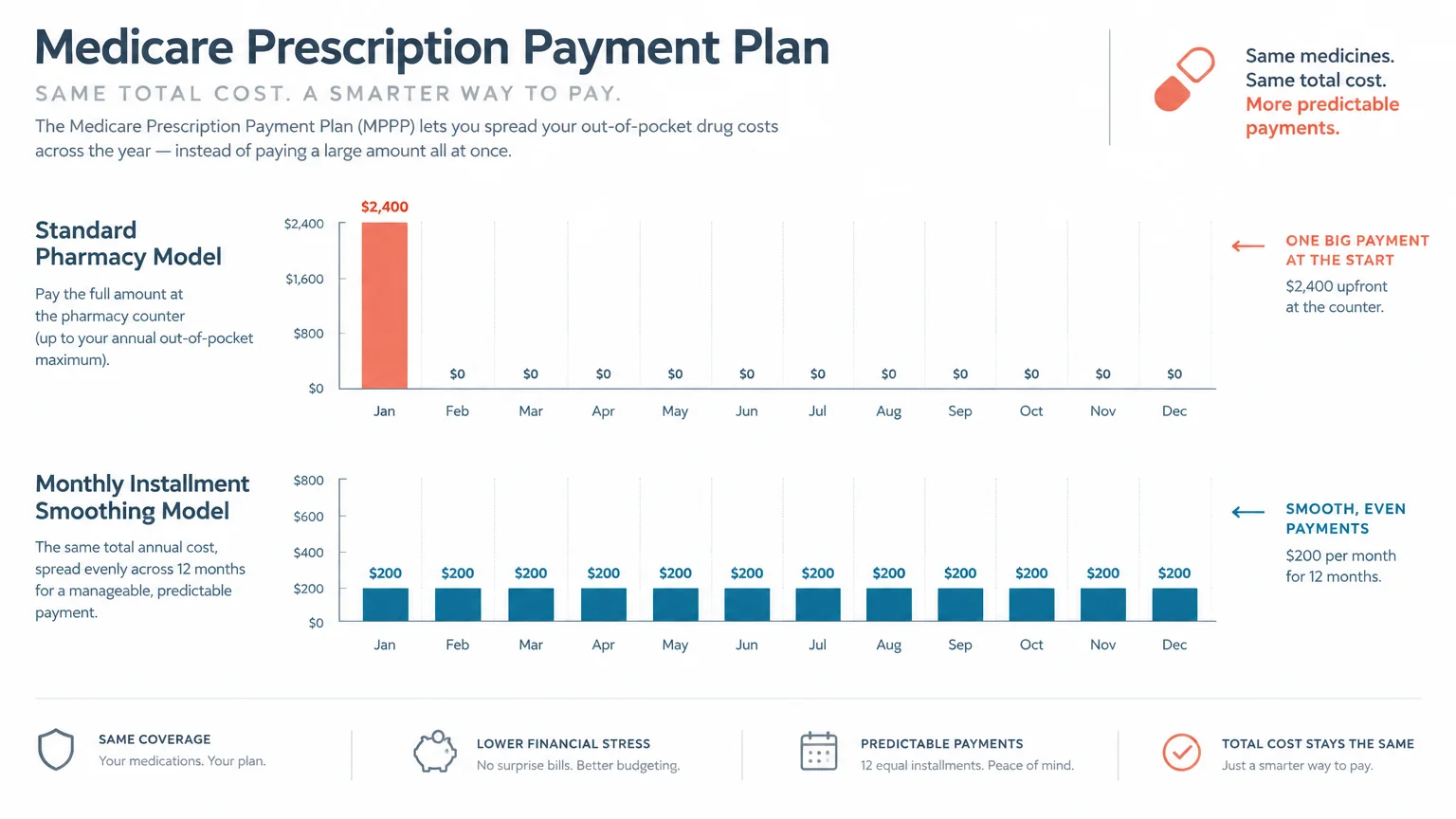
Large pharmacy bills early in the calendar year pose significant cash-flow challenges for households on fixed incomes. Meeting the new $700 deductible in January can strain basic household living budgets.
The Medicare Prescription Payment Plan offers a practical federal mechanism to ease this burden. Every Part D enrollee can opt into this voluntary payment program at any point during the year.
This initiative spreads your out-of-pocket costs into capped monthly installments rather than requiring large upfront payments at the pharmacy counter. You still pay your true out-of-pocket balance, but without sudden financial spikes.
Participation does not lower your total annual drug expenditures or eliminate required deductibles. However, predictable monthly billing helps you balance prescription therapy costs against essential groceries, utility bills, and personal care.

Strategy Pillar 2: Integrative Nutrition and Metabolic Health
Medication works best when paired with intentional lifestyle choices that address root physiological mechanisms. Whole-person nutrition and metabolic support can optimize your health, occasionally reducing your need for escalating drug doses.
Nutrient-dense eating patterns emphasize whole grains, fiber-rich vegetables, lean proteins, and anti-inflammatory healthy fats. These dietary choices improve vascular elasticity, enhance cellular insulin sensitivity, and naturally regulate digestive health.
Clinical evidence endorsed by the American Heart Association highlights how dietary changes lower blood pressure and cholesterol levels. Mindful eating serves as an essential companion to your pharmaceutical therapies.
Consult a Registered Dietitian Nutritionist before implementing major dietary modifications or taking novel nutritional supplements. A professional ensures your dietary adjustments complement your medical treatments without triggering dangerous food-drug interactions.
Never discontinue or reduce prescribed medications without the explicit guidance of your prescribing physician. Lifestyle adjustments provide powerful systemic support, but they function alongside professional medical oversight.

Strategy Pillar 3: Stress Resilience and Community Advocacy
Chronic financial anxiety elevates systemic cortisol and promotes persistent inflammation throughout your vascular system. Addressing the psychological stress of medical budgeting protects both your mental and physical equilibrium.
Practice nervous system regulation through slow diaphragmatic breathing, restorative movement, and routine social engagement. Calming your nervous system counteracts the debilitating physical effects of prolonged economic worry.
You do not need to navigate complex Medicare rules and rising deductible thresholds in isolation. Dedicated community advocacy groups provide personalized counseling to help seniors find financial relief and optimal coverage.
State Health Insurance Assistance Programs provide unbiased, local guidance to help you decipher confusing plan documentation. Counselors walk you through copayment tiers, premium structures, and enrollment deadlines at no cost.
Explore comprehensive benefit screening tools offered by the National Council on Aging. These public programs connect income-qualified older adults with financial assistance programs that subsidize prescription copayments and deductibles.

Real Perspectives from Clinicians and Advocates
Frontline healthcare providers emphasize the importance of open communication regarding prescription costs. Clinicians witness firsthand how rising deductibles cause unnecessary hesitation at the retail pharmacy counter.
Geriatric specialist Dr. Elena Vance advises seniors to speak openly about drug costs during routine examinations. She notes that clinicians can easily switch patients to therapeutic equivalents when made aware of financial concerns.
Clinical pharmacists also recommend checking pharmacy network classifications before filling annual prescriptions. Preferred network pharmacies frequently offer substantially lower copayments compared to standard non-preferred locations.
Patient advocate Marcus Miller emphasizes that tracking personal expenditures prevents unexpected gaps in essential care. He reminds older adults that planning around the $2,400 cap allows predictable budgeting throughout the entire year.
Frequently Asked Questions About Medicare Part D Changes
How does the 2027 Part D cap increase affect my monthly pharmacy bills?
The out-of-pocket maximum increases from $2,100 to $2,400 in 2027, requiring $300 in additional spending before catastrophic zero-dollar copayments begin. Spreading costs through payment programs helps manage this adjustment.
If you manage multiple high-cost medications, you will reach this limit earlier in the year. Once you satisfy the $2,400 threshold, your covered prescriptions remain completely free through December.
Can I use the Medicare Prescription Payment Plan if I take low-cost generic drugs?
Any Medicare Part D enrollee may opt into the payment plan regardless of their specific medication regimen. However, the program primarily benefits individuals who face steep, front-loaded out-of-pocket expenses.
If your monthly copayments remain small and consistent, standard retail payments may prove simpler to manage. Consult your pharmacist to determine whether installment financing matches your personal budget.
What should I do if my essential prescription is removed from my plan formulary?
Contact your prescribing healthcare provider immediately to discuss valid therapeutic substitutes on your formulary. If no suitable substitute exists, your clinician can submit a formal coverage exception request to your insurer.
While your exception undergoes review, you may qualify for a temporary emergency supply at the pharmacy. Maintaining continuous access to chronic medications protects you from destabilizing medical setbacks.
Do my Medicare Part B medications apply toward the $2,400 out-of-pocket cap?
Medications administered in a clinic or hospital setting fall under Medicare Part B and do not apply to this cap. The $2,400 ceiling applies exclusively to self-administered Part D prescription drugs.
Part B treatments maintain separate deductible and coinsurance structures, typically requiring supplemental Medigap or Advantage coverage to offset expenses. Consult your benefits counselor for tailored guidance regarding clinic-administered treatments.
Taking Charge of Your Health and Coverage
Navigating shifting Medicare Part D regulations empowers you to take decisive control of your wellbeing. Preparation removes anxiety, allowing you to focus on joyful, active living.
Begin by compiling a detailed inventory of your current prescriptions, dosages, and monthly copayment expenses. Having accurate records ready ensures you make informed choices during the autumn open enrollment window.
Consider how proactive lifestyle habits and open clinical conversations can support your daily energy and vitality. What small administrative or nutritional step will you take today to champion your long-term health?









Leave a Reply