
WHAT IS PSORIASIS?
Although psoriasis is included in the category of skin diseases, it actually begins inside the body, being a disease of the immune system. Psoriasis is a chronic inflammatory disease that affects about 2% of the world’s population. In about 1/3 of cases, the immune problem is genetic. In the families of people with psoriasis, there are often other members with this disease.
Yet, other factors also play a role in the onset of the disease. Psoriasis has been associated with stress, smoking, obesity, alcohol, streptococcal tonsillitis, viral infections, and certain medications, including beta-blockers (used to treat high blood pressure) and lithium (prescribed for affective disorders).
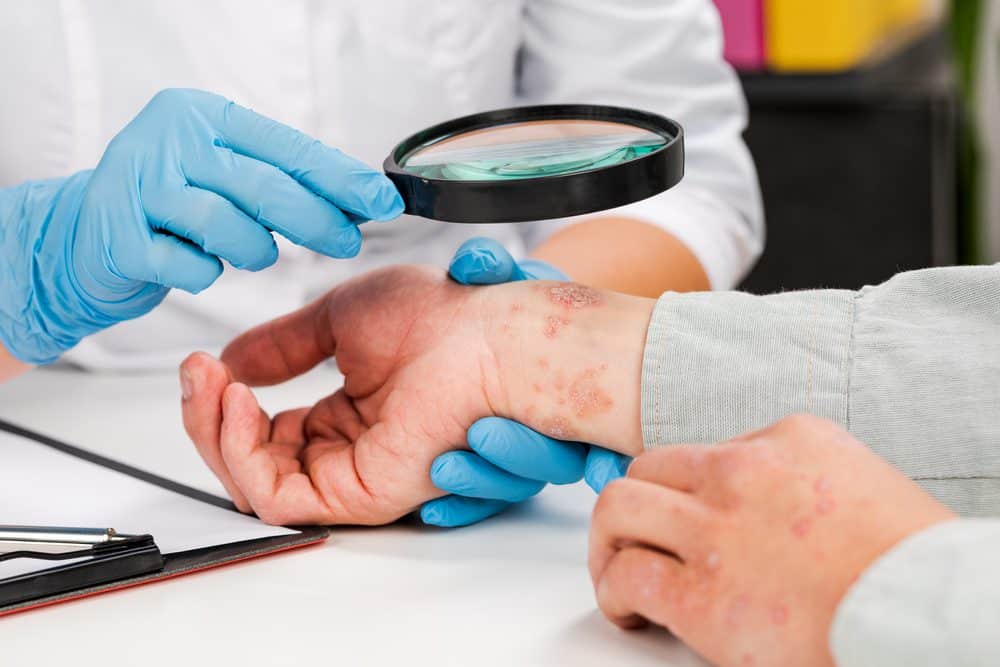
Psoriasis can occur in a variety of areas of the body, with slightly different symptoms; The five variants of the disease are known as: plaque psoriasis, gouty psoriasis, reversed psoriasis, pustular psoriasis, and erythrodermic psoriasis.
CAUSES OF PSORIASIS
Psoriasis is known as a disorder of the immune system that causes the skin to regenerate faster than normal. It is not known, however, the exact cause of this immune problem. According to research, both genetic and environmental factors play a role in triggering the disease. Psoriasis is NOT contagious. (Psst! You may find this book helpful! It’s amazing for treating psoriasis and for doing that in a healthy and nutritious way!)
Many people prone to psoriasis can remain asymptomatic for years until an environmental factor becomes a trigger. Other causes can be respiratory and skin infections, climate, especially cold or dry weather, a skin wound (a mosquito bite or severe sunburn), stress, smoking and secondhand smoke, massive alcohol consumption, and certain medications.
PSORIASIS SYMPTOMS
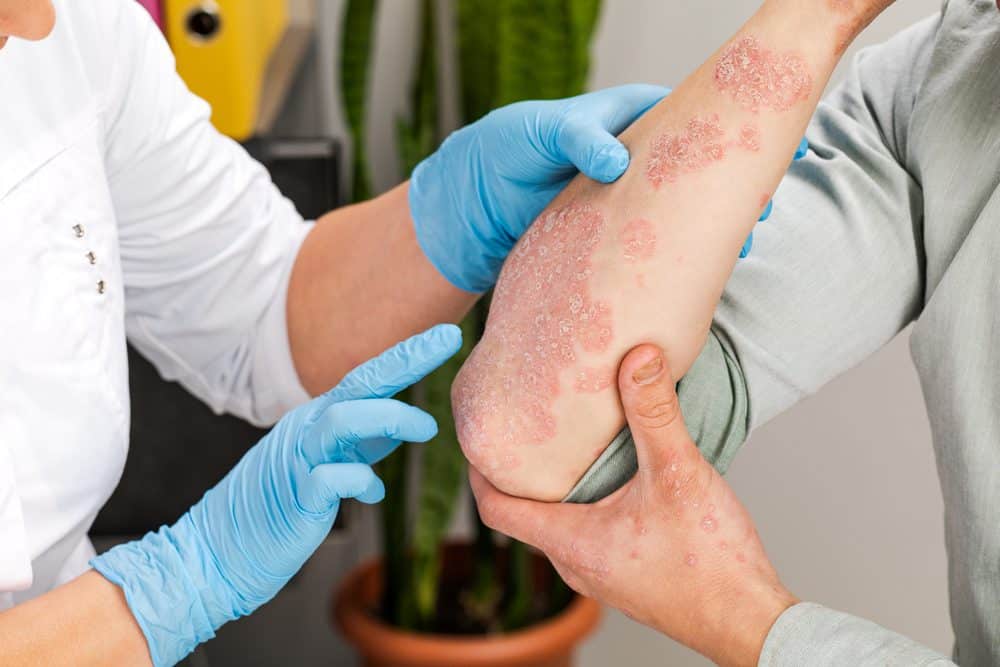
There are many psoriasis symptoms you have to pay attention to, such as itchy, dry, cracked, bleeding skin, well-defined, red plaques, which appear symmetrically, especially in certain areas, like elbows, knees, scalp, often on the trunk, arms, and legs; a number of small, scaly, red spots on the arms and legs (psoriasis gout); areas of smooth, inflamed skin; armpits; these areas can occur especially on armpits, under the breasts, or in the groin area; areas of skin full of pimples or pustules.
CONDITIONS THAT LOOK LIKE PSORIASIS
Psoriasis, even though it has specific symptoms, without being informed it can be mistaken with other skin conditions; some of them can be less serious and others can be more serious.
1. ECZEMA
Eczema is known as a chronic skin condition that can affect babies, children, and adults. It is represented by the appearance of skin lesions like redness, blisters, and crusts which may evolve into pimples. The condition causes severe dryness of the skin and a deterioration of the skin barrier.
It is accompanied by pain and itching, sometimes intense, which can affect a person’s daily activity. Healthy skin helps retain moisture and protects against bacteria, irritants, and allergens.
Eczema is closely linked to a variation in the gene that affects the skin’s ability to provide this protection and which allows the skin to be affected by environmental factors, irritants, and allergens. In some children, food allergies may play a role in triggering eczema.
2. ALLERGIC CONTACT DERMATITIS
Contact dermatitis is a red rash that occurs as a result of direct contact with a substance or an allergic reaction to it. The rash is not contagious but can be very uncomfortable. Many substances can cause such reactions, including soaps, cosmetics, perfumes, jewelry and herbs.
In order to efficiently treat contact dermatitis, you need to identify and avoid the cause of your reaction. If you can avoid the trigger, the rash usually heals in two to four weeks.
3. SEBORRHEIC DERMATITIS
Seborrheic dermatitis is a dermatological condition represented by a chronic inflammation predominantly in the scalp, which is not contagious.
To date, the exact causes of seborrheic dermatitis have not been established, and the manifestations of chronic inflammation that accompany this disease are similar to those of other conditions such as psoriasis and atopic dermatitis of sensitive skin.
However, it has been found that seborrheic dermatitis is frequently associated with hyperhidrosis, vitamin B deficiency, high-calorie diets and obesity.
4. PARAPSORIASIS
Parapsoriasis refers to a group of skin conditions represented by maculopapular or scaly lesions. Treatment may include a combination of various topical and oral medications and phototherapy. Parapsoriasis is not related to psoriasis, but is so named because the scaly plaques that appear in this condition sometimes resemble those in psoriasis.
Doctors don’t exactly know why some people get parapsoriasis, no specific reasons have been identified, which means that there is no known method to prevent the occurrence of this condition. Given that the disease is underreported, the prevalence is unknown. The data shows that parapsoriasis is a rare disease that occurs mainly in the elderly.
5. SKIN CANCER
The name “skin cancer” is representative for several types of skin cancer that can be classified by the stage of evolution in which it is.
The skin is the largest organ of the human body. It protects the body against infections and wounds and helps the body to regulate its temperature. The skin also helps the body to store water and fat and to produce vitamin D.
Skin cancer is characterized by symptoms like a bleeding wound that may have crusts and remain open for weeks; a reddish, raised spot or irritated area that may have crusts or itching but rarely hurts; a knot that is bright pink, red, pearl white, or translucent; a pink outgrowth with a raised edge and a central notch; and a white, yellow, or waxy scar-like area, often with a poorly defined edge.
6. RINGWORM
Ringworm (trichophytia or dermatophytosis) is a type of fungal infection of the skin. The infection can occur pretty much anywhere on the body and has been given different names depending on which body part it affects.
This superficial fungal infection does not cause any conditions under the skin. The ringworm of the body, which mostly affects the trunk and limbs, is called tinea corporis. The specific symptoms of ringworm depend on the location of the infection on the patient’s body surface. These usually include irritated, itchy skin, red, dry, scaly, or very cracked skin, ring or circle rash, and hair loss in the affected area.
7. HIVES (URTICARIA)
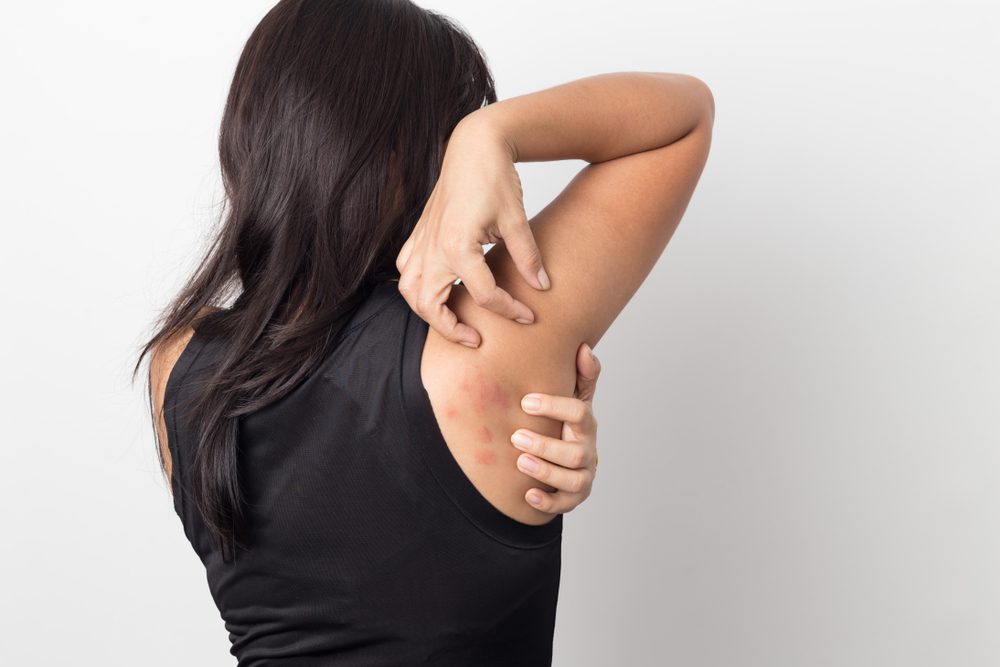
Urticaria is a sudden rash, in the form of papules (blisters) and erythematous plaques (extensive red spots), mobile, intensely itchy that persists for less than 6 weeks. The condition is the most common dermatological condition treated in emergency rooms worldwide.
The appearance of urticaria can be triggered by both allergic and non-allergic mechanisms, the skin lesions being due to the release of histamine and other compounds following mast cell degranulation. These substances cause vascular dilation, extravasation of fluid into the dermis and the appearance of consecutive edema.
8. KERATOSIS PILARIS
It is a very common skin condition, usually confused with “pimples”, due to the appearance of “goosebumps”, which is actually given by the dead cells/keratin plugs of the hair follicles. It is common on the arms, thighs, and buttocks, but can spread to the forearms or legs, and some children may have lesions even on the cheeks.
They may look like dry skin and may be of a reddish or purplish hue. The number of injuries varies from person to person. Keratosis Pilaris can be accompanied by itching, dryness, or even changes in appearance.
9. ROSACEA
Rosacea is an inflammatory dermatological condition characterized by reddening of the face. Episodes of rosacea can affect the appearance of the face and can cause discomfort to the patients who are suffering from it. There are several types of rosacea and each of them has the same form of treatment.
What you should know is that rosacea does not occur due to lack of hygiene, but has other causes that trigger it. Very rarely, rosacea can lead to more severe complications. A visit to the dermatologist can resolve the unpleasant effects of this condition.
10. ACNE
Acne is a condition of the skin that causes the appearance of comedones (pimples), and even cysts and nodules when we are talking about severe forms of acne. Acne is mostly present on the face, chest, and back. It is more common for adolescents, although it affects people of all ages.
It is not dangerous, but it can leave scars on the skin and can cause some social and emotional problems, especially among young people.
Without proper information, psoriasis may be mistaken for other conditions and vice versa. The safest scenario is to see a dermatologist in order to receive an accurate diagnosis and he’ll help you with everything you need to know about your condition.
If you find this article helpful, we have plenty more on our website! Here’s a good one you don’t want to miss: 7 Everyday Things That Can Give You Type 2 Diabetes!




Leave a Reply