
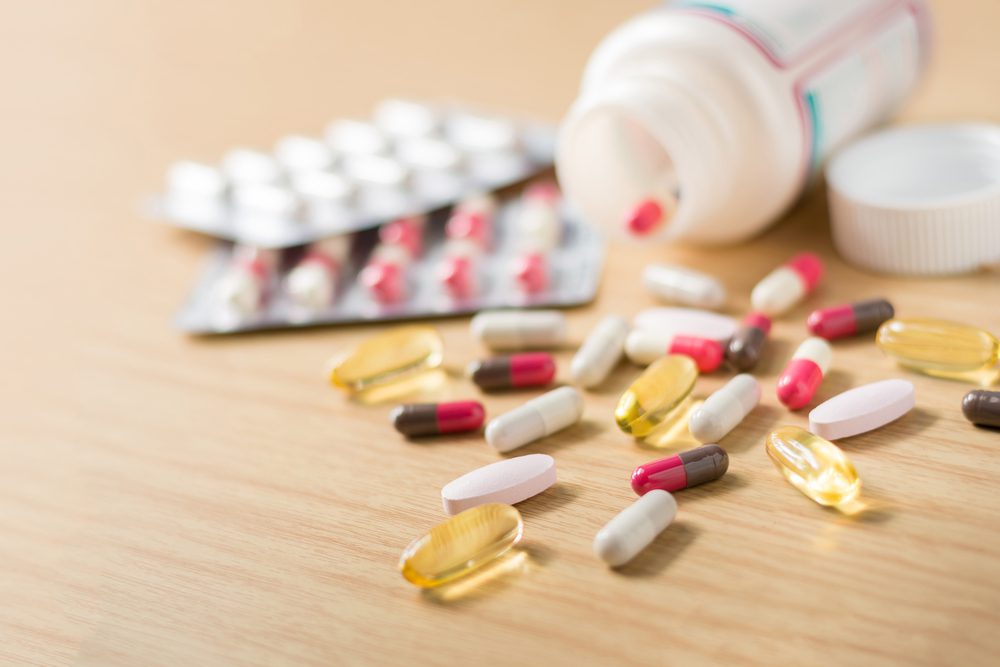
Where and how do you store your medications?
An apple a day keeps the doctor away appears to be a simple enough concept. However, staying on track with your prescription drugs from start to end can be difficult, especially if you are taking any new medications and supplements.
Try these suggestions and resources to help you store your medications, avoid missed doses, and never run out of refills.
Correctly keeping your drugs might help to ensure that they work properly and prevent poisoning incidents.
Keep Medicines Safely Stored
The place in which you keep your medication may influence its effectiveness. Learn how to properly store your medication so that it does not become contaminated.
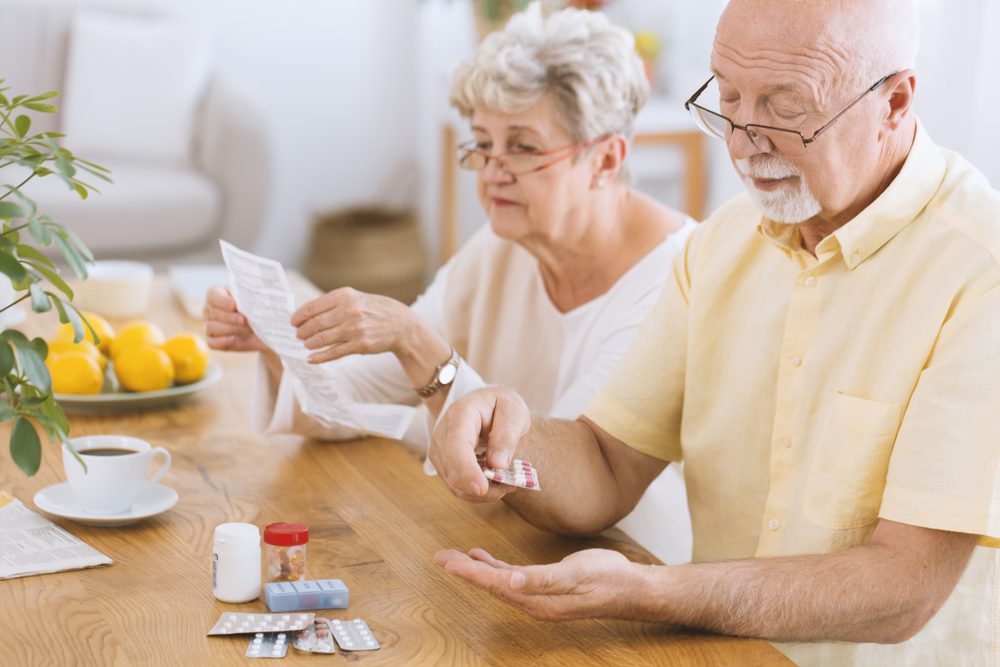
Take care of your medicine
Keep in mind that heat, air, light, and moisture can all be harmful to your medicines. Also, keep your medications in a cold, dry area. Store it in a dresser drawer or a kitchen cabinet, for example, away from the stove, sink, and any hot appliances. Medicine can also be stored in a storage box, closet, or shelf.
If you’re like most individuals, you probably keep medications in a bathroom cabinet. Your medication, however, can be damaged by the heat and moisture from your shower, bath, and sink. They can lose their potency or even go bad before their expiration date.
Pills and capsules are quickly destroyed by heat and moisture. When aspirin pills are broken down, vinegar and salicylic acid are produced. As a result, the stomach gets irritable.
Keep drugs in their original containers at all times. Remove the cotton ball from the medicine bottle, moisture is drawn into the container by the cotton ball.
Double-check with your local pharmacy to see if there are any specific storage requirements.
Keep children safe
- Keep your meds out of the reach and sight of your child
- Keep your medications in a cabinet that has a child latch or lock.
Do not use damaged medicine! Medicine that is damaged can make you unwell. Do not consume medicine that has changed color, texture, or odor, even though it is still not expired. Stay also away from pills that adhere to one another, are tougher or softer than usual, or are broken or chipped.
Get rid of old medicines
Dispose of any unused medicine in a safe and timely manner. Make sure your drug isn’t over its expiration date. Don’t have any outdated or unused medications on hand. It degrades with time and should not be used.
Do not dispose of your medication in the toilet. This harms the water supply.
Before throwing medication out in the garbage, combine it with anything that will damage it, such as coffee grounds or kitten litter. In a plastic bag, combine all of the ingredients and seal them.
You can also take any unneeded medications to your pharmacist for disposal. If community “drug gives back” initiatives are available, take advantage of them.
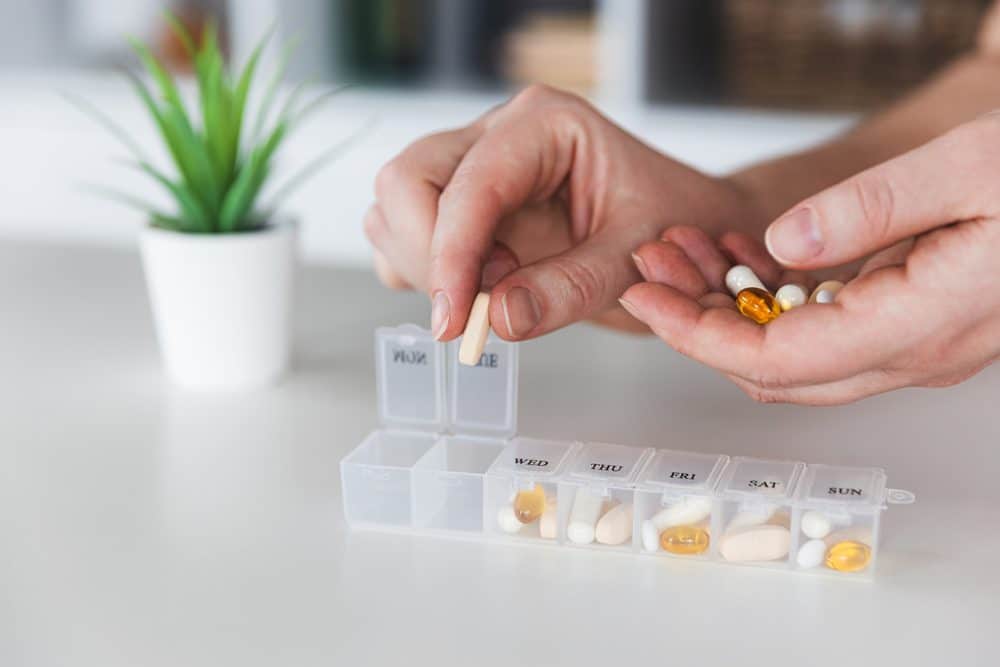
How to Organize Your Medications
Use a Pillbox
They’re inexpensive and convenient, and you can get them at your local drugstore. In a simple organizer, each day of the week gets its box. Larger tablets have more slots if you take them more than once a day. This enables you to categorize drugs based on when they must be taken (If you don’t want to use a pillbox, you can segregate drugs into different colored bottles for different times of the day.)
Most medications can be securely stored in the same organizer compartment as other pharmaceuticals for short periods without interfering. However, you should double-check with your doctor or pharmacist to be sure.
Also, double-check that your pillbox is properly filled. It’s all too simple to put two tablets in a bottle when only one should be there, or to put the wrong drug in a container. You should also remember to replenish your organizer when it runs out of space. It will be easier if you do it on the same day every week or month. If you require further assistance, have a friend or relative fill your pillbox when they come by.
If you don’t have a pillbox, Amazon has plenty of options!
Make a Checklist
Another smart way to keep organized is to have a written record that outlines which drugs to take and when to take them. You can buy some online or make your own.
Include the name of the medication, the dosage, when you take it, and the appearance of the pill. Make a note of any specific instructions, such as whether it should be taken with or without meals.
Make a checkbox to indicate that you’ve taken each dose. As soon as you change medicines, update your medication list.
Go Automatic
An automated pill dispenser can be the best option if your medication routine is complicated. One can be rented by the month. You can also buy it for a few hundred dollars or up to a thousand dollars, with some circumstances requiring a monthly membership fee.
It can contain up to a dozen tablets of various sizes in each cup and will remind you to take them when it’s time.
The most advanced dispensers can communicate with your pharmacist remotely to alert them if you miss a dosage. Medicare does not fund these gadgets for seniors. However, certain state Medicaid programs for low-income or disabled persons can be able to cover the costs. Consult your insurance provider.
You can also find less expensive automated dispensers for less than $100. These are frequently mistaken for normal plastic pillboxes. Some spin mechanically on a timer, and many locks prevent you from taking the wrong dose by accident. You can set them to notify you when it’s time for another dosage.
Take Single-Dose Packets
Inquire with your doctor or pharmacist about single doses or blister packs that can be sent ahead of time. Some pharmacies will split your medications into individual, custom-filled packets that are labeled with the date, weekday, dose, and even the time of day when you should take them. If your medicines change, please be sure to notify your pharmacist straight away.
When you know your routine will remain consistent, pre-made packets are the ideal option. You can still want to order a few at a time in case your prescriptions alter.
This cannot be the ideal option for you if your dose varies frequently or if you’re just starting a new prescription and know your doctor will most likely modify your medication.
Some pharmacies can also customize and streamline your prescription regimen. You’ll get simple instructions (in Spanish in some areas) on the optimal times of day to take your medications and how to take them in a way that reduces the number of daily dosages. Check to see if your drugstore has a comparable program.
Turn to Technology
These can be of great assistance to you! According to research, technology can help you stay in a routine.
Set phone alarms to remind you to take your medicine or refill your dispensers every week or month.
You can even set your phone or computer to remind you when it’s time to take your medication by email or text message. These alarms can be customized to meet any schedule, whether you take your medications at the same time every day, three times a day, or once a week.
If you have problems hearing alerts from a different room, a wristwatch can be an excellent solution. Online medicine monitors are available on several websites, and some will send you text or email reminders.
Some electronic gadgets that connect to prescription bottles can play a recording that instructs you on when and how to take your medication. Some can be linked to a mobile app that allows you to scan a bar code on the bottle to visit a webpage with further information or to play the recording through your phone.
You can keep a medicine checklist on your phone using mobile applications. Some utilize Wi-Fi to save your dosages in the cloud. Some can also be linked to a “smart” pill container, which contains a sensor that detects when it has been opened.
Check with your pharmacy to see whether they have them. When you take your medications, your app will notify a doctor, caregiver, or family member. These might be set to notify you or your contact person if you miss a dosage.

Adopt Helpful Habits
- Keep all of your medicines in one location to make it easy to remember to take them.
- Keep your tablets in an obvious, visible location, such as next to the coffeemaker or on your bedside table.
- Make it simple to distinguish your medicines from those of others in your home. For example, experiment with different colored pillboxes and make sure everything is properly labeled.
- Stick to a schedule. Take your medications at the same time every day, such as after breakfast or at night after brushing your teeth.
- Keep a list of your drugs on paper, on a smartphone app, or on the internet.
- Make a checkmark on a calendar on the wall or the fridge every time you take your medications.
- When it’s time to refill your prescription bottle, turn it upside down.
Traveling with medications
When driving, you may want to have certain medications on hand but don’t keep them in the glove compartment, where they might be destroyed by the heat, cold, or rain outside, as well as the car’s heater or air conditioner.
It’s best if you keep medications in your carry-on luggage if you’re flying. Cargo compartments, where checked luggage is housed throughout the trip, might be too hot or cold to keep your prescription safe.
Bring your prescriptions in their original containers so airport security knows you’re carrying prescription tablets from your doctor; keep them in a transparent plastic bag so you can disclose them. Even though airport security may screen for sharp items, diabetics are allowed to bring insulin, lancets, and needles for blood sugar checks.
If you have diabetes, request copies of your medicines as well as a note from your doctor describing your illness (the Transportation Security Administration does not need this, but it will make things easier). The letter should include a description of your drug routine as well as a list of any equipment you use, such as syringes.
Carry enough tablets or insulin to last the whole trip, but have copies of your prescriptions available to avoid delays at the airport and to allow you to receive extra medicine if you run out.
A pill dispenser is beneficial for rationing out your doses, and you can still utilize one of these helpful devices when traveling.
However, if you don’t have the original containers with you and there’s an emergency on the road, you might be in big trouble if there’s no medical history for you if you’re away from home and have an emergency, and it’s practically impossible to figure out what medications are in the pill dispenser, advises San Francisco pharmacist Chin.
He also recommends travelers have a current list of drugs in their handbag or wallet.
How should I dispose of my medicine?
According to studies, pharmaceutical waste is prevalent in the water we drink, and some pharmaceuticals might affect our ecosystem. Unfortunately, no waste treatment plants in the United States are designed to remove potentially dangerous medicines from sewage.
With this in mind, the White House Office of National Drug Control Policy issued the first consumer recommendations for responsible prescription medicine disposal. According to the instructions, if you need to dispose of unused, unnecessary, or expired pharmaceuticals, you can:
- Remove the medications from their original packaging and discard them.
- As an added precaution, mix the medicines with coffee grinds, kitty litter, or any other unwanted item before discarding them in an empty container or sealed bag.
- Scratch off the names of all prescriptions of the prescription bottles you’re throwing away.
Talk to Your Doctor and Pharmacist
If taking a drug many times a day is too much for you, ask your doctor if they can prescribe something you can take less frequently.
Keep in mind that the pharmacist is a vital component of your medical team. A list of your medications is kept on the computer system of your pharmacy. They may be able to assist you in creating a checklist.
If you have Medicare drug coverage, you will be eligible for medication counseling through the Medication Therapy Management program, which is a free service.
Read also: 7 Subtle Signs You Have a Weak Immune System.









Leave a Reply