
Clinical Testing and Screening Guidelines
You cannot diagnose prediabetes based on physical symptoms alone. Accurate identification requires standardized laboratory evaluations interpreted by a qualified medical provider.
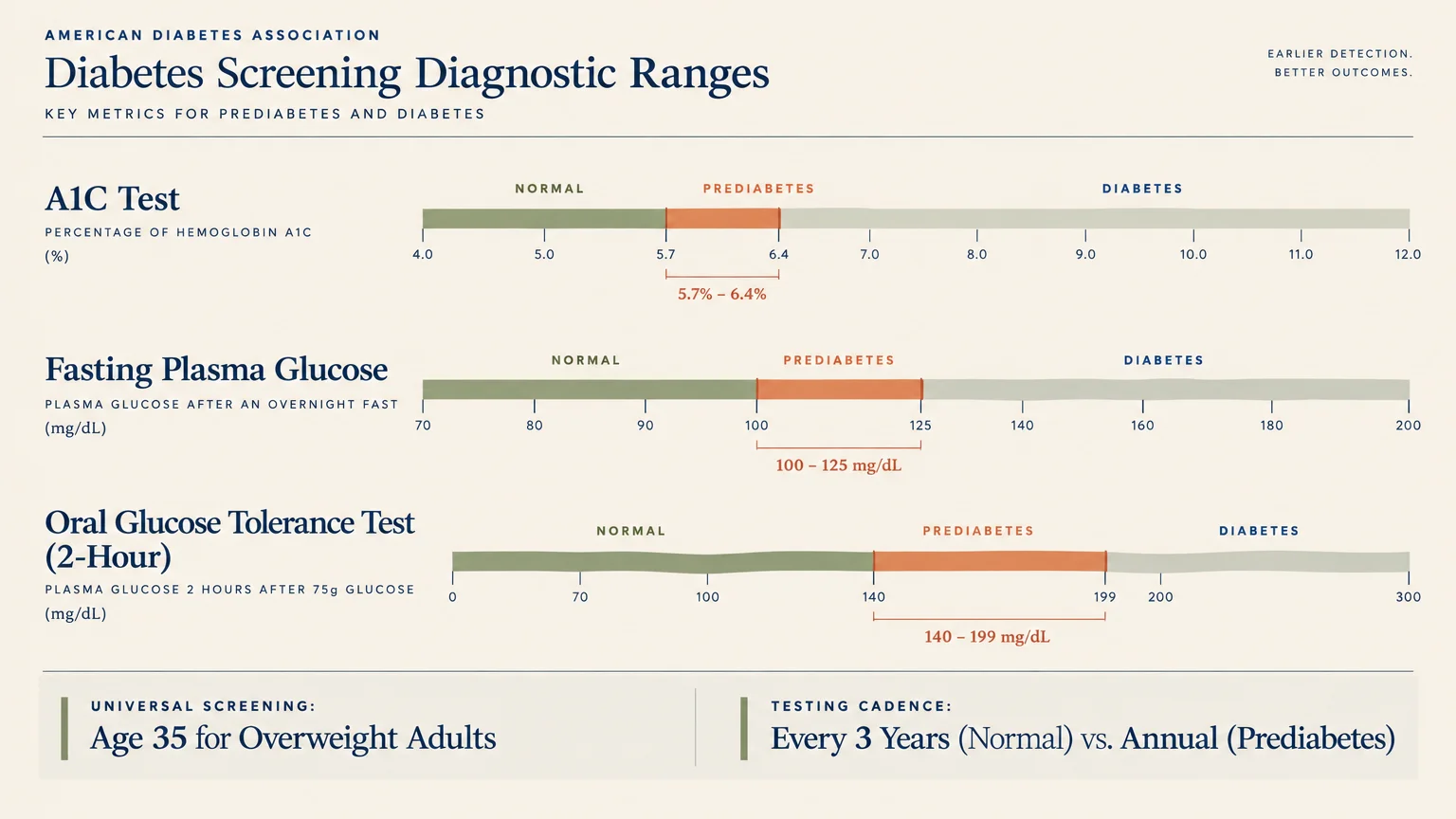
The American Diabetes Association defines prediabetes through three primary laboratory tests. An A1C test measures your average blood sugar over the previous two to three months, identifying prediabetes between 5.7 and 6.4 percent.
A fasting plasma glucose test identifies prediabetes between 100 and 125 milligrams per deciliter after an overnight fast. Alternatively, an oral glucose tolerance test reveals prediabetes when two-hour readings land between 140 and 199 milligrams per deciliter.
The U.S. Preventive Services Task Force recommends universal screening starting at age 35 for adults who are overweight or obese. Individuals carrying family history, gestational diabetes history, or high-risk ethnic backgrounds should undergo screening even earlier.
Clinicians recommend repeat testing every three years if your results are normal. If your numbers indicate prediabetes, you should schedule comprehensive metabolic evaluations at least once every year.







Leave a Reply