

If you care for an older adult facing memory loss, common sleep medications and sedatives can present severe hazards. Nearly one in three seniors with cognitive impairment still takes these central nervous system prescriptions.
Federal healthcare data reveal that these drugs significantly increase the risk of emergency department visits and emergency hospitalizations. Recognizing these risks empowers you to advocate effectively for your loved one’s physical safety.
By adopting evidence-based lifestyle changes, you can support deep, natural rest while protecting essential brain health and daily independence.
The Hidden Risks of Central Nervous System Medications
A landmark study led by first author Dr. Haowen Hsu and senior author Dr. David M. Jacobs evaluated federal survey data across eleven years. Published in the Journal of the American Geriatrics Society, the study analyzed 2,796 older adults with dementia or mild cognitive impairment.
Representing roughly 29.7 million community-dwelling older Americans, the investigation examined four classes of cognitive potentially inappropriate medications, commonly termed CogPIMs.
These monitored drug classes include anticholinergic agents, antipsychotics, benzodiazepines such as alprazolam, and non-benzodiazepine Z-drugs like zolpidem. Between 2011 and 2022, overall patient exposure dropped from 39.3% to 29.3%.
Despite this encouraging decline, nearly one in three cognitively impaired seniors still receives these risky central nervous system compounds. The statistical analysis linked these medications directly to acute medical crises.
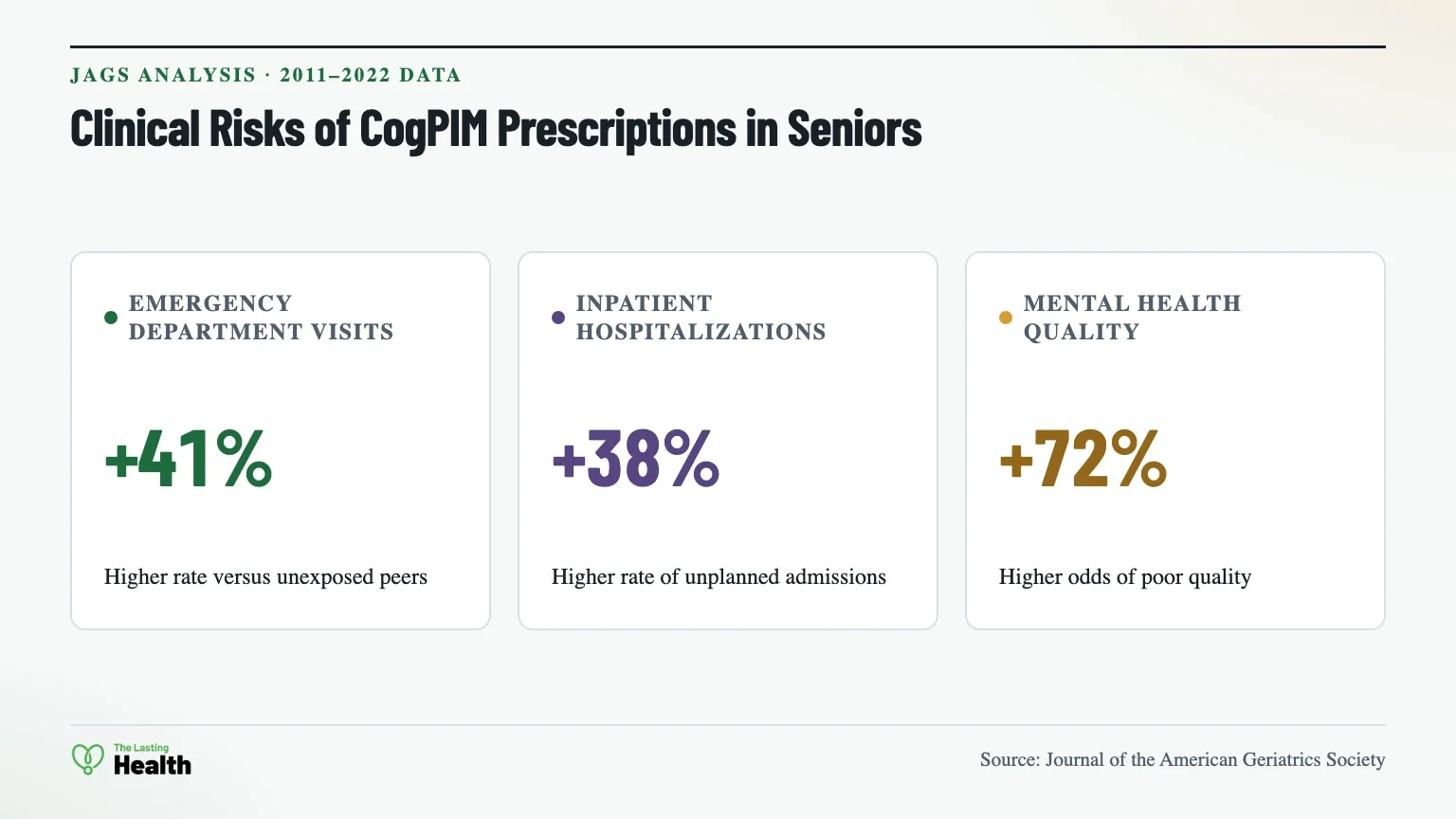
Seniors taking these medications experienced a 41% higher rate of emergency department visits compared to unexposed peers. They also faced a 38% higher rate of unplanned inpatient hospitalizations.
Furthermore, participants taking these prescriptions had 72% higher odds of reporting poor mental health-related quality of life. Interestingly, researchers observed no significant association between medication exposure and physical quality of life or routine outpatient clinic visits.
While this cross-sectional study demonstrates strong associations rather than direct causation, the surge in emergency care indicates substantial clinical risk.
Why Vulnerable Brains Struggle with Sedatives
Aging alters pharmacokinetics fundamentally; declining renal function and reduced hepatic clearance slow down drug metabolism. Consequently, sedating compounds persist in blood plasma and neural tissues far longer than clinical guidelines anticipate.
In brains affected by dementia, the blood-brain barrier becomes increasingly permeable to psychoactive substances. When sedatives bind to sensitive central receptors, they trigger exaggerated sedation, motor instability, and acute confusion.
Lingering sedation impairs morning balance, precipitating devastating falls and bone fractures that often initiate permanent functional disability.
A 2026 study in JAMA evaluated Medicare claims linked to the Health and Retirement Study across 4,842 seniors. The researchers discovered that 25.1% of beneficiaries with dementia received inappropriate central nervous system prescriptions.
Among older adults experiencing cognitive impairment without dementia, 21.7% received these medications, compared to 17.0% with normal cognition. Alarmingly, 70.4% of beneficiaries receiving these drugs in 2021 had no documented clinical indication.
Hospital transitions frequently initiate these problematic regimens without adequate follow-up planning. A 2026 study in JAMA Network Open found that acute and post-acute facilities initiated 43% of antipsychotic prescriptions for dementia patients.
More than half of those dementia patients remained on these powerful medications twelve months later. This acute prescribing cascade leaves vulnerable seniors trapped on prolonged, unmonitored regimens.
Regulatory Warnings and Geriatric Guidelines
The U.S. Food and Drug Administration enforces its strongest boxed warning on antipsychotics, citing elevated mortality in dementia-related psychosis.
This boxed warning highlights a 1.6- to 1.7-times increased mortality risk when older patients with dementia-related psychosis receive antipsychotics. The agency explicitly notes that antipsychotics lack approval for managing dementia-related behavioral symptoms.
Benzodiazepines also carry rigorous boxed warnings highlighting risks of physical dependence, addiction, and lethal respiratory depression when combined with opioids. Severe physical dependence can manifest within days or weeks of standard therapeutic dosing.
The American Geriatrics Society updated its Beers Criteria guidelines to formally advise against these drug classes for cognitively impaired adults. The guidelines discourage anticholinergics, benzodiazepines, and Z-drugs due to elevated risks of delirium, fractures, and death.
In 2025, the society released a comprehensive Beers Criteria Alternatives List in their journal. This companion resource urges physicians to replace sedatives with non-pharmacological behavioral modifications and targeted environmental interventions.

Safe Deprescribing and Clinical Insights
Senior author Dr. David M. Jacobs emphasized that reducing CogPIM exposure mitigates fall risk and spares families stressful emergency room visits.
However, you must never discontinue sedatives, sleep drugs, or antipsychotics abruptly on your own. Quitting benzodiazepines or Z-drugs suddenly can provoke severe rebound insomnia, profound anxiety, autonomic instability, and life-threatening seizures.
Safe deprescribing demands a collaborative, gradual tapering plan managed by a physician or geriatric pharmacist. Structured tapers often reduce dosage increments by small percentages over several weeks or months to safeguard neural stability.

Strategy Pillars for Restorative Sleep and Calmer Days
Transitioning away from sedatives requires practical, non-drug interventions that honor your loved one’s physical and emotional needs. These evidence-based pillars create a calming environment that promotes natural rest.
Pillar 1: Cognitive Behavioral and Environmental Sleep Habits
The National Institute on Aging strongly endorses cognitive behavioral therapy for insomnia as the gold standard for older adults. This therapeutic framework restructures sleep routines and eliminates anxious associations with the bed.
Anchor your loved one’s circadian rhythm by maintaining an identical wake time every morning, seven days a week. Consistent wake times regulate internal melatonin production and establish reliable biological sleep pressure by evening.
Optimize the bedroom sanctuary by keeping ambient temperatures between 65 and 68 degrees Fahrenheit. Eliminate glowing digital clocks, television screens, and nightlights with blue wavelengths that inhibit natural melatonin release.
Pillar 2: Strategic Daytime Movement and Light Exposure
Natural morning sunlight acts as the primary environmental cue synchronizing your companion’s master circadian clock. Expose your loved one to twenty to thirty minutes of bright outdoor light within an hour of waking.
Pair morning light exposure with gentle, accessible physical exercise appropriate for your family member’s current abilities. Moderate activities like supervised walking, light gardening, or seated range-of-motion routines enhance deep slow-wave sleep.
Avoid vigorous physical activity within three hours of bedtime, as elevated core body temperatures can interfere with sleep onset. Instead, transition to gentle stretching or soothing foot massages during the final waking hour.
Pillar 3: Mindful Evening Nutrition and Soothing Rhythms
Dietary choices significantly influence evening behavior and nocturnal comfort in individuals experiencing cognitive decline. Eliminate all caffeine sources after midday, paying close attention to sodas, iced teas, and dark chocolate desserts.
Serve dinner at least three hours before bed, offering nutrient-dense meals featuring complex carbohydrates and lean proteins. Foods containing magnesium and tryptophan, such as pumpkin seeds, oatmeal, and bananas, naturally support neurotransmitter synthesis.
Before assuming restlessness reflects psychiatric distress, methodically check for physical discomforts like subtle joint pain, hunger, thirst, or a full bladder.
As evening approaches, dim indoor lighting to mitigate sundowning, a common phenomenon involving increased late-day confusion. Playing soft orchestral music and diffusing gentle lavender essential oils can reinforce evening calmness.
Pillar 4: Proactive Medication Reconciliation
Conduct a comprehensive medication audit every six months with your primary care team or a clinical pharmacist. Bring every prescription bottle, herbal supplement, and over-the-counter remedy into the clinic in a single container.
Pay vigilant attention to over-the-counter sleep products, which almost universally contain first-generation antihistamines like diphenhydramine. These potent anticholinergics worsen memory impairment, induce urinary retention, and dramatically heighten delirium risks.
Request an explicit review of any central nervous system medication initiated during a prior hospital or rehab stay. Discontinuing temporary prescriptions prevents acute hospital interventions from solidifying into harmful, year-long habits.
Frequently Asked Questions
Why do sleep medications pose higher risks for seniors with cognitive impairment?
Aging physiology clears sedating drugs slowly, causing compounds to accumulate and cross the compromised blood-brain barrier easily. This creates persistent daytime grogginess, severe motor incoordination, paradoxical agitation, and dangerous fall-related injuries.
How can families safely reduce a loved one’s sedative prescriptions?
Never stop sedative medications abruptly, because sudden withdrawal can trigger acute delirium, severe insomnia, and life-threatening seizures. Work with a physician to implement a gradual, slow taper that reduces doses over several months.
What should you do when behavioral symptoms spike at bedtime?
First, rule out physical discomforts such as pain, hunger, dehydration, or an urge to use the restroom. Next, reduce environmental stimulation by lowering lights, minimizing loud noises, and providing calm, reassuring companionship.
Did the University at Buffalo study prove that sleep medications accelerate brain aging?
No, the study evaluated healthcare utilization and quality of life rather than neuroimaging or biological brain-aging biomarkers. The measured dangers center on a 41% higher rate of emergency visits and poorer mental well-being.
Empowering Brain Health for the Future
The Alzheimer’s Association reports that 7.4 million Americans aged 65 and older live with Alzheimer’s dementia in 2026. Health and long-term care expenditures are projected to reach $409 billion this year alone.
Global demographics reinforce this urgency; adults 65 and older now outnumber children under five worldwide for the first time. The U.S. Census Bureau projects that older Americans will outnumber children under eighteen by 2029.
These demographic shifts demand rigorous medication stewardship and proactive advocacy to shield older adults from preventable emergency visits.
Take your first concrete step today by scheduling a dedicated brown-bag medication review with your primary care provider. Ask your clinician to evaluate every sedating compound against the American Geriatrics Society Beers Criteria.
Reflect on your companion’s current evening routine tonight. What gentle, non-drug comfort measure can you introduce to foster peaceful, natural rest?