

You can transform your metabolic health by learning to decipher ingredient lists on food packaging before hidden sweeteners sabotage your daily energy. Food manufacturers frequently disguise added sugars under sophisticated chemical terms and plant extracts, making products like salad dressings, pasta sauces, and wheat bread appear healthier than they really are. By identifying these secret aliases, you regain control over your total intake, protect your long-term cardiovascular system, and support stable blood glucose levels throughout the day. Master these key label tricks now so you can make confident, nourish-focused choices every time you walk down the grocery store aisle.
The Hidden Reality of Added Sugars in Packaged Foods
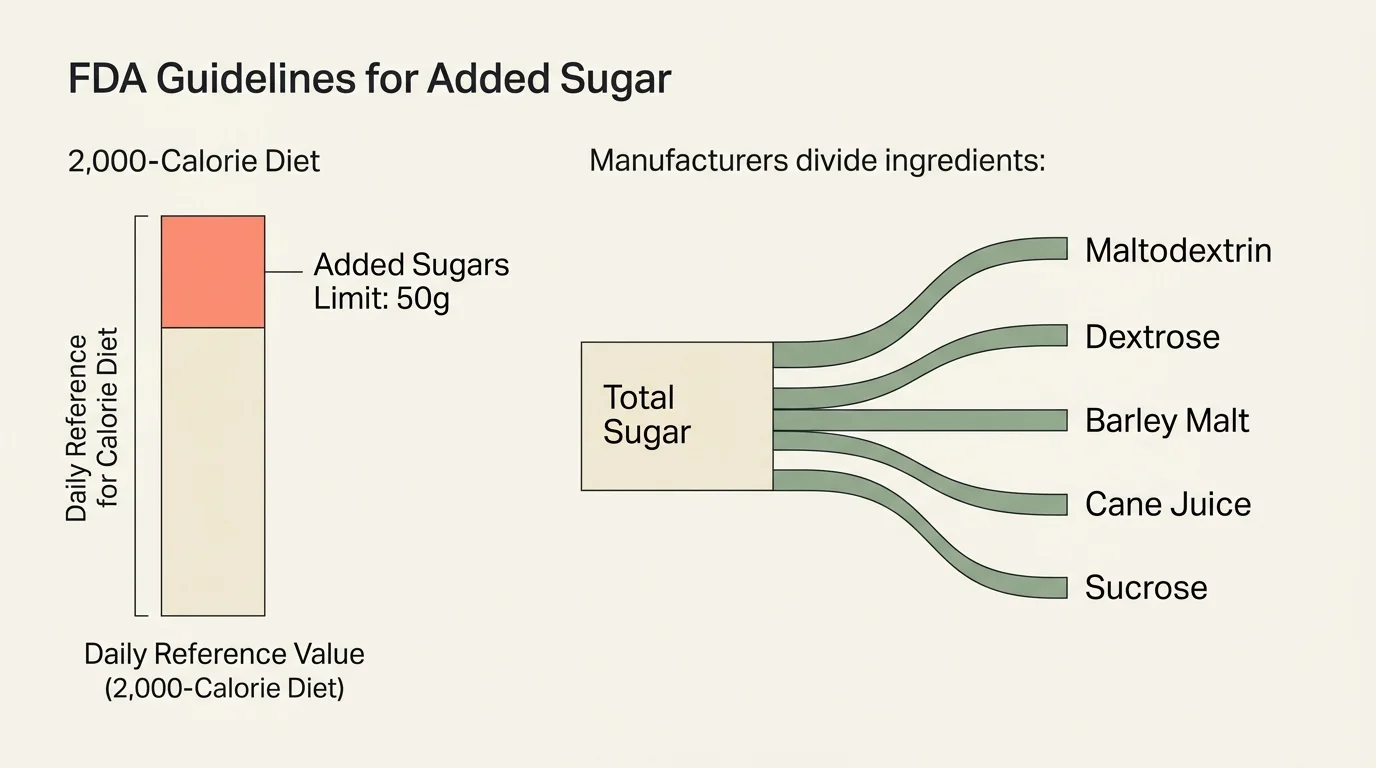
Navigating the grocery store aisles presents a significant challenge when food processing methods split added sugars across several technical ingredients. Manufacturers know that regulations require them to list ingredient items in descending order by weight. To prevent refined sugar from occupying the top spot on an ingredient panel, companies intentionally distribute sweetening agents across four or five distinct chemical names. A single box of breakfast cereal or granola bar might feature five different sweeteners, each appearing lower on the list, masking the reality that sugar constitutes the primary ingredient overall.
To address this transparency gap, the U.S. Food and Drug Administration instituted mandatory labeling changes for food producers. Manufacturers generating ten million dollars or more in annual sales had to display an explicit line showing added sugars under total sugars by January 1, 2020, while smaller companies complied by January 1, 2021. The FDA set a baseline daily reference value of 50 grams of added sugar for a standard 2,000-calorie daily diet, representing roughly 10 percent of total caloric intake. Despite these expanded transparency rules, identifying specific sugar aliases remains essential because processed foods often contain multiple refined agents that impact your digestion and insulin response in distinct ways.

Eight Common Sugar Aliases Hiding in Plain Sight
Understanding how manufacturers formulate packaged goods empowers you to spot hidden sweeteners instantly. Here are eight prevalent sugar names that routinely slip past conscious grocery shoppers.
1. Barley Malt Syrup
Produced from sprouted barley grains, barley malt syrup is an unrefined sweetener consisting primarily of maltose. Manufacturers frequently slip this ingredient into organic baked goods, dry cereals, and savory crackers to create a wholesome, rustic impression. Despite its rich, toasted flavor and perception as an unrefined food, your body breaks maltose down into glucose rapidly; this induces a sharp rise in circulating blood sugar without delivering meaningful micronutrients.
2. Dextrose and Maltodextrin
Dextrose is chemically identical to pure glucose, whereas maltodextrin is a processed starch derivative composed of short sugar chains. Manufacturers rely heavily on maltodextrin as a thickening agent, texturizer, or flavor carrier in spice mixes, salad dressings, and athletic supplements. Because maltodextrin possesses a glycemic index even higher than table sugar, it elevates blood glucose rapidly—even though it does not taste intensely sweet on your tongue.
3. Dehydrated Cane Juice
Also marketed under names like dried cane syrup or evaporated cane juice, this sweetener sounds like a minimally processed liquid extract. In truth, regulatory agencies view dehydrated cane juice as refined sugar because it undergoes processing that removes water while leaving pure sucrose behind. It delivers the exact same metabolic load and caloric content as standard white sugar, providing no superior nutritional advantages.
4. Fruit Juice Concentrate
You frequently spot fruit juice concentrates in products advertised as naturally sweetened or made with real fruit, such as fruit snacks, flavored yogurts, and bottled teas. Processing removes the water, essential fiber, and delicate micronutrients from original fruit juices, leaving behind dense fructose and glucose. Once ingested, your body handles concentrated juice extracts in much the same way it processes high-fructose corn syrup.
5. Agave Nectar
Widely promoted as a low-glycemic, natural health food, agave nectar often undergoes intensive processing that converts its natural carbohydrates into pure fructose. Commercial agave syrups frequently contain between 70% and 90% fructose—a concentration significantly higher than standard high-fructose corn syrup. High fructose consumption places a heavy burden on your liver, encouraging hepatic fat storage and potential insulin resistance over time.
6. Rice Syrup or Brown Rice Syrup
Created by fermenting cooked rice starches with specialized enzymes, brown rice syrup consists almost entirely of maltose. It serves as a staple sweetener in many gluten-free products, vegan snack bars, and infant formulas. While free of high fructose, brown rice syrup scores remarkably high on the glycemic index, causing rapid blood glucose surges that prompt significant insulin spikes.
7. Crystalline Fructose
Produced by processing cornstarch or sugar crystals, crystalline fructose is a dried, concentrated form containing at least 98 percent pure fructose. Manufacturers favor crystalline fructose because it offers enhanced sweetness without immediately triggering a surge in blood glucose levels. However, because your liver metabolizes fructose exclusively, excessive exposure promotes lipid production, elevated blood triglycerides, and metabolic dysfunction.
8. Treacle and Turbinado
Treacle is an unrefined syrup byproduct generated during sugar refining, while turbinado represents partially refined raw sugar with minor molasses residues intact. Although their caramel hue and coarse texture suggest a rustic origin, both substances consist predominantly of sucrose. They carry the exact same caloric load and metabolic effects as white table sugar, making them direct contributors to your daily added sugar quota.

Science Snapshot: How Excess Sugar Impacts Your Body
Clear public health evidence demonstrates that excessive intake of added sugar undermines long-term health resilience. According to the federal Dietary Guidelines for Americans, adults and children aged two and older should restrict added sugars to less than 10 percent of total daily calories, while infants and toddlers under age two should avoid added sugars entirely. When you consume refined sweeteners repeatedly, your pancreas secretes elevated levels of insulin to move circulating glucose into tissue cells; over time, this pattern triggers insulin resistance, systemic inflammation, and metabolic fatigue.
The medical community advocates even tighter thresholds to lower chronic disease risk across populations. The American Heart Association recommends that adult women limit added sugars to no more than 6 teaspoons (25 grams or 100 calories) daily, while men should stay under 9 teaspoons (36 grams or 150 calories) per day. For children aged 2 through 18, the AHA sets a firm ceiling of 25 grams daily and advises limiting sugar-sweetened beverages to no more than 8 ounces per week. Internationally, guidelines from the World Health Organization recommend limiting free sugars to under 10 percent of energy intake, while noting that reducing intake below 5 percent—roughly 25 grams daily—provides significant additional health protection against dental caries and metabolic disorders.

Actionable Strategies to Outsmart Hidden Sugar
Mastering label reading allows you to make deliberate, informed choices that align with your wellness goals. Implementing practical lifestyle strategies across key functional pillars helps you maintain stable metabolic health.
Pillar 1: Nutrition and Label Literacy
Always look beyond front-of-package marketing claims such as light, natural, or wholesome. Turn the package over and examine the ingredient panel carefully; if any of the eight sugar aliases appear in the first three listed ingredients, the product likely contains substantial added sugar. Cross-check the ingredient list against the Nutrition Facts panel to evaluate the grams of added sugar per serving, keeping your daily limit top of mind as you plan meals.
Pillar 2: Movement and Metabolic Flexibility
Physical activity plays a crucial role in mitigating the glycemic impact of meal consumption. Engaging in a light 10-to-15-minute walk after eating encourages skeletal muscle tissue to absorb excess glucose directly from your bloodstream without requiring additional insulin production. Regular resistance training further enhances your metabolic flexibility by increasing your body’s glycogen storage capacity, helping you manage unexpected glucose fluctuations efficiently.
Pillar 3: Mindset and Flavor Adaptation
Retraining your palate takes patience, but your taste receptors adapt rapidly when you lower your exposure to hyper-sweet food formulations. Transition away from artificially sweetened foods over a two-to-three-week window, replacing refined sugar with whole-food flavor boosters. Incorporating warming spices like cinnamon and nutmeg, pure vanilla bean extract, fresh citrus zest, or unsweetened cacao powder allows you to enjoy rich, satisfying flavor profiles without spiking your blood glucose.
Pillar 4: Partnering with Healthcare Professionals
Collaborating with a primary care physician, endocrinologist, or registered dietitian provides personalized clarity regarding your unique metabolic profile. Tracking standard biomarker blood tests—such as hemoglobin A1c, fasting plasma glucose, and fasting lipid panels—helps evaluate how your diet influences long-term cardiovascular health. If you manage underlying conditions like prediabetes, your clinician may recommend wearable continuous glucose monitoring or customized clinical advice from the Centers for Disease Control and Prevention to refine your dietary strategy.

Real Voices: Clinical Perspectives on Sugar Awareness
Clinical experts emphasize that recognizing disguised sugar is not about perfectionism or food fear; it is about self-advocacy. Medical professionals note that consumers often feel discouraged when they realize how many staple items contain hidden sweeteners. “When patients learn to identify hidden sugar aliases on ingredient panels, they transition from feeling confused to feeling fully empowered,” explains Dr. Marcus Vance, an integrative endocrinology specialist. “You do not need to eliminate every single gram of sugar overnight; rather, building consistent label awareness helps you make intentional food decisions that protect your cellular health over a lifetime.”
Frequently Asked Questions About Identifying Hidden Sugars
Do natural sugars in fresh fruit count toward my daily added sugar limit?
No, whole fresh fruits contain naturally occurring sugars bound within a complex matrix of dietary fiber, water, and essential vitamins. Fiber slows down digestion and delays sugar absorption, preventing the steep glucose spikes associated with refined additives. The daily targets established by major public health organizations specifically address added sugars introduced during manufacturing or preparation.
Are unrefined sweeteners like raw honey or maple syrup healthier than white sugar?
While raw honey and pure maple syrup offer trace minerals, antioxidants, and unique flavor profiles, your liver metabolizes them similarly to refined sucrose. They both count directly toward your daily added sugar allowance, so consume them mindfully even though they undergo minimal manufacturing processing.
How can I spot added sugars if a product box claims “no added sugar”?
Regulatory guidelines prohibit manufacturers from using the claim “no added sugar” if they insert sugar ingredients during production. However, products may naturally contain high sugar levels, or manufacturers may include concentrated fruit juice extracts under specific labeling exemptions. Always verify claims by checking both the Nutrition Facts panel and the full ingredient list for high overall carbohydrate levels.
Should children follow different added sugar limits than adults?
Yes, pediatric nutrition guidelines strictly limit added sugars to support optimal growth, cognitive development, and cardiovascular health. Public health agencies advise that children under age two avoid added sugars entirely, while youth aged 2 through 18 should cap added sugars at 25 grams daily and restrict sugar-sweetened beverages to no more than 8 ounces per week.
Your Next Step Toward Label Mastery
Take a proactive step toward better metabolic health today by auditing three packaged items currently sitting in your kitchen pantry. Read through their ingredient lists closely, searching specifically for terms like maltodextrin, barley malt syrup, or fruit juice concentrate. If you discover hidden sweeteners in your favorite staples, reflect on how you might swap them for whole-food alternatives during your next grocery trip. Small, steady choices build lasting health resilience over time.








Leave a Reply